-
Chicago Bears Coach Rips His Shirt Off In Hot Dog Challenge After Bears Win
Chicago is one crazy town. Especially when it comes to sports. Multiply that by a very large number when it comes to the Chicago Bears. After today’s win over last year’s Super Bowl champion Philadelphia Eagles the crazy is out of this world.
So much so that new Chicago Bears head coach Ben Johnson, who has become famous for his post game chant of Good, Better, Best after the Bears have been on what once seemed like an improbable winning streak, took up a challenge today and ripped his shirt off in the locker room to lead his now famous chant.
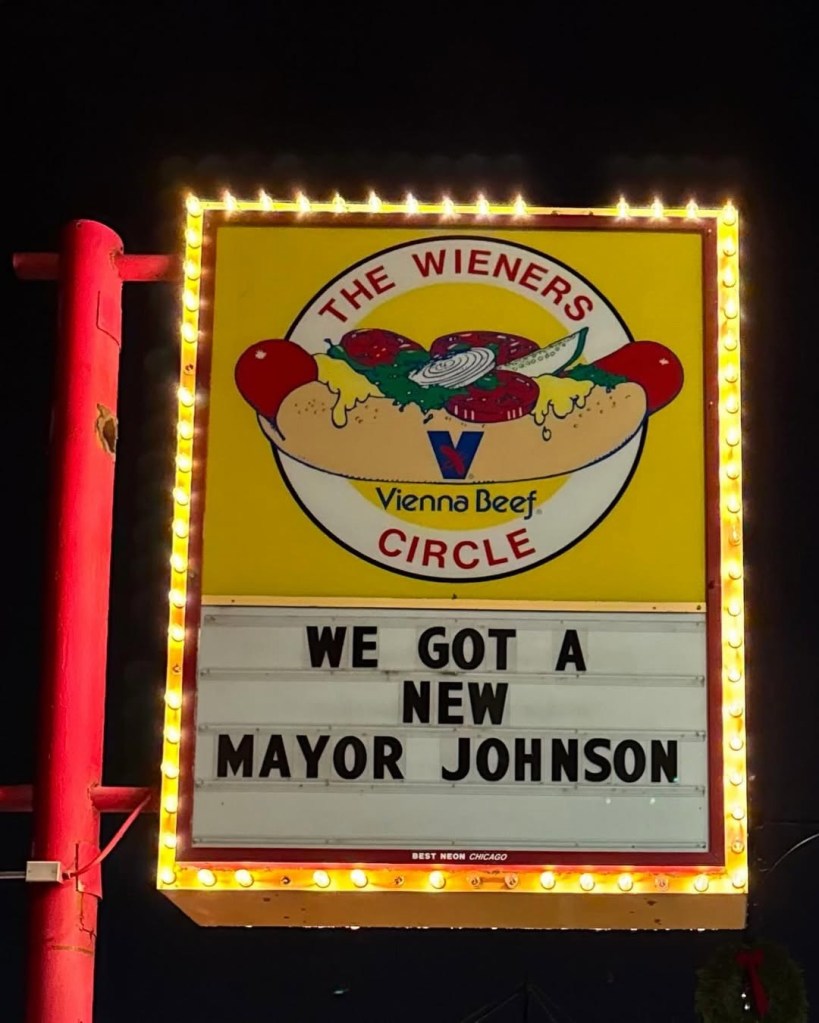
The challenge came from another wonderfully crazy Chicago favorite, The Wieners Circle, famous not only for its Chicago hot dogs, but also it’s wonderfully witty and irreverent statements on its sign, challenged the coach to take off his shirt during one of his post-game rallying cries. And Coach Johnson did so today after a thrilling victory.
Johnson’s acceptance of the challenge means the Wieners Circle is serving up free hot dogs this week.
Meanwhile the Chicago Bears keep serving up wins to a hungry sports town heading into the stretch run before the playoffs. There’s no question Johnson has changed the culture of the Bears. It’s a far cry from a year ago on Black Friday when the Bears fired head coach Matt Eberflus the day after a huge Thanksgiving day loss at Detroit. Perhaps equally important, Johnson is also rallying the entire Chicago Metro area after all we’ve been through this late summer and fall.
Put it another way that Chicagoans understand. He’s on his way to owning this town and certainly giving new meaning to the slogan, Bear Down!
Edit: Added the photo below from The Wieners Circle later in the evening.
You can also find more of my writings on a variety of topics on Medium at this link, including in the publications Ellemeno and Rome. I can also be found on social media under my name as above.
-
Apple Features Puppet Forest Critters In Christmas Ad
Apple has released its annual Christmas ad, this one called A Critter Carol and featuring a puppet potpourri of forest creatures singing about friendship in a sort of weird twist that combines the spirt of being friends along with lyrics about roadkill and being hunted. Oh, it also highlights the new iPhone 17 Pro.
Intriguingly I find the behind the scenes video of the making of the ad is actually a better advertisement for the iPhone, than the finished product. It also highlights the puppeteers and their art and craftsmanship.
-
Happy Thanksgiving!
Happy Thanksgiving to all who celebrate and give thanks for their blessings! May you find joy, warmth and laughter in the company of family and/or good friends.
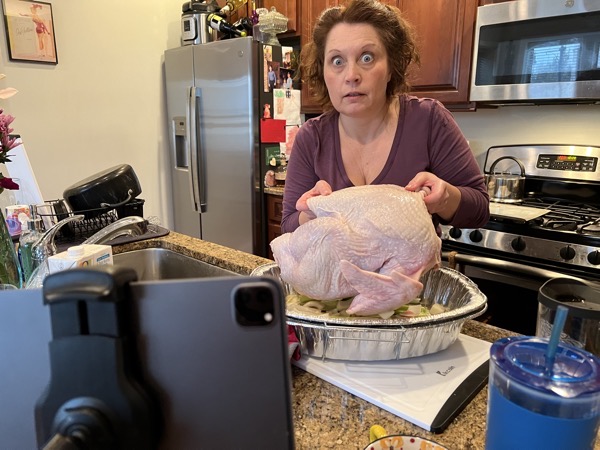
And may you survive the day’s cooking chores!
-
Finishing Ken Burns’ The American Revolution
We completed watching Ken Burn’s excellent The American Revolution this week. Thank goodness for streaming, allowing us to view it on our schedule. Two spoiler alerts. First, we won the war. Second, we’re still struggling with many of the differences that made the formation (and perhaps the continuation) of what would become the Untied States such a close thing.
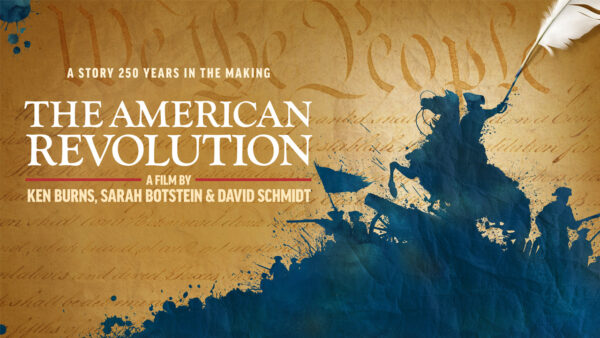
The series is excellent and I highly recommend it. Burns and his team do their expected thorough job of researching and producing the documentary. We’re lucky there were so many letters written by those beneath the status of the cast of characters most of us could identify at a glance, because that material provides much of the content and texture inside the frame.
The production does it’s job so well that my hunch is some will come away learning things they never knew about a period of our history we’ve wrapped in so many myths it would keep troops at Valley Forge warm. I would also guess that in today’s political and social climate there will be far too many who tune out or don’t tune in because they prefer the comfort of the mythology.
Which is a damned shame. As I said in an earlier post about the series:
I’m not hearing things differently, but I’m hearing how folks can take their own meaning out of many of the things written and said during that period that led to this country’s founding. History may indeed rhyme, but it also echoes. Often in strange ways.
If you have followed any of Burns’ work you know his approach to American history is to tell the parts of stories we leave out of the picture. I grew up in a part of the country where you could turn your head left or right, spit, and hit the history of the American Revolution or the Civil War. I count myself lucky that my 10th grade history teacher kept reminding us that there was so much more to discover about our past than he had the time to teach us, planting a seed of curiosity that continues to grow inside of me to this day decades later.
Ken Burns and his team continue to keep that curiosity growing. We should all be grateful and unafraid that they do so.
You can also find more of my writings on a variety of topics on Medium at this link, including in the publications Ellemeno and Rome. I can also be found on social media under my name as above.
-
Fall Leavings
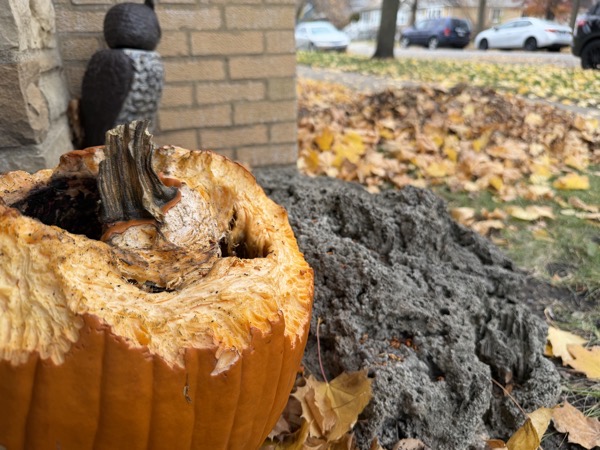
Just a quick share of a quick shot I grabbed that captures the season, and I dare say, my mood.
-
Read ’em. Maybe Weep. Maybe Get Pissed Off. But Read ’em
Life on the Wicked Stage readers will be familiar with the Sunday Morning Reading column wherein I share good writing and interesting topics. Sometimes things fly across my radar after I’ve published the week’s column. Three pieces hit and hit hard late on Sunday after the Chicago Bears continued a mysterious, but gratifying winning streak. I’m going to share those stories here, on a Monday. The writing is too hot to let cool, and the subject matter burns even hotter.
First up, is an excellent piece by Will Bunch called The Night America’s Doomed Ruling Glass Gorged On Lamb, Blood, and Oil. Bunch puts the elite on the menu and carves them up with a bone saw.
Next, check out Anand Girdhardas’ excellent How The Elite Behave When No One Is Watching: Inside the Epstein Emails. A vivisection that exposes what we all imagine.
Finally, read Tatiana Schlossberg’s A Battle With My Blood. A Kennedy family member, dying of incurable blood cancer eloquently tells her story, and ours.
You might think these pieces tilt into the category of just another round of depressing news and commentary. Partly that’s true. But it’s a small part for small minds. I find each of them reassuring. Reassuring that smart people, spilling words like blood on digital paper, can pour out the pain we’re all living through personal pain of their own, and decipher the day-to-day charades even as the current deadly and dangerous game continues.
I’d say the writing is courageous, but that’s obvious. The real courage comes in reading what’s written and paying enough attention to make it matter. Perhaps sharing them around this Thanksgiving week when we give thanks for our blessings with family and friends. Especially those we disagree with.
Be thankful. Be courageous.
(Image from Militarist on Shutterstock)
You can also find more of my writings on a variety of topics on Medium at this link, including in the publications Ellemeno and Rome. I can also be found on social media under my name as above.
If you’re interested in just what the heck Sunday Morning Reading is all about you can read more about the origins of Sunday Morning Reading here. If you’d like more click on the Sunday Morning Reading link in the category column to check out what’s been shared on Sunday’s past. You can also find more of my writings on Medium at this link, including in the publications Ellemeno and Rome.
-
Sunday Morning Reading
It’s another Sunday in this insane world, so it’s time for some Sunday Morning Reading. It won’t cure what ails you, or the world. But there are those who are listening. Listen as you read.
Aren’t You Tired Of Feeling Insane All The Time? Marie Le Conte asks that question. I’m not sure anyone can plug the hole in that boat, but acknowledging that we’re sinking is the first step.
David Todd McCarty tackles The Lost Art of Listening.
NatashaMH recently launched an exhibition of her art. Launching anything can take life out of you, launching any display of art exacts even more of the soul than it does the physical being. But as she says in The Social Life of Art, “art demands resilience, and resilience demands a sense of humor.”
I wrote a bit this week about what Mark Leydorf has to say about The Rise of Resistance Cinema In The Era of Trump. It’s worth highlighting his piece again here.
I’ve been watching the Apple TV series Pluribus with great curiosity. If nothing else, the show echoes Mr. McCarty’s opening to his piece linked above. (Warning. Don’t watch the show with my wife.) Dani Di Placido thinks he’s got it all figured out in What Is ‘Pluribus’ Really About? Perhaps he does. I’m not so sure. I’m also not sure the show’s success or failure relies on figuring it out in the end.
I’ve been linking to some of the goings on at The Kennedy Center under this corrupt administration. Trust me when I say what’s happening there is causing shock waves across board rooms in arts institutions across the country as everyone looks to uncertain and unknown futures with no script to follow. It’s affecting the art. It’s affecting the business of art. It will affect the art in ways we can’t begin to imagine. Janay Kingsberry examines how Senate Democrats Are Investigating Kennedy Center’s Deals And Spending.
Most of the links this week touch on the arts in one way or the other. In a way this tech topic does as well, given that so many want to turn emoji’s into some form of art. Benji Edwards examines the origins of this move back to hieroglyphics with the piece, In 1982, A Physics Gone Wrong Sparked The Invention Of The Emoticon. Art by accident often is the art that sticks.
(Image by Roman Kraft on Unsplash)
If you’re interested in just what the heck Sunday Morning Reading is all about you can read more about the origins of Sunday Morning Reading here. If you’d like more click on the Sunday Morning Reading link in the category column to check out what’s been shared on Sunday’s past. You can also find more of my writings on Medium at this link, including in the publications Ellemeno and Rome.
-
Filmmakers, Storytellers and The Resistance
Writing for Bloomberg, Mark Leydorf makes a case that movies are taking up the whistles of resistance in The Rise of Resistance Cinema in the Era of Trump. He’s right but he shortcuts the great history of storytelling.
He’s correct that there are a number of films being released, along with those already past their big screen sell by dates, featuring stories and themes that can’t help but strike resonant chords for those repelled by and rebelling against the current political moment we’re living in.
He doesn’t have to reach too far beyond his initial example of Wicked: For Good to create a long list of titles to support his thesis. A thesis I buy, even though I think it serves cinema history, and storytelling in general, a bit short in the end.
In compiling his list, Leydor says:
The list goes on:
Eddington, Bugonia, Sirāt— there’s a reason directors are digging into stories of conflict, paranoia and cataclysm. Taken together, these films, most of which were conceived and went into production during Donald Trump’s interregnum, between the insurrection of Jan. 6, 2021, and MAGA’s triumphant return to power, have coalesced into a troop of cinematic resistance amid the conflicts and crises defining his political era and the rightward, nationalistic turns happening broadly around the globe.
I’ll reach into that quote and point out that all successful storytelling, on the screen, on the page, on the stage, around campfires, or told sitting on bar stools involve some form of conflict, paranoia, and cataclysm. Even top rated fare on the feel good Hallmark Channel features conflict. Heck, they have to make it up on Reality TV. Without conflict you don’t really have much of a story. Goodness knows we’re overripe with enough conflict to tell thousands of stories at the moment.
While focusing on this current crop of films, Leydor is spotlighting a point in the long timeline of story telling. These current storytellers are doing what storytellers do, bringing their near term reactions to whatever is in the zeitgeist at the moment, following traditions established long before Hollywood executives ever got involved in a script conference or endings became focus group fodder.
Frankly, I’m glad to see such a strong list of filmmakers telling these stories at this moment. We need to see ourselves reflected back in the mirror we hold up to nature, before it’s all AI generated. The same is happening on stages, in late night television comedy, and from the keyboards of many authors. Given how none of us knows how this moment is going to play out, it’s fascinating.
Note that Leydor points out that most of these films were conceived and green lit after the first Trump administration and prior to this second one.
I had the privilege in the Fall of 2022 to direct three one-act plays from Ukrainian playwrights about the effects of the Russian invasion that had begun earlier that year in February. The writing was alive, fresh, and as urgent as the wounds were then. That writing still is today, even though now those stories are snippets of a longer story still unfolding to an end no one knows.
Historically few stories springing up in any current conflict, regardless of medium, retain staying power beyond almost artifact curiosity. It’s usually the stories told after the moment passes that last and define with more resilient resonances, even as their lessons are forgotten by those too eager to write what they think will be a different ending.
What will be more fascinating to watch is how many of these current films are remembered years or decades from now, once this historical moment does pass.
Whatever that turns out to be.
(Image from Skylines on Shutterstock)
You can also find more of my writings on a variety of topics on Medium at this link, including in the publications Ellemeno and Rome. I can also be found on social media under my name as above.
-
Scene Painting a History of Hamlets at The National Theatre
I’ve done some scene painting in my day, but nothing like this. Actually nothing even approaching anything like this.
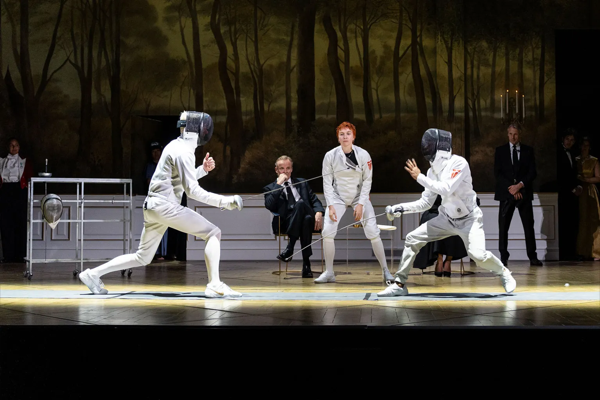
In Robert Hatcher’s production of Shakespeare’s Hamlet at Britain’s National Theatre Ben Stones’ scenery features a gigantic mural that surrounds the set that includes the faces of actors who have played Hamlet through the ages. The picture above doesn’t do that description or the concept justice.
The faces woven into the Danish artwork are the ultimate theatrical Easter egg. While Stones keeps the full cast list close to his chest, he confirms that they are all there – a complete history of the role.
“They’re all hidden in there. Everybody who’s been in it… even Tinuke Craig’s schools Hamlets, the three boys who played on that tour. We were very clear that if we include, we are including everyone who’s ever spoken those words in any version of this kind of play.”
As a statement on the play and its theatricality that’s cool in and of itself. The ghost visages of previous Hamlets watching what can be described as a ghost story has a meta appeal.
What also attracted my attention to this article — and why I’m sharing it — is that it puts the spotlight on scenic painting, somewhat of a lost art in this day of projected backgrounds and digital printing. This theatrical work of art required 920 hours to complete.
There’s a terrific little video that gives you an idea of the scale and scope of the painting requirement. Unfortunately it’s filmed in vertical mode so you don’t get the grand finale the same way on a computer webpage that you might on a smartphone. Even on smaller screens it has an impact.
It made me recall my days directing theatre in Omsk, Russia when the scene painting loft was at the top of the building. There, drops would be stretched on a frame that would rise and descend through an opening in the floor allowing the scenic artists to stand on the floor as they painted. There were some amazing scenic painters in that loft.
The article also gives credit to the scenic artists who did the work for Hamlet at the National. Well deserved.
You can also find more of my writings on a variety of topics on Medium at this link, including in the publications Ellemeno and Rome. I can also be found on social media under my name as above.
-
Thieves Get Picky And Only Want iPhones
I find this story funny. I shouldn’t. But I do.
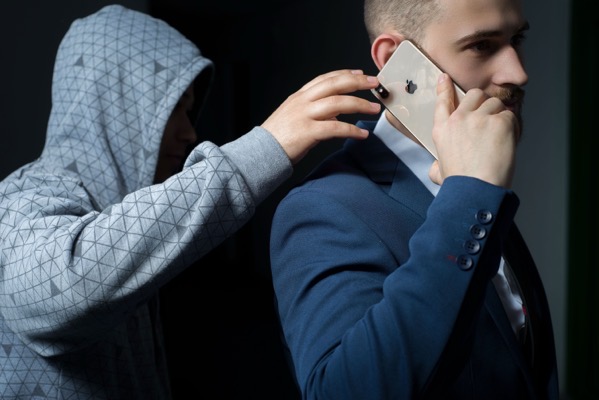
Apparently thieves are picky when it comes to the smartphones they steal. According to this report in London Centric:
The thieves took Sam’s phone, his camera and even the beanie hat off his head. After checking Sam had nothing else on him, they started to run off.
What happened next was a surprise. With most of the gang already heading down the Old Kent Road, one turned around and handed Sam back his Android phone.
The thief bluntly told him why: “Don’t want no Samsung.”
As I said, I shouldn’t find anyone who finds themselves in this sort of misfortune funny. The victims. Not the thieves, obviously.
Discerning criminals are all about the resale value apparently. Which, if all of the analysts and fanboys get smart about it, might be a new metric to score the ridiculous game of which smartphones are better than another.
(Image from Donenko Okeksli on Shutterstock)
You can also find more of my writings on a variety of topics on Medium at this link, including in the publications Ellemeno and Rome. I can also be found on social media under my name as above.
Skip to content
Life on the Wicked Stage: Act 3
Musings on life, the theatre, technology, culture and the occasional emu sighting
 Life on the Wicked Stage: Act 3