The End of Reading?

Let’s not make it so. At least until you read this piece.

File this one in the “Depressing If True” category. Rose Horowitch has written an excellent piece for The Atlantic entitled The End Of Reading Is Here. Yes, you read the title correctly. Unless you’ve already given up on reading you should give the piece more than just a look. If you have given up, try to remember how.

I’m not sure I’d agree completely that we’ve reached or are nearing the end point of reading, but I have to admit that we sure seem to be rushing headlong to cliff noting, bullet pointing, and summarizing everything to a point that it’s far too easy for some to break the habit and shy away from reading as a way to discover knowledge, new ideas, and well…advance ourselves and civilization while understanding from whence we came.

An excerpt:

Reading has never been natural. Humans have no innate cognitive machinery designed to string letters into words and connect them to their real-world analogues. To read, people had to repurpose regions of their brain used for speech and object recognition. The practice first emerged 6,000 years ago in Mesopotamia. 

Horowitch traipses through the history of the written word hitting the high and low water marks, many easily recognizable, some not nearly as discernible, pointing to an age when Marshall McLuhan predicted we would become “post-literate.” He predicted that in 1962. She marches on from there.

The usual, and occasionally unusual, list of the enemies of writing and reading make their appearance on her march through the ages, but Horowitch lays them out, dare I say, in only the way a writer could. And yes, AI makes its appearance on that list. For it is not just reading, it’s also the writing of the words we read that is under threat. 

Another excerpt:

The written word is fundamentally different from oral language. Writing detaches the message from the messenger, allowing for a more dispassionate spread of information than was possible in oral societies. Because writing a phrase takes longer than speaking it, writing forces the author to slow down and reflect. Written language tends to employ more complex sentence structures and vocabulary than spoken language. And unlike speech, it doesn’t disappear into the ether.

In her conclusion Horowitch reminds us that in our digital age we have the capability to read much more than at any point in human history.

When the Library of Alexandria disappeared, the knowledge inscribed on its scrolls was lost forever. We can only guess what else Eratosthenes and Euclid might have written. The text turned to dust. That won’t happen today; all of the words in the great library could be stored on a single computer chip. Nowadays, even the most obscure academic monographs are scanned and digitized. Google Books and the Internet Archive represent libraries of unfathomable proportions. We can navigate to them with a few keystrokes, not a perilous journey across the Mediterranean. There’s little risk of their texts succumbing to humidity or mice.

But the threat of apathy remains. What we’re losing is the ability and inclination to read those texts. An astonishing wealth of information and wisdom has been bequeathed to us. What we’ll do with this inheritance is up to us.

That makes it all a choice, does it not?

I won’t question the assumptions, nor the excellent way she has written them. I will add that if we are indeed reaching the end of reading, the logical next step is the end of thinking. 

The piece is more than worth your time, should you have in the inclination to read it. I hope you do. It might actually make you think.

Thanks for reading. You can subscribe to this blog if you care to. You can also find more of my writings on a variety of topics on Medium at this link, including in the publications Ellemeno and Rome. I can also be found on social media under my name as above. This site does not use affilate links. 

Sunday Morning Reading

Words, words, words…

Meaning. It means so much. So do the words that deliver it to us. But remember, there was meaning before we constructed words into language. This week’s Sunday Morning Reading comes on the final day of a weird and wacky 4th of July weekend in the U.S when an often mean Mother Nature reminded us who is really in control no matter which words we choose or manipulate to pretend we are. It was kinda fun to watch. There’s also a few interesting pieces about America’s founding, and the myths and the meaning behind it all.

Alexandra JYBBcCbRaFc unsplash.

Kicking it off is a short piece from JA Westenberg asking Remember When Words Had Meaning? What comes first the distortion of language or the devaluing of the culture that employs them?

Speaking of meaning, Jack Loftus gives us The U.S. Constitution Is For Simple Folk Still Burdened By The Belief That Words Have Meaning. You can argue it was always thus, but we sure do spend an awful amount of time, energy and money arguing the opposite.

In this age of WTF, it has become an accelerating trend to see pieces disemboweling many of the myths we assign to the founding of America around the 4th of July. We used to share common myths more than we did a common history, but now even the myths get mangled. So it’s no surprise when the powers that currently be toil to rewrite both. Noah Berlatskys The Constitution Sucks is a good example of how we can forever flip the coin looking for the right result, ignoring the edge. 

T.H. Breen takes a look at some of the too often un-heralded folks and local movements during America’s revolutionary war period in It Wasn’t Just The Founders

John Warner offers up For The Fourth, 9 Books For Your Sense Of Patriotism, saying “I’ve come to (personally) understand patriotism as a not a fan-like allegiance to a team, but a responsibility to understand the country’s history, warts and all as we pursue the illusive promise of life, liberty and happiness for all from the Declaration.” The key is knowing we all “come” to understanding.

Will Frivolous Charges Be Brought Against Future Ex-POTUSes? That’s Okay Too by Josh Marshall offers up an excellent piece on how we can twist and morph words in a legal context that shift the ground under most mythical mountains like “no man is above the law. “

Speaking of words and meaning, the bad guys seeking to survive a legal onslaught ahead of what they fear is a political tsunami coming for them are trying to rekindle old fears about communism and socialism as their latest talking points. Not sure those old saws will cut the same way they used to, but it demonstrates just how limited the dictionary is. David Todd McCarty takes a look behind the hooting and hollering in Democratic Socialism: Keeping The Great American Experiment Alive.

And in a quasi-hysterical look at shifting meanings and changing words, Rogé Karma is wondering Why Everyone Is Suddenly Talking About ‘Universal Basic Capital’. The quasi-hysterical part is that it’s coming from the AI market masters and a few politicians substituting the word “capital” for “income” following the words “universal basic.” Language is hard. When you can say anything to get what you want. 

And in another word substitution, Doc Searls suggests we shift from an “attention economy” to an “intention economy.” Check out The First Source Of Personal Intent. I’m not sure the meaning changes with the substitution. 

(Image from Alexandra on Unsplash)

Thanks for reading. Feel free to subscribe if you want. It’s free. If you’re interested in just what the heck Sunday Morning Reading is all about you can read more about the origins of Sunday Morning Reading here. If you’d like more click on the Sunday Morning Reading link in the category column to check out what’s been shared on Sunday’s past. You can also find more of my writings on Medium at this link, including in the publications Ellemeno and Rome. This site does not use affiliate links. 

A Flopping Turkey In Washington DC

Sad spectacle in Washington DC

I’ve directed a few shows in my time that were flops. Small audiences. Empty theaters. Never fun. Always embarrassing. Always a loss. We called flops and turkeys. I don’t think any of those experiences compares to the big show currently flopping in Washington DC as America tries to celebrate its 250th Anniversary under an extremely unpopular, flailing pedophile and adjudicated rapist still pretending to be president. 

Trump great american state fair.jpg.

It’s one thing to give your all for a play or a musical and have the public not be interested, regardless of the quality of work. It’s another thing entirely to fail with egg on your face celebrating the biggest anniversary in the country’s history to date, simply because folks don’t bother to show up. 

We always joked about a flop by saying the public stayed away in droves. From all of the photos and live coverage from DC, it looks like the droves are in on this joke. Oh, there are other celebrations around the country, but the public sure seems to be ignoring the big one put on by the big guy. You’d think someone so obsessed about ratings would take the hint.

The myth is that Benjamin Franklin wanted the turkey to be our national bird and not the eagle. Turns out we’ve got a real turkey of a 250th celebration on our hands. And this one is no myth.

Thanks for reading. You can subscribe to this blog if you care to. You can also find more of my writings on a variety of topics on Medium at this link, including in the publications Ellemeno and Rome. I can also be found on social media under my name as above. This site does not use affilate links. 

Sunday Morning Reading

Comings and goings as life goes on.

It’s a Sunday, so it’s time for a little Sunday Morning Reading. As usual, I’m sharing a collection of links and once again they somehow touch one upon another. Funny how that happens. Some point to big issues. Some about the comings and goings of life. Some about its shifts. Take a look. Take a read. Happiness is a choice.

a bronze statue depicting a young boy sitting on a stone ledge and reading a book. He sits cross-legged, leaning slightly forward, with a large open book resting on his lap. Perched on the open page of the book is a small, detailed bronze bird looking back toward him. The boy's right arm rests on a stack of four large bronze books piled beside him on the stone ledge.

David Todd McCarty’s On Being Good At Life talks about abandoning the quest of success, fame, fortune, and just being better at life. Deciding how one defines life is always the first obstacle.

If you read one piece among those shared this week, read Josh Marshall’s Google, AI, Oligarchy and the End of the ‘Open Web’. I’ve been writing about Google’s recent moves and how they will change the web as we know it. Josh nails it better than I ever did. Some think we’re ready for this. I’m not one of those.

We lost a one of the good ones this week when Om Malik died. By all accounts a great human being and a giant in tech for so many years in so many spheres. Om’s writing has been featured in this column many times. As a human he was so much more than just his achievements. Two great pieces about Om that you should take the time to read. John Gruber’s simply titled Om, and Mathew Ingram’s Om Malik 1966-2026. Sail on, good sir.

Tom Wellborn takes a look at The Art of the Fail. You can guess his target. You should read his piece.

JA Westenberg takes on the pursuit of optimization and the cult of the extreme in The Extreme Is The Easy Way Out. Choosing a middle path is also not necessarily easy.

Mike Masnick tells us How The Internet Became A Tool For Domination and Control Instead of Liberation. Joke’s on us. I’m not laughing. 

Ken White’s not laughing either. Or maybe he is. There’s always some kind of fracas happening in social media, regardless of the platform. When you step back, it’s weird that we designed something to explode and exploit that kind of chaos. Weirder still that we think we can control what people say or social media or anywhere else by banning them. Ken White of PopeHat fame was recently suspended from Bluesky and writes about his thoughts in A Bit of Tedious Drama At Bluesky. The piece is much more than just about those circumstances and worth your time. You are what you think and say. Ken defines it well.

A tip of the hat to Dwight Silverman who’s retiring (again) after a terrfic career writing about tech. I have always enjoyed Dwight’s work because he kept the focus of his tech adventures on the user, while having a firm grasp of the bigger picture. Check out The Grand Finale (for real this time): My 30+ year column ends, It’s exit heralded by AI, and also his thoughts about his retiring on his personal blog. I’m guessing (and hoping) we haven’t seen the last of what Dwight has to say.

Thanks for reading. Feel free to subscribe if you want. It’s free. If you’re interested in just what the heck Sunday Morning Reading is all about you can read more about the origins of Sunday Morning Reading here. If you’d like more click on the Sunday Morning Reading link in the category column to check out what’s been shared on Sunday’s past. You can also find more of my writings on Medium at this link, including in the publications Ellemeno and Rome. This site does not use affilate links. 

Social Media Influencers Left Adrift With The Odyssey

Perhaps this starts a new trend

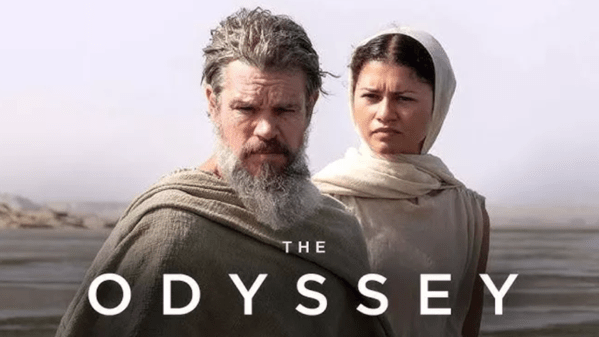
I find this move by movie maker Christopher Nolan to be quite fascinating. Prior to the opening of his next film, The Odyssey, Nolan is skipping the now usual round of screenings for social media influencers. In and of itself, it’s a great way to generate the same kind of annoying buzz that typically follows social media screenings. In the bigger picture, perhaps it’s the start of a healthier trend.

A Christopher Nolan film is going to generate its own momentum one way or the other these days, regardless of what critics and influencers say early on. So, you can argue that it’s a shrewd move for a movie that’s already generated quite a bit of social media furor over casting and other issues. That said, I hope this move starts a trend that has nothing to do with this particular movie.

Social media influencers, like critics, are by and large out for themselves, more than whatever they’re covering. They were born that way. Critics evolved into that mutation. What we used to call critics will say they are there for their readers, relying on that trope far too often. Social media influencers don’t even try to fall back on that concept as an excuse. It’s a hit and run business.

Those days when criticism on any level was an opinion to measure your own against are largely gone. The world wants others to form their opinions for them. Everyone’s just too busy. Taking the time to think on your own is too hard and time consuming. Heck, in that context, I wouldn’t be surprised if we don’t eventually see early takes on new films, books, theatre, etc… generated by Artificial Intelligence.

In my opinion, we’d all be better off forming our own opinions, but that’s not how the world works. I’ve often derided the Siskel and Ebertization of thumbs up, thumbs down movie criticism. The move to creating another substrate of quick hit takes via social media was both a logical and illogical extension of critics as personalities pleading for attention.

The equation is a simple one that falls back on the cliché that any mention, good or bad, is good for business as long as the name is spelled correctly. That’s still largely true, thus my opinion that this is a shrewd move on Nolan’s part as long as this game continues.  Since any level of criticism has become a sport, that cliché has opened the doors to rooms empty of thought, nuance, and dare I say, substance.

When criticism becomes a contact sport for attention it’s no longer criticism, no matter the form. 

That’s my critical opinion.

Thanks for reading. You can subscribe to this blog if you care to. You can also find more of my writings on a variety of topics on Medium at this link, including in the publications Ellemeno and Rome. I can also be found on social media under my name as above. This site does not use affilate links. 

Sunday Morning Reading

Searching for normal in abnormal places

Time for a little Sunday Morning Reading.  Sharing good writing is a normal thing to do. Maybe that’s abnormal. Don’t know. Don’t care. Defining normal is a tricky subjective thing. But then trying to define most things these days feels, well…almsot abnormal.

Justin simmonds BURcCv6RkBg unsplash.

Just be normal. Is that a “new normal” or last week’s “old normal?” Do we crave normality? Does it matter? Normally, I’d have more to say, but instead check out JA Westenberg’s Just Be Normal About Things.

Mathew Ingram takes on the subject of consciousness, one of the latest discussions bopping around the bits and bytes surrounding AI, with his piece, Is Atlantic Writer Ted Chiang Conscious? How Do We Know? If you ask me, that fact that this is being discussed calls whatever the idea of consciousness is into question. Doesn’t feel normal. For that matter doesn’t feel abnormal either. Just weird.

Mike Masnick states the obvious in CEOs Who Think AI Replaces Their Employees Are Just Bad CEOs. 

David Todd McCarty calls his piece The Slow News Moment. I like his description better. “How we became terrorized by the 24-hour news cycle and what we might do to combat the charade of exigency.” Perhaps less is more normal.

“We are being robbed by the worst people in the world,” says Kelly Hayes in The Heist State. Spot on, given that blatant thievery is the new normal these days.

Everywhere you look life is a scam. That is indeed far too normal. Neil Steinberg takes on one that targeted him and other writers in We Love Your Book! Now Give Us Money. Funny stuff.

Protect The Weird, Slow and Inefficient. Natasha MH thinks AI might one day become as invisible a tool to the process of writing as the typewriter did in its day. But look again. The tools don’t matter as much as the desire. 

(Image from Justin Simmonds on Unsplash.)

Thanks for reading. Feel free to subscribe if you want. It’s free. If you’re interested in just what the heck Sunday Morning Reading is all about you can read more about the origins of Sunday Morning Reading here. If you’d like more click on the Sunday Morning Reading link in the category column to check out what’s been shared on Sunday’s past. You can also find more of my writings on Medium at this link, including in the publications Ellemeno and Rome. This site does not use affilate links. 

Trump’s Name Finally Comes Off The Kennedy Center

May his named be erased from so much more.

Well, that happened. Finally. Trump’s desecrating name was finally removed from The John F. Kennedy Center for the Performing Arts after a judge ruled to make it so. 

Photo of worker removing Donald Trump's name from the Kennedy Center by AP photographer Cliff Owen

It took a while, thanks to some legal cry-babying from Trump’s legal bunglers trying to soothe his injured and fragile ego. The act didn’t quite meet the June 12th deadline, but eventually under the cover of darkness and behind a curtain, the name came down after the public, via live streams on the Internet, got lessons in erecting scaffolding. The photo above was captured by Cliff Owen of the Associated Press and so far is the only one I’ve seen with a worker’s hands removing one of the letters.

The Kennedy Center has told the judge that all references to name have been removed from the building, website, and printed materials.

Of course the pedophile-in-chief’s name should have never been put there in the first place. It was a perversion. The removal is a small victory. Even if largely symbolic in a wellspring of atrocities. There’s no telling how long it will take to rebuild the damage he’s done to the Kennedy Center as an institution and the rest of what he’s destroyed.

But it is a bright moment in all of the darkness and hopefully breeds more anger and anticipation for ripping to shreds any of the other atrocious marks this less than human, but very real human monstrosity has visited on all of us. 

The facade certainly looks better.

As Neil Steinberg of the Chicago Sun-Times reminds us:

I want to live long enough to dance in the street when that happens. Let there be bonfires to light the night skies.

Update: The photo above of the facade with Trump’s name removed is from pre-Trump days. Apparently the tarp that covered the removal is still there and may be for some time.

Thanks for reading. You can subscribe to this blog if you care to. You can also find more of my writings on a variety of topics on Medium at this link, including in the publications Ellemeno and Rome. I can also be found on social media under my name as above. This site does not use affilate links.

Spider-Noir: A Mini Review

Not great, but great fun.

The Chicago Cubs have decided to essentially quit acting like a professional baseball team. Chock-full of talent, yet seemingly unable to play the game. My wife is away on a theatre gig. (The show opened wonderfully last night.) So I decided I needed an entertaining distraction and queued up Oren Uziel and Steve Lightfoot’s Spider-Noir, now streaming on Prime Video. Bottom line, it is a stylish, entertaining distraction, and a treat for fans of the noir genre. 

Spider man noir series_t2mj.jpg.

I won’t call the eight-episode series great by any means, but the fun makes up for it. Taking yet another Marvel Comics hero from yet another alternate Marvel universe, Spider-Man Noir, and bringing him to the screen minus the “man” in the name, this version follows an aging private investigator, who is also a web-slinging superhero, through a depression era New York City in the 1930’s. Fighting with his past and the bad guys, it’s a bit of a romp that at times can’t decide what it wants to be, but in the end sticks the landing.

You get a choice of two ways to view the series. In what the filmmakers call Authentic Black and White or True-Hue Color. I recommend the black and white version. I checked out the True-Hue Color but that’s not for me. Your mileage may vary, but hey, the word “noir” is in the damn title, so follow the lead you’re given.

Nicholas Cage stars as the troubled leading superhero who isn’t sure he wants to be one. Down on his luck. Tough times. Hard bitten. (Literally.) He’s at times a bit over the top in that Nicholas Cage kind of way, but weirdly it works as the choices largely hold up, even as they often veer the show into comedy more than the hard-boiled wit I associate with the genre.

Brendan Glesson gives a boffo performance as the big bad in the show. Jack Huston and Andrew Lewis Caldwell as Flint Marko/Sandman and Dirk Leydon/Megawatt bring fun and serious menace to their characters trapped and wrapped in one of the show’s central mysteries. The rest of the cast fills their roles nicely and everyone enjoys chewing the scenery at one point or the other.

As to the production, the black and white version looks terrific. It’s full of all the shadows, cigarette smoke, femme fatales, crooked pols, gangsters, grit, lots of rain, period music, and all the clichés you expect from a noir detective mystery. The occasional nods to other noir classics are added treats.

The story gets more convoluted and drawn out than I think it needs to, but that’s the name of the game in streaming entertainment these days. Even so, in the end, it’s a cut above the rest, and filled the bill I was looking for. Indeed, a fun and entertaining distraction. 

Thanks for reading. You can subscribe to this blog if you care to. You can also find more of my writings on a variety of topics on Medium at this link, including in the publications Ellemeno and Rome. I can also be found on social media under my name as above. This site does not use affilate links.
Sunday Morning Reading

The art of dancing on the line that separates and defines humanity

It was a good week for reading good writing. It’s a better week for sharing what popped up. A variety of topics, spanning art and the making and selling of it, technology — which these days is more about the selling than the tech — the humanity, or lack thereof, behind it all, and…well to continue a list would sell it all short. Here’s hoping you enjoy the links shared in today’s Sunday Morning Reading as much as I enjoy sharing them. Yia Mas! 

An overhead, first-person perspective shows a person lying on their back on a teal couch, holding open a large book to read. The person's head is closest to the foreground, with long, blonde-streaked hair spilling downward. They are wearing a deep maroon, long-sleeved sweater and light grey sweatpants. Image from Matias north v8DSLoY80Xk unsplash.

Om Malik wrote one of the best things I’ve read in quite some time. We Are Living In Pinocchio’s World is about lying. It’s about AI. It’s about a pen. But it’s about so much more. 

Cory Doctorow’s Refining Humanity takes on our propensity for explanation, personhood for machines, and that line we seem to want to dance with defining just what makes us human in the midst of it all. 

Meanwhile Martyn Berlin of Martyn’s Random Musings finds himself an outcast in To Have A Moral Stance On AI Is To Be An Outcast, And It Sucks.

At what cost art? Natasha MH wonders and writes about it in Sold At A Premium. At what cost, anything?

Mike Masnick thinks it’s not about whether technology is inherently good or bad, liberating or oppressive. You could argue the same could be said about most aspects of human endeavor. But then that’s the point. Tech is just another in a long line. Check out Enshittification, Despotification, And The Open Internet. 

“The only conviction worth having is the kind you could lose tomorrow and survive it.” JA Westenberg warns us not to take a pill, regardless of color in Be Thou Not Pilled. 

Mathew Ingram wonders Have Investors In AI Companies Lost Their Minds? I’m not sure we can call them investors any more. As to their minds? No comment.

Two interesting takes on what’s going on the business of making movies in Hollywood that occasionally and almost accidentally is about making art. M.G. Siegler talks about how YouTube Beats AI To Disrupting Hollywood. Meanwhile Sonny Bunch takes a look at The Thoughtlessness of AI Filmmaking. 

Word came down this week that a restaurant was finally going to fill one of the retail spaces in the Trump Tower in Chicago, after they had all sat empty for seventeen years. Neil Steinberg asks Will Chicago Happily Eat Dolmades And Drink Roditis In Trump Tower?

To close, click through the popover on John Gruber’s post This Is A Dickover, and give the post a read. You know what a Dickover is. Now you have a name for it.

(Image from Matias North on Unsplash)

Thanks for reading. Feel free to subscribe if you want. It’s free. If you’re interested in just what the heck Sunday Morning Reading is all about you can read more about the origins of Sunday Morning Reading here. If you’d like more click on the Sunday Morning Reading link in the category column to check out what’s been shared on Sunday’s past. You can also find more of my writings on Medium at this link, including in the publications Ellemeno and Rome. This site does not use affilate links. 
The Kennedy Center Saga Continues

A glimpse of hope for the future

With so many things fundamentally broken during this second Trump administration there’s a momentary sigh of relief when it appears that something, anything might be put back together again. 


This week U.S.District Judge Christopher Cooper ruled that Trump’s appointed Kennedy Center board exceeded its authority when they decided to slap Trump’s name on the building and remake the building in his imagined image. Taking a look at any photo of the remade Oval Office and the plans for his ballroom, his gigantic arch, and the wrestling ring he’s built for his birthday beat down, which he somehow likens to the Eiffel Tower, is enough to make anyone with any semblance of taste in their mouth spit in disgust.

The ruling essentially says stop and take the offensive name off of the building. The Kennedy Center administration has already ordered employees to remove the sign and also strip all references from other signage, brochures, the website and to remove email signatures and letterhead by June 12th. The move is being hailed as a victory.

Cathartic and symbolic as removing the name may be, it can’t possibly make up for the damage done to the revered national center for the arts. It’s a start, and it certainly kindles hopes and dreams of doing the same to much of the defacing and defecating this one man wrecking crew has visited on Washington DC and the rest of the country. 

Take for example the story of the National Symphony Orchestra. After many acts and organizations cut ties with the Kennedy Center rather than being associated with the madness, Trump closed the Kennedy Center for a two-year period of renovations, leaving the NSO without a home. Ben Folds, previous artistic advisor, (previous only because he stepped down when Trump took over), has released a letter calling for an “outpouring of public support.” Saying without such a push the NSO may not survive. You can read the full letter at this Instagram link. That will be a hard task and I wish them success. 

I’ve said ever since Donald Trump came on the political scene that given the grifter and sexual predator’s previous life as a real estate developer we needed to understand that in order to construct something new a developer in his/her heart needed to also love demolishing something first. He’s certainly more than demonstrated a penchant for demolition and desecrating.

Here’s hoping one day we all get a chance to enjoying demolishing the things he’s touched in this horrible age. 

You can also find more of my writings on a variety of topics on Medium at this link, including in the publications Ellemeno and Rome. I can also be found on social media under my name as above. This site does not use affilate links.