Sunday Morning Reading

Lots to think about in this helter-skelter moment we’re living through.

Back at it after a couple of weeks of traveling and dealing with a case of pneumonia. (All is well.) Certainly there’s a lot going on and most of it is happening in a such a rush that I’m not sure anyone has enough space to accurately write or think about all that’s happening. But there is some good stuff to recommend.

Leading off this week are some articles from folks who are concerned, distressed, pissed off, and searching for tech solutions that don’t rely on America’s big tech oligarchies.

First up is I’m Tired of Pretending Tech is Making the World Better by Joan Westenberg. Follow that up with Joan’s article on How I’m Building a Trump-Proof Tech Stack Without Big Tech. Good suggestions there.

Matt Keil has also published a list of non-U.S. tech apps and services for those looking to move things offshore called Migrating Away from US Apps and Services.

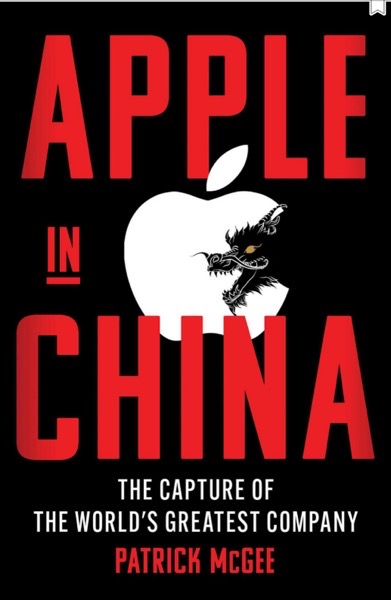
With all going that’s going on, Denny Henke at Beardy Star Stuff takes a look at Apple, big tech, lock-in and the corporate colonization of life experience.

If you’re one of those searching for different tech solutions, remember no matter how long a service may have been around or how big the company behind it is, it’s all impermanent. As an example, Om Malik takes a look at Microsoft ending the run of Skype this week in Skype Is Dead. What Happened? It might take awhile, but everything eventually dies.

Moving off of the tech beat, this story by Joshua St. Clair is tough emotional read, but well worth your time. The title tells you what you’re in for: What Do You Do After You Accidentally Kill A Child?

There’s lots of rethinking of lots of things these days. David Todd McCarty is Rethinking Pride.

Adam Serwer asks the question most are asking when it comes to the words behind the ugly acronym, MAGA: Just when was America great, exactly, and for whom? Check out The Great Resegregation.

We’ve yet to feel any real impact on the economy given all of what’s happening. At some point we will. Umair at the issue takes a look at what happens if capital flight occurs in How an America the World Can’t Trust Goes from Collapse to Implosion.

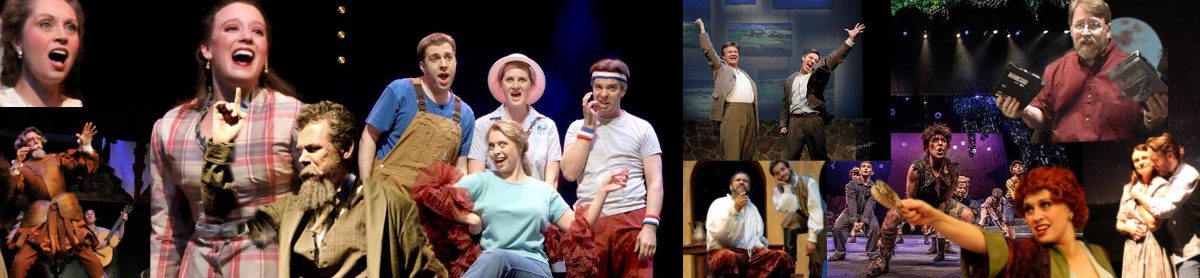
Tonight is Hollywood’s big night with the Oscars. In an article from 2013, Seth Abramovitch takes us on a look inside a moment when an Oscar opening number went horribly wrong in “I Was Rob Lowe’s Snow White”: The Untold Story Of A Nightmare Opening. Show biz is hard.

And to close things out, NatashaMH takes a look at simple acts of kindness in Of Munchkins and Manners. Do be kind.

If you’re interested in just what the heck Sunday Morning Reading is all about you can read more about the origins of Sunday Morning Reading here.  You can also find more of my writings on Medium at this link, including in the publications Ellemeno and Rome.

(image from Roman Kraft on Unsplash.)

September 5 Is More Than Worth A Watch

A fresh look at a moment that changed the world.

The events of the 1972 Munich Olympics hostage crisis changed the world in so many ways, ushering in the age of terrorism foremost among them. But behind the scenes of the terror and the politics were the sports television broadcasters who found themselves in the middle of an unexpected crisis and they were totally unprepared for. The movie September 5 tells that side of the story and tells it well.

MV5BOWUxY2YyYzctYWY3Yi00ZGJjLTkzMDktZjYzMTIzZjNhNmM2XkEyXkFqcGc@. V1 FMjpg UX1000 .

Two things stand out beyond the excellent acting and well crafted script that make the film worth a watch. Director Tim Fehlbaum does a great job of capturing the chaos and the tension in the ABC control room and its environs as his cast hustles and bustles from moment to moment and emotion to emotion. Fehlbaum also skillfully weaves historical ABC footage of the coverage into the action he’s filming in his current day mise-en-scene. That choice alone was an excellent one and sets the filmmaking apart.

The film is also a terrific nostalgic view on what seems like the now ancient technology that television broadcasts used in that era. Watching how logos and titles are created to superimpose over images is quite a treat.

Certainly audiences of my generation will be familiar with how big a moment this was, but I’m sure there are younger generations experiencing the story for the first time. They couldn’t have a better primer than this film.

The end of the tragedy is well known, but the telling of it in this newsroom procedural gives it an entirely new life as we see producers and directors making choices in the moment, realizing how their actions are breaking new ground, potentially fraught with peril, and how their audiences will witness the event they are covering and what it means going forward.

September 5 is currently streaming on Paramount+ and available via video on demand from most services.

You can watch the trailer below.

 You can find more of my writings on a variety of topics on Medium at this link, including in the publications Ellemeno and Rome. I can also be found on social media under my name as above. 
Tuesday Morning Reading: Collaboration

Collaboration colloquies

No, I’m not starting a Tuesday edition of Sunday Morning Reading. But it is a Tuesday morning, and I want to link to two pieces about collaboration that are very much worth your time given there’s a race to see who can collaborate more quickly with the current regime of evil in the U.S. Shutterstock 583369387. First up, John Gruber in Daring Fireball takes on the broad gulf in the Gulf of Mexico (America) debate in a well reasoned, often too nuanced post entitled Golfo del Gringo Loco. Follow that up with Essay: Home Of the Brave? Really? by Anand Giridharadas. Anand sets aside nuance and hits hard on collaboration and collaborating and his points are more than well made. So are Gruber’s. The opposite of collaboration is resistance. At some point that becomes self defense. When you start hearing those words, we’re not just sailing into trouble, we’re deep in the maelstrom. I expect we’ll hear them sooner rather than later. Give an inch, they’ll take everything. Illustration above by Mike_Kiev on Shutterstock. If you’re interested in just what the heck Sunday Morning Reading is all about you can read more about the origins of Sunday Morning Reading here.  You can also find more of my writings on Medium at this link, including in the publications Ellemeno and Rome.

A Wonderful Trip Down Memory Lane With SNL50 Special

A terrific funny walk through comedy history.

I’ve blown hot and cold with Saturday Night Live through the decades. That said, watching the SNL 50th Anniversary Special was a wonderful nostalgic trip down several memory lanes. How to Stream the SNL 50th Anniversary Special Online for Free MAIN. Like the series itself the evening had its ups, its downs, and its moments of mediocrity, but taken as a whole it was a keystone event chronicling a key cultural touchstone in entertainment history that’s been in and out of my life since the year after I graduated high school. I remember the first time I saw the show, well into its first season, and remarking in a bit of awe that they can’t do that on TV. Well, they did. And I’m glad they did. Like I said, I’ve blown hot and cold through the years, but having been around show biz for the majority of my life I know there are more misfires than there are direct hits. Even so, you certainly can’t deny the cultural impact the show has had and that’s a credit to both longevity and the willingness to fail and flail. While I’m sure some of the sketches from the special will be criticized for not landing, the fact that some did and some didn’t seems like the perfect celebration of walking that fine line. The good news for those who might not have tuned into the broadcast is that you don’t have to wait around for highlights to appear on YouTube as the entire special (over 3.5 hours) is available for streaming. You can find more of my writings on a variety of topics on Medium at this link, including in the publications Ellemeno and Rome. I can also be found on social media under my name as above. 
Ubu and The Truth Commission

An often reviled 1888 play always returns to remind and haunt us when history recycles bad guys.

Alfred Jarry’s 1888 play Ubu Roi never goes out of style. It may disappear from the spotlight but always returns when ostentatious, overbearing, overeager and slobbish rulers ascend to power and use it injudiciously to cause harm and destruction. The message, like these monomaniacal megalomaniacs, recycles again proving there really isn’t much new under the sun. 

Ubu 3 800x600.

Every now and then new productions or adaptations Jarry’s work hit stages to remind us and often revolt us. The original production of Ubu Roi, and many others since, have been reviled as offensive as the grotesque behaviors and characters the story reveals. At its core, Ubu Roi is a sort of parody of Macbeth with a little Hamlet tossed in along the way. To give you an idea, the title of the play is occasionally translated as King Turd

In 2016 The Handspring Puppet Company presented their multi-media version Ubu and The Truth Commission, featuring live actors, puppetry, documentary footage, music and animation. It’s worthwhile viewing anytime, but in our current moment it’s a necessary kick in the teeth. You can see the entire thing (about an hour and a half) on YouTube at the link in the featured video below.

 Handspring makes the story, like all of their work, entirely their own and it’s not only quite a treat, but given that this production happened in 2016, seems eerily and entirely prescient for the moment we’re living in. 

You can find more of my writings on a variety of topics on Medium at this link, including in the publications Ellemeno and Rome. I can also be found on social media under my name as above. 

Vietnam: The War That Changed America. A Review of Then and Now

Looking back to look forward.

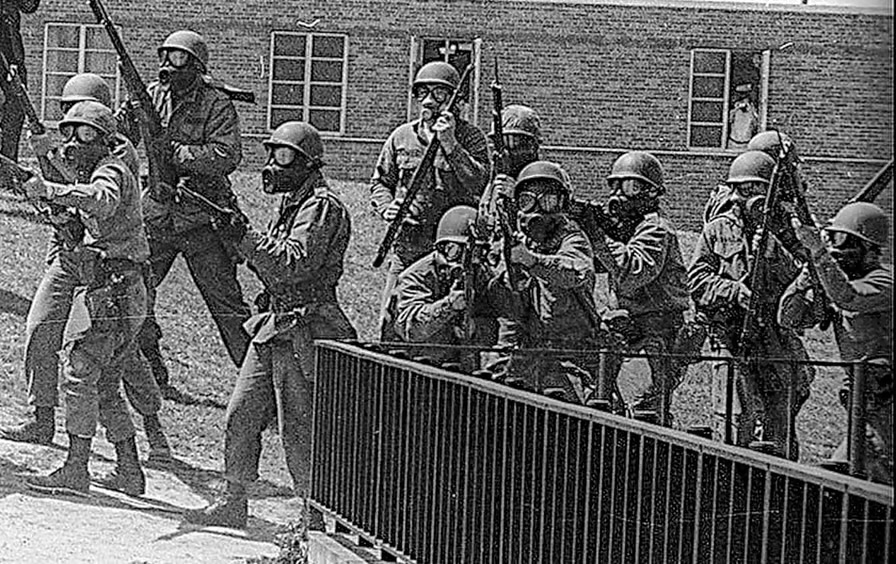
The recently released Apple TV+ documentary Vietnam: The War That Changed America left me with a lot of mixed emotions. Not about the documentary itself. It’s well done and deserves attention. Both as a reflection of our past history and also how it projects forward into our present moment. Apple TV Vietnam The War That Changed America key art graphic header 4 1 show home.jpg.og. The documentary itself is excellent work. The six episodes splice together historical footage-some already famous, some new-with interviews from those who were actually there, on all sides of the conflict. We’ve seen similar story telling techniques in other historical documentaries. This time around we get to hear not just from Americans, but also from North Vietnamese and Viet Cong voices. These moments are certainly compelling, as are some of the stories of the journalists and other non-combatants involved. Add to that what I’ll call the reunion factor. Each episode features a couple of individuals who served together to tell their stories, often with completely different views on the war and its aims. In the episode’s conclusion they are then reunited. It’s effective and at times emotional and effectively reveals the folly and tragedy of division. As good as the series is at chronicling an inflection point in American and world history, what got me thinking was again witnessing scenes of anti-war protests. While I’ve seen many such scenes before, watching them through the prism of this contemporary moment of peril we’re trying to find our way through in the U.S left me curious and unsettled. There’s no doubt that those anti-war protests had an impact on America culturally and politically. That tumultuous era created new alliances and divisions over root causes that we are still fighting over today. But as I watch those surging crowds of protesters, knowing how history often repeats and/or rhymes, I remind myself that was a different age. One without the organizing tools like social media and mobile communications that we have at our disposal now. As I and many others anguish over the lack of leadership defying what is happening currently in Washington DC, I’m left wondering, given the tools we have at our disposal today, what it will take to effectively take advantage of those tools and galvanize, as was done then, to meet the challenges of today. Certainly the forces we’re now in contest with have bought and pillaged some of those services and learned how to use them more effectively than those in the reluctant opposition. Perhaps we lost this round when most of us left Twitter to avoid the cesspool of Elon Musk’s making, instead of sticking around and forcing them to toss us off. It took time in that era for anti-government pressure to come together and coalesce with enough momentum to bring change. And yes, it also took events like the murders of student protestors at Kent State, Martin Luther King, and Bobby Kennedy, not to mention the too many casualties of war. Let’s hope we don’t need the time, or that type of violence, for leaders to emerge and spark enough outrage to bring a stop to the evil we now face. I’m not talking about leaders emerging from conventional political party structures. I’m talking about from the ground up. The tools are there. It should be easier to organize and get the word out with less effort than it was during the age of the War in Vietnam. Here’s also hoping we have the courage, conviction, and most importantly the desire to do what is necessary when the time comes. Because it’s coming. You can find more of my writings on a variety of topics on Medium at this link, including in the publications Ellemeno and Rome. I can also be found on social media under my name as above. 

Sunday Morning Reading

Bogus science, finance, politics, and tech dominate this Groundhog Day edition of Sunday Morning Reading.

Here we go again. If it feels like Groundhog Day that’s because it is. Happens every year, but the things going on in this country feel very similar to, yet even more dangerous, than they did eight years ago. It’s a movie we don’t want to revisit, but are living through. Live through it we must. Enjoy today’s Sunday Morning Reading while we try to avoid repeating the same mistakes, or at least dodging them. With trade wars now needlessly underway most of the big news ahead this week will be in the financial markets. John Lanchester has an excellent piece with excellent context about finance and what he calls “its grotesquely outsize role in the way we live now” in For Every Winner A Loser. Meanwhile as the world focuses on trade wars, Elon Musk and who knows who else is rampaging through the federal government in ways that sound more than illegal. Josh Marshall asks Who Can Stop Elon’s ‘Team’ Wilding Its Way Through The Federal Government? I don’t often link to Wall Street Journal pieces in this column unless they are about tech related topics. This one by The Editorial Board is worth a read and definitely worth the headline: The Dumbest Trade War In History. Seems like Murdoch and his scribes got what they wished for. Again. On the tech front, running parallel to our political misfortunes is a river of thought on Artificial Intelligence, most of it negative these days, but also thoughtful. Alex Kirshner interviews Ed Zitron and came away with One Of Big Tech’s Angriest Critics Explains The Problem.  Audrey Watters tackles the issue and says “In this AI future, there is no accountability. There is no privacy. There is no public education. There is no democracy. AI is the antithesis of all of this.” I fear she’s correct. Check out AI Foreclosure for her piece, but also the excellent collection of links on the subject she provides. Whether it’s the science of tech or the science of finance, there’s science. We ignore it at our peril. But what happens if some of the science is bogus? Frederick Joelving, Cyril Labbé, and Guillaume Cabanac tell us that Bogus Research Is Undermining Good Science, Slowing Lifesaving Research. In this day and age going viral is the equivalent of getting that infamous 15 minutes of fame. Both are fleeting. Joan Westenberg says Trust Me. You Don’t Want To Go Viral. NatashaMH writes about a woman finding meaning in memoirs in Drowning In Sobriety. And, as we enter Black History Month in the U.S., check out Deborah W. Parker’s piece on Belle da Costa Greene in The Black Librarian Who Rewrote The Rules Of Power, Gender and Passing As White. If you’re interested in just what the heck Sunday Morning Reading is all about you can read more about the origins of Sunday Morning Reading here.  You can also find more of my writings on Medium at this link, including in the publications Ellemeno and Rome. You can also find me on social networks under my own name.

The Brutalist: A Review

Brutal filmmaking and story telling in a monumental achievement.

I’ve never been a fan of Brutalist architecture. I get the theory. I understand the aesthetics and the reaction against ornamentation that led to it. I just find it too brutal for my tastes. That said, I am a fan of the new film The Brutalist produced and directed by Brady Corbet and starring Adrien Brody. It is a brutally ambitious piece of filmmaking and story telling. Thebrutalist poster 1. I’m finding myself attracted to very complex and complicated films and streaming series these days, even if they are flawed. That is certainly opposite of the minimalist and often stark aesthetic of Brutalist architecture where everything must have its functional point. Make no mistake, The Brutalist is functionally a complex and complicated film that I’m sure some will find a brutal time watching. And that’s not just because the run time is three hours and thirty-five minutes with a fifteen minute intermission. I’m sure that length will scare some off. It certainly made me think long and hard about waiting to see it at home, instead of seeing it in the theatre. As an older guy with a bladder that prefers having a pause button nearby I decided to take the risk. I’m glad I did. During that intermission the conversation in the men’s lavatory was all about how thankful everyone was for the pause. Talk about a sharing a communal experience the way art is supposed to do. Let’s just say I’m glad there was an intermission and I can think of a number of recent longer films that would have been well served to have added one. But the intermission speaks not just to relief, but ironically it speaks back to a grander, perhaps more audacious age of cinema, when movies had things like overtures and intermissions, and were shown in ornately decorated movie palaces, instead of gray boxes stuffed next to other gray boxes. It certainly adds weight and import to the epic scale of this ambitious movie about ambitious aims. At its core The Brutalist is an immigrant story. A Jewish immigrant story in America after the horrors of World War II. It feels all the more resonant in this time and place. Watching the protagonist survive, struggle, and try to succeed might, in and of itself, feel like a typical American Dream story, but it plumbs the depth of American nightmare moments as well. We’ve seen these epic immigrant stories before. We’ve also seen the epic stories of artists struggling against all odds, shedding and hurting those who love them as they pursue their passion, while suppressing and harming parts of themselves to serve at the pleasure of rich philistines who use and abuse them as extensions of their own outsized egos. This epic story works on all of those levels, but it works because of the art of the filmmaking, more specifically the men behind the cameras. Corbet may be telling the tale of a Brutalist architect pushing for his dream, but there is nothing minimalistic or spare about how he and his cinematographer and composer uses cameras and sound to tell it. The cinematographer Lol Crawley and his camera is everywhere and anywhere, often in odd places from odder angles,  especially in the first half, using visuals that disorient as much as they reveal. The sound design and the music by Daniel Blumberg in collaboration with the director is equally surprising, and at times wonderfully disconcerting and deliciously uncomfortable. Corbet sets us up for this by shattering expectations with the overture and the credits. Instead of credits scrolling vertically, or fading in, or overlayed on the action, they scroll horizontally from right to left. It feels wrong to western eyes and is matched by the camera work in the opening section. Literally bouncing in and out of point of view, light and dark, the cameras follow the characters stumbling from the bowels to the deck of their ship, finally landing upright on Ellis Island. We are thrown into the chaos of the scramble with as much desperate anticipation and confusion as the characters. If you’re not uncomfortably ready for something different after these first few minutes then you are not ready to surrender to what the rest of this film has to offer. The story is divided into two parts by that intermission and unfolds with many such surprises. Part I is cinematically more intriguing than Part 2, which lags at times. There the camera and editing slow down to capture longer, quieter, yet equally intense moments and that makes sense. That’s never more apparent than the scene when a husband comforts his wife’s physical pain, knowing his solution is as wrong as it will be relieving and welcome. It’s an injection of pure agony, painfully, yet beautifully acted, filmed, and scored. But that’s a setup for when the pace picks back up to its Part 1 tempos, propelling us to the conclusion. It’s almost too much of a shock, and that’s the intent. We’re finally delivered to an epilogue, which to me feels unnecessary and almost tacked on even as it completes the epic arc of the story. But it does allow you to sober up a bit before leaving the theatre. Overall the cast is generally quite good with Brody standing out as the architect László Tóth. You can almost breathe his pain its so present. Felicity Jones almost matches him once she enters the story in Part 2, only failing when the script fails her. But when she’s the focus, she captivates. Guy Pearce, who I generally don’t like, does the best work I’ve seen from him, and often threatens to take the story away as the central antagonist. All in all the story isn’t unfamiliar, but it’s told with a rawness and complexity that propels us and it forward into something larger than itself, even larger than the ambitions of its characters and those of it’s storyteller.  It won’t be a film for everybody, but it is more monumental than anything I’ve seen in a while. You can find more of my writings on a variety of topics on Medium at this link, including in the publications Ellemeno and Rome. I can also be found on social media under my name as above. 

This Is A Must See: QuestLove’s Video Tease of 50 Years of SNL Music

One helluva a teaser for the retrospective of 50 years of SNL music.

Hands down. Stand up. Let your head spin. This Questlove video mix of 50 Years of SNL Music is a must watch for fans, non-fans, or anyone who has a heartbeat. 

 The clip above teases the upcoming Ladies & Gentlemen…50 Years of S.N.L Music airing on January 27th. If you’re not teased I don’t know what else could do that for you. As if the memories of the performances in this tease aren’t enough, the editing is something to be in awe of.

Just sit back. Watch it. I’ve archived it everywhere I could. You should too. I’m looking forward to the full show. How could you not be?

Then New York Times has a write up on the piece and interview with Ahmir Light (Questlove) by Alan Light you might also want to check out. 

FYI: You may have to find the video on YouTube. The Watch on YouTube link above appears to work sometimes and others note.

You can find more of my writings on a variety of topics on Medium at this link, including in the publications Ellemeno and Rome. I can also be found on social media under my name as above. 

Apple’s 2025 Black Unity Collection Announced Amidst An Age Of Disunity

Timing is everything in this political circus Apple fans find themselves in.

What a planet we’ve landed on. It’s certainly a different one than a few months ago. Or is it? Apple Watch Black Unity Collection hero_big.jpg.large_2x. Today Apple announced its 2025 Black Unity collection including a new Apple Watch Band and watch face in addition to wallpapers to honor Black History Month. This has become an annual Apple tradition since 2021, and is typically met with some, but not large, fanfare given that it can be classified as an appeal to a specific segment of the market. That said, it has historically been one of Apple’s signature signals about where it’s cultural (some say woke) heart lies. But that landscape has changed a bit with the election of the new oligarchic, nakedly racist regime in the United States, and with Tim Cook’s decision to donate $1 million dollars to the inauguration and attend that knee bending ceremony. Cook’s decisions will cast shadows on any Apple announcements going forward, certainly those that historically Apple has painted as a part of its civic and human consciousness. Many Apple fans, I count myself among them, are asking tough questions of themselves and Apple. The questions are tough, everyone is touchy, and feelings are raw. As an example, The MacRumors article announcing Apple’s announcement this morning illustrates just how touchy an issue is. Take a look at the footnote to their article below. CleanShot 2025-01-27 at 08.19.33@2x.I’m not judging anyone for what had to be a tough editorial decision, but the decision to move the discussion thread to the Political News section of the MacRumors forum speaks to the moment. Timing is everything in life, with or without punch lines. Black History Month  is always in February and for those counting the bruises on Apple, unfortunately February follows an ugly inauguration month. In order for there to be a punch line though, you first need to have a joke, and sadly, we’re not in joking territory as we muddle our way through this. You can find more of my writings on a variety of topics on Medium at this link, including in the publications Ellemeno and Rome. I can also be found on social media under my name as above.