Sunday Morning Reading

Big stuff is happening.

Something big is happening. Everywhere all at once. At a pace that seems like it’s uncontrollable. We can either try to keep up, or tune out. Those are the options. I choose to try and keep up, try and stay aware. Mostly just try. That’s one of the reason this Sunday Morning Reading column exists. To share some of the writing about some of things that I think keep me aware. Hope you agree.

Person in a bright yellow hoodie and jeans sits on a floor covered with newspaper pages, holding an open newspaper in front of their face so it hides their identity, with a wall of newspapers behind them. Photo by Egor vikhrev IFdQ6ea7r0s unsplash.

I took the first sentence of the above paragraph from the excellent post from Matt Shumer. Yes, it’s called Something Big Is Happening. Because there are so many big things happening. As a spoiler, Matt’s post addresses Artificial Intelligence. Pay attention.

“Art begins when the words stop.” That’s a quote from the excellent Every Brushstroke Is A Philosophy In Motion by Natasha MH. It’s the text of a Valentine’s Day speech of hers. Read these first two pieces back to back. Connect the dots. Pay attention.

A Great Social Rewilding Is Coming. So says, David Todd McCarty. So say I as well.

Wonderful actor Bob Odenkirk tells us what his agenda will be in I Will Be Your Next President. He nails the moment. If he ran I’m sure he’d get votes. Probably mine. Can’t be much worse than what we’ve recently seen.

Mike Elgan writes Why There’s No ‘Screenless’ Revolution. I happen to agree that there won’t be one. Anyone still watching 3D TV?

Curtis McHale takes on Binary Bias, Cancel Culture, and the Death of Nuance. Sadly, it wasn’t a quick or a painless death.

There’s no question that journalism is in as big a mess as most everything else. David Brooks Sucks. This Is Who Should Replace Him by John Warner lays out the case for the first sentence. But read it for the links to those who he thinks should replace him.

The surveillance state is going to the dogs thanks to a Super Bowl ad. Mathew Ingram tells us about Building the Panopticon: The Doorbell Camera Version.

It’s been quite a cold winter, though it’s warming up a bit in these midwestern parts, but apparently this cold weather across most of the U.S. led to increased demand for firewood and just about anything that will burn. Neil Vigdor writes about it Shivering Americans Snap Up Firewood As Winter Grinds On.

And since this is Valentine’s Day weekend, I’ll close the circle with Catherynne M. Valente’s piece, On Valentine’s Day. There are indeed worse things to feast over.

(Photo  by Egor Vikhrev on Unsplash)

f you’re interested in just what the heck Sunday Morning Reading is all about you can read more about the origins of Sunday Morning Reading here. If you’d like more click on the Sunday Morning Reading link in the category column to check out what’s been shared on Sunday’s past. You can also find more of my writings on Medium at this link, including in the publications Ellemeno and Rome.

Meta’s Not So Smart Approach To Smart Glasses With Facial Recognition

Leave the timing to comedians

If you’re a comedian, timing is everything. But not so much if you’re SOBs who don’t give a damn about anything other than feathering your own nest at the expense of everyone else’s safety and privacy. Or if you have employees who leak memos to the press.

Alireza heidarpour FiafJwLQfR4 unsplash.

The New York Times has a report on Meta’s second attempt at launching facial recognition, this time with smart glasses. The idea is sketchy enough, but according to a memo that the NYT obtained Meta thinks our political and social turmoil might just provide the right timing. Here’s the money quote:

We will launch during a dynamic political environment where many civil society groups that we would expect to attack us would have their resources focused on other concerns

I’m not so sure civil society groups will take their eye off of the ball now, no matter how much Meta helps the administration continue to stir things up.

There are already reports of people using smart glasses photography for what sounds very much like the reason Mark Zuckerberg created Facebook as Facemash in the first place as a  “hot or not” game. It doesn’t take any leap of imagination to know what kind of mischief this will cause once facial recognition is added into the mix.

The Electronic Frontier Foundation says, There are Seven Billion Reasons For Facebook To Abandon Its Face Recognition. 

But as we continue to see, but never learn, some prepubescent boys with toys will never grow up, always remaining prebubescent boys, even if they accumulate wealth enough to do better things.

There might be money in smart glasses, but if you ask me there might be more money in creating some sort of gadget that we can all carry or wear that blurs our faces and interferes with this kind of photography.

(Photo by Alireza heidarpour on Unsplash

You can also find more of my writings on a variety of topics on Medium at this link, including in the publications Ellemeno and Rome. I can also be found on social media under my name as above.


More Thoughts On iOS 26’s iPhone App Changes

Still very much a work in progress

Back last fall I wrote about the changes Apple made to the iPhone’s Phone app in iOS 26. I thought they were both helpful and confusing. I followed that up a month or so later suggesting that smartphone makers needed to make delete and report spam buttons more of a priority.

New Shareshot.

I still maintain the points I made in both of those posts, but here are some more thoughts after having used the Phone app since.

Regarding the Hold Assist Detection feature what I said earlier very much still applies.

It makes me think that the designers of this feature have never used the Phone app to call a pharmacy or a doctor’s office where the person answering the phone is so busy that when they answer they speak so fast that you can’t understand what they’re saying. In my experiences attempting to use this feature in cases like those, the person on the other end just hangs up and I have to make the call again.

Recently I spoke with a receptionist at one of my medical providers about this feature and her response I sums that up well from the other end of the line. Simply put she said, “I have no time for such nonsense.”

She said essentially the same thing about the Screen Unknown Callers feature that allows the call recipient to see who is calling or leaving a voicemail. As I previously mentioned I have the Ask Reason for Calling option selected. Early on there were a few callers that actually left a voicemail, but that seems to have diminished over time. My speculation is that those doing the calling have caught on and just continue down their call lists. With this same medical provider I missed several calls because she was using a different number assigned by their phone system than I had placed in my contacts and the call logged as Unknown.

As to making spam reporting a more prominent UI feature not buried under a series of menus and taps, if Apple (and others) were really serious about making life easier for their users they’d add a Delete and/or a Delete and Report Spam option to the notification of a call. I mentioned in that earlier post that this Call Filtering feature would probably lead to a whack-a-mole game with spam callers. Based on the increasing frequency of spam calls I’m receiving I think the spammers are currently on a trajectory to win that game.

I still don’t know why all phone calls I receive, welcome or unwelcome, are listed as a Priority Notification. Since last autumn I’ve changed my lazy habits with contacts and been diligent about providing good contact metadata for doctors and others I do business or social interactions with. At that point that appeared to be the best way to try and take advantage of the newer features. But honestly I don’t think it matters much at this point based on what I’m seeing.

I support several elderly relatives who use their iPhones for basic needs, communication being the primary one. Having had a chance over the holidays to physically examine their devices, I noticed little usage of the delete function in the Unknown Call Callers section of the Missed Calls list. There were long lists of unknown callers. I imagine at some point we’ll see articles on how to clean up those lists.

In summary, I’d say the new Phone app features are still helpful and still confusing. Like everything else with Apple these days they should be categorized as a work in progress.  Here’s hoping we won’t be on hold too long before we see progress happen.

You can also find more of my writings on a variety of topics on Medium at this link, including in the publications Ellemeno and Rome. I can also be found on social media under my name as above.


The Power Users Have With Subscriptions

Unsubscribing is a vote

I was not a fan of app subscriptions initially. I long ago rethought my position. I continue to think it’s the best option for users. That belief is becoming more entrenched now that we’re entering into whatever the future will be with Artificial Intelligence and it takes constant cash to continue to burn the planet.

Apple Creator Studio hero_571x321.jpg.large.

Whether it’s this week’s flavor of AI chatbots, Apple’s new Creator Studio, or any other new app or service, most now require a subscription to take advantage of new features as they roll out. In most cases the offer is pay $XX a month or $XX a year, with the yearly price being discounted by the cost of a month or more. Even so, we’re already seeing premium subscriptions that add on costs for more features and I think that trend will only accelerate. Welcome to the land of upsell.

Although much less than I used to, I will subscribe to a new app or service that attracts my interest for a month to check it out. I’ll set a reminder a few days before the end of the month and then take a little inventory to see if it’s worth continuing. If not, I’ll unsubscribe.

If the app or service is truly worth my while I may subscribe for the yearly price after determining it’s something I value, but that’s becoming rarer. Frankly, there just aren’t many new apps and services that seem worth even a monthly try out these days, much less paying for a yearly subscription. There have been a few apps that, although they didn’t really fit my needs, I have paid for a yearly subscription to support the developer. But that’s even rarer.

In those cases with apps, newsletters and other services, I think of those more as tips or a donation than I do entering into an ongoing relationship. I’ve even subscribed on occasion and immediately canceled with just that thought in mind. I’m all for supporting good work by good people. I admit it’s a bit unfair to a good app that doesn’t fit my needs, but it’s still a signal that I think is worth sending.

Here’s the key. Large companies (Apple, Microsoft, Google, etc…) and independent developers, writers, etc, notice when the turnstile rotates in reverse because someone unsubscribes. It’s a metric they pay attention to. They count on inertia and waning attention spans. You might think they don’t notice, but they do. As a user I look at unsubscribing as my vote up or down. Again, maybe unfair, but as I said, it’s a signal worth sending.

With the recent release of Apple’s Creator Studio suite of apps I found it remarkable that much of the commentary included mentions that users could try things out and turn off the subscription payments if they didn’t find things suitable for their purposes. Or, if they needed one of the apps for a short project that they could check in and out of the bundle for the duration of the project. I highly recommend that kind of thinking.

For what it’s worth I chose not to subscribe and try out the new Creator Studio. I thought about it, but have long since discovered other tools that fit what I might need from those apps.

In this hyper political age, we talk a lot about voting. That’s always a choice. Using the choice to subscribe and unsubscribe from apps and services can be one as well.

You can also find more of my writings on a variety of topics on Medium at this link, including in the publications Ellemeno and Rome. I can also be found on social media under my name as above.


Matt Gemmell on “The Fallen Apple”

Dissatisfaction with the familiar breeds contempt

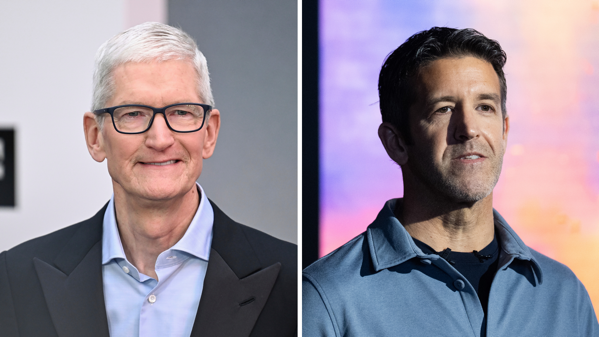
Matt Gemmell begins with an understatement. “It’s a troubling time to be a long-term Apple customer.” It doesn’t get any easier to read after that. Nor should it.

Shutterstock 1478322374.

Like many Apple users these days, including myself, Matt is expressing his dissatisfaction with Tim Cook’s Apple. Misery loves company. So does commiseration.  The Fallen Apple is a powerful read, and I suggest you do so.

Yes, he points to Cook’s knee-bending and kowtowing that betrays much of the carefully cultivated culture Apple spent untold sums creating over the years, now tossed aside like a decaying FineWoven iPhone case. Perhaps with a sparing nod to rationality Gemmell calls it an act of “corporate sacrifice.”

But this paragraph is particularly damning:

I sometimes think about the full-page, black-background Steve Jobs memorial on the Apple site, with the list of tributes you could send submissions for. Then I try to imagine the same thing for Cook, and I find that it only cheapens the original. The Tim Cook of the Trump era is the erasure of a man who previously could do little wrong, but I think that ultimately it has also laid bare a person whose goals and even motives are as far from Apple’s erstwhile values as it’s possible to be. While Jobs gets to be remembered with artful aphorisms and elaborate hagiographies, surely Cook’s epitaph must be something along the lines of “another record quarter”.

Corporate rationality, like it or leave it, is often as distasteful as it is easy to comprehend. But in my view it requires the wrong kind of different thinking when you’ve built a company on creating an emotional connection with your users.

One thing leads to another. Gemmell points not just to the cultural upheaval and downward spiral, but also to a future that appears uncertain. As he puts it, “More perniciously, Apple is also hemorrhaging people and knowledge.” It makes one wonder if Apple University is still in existence.  If so, what exactly are they teaching these days?

But, and to the larger point, he correctly states Apple isn’t hemorrhaging profit.

I hope very much to be wrong, but I fear that Apple’s skyrocketing revenue masks a steep institutional decline that is already well underway, propelled by the fact that success itself, improperly managed, is a poison.

It must be something for folks like Cook, Trump, Musk, etc… to sit atop such vast piles of money, knowing how much dislike and distaste they engender and how it undermines the thrones they cling to. Apples ripen and fall. Unless they are harvested. Either way, there’s an end.

Read the rest here.

(image from Johann Lensless on Shutterstock

You can also find more of my writings on a variety of topics on Medium at this link, including in the publications Ellemeno and Rome. I can also be found on social media under my name as above.


Promises, Promises

Harold Hill never had such easy marks

Years ago when I ran professional theatres my principal responsibility was picking a season of plays and/or musicals, then pulling things together to actually produce that season. Planning was based on quite a few variables and data, but you never knew how things were actually going to play out in the end. Show business can be cruel.

The Music ManThere were always surprises. Some good and some bad. Some shows would become surprise runaway hits, others that seemed like sure things would flop. Lose a weekend due to a snowstorm and the bottom line got hit hard.

Of course the choice of plays was always the key variable. I remember sitting in a particularly contentious board of directors meeting as we were nearing a season announcement and a board member was pushing back hard on our revenue and expense projections for what we had planned. He pounded the table and asked, “How can you know what will sell tickets a year from now?” I told him I could project, but I couldn’t know and that I always went into each season saying that if we succeeded as much as .300 hitters in baseball we’d be superstars.

Well, we weren’t baseball players, but we still usually came out ahead of the game with more hits some seasons than others. We held our own. The not-for-profit theatre version of the game I was playing relied on picking and announcing a season a year or so in advance. You’d promote and sell that season to subscribers to accumulate cash and support up front, and then once you were in the season proper you’d push hard for single ticket sales and then after they got a taste, try to convert them into subscribers, then donors.

It was always risky, just like many business propositions. I remember asking that same board member if his business would be comfortable announcing his plans and projecting sales a year in advance knowing all of the risks. It was a rhetorical question on my part because I knew his business couldn’t operate that way. Most can’t.

The entire thing was based initially on a promise, and each new season announcement was a new promise. Each time you delivered a promised season the theatre built or kept trust with that subscriber base. That loyal base would resubscribe based on that trust. Those customers knew there may be a play or two in the season they didn’t care for, but they came back season after season based on the quality of what we offered, and also that we delivered on what we initially sold and promoted.

As an artistic director (CEO) I was the one who was responsible for that trust and never took that responsibility lightly. Yes, there were times we had to change our plans, but the trust engendered along the way helped weather those moments as long as we were honest with our customers and donors.

The above is a long wind up to something I’ve been thinking about lately and spurred by an article I saw on Elon Musk’s latest promises about delivering robots “next year.”

No one thinks that’s real. For the life of me, I doubt he does. Given how many “promises” this guy has made and broken I don’t understand how reasonably intelligent (I assume they are reasonably intelligent) reporters and investors don’t just burst out laughing when the next one self-drives out of the empty garage that is his mouth. But then again, everyone is in on the con.

Musk isn’t alone these days when it comes to talking out of more orifices than human anatomy provides. Our politicians do it. Relentlessly. As do Tech and other corporate CEOs. The politicians you can almost understand because they are allowed to say whatever the hell they want under the Speech and Debate clause of the Constitution, granting them immunity for anything they say while doing their legislative duties. Unfortunately that seems to have spread a bit outside of the original boundaries through various court rulings and a willingness to boldly and brazenly lie at the drop of a hat.

But CEOs are supposed to be under more scrutiny. From their shareholders. From various regulatory agencies. And yet, those like Musk and many of the Artificial Intelligence promoters seem to be able to promise the Moon (or Mars) without ever delivering.

As I said earlier, at some point you’d think intelligent folks would catch on and actually run these Harold Hills out of town, instead of allowing them to continue courting the librarians they want to take jobs away from. If the regulators aren’t regulating and the shareholders keep writing checks I guess those of us watching shouldn’t care if they all end up playing air trombones. (Bonus points for those who get The Music Man references.)

There’s a truism in my business that nobody ever starts out to do a bad show. Yet, some shows flop. I used to believe that no one ever started a business to be a bust. But the flimflammery we’re seeing these days makes me wonder. As long as you can continue to fleece the flock along the way, does it really matter if you ultimately succeed in producing what you promised as long as you score along the way?

Set aside for the moment that anything, well intentioned or not, can fail. But after delivering a string of broken promises you’d think there’d be enough erosion of trust that only fools would continue to pony up their money. Perhaps I’ve just underestimated the number of fools.

My business was disposable. Technology isn’t. Essential as the arts are to our collective humanity, the arts are always the first to feel financial hits in tough times, and generally the last to recover. Technology keeps playing an increasing role in all of our lives and is becoming dangerously essential. Lord help us if an EMP ever goes off.  Watching this new rush into the a world of Artificial Intelligence it’s frightening to contemplate even a small portion of what the promises offer, even as some have already collapsed under their own weight. It’s even more challenging to contemplate what the remaining ones might actually turn into.

It’s one thing to run a smartphone on a beta OS. It’s another when it runs your life for you.

Frankly, I don’t buy all of the promises. The ones that I think offer possible benefits I’m skeptical about. And that’s because I don’t trust the folks offering the promises, the folks funding them, or those rushing to implement them. They’ve all had their chance to earn my trust. There are very few remaining that haven’t squandered it.

You can also find more of my writings on a variety of topics on Medium at this link, including in the publications Ellemeno and Rome. I can also be found on social media under my name as above.


Tim Cook Captured, Trapped, and Caged

Tough to be a performing monkey in a cage

Om Malik has a great piece about Tim Cook and Apple’s current fail mode when it comes to dealing with the Trump administration called A CEO, Captured. M.G. Siegler sees Cook as trapped in his post Aside From That Mr. Cook, What Did You Think of the Movie?

Artem bryzgalov DaC_1AZEscY unsplash.

If you haven’t been paying attention, Cook has indeed seemingly been captured by his efforts to hang onto Apple’s success in the face of the Trump administration’s intent to drag everyone into his ever increasing cesspool view of the world. Attending the premiere of the Amazon produced film Melania on the night that Alex Pretti was murdered in Minneapolis is just the latest in a series of what can politely be called missteps by Cook, but in my view more appropriately called sucking up out of naked and unabashed fear.

Cook, hearing the large number of complaints about his latest knee bending issued a memo to Apple employees expressing his heartbreak over the events in Minneapolis and notes that he had a good conversation with the president about trying to deescalate the situation. From the reactions I’ve seen nobody is buying it. Issuing memos designed to be leaked is another cowardly PR move, certainly from a company once admired for its supposed civic conscience.

Sure, corporations are corporations and do what they need to do to protect their market share and shareholders. You can make that argument with assurance until the MBAs are all penned up in the same pasture. But when you’ve built much of your success by heavily marketing civic engagement, and I dare say a civic conscience, it becomes not just a dent in that hard earned reputation, but a tougher row to hoe going forward. But we are living in the age of melting myths and laughing at legends.

Malik posits:

When your company is worth more than most nations, you cannot afford principles that inconvenience presidents. The moral equation changes. What once seemed unthinkable becomes necessary. Cook learned this the hard way after he skipped a presidential photo op and was thrown back under the tariff bus. So now he shows up. He sits in the front row. He claps when expected. This is what happens when valuation becomes destiny.

Siegler says Cook should have pulled out of the event and “has lost his way,” and probably should wait out Trump or the GOPs defeats before passing on his dimmed torch.

I don’t disagree with Malik or Siegler. But if you carry the captured analogy further it makes one wonder if reaching the top doesn’t just turn you into just another zoo animal behind bars.

I wonder if they teach that in business school.Photo by Artem Bryzgalov on Unsplash

You can also find more of my writings on a variety of topics on Medium at this link, including in the publications Ellemeno and Rome. I can also be found on social media under my name as above.

Treading Through the Storms

Rough weather on all fronts still ahead.

Those blobs on weather radar maps that blanketed vast amounts of the U.S this past weekend felt not just predictive, but also somewhat defining. The traditional red and blue color schemes signaling rough weather almost hinted at our political and social divisions, reminding those that pay attention that Mother Nature doesn’t pick sides when she chooses to show her wrath.

Viktor mogilat PqPorwfUJlo unsplash.

And she’s tossing a torrent in this, our winter of discontent. Weather, politics, culture and technology all seem to be conspiring to obscure our view in a swirling tempest that chills to the bone, while boiling the blood.

We’ve all seen movies where folks get lost in winter terrain during a storm and can’t find their bearings. It feels like we’re all in that movie, or maybe it’s a stultified streaming series, given how it just keeps stringing us along and clogging up the queue, long after we’ve figured out the formula.

But this is a tortuous tempest. Minneapolis murders. Booting Bovino (or not?) Now US owned TikTok being more ruthless censoring than the Chinese. The gun nuts prematurely treading all over their cherished 2nd amendment, only to retreat after the muzzle blew up in their faces with the shots they just fired. Tim Cook continuing to debase himself and Apple by attending the Melania premiere at the White House. ICE here, there, and everywhere including the Winter Olympics. Consumer confidence hitting a 12-year low. The Doomsday Clock moving closer to midnight. Greenland. Venezuela. Canada. Europe. Iran.

Billy Joel in his heyday would have a rough time chronicling all that’s currently swirling in this winter’s winds for a new version of We Didn’t Start the Fire.

I’m not sure if we’ve reached a tipping point, but it feels like we’re closer to it than we have been since these idiots started shredding all of the life preservers and poking holes in the rowboats on their version of the Titanic. (Thanks for that reference J.D. Vance.)

They wanted to flood the zone with shit so that we couldn’t keep up. By and large they’ve succeeded to this point, but you can sense that the smell may be shifting. There’s chaos all over, but there’s just as much chaos in their inner sanctums as they try to trim sails to survive the storms they’ve created. Small victories add up. Take the wins when they happen and build on that.

It’s up to us to keep the pressure on, because if you’re relying on any of those lifeboats or life preservers (Congress, media, the business community) we’re all going to freeze before we go under with them.

It’s not going to happen overnight. There will be setbacks. It’s One Battle After Another. (Talk about a prescient film release.)

No one knows how this is going to end. No one knows when it’s going to end. No one knows what will be once it does end. But certainly it will end.

Rough weather still ahead. Uncharted waters in a storm. No horizon in sight.

Bundle up. Buckle up. Trust your own compass. Follow the lead of the good folks from Minneapolis causing good trouble. As my friend, David Todd McCarty says, Stand Your Ground.

(Photo by Viktor Mogilat on Unsplash)

You can also find more of my writings on a variety of topics on Medium at this link, including in the publications Ellemeno and Rome. I can also be found on social media under my name as above.


Sunday Morning Reading

Thoughts tumble down on a chilling weekend

I’m going to avoid the horrific news that continues out of Minneapolis (and the rest of the U.S.) for this week’s Sunday Morning Reading. But, then I guess I didn’t avoid it by saying that. Think of it as a wound too sore to touch rather than avoiding. Anyway, onto this week’s sharing.

Aga putra P_p4NGz5Cb4 unsplash 1.

I’m going to kick this off with a blog post from Mathew Ingram called Why Blogging Is Better Than Social Media. Title says a lot of what I believe. I wish more believed it also.

I love watching those younger than I live the same lives, fears, and joys I did. Nothing ever changes. But it’s always entertaining and worth reflection. Check out Alex Baia’s I Thought I Would Have Accomplished A Lot More Today And Also By The Time I was Thirty-Five. 

Gray Miller suggests You Should Put A Codex In Your Pocket Instead Of Your Phone. If you don’t know what a Codex is, read the piece.

Cory Doctorow in The Guardian says AI Companies Will Fail. We Can Salvage Something From the Wreckage. Salvaging things from wreckage is what we do. Avoid wrecking things not so much.

Speaking of wreckage, AI-Powered Disinformation Swarms Are Coming For Democracy says David Gilbert. 

Follow that up with Brynn Tannehill’s piece ‘Trump Has Already Rigged The 2028 Presidential Election’: Us Defense Insider. You didn’t need AI to tell you that. Or insiders. All you had to do was pay attention.

We do seem to like and be drawn to adversity like so many moths. Funny how we know what happens to moths that fly too close, yet can’t predict own fate when we do the same. But if we break that cycle, there wouldn’t be anything to salvage. David Toddy McCarty says We Like It Hard.

Aaron Vegh blogs A Canadian’s Call To Arms, Being Totally Pissed Off At The State Of Computing In The 21st Century. I don’t think the Canadians are alone in their feelings. I know a number of Americans are as well.

I said I would stay away from this weekend’s events. I lied. Sota. Kinda. I admire those like Dan Sinker who are finding ways to do what they feel can in the face of this adversity. Check out his piece We Are All We Have.

(Image from Aga Putra on Unsplash

If you’re interested in just what the heck Sunday Morning Reading is all about you can read more about the origins of Sunday Morning Reading here. If you’d like more click on the Sunday Morning Reading link in the category column to check out what’s been shared on Sunday’s past. You can also find more of my writings on Medium at this link, including in the publications Ellemeno and Rome.


A Disturbing Piece Of The AI Future We’re All Headed Into

AI generated headlines are just the tip of the iceberg we’re sailing into

It’s difficult enough to trust anything you read, see, or hear these days. Trust used to be the coin of the realm, but those days seem to have gone the way of the dodo. It’s bad enough that what used to pass for journalism has devolved into stenography, cheerleading, and blatant lying damaging enough to cost Fox News millions. Yet all of that continues. But we haven’t seen anything yet.

Google discover drone ban false.

The Verge is out with a report that says Google Won’t Stop Replacing Our News Headlines With Terrible AI. Sean Hollister lays out the case well, and he’s right, this shouldn’t happen. But it does and it’s only going to get worse, because… well AI is the name of the game that everyone who controls any sort of publishing and most search engines are playing.

Here’s the rub. Content used to be king. Or so the theory went. That king fed his court by selling advertising. But that king got toppled by online advertising usurpers. Yes, there’s still content, but it doesn’t matter what the content is, and long as it can be advertised against. We’re already seeing such an overwhelming avalanche of AI generated content all over the Internet that merely dismissing it as AI Slop diminishes the definition of slop.

As an example, Meta’s on a quest to just create users out of nowhere to feed content to your feeds to make sure the advertising turnstiles always spin whether you’re doomscrolling or not.

Content, much less headlines, really doesn’t matter to those who control the channels. In fact, I’m guessing we’re not far off from seeing the same piece of content (whether AI generated or by humans) recycled with different AI generated headlines. I’m guessing It consumes less compute cycles to gin up a new headline than it does to create a full article.

I remember the days when human editors wrote headlines that often confused readers and pissed off reporters when they slanted or misrepresented the nature of a story’s content. Some of that still happens. But that will pale in comparison to the future we’re just beginning to live in.

(Image from Google, PC Mag, The Verge)

You can also find more of my writings on a variety of topics on Medium at this link, including in the publications Ellemeno and Rome. I can also be found on social media under my name as above.