Chatbots, Pins, and Other Talking Distractions

The world of talking to chatbots just isn’t for me

In the end everything boils down to a question of taste or a matter of preference. In the beginning everything bubbles up in a hot tub with the jets on high. That’s kind of how I’m viewing all the bubbling around chatbots, AI Pins , possible AI earbuds, AI glasses, and any other kind of method or gadget folks are devising to talk to computers — those with screens, and those without.

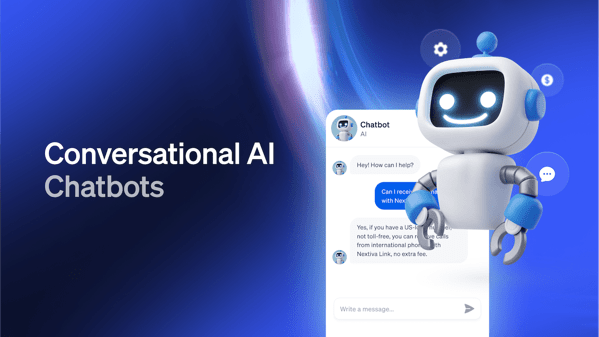
Conversational AI Chatbots.webp.

Apple rumors popping like champagne corks are going to turn up the heat on discussions about chatbots, especially since Apple had been previously saying they weren’t interested in creating a chatbot for its Apple Intelligence portfolio. Fortunately most of those discussion will be between humans.

Mark Gurman reports that we’ll see changes to what we currently think of as Siri this spring, but stay tuned for a revamped version that offers the back and forth conversational approach that existing chatbots offer, codenamed Campos,  later this year.

Almost simultaneously, MacWorld reports that Apple employees are being encouraged to use a chatbot called Enchanté in their work. So, it sounds like Apple is seeding the ground for what’s to come.

For the record, I’m not big on voice computing. Yes, I use my Apple Watch to ask Siri to set a reminder or send a text message, but that’s about the extent of what my experimenting with voice computing has boiled down to.

I’ve tried some of the existing chatbots on smartphones and on computers, and I’ve been in the company of others who enjoy using voice as their primary method of interacting with smartphones. I don’t begrudge anybody using voice as their input method if that’s their preference, and I certainly don’t if it makes computing accessible to those who can’t type. But it’s just not for me.

Part of it is I find myself being more accurate when I can type, and part of it is the social aspect. While microphone technology continues to improve to allow better pickup in noisy environments I find it awkward when someone pulls out their smartphone and starts talking to it with others around. I feel compelled to silence myself while they are doing so. I couldn’t imagine using it in my theatre work, compared to using an iPad with pen to take notes, because my talking would be distracting to everyone else in the rehearsal hall. Goodness knows being in a room with small children laughing/crying/talking at the top of their lungs doesn’t strike me as a suitable environment.

I spent a good portion of this fall watching the Chicago Bears on their improbable run, while texting back and forth on several chains with my nephews and others. I can’t imagine doing that in my local sports pub trying to do so via voice input.

I won’t get into a conversation about how some are using existing chatbots for social interactions like therapy and companionship except to say that I’m guessing if those trends continue as voice input as chatbots proliferate, we’ll eventually see similar reactions to curtail that type of usage similar to what we saw back in the day about decreasing smartphone and screen time usage.

There are some interesting questions out there though. OpenAI has already announced its inevitable move into advertising for ChatGPT. I’m sure the others aren’t far behind. I’m not sure how viable advertising really is in a voice chat environment, whether it’s a smartphone, pin, or set of headphones. I certainly wouldn’t want a “conversation” interrupted with an ad. Amazon certainly doesn’t seem to have come close with its Alexa products.  To my way of thinking, ads in chatbot conversations will give new meaning to the clichés about intrusive advertising.

I’m also of the opinion that while the non-smartphone AI devices might be clever gadget accessories, I don’t see them ever replacing smartphones or significantly denting that market. Too much of everyday life has become so inextricably linked to smartphone usage that requires a screen that I just don’t see voice chatbots replacing it. Someday your voice may be your password, but I think we’re a long ways off from that for interacting with the businesses and other institutions we deal with daily.

But who knows where this is all headed. Quite frankly, I don’t think anybody does. Including the chatbots.

You can also find more of my writings on a variety of topics on Medium at this link, including in the publications Ellemeno and Rome. I can also be found on social media under my name as above.
Sunday Morning Reading

Inquire and think for yourself

Whew. Regular readers here will know that since the middle of December we’ve been spending time helping my daughter and her family move into a new house, with an interim stop to an Airbnb over the holidays until the new place was ready.  It’s been as chaotic as any move could be, multiplied by the antics of our two grandchildren who had their small worlds turned upside down. The chaos didn’t allow for much Sunday Morning Reading, but here we are again, playing a little catch up as well as looking ahead. As much as anybody can look ahead these days.

Rey seven _nm_mZ4Cs2I unsplash.

What Just Happened? That title for Andrea Pitzer’s piece sort of explains the look I see on most people’s faces during the events of this January. If it seems like too much to think about. That’s because it is. Think on it.

Brian Merchant’s Abolish The Senses plays on the same themes and the dismay we’re all feeling.

“Do math. Check your facts.” That’s the message from Neil Steinberg in Wrapping Our Heads Around A Trillion, Now That The Alphabet is Worth $4,000,000,000,000. Don’t let others think for you.

Dealing with much smaller numbers, NatashaMH’s Five Dollars For Catastrophe explains how a $5 book about genocide can offer much more value, should you actually inquire and think for yourself. Words have meaning folks.

And while I’m linking to posts on the numbers, let’s talk gambling. Apparently it’s reaching epidemic proportions and you can bet on when the USA is going to invade other countries, among other catastrophic outcomes these days. Especially if you’re in the know. Saahil Desai says America Is Slow-Walking Into A Polymarket Disaster. I’m not so sure about the slow-walking part.

If gambling is betting on predictions, Artificial Intelligence, with its ability to predict the next word ought to be able to figure out most outcomes ahead of time. It’s all math, right? Remember that earlier admonition to think for yourself? While doing so, check out Steven Adler’s AI Isn’t “Just Predicting The Next Word” Anymore. 

Are Tech Companies Allies Or A Threat To Press Freedom?  I’m not spoiling Emily Bell’s conclusions with the obvious answer, because the piece is about more than that.

Jill Lepore explores How Originalism Killed The Constitution. It’s an earlier piece that contains context that most have no idea about. I’d suggest finding out.

Speaking of killing things, Russel Berman and Elaine Godfrey ask the simple question, Does Congress Even Exist Anymore? Applying the Ian Betteridge law of headlines, that any headline that ends in a question mark can be answered by the word no, you don’t have to guess at my answer. Berman and Godrey call it a fast fade. I call it a slow self-suicide.

Closing out this week, I’m pointing to a venture from a raconteur I feature here often, David Todd McCarty. He’s gathering up his words and images from over the years on a new website. David is quite a storyteller. If you think for yourself, I suggest you pay attention. For a taste check out David Dreams Of Everything. 

Go Bears!

(Image from Rey Seven on Unsplash)

If you’re interested in just what the heck Sunday Morning Reading is all about you can read more about the origins of Sunday Morning Reading here. If you’d like more click on the Sunday Morning Reading link in the category column to check out what’s been shared on Sunday’s past. You can also find more of my writings on Medium at this link, including in the publications Ellemeno and Rome.

“Then No Line Exists”

Musk’s Grok has erased them all

I recently linked to Eizabeth Lopatto’s excellent and scathing article pointing fingers at Apple and Google for continuing to allow Elon Musk’s Grok AI to undress without consent adults and children. Calling Tim Cook and Sundar Pichai cowards in the headline on this issue is, in my opinion, table stakes and will be until they take public action and actually apologize for violating their own rules and the privacy of the users that pump money into their bank accounts.

1001 PandorasBox.

Following that up I’m linking to another excellent article on the topic from Charlie Warzel and Matteo Wong, published in the Atlantic. The headline is strong, saying Elon Musk Cannot Get Away With This. The article is stronger still. Yet, the sad reality is that he already has, and even if Cook and Pichai suddenly change direction, the damage has already been done. Like the political figures they have bent knees to, they won’t be able to find a mirror to look in that won’t reflect their cowardice back at them.

Hiding under their respective rocks, both Cook and Pichai have let Musk turn this from a ruinous troubling feature into a paid premium feature, which is not only ridiculous but makes a mockery of both Apple and Google. I’ve already said that any X users who still hang onto that platform are just as culpable.

But then that’s the world we live in. We ignore the horrible nature of what’s unfolding in front of our faces. So many demons have flown out of this era’s Pandora’s Box we find ourselves it is impossible to count them, much less have any hope of banishing them. But then, that’s what the demons are counting on. As the article says:

This crisis is an outgrowth of a breakneck information ecosystem in which few stories have staying power. No one person or group has to flood the zone with shit, because the zone is overflowing constantly. People with power have learned to exploit this—to weather scandals by hunkering down and letting them pass, or by refusing to apologize and turning any problem into a culture-war issue.

As Warzel and Wong also say, “the silence says everything.”

You can also find more of my writings on a variety of topics on Medium at this link, including in the publications Ellemeno and Rome. I can also be found on social media under my name as above.
Apple’s New Siri Will Be Google’s Gemini

Giving Up The Chase

In news you wouldn’t need AI to hallucinate, Apple and Google  in a joint statement to CNBC announced that Apple will be using Google’s Gemini to power Apple’s long anticipated and delayed New Siri in a multi-year deal.

Screen shot 2020 09 01 at 11 11 53 am.png.

You can call it a surrender. It is. You can call it an admission of failure. It is. Even if Apple rarely admits mistakes.

Stating that the new models will continue to run on Apple’s private cloud compute in a joint statement, (published on Google’s news blog and to my knowledge not in any Apple press release), the statement said,

Apple and Google have entered into a multi-year collaboration under which the next generation of Apple Foundation Models will be based on Google’s Gemini models and cloud technology. These models will help power future Apple Intelligence features, including a more personalized Siri coming this year.

After careful evaluation, Apple determined that Google’s Al technology provides the most capable foundation for Apple Foundation Models and is excited about the innovative new experiences it will unlock for Apple users. Apple Intelligence will continue to run on Apple devices and Private Cloud Compute, while maintaining Apple’s industry-leading privacy standards.

Given the delay in releasing the promised and once heralded update to Siri, this isn’t really news and  has been thought to be the path Apple would adopt for quite some time. Speculation is that users might see this as early as this spring, but I’m still thinking it won’t roll out until WWDC 2026 this summer.

For what it’s worth, the statement to business network CNBC tells everyone who the audience is for this news that isn’t news and I’m guessing the complete retrenchment from Apple’s initial endeavors to try and create a AI powered Siri is quite a blow and the fallout won’t blow over soon.

Saying “Apple determined…” is quite some shade from Google, even in a joint statement.

I doubt this is the end of this saga, but in the end, does this really matter? Who knows. But given the C-suite shakeups at Apple, whatever happened with Apple Intelligence and New Siri has changed how iPhone users, investors, and probably a bot or two view Apple going forward.

For future curiosity purposes it will be interesting to see how Apple’s New Siri/Gemini will respond if someone prompts it to generate a summary of this news.

You can also find more of my writings on a variety of topics on Medium at this link, including in the publications Ellemeno and Rome. I can also be found on social media under my name as above.

Nikita Prokopov Takedown of macOS Tahoe Icons Is Iconic

Apple should be embarrassed. It won’t be.

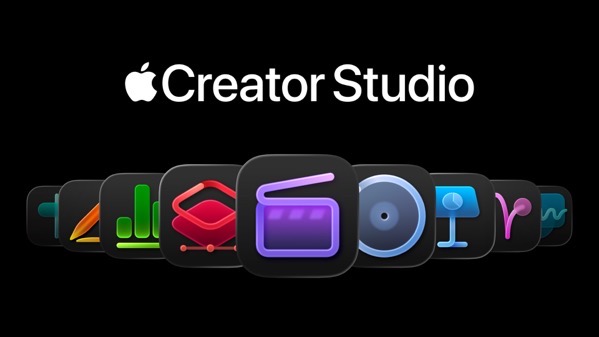
Nikita Prokopov takes Apple’s macOS Tahoe designers to task over their use of icons in menus in a a terrific, yet saddening post called It’s Hard To Justify Tahoe’s iCons. It’s an iconic takedown over what I also find an unnecessary and distracting visual change in Tahoe. Set aside that I think it’s unnecessary and unattractive, it’s just implemented so poorly it makes me wonder how many resources Apple devoted to something this poorly done, and how many more resources it will have to devote to hopefully cleaning it up.

CleanShot 2026-01-05 at 16.39.47@2x.

Prokopov’s post is filled with examples that points up inconsistencies and confusing metaphors. It is illustrated extremely well with enough examples that anyone at Apple should find the cataloging of it embarrassing.

In his conclusion he states:

In my opinion, Apple took on an impossible task: to add an icon to every menu item. There are just not enough good metaphors to do something like that.

But even if there were, the premise itself is questionable: if everything has an icon, it doesn’t mean users will find what they are looking for faster.

And even if the premise was solid, I still wish I could say: they did the best they could, given the goal. But that’s not true either: they did a poor job consistently applying the metaphors and designing the icons themselves.

It’s well worth a read, but I tell you this, as bad and as distracting as I thought this macOS Tahoe design feature was, Prokopov’s post is full of so many examples that it actually makes Apple’s choices even more distasteful.

(Image from Propokov’s post)

You can also find more of my writings on a variety of topics on Medium at this link, including in the publications Ellemeno and Rome. I can also be found on social media under my name as above.

Souring On Artificial Intelligence

The new butt of family holiday jokes

There’s an interesting article in the New York Times called Why Do Americans Hate A.I.? The article goes through the litany of some of the bugaboos just about anyone can recite from memory these days: jobs, trust, and agency. As fast as Artificial Intelligence has dominated the conversation, warnings about the pitfalls have run side by side in what I think resembles a barefooted three-legged sack race over broken glass.

Andrea de santis zwd435 ewb4 unsplash.

Over the holidays at what seemed like an infinite number of family gatherings I picked up on some interesting themes that I mentioned in my end of year post about all things Apple that I think is worth calling out here again. Everyday Janes and Joes are souring on artificial intelligence, not for any of the now almost clichéd anti-AI reasons, but after everyday unsatisfactory encounters with their doctors, banks, and any number of the other institutions and business that they deal with.

As I said in that post about Apple, 

I also think Apple and the other tech companies need to pay attention to the warning signs that are starting to bubble up about Artificial Intelligence. I think most of the growing distaste of AI comes not from what these tech companies are offering on computing platforms, but from the day to day encounters people are experiencing in their daily lives as more and more non-tech companies roll out versions of AI support. The way I’m hearing and feeling it, jokes and complaints about AI at holiday gatherings this year are starting to compete in numbers with ones about government and politics.

Because money rules the roost, most of the conversations we hear about Artificial Intelligence center on how much money is being spent propping up and expanding the bubble that is keeping a sagging economy afloat like a hot balloon on a cloudy day. There’s only so much liquefied propane in any tank once things lift off.

Here’s the thing about holiday family gatherings. I can’t remember one when conversations didn’t at some point offer up a “you’ve got to try this” recommendation or some sort of eye-grabbing new thing  or trend that captured attention along with the usual complaints and grievances. But AI-negative conversations seemed to take precedence on the grievance side of the ledger this year.

Everyday folks don’t care about who wins the AI technology race or who has the best on device AI or how many tokens a system offers. They care about getting results in less time and more so, getting it done with a human they can talk to, not a robot in a chat window. So far based on the jokes, swearing and condescending attitudes I’m hearing (anecdotally, I admit) everyday folks aren’t buying the pitch, but they’re getting closer to picking up the tar.

We can talk about data centers, job efficiencies and job losses, chatbots, AI slop, and scientific advancements all day long, but when everyday folks on the ground develop a distaste for what you’re selling and turn your efforts into the butt of a joke, eventually you need to discount or clear out the inventory no matter how many data center servers you pop up.

Even so, perhaps that’s the aim of the A.I. purveyors. If they salt the fields with enough of their product to the point that everyone condescendingly abides it the way they do government, it may not matter if it doesn’t offer any harvest that yields nutrition, just that it yields a ubiquitous tolerance.

(Image from Andres De Santis on Unsplash)

You can also find more of my writings on a variety of topics on Medium at this link, including in the publications Ellemeno and Rome. I can also be found on social media under my name as above.

My Year In The Apple Fruit Basket 2025

Not a good fruit crop yield for Apple

2025 was an odd year toiling in Apple’s orchard.

Shutterstock 1478322374.

Getting this out of the way upfront, it was a year that Apple’s corporate behavior, personalized by Tim Cook, made me think seriously about looking to fill my computing needs and habits elsewhere. That’s an ongoing discussion I’m having with myself. As it rattles around my brain, I don’t see an alternative that is any better or any worse from a corporate posture point of view. Apple has plenty of company.

From a technology point of view I also don’t see any better alternative beyond reliving my past hobbyist days with Linux that I’m far too old to contemplate. I used to be that geek. I’m not anymore. Aside from communal political knee bending, every tech company’s plunge into the Artificial Intelligence swamp has mucked up everything, everywhere all at once, in one way or another.

I have to touch Windows now and again and every time I do I feel like I need to take a purgative and wash my hands. I feel much the same about Google’s products. Life as a geek was already becoming increasingly more distasteful in the days when it was just the algorithms that enshittified everything, but adding Artificial Intelligence into the mix has created a slop that even hogs are beginning to turn away from. I know that’s all here to stay and I’m honestly sad that it is.

Hardware

This was the first year that I didn’t upgrade much Apple hardware. I don’t think it was a conscious choice correlating with Apple’s corporate behavior, but I won’t rule out my subconscious working against my small contribution to Apple’s bottom line. Let’s put it this way, I didn’t feel the usual gadget lust tugs and twinges over anything Apple announced this year.

I did upgrade to an iPhone 17 Pro and didn’t even think twice about taking a serious look at the iPhone Air. Apparently I wasn’t the only one. There’s nothing really remarkable to say about the 17 Pro. It’s as good and solid as it’s predecessor and if that’s incremental, than incremental is more than enough for me. I think that’s also true for most users.

I did pick up a pair of AirPods Pro 3 and wrote a quick review that you can read here. The battery life on the AirPods Pro 2 was approaching end of life, so it was time, and I use AirPods a lot.

I also upgraded to the Apple Watch Series 11 from the Series 10. It’s not that the Series 11 does anything more remarkable from a technology perspective. It doesn’t. But I’m in sort of a trap of upgrading every year due to the technology I use to monitor my diabetes.

I use the Dexcom G7 sensor that pairs with both my iPhone and Apple Watch to show me and my doctor how I’m doing with my blood sugar readings. I’ve come to rely on the constant monitoring on the Apple Watch app more than I do on the iPhone. But the two devices and their apps are married. On the Apple Watch that constant monitoring takes a heavy toll on Battery Life and Battery Health. Since I’ve been using that technology Battery Health can degrade at or below 70% in a year. That’s enough for me to upgrade every year.

That is an excellent example of one of the pitfalls of Apple’s development pace that drops new operating systems annually, but trickles out fixes over the course of a year. Dexcom developers take quite a bit of time to catch up with new hardware and software. They have to. They are a medical device company. That lag is certainly more acute with a device that monitors medical conditions, but this year’s round of operating system changes have been challenging for developers in all software categories leading us all into a perpetual year of beta software.

Summing up what I feel about Apple’s 2025 hardware releases I’ll leave it this way. Apple continues to make good improvements with each hardware iteration. Quite frankly, I’d be content to see Apple continue iterating the way it has since the dawn of the M-series chip change, but the many voices continually calling for something newer and bolder seem like they’ll have their day in the next few hardware cycles.

The current crop of Apple hardware has matured into the best I’ve seen on the market. Here’s hoping all that’s rumored continues that trend. That said, I don’t really see the appeal of a vastly more expensive folding iPhone beyond it being a regressive retro move and small enough to make it easier to stuff in a pocket. I guess the next big retro innovation will be to bring back mechanical keyboards. But, hey the Commodore 64 also made a come back this year. I’m guessing a folding iPhone will be enough to excite the faithful. For a few months.

Software

Software provided the real color on Apple’s fruit plate this year with what they shipped and what they still haven’t. The Apple Intelligence slices are browning around the edges, leaving an unappetizing anticipation for what may or may not be unveiled. I say “may not” because in Apple’s announcement last spring delaying the rollout of how Apple Intelligence integrates with the “new Siri” there was an important word that most seem to have overlooked. Here’s the statement:

“Siri helps our users find what they need and get things done quickly, and in just the past six months, we’ve made Siri more conversational, introduced new features like type to Siri and product knowledge, and added an integration with ChatGPT. We’ve also been working on a more personalized Siri, giving it more awareness of your personal context, as well as the ability to take action for you within and across your apps. It’s going to take us longer than we thought to deliver on these features and we anticipate rolling them out in the coming year.”

The key word in that statement is “anticipate.” Most conventional assumption makers believe whatever Apple is working on will roll out sometime in the first half of 2026. But that word “anticipate” is a great hedge that only a PR professional or lawyer could love. I don’t doubt the pressure is on to release something. I wouldn’t bet a dime on it happening before WWDC 2026.

As for what Apple Intelligence is currently, it’s still nothing to write home about. Notification summaries remain a comedy gold mine. I think I’ve touched the Writing Tools a few times, but fall back on other proofreading habits and tools. Whatever Siri is or is not doing, it’s gotten worse and even less predictable than it was before. Every time an accidental touch of the camera button light’s up the border of the screen it’s more a reminder of what’s not there than what it was promised to do. Whatever Apple is planning, the current iteration feels like it’s been largely abandoned like a rotting piece of fruit.

Liquid Glass was the feature that did ship. Countless words have proliferated around the Internet about the design change. I’ve written a few myself. My take at year end is that Liquid Glass is neither here nor there.

Legibility issues and design disasters need lots of work and attention, most of which won’t come while the number 26 is still affixed to the operating systems. Devices still work, even though I’m seeing more and more haphazard weirdness as app developers try to play catch up while Apple itself is still trying to chase down its own problems.

Given the leadership turmoil within Apple who knows what Liquid Glass may or may not become in the future. But then who knows what it was actually intended to be in the first place, beyond a distraction from the Apple Intelligence miss. It certainly wasn’t designed to fulfill anything Apple’s marketers thought it might. If there’s harmony in trying to unify things across platforms, someone needs a basic course in music theory.

While I don’t hate Liquid Glass my continuing impression is that it still feels childish in a bubbly sort of way that doesn’t jive with the sophistication that the advanced hardware platforms seem to beg for. That was my first impression when Liquid Glass rolled out, and it was solidified after spending a large junk of time with my grandkids and other relatives’ kids watching them play children’s games on their non-Apple tablets over the holidays.

CleanShot 2025-12-30 at 15.43.21@2x.

It may look cool to some, but it feels like undercarriage lighting on a car to me.

There Were Some Good Things

The most important operating system change that Apple made was iPadOS 26, finally instituting, and then continuing to iterate on, a much better windowing system for iPads. 

And, the best new feature on any of the Apple devices I use the most is the Wrist Flick to dismiss a notification on my Apple Watch. It’s simple, it’s effective, it makes sense on all levels. It should have existed earlier. And it should be what Apple aspires to with everything it creates.

Spotlight was given an overhaul offering new features like a clipboard manager. I’m still experimenting with it, but can see how it might replace Raycast in the future if Apple continues iterating on it. It’s a good addition that still needs work.

I think Apple is on to something with the changes it made for the Phone app to try and help alleviate spam calls. I hope they continue to improve this, because as good an effort as it is, I and others still find it confusing. 

Perhaps the best thing about the OS 26 releases beyond that is that all of my devices are working as I anticipate if I look past (not through) Liquid Glass and avoid Apple Intelligence.

Summing Up

In the end, I think 2025 will be considered a lost year for Apple. I maintain that Apple’s ability to take the long view strategically hindered more than it helped. And I think that some of the executive level changes reflect that. But the fact that it takes a long time to see any new substantial change in an already crowded and confused orchard didn’t argue well for the year to be a success. The political posturing alongside the product missteps has led to my personal disgruntlement and I know it has for many others as well.

One of the many Apple mantras that we’ve become accustomed to is that Apple designs its products for 90% of its users. That may indeed still be true. As much as I feel comfortable with steady iteration in hardware and software, it feels to me increasingly that Apple is reaching more and more for innovations that excite the remaining 10%. I get that. And to a degree it’s commendable. But in my experience with the users I support, the majority of those in that 90% probably never even attempt to use many of these new innovations. It’s not a case of reach exceeding grasp in my opinion. Rather, it’s reaching in the wrong direction.

Apple has already made some noise that the next OS versions will be more fixing and futzing rather than feature rich. How could it not be? By the same token, how could it be if, I as feel is increasingly likely, it will be the first time we see what the new Siri and Apple Intelligence will really offer.

I also think Apple and the other tech companies need to pay attention to the warning signs that are starting to bubble up about Artificial Intelligence. I think most of the growing distaste of AI comes not from what these tech companies are offering on computing platforms, but from the day to day encounters people are experiencing in their daily lives as more and more non-tech companies roll out versions of AI support. The way I’m hearing and feeling it, jokes and complaints about AI at holiday gatherings this year are starting to compete in numbers with ones about government and politics.

I don’t think that’s an accomplishment that augurs well.

(First image from Johann Lensless on Shutterstock)

You can also find more of my writings on a variety of topics on Medium at this link, including in the publications Ellemeno and Rome. I can also be found on social media under my name as above.

Apple’s Customer Support Weaknesses

Closing holes in customer support

The story from Paris Buttfield-Addison about losing 20 years of his digital life due to a hacked gift card broke last week when I was watching my grandkids. I was able to follow along but didn’t have time to comment, but it certainly flashed me back to some issues I have had with Apple in the past. The good news is that it appears that someone from Apple’s Executive Relations solved the issue.

If you aren’t up on the story the quick summary is that Paris Buttfield-Addison attempted to redeem a $500 Apple Gift Card he had recently purchased from a third party retailer. The card had been tampered with. Apple’s system saw it as problematic and disabled his 25-year old account. After frustrating attempts to resolve the situation Buttfield-Addison blogged about his situation, which was picked up by much of the Apple press. That in turn prompted action which escalated the situation to the Executive Relations Team. You can read all about it here.

As I said, the good news is that the account was eventually restored.

The bad news is that it took the pressure from exposure online to solve the issue. What’s good is that the story was picked up enough to generate that pressure. Often that’s not the case.

I can testify to that from two events in my Apple experiences. Both of which required escalation to the executive level. The second one requiring intervention from Craig Federighi after I had all but given up hope. You can read about that adventure here. It took quite a while to get that issue resolved, one that lasted through several operating system revisions.

The worse news is that increasingly if you have an issue with Apple (or any other large company for that matter) that falls outside their prescribed systems of support you really have to be either lucky or damned persistent to get a resolution. There’s an old saying that if you have one employee you have an employee problem. That applies to customers also. If you have one, you have a customer relations problem. To be fair in a company as large as Apple it has to be tough to mitigate these kind of issues given the very large number of users.

But if you smash those old sayings about employees and customers together the resolution dynamic can easily become untenable. It shouldn’t. The fact that large companies have to have an Executive Relations Team speaks to failures in management. Anyone remember Comcast Cares on Twitter? Great that it existed. An admitted failure that it had to.

When a company anticipates potential breakdowns and devotes resources to solving problems its existing customer support systems can’t handle, the dog is chasing its tail. One has to assume the resources devoted to Executive Relations Teams solving issues that regular customer support systems can’t must be less expensive than addressing the flaws in existing customer support mechanisms. At least I hope that’s the case. The alternative is that a company just doesn’t care.

To be fair, there will obviously be issues that can’t be anticipated that require some method of higher level oversight to be corrected. Customers can only hope that leads to better support further down the line once an out of the ordinary problem arises. Unique problems crop up all the time and rules and regulations get changed to deal with them. But setting up barriers to problem solving creates its own set of problems.

With more and more companies adopting AI solutions to help with customer service and support, it makes one wonder if we’ll end up with AI Executive Relations Teams made up of AI engines solving problems AI support created in the first place. But I imagine it will fall back to humans.

Assuming you can reach one without needing allies in the media to help make your case.

You can also find more of my writings on a variety of topics on Medium at this link, including in the publications Ellemeno and Rome. I can also be found on social media under my name as above.

Time Names Architects of AI As 2025 Person of the Year

Hype masters of the Year

There was a time when I used to buy Time Magazine’s rationale for naming someone Person of the Year. The rationale always was the person or persons chosen had the most impact during the year, whether for good or ill. I’ve changed my perspective on that, long before this year’s choice.

ArchitectsCover web 01.

This year Time Magazine named The Architects of AI as the 2025 Person of the Year.

As Time puts it:

This is the story of how AI changed our world in 2025, in new and exciting and sometimes frightening ways. It is the story of how Huang and other tech titans grabbed the wheel of history, developing technology and making decisions that are reshaping the information landscape, the climate, and our livelihoods. Racing both beside and against each other, they placed multibillion-dollar bets on one of the biggest physical infrastructure projects of all time. They reoriented government policy, altered geopolitical rivalries, and brought robots into homes. AI emerged as arguably the most consequential tool in great-power competition since the advent of nuclear weapons.

There’s no denying the individuals Time lists have had an impact. In my opinion, the list leans decidedly into the “for ill” column. You can’t argue that these folk have certainly created a new economy with all of the yet to be fulfilled promises. But, at some point there needs to be something real underneath the hype. For better or worse, and however these promises may or may not be fulfilled, I’d love to be around a few decades from now to see how the ledger balance that describes what good may have come from AI versus what bad things it left in its wake totals up.

But if any or all of the promises come true, I doubt the AI accountants will ever show us that math.

Perhaps it’s the advent of the holiday season. Perhaps it’s that I’m just not that keen on Artificial Intelligence. But I’d rather see a focus on folks who have actually done tangible good for the world rather than folks who, to this point, have only made bundles of money promising a future that may in the end turn out to be what I suspect will be just another unfulfilled promise.

While I get the intention, I also find it darkly portentous that Time includes a “Ask me anything” chatbot that follows you along the webpage as you scroll through to read the article.

CleanShot 2025-12-11 at 08.46.57@2x.

To be fair, Time does point out some of the bad things already associated with Artificial Intelligence in the article. There are a growing number of those these days, but eventually eyeballs will pass them by in the same way folks eventually look past the ever present news of gun violence. Those sitting on that girder in the photograph are counting on that.

I’m guessing future Person of the Year selections will most likely be chosen by AI, and will whitewash most of that out of the accompanying articles.

You can also find more of my writings on a variety of topics on Medium at this link, including in the publications Ellemeno and Rome. I can also be found on social media under my name as above.

macOS 26.1 Seems To Have Fixed the iconservicesagent Memory Leak

A bug fix. But who did the fixing?

A little follow up.

A few weeks back before Apple released the non-beta version of macOS 26.1 I wrote up some observations about macOS 26. One of those observations was about memory leaks.

Cleanshot 2025 10 17 at 09.35.13402x.

I cited one example I was seeing frequently with iconservicesagent, a process that the system uses to read and generate icon images. When it goes awry because of a corrupted icon or corrupted icon cache then the memory leak occurs. You can kill the process and it will restart, but that wasn’t fixing the problem and the memory leak would reoccur.

Tracking down what might be a corrupted icon is beyond my skill level, so I was hoping this was a bug that would eventually get fixed by Apple, or an app developer who might clean up an errant icon.

Apparently that happened because I haven’t seen the memory leak reoccur since installing macOS26.1. Of course quite a few apps have updated in the meantime as well. So, there’s no way for me to really know whether the fix was on Apple’s end or an app developer’s without doing some digging I don’t have time for. Nor would most users.

Keep in mind, Apple created an entirely new method for developers to build icons this year. Some developers have used the new Icon Composer already, some have not. It’s caused a few developer headaches, especially for app developers who offer multiple icon choices as a part of their app and general disgruntlement with the icons Apple itself has released. Note Apple hasn’t as of yet updated all of its own icons.

I’m glad the bug has been fixed. Whether the fault was on Apple’s end or a developer’s it points to the catch up that Apple has to do to solidify things in macOS 26 Tahoe with app developers having to follow behind as it does so. We’ll see how many other bugs get quashed in the months ahead with macOS 26.2 presumably coming sometime before the end of the year and successive  point releases following in the first half of the next year.

You can also find more of my writings on a variety of topics on Medium at this link, including in the publications Ellemeno and Rome. I can also be found on social media under my name as above.