My Viewing and Reading Picks for 2025

Another year of complex viewing and reading

Another year comes to an end. A new one gets ready to begin. 2025 felt less complex than 2024. Lines weren’t as blurry with one exception that I’ll get to later. In a year when the rush to redefine and compete for the lowest common denominator felt like a three-legged sack race over broken glass, complexity again drew my attention and stuck with me. There’s a great leveling happening, whether intentional or not. But as long as we can advertise against whatever the content is, it seems to matter less and less what the content is or how it’s made.

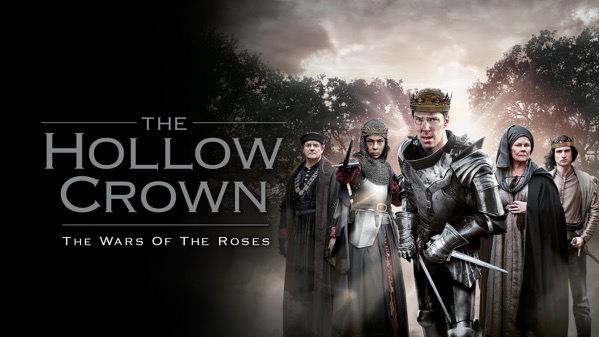
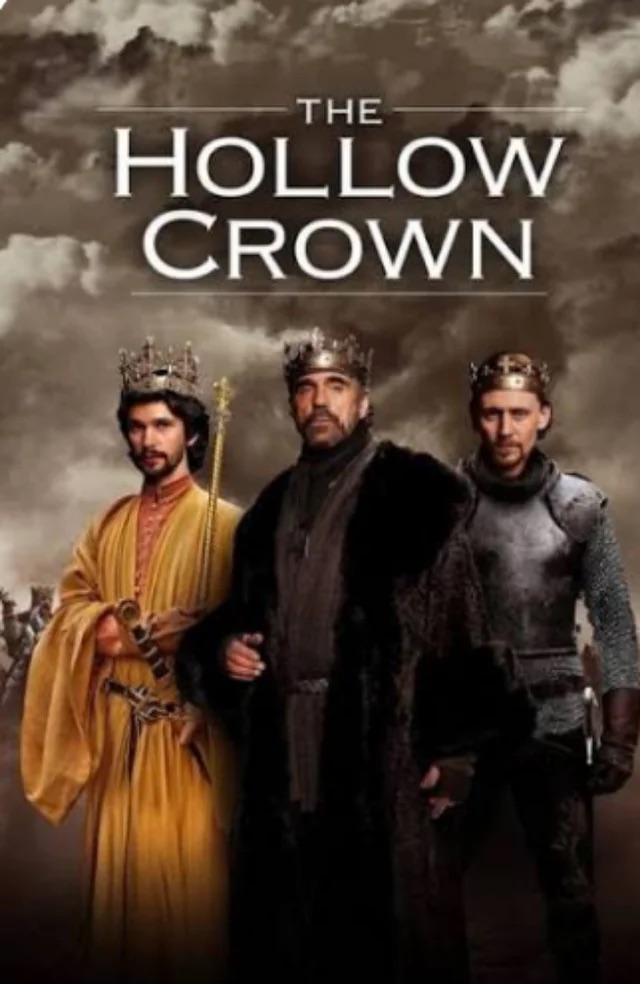
When it comes to viewing entertainment it was a year when the quality line between movies and streaming TV blurred even more as excellent series work competing with the big screen for some of my favorite viewing. The Pitt and Adolescence were two of the finest things I watched this year.

There are a number of titles in these lists that would qualify for what is being called Resistance Cinema. Each one is deserving of inclusion in that list for immediacy. Any lasting impact will only be determined with the passage of time and all of what we’re currently resisting either cements or cracks.

I don’t believe in “best of” lists. There’s good stuff being created amidst all of the mediocrity and my judgement on what’s good is probably not yours. I pick what attracts and holds my attention. I also don’t see or read everything and the holiday release schedule geared to coming in under the wire for awards recognition is a silly game for insiders and not for me. There also may be a title or two that I didn’t catch until 2025 even though it was released in previous years. Goodness knows there are books waiting to be read.

If there’s a link with a title, I took the time to write about it. I should have done that more. So here’s a list in no particular ranking order of what I found most intriguing throughout the year.

Movies
Streaming TV
Books
  • 1929 by Andrew Ross Sorkin
  • The Mission by Time Weiner
  • Apple In China by Patrick McGee
  • The Director by Daniel Kehlmann

Have a Happy New Year!

You can also find more of my writings on a variety of topics on Medium at this link, including in the publications Ellemeno and Rome. I can also be found on social media under my name as above.
Sunday Morning Reading

Sharing thoughts about big ideas and little things

Sunday Morning Reading is back from a two-week hiatus in which we watched the grandkids while their parents began moving into what will be their new house after the first of the year. It was a big deal featuring lots of little things with the little ones. As usual the column this week presents some interesting reading and writing that I think worth sharing. Big topics side by side with little things.

As the Christmas season I knew growing up begins to wind down and everyone begins gearing up for the New Year, I ran across Matthew Cooper’s Why We Need A New Dickens. He makes a good argument, but in my experience everyone loves reading what Dickens chronicled, but somehow it never really catches on.

Keeping somewhat in the Christmas vein The Guardian View On Far-Right Perversions Of The Christmas Message: Promoting A Gospel Of Hate by the Guardian’s editorial department hits its target, but in a glancing blow that proves my point from the link above.

NatashaMH takes on The Great Wall Of Honesty with blunt truths, bear hugs, and a bit of resilience.

JA Westenberg points out that we never pay much attention to the tech folks who do the grunt work behind the scenes to keep things running in The Rime Of The Ancient Maintainer. That’s the little story behind most of the big things we take for granted.

Illustrator Lauren Martin writes On The Pitfalls Of Saying Yes To Everything. Hat tip to Stan Stewart for this one.

I don’t usually link to book reviews in this column, but this one by Dorian Lynskey of Sven Beckert’s book Capitalism: A Global History made me buy the book. Check out Capitalism by Sven Beckert Review — An Extraordinary History Of The Economic System That Control Our Lives. (FWIW there are no affiliate links on this site.)

Speaking of the little things, David Todd McCarty enjoys The Casual Comfort Of Champagne And French Fries.

This piece by Josh Marshall has been sitting in my Sunday Morning Reading queue during the aforementioned hiatus and it’s certainly lost none of its luster with time. Check out Will The 21st Century Nabobs Win Their War On Public Accountabilty?

I’ve followed and linked to a number of Denny Henke’s posts about how he’s changing his personal computing habits this year. His 2025 End Of Year Personal Computing Check-In is worth a read even if you haven’t been paying attention up until now.

Neil Steinberg notices things big and small and occasionally writes about those he hasn’t seen in a while. Check out his observations on seeing an Armored Car.

And to close out this week and this year’s Sunday Morning Reading, here’s a piece that good friend Sumocat linked to that is indeed an obituary. One worth a look even if you never noticed or took for granted what the deceased created, The Moylan Arrow. Take a look at The Inventor Of The Little Arrow That Tells You What Side The Fuel Filler Is On Has Died by Daniel Golson.

It’s the little things that make a difference in this big world. Have a happy turn of the New Year.

If you’re interested in just what the heck Sunday Morning Reading is all about you can read more about the origins of Sunday Morning Reading here. If you’d like more click on the Sunday Morning Reading link in the category column to check out what’s been shared on Sunday’s past. You can also find more of my writings on Medium at this link, including in the publications Ellemeno and Rome.

Who Knows What To Believe?

Believe it or not

Who knows what to believe these days. Pick a topic. Politics. Tech. AI. Sports. Culture. Doesn’t matter. There’s enough different opinions that want to be facts that you can pick any position on any topic and find others who will believe as you do. When you can manufacture enough belief in anything, is anything worth believing?

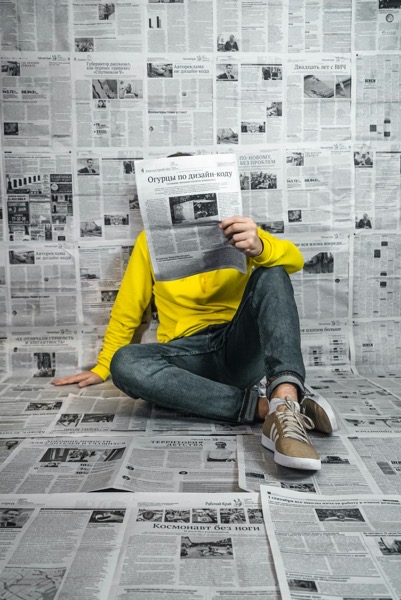
Shutterstock 2592766917.

The sad news is we’ve reached a point where facts don’t matter. What matters is how well whatever passes for facts can be sold. Attract enough buyers or investors and you’ve created a wave. Or perhaps a bubble.

The reason for this post is some interesting back and forth I had with former colleagues who’ve jumped all in on the AI bandwagon with what I’ve characterized as blind enthusiasm.

Of course they aren’t the only ones. Thus the bubble.

I’ve pointed them to some reading that I doubt they’ll read. And I’m going to point to one of those pieces here.

Cory Doctorow is working on his next book and has posted a preview of thinking that he delivered in a recent speech. HIs next book is called The Reverse Centaur’s Guide To Life After AI. I think you’ll find reading the text of his speech informative. I hope my colleagues do. I hope a lot of folks do.

(Image from MediaMag on Shutterstock)

You can also find more of my writings on a variety of topics on Medium at this link, including in the publications Ellemeno and Rome. I can also be found on social media under my name as above.
Sunday Morning Reading

Hands on with playwrights, movies, smart toilets, and a discomforting rooster

Another Sunday. More snow overnight. More shoveling later. The holidays creep closer or perhaps they’re already here, given that grandpa mode has kicked into high gear. Started writing a new play out of the blue yesterday. I have no idea why, but it just tumbled out of my brain on to the screen via the keyboard. Time to share some Sunday Morning Reading. Read as you will, even if it’s on a smart toilet.

I often save the softer pieces for later in this column, but I’ll lead today with David Todd McCarty’s Christmas Means Comfort. Tell that to the rooster.

The world lost a treasure this week with the passing of architect Frank Gehry. Lee Bray writes a nice obituary and tribute. Check out Architect Frank Gehry Who Designed Millennium Park’s Pritzker Pavillion and Foot Bridge Dies at 96.

Samuel Beckett’s Hands is a terrific piece by Rob Tomlinson about, well it’s about Samuel Beckett’s hands and how Dupuytren’s contracture may have influenced not just how, but what he wrote, given that Beckett always begin his writing with pen and paper.

While I’m sharing stories about playwrights, the movie Hamnet is garnering lots of attention and accolades. (I haven’t seen it yet.) Based on Maggie O’Farrell’s excellent novel of the same name, Hamnet mostly follows accepted scholarship that William Shakespeare wrote Hamlet while grieving the death of his son, Hamnet. (At the time, the two names were practically interchangeable.) As with most things Shakespeare, there’s generally accepted knowledge and there are always those who challenge it. James Shapiro takes a look at The Long History of the Hamnet Myth.

And while I’m sharing stories about movies, take a look at Susan Morrison’s piece on How Noah Baumbach Fell (Back) In Love With The Movies.

I linked earlier this week to a piece by Phillip Bump called There Are Limits to the Hitler-Trump Comparison. Just Ask These Historians. I don’t disagree with the thesis. I just think it stops short in the way most history usually does.

Rory Rowan and Tristan Sturm write that Peter Thiel’s Apocalyptic Worldview Is A Dangerous Fantasy. Here’s hoping this first draft of our current history proves lasting.

There’s been much talk about all things military recently given how the current administration is tossing away most of what we believe the military stands for as easy as my grandson tosses away toy soldiers. Carrie Lee says The Soldier In The Illiberal State Is A Professional Dead End. I concur. Sadly.

In the wake of the cataclysm that was Twitter, social media is essentially a messy muddle these days with users continuing to migrate from one platform to another seeking some sort of place that feels comfortable enough to share and often discomfort others. Ian Dunt writes what he calls a love letter to one platform with Thank God for Bluesky.

Smart toilets were in the news this week. I actually got to see and use one at a Christmas party last night. All I could think about while doing my business was this piece by Victoria Song called Welcome To The Wellness Surveillance State. 

And to conclude this week, Amogh Dimri informs us that the Oxford University Press has chosen Rage Bait as 2025’s Word of the Year. Dimiri thinks it’s a brilliant choice. I guess it begs the question, if we’re angry enough to rage, is it really baiting?

If you’re interested in just what the heck Sunday Morning Reading is all about you can read more about the origins of Sunday Morning Reading here. If you’d like more click on the Sunday Morning Reading link in the category column to check out what’s been shared on Sunday’s past. You can also find more of my writings on Medium at this link, including in the publications Ellemeno and Rome.

Living in the Past with Apple Music Replay

Musical time warps

I listen to music but I’m not a voracious listener like some are. Fact is, I spend most of my listening time with podcasts and audio books. Nevertheless, it is interesting to see what music I did spend my time listening to. Apple Music, like other music services, offers a feature to summarize what tunes you’ve tuned into over the year called Apple Music Replay.

CleanShot 2025-12-02 at 08.48.09@2x.

Given all that’s going on in the U.S currently I shouldn’t find it surprising that I spent most of my time reliving parts of my youth that were just as tumultuous as our present, revisiting a lot of Crosby, Stills, Nash and Young and The Grateful Dead as well as the musical Girl From the North Country that features the music of Bob Dylan. (I spent considerably more time with that selection last year.)

It’s also interesting to me that when I do listen to music I do so through a couple of very eclectic playlists that range over quite a few genres. I never see that reflected in these generated mixes, only artists or albums I’ve selected specifically, which tells me these lists are mostly made up from selections you’re searching for. Perhaps that explains why when I ask Siri to cue up a playlist it fails as much as it succeeds. But then again, most of those playlists contain mostly music from my past, more than contemporary selections.

Seems to me, we could all do with a little more music these days that is speaking directly to these days.

You can also find more of my writings on a variety of topics on Medium at this link, including in the publications Ellemeno and Rome. I can also be found on social media under my name as above.
Finishing Ken Burns’ The American Revolution

The series is complete. As a nation the question remains open.

We completed watching Ken Burn’s excellent The American Revolution this week. Thank goodness for streaming, allowing us to view it on our schedule. Two spoiler alerts. First, we won the war. Second, we’re still struggling with many of the differences that made the formation (and perhaps the continuation) of what would become the Untied States such a close thing. 

 The series is excellent and I highly recommend it. Burns and his team do their expected thorough job of researching and producing the documentary. We’re lucky there were so many letters written by those beneath the status of the cast of characters most of us could identify at a glance, because that material provides much of the content and texture inside the frame. 

The production does it’s job so well that my hunch is some will come away learning things they never knew about a period of our history we’ve wrapped in so many myths it would keep troops at Valley Forge warm. I would also guess that in today’s political and social climate there will be far too many who tune out or don’t tune in because they prefer the comfort of the mythology. 

Which is a damned shame. As I said in an earlier post about the series:

I’m not hearing things differently, but I’m hearing how folks can take their own meaning out of many of the things written and said during that period that led to this country’s founding. History may indeed rhyme, but it also echoes. Often in strange ways.

If you have followed any of Burns’ work you know his approach to American history is to tell the parts of stories we leave out of the picture. I grew up in a part of the country where you could turn your head left or right, spit, and hit the history of the American Revolution or the Civil War. I count myself lucky that my 10th grade history teacher kept reminding us that there was so much more to discover about our past than he had the time to teach us, planting a seed of curiosity that continues to grow inside of me to this day decades later. 

Ken Burns and his team continue to keep that curiosity growing. We should all be grateful and unafraid that they do so.

You can also find more of my writings on a variety of topics on Medium at this link, including in the publications Ellemeno and Rome. I can also be found on social media under my name as above.

Read ’em. Maybe Weep. Maybe Get Pissed Off. But Read ’em

Blood, some boiling, some cold, but killer writing.

Life on the Wicked Stage readers will be familiar with the Sunday Morning Reading column wherein I share good writing and interesting topics. Sometimes things fly across my radar after I’ve published the week’s column. Three pieces hit and hit hard late on Sunday after the Chicago Bears continued a mysterious, but gratifying winning streak. I’m going to share those stories here, on a Monday. The writing is too hot to let cool, and the subject matter burns even hotter.

Shutterstock 518101168.

First up, is an excellent piece by Will Bunch called The Night America’s Doomed Ruling Glass Gorged On Lamb, Blood, and Oil. Bunch puts the elite on the menu and carves them up with a bone saw.

Next, check out Anand Girdhardas’ excellent How The Elite Behave When No One Is Watching: Inside the Epstein Emails. A vivisection that exposes what we all imagine.

Finally, read Tatiana Schlossberg’s A Battle With My Blood. A Kennedy family member, dying of incurable blood cancer eloquently tells her story, and ours.

You might think these pieces tilt into the category of just another round of depressing news and commentary. Partly that’s true. But it’s a small part for small minds. I find each of them reassuring. Reassuring that smart people, spilling words like blood on digital paper, can pour out the pain we’re all living through personal pain of their own, and decipher the day-to-day charades even as the current deadly and dangerous game continues.

I’d say the writing is courageous, but that’s obvious. The real courage comes in reading what’s written and paying enough attention to make it matter. Perhaps sharing them around this Thanksgiving week when we give thanks for our blessings with family and friends. Especially those we disagree with.

Be thankful. Be courageous.

(Image from Militarist on Shutterstock)

You can also find more of my writings on a variety of topics on Medium at this link, including in the publications Ellemeno and Rome. I can also be found on social media under my name as above.

If you’re interested in just what the heck Sunday Morning Reading is all about you can read more about the origins of Sunday Morning Reading here. If you’d like more click on the Sunday Morning Reading link in the category column to check out what’s been shared on Sunday’s past. You can also find more of my writings on Medium at this link, including in the publications Ellemeno and Rome.

Sunday Morning Reading

Art matters. If you listen.

It’s another Sunday in this insane world, so it’s time for some Sunday Morning Reading. It won’t cure what ails you, or the world. But there are those who are listening. Listen as you read.

Roman kraft _Zua2hyvTBk unsplash 1.

Aren’t You Tired Of Feeling Insane All The Time? Marie Le Conte asks that question. I’m not sure anyone can plug the hole in that boat, but acknowledging that we’re sinking is the first step.

David Todd McCarty tackles The Lost Art of Listening.

NatashaMH recently launched an exhibition of her art. Launching anything can take life out of you, launching any display of art exacts even more of the soul than it does the physical being. But as she says in The Social Life of Art, “art demands resilience, and resilience demands a sense of humor.”

I wrote a bit this week about what Mark Leydorf has to say about The Rise of Resistance Cinema In The Era of Trump. It’s worth highlighting his piece again here.

I’ve been watching the Apple TV series Pluribus with great curiosity. If nothing else, the show echoes Mr. McCarty’s opening to his piece linked above. (Warning. Don’t watch the show with my wife.) Dani Di Placido thinks he’s got it all figured out in What Is ‘Pluribus’ Really About?  Perhaps he does. I’m not so sure. I’m also not sure the show’s success or failure relies on figuring it out in the end.

I’ve been linking to some of the goings on at The Kennedy Center under this corrupt administration. Trust me when I say what’s happening there is causing shock waves across board rooms in arts institutions across the country as everyone looks to uncertain and unknown futures with no script to follow. It’s affecting the art. It’s affecting the business of art. It will affect the art in ways we can’t begin to imagine. Janay Kingsberry examines how Senate Democrats Are Investigating Kennedy Center’s Deals And Spending. 

Most of the links this week touch on the arts in one way or the other. In a way this tech topic does as well, given that so many want to turn emoji’s into some form of art. Benji Edwards examines the origins of this move back to hieroglyphics with the piece, In 1982, A Physics Gone Wrong Sparked The Invention Of The Emoticon. Art by accident often is the art that sticks.

(Image by Roman Kraft on Unsplash)

If you’re interested in just what the heck Sunday Morning Reading is all about you can read more about the origins of Sunday Morning Reading here. If you’d like more click on the Sunday Morning Reading link in the category column to check out what’s been shared on Sunday’s past. You can also find more of my writings on Medium at this link, including in the publications Ellemeno and Rome.

Scene Painting a History of Hamlets at The National Theatre

Hamlets watching Hamlet

I’ve done some scene painting in my day, but nothing like this. Actually nothing even approaching anything like this. 

Hamlet 2.jpg.

In Robert Hatcher’s production of Shakespeare’s Hamlet at Britain’s National Theatre Ben Stones’ scenery features a gigantic mural that surrounds the set that includes the faces of actors who have played Hamlet through the ages. The picture above doesn’t do that description or the concept justice. 

The faces woven into the Danish artwork are the ultimate theatrical Easter egg. While Stones keeps the full cast list close to his chest, he confirms that they are all there – a complete history of the role.

“They’re all hidden in there. Everybody who’s been in it… even Tinuke Craig’s schools Hamlets, the three boys who played on that tour. We were very clear that if we include, we are including everyone who’s ever spoken those words in any version of this kind of play.”

As a statement on the play and its theatricality that’s cool in and of itself. The ghost visages of previous Hamlets watching what can be described as a ghost story has a meta appeal.

What also attracted my attention to this article — and why I’m sharing it — is that it puts the spotlight on scenic painting, somewhat of a lost art in this day of projected backgrounds and digital printing. This theatrical work of art required 920 hours to complete. 

There’s a terrific little video that gives you an idea of the scale and scope of the painting requirement. Unfortunately it’s filmed in vertical mode so you don’t get the grand finale the same way on a computer webpage that you might on a smartphone. Even on smaller screens it has an impact.

 It made me recall my days directing theatre in Omsk, Russia when the scene painting loft was at the top of the building. There, drops would be stretched on a frame that would rise and descend through an opening in the floor allowing the scenic artists to stand on the floor as they painted. There were some amazing scenic painters in that loft. 

The article also gives credit to the scenic artists who did the work for Hamlet at the National. Well deserved.

You can also find more of my writings on a variety of topics on Medium at this link, including in the publications Ellemeno and Rome. I can also be found on social media under my name as above.

Find Beauty When and Where You Can

Stop and smell the roses

A Mastodon user sent me a direct message the other day asking why I felt so comfortable doing what I do every morning, which is posting a “Good Morning” toot featuring photos I’ve taken of flowers, tree leaves changing color, other shots of nature, holiday ornaments, etc….

CleanShot 2025-11-17 at 12.25.20@2x.

The context of the query was criticizing how I could continue to do that every morning given all of the terrible things going on in the United States, things I also rightfully describe on social media as horrors.

I get it. Believe me I get it. I’m overwhelmed at times as well. But my response was and is simple.

Stop and smell the roses.

While there are indeed horrors happening in the world there is always beauty. If we don’t take a moment to see and acknowledge the beauty around us and the spontaneity of discovering it, whether it be in nature, in very human moments, in a museum, a gallery, a stage, a movie theater, a concert hall, a photograph, a child’s laugh, or in a story, then what the hell are we fighting for?

I’m convinced those we are fighting against don’t see or even care to see the beauty around and within us, unless it involves increasing their bank account balances.

Sometimes you need to stop and smell the roses. I prefer doing so in the mornings, before I put on my armor to meet the challenges of the day.

You can also find more of my writings on a variety of topics on Medium at this link, including in the publications Ellemeno and Rome. I can also be found on social media under my name as above.