Well we survived. At least I think we did. We’ve spent the last week with the grandkids and to quote their father, “these two will run you into the ground.”
We met some ground. That’s for sure. But it was a delightful time that I wouldn’t trade for any other as bonds get stronger, laughs got louder, and they keep figuring out all my grandpa tricks.
You can also find more of my writings on a variety of topics on Medium at this link, including in the publications Ellemeno and Rome.I can also be found on social media under my name as above. This site does not use affilate links.
Wandering through the Internet, disregarding along the way
We live in interesting times. I’m spending a lot of my time being interested in watching my grandkids develop, and watching everything around how I thought they might grow up change. In my opinion, change not necessarily for the better. They won’t know what things changed from necessarily, unless they choose to look into it. That assumes they’ll be able to do so the way we can now. I have my doubts about that. Regardless, that’s tomorrow. Here are some links to share in this edition of Sunday Morning Reading.
Terry Godier says the Internet is dying. I’m not sure if it’s dying, morphing, collapsing in on itself, or just in the midst of growing pains, but I take the point. Check out The Boring Internet. (That’s a link to the text version. There’s also an animated version here. Quite nicely done.
JA Westenberg believes Nobody Is Destined For Greatness. I happen to agree. Shakespeare gave his greatest comic villain, Malvolio, lines about being born great. I wish I could label our current day villains as comic. Perhaps one day.
Derek Sivers reminds us that Geography Is Four-Dimensional. How true. There’s a reason Shakespeare more often than not capitalized the word “Time.”
Stories about religion occasionally get shared here. Mostly they are stories about how it’s really not religion, but a cover for grift and abuse. This is one of those. He Remade The Southern Baptist Convention In His Image. Then Came The Abuse Allegations by Robert Downen chronicles yet another of those tales we seem to hear far too frequently these days.
For another take involving religion, check out Neil Steinberg’sBeing Formed By Christians Does Not A Christian Make. He quotes Thomas Jefferson’s “It does me no injury for my neighbor to say there are twenty gods, or no god. It neither picks my pocket nor breaks my leg.” I’m not sure we can say either of those things any more.
There was a bit of a funny fracas after Google’s all in on AI announcements this week at its annual I/O conference. Apparently for a short time after Google announced big changes to Search, you could not Google the word “disregard” and expect the usual quick definition. Google quickly fixed that. The root of the problem? “Disregard” is an AI command that you have to put in a prompt to keep the AI demons from you know, making a mistake. Check out Russell Brandom’s quick story, You Can No Longer Google the Word ‘Disregard.’
Speaking of Artificial Intelligence, the talk is all about agents. (Actually that’s been the talk for a while, the volume is just increasing.) Hayden Field thinks If Google Can’t Make AI Agents Useful, Maybe No One Can. FWIW, I think Hayden is spot on.
In an article The Economist credits as anonymous, someone thinks Vladimir Putin Is Losing His Grip On Russia. Perhaps that’s true. I don’t know about you, but I’m as tired of hearing about autocratic oligarchs losing their grip as I am about hearing all of the promises about generative AI and autonomous driving being just around the corner.
If you’re interested in just what the heck Sunday Morning Reading is all about you can read more about the origins of Sunday Morning Reading here. If you’d like more click on the Sunday Morning Reading link in the category column to check out what’s been shared on Sunday’s past. You can also find more of my writings on Medium at this link, including in the publications Ellemeno and Rome. This site does not use affilate links.
The way I’m feeling things, Google is essentially repaving what we’ve been referring to as The Information Superhighway, better known as the Internet.
Gone (or soon to be gone) is the Google most Internet pedestrians think of when they think of Google. Google has decided it’s ready to quit A/B testing and slowly spoon feeding us Artificial Intelligence, and chosen to bulldoze new paths ahead that will be all AI, all the time, everywhere.
From what I’m seeing if you want to use Google’s products, whether it’s on a Google device, Samsung or other Android device, or even an Apple device, you’re serving Google in larger ways, while serving yourself.
This has and continues to be a race that Google has always had the resources to win, and for the next few laps at least it feels like they will. Frankly, I don’t see the others being able to compete on that scale, for the simple reason that like it or not, Google is far more entrenched in users minds as a go to than any of the others.
Also, the other competitors may be good at creating code, but they appear far more incompetent at selling what they offer. Google has become pervasive enough, that it doesn’t need to care as much.
As to feelings, this does feel bad as it feels inevitable. I liken it to the days of Interstate construction that spread across this country. Entire generations have grown up not knowing how to drive great distances without traveling along an Interstate. Sure, there are folks who avoid them and take their time along more conventional routes, but that’s a very distinct minority.
Eventually there will be entire generations that will never know what the verb “Google” meant, the way those understand it today, just like those pre-Interstate generations of drivers. Even so, I’m guessing using it as a verb will probably mean the same to those down the road in the same way my grandkids don’t distinguish driving to grandpa’s house any differently than I do, when what today would take less than an hour, back then took at least two, often three.
But like many communities that slowly died out when Interstates and expressways bypassed towns, depressing changes will come to the Internet as Google owns more of the traffic and shares less, and essentially has to charge tolls to head down it’s superhighway, that used to be free.
I’m still digesting the news from this week, and I don’t think the story has been completely told yet. There’s also no way to know that if any of these promises will ever pan out. (Google is as famous for announcing what might never come to pass as it is for search.) That’s why this is a feelings post. Perhaps one of the most unsettling feelings I have about all of this is that Apple, by adopting Google’s approach to AI, in lieu of its own failing efforts, is helping create an Internet universe that for most users, will essentially be controlled by Google. Samsung is already all in, Apple as of this fall will be too. That essentially means that buying a smartphone from one of the largest two sellers, or any other that uses Android, is buying a ticket to travel on Google’s superhighway.
The various theories that suppose Apple is doing this as a stop gap until it can come up with its own solution the way it had to with Maps back in the day, don’t hold much water in the vessel that is my brain. There’s money to be made certainly, but there’s money (lots of money) that needs to be spent to construct all of whatever Google thinks it has going. My hunch is Apple will let Google spend the dough, take the credit and the blame, (there will be plenty of both) and happily collect a percentage as long as it can still sell iPhones and other hardware.
You can also find more of my writings on a variety of topics on Medium at this link, including in the publications Ellemeno and Rome.I can also be found on social media under my name as above. This site does not use affilate links.
My two grandkids are usually in constant motion, so it’s rare when I have a camera ready when they aren’t.
Somehow I’m more anxious when they’re still and thinking.
It’s been quite a week so far, and it is no way close to over.
You can also find more of my writings on a variety of topics on Medium at this link, including in the publications Ellemeno and Rome.I can also be found on social media under my name as above. This site does not use affilate links.
I know from the many complaints I’ve seen around social media that far too many of us are receiving unwanted phone calls from supposed loan officers wanting to hook us up. I bet I’ve gotten hundreds of these since this wave of spam and fraud began earlier this spring. I’ve written in the past about the changes Apple made to its Phone app, (here and here,) designed to help with the avalanche of unwanted calls such as these. I’m not sure the new system is an improvement, though. As Cupertino gets ready for WWDC 26, I’m hoping Apple will actually take a much stronger step. Actually it should be the step to end it all.
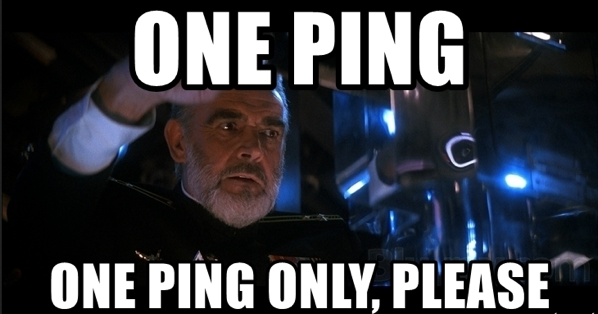
One button. Just give us one button, Apple, to block, report, and delete any unwanted call and associated emails. Make it fun. Maybe license the “One ping only” line from The Hunt for Red October and put that on the button. Make purging spam fun, not tedious. One ping only, please.
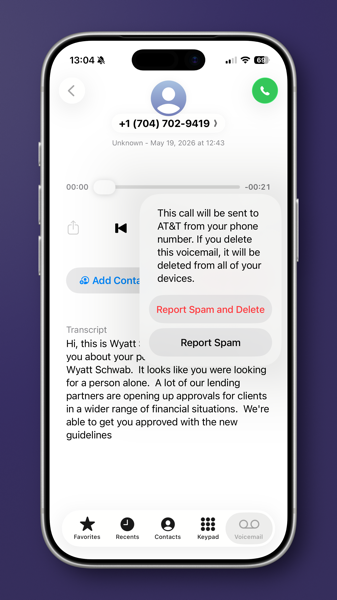
At the moment in order to ban any trace of an unwanted call that leaves an AI generated voicemail you have to take three steps. There’s no third time is the charm here.
To get rid of that voicemail, you have to open the transcript and choose Report Spam And Delete to nuke it.
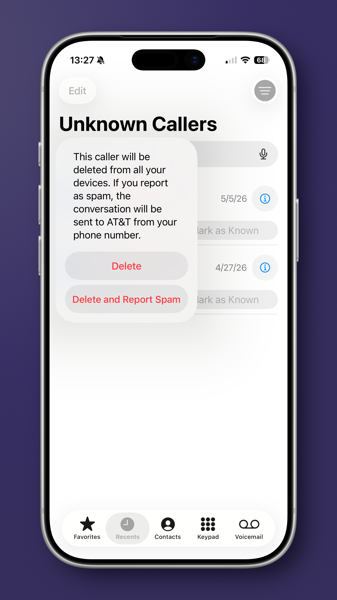
You then need to go to the Unknown Callers screen and Block and Report spam by swiping left to reveal a little orange hand that is the Block button, and then choose to Block or Block and Report Spam.
And then you need to delete the call itself from the Unknown Callers screen. Or you can Delete And Report Spam.
I don’t think a system needs to be artificially intelligent to know that if I choose to block a number in one place, I’m not that keen on seeing it anywhere else.
Bottom line, there should only be one button. No need to slide to find it. Put it right there in the Unknown Callers screen that will Block, Report, and Delete any trace of the offending call. Give us the options, sure, but in one place, from one button.
FWIW, the same could be said about Messages. One button, only. That’s all we need.
Make it simple, Apple. Simple works.
You can also find more of my writings on a variety of topics on Medium at this link, including in the publications Ellemeno and Rome.I can also be found on social media under my name as above. This site does not use affilate links.
As chaos, criminality, and incompetence all in equal parts masquerade as something pretending to be the U.S. Government swirls us around like flotsam in a whirlpool destined to be dragged under, I’m missing simpler times when, upon reflection, I remember there were easier ways to stay afloat.
Life was always challenging, but I was younger then. Girded with the innocence of youth, I still felt like I could overcome whatever obstacles lay in front of me.
Given the higher costs of just getting around currently, I miss those younger days, when I lived in a part of town where I could walk to just about anything I needed to, or hail a cab if it was a longer journey not on a public transit route. Being younger, those trips included far fewer visits to doctors, and far fewer trips to help out older relatives. Again, mostly visiting doctors.
It was nothing to wheel a portable grocery cart a few blocks for a load of groceries and again back home. There also weren’t many thoughts about comparison shopping, as convenience outweighed whatever cost differences there were between competing grocery stores, pharmacies, and other merchants.
If I wanted to get out of town for the weekend, a car was easily rentable. Leaving and returning to the city was never a planning chore attempting to avoid whatever construction currently makes a joke out of the term expressway.
I miss the days when stupidly crooked politicians got their comeuppance if they tried to beat the rap, or had a sense of shame and the good sense to leave office on their own. Yes, things were still crooked. But there was a harmlessness about it, unlike in this moment.
In the neighborhood taverns, sports talk was sports talk. About the sport and real stats. Not about analytics, salary caps, and free agency. A trade was a trade. A hit was a hit, and no one knew the exit velocity.
Talk about politics was actually about the issues, and the political peccadillos certainly. But it all felt harmless compared to the blood sport it is today.
I visited one of those taverns recently. Felt like a stranger in my own town. Perhaps I am the stranger. Maybe I’m just strange. Perhaps it’s not my own town any longer. Today is not yesterday. Tomorrow won’t be either.
You can also find more of my writings on a variety of topics on Medium at this link, including in the publications Ellemeno and Rome.I can also be found on social media under my name as above. This site does not use affilate links.
When I check in on social media these days there’s a disturbing, yet comical, theme that runs through my feeds. Every time Trump or his toady enablers whips out some wide open act of corruption like a perverted exhibitionist my feeds fill up with naive anguish, hair pulling, and occasionally the gnashing of teeth.
“Someone needs to stop this!”
“Congress must stand up!”
“How can they get away with this?”
What a waste of bandwidth and AI training.
In the first two instances there is no one left to stop any of this. Those folks have all gone home, or they’re cashing in after joining the circus. Congress doesn’t exist as anything other than a way to accrue vacation days, pensions, and fundraising opportunities.
As to “How can they get away with this?” One word folks.
Pardons.
Ok, two words.
Pardons and immunity.
When SCOTUS let Trump off the hook by conferring presidential immunity for official acts, he got permission to double down and do whatever he wants to do. Who knew gleefully committing crimes could be official acts?
Those following and enabling him, do so knowing full well that unless he dies before signing their pardons (he probably already has), they’re home free as well. Remember, accepting a pardon doesn’t erase the underlying crime, it just pardons you for criming in the company of a friend with pardon power and immunity.
For those who haven’t figured it out, it’s a risk free criminal enterprise.
It’s amazing how brave you might think you are, when you know you won’t be held accountable. It’s not bravery. It’s actually servitude.
It’s also amazing how naive we can be thinking any of the old rules still apply or that someone is going to ride to the rescue. No one wants to admit the jig is up because that ends the outrage gravy train, and is painful to contemplate.
You can also find more of my writings on a variety of topics on Medium at this link, including in the publications Ellemeno and Rome.I can also be found on social media under my name as above. This site does not use affilate links.
The grandkids are coming! The grandkids are coming!
It certainly feels like an invasion as we prep the house, prep the fun and games, and prep ourselves for their arrival. They’re spending most of the week. We’re spending a small fortune.
But we wouldn’t have it any other way. Bring ‘em on
You can also find more of my writings on a variety of topics on Medium at this link, including in the publications Ellemeno and Rome.I can also be found on social media under my name as above. This site does not use affilate links.
Good writing is good writing. But underneath the surface or the subject matter of good writing, you find subtext, perhaps buried, that surprises beyond the words on the page, the summaries, and the top lines that often reduce more than broaden. That’s the case with this week’s edition of Sunday Morning Reading. Read on, dig beneath, and enjoy.
First up, is a piece by film critic Sonny Bunch, discussing The Weird Right-Wing Freakout Over ‘They Odyssey’ Yes, it’s about casting and race and history and myths and all those things. On the surface a tired argument. Dig below the controversy, and you might find a morsel or two worth chewing on, but in reality only being upset about if you believe in exercising or conjuring demons through outrage. Maybe someday we’ll all eventually end up back where we started from. But like Odysseus, the homecoming might feel as hazardous as the journey we’re putting ourselves through to get there.
Things are certainly screwed up in U.S. Politics, but we’re not alone. In fact, we’ve got more than enough company. Great Britain is having its moment as well. Ian Dunt’s piece There Is A Light That Never Goes Out is one heckuva piece of writing that beneath the stormy surface of British politics, points to the problems far and wide and far below, regardless of what flag your ship might be flying when it sinks.
The trial between Elon Musk and Sam Altman over OpenAI and whatever the hell all of that means, sounds like a circus where the clowns won’t leave the center ring. M.G. Siegler takes a look at some of the shenanigans in Take Me Down To The “Amateur City.”
Rex Reed was, if nothing else, a show into and of himself as a film critic. I always found him both entertaining and I occasionally agreed with his acerbic criticism. For better or worse he set a standard that presaged much of what passes for criticism today. He passed away this week. Merin Curotto has written quite a remembrance piece that’s so much more than about the one man. The Rex Reed I Knew (1938-2026) is worth a read even if you weren’t a fan or don’t have any sense of who Rex Reed was.
Alessandra Ram explores what happens when you might be married to a man who is smitten with AI in Meet The Sad Wives Of AI. I think this could also apply across any way the genders choose to partner. I’m sure there’s a promise out there somewhere that AI will fix all of this. Right?
Chicago baseball is having a moment with both of its major league teams doing reasonably well and playing each other in the Crosstown Classic. There were and are great expectations for the Chicago Cubs, not so much for the Chicago White Sox, which is why the exciting level of play on the South Side is capturing some of the North Siders glow. In the midst of all of that, this week marked the passing of Sam Sianis, the legendary owner of the Billy Goat Tavern, who placed a curse on the Chicago Cubs back in 1945 when the owner wouldn’t let him bring his goat into the stadium. Paul Sullivan has a great write up on the history, the myths, and the lore. Check out Sam Sianis And The Curse Of The Billy Goat Remind Chicago Fans Why We Love Baseball And It’s Myths.
When you do look beneath the surface of a moment, a life, an obituary, or perhaps even the remains of what’s left, sometimes you find more than you might have imagined. Archaeologists Find Egyptian Mummy Buried With The ‘Iliad’ by Franz Lidz tells such a tale. Homer says, “the sort of words a man says is the sort he hears in return.”
I’ll add, the sort one reads to that as well.
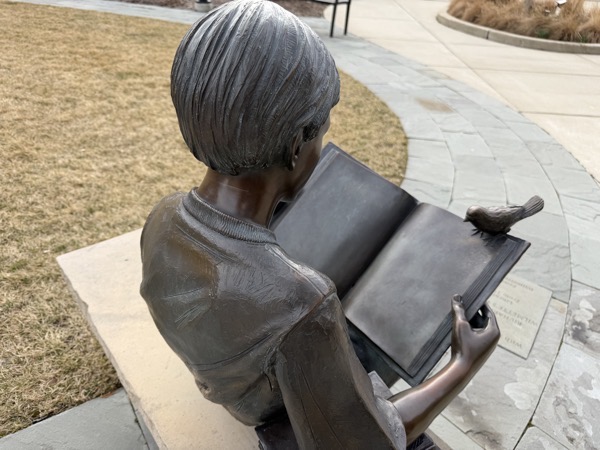
(Photo by the author)
If you’re interested in just what the heck Sunday Morning Reading is all about you can read more about the origins of Sunday Morning Reading here. If you’d like more click on the Sunday Morning Reading link in the category column to check out what’s been shared on Sunday’s past. You can also find more of my writings on Medium at this link, including in the publications Ellemeno and Rome. This site does not use affilate links.
Now that we’re into rehearsals for the stage reading of Puta Wijaya’s play OH, it’s both gratifying and terrifying to discover that my initial thoughts about the piece being timely and universal are correct.
That of course what’s makes a good play, a good story. It also makes for a constant reminder of how little attention we pay to the stories we tell and repeat.
Wijaya’s work began as a short story that was originally published in 2003, and was then adapted by him in 2018 into what he calls a monodrama, meaning a one character monologue. It’s set in Indonesia. But the words spilling out his thoughts could easily have been written about the U.S lately.
Here’s an example:
I’m stepping into the struggle for justice in this impotent toothless tiger of a country which, instead of using what’s left of its strength to fight, lazes around enjoying itself. Oh! This is insanely embarrassing. It just doesn’t make sense. But this is reality. Our reality! The older generation slacks off, the younger generation jacks off. People are racing to dig their own graves.
And another:
Not like those other lawyers these days who are mostly about making deals, or those elites and intellectuals who shine when they are powerless, but who, from their new seats of power, become more…(Louder) violent, greedy, materialistic, merciless, and despicable once they get the opportunity to trample on justice and truth they once idolized.
Working with IVP is one of the gigs I return to eagerly. Working with plays from far away places and different cultures, always, in the end, proves over and over again that at the core, we’re all the same. Though our life experiences may differ, they really aren’t.
I used the word terrifying in the opening of this post because you’d never know that this play wasn’t written about what we in the U.S. are living through currently. I also say that because regardless of where we’re from, or the horrors we endure, we never seem to learn how the wheel always turns and comes round again.
Life can be painful. Live theatre can be as well.
You can also find more of my writings on a variety of topics on Medium at this link, including in the publications Ellemeno and Rome.I can also be found on social media under my name as above. This site does not use affilate links.