The iPad Mystery That Isn’t Really a Mystery

Apple is about to unleash its annual storm of iPhone news next week when it unveils the 2023 edition of the computer that changed everything. There will be a flood of impressions initially, good and less than good, and we’ll be wading through high water right into the holiday season.

So why is it raining thoughts about iPads?

Goldiipads

Probably because it doesn’t look there will be much in the way of iPad news at this event. And from what we know of iPadOS the big news seems to be correcting the goofy mistakes made last year with Stage Manager. I also think that since this year’s iPhones and Apple Watches are rumored to be more interative than innovative, and much of the pent up energy is focused ahead to next year’s release of Apple’s Vision Pro, AND the predominant iPad rumor is that the 2024 iPad will feature big design changes, there’s room to kvetch a bit.

Don’t get me wrong about the iPhone. I don’t think iterative is a bad thing. The iPhone is mature platform. In and of itself that’s a great thing. But that doesn’t set the tech pundit heartbeats a-fluttering as much as the potential for bigger innovations.

Nature abhors a vacuum and so does the Internet. So why not talk about everyone’s favorite Apple mystery: iPad.

Why a mystery? No one seems to know exactly how to define this device. Including Apple.

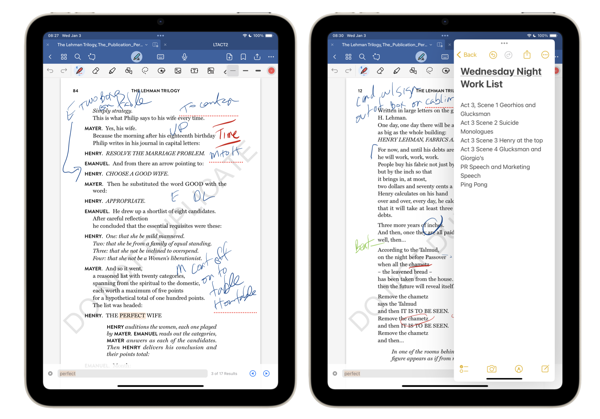
Before moving on let me say this. I’m an iPad fan. I’ve owned most of them, currently the latest versions of the 11-inch iPad Pro and iPad mini. I use them both daily (along with Macs) for both work and play. I’m typing this currently on the iPad Pro while visiting family. There hasn’t been one too far from my reach since the first version. It’s my favorite work device and my favorite stall surfing device.

Here’s a quick summary of what some are saying:

Jason Snell of Six Colors kicked off this current wave by saying he’s Giving up the iPad-Only Travel Dream. He’d like to see the iPad capable of more functionality with Apple opening the platform up for developers and users to more easily extend it to their heart’s content.

John Gruber picked up and extended that argument on Daring Fireball.

Wes Davis on The Verge hammers the iPad sits in an awkward place argument.

Harry McCracken calls it a beautiful disappointment.

Jason McFadden asks the question Why do some want the iPad to be more than just a good tablet?

Denny Henke of Beardy Guy Musings thinks we’re perpertually moving goal posts in the discussion between touch-first casual users and power users who pound keyboards for a living.

I’m sure I missed a few.

None of them are wrong.

Much of the mystery isn’t really mysterious. It’s that there seems to be no Goldilocks answer. The pro-users want more and the extremes in that camp won’t be content until the Mac and the iPad are one and the same. In the middle, the iPad Air line offers most users much of what the Pro offers but holds back a bit. The iPad without a modifer offers even less, but compensates with a price point that makes it popular for those who just want to stream entertainment, do some browsing, FaceTime, or shut their kids up by letting them stream CoComelon.

And the iPad mini is caught somewhere in the middle. In my view the iPad mini is the most hindered by Apple’s attempts at segregating the lineup beyond size. Goldilocks might have called it “just right.” It’s the device I pick up the most.

Unless you measure success merely by sales charts, there’s nothing wrong with there being some confusing segmentation. On the other, what we currently know (and use) in all computing categories is constantly changing around and underneath our finger tips. Apple Silcon changed everything, including, I think, Apple’s plans. All you had to do was watch the “What’s a computer” commercials in the last decade to see where things seemed to be headed.

And if you think that spatial computing, the concept behind Apple’s Vision Pro, wasn’t in the works when those commericals were approved and aired, you’re mistaken. Whatever spatial computing is going to be it is going to profoundly change things.

It’s hard for the pundits when Apple’s cues aren’t easily decipherable. In my view it’s less, but still so for consumers. I’ve yet to read a review of any product in any category that calls it perfect without calling for more. Goodness knows how confusing things will be in the future if spatial computing’s future offers a lineup of products resembling anything  close to current speculation, from contact lenses to powerhouse gaming headsets.

So I say enjoy the ride while the riding’s good. There’s no Goldilocks iPad for all. There’s no Goldilocks computing platform for all. There probably shouldn’t be and I hope that always remains the case. Niches can be nice. And besides, we’d all be bored and begging for more anyway if the game just stopped. Just look at the lack of excitement about this year’s iPhones and Apple Watches.

Sunday Morning Reading

Summer is heading towards Fall and we’re on lake time this weekend. So a shorter list of things to share. As usual it’s a potpourri of topics and great writing. Enjoy!

IMG 3220

Mug shots were the talk of all the towns this week. David Todd McCarty takes a look at a bit of of mug shot shooting history in The Lost Art of Shooting Criminals.

Always fun to look back on the history of old school Chicago politics. Edward Robert McClelland takes just such a look back as he looks ahead in The Machine Has Given Way to Organizing.

This piece is a real pleasure from Natasha MH. Worth lingering over for more than two minutes. Check out A Two-Minute Pleasure.

In this world where the reliance on facts keeps diminishing Jonathan Taplin takes a look at How Musk, Thiel, Zuckerberg and Andresseen-Four Billionaire Techno-Oligarchs- Are Creating an Autocratic Reality.

And if Autumn is approaching so too is football. David. K. Li takes a look back at the Supreme Court case that changed the game (or rather the money behind the game), in Meet The Man Who Thinks He’s Screwed Up College Football With A Supreme Court Win.

An another harbinger of Fall is the build up and anticipation of new Apple gear. Jason Snell takes yet another look at the never ending debate surrounding the purpose of the iPad in Giving Up The iPad-only Travel Dream.

If you’re interested in just what the heck Sunday Morning Reading is all about you can read more about the origins of Sunday Morning Reading here.

Sunday Morning Reading

Here’s some Sunday Morning Reading to share. From arts in space and on the stage, to booby trapped tombs and age-old pathogens thawing out of the ice, here’s an electic mix of topics that might or might not connect together as we sweat and swelter through the Dog Days of Summer. Enjoy.

Terracottaai

The Lunar Codex is an archive of various forms of creativity including contemporary art, poetry, podcasts, film, images, and other Earth bound cultural artifacts that’s on it’s way to the Moon. Headed up by Samuel Peralta it will travel on several rockets and include works of 30,000 artists, writers, musicians, and filmmakers from 157 countries. J.D. Biersdorfer tells us about it in the New York Times.

Back to Earth it seems that archaeologists are afraid to look inside the tomb of China’s first emperor. You know the one guarded by the Terra Cotta army among other things. Apparently it’s not just what might be disturbed by digging or what might be disturbing if they do, but there’s a theory that the place is booby trapped. Sounds very Indiana Jonesish. Tom Hale writes about it in IFLSCIENCE.

The Stage Is Yours according to Natasha MH in this Medium post on Ellemeno. It’s a great piece about arts, artists, dance, theatre, authenticity, and those hidden fears and secrets inside of us all. You know, the ones we choose not to share when we offer ourselves up. Or do we?

The strikes by the actors and writers unions have pointed a spotlight on AI and how that might replace creatives in film, TV and other industries. Studios see financial savings from reduced costs. But maybe they should take a look at Michael Grothaus’ piece in Fast Company as he theorizes that AI might even replace the studios themselves.

In what sounds like science fiction, scientists have woken up a 46,000-year-old roundworm from the Siberian permafrost. Carolyn Y. Johnson in the Washington Post tells us about that. But if tinkering with what many might think should be left alone doesn’t sound John Carpenterish enough for you, we’re also hearing about frozen pathogens that are waking up on their own in cold places that are warming up. (Can you say Climate Change?) Corey J.A. Bradshaw and Giovannie Strona wrote about this in The Conversation and I caught the article from Science Alert.

Ryan Busse is a former gun company exec who is now warning about the dangerous growing radicalization in his former industry. Corey G, Johnson talked to him for this article in ProPublica.

The social media world is certainly in a state of flux given all the damage Elon Musk has done to Twitter and the scramble by others to provide venues that might offer some of what Twitter used to be before it was X-ed out. Craig Grannell has a great piece called X Marks the Rot. Don’t Buy Into Elon Musk’s Lifelong Crusade.

If you’re interested in just what the heck Sunday Morning Reading is all about you can read more about the origins of Sunday Morning Reading here.

A Possible Answer To Those Apple Migraines

I’ve written about what seemed like random issues with my Apple devices here and here. It looks like these supposedly unexplainable Apple Migraines might not be quite so random. At least of late.

Applemigraines

The issues are maddening.  At apparent random times the Macs I use will disconnect from iCloud, losing the ability to Sign in with Apple Watch and jettison the Continuity features including Handoff and Universal Control. At times a reboot would rectify the problem. At other times not. I’ve spoken several times with Apple Support and they have no answer they are willing to reveal.

Recently though I’ve detected a pattern.  Apple has released quite a few operating system updates in these last few months. Several of those were what Apple calls Apple Security Responses meant to fix security holes and are smaller updates. We’ve also seen two larger OS updates in recent months. If you follow the news you know roughly when these releases will drop. Regardless of type, the last five releases prompted an iCloud disconnection  the morning the updates would be released.

I’d say it’s like clockwork, but that’s a risky statement. Stranger still is that during at least two of these cycles after installing the OS updates I got the alert that a new Mac had been added to my account.

Macaddedtodevice

That notification haven’t appeared for the last three updates. I’d call Apple Support and talk to them about it, but that’s been proving to be a waste of time with this and other issues.

Apple just released what is probably the last major OS updates for Ventura and iOS 16 as well as their other devices. There may be more of those Security Responses before Sonoma and iOS 17 roll out in the fall. I’ll post updates if I see this behavior continue. Is this an answer? Probably not. But it is a clue.

In the meantime, it’s still catch as catch can when it comes to pinning this down conclusively, and as long as Apple Support remains silent on the issue who really knows what’s going on behind the scenes.

Sunday Morning Reading

A few loose threads in this edition of Sunday Morning Reading. Yes, that’s a bad attempt at headlining what’s going on in the social media universe after the release of Threads by Meta. But hey, if you’re interested there’s also pieces on our inevitable extinction driven by our pursuits of pleasure along with a piece of how we can possibly slow down aging.

Threads

We seem to want everything to replace everything else when something new happens. Watts Martin takes on Threads vs Mastodon in You’re So Vain, You Probably Think This App Is About You: On Meta and Mastodon. 

Scott Galloway also takes on the Threads thing in Threadzilla. Good read for context and what’s going on in the moment.

And while not exactly Threads related but certainly Threads adjacent, David French has an excellent piece about how Twitter Shows, Again, the Failure of the New Right’s Theory of Power.

And to move away from Threads, did you know The Pursuit of Pleasure Could Doom All Intelligent Life To A Bllissful Extinction?

But not to worry about extinction. Go ahead and pursue pleasure. Madeline Fitzgerald tells us that Harvard Researchers Claim They’ve Found the Chemical Cocktail That Reverses Aging.

And back on the Artificial Intelligence beat, here’s a bit from Benji Edwards on Why AI Detectors Think The US Constitution Was Written By AI.

If you’re interseted in just what the heck Sunday Morning Reading is all about you can read more about the origins of Sunday Morning Reading here.

Hollywood on Strike: Nothing Artificial About This Intelligent Move

Balls and Strikes.

SAG-AFTRA joined the WGA by going on strike against the Hollywood studios. This sounds and feels like it’s going to be quite a show. The issues surround the pieces of the compensation pie, but also everyone’s favorite new tech-bug-a-boo, Artificial Intelligence. 

The studios, like many other industries see AI as a way to reduce costs. Set aside the issue of replacing labor, introducing AI also affects creativity. We’ve been heading here for quite some time and this is certainly a moment when lines need to be drawn because the precedents set down now will have an effect for who knows how long. 

Here’s SAG-AFTRA president Fran Drescher’s speech announcing the strike. She says it better than I, or just about anyone could. 

And for history and political buffs if history does indeed repeat, Fran Drescher will be elected President of the US down the road. Ronald Reagan was the last president of the guild when it went on a similar strike with other guilds.

Evernote Like Everything Was Never Forever

Evernote. It was one of my mainstay apps for so long.  As it was for many. There wasn’t much I didn’t squirrel away in that app. It was always one of the first apps I installed on any new device. And as a Tablet PC guy back in the day its digital inking features were a big draw. Evernote was everywhere. Always there when a new platform dropped. Always a way to make data transportable between platforms. But it hit hard times and its future is more than a bit murky.

Evernote splash

“Never, Ever, Forget” was the slogan that accompanied the elephant logo so prominent on so many devices. What we should all never forget is that nothing lasts forever. After cluttering up the service with more features than anyone could possibly have needed, Evernote hit tough times and lost users by the herd. Charging a steep (for the time) subscription price didn’t help the migratory exit either.

Evernote was bought last year by Italy based Bending Spoons and last week the new owners announced they were closing down US operations, laying off staff and consolidating operations in Europe. Perhaps they’ll manage to keep the eventual extinction away.

Not really a new story. But as familiar as it may be it’s a reminder that any of these services where we store notes, receipts, memories, journals, or data in any form may feel like ours but they’re not. The rent always comes due. The investors always want growth. And the eventual march to the end begins. There are a number of note taking data stores you can migrate your Evernote data to and I recommend doing so if you haven’t already done so. But never, ever forget. Nothing lasts forever.

Meta Meets the Moment with Threads. (For the Moment)

You gotta hand it to that huckster Zuckerberg. He and his Meta team have certainly met the moment with the release of his Twitter killer, Threads. It’s not that the app is all that great in this version 1. (More on that later.) But Zuck pushed this thing out with such gusto and killer timing that he was able to eaisly take advantage of Elon Musk’s baffling and ballooning buffoonery. When billionaires go for each other’s throats apparently they use guillotines.

Ap23186563996080 c4e465fdee66844fe3dad73b70c8c97b538ef5c1 s1100 c50

Sure, these social media wars aren’t over yet. Far from it. But these wounds are deep. The number of signups on Threads keeps rising so fast I won’t even hazard a guess at how many millions there have been for fear of the number being old news before I finish writing this. And on it goes.

And on it will go. I don’t think we’ve ever seen such an underpantsing as Zuck put on Musk. He’s taking advantage of someone who has made himself such a detestable target, that Zuckerberg, not all that well liked himself, is momentarily being thought of as the conqueror Elon and his detestables dreamed of being. It’s deliciously funny. But it is also frightening when you take a moment and think about it.

Again, there’s no guarantee Threads will carry this moment’s momentum into something resembling what Twitter was before Musk took MAGA torches to it. And while in this really crazy, and what seems historic, rush there seems to be an appetite for this kind of “everybody into the pool” replacement. That’s guaranteed to fade once ads, bots, spammers, etc… inevitably get their chance to piss in the pool. That’s gonna happen.

The Threads team also needs to move quickly to address some serious missing pieces for a social media app in this day and age. There’s nothing that speaks to accessibility in the app yet. There’s no web access from a browser forcing everyone to use it on their phones. Hashtags aren’t there yet. Forget searching. Or sending direct messages. These are table stakes in the social media game. Lots of iPad users are complaining that there isn’t an iPad app. Don’t hold your breath on that one. This thing is connected to your social network via Instagram and there’s still no appetite for an iPad app from Instagram yet in what seems like another front in the Billionaires Battles, this one between Meta and Apple.

Just about everyone is screaming to only have their feed show only folks they are following. Same here. But, folks, let’s get real. These companies need to push all sorts of stuff into your eyeballs in order to make bigger bank. We lived through this with Facebook, Instagram, Twitter and the rest. We will probably see some soft of attempt at appeasement here, but it’s not going to last. Don’t kid yourself.

There’s also talk of Meta doing the federated thing with Threads. That’s got pros and cons and lots of consternation stirred up among those who see the beneift of protocols like Activity Pub in the Fediverse. (If you have no idea what that means, don’t worry. Most don’t.) I have my doubts things will go this way. But if it does, there’s going to all sorts of noise made on places like Mastodon and beyond.

So this story has offered a slam bang opening number and for a variety of reasons appears to be sucking many in to see what’s next while it sucks ever more life out of Elon’s Twitter. There’s more to come and more to know when it does. About the only thing we know in this moment is things are changing. But they always are. Score this moment for Meta. Enjoy the ride while we watch it play out.

Oh, and you can find me on Threads at https://www.threads.net/@warnercrocker

The Missing Link in the Artificial Intelligence Story

I’ve written and linked to a bit about Artificial Intelligence. I see the upsides and the downsides. The mislabeling (marketing.) The gold rush. The warnings. And I’m starting to see a bit of tarnish on this shiny new object of desire. It’s fascinating. 

What’s starting to puzzle me in this ongoing discussion is what we’re not seeing. 

Artificialintelligence

But first a few themes.

One of the biggest stories is how AI is going to give us more freedom to enjoy our lives and be more creative by assuming many of the mundane drudgery of our lives. What immediately follows that is how many jobs we’re going to lose and stories of “too eager for the quarterly results” CEOs cutting jobs. 

The next recurring story is how this will affect creativity by replacing artists, stealing from artists, and generally reducing creativity to bits and bytes created by bits and bytes. 

And then there’s our continued march away from knowledge and facts to one where we don’t know what’s real and what isn’t. Especially once the supposed AI bots and Large Language Models start feeding on themselves instead of just on the stuff we make up.  

Those three themes seem to predominate the conversation. But back to what I’m not seeing. 

Why aren’t we seeing the tech bros advocating ways to use AI to help us get rid of the some of the scourges of the Internet and our lives? 

A few examples:

  • A tool to indentify and remove spam from email, texts, phone calls, etc… 
  • A tool to indentify scams and scammers.
  • A quick label on any web page that tells us how many trackers there are and where they are from.
  • A tool that always puts the “Continue Watching” queue at the top of the home page of streaming apps.
  • A tool that kills ads for products we just purchased. 
  • A tool that actually lets users unsubscribe from content. 
  • A tool that points to which company sold our data to the new content in our in-boxes. 
  • A label that justs says “Bullshit” on content that is bullshit.
  • A tool that tells us when our ISP is throttling bandwidth. 
  • A tool that always links back to the original source for regurgitated content.
  • A tool that identifies and labels bots.
  • A tool that tracks and reports the origin of evil doers on the web.
  • A tool that actually deciphers error messages, tells us the real problem, and connects us to useful solutions that don’t require wading through scores of bogus and out of date webpages and videos.
  • A tool that actually lets us vote advertisments up or down and lets us say I never want to see this ad again.

And of course:

A quick label that says this content was created by artificial means.  

I’m sure there are others. 

Of course this kind of “intelligence” would devastate so many business models that the global economy would probably collapse. But then perhaps there could be an AI tool that tells calls bullshit on the stuff economists and politicians tell us about that as well. 

Sunday Morning Reading

Some Sunday Morning Reading for Father’s Day. There’s no real theme to this week’s edition. Which is fitting. We used to joke that my Dad had a new hobby every six months. He did. But that just demonstrated his endless curiosity about the world around us. I think I got some of that tossed into my mix. So here’s a pot-pourri of topics to share. 

Blanche monniers news

Humans aren’t mentailly ready for a lot of things. So called Artificial Intelligence is certainly one of them. Thor Benson tells us why that might be the case

Nicholas Casey tells a great spy story in The Spy Who Called Me.

Barbara Kinsolver is a great writer. Her latest book Demon Copperfield brings a dive into Dickens for a tale from Appalachia. Lisa Allardice has written a terrific profile on Kingsolver. 

Pennsylvania apparently is one of the key stomping grounds for the Christian Right’s desire to spin us back to the dark ages. Frederick Clarkson gives us an excllent look into this. 

Why Is Everyone Watching TV With the Subtitles On? Devin Gordon offers up some answers. Mine’s simple: Selfish stupid filmmaking. 

What came first the chicken or the egg? Well that age-old riddle leaves the rest of the egg-laying species out of the question. Intriguing piece by Nisha Zahid. 

And while we’re talking about the riddles that plague humans about the non-humans sharing our planet, Ari Daniel highlights an article in Cell that says an Octopuses can tweak the RNA in their brains to adjust to warmer and cooler waters. 

This is a scary and sad tale. Gina Dimuro tells us about Blanche Monnier. Her parents locked her in her room for 25 years after she fell in love with the wrong kind of guy.

If you’re interseted in just what the heck Sunday Morning Reading is all about you can read more about the origins of Sunday Morning Reading here