Social Media is having another moment. Social Media has many of those. This one is in the wake of the historic U.S. election and a largely a delayed reaction to Elon Musk’s raping of what used to be Twitter, pro-Trump propagandizing, and general infantile behavior. That last comment was not intended to insult infants. They know no better.

Certainly it cuts deeper than that. But not by too much. Since Musk’s takeover of Twitter it has largely become a stinkier cesspool than it already was pre-Musk. Now, it’s overrun by frat boys, tech bros, and Nazis, all far too eager to rape and pillage as Twitter/X barrels down a path to becoming State Sponsored Social Media. That would be ironic if irony applied to anything on the Internet and in politics these days.
Since the takeover, there have been at least three massive migrations of Twitter/X refugees that would make a human trafficker lust with envy for the business. The first came in the days leading up to and after Musk’s takeover. Most of those folks headed to Mastodon at the time. But, for quite a few Mastodon offered too many hurdles, too much policing, and too little inclusiveness to overcome their quest for Social Media solace. But quite a few stuck.
Then there was Threads, the Mark Zuckerberg empire’s attempt to swipe back at Musk. That too pulled in a rush of users, at least initially because you could import your entire Instagram graph. That could and should have been an early warning sign.
What was funny to watch in that migration was how conveniently many who had been pounding Zuckerberg as an Internet devil in the Meta hellscape, quickly developed amnesia and jumped on board. But Threads began to lose luster, when it became apparent that producing, sharing, and viewing desired content (most of it political and news) became secondary to Meta’s commercial needs. Again, that should not have been a surprise.
And in this latest chapter there is yet another shift to yet another social network, this time BlueSky.
This last migration to bluer skies is both yet another reaction against Twiiter/X and also the increasing dissatisfaction with Threads. There are reports that Mastodon is also seeing a smaller wave of newcomers or returnees. Regardless of platform, returnees is a key. When a new service, in this case a social network, is launched, there are quite a few who sign up simply to reserve their name or handle on that service, assuming that at some point their followers will, well… follow them there. Some try it out and stick, some move on, perhaps to return at a later date.
To be clear, I’m on Mastodon, Threads, and Bluesky. (Yes, those are links to my profiles on each of those services.) I stopped participating on Twitter during the first big migration, though I kept my account active for a period of time before finally deactivating it. I am one of those who will grab my name, (I always use my real name), when a new platform debuts and it is littered around more Internet services than I can remember.
If I had to choose one social media platform today I’d choose Mastodon. I’m comfortable there, and that will probably be my downfall. So I continue to actively explore because I don’t think there’s anyway to predict how any of this will evolve. Ask anyone who proudly proclaimed with each new app that they were replacing the Twitter icon on their home screen with Mastodon, then Threads, now Bluesky. Always a good laugh. Infatuations are always infinite entertainment.
Know this. For one reason or the other all of these services will end up disappointing users at some point in the future.
Here’s the thing. The story we’re living through has been repeated many times on Internet platforms other than social media and in social spheres other than the Internet. Folks find an app or a service they like. The business of that app or service changes hands when the original owners cash out (nothing wrong with that), or choose to pivot in different directions. Customers show their dissatisfaction and move on. Nothing is forever in life. The distance between now and forever is even shorter in Internet time.
Why is social media so attractive an addiction?
Being on social media is largely a performative gesture. If you’re going to participate, as opposed to just lurking and following, you’re choosing to share what you think or feel, in and of itself, quite a bit like performing. Some do it as themselves, some adopt personas.
If you rub digital elbows with celebrities, sports heroes, and other favorites, you get to bask in their spotlight while pretending that you are actually communicating with those larger than life folks with large followings. Think of it has having a backstage pass. You’re part of the entourage, part of the show. At least in your mind. And like all performers that’s where the juice is juiciest. In the little theatre or grand stages of their own minds.
But, the minute you step on any stage you also open yourself up, and become vulnerable to judgment, criticism, and yes, ridicule and possible abuse. Willing to share, many recoil at the responses that can come flying back their way, yet some thrive and build lucrative lifestyles from it. To say you need a thick skin and not care oversimplifies and understates the paradox. Protestations aside, (“I don’t read reviews”), all performers care. Even stating you don’t care is an act that shows how much you actually care.
Reacting to Reactions
Everyone wants whatever new social network pond they are swimming in to be either what TwitterX was before Musk, or anti-what TwitterX became. Everyone also wants their pond to be just the right temperature and free from scum. Except of course the scum. There will always be scum no matter how many ways of blocking or muting a network can provide.
Variety may be the spice of life, but there’s also a healthy clamoring for all of these new networks to work together. Protocol debates are heating up and some interesting solutions for cross pollination are buzzing about. Quite honestly I hope whatever we end up with will be something different with distinctions with differences among them.
I don’t expect any of these social networks will find ways to escape, or be free from whatever you, I, or someone might consider bad or wrong behavior. You would have to get rid of humans to do that. (Maybe we’re heading that way faster than we think. *Cough* AI *Cough*). There are new features in all of these newer networks that are reactions to how things sunk so low on Twitter/X. Call them reactions. Every action may have an equal and opposite reaction, but that’s a cycle that never ends.
Why we should have an expectation of a safe and conflict free “social” network when we live in an age when we can’t expect that at a sporting event, a church, or a family holiday gathering is beyond me. I’ve always viewed social media no differently than I view any other social interaction, there’s just a safer illusion of freedom when you’re behind a keyboard and not face to face. Remember, TwitterX had its bad actors even when it was in its prime.
Real Time
Bad actors notwithstanding, there will never be another Twitter/X-like social network that resembles what it was in that heyday. Those days and that utility are gone. In my feeds I could get real-time local news, as well as real-time news from around the planet. I could communicate with companies I did business with, promote my own, and receive technical support, (remember ComcastCares and Frank Eliason?) There was also great fun to be had reacting online in real-time to sporting or current events.
The key to all of that was the real-time or near real-time utility of Twitter. Currently none of the newer networks comes close to that. I doubt they ever will.
Bluesky looks like it might have the best chance of achieving some semblance of that real-time utility, but it’s early and it has a ways to go before any determination can be made. What is obvious is that Bluesky has put up enough of a threat to Threads, which seems to have no interest in anything approaching real time, that Meta is making rapid changes signaling they are feeling the pressure. All that means is we’re going to see some bursts of activity and change as competition, perceived or real, heats up. In real time.
What was Twitter/X wasn’t built in a day and just like everything else happening in the world we’re in a period of transition without knowing, but perhaps fearing, what we’re transitioning to. So, it is wise to be skeptical.
Far be it from me to tell anyone where to consume or perform on social media. I’ll continue to explore what’s out there, because one way or another we’re heading somewhere different, perhaps faster than we could have imagined a short time ago.
Pick your poison.
You can find more of my writings on a variety of topics on Medium at this link, including in the publications Ellemeno and Rome. I can also be found on social media under my name as above.


 I doubt it will have much effect.
We have to face facts. There are far too many folks who are currently far too delighted with how things are going or far too delusional enough to think a day long protest will create enough impact to do anything but create noise. Noise is good. Signal is better.
To be clear, I’m not against protests. In fact I think there should be more of them. Pushback does help. Collective action helps more. In fact, I’d love to see a broad country wide general strike. Folks are angry, and in my humble opinion that anger unfortunately needs to heat up and boil over before anything has any prospect of prompting change. I don’t like to say that. I don’t like to think it. But it’s no longer a choice between the high road or low road. We’ve all been dragged into the gutter and like it or not we need to start fighting to get out of this stink.
So keep up the protests. I’m glad to see that there are more planned for other dates.
I doubt it will have much effect.
We have to face facts. There are far too many folks who are currently far too delighted with how things are going or far too delusional enough to think a day long protest will create enough impact to do anything but create noise. Noise is good. Signal is better.
To be clear, I’m not against protests. In fact I think there should be more of them. Pushback does help. Collective action helps more. In fact, I’d love to see a broad country wide general strike. Folks are angry, and in my humble opinion that anger unfortunately needs to heat up and boil over before anything has any prospect of prompting change. I don’t like to say that. I don’t like to think it. But it’s no longer a choice between the high road or low road. We’ve all been dragged into the gutter and like it or not we need to start fighting to get out of this stink.
So keep up the protests. I’m glad to see that there are more planned for other dates.
 Keep organizing and showing up for in person protests. Especially at the district offices of cowardly congress critters who are taking orders from the top to stop doing town halls. But keep the pressure on both the MAGAts and the Dems. The former for their abject surrender and sucking up, the latter for pretending the old ways might still work. Joke’s on them all because they seem to be the only ones, besides the media, that think Congress actually matters any more than the Duma matters in Russia.
Think Bigger
I like to believe there are ways of thinking and acting bigger. This all might be pie-in-the-sky thinking, but it’s my brain and I like pie. So here are some thoughts.
Hit harder at companies like Amazon, Meta, Apple, Walmart, Target, newspapers, media, etc…
One way to do that is to organize a day when everyone cancels their subscriptions, memberships, monthly plans, etc… But don’t plan to do it just for a day. Cancel them all on one day and plan to leave them canceled for a full month or longer.
Angry about the changes at NBC and MSNBC? Cancel your cable or streaming service. If you haven’t already, cancel your subscriptions to The Washington Post, The New York Times, The Los Angeles Times, or whatever state media publication that’s certainly not going to be giving you real news in the future.
Given the choice don’t cancel online. Take the time to make a phone call and do the deed. All of those calls are recorded. State your unhappiness clearly and why you’re canceling. Whatever AI service that summarizes those calls is sure to pick up on the negativity.
Cancel your home Internet. Use your phone. AT&T, Verizon, and T-Mobile can’t be any deeper in the pockets of the government than they have been for quite some time over a number of administrations, so there’s not much room for coercion or surrender left there.
Cancel your streaming services. Log off and don’t participate in corporate social media. Again, all on the same day of action. Think you’ll be bored? Spend a month reading books. If you still have one, dust off that old Blu-Ray or DVD player and cue up any discs you have remaining. If you don’t have the discs check some out from the local library.
Pissed off at Google, Apple, Microsoft and other big tech companies? Take a trip to your local Best Buy or other gadget store and buy a relatively inexpensive external drive. Download all of what you have stored in the cloud and cancel your monthly cloud storage plans. All on the same day.
There are more alternatives for your computing needs than those offered by the popular makers. I won’t go into that here as there are plenty of resources online to find them. Here’s
Keep organizing and showing up for in person protests. Especially at the district offices of cowardly congress critters who are taking orders from the top to stop doing town halls. But keep the pressure on both the MAGAts and the Dems. The former for their abject surrender and sucking up, the latter for pretending the old ways might still work. Joke’s on them all because they seem to be the only ones, besides the media, that think Congress actually matters any more than the Duma matters in Russia.
Think Bigger
I like to believe there are ways of thinking and acting bigger. This all might be pie-in-the-sky thinking, but it’s my brain and I like pie. So here are some thoughts.
Hit harder at companies like Amazon, Meta, Apple, Walmart, Target, newspapers, media, etc…
One way to do that is to organize a day when everyone cancels their subscriptions, memberships, monthly plans, etc… But don’t plan to do it just for a day. Cancel them all on one day and plan to leave them canceled for a full month or longer.
Angry about the changes at NBC and MSNBC? Cancel your cable or streaming service. If you haven’t already, cancel your subscriptions to The Washington Post, The New York Times, The Los Angeles Times, or whatever state media publication that’s certainly not going to be giving you real news in the future.
Given the choice don’t cancel online. Take the time to make a phone call and do the deed. All of those calls are recorded. State your unhappiness clearly and why you’re canceling. Whatever AI service that summarizes those calls is sure to pick up on the negativity.
Cancel your home Internet. Use your phone. AT&T, Verizon, and T-Mobile can’t be any deeper in the pockets of the government than they have been for quite some time over a number of administrations, so there’s not much room for coercion or surrender left there.
Cancel your streaming services. Log off and don’t participate in corporate social media. Again, all on the same day of action. Think you’ll be bored? Spend a month reading books. If you still have one, dust off that old Blu-Ray or DVD player and cue up any discs you have remaining. If you don’t have the discs check some out from the local library.
Pissed off at Google, Apple, Microsoft and other big tech companies? Take a trip to your local Best Buy or other gadget store and buy a relatively inexpensive external drive. Download all of what you have stored in the cloud and cancel your monthly cloud storage plans. All on the same day.
There are more alternatives for your computing needs than those offered by the popular makers. I won’t go into that here as there are plenty of resources online to find them. Here’s 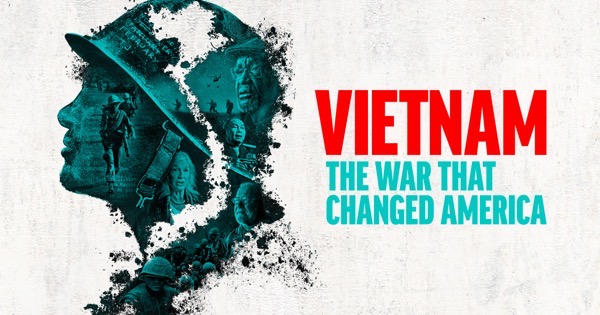 The documentary itself is excellent work. The six episodes splice together historical footage-some already famous, some new-with interviews from those who were actually there, on all sides of the conflict. We’ve seen similar story telling techniques in other historical documentaries. This time around we get to hear not just from Americans, but also from North Vietnamese and Viet Cong voices. These moments are certainly compelling, as are some of the stories of the journalists and other non-combatants involved.
Add to that what I’ll call the reunion factor. Each episode features a couple of individuals who served together to tell their stories, often with completely different views on the war and its aims. In the episode’s conclusion they are then reunited. It’s effective and at times emotional and effectively reveals the folly and tragedy of division.
As good as the series is at chronicling an inflection point in American and world history, what got me thinking was again witnessing scenes of anti-war protests. While I’ve seen many such scenes before, watching them through the prism of this contemporary moment of peril we’re trying to find our way through in the U.S left me curious and unsettled.
There’s no doubt that those anti-war protests had an impact on America culturally and politically. That tumultuous era created new alliances and divisions over root causes that we are still fighting over today. But as I watch those surging crowds of protesters, knowing how history often repeats and/or rhymes, I remind myself that was a different age. One without the organizing tools like social media and mobile communications that we have at our disposal now.
As I and many others anguish over the lack of leadership defying what is happening currently in Washington DC, I’m left wondering, given the tools we have at our disposal today, what it will take to effectively take advantage of those tools and galvanize, as was done then, to meet the challenges of today. Certainly the forces we’re now in contest with have bought and pillaged some of those services and learned how to use them more effectively than those in the reluctant opposition.
Perhaps we lost this round when most of us left Twitter to avoid the cesspool of Elon Musk’s making, instead of sticking around and forcing them to toss us off.
It took time in that era for anti-government pressure to come together and coalesce with enough momentum to bring change. And yes, it also took events like the murders of student protestors at Kent State, Martin Luther King, and Bobby Kennedy, not to mention the too many casualties of war.
Let’s hope we don’t need the time, or that type of violence, for leaders to emerge and spark enough outrage to bring a stop to the evil we now face. I’m not talking about leaders emerging from conventional political party structures. I’m talking about from the ground up. The tools are there. It should be easier to organize and get the word out with less effort than it was during the age of the War in Vietnam.
Here’s also hoping we have the courage, conviction, and most importantly the desire to do what is necessary when the time comes.
Because it’s coming.
You can find more of my writings on a variety of topics on Medium at
The documentary itself is excellent work. The six episodes splice together historical footage-some already famous, some new-with interviews from those who were actually there, on all sides of the conflict. We’ve seen similar story telling techniques in other historical documentaries. This time around we get to hear not just from Americans, but also from North Vietnamese and Viet Cong voices. These moments are certainly compelling, as are some of the stories of the journalists and other non-combatants involved.
Add to that what I’ll call the reunion factor. Each episode features a couple of individuals who served together to tell their stories, often with completely different views on the war and its aims. In the episode’s conclusion they are then reunited. It’s effective and at times emotional and effectively reveals the folly and tragedy of division.
As good as the series is at chronicling an inflection point in American and world history, what got me thinking was again witnessing scenes of anti-war protests. While I’ve seen many such scenes before, watching them through the prism of this contemporary moment of peril we’re trying to find our way through in the U.S left me curious and unsettled.
There’s no doubt that those anti-war protests had an impact on America culturally and politically. That tumultuous era created new alliances and divisions over root causes that we are still fighting over today. But as I watch those surging crowds of protesters, knowing how history often repeats and/or rhymes, I remind myself that was a different age. One without the organizing tools like social media and mobile communications that we have at our disposal now.
As I and many others anguish over the lack of leadership defying what is happening currently in Washington DC, I’m left wondering, given the tools we have at our disposal today, what it will take to effectively take advantage of those tools and galvanize, as was done then, to meet the challenges of today. Certainly the forces we’re now in contest with have bought and pillaged some of those services and learned how to use them more effectively than those in the reluctant opposition.
Perhaps we lost this round when most of us left Twitter to avoid the cesspool of Elon Musk’s making, instead of sticking around and forcing them to toss us off.
It took time in that era for anti-government pressure to come together and coalesce with enough momentum to bring change. And yes, it also took events like the murders of student protestors at Kent State, Martin Luther King, and Bobby Kennedy, not to mention the too many casualties of war.
Let’s hope we don’t need the time, or that type of violence, for leaders to emerge and spark enough outrage to bring a stop to the evil we now face. I’m not talking about leaders emerging from conventional political party structures. I’m talking about from the ground up. The tools are there. It should be easier to organize and get the word out with less effort than it was during the age of the War in Vietnam.
Here’s also hoping we have the courage, conviction, and most importantly the desire to do what is necessary when the time comes.
Because it’s coming.
You can find more of my writings on a variety of topics on Medium at 


 When Zuckerberg
 Life on the Wicked Stage: Act 3