The Catechism of a Christmas Carol Revisited

Humbugs and humble remembrances

In the run up to the Christmas holiday I revisit this piece I wrote for Ellemeno called The Catechism of A Christmas Carol. It makes sense because for most of my life I revisited or restaged A Christmas Carol, or some other Christmas themed show each and every holiday season.

I revisit the piece hoping that things might have changed for the better and that the hard hearted might have taken some of Dickens’ message to heart. Sadly, this year I knew that wasn’t going to be the case. But as I suggest in the piece, that’s true every year. This year it is just more openly apparent. As ingrained as it is in most of Western culture, A Christmas Carol doesn’t seem to have the same power to change hearts that the ghosts Dickens conjured did with old Ebenezer.

In fact these days, I’m slightly surprised that the folks in charge of banning books haven’t focused on this one yet, given how contradictory it is to their aims and careless heartlessness.

I write this a week before Christmas Day, 2025, in what has been a frightening year that presages more frights to come. I imagine this weekend will see theatre’s filled watching A Christmas Carol, A Wonderful Life, A Miracle on 34th Street, etc… etc…. We can hope some in those audiences will take home a moment taken to heart, if only momentarily.

Perhaps one day we’ll return to a place where the momentary touching of hearts and salving of souls means something for at least the length of the  drive home from a Christmas Eve matinee. There is always hope. And that’s what Christmas is about.

As Scrooge’s nephew Fred says:

“There are many things from which I might have derived good, by which I have not profited, I dare say,” returned the nephew. “Christmas among the rest. But I am sure I have always thought of Christmas time, when it has come round — apart from the veneration due to its sacred name and origin, if anything belonging to it can be apart from that — as a good time: a kind, forgiving, charitable, pleasant time: the only time I know of, in the long calendar of the year, when men and women seem by one consent to open their shut-up hearts freely, and to think of people below them as if they really were fellow-passengers to the grave, and not another race of creatures bound on other journeys. And therefore, Uncle, though it has never put a scrap of gold or silver in my pocket, I believe that it has done me good, and will do me good; and I say, God bless it!”

I hope you’ll read the piece. Merry Christmas to all of those who celebrate.

(image from Plateresca on Shutterstock.)

You can also find more of my writings on a variety of topics on Medium at this link, including in the publications Ellemeno and Rome. I can also be found on social media under my name as above.

Conflictions Part 2

Repeating the good while reminded of the bad

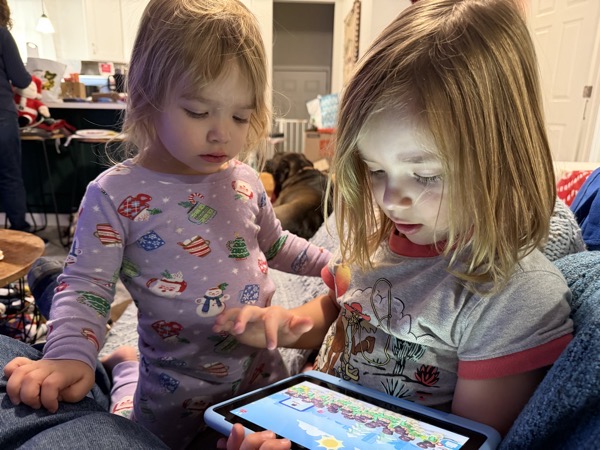
Continuing on a theme after yesterday’s post about conflicting feelings I ran across this interview with actors Colin Farrell and Jessie Buckley. The quote below from Colin Farrell reached out and touched all of those conflicted nerve endings in my body and soul I’m experiencing as I tend to my grandkids while watching the whirlpool that is the world at this moment.

PXL 20251216 133138813.MP.

I have mad moments of joy in my life and joy in work and joy with my kids. But I’ve always felt that the common denominator in regard to experience as humans is pain. The one thing we’ve all felt, really, is pain. I put fear and uncertainty under that banner. Not everyone, sadly, has felt joy. And that’s a great tragedy. But I’m fascinated with pain. Every single act of aggression or violence has its root in pain that has become personalized.

I mostly buy Farrell’s statement. As for me, I’ve experienced both great joy and great pain. My always burning inner conflict  is not letting the latter overwhelm the former.

These crazy days with the grandkids are full of that joy now that the visits more than the usual long weekend. Certainly when we view holiday favorite movies and continually rewind favorite laugh moments.

My grandson is continually asking me to identify the bad guys (he knows who they are after repeated viewings.) More curiously he’s asking why they are doing bad things or what makes them bad.

I hope like hell I’m giving him the right answers.

You can also find more of my writings on a variety of topics on Medium at this link, including in the publications Ellemeno and Rome. I can also be found on social media under my name as above.

Confliction

Scream or hide?

So many conflicting feelings tonight after spending a few days with the grandkids and experiencing sheer joy and wonder, while in the same instance catching glimpses of all that’s happening around us.

In the wake of “waving arms at everything happening seemingly all at once” I would like to say I am appalled at horrors of humankind.

But I would be lying.

Perhaps my granddaughter portrays it best when she just stands in middle of the room and decides to scream at the top of her lungs for no apparent reason, or just goes quiet and decides to hide on the lower shelf of an empty cabinet. 

You can also find more of my writings on a variety of topics on Medium at this link, including in the publications Ellemeno and Rome. I can also be found on social media under my name as above.

Time Names Architects of AI As 2025 Person of the Year

Hype masters of the Year

There was a time when I used to buy Time Magazine’s rationale for naming someone Person of the Year. The rationale always was the person or persons chosen had the most impact during the year, whether for good or ill. I’ve changed my perspective on that, long before this year’s choice.

ArchitectsCover web 01.

This year Time Magazine named The Architects of AI as the 2025 Person of the Year.

As Time puts it:

This is the story of how AI changed our world in 2025, in new and exciting and sometimes frightening ways. It is the story of how Huang and other tech titans grabbed the wheel of history, developing technology and making decisions that are reshaping the information landscape, the climate, and our livelihoods. Racing both beside and against each other, they placed multibillion-dollar bets on one of the biggest physical infrastructure projects of all time. They reoriented government policy, altered geopolitical rivalries, and brought robots into homes. AI emerged as arguably the most consequential tool in great-power competition since the advent of nuclear weapons.

There’s no denying the individuals Time lists have had an impact. In my opinion, the list leans decidedly into the “for ill” column. You can’t argue that these folk have certainly created a new economy with all of the yet to be fulfilled promises. But, at some point there needs to be something real underneath the hype. For better or worse, and however these promises may or may not be fulfilled, I’d love to be around a few decades from now to see how the ledger balance that describes what good may have come from AI versus what bad things it left in its wake totals up.

But if any or all of the promises come true, I doubt the AI accountants will ever show us that math.

Perhaps it’s the advent of the holiday season. Perhaps it’s that I’m just not that keen on Artificial Intelligence. But I’d rather see a focus on folks who have actually done tangible good for the world rather than folks who, to this point, have only made bundles of money promising a future that may in the end turn out to be what I suspect will be just another unfulfilled promise.

While I get the intention, I also find it darkly portentous that Time includes a “Ask me anything” chatbot that follows you along the webpage as you scroll through to read the article.

CleanShot 2025-12-11 at 08.46.57@2x.

To be fair, Time does point out some of the bad things already associated with Artificial Intelligence in the article. There are a growing number of those these days, but eventually eyeballs will pass them by in the same way folks eventually look past the ever present news of gun violence. Those sitting on that girder in the photograph are counting on that.

I’m guessing future Person of the Year selections will most likely be chosen by AI, and will whitewash most of that out of the accompanying articles.

You can also find more of my writings on a variety of topics on Medium at this link, including in the publications Ellemeno and Rome. I can also be found on social media under my name as above.

Sunday Morning Reading

Hands on with playwrights, movies, smart toilets, and a discomforting rooster

Another Sunday. More snow overnight. More shoveling later. The holidays creep closer or perhaps they’re already here, given that grandpa mode has kicked into high gear. Started writing a new play out of the blue yesterday. I have no idea why, but it just tumbled out of my brain on to the screen via the keyboard. Time to share some Sunday Morning Reading. Read as you will, even if it’s on a smart toilet.

I often save the softer pieces for later in this column, but I’ll lead today with David Todd McCarty’s Christmas Means Comfort. Tell that to the rooster.

The world lost a treasure this week with the passing of architect Frank Gehry. Lee Bray writes a nice obituary and tribute. Check out Architect Frank Gehry Who Designed Millennium Park’s Pritzker Pavillion and Foot Bridge Dies at 96.

Samuel Beckett’s Hands is a terrific piece by Rob Tomlinson about, well it’s about Samuel Beckett’s hands and how Dupuytren’s contracture may have influenced not just how, but what he wrote, given that Beckett always begin his writing with pen and paper.

While I’m sharing stories about playwrights, the movie Hamnet is garnering lots of attention and accolades. (I haven’t seen it yet.) Based on Maggie O’Farrell’s excellent novel of the same name, Hamnet mostly follows accepted scholarship that William Shakespeare wrote Hamlet while grieving the death of his son, Hamnet. (At the time, the two names were practically interchangeable.) As with most things Shakespeare, there’s generally accepted knowledge and there are always those who challenge it. James Shapiro takes a look at The Long History of the Hamnet Myth.

And while I’m sharing stories about movies, take a look at Susan Morrison’s piece on How Noah Baumbach Fell (Back) In Love With The Movies.

I linked earlier this week to a piece by Phillip Bump called There Are Limits to the Hitler-Trump Comparison. Just Ask These Historians. I don’t disagree with the thesis. I just think it stops short in the way most history usually does.

Rory Rowan and Tristan Sturm write that Peter Thiel’s Apocalyptic Worldview Is A Dangerous Fantasy. Here’s hoping this first draft of our current history proves lasting.

There’s been much talk about all things military recently given how the current administration is tossing away most of what we believe the military stands for as easy as my grandson tosses away toy soldiers. Carrie Lee says The Soldier In The Illiberal State Is A Professional Dead End. I concur. Sadly.

In the wake of the cataclysm that was Twitter, social media is essentially a messy muddle these days with users continuing to migrate from one platform to another seeking some sort of place that feels comfortable enough to share and often discomfort others. Ian Dunt writes what he calls a love letter to one platform with Thank God for Bluesky.

Smart toilets were in the news this week. I actually got to see and use one at a Christmas party last night. All I could think about while doing my business was this piece by Victoria Song called Welcome To The Wellness Surveillance State. 

And to conclude this week, Amogh Dimri informs us that the Oxford University Press has chosen Rage Bait as 2025’s Word of the Year. Dimiri thinks it’s a brilliant choice. I guess it begs the question, if we’re angry enough to rage, is it really baiting?

If you’re interested in just what the heck Sunday Morning Reading is all about you can read more about the origins of Sunday Morning Reading here. If you’d like more click on the Sunday Morning Reading link in the category column to check out what’s been shared on Sunday’s past. You can also find more of my writings on Medium at this link, including in the publications Ellemeno and Rome.
Phillip Bump and Clumsy Nazi Comparisons

Not the time for historical nuance

Phillip Bump, a thinker and writer I greatly admire has an intriguing, yet troubling piece titled There Are Limits To The Hitler-Trump Comparison. Just Ask These Historians. I say troubling, not because I disagree with his points, but because I think it misses the larger one everyone is too afraid to acknowledge.

Shutterstock 720509233.

It is intriguing on an intellectual level, and nuanced on several levels. But I hasten to say that we’re living in a moment without much room for nuance, and as for the intellectual part? I’m afraid we’re suffering losses there as well.

Looking to explore further whether or not the Trump administration’s use of anti-immigrant rhetoric could be compared to the Nazi movement, Bump reached out to several historians who “generally agree that while the comparison was imperfect, it was not completely unfair.”  I urge you to read Bump’s column before continuing here.

I won’t argue with the callbacks to the history of America’s own xenophobia. Let’s remember where the Nazis claimed to get some of their ideas from. As a species we seem to be entirely incapable of finding news ways to diminish and dehumanize those we don’t like or want to scapegoat on the path to power. Nor will I argue that it depends on what part of the Nazi timeline you drop into when making comparisons.

I will say this.

While no one knows how any of this will turn out, the fact that we’re living through any resemblance, no matter how clumsy or incoherent it may be in comparison to past political movements here or abroad, should be more than enough to call us up short and put a stop to it.

Bump states:

So Trump’s allies have a point: Comparisons to Nazism, particularly the late-stage Nazism with which we are all familiar, are imperfect. The president’s administration mirrors that party’s ascent a century ago in other ways — its bullying, the collapse of opposition from the existing establishment — that sharpen the criticism. If it is on the same path forward, though, there is still a long way to go, and a lot of time to change direction.

The comparisons may indeed be imperfect. However, every time civilization has beaten back these ill winds it has had to do so imperfectly as well, having to stoop below many of the values we rallied to save in the name of those values.

There may indeed still be time for a change in direction. That said, I would argue that the longer the weak-kneed and cowardly capitulators let this go on, not only does that window of time close, but it makes it harder to pry back open even after all of the glass has been broken.

(Image from Claudio Divizia on Shutterstock)

You can also find more of my writings on a variety of topics on Medium at this link, including in the publications Ellemeno and Rome. I can also be found on social media under my name as above.

Sunday Morning Reading

Winter is coming. Or is it already here?

It’s a snowy Sunday after the Thanksgiving holiday here in Chicago. The Chicago Bears have already played this week’s game, beating the Philadelphia Eagles on Friday, sending the town into a tizzy before it got covered in a Saturday snowfall. So it feels like the perfect day to settle in and do a little Sunday Morning Reading after the shoveling and snow blowing move stuff around. Bitch of it is, the stuff still has to melt. Let’s take a look.

PXL 20250320 115712285.

Humorist Emily Bressler has a frighteningly funny piece of satire that I think sums up the chilling undercurrents in so much of what we’re living through at the moment in I Work For An Evil Company, But Outside Work, I’m Actually A Really Good Person.

Winter may be a few weeks away officially, but in Chicago, it feels like it’s here already this weekend. Actually the metaphor feels like it’s been too close for comfort for quite some time. The U.S. might be sinking ships in warmer waters threatening an invasion of Venezuela, but the Danes haven’t forgotten threats in colder climes and have been preparing. Miranda Bryant spells it out in Denmark Sets Up ‘Night Watch’ To Monitor Trump After Greenland Row. 

Theaters and other arts organizations are feeling quite a chill in this inhospitable political climate these days. Adam Harrington is Taking The Temperature Of Theater In Chicago: Distress As Venues Fall, But Optimism Driving By A Vibrant Community. 

Speaking of theater, Mathew Ingram takes a look at the ritualized charades that happen after a tech company gets called on the carpet for being evil in What Did Mark Zuckerberg Know And When Did He Know It? These performance art pieces happen all too frequently, regardless of venue. The audience never buys it. So why do these unfunny farces continue?

If we survive the Artificial Intelligence tsunami the next big thing that’s been the next big thing for quite some time will be when quantum computing actually turns into something. I imagine it’ll all be lumped in together as all of these waves crash ashore with the same promises. The Swinburne University of Technology asks the question If Quantum Computing Is Solving ‘Impossible’ Questions, How Do We Know They’re Right?

Josh Marshall takes a look at The Surreal Madness Of The AI Boom. I’m not sure I’d call it surreal, but it’s certainly something other than real. Otherwise, why would folks like Laura J. Nelson be chronicling how Tech Titans Amass Multimillion-Dollar War Chests To Fight AI Regulation. (Hint, when you have to play that kind of expensive defensive game, you’re trying to hide the ball, not advance it.)

NatashaMH provides a quilted farewell in a touching remembrance of a friend who passed too soon. Her closing line of My Best Friend Wrapped In Peace, “be safe in winter till summer arrives again,” chills and thaws in the same breath.

To close out this snowy holiday weekend, Neil Steinburg gives us a short piece titled simply, Home. Read it. Whether you’re home, on your way there, or returning to it.

If you’re interested in just what the heck Sunday Morning Reading is all about you can read more about the origins of Sunday Morning Reading here. If you’d like more click on the Sunday Morning Reading link in the category column to check out what’s been shared on Sunday’s past. You can also find more of my writings on Medium at this link, including in the publications Ellemeno and Rome.
Read ’em. Maybe Weep. Maybe Get Pissed Off. But Read ’em

Blood, some boiling, some cold, but killer writing.

Life on the Wicked Stage readers will be familiar with the Sunday Morning Reading column wherein I share good writing and interesting topics. Sometimes things fly across my radar after I’ve published the week’s column. Three pieces hit and hit hard late on Sunday after the Chicago Bears continued a mysterious, but gratifying winning streak. I’m going to share those stories here, on a Monday. The writing is too hot to let cool, and the subject matter burns even hotter.

Shutterstock 518101168.

First up, is an excellent piece by Will Bunch called The Night America’s Doomed Ruling Glass Gorged On Lamb, Blood, and Oil. Bunch puts the elite on the menu and carves them up with a bone saw.

Next, check out Anand Girdhardas’ excellent How The Elite Behave When No One Is Watching: Inside the Epstein Emails. A vivisection that exposes what we all imagine.

Finally, read Tatiana Schlossberg’s A Battle With My Blood. A Kennedy family member, dying of incurable blood cancer eloquently tells her story, and ours.

You might think these pieces tilt into the category of just another round of depressing news and commentary. Partly that’s true. But it’s a small part for small minds. I find each of them reassuring. Reassuring that smart people, spilling words like blood on digital paper, can pour out the pain we’re all living through personal pain of their own, and decipher the day-to-day charades even as the current deadly and dangerous game continues.

I’d say the writing is courageous, but that’s obvious. The real courage comes in reading what’s written and paying enough attention to make it matter. Perhaps sharing them around this Thanksgiving week when we give thanks for our blessings with family and friends. Especially those we disagree with.

Be thankful. Be courageous.

(Image from Militarist on Shutterstock)

You can also find more of my writings on a variety of topics on Medium at this link, including in the publications Ellemeno and Rome. I can also be found on social media under my name as above.

If you’re interested in just what the heck Sunday Morning Reading is all about you can read more about the origins of Sunday Morning Reading here. If you’d like more click on the Sunday Morning Reading link in the category column to check out what’s been shared on Sunday’s past. You can also find more of my writings on Medium at this link, including in the publications Ellemeno and Rome.

Sunday Morning Reading

Art matters. If you listen.

It’s another Sunday in this insane world, so it’s time for some Sunday Morning Reading. It won’t cure what ails you, or the world. But there are those who are listening. Listen as you read.

Roman kraft _Zua2hyvTBk unsplash 1.

Aren’t You Tired Of Feeling Insane All The Time? Marie Le Conte asks that question. I’m not sure anyone can plug the hole in that boat, but acknowledging that we’re sinking is the first step.

David Todd McCarty tackles The Lost Art of Listening.

NatashaMH recently launched an exhibition of her art. Launching anything can take life out of you, launching any display of art exacts even more of the soul than it does the physical being. But as she says in The Social Life of Art, “art demands resilience, and resilience demands a sense of humor.”

I wrote a bit this week about what Mark Leydorf has to say about The Rise of Resistance Cinema In The Era of Trump. It’s worth highlighting his piece again here.

I’ve been watching the Apple TV series Pluribus with great curiosity. If nothing else, the show echoes Mr. McCarty’s opening to his piece linked above. (Warning. Don’t watch the show with my wife.) Dani Di Placido thinks he’s got it all figured out in What Is ‘Pluribus’ Really About?  Perhaps he does. I’m not so sure. I’m also not sure the show’s success or failure relies on figuring it out in the end.

I’ve been linking to some of the goings on at The Kennedy Center under this corrupt administration. Trust me when I say what’s happening there is causing shock waves across board rooms in arts institutions across the country as everyone looks to uncertain and unknown futures with no script to follow. It’s affecting the art. It’s affecting the business of art. It will affect the art in ways we can’t begin to imagine. Janay Kingsberry examines how Senate Democrats Are Investigating Kennedy Center’s Deals And Spending. 

Most of the links this week touch on the arts in one way or the other. In a way this tech topic does as well, given that so many want to turn emoji’s into some form of art. Benji Edwards examines the origins of this move back to hieroglyphics with the piece, In 1982, A Physics Gone Wrong Sparked The Invention Of The Emoticon. Art by accident often is the art that sticks.

(Image by Roman Kraft on Unsplash)

If you’re interested in just what the heck Sunday Morning Reading is all about you can read more about the origins of Sunday Morning Reading here. If you’d like more click on the Sunday Morning Reading link in the category column to check out what’s been shared on Sunday’s past. You can also find more of my writings on Medium at this link, including in the publications Ellemeno and Rome.
Find Beauty When and Where You Can

Stop and smell the roses

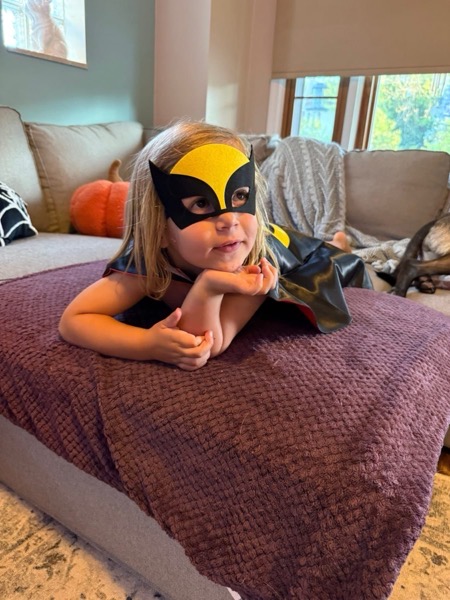
A Mastodon user sent me a direct message the other day asking why I felt so comfortable doing what I do every morning, which is posting a “Good Morning” toot featuring photos I’ve taken of flowers, tree leaves changing color, other shots of nature, holiday ornaments, etc….

CleanShot 2025-11-17 at 12.25.20@2x.

The context of the query was criticizing how I could continue to do that every morning given all of the terrible things going on in the United States, things I also rightfully describe on social media as horrors.

I get it. Believe me I get it. I’m overwhelmed at times as well. But my response was and is simple.

Stop and smell the roses.

While there are indeed horrors happening in the world there is always beauty. If we don’t take a moment to see and acknowledge the beauty around us and the spontaneity of discovering it, whether it be in nature, in very human moments, in a museum, a gallery, a stage, a movie theater, a concert hall, a photograph, a child’s laugh, or in a story, then what the hell are we fighting for?

I’m convinced those we are fighting against don’t see or even care to see the beauty around and within us, unless it involves increasing their bank account balances.

Sometimes you need to stop and smell the roses. I prefer doing so in the mornings, before I put on my armor to meet the challenges of the day.

You can also find more of my writings on a variety of topics on Medium at this link, including in the publications Ellemeno and Rome. I can also be found on social media under my name as above.