The Netflix Paramount Media Money Muddle

Stay tuned

It was quite comedic to watch the reaction to the news at the end of last week that Netflix had won the bidding to take over Warner Brothers. There was indeed much celebrating. There as also quite a bit of consternation. The celebration was primarily because there is an abundant school of thought that no one wanted Paramount, now essentially another tentacle of the Trump administration, to win.

CleanShot 2025-12-09 at 14.59.44@2x.

I didn’t bite on the news celebrations or the consternation being the final chapter then. Of course it wasn’t. The Netflix bid parlayed out to $72 billion. On Monday, Paramount Skydance launched a hostile all cash takeover bid of $77.9 billion.

There’s only a roughly $5-6 billion difference between the two bids, but the Paramount bid seeks to swallow up the pieces of Warner Brothers/Discovery that Netflix apparently wasn’t interested in, including media properties such as CNN, TNT Sports, and Discovery. Netflix’s bid was for Warner’s Studio and HBO’s streaming business only. Note that Warner Brothers had previously announced that it planned to split up the combined businesses in just that vein.

So, what does it all mean?

First, it means a lot of lawyers and lobbyists are going to make a lot of money. There are political, marketplace, and money pieces moving around the board in what looks to be quite a saga that I imagine Hulu will end up making a series about within a couple of years.

Netflix is after the content. And the control. Ben Thompson has an excellent run down on that, and why Netflix’s delivery system makes it make sense. Netflix has created quite a war chest for its bid (which is both cash and stock), by building a relatively slick distribution system to deliver its already abundant content, plus whatever it continues acquiring. (How many TV remotes are there without a Netflix button these days?)

Paramount Skydance CEO David Ellison’s all cash bid includes quite a few players including his pop, Larry Ellison, both of whom are Trump supporters, as well as outlays from sovereign wealth funds of Saudi Arabia, Abu Dhabi, Qatar, and also Jared Kushner’s Affinity Partners. Without those partners Paramount, valued at around $15 billion, would have a hard time competing with Netflix’s roughly $400 billion war chest. (The Wall Street Journal has a decent rundown on more of the money specifics.)

Second, it means what was already a muddle the way most of these kind of things are, will get muddled up even more due to the politics of the moment. I’ll disagree with Ben Thompson’s analysis that points out that the President doesn’t have final say on this. That may have indeed been true in a past we’re no longer living in. Those old rules no longer apply. As we’ve been learning everyday since January 20, 2025.

Third, Hollywood also has its concerns. The traditional studio power structure is not enamored of Netflix and its heretofore disdain for theatrical releases, which also brings movie theatre owners into play. I’m not sure if the Netflix bid means the death of Hollywood as some claim, but it certainly would shift the pieces, the game board, and the power structure as what began as a tech company could end up controlling much of what we see on our smaller silver screens.

Big money is at stake obviously. But when big egos get involved the costs for everyone increase. Including those flipping through content consumption choices with their remotes.

Stay tuned. I’m guessing that Hulu series will be quite a watch when all is said and done.

You can also find more of my writings on a variety of topics on Medium at this link, including in the publications Ellemeno and Rome. I can also be found on social media under my name as above.
Death By Lightning: A Mini-Review for a Mini-Success

Music, fighting, sausages

Candace Millard’s excellent non-fiction book Destiny of the Republic: A Tale of Madness, Medicine and the Murder of the President is often overlooked, though it was well received well when it debuted in 2011. I’m hoping that the new Netflix adaptation titled Death By Lightning will give Millard, her book, and the period of American history it chronicles more well deserved and appropriate notoriety.

Death by lightning.

Yes, this is one of those many cases where the original source material far outshines the film/TV version. That said, Death By Lightning is worth a watch, if nothing else for an entertaining opportunity to dip your toes into the historical waters that are still affecting much of what we’re wading through today in an age when those in control are so eager to pour cold water on the pieces of history they don’t like.

More to the point, Death By Lightning touches on a piece of history from a tumultuous time that seems largely forgotten, that we perhaps might have learned better from, even before we got into this current mess. A poignant, late scene sets this up wonderfully.

Created by Mike Makowsy and directed by Matt Ross, Death By Lightning is a limited Netflix series, that chronicles the unlikely rise of James Garfield to the presidency and his assassination by Charles Guiteau. (If you think anything in this brief review is a spoiler it proves my earlier point.)

There are four episodes and in the end that’s part of what weakens the series as it doesn’t allow much time for much of the depth of Millard’s book. Towards the end it feels like it’s rushing to a conclusion, leaving me wondering how much got left on the cutting room floor or chucked away in the C-suite.

An excellent cast largely rises to the occasion featuring Michael Shannon as Garfield and Matthew MacFadyen as an over the top Guiteau. That said, Guiteau was apparently quite over the top in real life according to many accounts, so much so that there are so many accounts. They are well supported by Betty Gilpin, Shea Whigham, Bradley Whitford, and especially Nick Offerman in a scenery and sausage chewing turn as Chester Arthur, who succeeded Garfield.

One of the wonders of Millard’s book is that it featured an intersection of so much of American life at the time following the Civil War, from politics to science and medicine. The battle between the politics of the spoils system and a desire for a less corrupt civil service system is well chronicled in both the book and the series and adds interesting context to our current tariff tangles that I’m guessing most will find surprising.

If you’re frustrated by recent happenings in our current day Congress and politics both the book and the series will add some historical (and often entertaining) context to the mess we’re in.

Less featured in the series are the conflicts in medicine with many American physicians of the day rejecting what had become largely accepted in Europe as a new approach to germs and sanitary surgical practices.  Not really a spoiler, Garfield was shot, but it wasn’t the bullet that killed him. He died from sepsis caused by infection due to unsanitary practices in the aftermath.  If you’re detecting hints of the medical madness we’ve been living through since the pandemic, you’re not wrong.

Alexander Graham Bell also makes an appearance with a new invention that could possibly detect the bullet lodged in Garfield’s gut, but the fuller story about his scientific advances and entrepreneurship, which runs on an almost parallel path to Garfield and Guiteau’s in the book, is mostly left as a footnote in the Netflix series.

Again, it’s by no means a perfect piece of streaming entertainment. I highly recommend the book on which it is based and I would mildly rate it better than most of the mundanity that fill our screens instead of the lists we curate. The cast and the exposure to a forgotten moment in American history that I’m certain many have no clue about makes it a good candidate for your watch list.

Besides just getting a chance to see Nick Offerman toss out the line, “Music, fighting, and sausages” is worth the time spent.

You can also find more of my writings on a variety of topics on Medium at this link, including in the publications Ellemeno and Rome. I can also be found on social media under my name as above.

Review: A House of Dynamite

Shear terror in the face of madness

When you live in Chicago, a city under siege by ICE, I’m not sure, but I guess it a strong bent of masochism to watch a movie where your city gets nuked by an unknown enemy. That’s sorta how I felt when my wife and I cued up the excellent Kathryn Bigelow film, A House of Dynamite over the weekend. We debated back and forth, and decided to give it a go. I’m glad we did.

CHANG   THE HOUSE OF DYNAMITE   UBO_20240926_29648_R3.

It’s certainly not an easy movie to watch, regardless of where you live. Yes, a city gets nuked. But that’s not the strength or the point of this movie. Nor should it be a spoiler at this point. The strength lies in watching otherwise steely individuals wither when their shields of confidence dissolve into vulnerable realizations as a horrible what-if scenario becomes all too real to contemplate, yet alone live through, even though they’ve contemplated them over and over again in training.

We don’t get the disaster movie special effects explosions and carnage. They aren’t necessary for this film to work. What we do get is far more terrifying. We get holes ripped through the souls of the characters we’re allowed to meet as they do their jobs. We get belief in systems and protocols developed by smart people shattered, leaving us all wondering if any of it was worth it in the end. It’s a parable of the moment.

It’s certainly not a Halloween movie, but I can’t think of a scarier film to watch as it strips away every possible security blanket and myth we might have become just too comfortable imagining, and realize just how much we’re in the hands of human beings just like us when horrible things unfold.

That’s more than frighteningly true with an utterly incompetent administration running the U.S at the moment. Noah Oppenheim’s script subtly, deceptively, and brilliantly lays that out as it carries us deeper into unfolding and inevitable danger that may be too horrible to watch, but is certainly more terrifying not to.

Bigelow and Oppenheim’s characters all seem more than capable of the sensitive jobs they hold. The filmmakers dispense with the tropes typical of these kind of disaster flicks that feature the usual array of martinets, incompetent and insufferable fools, and even heroes, sung or unsung. Sure, we see some of the personal traumas and trivia some may be dealing with as they come to work on the morning in question. But we initially watch each of these men and women of strong character knuckle down to perform when the unthinkable moment presents itself.

We then watch as they ultimately come face to face with that horrible moment of realization that there is nothing they can do to stop the inevitable. We watch as the enormous personal toll alters their breathing as they have no choice but to carry on with psychic wounds bigger than any smoldering crater before the missile even hits. Bigelow’s camera work and the cast’s strong acting gives us searing glimpses into those moments of horror and devastation as she catches her characters when each crushing realization occurs.

In three parts and an epilogue, the movie repeats the same horrible 18 minutes or so from missile detection to impact, presenting the scenarios in different government locales and viewpoints. We see a missile interception station in Alaska communicating with the White House Situation Room, the STRATCOM headquarters in Nebraska, FEMA headquarters as they have to pull out the plans for the inevitable, and the president who is attending a basketball camp event and then whisked away, while his aides work to inform him from the White House.

Those parts overlap using much of the same dialogue presented from these different points of view via video or audio conferences as the government tries to formulate its response. The repetition of dialogue serves as a better tension builder and reminder of the time before impact than any of the countdown clocks we might see on the screen. As does the sudden departures of those who need to be taken to secure locations as events unfold.

Bigelow’s cast includes some big name actors in a cast headed by Idris Elba and Rebecca Ferguson, that also includes Anthony Ramos, Gabriel Basso, Jared Harris, Jason Clarke, Greta Lee, and Tracy Letts among a host of others. Some of that host provides some of the most telling reactions on the periphery of the action as they watch their bosses try to handle the situation.

To my mind, nothing procedural happens that we haven’t seen or read about in countless Cold War thrillers of the past. With one exception. I was left with the same sort of existential dread after viewing A House of Dynamite as I was when I first read Tom Clancy’s Sum of All Fears and realized the weapon was going to explode. The only difference is that there was a hero in the Clancy novel to pick up the pieces and help us move beyond the horror.

In A House of Dynamite there are no heroes. Only humans. Trying to do their best. Not failing. But having to face the reality that sometimes your best is simply not enough in the face of madness.

You can also find more of my writings on a variety of topics on Medium at this link, including in the publications Ellemeno and Rome. I can also be found on social media under my name as above.

Final Trailer for Guillermo del Toro’s Frankenstein Released

Looking forward to this

I’m looking forward to the release of Guillermo del Toro’s Frankenstein on Netflix perhaps more than any other film to be released this fall. The movie hits theaters on October 7 and streams on Netflix beginning November 7th. The official trailer has now been released. 

Mary Shelly’s tale of the monster who created a monster has been so twisted around in so many different incarnations it’s hard to separate the takes from the original fiction. That’s not a complaint, it’s just what it is. I can imagine this one will offer up a unique twist or two given Guillermo del Toro’s previous films. 

I’m really looking forward to this and hope it lives up to its promise.

You can also find more of my writings on a variety of topics on Medium at this link, including in the publications Ellemeno and Rome. I can also be found on social media under my name as above.
iHostage Review: Not A Good Trip To The Apple Store

Apple Store takes center stage in this hostage drama.

I’m guessing iHostage is a flick you’ll never see on Apple TV+ even though it features the Amsterdam Apple Store as a prominent character in the story. iHostage, directed by Bobby Boerman is currently streaming on Netflix and is based on an actual hostage situation that took place at the Apple Store in Leidseplein in 2022.

Ihostage netflix movie review.

As far as hostage films go it isn’t bad nor is it great. These things typically only end one way, and of course if you have any familiarity (I did not) with the actual events you already know how things turn out in this case. But as to the entertainment value there’s good fun to be had as the director and his cameras look for every conceivable angle to shoot within and without the Apple Store. AirPods play an important role early on. Also interesting is watching some of the hostages use an Apple Watch to check whether or not another was having a heart attack. (For the record, an Apple Watch can’t detect underlying causes of a heart attack, but it can detect irregular rhythms.)

The acting, visuals, and direction are generally good, keeping the tension going as we cut back and forth between the hostage taker and his primary hostage, and those on the police side trying to bring about an end to the event. But again, these stories have a formula about them that to some extent just requires a plug-and-play approach with all the necessary elements of filmmaking. I’d say everyone pulls their job off well with the sort of cleanliness you’d expect in an Apple Store. In the end it’s all a bit too clean.

You can read about the true story behind the movie here and watch the trailer below. I’d say it’s a fun watch if this kind of story is your kind of thing, or you just want to tour an Apple Store in Amsterdam.

You can find more of my writings on a variety of topics on Medium at this link, including in the publications Ellemeno and Rome. I can also be found on social media under my name as above. 

Adolescence: A Review

A tough watch. A must see.

Adolescence. See it. 

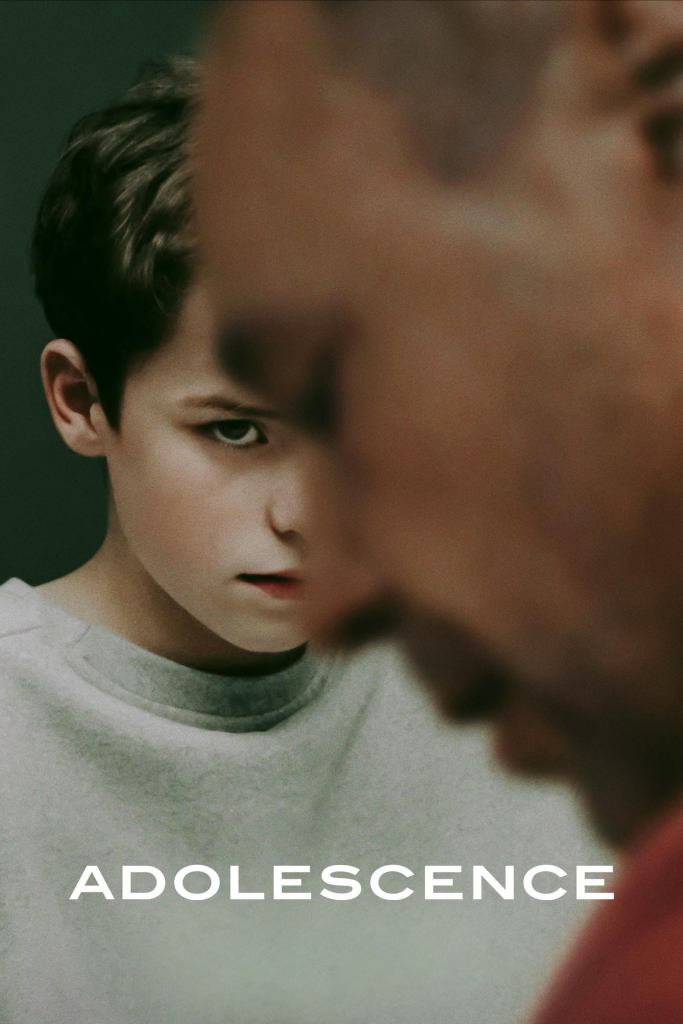
 I’d like that to be all that I write about this sensational limited streaming series on Netflix, but there’s more I want to say.

You’ve probably heard of Adolescence. It’s become a well deserved hot topic of conversation because it’s an excellently done piece of storytelling that cuts through what seems like an impenetrable zeitgeist like a hot knife through melted butter. I’m glad to see that the hype tour surrounding its recent release ramp up after the series took off because something this good needs to be ballyhooed, bravoed, and brandished with flying banners.

For me, the bottom line, beyond just saying “see it” is that the producers and artists involved captured something we all know in our gut and make us face it. Captured it in a challenging way that they didn’t need to, but by accepting that challenge opened up those gut instincts with a rawness that touches nerves we may have all let somehow deaden. The painful intimacy of one family’s story opens up a chasm full of realizations that speak far beyond the specific issues so well portrayed. 

In brief, a young boy is accused of stabbing a young girl and through the investigation we delve into a world of young boys and men influenced by Incel culture and bullying. A world not understood in this instance by the young boy’s family, or any one of the parents’ generation that we meet in the story. Watching the investigating detective’s son educate his father is a remarkable scene.

We follow the story through the boy’s arrest, booking and indictment, examination with a therapist, and the devastating conclusion as the family deals with the aftermath. Every moment is powerful. His arrest in the first episode is only the beginning of story that digs into every emotion there is when confronted with horrible moments that one would hope no family would ever have to endure. I can’t imagine any parent of young children, especially boys, watching this without wanting to take the doors off of their child’s bedroom doors and disconnect them from the Internet. It is tough to watch and it’s impossible to look away. 

Toxic masculinity, patriarchy, bullying, isolation, fear, self-loathing, and the perils of social media become bigger monsters by the moment than any knife wielding attacker. 

Director Philip Barantini, known for filming his stories in one take, uses that device to exquisite effect. He didn’t need to, but he and his team did and the payoff is exquisite. Each episode unfolds like a one-act play, filmed in one amazing traveling take. In later interviews it’s been revealed that they only did two full takes after a weekend’s rehearsal for each of the four episodes. The one take keeps you riveted as it ratchets up the tension, never letting you catch a visual breather from the story. How they filmed the second episode which takes place in and around a school is almost beyond imagining. 

The cast is superb, especially 13-year old Owen Cooper as the young boy. In his acting debut he delivers a performance that is so outstanding that it takes your breath away. He’s not only a natural, his performance borders on the supernatural. Stephen Graham, who also co-authored the story with Jack Thorne, plays the boy’s father and strikes true in every millisecond he is on the screen. Well known for playing in-your-face tough guys, Graham’s journey through this story is like watching a rock face that has been the feature of a cliff, let go and crash into a million pieces. The rest of the cast is equally up to the task of matching these amazing performances.

The back story is that Graham, hearing about crimes featuring young boys stabbing young girls, felt that questions needed to be asked, the obvious one being “why is this happening?’ As is the case with all good drama and story telling Adolescence raises as many questions as it answers others. Certainly I imagine parents who see this, and they all should, will be asking the same questions the mother and father in the series do themselves. 

On a larger scale, as we daily face an adult and supposedly mature world that seems stuck in adolescent, if not prepubescent misbehavior, celebrating toxic masculinity, bullying, and the perils of social media, this amazingly told story might at least give us a glimpse into how we looked away too often, when we knew we shouldn’t, ignoring so much at the cost of even more.

You can’t look away from this. 

You can find more of my writings on a variety of topics on Medium at this link, including in the publications Ellemeno and Rome. I can also be found on social media under my name as above. 

Sunday Morning Reading

What do ugly Christmas sweaters, physics, the post office and pernicketies have in common? Check out this week’s Sunday Morning Reading.

Here we are with the last edition Sunday Morning Reading for 2024. As usual there’s links to subjects and writing I’ve found particularly interesting. I hope you do as well. Enjoy this week’s edition and see you next year.

 Christmas has come and gone, and it’s time for the decorations to come down and the ugly Christmas sweaters to be put away. Jennifer Ouellette takes a look at The Physics of Ugly Christmas Sweaters. You may want to consider how you fold yours up for seasonal storage after reading this.

I’ve laid off politics during most of this year’s holiday season, but I’ve been peripherally aware that apparently a Civil War has broken out between the tech bros and the MAGAts over immigration. Not to worry, Heather Cox Richardson has a running account of the blows and counter blows in her Letters From An American for December 27. 

One of the numerous things many are worried we might actually lose during the next administration is the troubled U.S. Postal Service. Steve Herman gives a nice rundown of some history, context, and what we might lose in Going Postal. As the son of a former post master, I appreciate Steve’s efforts here.

Thinking about how big projects get started, Joan Westenberg takes on The Ego-Legacy Complex: On Ancient Monuments and Modern Malaise. 

ProPublica writers Asia Fields, Nicole Santa Cruz, Ruth Talbot, and Maya Miller conducted a series of interviews with homeless individuals. A feature of the article is the re-printing of the notecards some of the interviewees wrote describing their losses. Check out I Have Lost Everything to see what they have lost.

Most folks have a love/hate relationship with services they subscribe to and of course that includes streaming video services like Netflix. If you subscribe to Netflix and you’ve ever wondered why Netflix gets on your nerves, check out Will Tavlin’s Casual Viewing. You’ll never stream it the same way again.

You have to love the title, but you’ll also love the article. Check out Pet Peeves and Other Pernicketies from NatashaMH.

Have a Happy New Year! 

If you’re interested in just what the heck Sunday Morning Reading is all about you can read more about the origins of Sunday Morning Reading here.  You can also find more of my writings on Medium at this link, including in the publications Ellemeno and Rome. You can also find me on social networks under my own name.

Black Doves Makes A Play To Be A Deadly Christmas Movie

It’s no Die Hard, but Black Doves does make a play to be a deadly holiday thriller.

There’s a long standing debate that rolls around this time every year about whether or not the classic Bruce Willis film, Die Hard, is a Christmas movie or not. I happen to think it is, so there’s my $.02 on that. Netflix is making a play to join the violent Christmas movie genre with its recently released spy/gangster thriller Black Doves.

BlackDoves FirstLook Image 1-H-2024.

Does Black Doves stack up as a Christmas movie? For some probably so, for most I’m guessing not. It has a great sense of comedy amongst the dire circumstances, and almost enough holiday charm and romance to qualify it as a Hallmark holiday movie. Semi-stuffed with holiday trappings and none of the ticking clock pressure of trying to solve it by Christmas Day it sorta works.  That’s not to its detriment.

Black Doves does stack up as a decent spy/gangster tale with very good performances from Keira Knightly and Ben Whishaw, and it’s the spy game/gangster game plotting and sub-plotting that makes it work, though not necessarily with edge of your seat suspense. Which at times seems strange since  World War III keeps threatening to break out.

In any case, it’s not perfect, but it’s fun. I’d recommend Black Doves as a good stream if you’re looking for good entertainment over the holidays, whether you want things wrapped up with a pretty bow or not.

You can find more of my writings on a variety of topics on Medium at this link, including in the publications Ellemeno and Rome. I can also be found on social media under my name as above. 

Check Out Buy Now! The Shopping Conspiracy

Worth a watch even without many surprises.

Here is the U.S we’re heading into the Thanksgiving holiday, already surrounded by the madness of Black Friday, coupled with anxiety brought about by the recent election. It feels like everyday has been Black Friday under dark cloudy political skies for too long already, and of course that will continue straight into Christmas and beyond. 

 Here’s a thought. If you gather with friends and family this Thanksgiving, instead of watching football or squabbling over politics, tune everybody into the Netflix documentary Buy Now! The Shopping Conspiracy. The trailer is embedded above.

This somewhat entertaining documentary (it’s presentation conceit feels a bit too cutesy for my tastes), tackles the problems of rampant consumerism through a prism of what happens to all the stuff we buy this Black Friday, those previous, those to come, and any other day of the year.

The highlights of the series are the short cut interviews with former employees of Amazon, Adidas, Apple, folks from the fashion industry, and activists who are trying to address the issues of the large amount of waste created with all of our purchasing power.

If you’ve even remotely been paying attention to the world, there won’t be any grand surprises about the large amounts of unrecyclable waste we’re swimming in and adding to. That said, hearing some of the folks who feel responsible for their own decisions that led their company down that path of excess discuss their shifts in thinking makes the piece worthwhile.

There also aren’t any real surprises in the way the documentary lays out the tricks of the marketing trade to convince us to buy more stuff. Addressing the issue through a perspective of saying we could all buy less certainly makes sense, but given we all know that the game is rigged no differently than carnival games are, it makes one wonder why we do keep coming back each time the circus tents get pitched. 

Style points and lack of surprises aside, Buy Now! The Shopping Conspiracy is worth viewing, especially I would think if you have younger ones in your holiday household who might still be impressionable.

You can find more of my writings on a variety of topics on Medium at this link, including in the publications Ellemeno and Rome. I can also be found on social media under my name as above. 

Problematic 3 Body Problem

I both enjoyed and was ultimately left frustrated by 3 Body Problem, the Netflix adaptation of Liu Cixin’s sci-fi novel The Three-Body Problem. Thanks to fellow Mastodonian @RickiTarr I was finally able to put my finger on the source of my frustration.

I both enjoyed and was ultimately left frustrated by 3 Body Problem, the Netflix adaptation of Liu Cixin’s sci-fi novel The Three-Body Problem. Thanks to fellow Mastodonian Ricki Tarr I was finally able to put my finger on the source of my frustration.

Set aside the twists and turns through physics, politics, battles with cancer, romance, and everything else this story throws at you. The fundamental fight focuses on  humans who understand that an alien race is coming in 400 years to wipe out our civilization.  The aliens are doing so to save their own.

Given that we’re a species that can’t deal with more immediate threats currently facing us in far closer futures it’s hard to imagine trying to marshall the solidarity and resources to try and stave off a threat 400 years in the future. And that’s not even the problem in the title.

There’s not too much discussion of that in the show. Which is probably a good thing for how the storytellers want to unfold their story. But it puts us at a remove that left me and my wife joking throughout the series that Netflix has 400 years to unravel this tale.

Once the alien threat is revealed to all there are the usual sci-fi tropes about how those under threat deal with all such threats, but things quickly focus back on the main characters and their attempts to try and change what’s coming. As far as this adaptation is concerned everyone panics, reacts and then essentially shrugs and leaves it to a group of smart guys and gals to figure out.

I kept waiting for the 3 Body Problem metaphor to manifest in main character chaotic orbits as their arcs developed, but their orbital paths were all too damn predictable to cause the sort of friction that might have ignited the story, much less take hold with any metaphorical meaning.

As I said in the beginning I took some enjoyment from the experience. Some of the individual threads were captivating in and of themselves, but ultimately not enough to recommend the whole.

You can find more of my writings on a variety of topics on Medium at this link, including in the publications Ellemeno and Rome.