Touring in Tongues

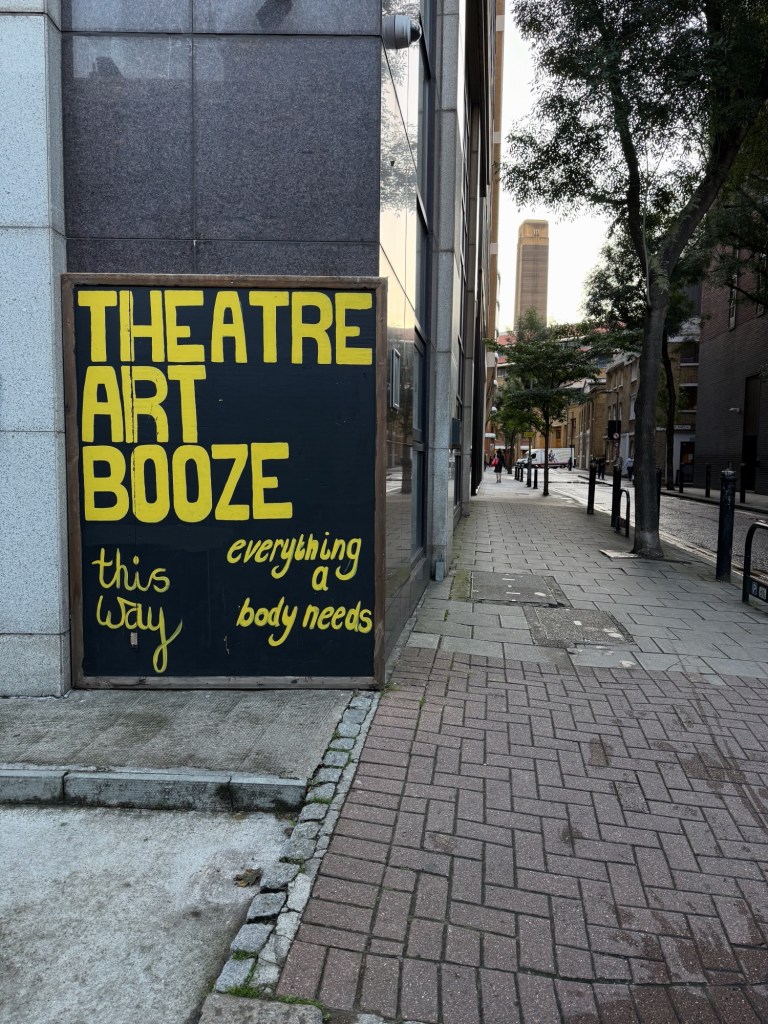
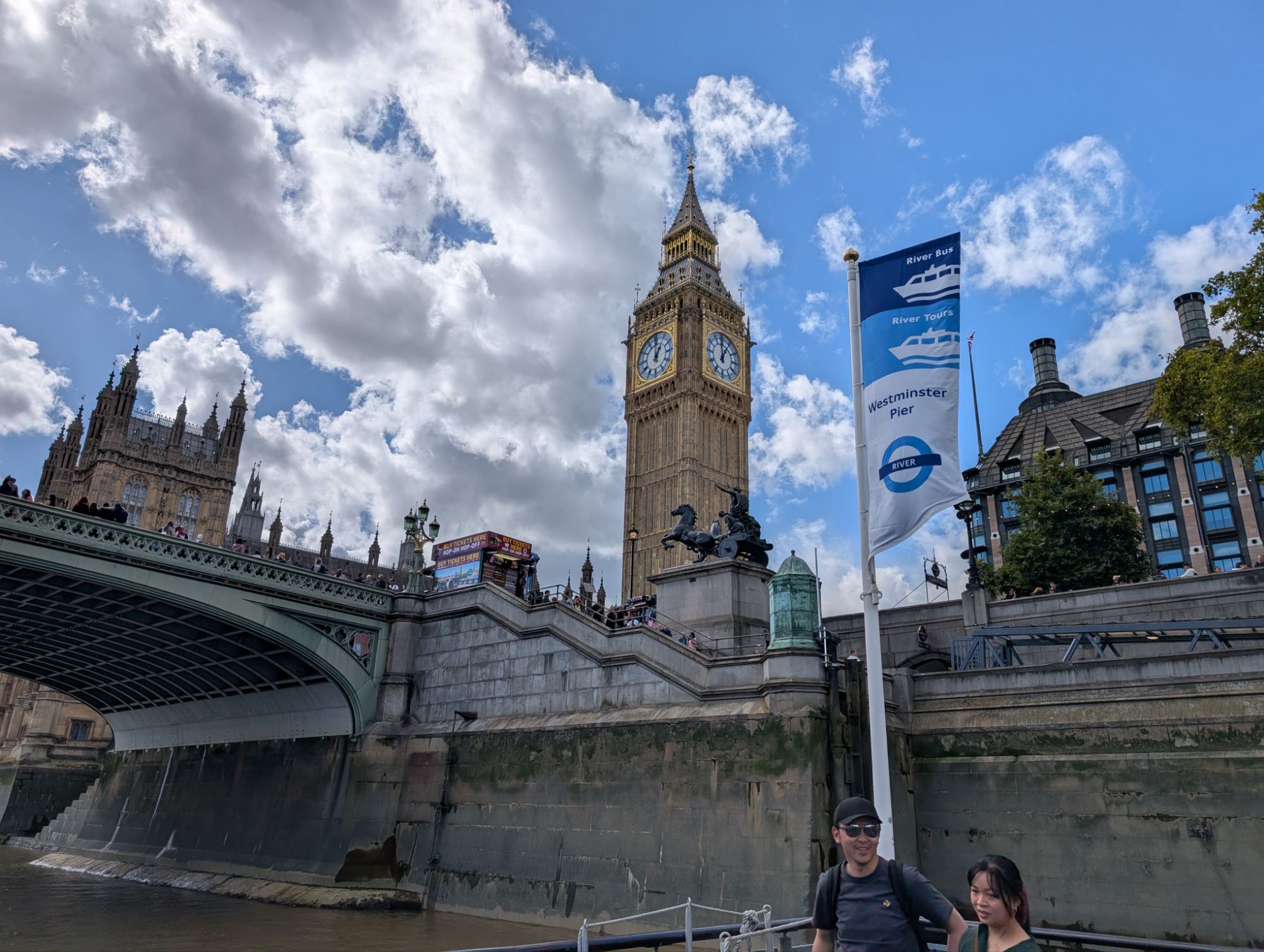
Still enjoying touring London. Still marveling at how weird it is seeing the reaction to this week’s news and the sadly predictable reactions to it back home.

Chatting with drivers and other folks met along the way, the news back home may seem foreign to my view on the world as I thought it might one day become, but I’m reminded how, though separated as we are by a common language, we are inextricably tied into a gordian knot, by those who thrive on stirring up division for gain. 

I say that as London prepares for supposed “free speech” protests today, with what’s in those quotes more easily defined as a way to drive the wedge of division deeper into our collective souls at whatever cost for whatever profit.

You can also find more of my writings on a variety of topics on Medium at this link, including in the publications Ellemeno and Rome. I can also be found on social media under my name as above.

Sunday Morning Reading

The ant hill of humanity

Crazy travel rhythms this summer. Spending time at the lake this weekend. The good thing about lake time is there’s time to do some reading. Here’s some good stuff I stumbled onto, worth sharing for this week’s edition of Sunday Morning Reading.  Quite a bit revolving around Artificial Intelligence and other mind games. There’s also ants.

For some inexplicable reason defining what it means to be an American has actually become a chore these days. It shouldn’t be. Kieran Healy has written a piece simply titled American that recounts his thoughts and feelings on becoming an American citizen. Well worth your time, espeically in these crazy times.

“Memory isn’t linear; it’s relational.” That’s the thought NatashaMH leaves us with in her piece The Mind’s Mischief. The mind is indeed a curious thing.

Matteo Wong says the AI Doomers Are Getting Doomier. I don’t know about you, but if we’re all doomed at the hands of AI (does AI have hands?) human intelligence never really advanced as far as I thought it did. Or maybe we just hit the ceiling.

Speaking of AI doom, Charlie Warzel wonders why one of the impacts of AI it to make us feel like we’re losing it in  AI Is A Mass-Delusion Event. I get the points and they’re well made. Referring back to my comment from the previous entry, if we’re such easy marks for this kind of delusion… well…we are such easy marks.

David Todd McCarty argues why we should resist AI with ecclesiastical fervor, especially those who create for a living. Check out The Moral Failure Of Using AI In Your Art.

Reece Rogers is marking yet another change brought about by AI. Take a look at The AI-Powered PDF Marks The End of An Era.

Barry Betchesky tells us that It Took Many Years And Billions of Dollars, But Microsoft Finally Invented A Calculator That Is Wrong Sometimes. You read that right. The money quote is:

“But now we have Microsoft apparently determining that ‘unpredictability’ was something that some number of its customers wanted in their calculators.”

Rounding out this collection of links on AI, is another article by NatashaMH where she says instead of Fearing the Machinery, Interrogate The Mindset. Excellent piece. The underlying current is something I’ve been thinking about a lot. We’re creating these machines in our own images. Or at least the images we imagine of ourselves. Humans are far too human, even when we look past or try to accelerate beyond our humanity.

One of the joys of spending time in the great outdoors is that it reminds you we’re not the only intelligent species on the planet. Although as the theme of this week’s reading has emerged, we might want to reevaluate that, just not with Microsoft’s math tools. On another front, in politics it’s certainly easy to argue for a reevaluation. Kate Knibbs takes a swipe at it in a look at how Government Staff Cuts Have Fueled An Ant-Smuggling Boom.

I told you there’d be ants.

If you’re interested in just what the heck Sunday Morning Reading is all about you can read more about the origins of Sunday Morning Reading here. If you’d like more click on the Sunday Morning Reading link in the category column to check out what’s been shared on Sunday’s past. You can also find more of my writings on Medium at this link, including in the publications Ellemeno and Rome.

Apple TV+ Price Increase and the Dummy Price

Death, taxes, and subscription price increases

Times have changed how money changes hands. Back in the day purchasing a subscription meant you got a deal. It also created a relationship between the customer and the service, that often, but not always, protected subscribers from price increases. At least for a time. That really no longer exists. Sure there are deals and free trials to seduce new customers, but typically those deals are for a period of time and then the price goes up. It’s changed the definition of what we used to call “the dummy price.”

CleanShot 2025-08-21 at 10.45.50@2x.

“The dummy price” was for those who didn’t subscribe, thus paying full price. We used to joke in the theatre biz that “the dummy price” was for the guy who’s wife told him she wanted to see a show, and then he’d have his secretary use his credit card to buy the tickets when he got to the office.

When we had to raise prices we’d do so on single tickets and reward our subscribers by telling them we’d keep their current prices intact, thus increasing their savings and further building trust in relationship. That made it a bit easier sell when we inevitably had to raise subscription prices.

It was similar to buying the newspaper each day, instead of subscribing. A subscription was always cheaper than the newsstand price.

The only thing I think I subscribe to these days that actually offers any type of real savings is an E-ZPass, which in my state cuts the cost you pay at the toll booth by 50%.

Of course those are different markets than streaming entertainment, which didn’t exist when I was setting “dummy prices.” Subscriptions for streaming entertainment only gets you access. Certainly a lot of content is available for the price you pay, but realistically it’s more than anyone could ever consume. But the promise is access. The quantity makes much of the content as disposable as it is available, even if it is cheaper than back in the day when you had to purchase physical or digital media in order to view it at home.

The only thing you’re really buying is the inevitable price increase and a bit more frustration in balancing out your entertainment budget.

The new definition of “the dummy price” is hoping there are enough customers who don’t pay attention and miss the price increase.

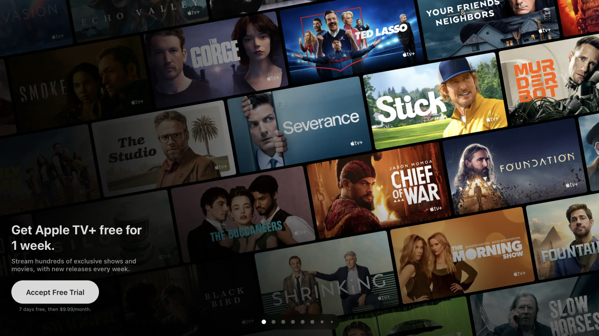
Apple announced today it’s increasing its monthly subscription price for its streaming entertainment service, Apple TV+ from $9.99 to $12.99 a month. Other streaming services do the same thing, more frequently than Apple. But every player in the market affects the perception of all the rest.

It’s led to a sort of comedic game for consumers who want to stream from different services. They cancel a service for a period of time, often waiting for new content to become abundantly available or a particularly desired title, and then they’ll resubscribe after canceling another service. Or they’ll just keep creating new email accounts, resubscribing under a new name.

Currently the streaming companies seem to be comfortable enough with this type of customer churn, but it builds more attraction to titles than it does to a service’s brand, which in turn drives up the marketing costs for each new title. I imagine at some point streaming companies will find a way to clamp down and try to minimize that churn, the same way they have done with password sharing.

But the subscription game is not just an entertainment industry business practice. There are quite a few services that want your monthly tithe and offer the same kind of price inducements. But it’s certainly easier to cancel Netflix for a period of time than it is some of these other types of services once the inevitable price increase comes along. It will be interesting to see how the AI market shakes out once the first big company needs to break the $20 a month barrier for general consumers.

Bottom line it’s a shell game for both customers and companies. Death and taxes used to be the only constants in that old axiom about the only things certain in life. That needs to be amended to include price increases for subscription services.

You can also find more of my writings on a variety of topics on Medium at this link, including in the publications Ellemeno and Rome. I can also be found on social media under my name as above. 

Mainstream Media Continues to Dismantle Itself

MSBNC to become MS Now

It’s been an accepted part of conventional wisdom for quite some time that what we consider mainstream media is gradually fading away in the face of newer generations turning to other sources available on the Internet for news and entertainment. Heck, even some older generations are turning what used to be the dial.

MSNBC MS NOW name change.

The business models have suffered for a while now whether it’s print, broadcast or cable. The fading away has gained new and seemingly panicked momentum thanks to the depredations of the Trump administration, aided by the greedy cowardice of the corporations worried more about avoiding the wrath of the beast they helped create, than the standards they all proudly trumpeted for years. Those trumpets have largely fallen silent or just ring hollow.

The end of late night comedy shows captured a lot of attention recently, but eventually most broadcast scripted news and entertainment will also give way. Which is ironic given that the convicted felon largely responsible for this quickening pace came to prominence via Reality TV, which let me tell you is anything but reality and is very scripted.

Now NBC Universal, owned by Comcast, is making a move away from MSNBC, attempting to distance the Peacock from controversy by rebranding as MS Now. That little branding acronym stands for  My Source | News | Opinion | World.

Yeesh. I guess the marketing department was the first place they made changes. As a social media friend Judgment Dave says, “it sounds like a translation of something in Japanese that doesn’t translate well into English.”

It’s weird, yet it isn’t to hang onto the ‘MS’, given that MSNBC was birthed as partnership with Microsoft and NBC, long since dissolved. Somewhere Bill Gates is laughing because it also sounds like a software program delivered on a CD-ROM.

Whatever sturm and drang comes from this news of the moment, (news of the Now?) the bigger picture is that these troubled corporations, in what feels like desperate efforts to try and save themselves, are essentially hastening their eventual final curtains in the wake of current trends already overtaking them.

Some may lay blame on the rise of the Internet and mobile devices in every hand, but the fact of the matter is the smart folks at the top of these corporations missed the moment. Some eventually tried to make changes. Remember CNN Plus? But in my opinion their failures were less about the delivery mechanisms and more about the decline of the news and entertainment products that they delivered as the cost cutters held sway.

NBCUniversal isn’t done trimming the sails yet. Plans are in place to spinoff other properties as well (CNBC, USA, Oxygen, and E!).

Some will blame it on advertisers seeking the best way to reach customers. That’s mostly true, but ask podcasters how that’s going for them these days. Chasing advertising revenue is always a cyclical game for just about everything except sports.

It’s no wonder then that it feels like we see our politics more and more resembling blood sports. Of course the irony is audiences claim they want less, not more in that realm. What will be interesting to see in the next decade or so is how political advertising, which fills so many corporate media coffers sorts itself out, once the usual outlets fade away as they continue to play to ever diminishing audiences that keep spreading themselves wider and wider, attempting to flee the same old, same old.

Certainly ads will continue to be designed to run on social media and circulate that way. But the only folks making real money off of that trend are the political consultants and ad-makers.

I hope I’m around to see how my grandkids eventually consume what we once revered and respected as the news. I’ll regale them with what I imagine they will view as fairy tales and myths.

You can also find more of my writings on a variety of topics on Medium at this link, including in the publications Ellemeno and Rome. I can also be found on social media under my name as above. 

David Mamet’s Woke Pain Behind His Masks

“Always tell the truth. It’s the easiest thing to remember.” -David Mamet

I first arrived in Chicago in 1999 aiming for a theatre career. I arrived just as David Mamet, one of the bright lights in the theatre firmament at the time, was spreading his wings and moving on from the city that birthed the characters in his plays. Here’s the thing, I was never that big a fan of his work.

David Mamet 080425 1 3c82613a6ff24dc685b547d0b8bf0872.

I saw the genius in it, but in the viewing it was always as predictable as it was entertaining. In later years after Mamet had found success in film I actually came to believe that his work for the big screen was actually better than it ever was on a stage. As an example, I enjoy the film version of Glengarry Glenn Ross more than I ever have on stage and I attended the Amrerican premiere of that play at The Gooodman Theatre back in 1984. The Spainish Prisoner and State and Main are delights that I always enjoy revisting.

To be fair, I’m in a minority among my professional peers. There’s no denying Mamet’s influence in the theatre and film. Personally, I was more a fan of Sam Shepard’s work. The two ran neck and neck in popularity in my early days in the theatre. But that’s not what this is about.

Somewhere along the way, Mamet became even more of an enigma when he opened up about his political views, which in some ways spun in counter orbit to the milieu of much of what his plays seemed to profess. His plays had a power dynamic that while not completely in sync with the “eat the rich” vein, both celebrated and condemned the powerful, alongside empathy with the downtrodden or less capable.

He was always a gadfly who reveled in that reputation. But there’s reveling, and then there’s reveling. At times it seemed as if he aspired to assume a Bertolt Brecht-like influence. I’m referrring more about his views on theatre, than his political views. Check out his book True and False, or the videos and articles you can find all over the Internet.

No matter what you thought of his work on the stage or in the cinema, once he began commenting about politcal and social issues he became, I dare say,  more entertaining than any piece of dramatic literature he created.

In a recent podcast with Sam Fragoso, Mamet revealed that part of the reason for his seemingly 180 degree turn in professing his political beliefs was because those in the media and literary circles that had always promoted him turned away from his work. No criticism stings more than being ignored. I’m not sure what’s the chicken or what’s the egg in that discussion, but it was a statement that did leave quite a bit of egg on his face. He later got fed up with Fragaoso and walked off the podcast.

Continuing to stay in the entertainment news this week, Mamet authored an op-ed in the Wall Street Journal called Sorry, Billionaires — There’s No Escape, essentially saying we’e all doomed regardless of how we’re measured on the wealth scale in life. Biilionaires who think they’ve built doomsday hide-aways will be undone by the laborers they hire to keep the places running. Of course those less privileged don’t even matter in the equation. It’s a reguritation of the history of the world that Brecht and Sondheim did better.

The thing of it is, for many Mamet was always as entertaining as he was enigmatic . I find him more so in these later chapters of his story, even with its odd and often confusing mix of woke hurt feelings bouncing up against his conservative bent.

But then, as Mamet, contradicting his maxim about truth says, “it’s not a lie. It’s a gift for fiction.”

You can also find more of my writings on a variety of topics on Medium at this link, including in the publications Ellemeno and Rome. I can also be found on social media under my name as above. 

Sunday Morning Reading

Roads traveled too well

Some things defy understanding. Others appear less murky. Occasionally some hit the target. That’s why I read. That’s why I share. I’m still traveling and on the road for a bit, but there’s plenty to share in this week’s Sunday Morning Reading. Tomatoes and potatoes may be involved.

Shutterstock 1781559542.

Phillip Bump recently accepted a buyout from The Washington Post and hasn’t announced new plans yet. But he’s still writing. Glad he is. He has always been one of my favorite writers and chroniclers. Check out his latest piece Humans Didn’t Evolve To Understand Our World.

When you reach a certain age (certain is alwasy self-defined) you start looking back to the beginning and wonder what will mark the ending. Cris Andrei calls them Bookends. This piece hit the target given that I’m visiting some old haunts on this trip. Oh, and approaching a certain age (self-defined.)

Tuning out news, noise and distractions is never easy. NatashMH takes a look through the marking of Ozzy Osbourne’s passing and other recent cultural touchpoints in Fractals of Modern Life. If you don’t look too hard, all the news, noise and distractions don’t really touch or point towards much in the grand scheme of things. But are we entertained or just dulled into carrying on?

Sometimes writers write just for the fun of it. David Todd McCarty says that’s where this piece, Killing Time Waiting for Friend, came from. I need to find more of the fun of it. Anyway his piece, gave me a chuckle. I did not read it at Denny’s, although I visited one of my favorite locations of the past during my travels.

I’ve linked to and written about Cory Doctorow’s theory of enshittification quite a bit. I’m doing so again with this piece You Can’t Fight Enshittification. I don’t think it’s a question of not fighting, I think it’s a question of not knowing there was a fight to begin with.

Staying in the tech vein, I’ve been linking to Mathew Ingram and others who are talking about the demise of Google Search. Take a look at Pete Pachal’s piece, What Content Strategy Looks Like In The Age of AI. Look beyond the headline on this one.

Speaking of Mathew Ingram, you should read Social Media Didn’t Start The Fire, It Just Fanned The Flames. I agree. That said, if you drink acclerants through a firehose you’re bound to bust.

On the political beat, Jon Pavlovitz offers up Everyone Believes They’re Esssentially A Good Human Being.  Actors who play villains will always say that they look for what’s good in their evil character. It’s a form of coping. I happen to think this bunch of performance artists trying to burn down the country never bothered looking beyond the glee they take from their villainy. Apologies to real performance artists.

And to close things out on a competely different note, check out Will Dunham’s piece on the Evolutionary Origins of the Potato Revealed — and a Tomato Was Involved. Some things do defy understanding.

(Image from Mr. Abstract on Shutterstock.)

If you’re interested in just what the heck Sunday Morning Reading is all about you can read more about the origins of Sunday Morning Reading here. If you’d like more click on the Sunday Morning Reading link in the category column to check out what’s been shared on Sunday’s past. You can also find more of my writings on Medium at this link, including in the publications Ellemeno and Rome.

Sunday Morning Reading

Notice the good things amidst the bad.

It’s been a week. But I repeat myself. These days it seems like that’s always the case. Superman’s back. (Again.) So too are this season’s butterflies. Everything circles back. Today’s Sunday Morning Reading is a potpourri of topics of interest that stroke a number of chords, some familiar, some not so, some good, some not so. Either way, enjoy.

Photo 1693722379283 fd3627e18cea.

In That Was Good, Merlin Mann says that smart people always find the best reasons for being very sad. I can relate. He suggests the cure for that might be noticing some good things. Even the small ones. Check it out. It’s a good thing.

This week featured the news revisiting the subject matter of several plays I’ve written or directed in the past. One of those, Inherit the Wind, the play by Jerome Lawrence and Robert Edwin Lee, is a semi-fictional retelling of the Scopes Monkey Trial in Dayton, Tennessee. This year marks the 100th year anniversary of that trial. Neil Steinberg has a terrific piece, both commemorating and commiserating. Given how short a distance we’ve traveled in this circle we keep walking in. Check out 100 Years Ago, The Scopes Trial Gripped The Nation, And Here We Go Again.

Twice a week on social media I post “This is your now weekly, and continuing reminder that we’re still fighting the Civil War.” Frankly, I don’t see it any other way for reasons I shouldn’t have to explain. I don’t often post interviews in this column, but I’m making an exception this week to post Amita Sharma’s interview with political scientist Barbara Walter who has helped forecast civil wars in other countries. Take a look at San Diego Political Expert Details Steps That Could Lead To US Civil War.

I blow hot and cold on Tom Nichols’ political commentary. I very much like his piece Damn You All To Hell! Find out his thoughts on how Hollywood taught a generation to fear nuclear catastrophe. It might have worked with that horror. Funny, yet sad, how it hasn’t worked with all of the goings on currently.

History is indeed always an incomplete picture that’s always evolving and struggling to take hold. In Texas Man’s Fight To Move A Lynching Marker Sparks New Battle For Truth, Christina Carrega pinpoints one of those moments of evolution.

Mathew Ingram says We Shouldn’t Blame AI For The Stupid Things That People Do. I agree. AI is the prime example.

Chris Castle takes on a piece of the Section 230 argument, thinking that a new theory of liability is emerging, grounded not in speech, but in conduct. Give a look at The Duty Comes From The Data: Rethinking Platform Liability In The Age of Algorithmic Harm. 

And to round out the circle this week, take a look at David SparksA Remarkable, Unremarkable Thing. Don’t let the small things go unnoticed.

(Image from Anya Chernik on Unsplash)

If you’re interested in just what the heck Sunday Morning Reading is all about you can read more about the origins of Sunday Morning Reading here. You can also find more of my writings on Medium at this link, including in the publications Ellemeno and Rome.
Sunday Morning Reading

Mixed feelings and mixed emotions on a Summer Sunday by the lake.

The 4th of July weekend is wrapping up in the U.S. and many are having mixed feelings this year. Today’s edition of Sunday Morning Reading will feature some excellent writing on some of those mixed feelings in addition to some interesting reads on familiar topics from familiar writers, and some not so familiar. Enjoy.

Giuseppe argenziano J04GmVkKSLQ unsplash.

First up, let’s take a look at Elizabeth Lopatto’s view on the state of things in the states in her post The American System of Democracy Has Crashed. Excellent. Should be required reading.

Neil Steinberg also has thoughts well worth your time in He’s baaaaaaack.

Jack Hopkins gives us The 4th of July: What We Were Meant to Celebrate — and How We’re Failing It. Again, worth a read as we close out the long holiday weekend and this section of today’s Sunday Morning Reading.

Now for some catching up on some links I’ve delayed too long in sharing.

First up is The Chosen Few and the Cost of Global Silence from NatashaMH. History repeats. All the damn time. As she also demonstrates in this piece The Cruelty of Indifference.

Relative youngster, David Todd McCarty writes about aging in When I Am Old.

Writers are having trouble finding the right fit when it comes to how to make a living. Matthew Ingram tells us Why Substack Shouldn’t Be The Future of Online Publishing. We

Chuck Wendig argues about and bemoans the loss of downtime in his writing process given all that’s happening around us in A Small But Vital Thing, Taken.

While writers search for new ways and new homes, Joshua Rothman wonders What’s Happening To Reading?

Never Forgive Them is a piece from Edward Zitron from December 2024 that seems relevant again in more ways than it was intended then.

Composer and poet Stan Stewart recently had his computer die on him. He writes about what he lost and found in Of Dead Computers and Really Living.

Matteo Wong says The Entire Internet Is Reverting to Beta. Sure everything is a janky work in progress, certainly in the janky days of AI. But I think that’s how those who think they run the joint like running the joint.

And to close out this week, take a good look at this wonderful long read from Eric Konigsberg from all the way back in 2001, entitled My Uncle The Hit Man.

Image from Giuseppe Argenziano on Unsplash.

If you’re interested in just what the heck Sunday Morning Reading is all about you can read more about the origins of Sunday Morning Reading here. You can also find more of my writings on Medium at this link, including in the publications Ellemeno and Rome.
Not as Self-Evident as Some Would Have You Believe

History twists and turns in often strange ways.

Some things are indeed self-evident. Some of that evidence gets white washed away.

 This video was created as an ad by Ancestry.com to encourage folks to use that service to learn more about their ancestry. It feels particularly relevant again on this 4th of July, 2025.

I can’t vouch for the claim that all of those pictured are actual descendants of the original signers of the Declaration of Independence. I can claim that I’d like that to be the case, because to my mind it would be a nice addition to the mythology surrounding this country’s founding and almost 250 years of existence, now that what those who did the signing actually stood for is under threat.  

History may be written by the victors. But there’s always more than what the chapters convey.

You can find more of my writings on a variety of topics on Medium at this link, including in the publications Ellemeno and Rome. I can also be found on social media under my name as above.