Sunday Morning Reading

Art matters. If you listen.

It’s another Sunday in this insane world, so it’s time for some Sunday Morning Reading. It won’t cure what ails you, or the world. But there are those who are listening. Listen as you read.

Roman kraft _Zua2hyvTBk unsplash 1.

Aren’t You Tired Of Feeling Insane All The Time? Marie Le Conte asks that question. I’m not sure anyone can plug the hole in that boat, but acknowledging that we’re sinking is the first step.

David Todd McCarty tackles The Lost Art of Listening.

NatashaMH recently launched an exhibition of her art. Launching anything can take life out of you, launching any display of art exacts even more of the soul than it does the physical being. But as she says in The Social Life of Art, “art demands resilience, and resilience demands a sense of humor.”

I wrote a bit this week about what Mark Leydorf has to say about The Rise of Resistance Cinema In The Era of Trump. It’s worth highlighting his piece again here.

I’ve been watching the Apple TV series Pluribus with great curiosity. If nothing else, the show echoes Mr. McCarty’s opening to his piece linked above. (Warning. Don’t watch the show with my wife.) Dani Di Placido thinks he’s got it all figured out in What Is ‘Pluribus’ Really About?  Perhaps he does. I’m not so sure. I’m also not sure the show’s success or failure relies on figuring it out in the end.

I’ve been linking to some of the goings on at The Kennedy Center under this corrupt administration. Trust me when I say what’s happening there is causing shock waves across board rooms in arts institutions across the country as everyone looks to uncertain and unknown futures with no script to follow. It’s affecting the art. It’s affecting the business of art. It will affect the art in ways we can’t begin to imagine. Janay Kingsberry examines how Senate Democrats Are Investigating Kennedy Center’s Deals And Spending. 

Most of the links this week touch on the arts in one way or the other. In a way this tech topic does as well, given that so many want to turn emoji’s into some form of art. Benji Edwards examines the origins of this move back to hieroglyphics with the piece, In 1982, A Physics Gone Wrong Sparked The Invention Of The Emoticon. Art by accident often is the art that sticks.

(Image by Roman Kraft on Unsplash)

If you’re interested in just what the heck Sunday Morning Reading is all about you can read more about the origins of Sunday Morning Reading here. If you’d like more click on the Sunday Morning Reading link in the category column to check out what’s been shared on Sunday’s past. You can also find more of my writings on Medium at this link, including in the publications Ellemeno and Rome.

Scene Painting a History of Hamlets at The National Theatre

Hamlets watching Hamlet

I’ve done some scene painting in my day, but nothing like this. Actually nothing even approaching anything like this. 

Hamlet 2.jpg.

In Robert Hatcher’s production of Shakespeare’s Hamlet at Britain’s National Theatre Ben Stones’ scenery features a gigantic mural that surrounds the set that includes the faces of actors who have played Hamlet through the ages. The picture above doesn’t do that description or the concept justice. 

The faces woven into the Danish artwork are the ultimate theatrical Easter egg. While Stones keeps the full cast list close to his chest, he confirms that they are all there – a complete history of the role.

“They’re all hidden in there. Everybody who’s been in it… even Tinuke Craig’s schools Hamlets, the three boys who played on that tour. We were very clear that if we include, we are including everyone who’s ever spoken those words in any version of this kind of play.”

As a statement on the play and its theatricality that’s cool in and of itself. The ghost visages of previous Hamlets watching what can be described as a ghost story has a meta appeal.

What also attracted my attention to this article — and why I’m sharing it — is that it puts the spotlight on scenic painting, somewhat of a lost art in this day of projected backgrounds and digital printing. This theatrical work of art required 920 hours to complete. 

There’s a terrific little video that gives you an idea of the scale and scope of the painting requirement. Unfortunately it’s filmed in vertical mode so you don’t get the grand finale the same way on a computer webpage that you might on a smartphone. Even on smaller screens it has an impact.

 It made me recall my days directing theatre in Omsk, Russia when the scene painting loft was at the top of the building. There, drops would be stretched on a frame that would rise and descend through an opening in the floor allowing the scenic artists to stand on the floor as they painted. There were some amazing scenic painters in that loft. 

The article also gives credit to the scenic artists who did the work for Hamlet at the National. Well deserved.

You can also find more of my writings on a variety of topics on Medium at this link, including in the publications Ellemeno and Rome. I can also be found on social media under my name as above.

Find Beauty When and Where You Can

Stop and smell the roses

A Mastodon user sent me a direct message the other day asking why I felt so comfortable doing what I do every morning, which is posting a “Good Morning” toot featuring photos I’ve taken of flowers, tree leaves changing color, other shots of nature, holiday ornaments, etc….

CleanShot 2025-11-17 at 12.25.20@2x.

The context of the query was criticizing how I could continue to do that every morning given all of the terrible things going on in the United States, things I also rightfully describe on social media as horrors.

I get it. Believe me I get it. I’m overwhelmed at times as well. But my response was and is simple.

Stop and smell the roses.

While there are indeed horrors happening in the world there is always beauty. If we don’t take a moment to see and acknowledge the beauty around us and the spontaneity of discovering it, whether it be in nature, in very human moments, in a museum, a gallery, a stage, a movie theater, a concert hall, a photograph, a child’s laugh, or in a story, then what the hell are we fighting for?

I’m convinced those we are fighting against don’t see or even care to see the beauty around and within us, unless it involves increasing their bank account balances.

Sometimes you need to stop and smell the roses. I prefer doing so in the mornings, before I put on my armor to meet the challenges of the day.

You can also find more of my writings on a variety of topics on Medium at this link, including in the publications Ellemeno and Rome. I can also be found on social media under my name as above.

Sunday Morning Reading

Politics, the arts, a little snow, and the end of an era

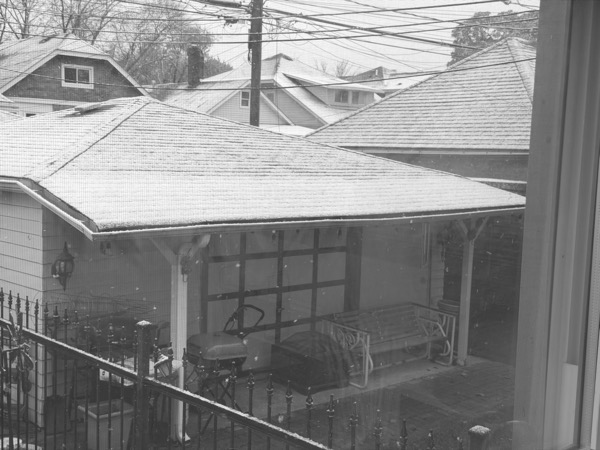
It’s a Sunday and Fall is homing in on Winter as the first snow of the season hits Chicago this morning. Perfect time for a little Sunday Morning Reading featuring some interesting stories about the arts, AI, and home.

As the first flakes of this winter of discontent fall, two interesting reads highlight some of the chaos the art-less U.S administration is inflicting on the American arts scene, specifically The Kennedy Center. Shawn McCreesh takes a look at the damage being done in The Kennedy Center Crackup.

Meanwhile, Charlotte Higgins reports that the Washington National Opera May Move Out Of The Kennedy Center Due to Trump ‘Takeover.’ I’m here to tell you that while what’s happening on the banks of the Potomac may feel very inside the beltway, the repercussions are being felt in the boardrooms of arts organizations across the country.

The above, like most of our news of late, is certainly not something to laugh at. That doesn’t mean we shouldn’t find ways to laugh at the incompetent, ignorant and dangerous players wreaking havoc in their wake. Laughter gets under their all too thin skins, no matter how made up or stretched too tight by surgery. Mike Monteiro offers up How To Point At Fascists And Laugh.

NatashaMH, far too young to worry about being old, takes a look at creating art as she nears the mid-century mark in I Don’t Paint For Your Sofa. Youngsters these days.

Art and politics might be an unholy mix in dangerous times like these, but there’s another foul concoction brewing. Adam Willems points to An ex-Intel CEO’s Mission To Build A Christian AI: ‘Hasten The Coming of Christ’s Return.’ If you ask me these folks wishing for these kind of end times have really missed the points. All of them.

Continuing on the AI front there seems to be a bit of weakening in the walls of what most concede is an economic bubble. The cliché is that bubbles pop. Those that don’t, just disappear as they float away. Ben Thompson takes a look at what happens in either case in The Benefits of Bubbles. 

Home is where hearts are and often places you can’t return back to. I’ve lived both. Chris Andrei is Searching For The Elusive Feeling Of Home.

With the weather changing and snowflakes falling out my window, there’s a passage of time marker about to be set. The Farmers’ Almanac is about to shut down. Growing up in rural America there were only two publications that everyone I knew received in the mail. It was always a big deal in our house when my dad, who was the postmaster, brought those home. The Sears Catalog and The Farmer’s Almanac. The Sears Catalog is long gone. The 2026 edition of the latter will be its last. Grace Snelling takes a look back and ahead in After More Than 200 Years, The Farmers’ Almanac Is Shutting Down For Good. 

Returning to where this week’s column began, the arts, Jack Rodolico’s The Blue Book Burglar examines how New York’s once vaunted Social Register, was not only a destination that social climbers desired to be included in, but was also a hit list for the country’s hardest working art thief. I just don’t understand how the current thieves doing today’s pillaging have it so damn easy.

If you’re interested in just what the heck Sunday Morning Reading is all about you can read more about the origins of Sunday Morning Reading here. If you’d like more click on the Sunday Morning Reading link in the category column to check out what’s been shared on Sunday’s past. You can also find more of my writings on Medium at this link, including in the publications Ellemeno and Rome.

Sunday Morning Reading

Traveling through the crazy paying attention along the way

It’s been a fortnight since I’ve published one of these columns due to travel. So much has happened. The travel adventures to London and Memphis were great. The way the world continues to pull itself apart continues to not be, as witnessed by protests and a madman’s threats of troops in the streets followed me from Chicago to London to Memphis. You can shut off and shut down to enjoy new places and visit dear friends, but the insanity keeps getting more insane. So, Sunday Morning Reading is back at it this week, with a mix of politics, culture and a bit of tech. (Oh, yeah, Apple released new iPhones during all of that.) If you can’t feel the currents flowing together, you’re not paying attention.

On my travels my wife and I caught some theatre. Two plays by Shakespeare and the contemporary play Stereophonic. The two Shakespeares were one of his worst, Merry Wives of Windsor, and one of the best, Hamlet. We’re theatre rats and know the importance of the medium and certainly recognize the role writers in all mediums play in our lives, history, and culture. So too does a favorite writer of mine, David Todd McCarty. Check out his important piece The Reason You Need To Be Making Art Right Now. And if I may be so bold, the other Sunday Morning Reading links below demonstrate that to a tee.

NatashaMH reflects on free speech, punk rebellion and British satire in When Satire Was Safe. Great piece. I dare say, satire has never been safe even when tolerated. Plenty of fools can attest to that. Ask Yorick.

I mentioned there’d be politics and here’s a few links to some excellent context on just how damn familiar all of what we’re living through is. For those who bother to pay attention. First up is Mark Hertling’s Beware Today’s ‘Fire-Eaters’. If you don’t know that term, read the piece. You’ll recognize today’s fire-eaters in a second.

On a broader scale, take a look at Nikki McCann Ramirez’s interview with Mike Duncan in Are We Witnessing The Fall Of The American Empire? My short answer is yes. Here’s the money quote that should terrify us all:

So if we go this route, we’re going to have congresses, we’re going to have Supreme Courts, we’re going to have a President of the United States, there will be governors, there will be elections, it’s just what’s happening underneath that facade. The facade is never going to go away, it’s how tissue-thin the facade is.

Follow that up with George Packer’s America’s Zombie Democracy.

For a bit of recent history and context, check out The Story of DOGE, As Told By Federal Workers from a team of Wired writers led by Zoe Schiffer.

As I mentioned Apple released new iPhones last week. Om Malik seems quite taken with the new iPhone Air, although he has some concerns in Go Out & Get Some Air.

In this column and other posts I’ve been following Denny Henke’s journey to de-Apple himself in his tech life with a keen interest. I greatly admire his drive and his sharing of his efforts. Check out My Ongoing Effort To de-Apple the iPad.

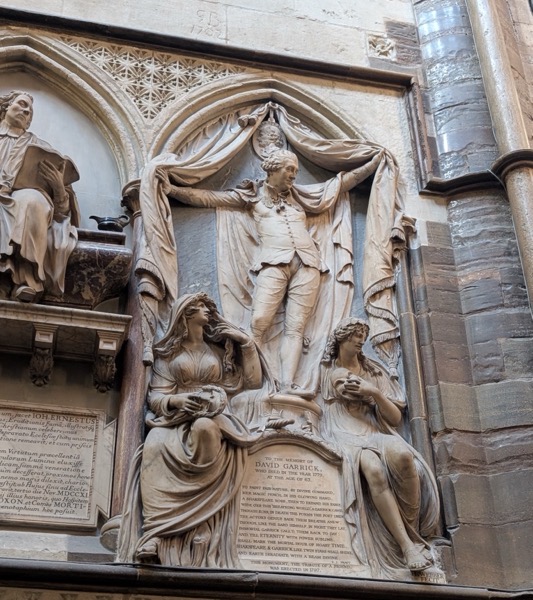
And to bring this all back around, take a look at Neely’s Tucker’s sharing of a guest post by Patrick Hastings,  Nobody Would Edit Shakespeare, Right? Right? They have and they do. David Garrick wasn’t the first or the last. Throughout history we always look for the ways to make it easier to swallow tragic moments and unhappy endings. In the theatre and on the stages of our lives.

(The image above is of David Garrick’s monument in Westminster Abbey, taken by me on my recent travels.

If you’re interested in just what the heck Sunday Morning Reading is all about you can read more about the origins of Sunday Morning Reading here. If you’d like more click on the Sunday Morning Reading link in the category column to check out what’s been shared on Sunday’s past. You can also find more of my writings on Medium at this link, including in the publications Ellemeno and Rome.

Sunday Morning Reading

The ant hill of humanity

Crazy travel rhythms this summer. Spending time at the lake this weekend. The good thing about lake time is there’s time to do some reading. Here’s some good stuff I stumbled onto, worth sharing for this week’s edition of Sunday Morning Reading.  Quite a bit revolving around Artificial Intelligence and other mind games. There’s also ants.

For some inexplicable reason defining what it means to be an American has actually become a chore these days. It shouldn’t be. Kieran Healy has written a piece simply titled American that recounts his thoughts and feelings on becoming an American citizen. Well worth your time, espeically in these crazy times.

“Memory isn’t linear; it’s relational.” That’s the thought NatashaMH leaves us with in her piece The Mind’s Mischief. The mind is indeed a curious thing.

Matteo Wong says the AI Doomers Are Getting Doomier. I don’t know about you, but if we’re all doomed at the hands of AI (does AI have hands?) human intelligence never really advanced as far as I thought it did. Or maybe we just hit the ceiling.

Speaking of AI doom, Charlie Warzel wonders why one of the impacts of AI it to make us feel like we’re losing it in  AI Is A Mass-Delusion Event. I get the points and they’re well made. Referring back to my comment from the previous entry, if we’re such easy marks for this kind of delusion… well…we are such easy marks.

David Todd McCarty argues why we should resist AI with ecclesiastical fervor, especially those who create for a living. Check out The Moral Failure Of Using AI In Your Art.

Reece Rogers is marking yet another change brought about by AI. Take a look at The AI-Powered PDF Marks The End of An Era.

Barry Betchesky tells us that It Took Many Years And Billions of Dollars, But Microsoft Finally Invented A Calculator That Is Wrong Sometimes. You read that right. The money quote is:

“But now we have Microsoft apparently determining that ‘unpredictability’ was something that some number of its customers wanted in their calculators.”

Rounding out this collection of links on AI, is another article by NatashaMH where she says instead of Fearing the Machinery, Interrogate The Mindset. Excellent piece. The underlying current is something I’ve been thinking about a lot. We’re creating these machines in our own images. Or at least the images we imagine of ourselves. Humans are far too human, even when we look past or try to accelerate beyond our humanity.

One of the joys of spending time in the great outdoors is that it reminds you we’re not the only intelligent species on the planet. Although as the theme of this week’s reading has emerged, we might want to reevaluate that, just not with Microsoft’s math tools. On another front, in politics it’s certainly easy to argue for a reevaluation. Kate Knibbs takes a swipe at it in a look at how Government Staff Cuts Have Fueled An Ant-Smuggling Boom.

I told you there’d be ants.

If you’re interested in just what the heck Sunday Morning Reading is all about you can read more about the origins of Sunday Morning Reading here. If you’d like more click on the Sunday Morning Reading link in the category column to check out what’s been shared on Sunday’s past. You can also find more of my writings on Medium at this link, including in the publications Ellemeno and Rome.
Sunday Morning Reading

With aging comes awareness. Or at least it should.

We’re on Lake Time this weekend, but there’s still time to share some Sunday Morning Reading. 

PXL 20250706 141021103.

Two weeks ago I shared a piece from youngster David Todd McCarty titled When I Was Old. I’m resharing it this week since I celebrated a birthday on Friday, getting one year closer to marking seven decades on this rock. Also sharing another great piece from David, called I Was Told There’d Be More.

“Scented memories.” I like those two words put together by NatashaMH in her piece, The Fragile Geometry of Becoming. 

I’ve been an Elmore Leonard fan for as long as I can remember. Anthony Lane’s Elmore Leonard’s Perfect Pitch may not be perfect, but it is damned close enough.

David Struett delivers a terrific ode to Chicago bike messengers, their culture and their jobs in Meet Chicago’s Last Bike Messengers. Here’s How They Survive.

You might notice a touch of sentimentality and reminiscing in the pieces above. Comes with the thoughts during a birthday weekend. Fair warning though that most of the links shared below are a bit darker, and yes, more political than those above. With aging comes awareness. Or at least it should.

Mathew Ingram wonders What Do We Do When The Facts Don’t Matter? I think we’re not liking what we’re finding out.

Mike Masnick’s piece Facism for First Time Founders offers the next generation a clue or two, assuming the current generation doesn’t crash it all before they get a chance to discover them.

I’ve written about the concept of enshittification in tech quite a bit. Mostly as regards the Internet. Henry Farrell and Abraham L. Newman take a look at The Enshittifcation of American Power. 

Another big contributor to enshittification is the media who increasingly seem more and more clueless and devoid of any self awareness. Charlotte Kim takes a look Inside The Media’s Traffic Apocalypse.

Speaking of things toxic and shitty, Adam Aleksic explores How Incel Language Infected The Mainstream Internet — and Brought It’s Toxicity With It. I’ve spent almost 70 years on this planet. I have no idea why guys turned into such misanthropic, self-loathing idiots.

In a world seemingly more and more intent on criminality, there are very few surprises, but there are legacies. Jessica Winter’s What I Inherited From My Criminal Great-Grandparents. Great story.

To conclude this week I’m sharing a film review by Sonny Bunch. This one of the new film Eddington. I haven’t seen the film. I plan to. Rarely does a review encourage or discourage me from seeing a film. If it’s anything like Bunch describes one way or the other I’m sure it will be worth it as it sounds like a fun, yet conflicted, summary of lots of things we’ve all been living through since 2020, and continue to do so. I’ll leave it with this quote:

The feed never stops, the algorithm never tires. There’s always more. It never ends. Just a few more videos. You can sleep later. You can never sleep, if that’s what you’d prefer. Who knows what you’ll miss when you’re asleep?

And we wonder why everyone has gone a little nuts.

If you’re interested in just what the heck Sunday Morning Reading is all about you can read more about the origins of Sunday Morning Reading here. If you’d like more click on the Sunday Morning Reading link in the category column to check out what’s been shared on Sunday’s past. You can also find more of my writings on Medium at this link, including in the publications Ellemeno and Rome.
Yes, There’s More on The Chicago Sun-Times AI Flap

Content is no longer king. Revenue generation is the boss.

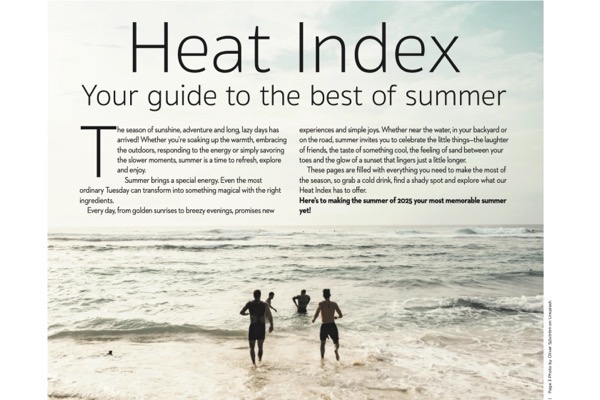
You probably remember last week’s adventure in AI and The Chicago Sun-Times. A special section featuring summer activities called The Heat Index included a traditional list of fifteen books for summer reading. Ten of the books didn’t exist, even though they are listed as being written by actual authors. Yes, AI was the culprit. But so too were the humans.

Well, it turns out there’s more to the story. Other parts of The Heat Index also included things like quotes from folks who claim they never made them and in the case of one chef was never solicited for an interview. The Sun-Times began checking the Heat Index and discovered 10 stories they checked all had similar erroneous sources, some phony, and multiple errors and information that couldn’t be verified.

The digging also unveiled that similar errors existed in past special supplements put together by King Features, a division of Hearts Corp, the newspaper published. The Sun-Times typically does about 10 such special supplements a year.

Here are some examples from the latest article describing the scenario:

One of the first stories in the summer section, touted as “a look at the hammock boom,” quoted several people who may not exist, or at least are not who Buscaglia said they were.

For example, a Ryan Leidecker was described as a product line manager at Eagles Nest Outfitters. The company said Leidecker is not an employee nor ever has been.

Buscaglia also cited a Dr. Jennifer Campos as professor of leisure studies at the University of Colorado. The university says it has no record of an employee named Jennifer Campos.

The story quoted Campos as saying a “hammock has become this generation’s equivalent of the Frisbee on the quad,” from her “2023 research paper published in the Journal of Contemporary Ethnography.” A search of her name in the journal yielded nothing.

In the same story, Mark Ellison is identified as an employee at Great Smoky Mountains National Park and warns about the damage that “improper hammock hanging techniques” can do to trees, with Buscaglia noting the information appeared on the park’s website.

Ellison posted on Facebook that he was not an employee of the park and said no such thing. The national park confirmed to the Sun-Times that Ellison does not work there and that there is no such information about hammocks on its website.

Also cited in the DIY article was a 2024 Wired magazine story by a tech writer named Brian Kahn, about setting up an outdoor movie area in your backyard. Wired told the Sun-Times that Kahn has not written for the publication and the quote was inaccurate.

The author of the content, Mark Buscaglia, did come clean about using AI and his failure to fact check. The Sun-Times has also come clean and said that no Sun-Times employees proofed the content before publishing it under its own banner.

What’s interesting, though not surprising, is The Sun-Times reasoning for how it got into this mess. Using King Features and not Sun-Times staff to prepare the supplements was, as you would expect, a cost-saving move according to Chicago Public Media’s CEO Melissa Bell, who also called the episode a series of “human mistakes.

Here’s another quote:

Bell said the decision to buy special sections from King Features — which predated her arrival at CPM last year — was a “creative solution to keep hitting revenue goals while we transition from print to digital revenue.” She said she had no objection: “I didn’t deeply investigate the editions, and quickly approved the team to continue the practice in place. My reasoning: let’s not sacrifice any revenue.”

As a side note to this story, and pointing to the bigger picture human mistakes I think all of these AI companies have made, it seems to me that a lot of these kind of error prone mistakes or hallucinations — too easily overlooked by most humans — could easily be rectified if the AI output included some sort of watermark or other identifier to say that it was generated by machines. That technology certainly should be easy to implement. At least given the promises of what AI is supposed to offer. But then that lets the air out of the balloon.

When it comes to scraping nickels off the pavement or bigger bucks from investors, and appearing that you’re something you’re not, we humans are far too accomplished at those skills. It’s no wonder Artificial Intelligence spits it back in our faces from time to time.

You can find more of my writings on a variety of topics on Medium at this link, including in the publications Ellemeno and Rome. I can also be found on social media under my name as above. 
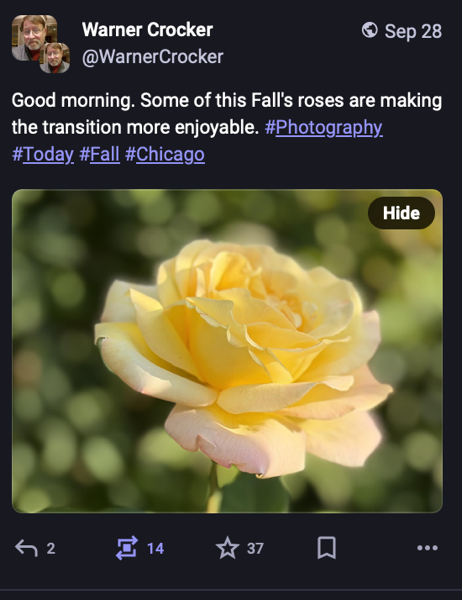
John Siracusa on Changes Needed at Apple

The time is ripe.

Apple is taking it on the chin lately. Deservedly so. Although some of the pounding is from external sources (Tump’s not happy with Tim Cook apparently,) most of the blows are entirely self-inflicted. Among those critics is noted Apple pundit and podcaster, John Siracusa, who delivered a piece on how he sees Apple’s current predicament. His post, Apple Turnover, essentially says it’s time for a leadership change in the C-Suite. I think he’s correct and his post is worth a read. 

AppleWorm copy.

Nothing lasts forever, as Siracusa nicely sums it up. Change happens. Life goes on whether that change is planned, forced, or fumbled into; a sort of a reverse echo of Shakespeare’s funniest villain Malvolio telling us that “some are born great, some achieve greatness, and some have greatness thrust upon them.” His display of hubris comes before his comic comeuppance. Apple’s won’t yield as much comedy. 

Quoting from his piece: 

…the only truly mortal sin for Apple’s leadership is losing sight of the proper relationship between product virtue and financial success—and not just momentarily, but constitutionally, intransigently, for years. Sadly, I believe this has happened.

The preponderance of the evidence is undeniable. Too many times, in too many ways, over too many years, Apple has made decisions that do not make its products better, all in service of control, leverage, protection, profits—all in service of money.

You can certainly argue that Apple achieved greatness and now appears like it’s reached a critical juncture on many fronts, including falling behind in Artificial Intelligence and trying to ring every ounce of worth it can from every penny its users might be willing to pay for its goods and services. I won’t go into any detail on any of that here because whether it’s AI, App Store business practices, or developer relationships, it’s all been chronicled well enough for most of those paying attention to recite like a catechism. The question is, are the high priests in the C-Suite paying attention?

A few years ago I wrote a piece about how I thought Apple had built itself into a design trap. Here’s a quote from that piece: 

The larger and more precarious point with this tangent is that Apple’s rich design expectations, as powerful as they are, are also Apple’s Achilles heel. Great artists aren’t afraid to fail. Great product makers who use great art as a selling point need to tread more carefully to avoid the level of disappointment that can turn a legacy into a burden.

I think they’ve built themselves a similar sort of trap in their business model(s) that comes from the same sort of reliance on their legacy of success and the hubris that’s engendered. You can easily argue that Apple’s business prowess, akin to its design prowess have both yielded unparalleled results feeding each other and fueling the company’s growth. 

Joan Westenberg has an excellent piece called Apple’s Diet of Worms that touches on this. But to a certain extent it goes well beyond that. Apple is well known to take a long view, and by and large that’s paid off. They’ve been able to afford that long view historically, even though there have been grumblings along the way. However, I don’t believe Apple is dictating the terms or the timeline any longer. 

In the case of Artificial Intelligence, as an example, who knows how that is going to play out for any of the players currently on the field or yet to come. But you can’t deny how OpenAI has changed the pace of things or how Google, and everyone else, is trying to play catch up. The recent announcement that OpenAI was purchasing Jony Ive’s design company to collaborate on what looks like new hardware, coming chock-a-block on top of Google’s mostly AI IO conference announcements, certainly changed the conversation. But then again it might be all smoke and mirrors, no matter how anxious everyone seems to be for some kind of new gadget of the future. Personally, I still think much on this AI front is a race without a finishing line or even a destination beyond collecting data for dollars.

That said, Apple is in it, perhaps thrust into the fray or perhaps fumbling along. Regardless, in my opinion any future achievements are going to require leadership change at the top. 

You can find more of my writings on a variety of topics on Medium at this link, including in the publications Ellemeno and Rome. I can also be found on social media under my name as above. 
 

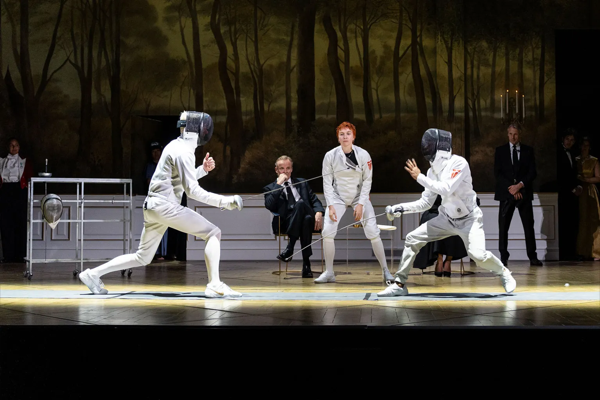
“Improper Ideology.” How Long Before They Just Call It Degenerate Art?

The whitewashing continues

It’s only a matter of time before the Nazis currently running America into the ground recycle Degenerative Art as a naming convention. At this point I’m not sure what’s holding them back giving their predilection for attacking anything other than the privileged white bread culture they seem to love. Although I doubt many of them actually eat white bread. 

Doing his worst to try and remake culture and history into something most of the world has left behind, Trump yesterday issued another of his plans. This time it’s directed at the Smithsonian Institution proclaiming that there has been a concerted and widespread effort to replace the “objective facts” of American History with a “distorted narrative.” Oh, yeah, it’s now called “improper ideology.”

The Nazis played a similar game with history and culture, labeling some of the art they didn’t like, or that didn’t support the world they wanted to create, as “degenerate art.” Funny though that those same goons sent troops all over Europe to snatch and grab quite a bit of that artwork for their own personal use. Go ahead, tell me who were the real degenerates. 

As I said, I’m not sure why the cowards in this administration haven’t stolen the “degenerate art” label for themselves, while they are stealing everything else. I’m sure there’s a Signal thread running around discussing it somewhere. 

I don’t need to lay out why this is bad and yes, stupid. The Smithsonian isn’t the only target and other cultural institutions are on the list, of course the most prominent prior to this being The John F. Kennedy Center for the Performing Arts. There have been and will continue to be many more sad and horrific days with horrific and misguided attempts at forcing blinders over muzzles.

At some point those you try to muzzle bite back. 

You can find more of my writings on a variety of topics on Medium at this link, including in the publications Ellemeno and Rome. I can also be found on social media under my name as above.