
Sunday Morning Reading

Silver linings, taking stock, a revival of the Avant-Garde, and the future of chocolate all in this week’s Sunday Morning Reading to Share

Weekends used to be for taking a breath. That seems so long ago it’s tough to measure it conventionally as it somehow sadly just slipped away. Even so, there’s still time to share some Sunday Morning Reading. 

Artificial Intelligence remains on the tip of all the digital tongues these days, though it’s yet to show any real promise that I’ve seen. Except for those who got in early on the cash grab. Steven Levy has an interesting piece, Tech Leaders Once Cried For AI Regulation. Now the Message is ‘Slow Down.’ Sounds like the cash isn’t as easy to grab as much as it used to be.

Speaking of AI, Chris Castle has an interesting piece on Music Technology Policy called Has The Ship Sailed On The Myth of “Responsible AI”? I’m not even sure it ever qualified for myth status, but whatever it is, that ship is out of the harbor. Hat Tip to Stan Stewart.

Kyle Chayka thinks The Dumbphone Is Real. This comes as so many blame smartphones for the decline of civilization among other smaller sins. Call me when every company in the world no longer begs you to pay your bills online, you can reach your doctor’s office via a phone, or tech companies (including those that make dumb phones don’t put you through hell trying to get techncial support from a person. I’ll take that call on my smartphone.

Most things get recycled. Including art movements. Helen Shaw takes a look at one such revival/remount in The Avant-Garfde Is Back On The Launchpad about the Wooster Group’s remounting of Richard Foreman’s Symphony of Rats. 

Jamelle Bouie’s When Politicians Invoke the Founding Fathers, Remember This is interesting. First, because the title changed from when it first appeared in The New York Times. Originally it was The Founding Fathers Don’t Have the Answers To Every Question. I wrote about that here. My points remain, so does Bouie’s (which are excellent). The headline writing still suffers.

Richard Stengel suggests that 2024 election coverage should be free and out from behind paywalls. He makes a good argument in Democracy Dies Behind Paywalls.

One of my favorite writers, NatashaMH gets quite poignant and, protestations aside, quite brave in doing so, in The Distance Between a Breath And Sadness. I think we should all learn how to better measure that distance.

David Todd McCarty uncharacteristically goes Searching for Silver Linings.

And to close things out on a bitter sweet note, Isable Fattal takes a look at The Future of Chocolate. It’s a summary for articles about the future of chocolate as she tells us to savor our favorites whlle we can. Apparently, yet another in a long line of sweet life things where we need to measure the difference between a breath and sadness because there may not be a silver lining.

If you’re interested in just what the heck Sunday Morning Reading is all about you can read more about the origins of Sunday Morning Reading here.  You can also find more of my writings on Medium at this link, including in the publications Ellemeno and Rome.

Axios and the Axis of Missing the Point

Missing the point and missing the story.

The folks at Axios raised a few eyebrows this week with a report, follwed up with a behind the scenes look at the report, essentially telling us to calm down about what’s happening in U.S. politics. Those of us alarmed are living in a reality distortion bubble according to Axios. The country isn’t as divided as we’ve been decieved into thinking it is.

Head buried in sand 1170x638.

If you ask me the only bubble is the one in the Axios editorial suite.

Look, I get it. Yes, there are millions of Americans too busy to be anywhere close to up to speed on what’s going on in this country politically, legally, and socially. But that misses the point and also gives lie to what passes for current day media’s business model. Also the historical one. If it bleeds it has always led and the country could use a tourniquet about now. Missing that story misses all points entirely.

There are millions who are paying attention, landing on either side of whatever passes for fences these days. If there weren’t, the media bubble (of which Axios is a part of) wouldn’t have much of an audience, or at least wouldn’t have enough worth advertisting on.

Those pushing to turn the clock back and those pushing to keep it moving forward both count on those millions too busy with the everyday to pay attention everyday. Assigning those paying attention to “a fringe view,” side swipes at what’s been happening and what’s going to happen in the next seven months and beyond. It’s also at odds with broad concepts like political science, history, and just plain old math.

I’m not disagreeing with some of the facts and data laid out in these articles. I’m disagreeing with the head in the sand conclusions.

You can find more of my writings on a variety of topics on Medium at this link, including in the publications Ellemeno and Rome.

Sunday Morning Reading

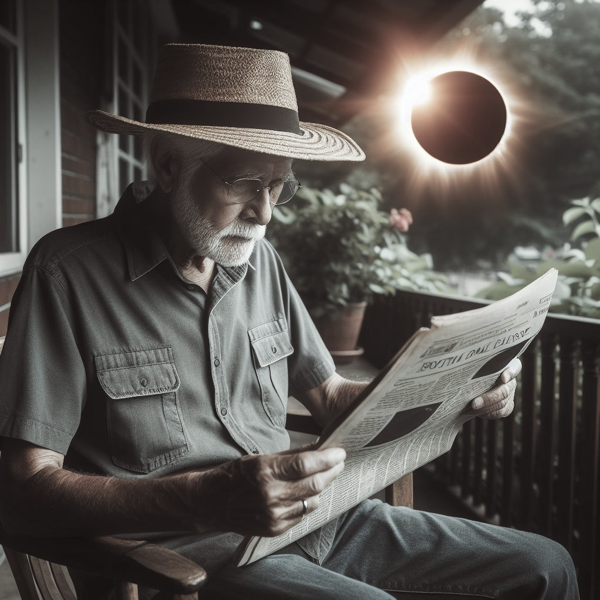
The world seems a bit crazier each week when the calendar flips to Sunday. In the lead up to a ‘sun eating’ total solar eclipse perhaps a bit more so. Don’t gamble on things settling down after it passes. Regardless, here’s some Sunday Morning Reading to share. 

According to Bertrand Russell “fear is the main source of superstition.” That may well be true. David Todd McCarty takes a look at The Disparity Between Fear and Progress. 

Kyle Orland in Ars Technica tells us that Google Might Make Users Pay for AI Features in Search Results. I can’t imagine anything less intelligent. 

Speaking of AI, NatashaMH wonders Will We Ever Be Ready for the Future? Have we ever?

Getting back to creativity in the real world, textile artist Minga Opazo explores being confident, finding solutions, and balancing research with your artistic practice in Engaging With The World In Your Work. Hat tip to Stan Stewart. 

On the politics beat, Robert Faturechi, Justin Elliott and Alex Mierjeski of ProPublica take a look at what appears to be another in a long line of Trump scams, this time with his last minute bond bailout. Ethical concerns abound in Trump’s Lawyers Told The Court No One Wold Give Him a Bond. Then He Got A Lifeline, But They Didn’t Tell The Judges. Too bad ethics don’t matter much anymore.

One thing about the political beat is that most of what we see and read is re-packaging things most of us already know. Details do matter, but not after the orange bull has wrecked the China shop. Lachlan Cartwright tells us What I Saw At The National Enquirer During Trump’s Rise. A too late, but good read.

Our Entire Society Is Becoming Addicted to Sports Gambling says Alex Shephard. I’m sure everyone saw this coming once the Supreme Court gave gambling the go ahead. Don’t forget, someone paid off Justice Kavanaugh’s gambling debts as he was being groomed for the bench.

To close things out, here’s a bit of history about solar eclipses from Leah Sarnoff in ‘The Sun Has Been Eaten’: Inside The History and Mystery of Total Solar Eclipses.

If you’re interested in just what the heck Sunday Morning Reading is all about you can read more about the origins of Sunday Morning Reading here.  You can also find more of my writings on Medium at this link, including in the publications Ellemeno and Rome.

Slam! Destroy! What’s With This Boring Bullshit SEO Headline Writing?

Click bait headline writing has become so ever present, overused, and tired that it has certainly lost all meaning to anyone except the chronically bored or the algorithmically programmed.

Whether it was “Pow!” or “Bam! Zoom!” it was usually the preface to “Right in the Kisser!” That’s what Jackie Gleason’s Ralph Cramden would exclaim to his wife Alice in The Honeymooners when she got under his skin. For some reason SEO experts think we’re attracted to this kind of cartoonish, wrestlemania-type of violence and have slobbishly skewed that assumption into the seemingly never ending stream of headlines saying “So and So Slams So and So” or “So and So Destroys So and So.” Internet publications and ad mills have followed the gravy train right along. “Rips,” “blasts,” and “bashes” also seem popular.

This type of click bait headline writing has become so ever present, overused, and tired that it has certainly lost all meaning to anyone except the chronically bored or the algorithmically programmed. As lazy as it is, I guess it works. Which is not only a sad commentary on humanity but a sadder one on algorithms and the SEO industry.

I mean where’s the creativity? Why not use “lambasts,” “harangues,” “admonishes,” “berates,” “objurgates?” Or for those with syllabaphobia how about “dress down,” “haul over the coals,” “lays into,” “lace into, or “slag off?” 

And just imagine how many of those boringly inept and inutile headlines are being fed into AI training engines. 

You can find more of my writings on a variety of topics on Medium at this link, including in the publications Ellemeno and Rome.

Sunday Morning Reading

The price of chocolate is through the roof and even ideas seem to be melting away in some fashion or the other in this Easter edition of Sunday Morning Reading. 

The price of chocolate is through the roof and even ideas seem to be melting away in some fashion or the other in this Easter edition of Sunday Morning Reading. 

Leading off this Easter Sunday morning it appears the price of cocoa is soaring leading to worry for chocolate makers and chocolate lovers. Aliina Selyukh covers it in Pricier Easter Bunnies and Eggs. Half-Dipped Kit Kats. What’s Up with Chocolate?

Much of this week’s news was dominated by the Baltimore maritime disaster at the Francis Scott Key Bridge. This is an fascinating take from Will Bunch: A Ship Crashed Into a Baltimore Bridge and Demolished the Lies About Immigration.

Less fascinating perhaps, but also timely,  A.W Ohlheiser says The Slow Death of Twitter Is Measured in Disasters Like the Baltimore Bridge Collapse.

David Todd McCarty tackles the power and the mystery of ideas in The Idea of Things.

Moving into the poltical world Marc O. De Girolami may be late to the party but he’s correct when he says Something Other Than Originalism Explains This Supreme Court.

Perhaps the most important political piece written this week comes from Chris Quinn, editor of the Cleveland Plain Dealer. Check out Our Tump Reporting Upsets Some Reades But There Aren’t Two Sides To Facts: Letter From the Editor. Better yet, forward it on to the editor, publishers, and programmers of your local media sources. 

Andres Marantz wonders Why We Can’t Stop Arguing About Whether Trump Is A Facist. It begs the question as to who is arguing this anymore, but it’s a good read. 

Will Knight takes a look Inside The Creation of the World’s Most Powerful Open Source AI Model. 

Meanwhile Erik Hoel says A.I.-Generated Garbage Is Polluting Our Culture. 

And to round out this week’s edition, Catherine Rampbell tells us The Internet Was Supposed To Make Humanity Smarter. It’s Failing. 

If you’re interested in just what the heck Sunday Morning Reading is all about you can read more about the origins of Sunday Morning Reading here.  You can also find more of my writings on Medium at this link, including in the publications Ellemeno and Rome.

Sunday Morning Reading

The line between Winter and Spring can be as confusing as it is normal. That fine line between confusing/normal runs through most this week’s Sunday Morning Reading. Enjoy!

It’s a Spring Sunday morning in Chicago. Nippy temps frustrate the daffodils that keep brushing off the snowflakes. As confusing as the weather may be, it’s also quite normal. That fine line between confusing/normal runs through a lot of this week’s Sunday Morning Reading. Mostly tech, some music, some marketing, some fear, and a troll or two, Enjoy!

The big tech news this week was the U.S. going after Apple as a monopoly. It’s brought out the the explainers and turned legions of Apple fan boys into anti-trust lawyers. Even the lawyers are going to need lawyers to figure this one out in my view. One of the best early inning reactions to this was from Jason Snell at Six Colors in U.S. versus Apple: A First Reaction.

When Marketing is everything, everything eventually gets reductive. Doc Searls of The Cluetrain Manifesto fame tackles this in Getting Us Wrong, a piece from December that recently resurfaced in my feeds and is always a timely read. So too is The Cluetrain Manifesto

The Disparity Between Fear And Progress by David Todd McCarty strikes a chord (actually chords) that I think many of us hear vibrating these days. 

Grim Tales, Fairy Dusts And All That Makes Us Gullible At Bedtime by NatashaMH jumps into the space between wanting to know and suspending disbelief. An interesting troll on it’s own. 

Social Media always seems to be at war with itself over most things, misinformation being one in a long list. I’m not sure Social Media presents more or less of that than other means of socialization, but Scott Duke Kominers and Jesse Shapiro think It’s Time To Give Up On Ending Social Media’s Misinformation Problem.

Joan Westenberg thinks the creator economy is a dead end for most creators. Is there an alternative? Check out The Creator Economy Trap: Why Building On Someone Else’s Platform Is A Dead End.

Musician and composer Stan Stewart thinks it’s dangerous to explain something before he does it, but he does so anyway in I’ve Got Some Explaining To Do. With all that’s going on in the world there’s something cooking up inside of Stan and I’m looking forward to the music that comes from this. 

Christopher Mims spent a couple of weeks using AI tools to do his work and comes out convinced we’re on the cusp of a ‘Cognitive Revolution.’ As he puts it: “Here’s my verdict: The last time I had an experience this eye-opening and transformative was after I bought my first smartphone.” Check out his thoughts in Want To Know If AI Will Take Your Job? I Tried Using It To Replace Myself.

If you’re interested in just what the heck Sunday Morning Reading is all about you can read more about the origins of Sunday Morning Reading here.  You can also find more of my writings on Medium at this link, including in the publications Ellemeno and Rome.

Sunday Morning Reading

Still bouncing back and through some health issues, but it’s Sunday and we’re approaching the start of the baseball season. So here’s some Sunday Morning Reading to share.

David Todd McCarty wonders how we convince friends and family that they’re wrong and we’re right in today’s mixed up world in Those Closest To Us. My hunch is that’s becoming no longer possible.

The Internet is as mixed up and crazy as everything else in the world these days. Was it always? Joan Westenberg published a zine that you can download for free called I Miss The Internet: a zine. I’d grab a copy if I were you.

The bills always come due. But this one might never get paid. Christopher Mims takes a look at the growing problem of technical debt in The Invisible $1.52 Trillion Problem: Clunky Old Software.

It didn’t take long for someone to create an AI worm. Makes one wonder where the good guys are who might use AI to beat this stuff back. Matt Burgess sounds the alarm in Here Come the AI Worms.

Sports analytics has been the latest craze for quite some time now. With the Major League Baseball season just around the corner, some are concerned that AI will eventually overwhelm the new wave of analysts and the games. The AP has this report from Jimmy Golen, Sports Analytics May Be Outnumbered When It Comes to Artificial Intelligence.

And from the tech future to the tech past, check out American’s Last Morse-Code Station by Saahil Desai.

If you’re interested in just what the heck Sunday Morning Reading is all about you can read more about the origins of Sunday Morning Reading here.  You can also find more of my writings on Medium at this link, including in the publications Ellemeno and Rome.

Sunday Morning Reading

Playing a bit of catch up after a week off due to some health issues and travel to visit the grandkids, so here’s some Sunday Morning Reading to catch up on and share as the world continues its wobbly spin. 

Context is Everything. I concur with NatashaMH. Cat piss and all.

Trigger me this: John Mellencamp says that one way to combat our US problem with guns is to start showing the carange on the news. Daniel Kreps tells us about it in John Mellencamp on How To End Gun Violence: ‘Show America the Carnage.’ I think Mellencamp is right.

Teri Kanefield has a nice rundown on Why Some Prefer Oligarchy and What’s Russia Got To Do, Got To Do With It? If you don’t follow Teri’s stuff, you should. 

Michel Schwirtz and Adam Entous writing for The New York Times put out an explosive piece on The Spy War: How The CIA Secretly Helps Ukraine Fight Putin. It’s not explosive for the content because those who need to know these things already do. What’s intriguing is that when info like this hits the Main Stream Media, there’s always a motive. The question is whose?

James Carville writes a piece for The Bulwark entitled A Crusade for Something Noble. If the title triggers you, read the article. If the subject matter doesn’t trigger you, well… let’s just say don’t say you weren’t warned.

Christopher Mims says AI means It’s The End of the Web As We Know It. I think he’s right, but have we ever really known this moving target?

David Dreams of Everything is a nice piece of introspection from David Todd McCarthy. Also check out his piece  Fish Or Cut Bait.

If you’re interested in just what the heck Sunday Morning Reading is all about you can read more about the origins of Sunday Morning Reading here.  You can also find more of my writings on Medium at this link, including in the publications Ellemeno and Rome.

Sunday Morning Reading

Winter is bearing down on big portions of the U.S. Some places are already digging out. I’m in one of the former portions (Memphis) that doesn’t handle it well. So today, Sunday Morning Reading will contain less links than usual. We’re rushing to get things accomplished before folks anticipate a rough time (or a snow day) in this old southern town. But don’t rush through these links.

As for winter, Zoë Schalnger has a good piece up about The Threshold at Which Snow Starts Irreversibly Disappearing.  Given deadlines and what’s impending here I sort of wish it never would appear, but that’s not the point of this article.

U.S. Politics may be a hot topic, but not enough to defeat Old Man Winter in Iowa where the first caucus will be held tomorrow for apparently no reason. The debate also rages on about the 14th Amendment. This piece from Jason Linkins, The Fourteenth Amendment Scolds Abetting Trump’s Return, turns up the heat on that issue and the media that keeps screwing up the coverage.

Natasha MH, talks about school reunions in The United States of Reunion. Great piece about the inner conflicts they can dredge up.

Smart is Not Always Wise. I concur. So does David Todd McCarty who penned this piece.

And for those who come here for a little tech, check out John Siracusa’s take on Artificial Intelligence entitled I Made This. Well worth your time.

If you’re interested in just what the heck Sunday Morning Reading is all about you can read more about the origins of Sunday Morning Reading here.  You can also find more of my writings on Medium at this link, including in the publications Ellemeno and Rome.

Sunday Morning Reading

Some culture, some politics, some tech, and some fun to share in this week’s Sunday Morning Reading. There’s also a bit of Picasso tossed into the mix. I’m in Memphis starting rehearsals for The Lehman Trilogy at Playhouse on the Square so life’s rhythms are a bit fractured currently, but life’s slower on the Mississippi.

Kicking it off, David Todd McCarty in We Could Be Heroes asks what do we do when mystery no longer sustains us after we’ve moved past enlightenment? I’m thinking the answer is either drink more or drink less. Pick your poison. Also check out his weekday daily columns here.

Susan B. Glaser, Jane Mayer, and Evan Osnos explain How The American Right Came to Love Putin. My $.02? It’s simple. It’s not about Left and Right in the traditional sense. It’s about take what you can because the good guys have proven they can’t really stop you.

Ray Naler in Time Magazine has an excellent piece on Artificial Intelligence called AI and The Rise of Mediocrity. We’ve been rising/sinking to that level for awhile now. The pace is quickening.

Speaking of quickening, what was Twitter continues to quickly plunge into past tense. The Verge has an excellent and fun piece called Elon Musk Killed Twitter from a team of writers.

More and more journalism these days seems to be telling us what we already suspected, already surmised, or already knew. Jodi Kantor and Adam Lipton fill in a few blanks on how the disaster that was the Roe v Wade decision came down in Behind the Scenes at the Dismantling of Roe v Wade.

Jason Snell makes a case for Apple to develop its own clipboard manger for macOS. He’s right.

NatashaMH in The Madness of Pablo takes a walk into the wildside with Pablo Picasso.

Continuing on the art beat to wrap things up this week, have you ever asked What’s With Those Hilarious Medieval Portrayals of Animals? Well Elaine Velie did and wrote all about it.

If you’re interested in just what the heck Sunday Morning Reading is all about you can read more about the origins of Sunday Morning Reading here