Adolescence: A Review

A tough watch. A must see.

Adolescence. See it. 

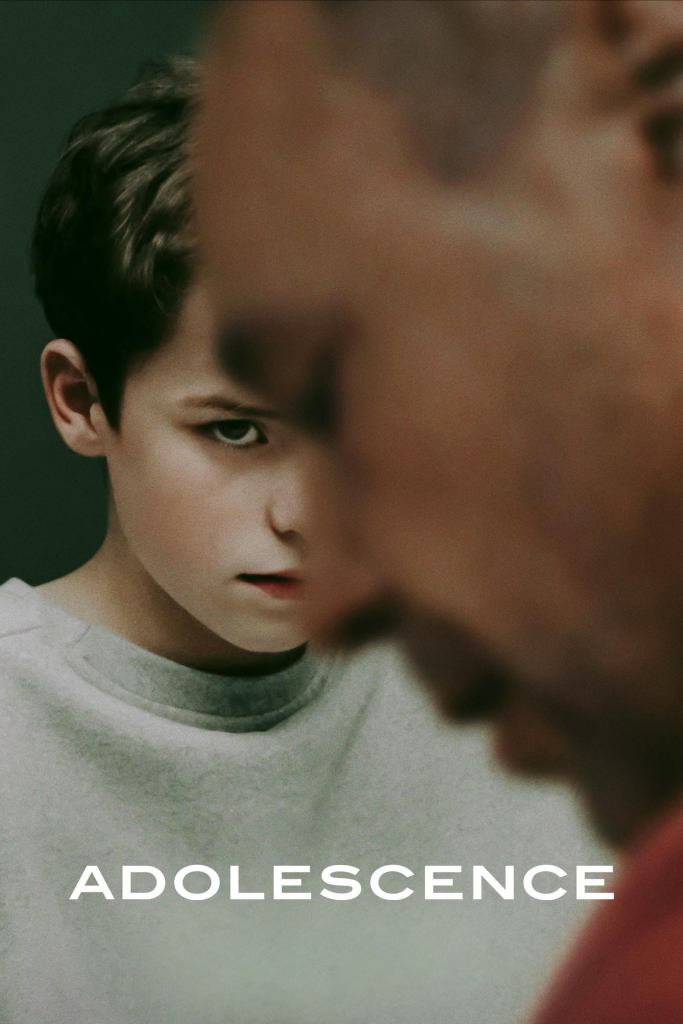
 I’d like that to be all that I write about this sensational limited streaming series on Netflix, but there’s more I want to say.

You’ve probably heard of Adolescence. It’s become a well deserved hot topic of conversation because it’s an excellently done piece of storytelling that cuts through what seems like an impenetrable zeitgeist like a hot knife through melted butter. I’m glad to see that the hype tour surrounding its recent release ramp up after the series took off because something this good needs to be ballyhooed, bravoed, and brandished with flying banners.

For me, the bottom line, beyond just saying “see it” is that the producers and artists involved captured something we all know in our gut and make us face it. Captured it in a challenging way that they didn’t need to, but by accepting that challenge opened up those gut instincts with a rawness that touches nerves we may have all let somehow deaden. The painful intimacy of one family’s story opens up a chasm full of realizations that speak far beyond the specific issues so well portrayed. 

In brief, a young boy is accused of stabbing a young girl and through the investigation we delve into a world of young boys and men influenced by Incel culture and bullying. A world not understood in this instance by the young boy’s family, or any one of the parents’ generation that we meet in the story. Watching the investigating detective’s son educate his father is a remarkable scene.

We follow the story through the boy’s arrest, booking and indictment, examination with a therapist, and the devastating conclusion as the family deals with the aftermath. Every moment is powerful. His arrest in the first episode is only the beginning of story that digs into every emotion there is when confronted with horrible moments that one would hope no family would ever have to endure. I can’t imagine any parent of young children, especially boys, watching this without wanting to take the doors off of their child’s bedroom doors and disconnect them from the Internet. It is tough to watch and it’s impossible to look away. 

Toxic masculinity, patriarchy, bullying, isolation, fear, self-loathing, and the perils of social media become bigger monsters by the moment than any knife wielding attacker. 

Director Philip Barantini, known for filming his stories in one take, uses that device to exquisite effect. He didn’t need to, but he and his team did and the payoff is exquisite. Each episode unfolds like a one-act play, filmed in one amazing traveling take. In later interviews it’s been revealed that they only did two full takes after a weekend’s rehearsal for each of the four episodes. The one take keeps you riveted as it ratchets up the tension, never letting you catch a visual breather from the story. How they filmed the second episode which takes place in and around a school is almost beyond imagining. 

The cast is superb, especially 13-year old Owen Cooper as the young boy. In his acting debut he delivers a performance that is so outstanding that it takes your breath away. He’s not only a natural, his performance borders on the supernatural. Stephen Graham, who also co-authored the story with Jack Thorne, plays the boy’s father and strikes true in every millisecond he is on the screen. Well known for playing in-your-face tough guys, Graham’s journey through this story is like watching a rock face that has been the feature of a cliff, let go and crash into a million pieces. The rest of the cast is equally up to the task of matching these amazing performances.

The back story is that Graham, hearing about crimes featuring young boys stabbing young girls, felt that questions needed to be asked, the obvious one being “why is this happening?’ As is the case with all good drama and story telling Adolescence raises as many questions as it answers others. Certainly I imagine parents who see this, and they all should, will be asking the same questions the mother and father in the series do themselves. 

On a larger scale, as we daily face an adult and supposedly mature world that seems stuck in adolescent, if not prepubescent misbehavior, celebrating toxic masculinity, bullying, and the perils of social media, this amazingly told story might at least give us a glimpse into how we looked away too often, when we knew we shouldn’t, ignoring so much at the cost of even more.

You can’t look away from this. 

You can find more of my writings on a variety of topics on Medium at this link, including in the publications Ellemeno and Rome. I can also be found on social media under my name as above. 
Sunday Morning Reading

We’re all circling. We’re not listening. We should be reading.

Everything changes. Everything remains the same. Damnit. With that said, here is this week’s Sunday Morning Reading with links to articles worth sharing and perhaps pondering over. There’s a bit of satire, a golden toilet heist, and the evolving nature of a piece from draft to final polish. And, yes, there is politics. Everything changes. Everything remains the same. Damnit.

Let’s kick off with Tina He and The Last Human Choice. That link is to the final version of the story. I also strongly encourage you to check out the draft version she shared here.

Alex Reisner takes on The Unbelievable Scale of AI’s Pirated-Books Problem. The technical scale may indeed boggle, the human greed behind it is a story told too often.

The Apple Intelligence/Siri sucks discussion continues and will certainly do so for quite awhile. Andrew Williams in Wired says To Truly Fix Siri, Apple May Have To Backtrack on One Key Thing–Privacy. I hate to say it, but I think he’s right and wish he weren’t.

Good satire can often be hard to distinguish from the real thing. Eli Grober walks that line well in Sergey Brin: We Need You Working 60 Hours A Week So We Can Replace You As Soon As Possible.

John Passantino takes a look at the unraveling of Threads in Hanging by a Thread.

Clearing the throat and clogging up the arteries with a bit of political writing here’s James Thorton Harris with Imagine Deportation: When Nixon Tried To Pull A Trump On John Lennon. Everything changes, everything remains the same. Damnit.

In the category of “be careful what you wish for,” Phoebe Petrovic in ProPublica gives us How A Push To Amend The Constitution Could Help Trump Expand Presidential Power. We’ve already let quite a few demons out of Pandora’s Box, I’m not so sure we want to crack it open any wider.

Speaking of demons, Elizabeth Lopatto tells us How Trump And Musk Built Their Own Reality. Excellent piece.

John Pavlovitz says we all make mistakes in America Chose The Monster.

Mark Jacob always has a great look at the media, especially in this moment, In this one he examines When The Media Take MAGA Liars At Their Word. I mentioned to Mark that what infuriates me is not just the media taking him at his word–ignorance and stupidity know no bounds–but that they know better and report it out as if they don’t.

And to flush away politics Clodagh Stenson, Jonathan Eden and William McLennan tell the tale of The Inside Story of Blenheim’s Gold Toilet Heist.

Bringing my words at the top full circle, NatashaMH once again delves deep into the personal past through a contemporary moment (her reaction to the streaming hit Adolescence) in A Requiem For My Dreams. I’ll close with a quote from her piece about the series that applies to everything, everywhere all at once:

People say the series is about a new world that’s happening. Fuck that, ignoramuses. It’s about a world that has always been out there behind closed doors when ears weren’t listening

(Image from Ashni on Unsplash)

If you’re interested in just what the heck Sunday Morning Reading is all about you can read more about the origins of Sunday Morning Reading here.  You can also find more of my writings on Medium at this link, including in the publications Ellemeno and Rome.