The Catechism of a Christmas Carol Revisited

Humbugs and humble remembrances

In the run up to the Christmas holiday I revisit this piece I wrote for Ellemeno called The Catechism of A Christmas Carol. It makes sense because for most of my life I revisited or restaged A Christmas Carol, or some other Christmas themed show each and every holiday season.

I revisit the piece hoping that things might have changed for the better and that the hard hearted might have taken some of Dickens’ message to heart. Sadly, this year I knew that wasn’t going to be the case. But as I suggest in the piece, that’s true every year. This year it is just more openly apparent. As ingrained as it is in most of Western culture, A Christmas Carol doesn’t seem to have the same power to change hearts that the ghosts Dickens conjured did with old Ebenezer.

In fact these days, I’m slightly surprised that the folks in charge of banning books haven’t focused on this one yet, given how contradictory it is to their aims and careless heartlessness.

I write this a week before Christmas Day, 2025, in what has been a frightening year that presages more frights to come. I imagine this weekend will see theatre’s filled watching A Christmas Carol, A Wonderful Life, A Miracle on 34th Street, etc… etc…. We can hope some in those audiences will take home a moment taken to heart, if only momentarily.

Perhaps one day we’ll return to a place where the momentary touching of hearts and salving of souls means something for at least the length of the  drive home from a Christmas Eve matinee. There is always hope. And that’s what Christmas is about.

As Scrooge’s nephew Fred says:

“There are many things from which I might have derived good, by which I have not profited, I dare say,” returned the nephew. “Christmas among the rest. But I am sure I have always thought of Christmas time, when it has come round — apart from the veneration due to its sacred name and origin, if anything belonging to it can be apart from that — as a good time: a kind, forgiving, charitable, pleasant time: the only time I know of, in the long calendar of the year, when men and women seem by one consent to open their shut-up hearts freely, and to think of people below them as if they really were fellow-passengers to the grave, and not another race of creatures bound on other journeys. And therefore, Uncle, though it has never put a scrap of gold or silver in my pocket, I believe that it has done me good, and will do me good; and I say, God bless it!”

I hope you’ll read the piece. Merry Christmas to all of those who celebrate.

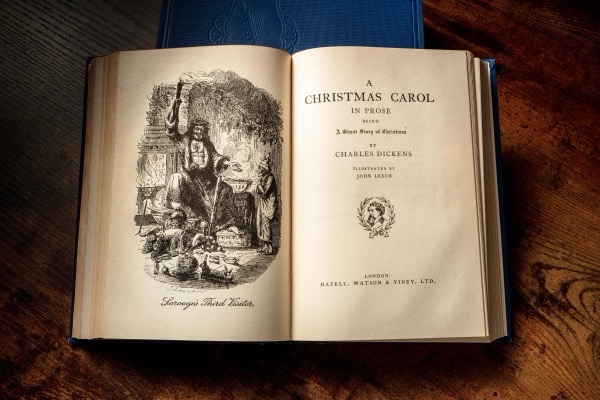
(image from Plateresca on Shutterstock.)

You can also find more of my writings on a variety of topics on Medium at this link, including in the publications Ellemeno and Rome. I can also be found on social media under my name as above.
Sunday Morning Reading

Hands on with playwrights, movies, smart toilets, and a discomforting rooster

Another Sunday. More snow overnight. More shoveling later. The holidays creep closer or perhaps they’re already here, given that grandpa mode has kicked into high gear. Started writing a new play out of the blue yesterday. I have no idea why, but it just tumbled out of my brain on to the screen via the keyboard. Time to share some Sunday Morning Reading. Read as you will, even if it’s on a smart toilet.

I often save the softer pieces for later in this column, but I’ll lead today with David Todd McCarty’s Christmas Means Comfort. Tell that to the rooster.

The world lost a treasure this week with the passing of architect Frank Gehry. Lee Bray writes a nice obituary and tribute. Check out Architect Frank Gehry Who Designed Millennium Park’s Pritzker Pavillion and Foot Bridge Dies at 96.

Samuel Beckett’s Hands is a terrific piece by Rob Tomlinson about, well it’s about Samuel Beckett’s hands and how Dupuytren’s contracture may have influenced not just how, but what he wrote, given that Beckett always begin his writing with pen and paper.

While I’m sharing stories about playwrights, the movie Hamnet is garnering lots of attention and accolades. (I haven’t seen it yet.) Based on Maggie O’Farrell’s excellent novel of the same name, Hamnet mostly follows accepted scholarship that William Shakespeare wrote Hamlet while grieving the death of his son, Hamnet. (At the time, the two names were practically interchangeable.) As with most things Shakespeare, there’s generally accepted knowledge and there are always those who challenge it. James Shapiro takes a look at The Long History of the Hamnet Myth.

And while I’m sharing stories about movies, take a look at Susan Morrison’s piece on How Noah Baumbach Fell (Back) In Love With The Movies.

I linked earlier this week to a piece by Phillip Bump called There Are Limits to the Hitler-Trump Comparison. Just Ask These Historians. I don’t disagree with the thesis. I just think it stops short in the way most history usually does.

Rory Rowan and Tristan Sturm write that Peter Thiel’s Apocalyptic Worldview Is A Dangerous Fantasy. Here’s hoping this first draft of our current history proves lasting.

There’s been much talk about all things military recently given how the current administration is tossing away most of what we believe the military stands for as easy as my grandson tosses away toy soldiers. Carrie Lee says The Soldier In The Illiberal State Is A Professional Dead End. I concur. Sadly.

In the wake of the cataclysm that was Twitter, social media is essentially a messy muddle these days with users continuing to migrate from one platform to another seeking some sort of place that feels comfortable enough to share and often discomfort others. Ian Dunt writes what he calls a love letter to one platform with Thank God for Bluesky.

Smart toilets were in the news this week. I actually got to see and use one at a Christmas party last night. All I could think about while doing my business was this piece by Victoria Song called Welcome To The Wellness Surveillance State. 

And to conclude this week, Amogh Dimri informs us that the Oxford University Press has chosen Rage Bait as 2025’s Word of the Year. Dimiri thinks it’s a brilliant choice. I guess it begs the question, if we’re angry enough to rage, is it really baiting?

If you’re interested in just what the heck Sunday Morning Reading is all about you can read more about the origins of Sunday Morning Reading here. If you’d like more click on the Sunday Morning Reading link in the category column to check out what’s been shared on Sunday’s past. You can also find more of my writings on Medium at this link, including in the publications Ellemeno and Rome.

Scene Painting a History of Hamlets at The National Theatre

Hamlets watching Hamlet

I’ve done some scene painting in my day, but nothing like this. Actually nothing even approaching anything like this. 

Hamlet 2.jpg.

In Robert Hatcher’s production of Shakespeare’s Hamlet at Britain’s National Theatre Ben Stones’ scenery features a gigantic mural that surrounds the set that includes the faces of actors who have played Hamlet through the ages. The picture above doesn’t do that description or the concept justice. 

The faces woven into the Danish artwork are the ultimate theatrical Easter egg. While Stones keeps the full cast list close to his chest, he confirms that they are all there – a complete history of the role.

“They’re all hidden in there. Everybody who’s been in it… even Tinuke Craig’s schools Hamlets, the three boys who played on that tour. We were very clear that if we include, we are including everyone who’s ever spoken those words in any version of this kind of play.”

As a statement on the play and its theatricality that’s cool in and of itself. The ghost visages of previous Hamlets watching what can be described as a ghost story has a meta appeal.

What also attracted my attention to this article — and why I’m sharing it — is that it puts the spotlight on scenic painting, somewhat of a lost art in this day of projected backgrounds and digital printing. This theatrical work of art required 920 hours to complete. 

There’s a terrific little video that gives you an idea of the scale and scope of the painting requirement. Unfortunately it’s filmed in vertical mode so you don’t get the grand finale the same way on a computer webpage that you might on a smartphone. Even on smaller screens it has an impact.

 It made me recall my days directing theatre in Omsk, Russia when the scene painting loft was at the top of the building. There, drops would be stretched on a frame that would rise and descend through an opening in the floor allowing the scenic artists to stand on the floor as they painted. There were some amazing scenic painters in that loft. 

The article also gives credit to the scenic artists who did the work for Hamlet at the National. Well deserved.

You can also find more of my writings on a variety of topics on Medium at this link, including in the publications Ellemeno and Rome. I can also be found on social media under my name as above.
Find Beauty When and Where You Can

Stop and smell the roses

A Mastodon user sent me a direct message the other day asking why I felt so comfortable doing what I do every morning, which is posting a “Good Morning” toot featuring photos I’ve taken of flowers, tree leaves changing color, other shots of nature, holiday ornaments, etc….

CleanShot 2025-11-17 at 12.25.20@2x.

The context of the query was criticizing how I could continue to do that every morning given all of the terrible things going on in the United States, things I also rightfully describe on social media as horrors.

I get it. Believe me I get it. I’m overwhelmed at times as well. But my response was and is simple.

Stop and smell the roses.

While there are indeed horrors happening in the world there is always beauty. If we don’t take a moment to see and acknowledge the beauty around us and the spontaneity of discovering it, whether it be in nature, in very human moments, in a museum, a gallery, a stage, a movie theater, a concert hall, a photograph, a child’s laugh, or in a story, then what the hell are we fighting for?

I’m convinced those we are fighting against don’t see or even care to see the beauty around and within us, unless it involves increasing their bank account balances.

Sometimes you need to stop and smell the roses. I prefer doing so in the mornings, before I put on my armor to meet the challenges of the day.

You can also find more of my writings on a variety of topics on Medium at this link, including in the publications Ellemeno and Rome. I can also be found on social media under my name as above.
The Little Prince Meets Artificial Intelligence

A melange of technology and fantasy

Every year, sometimes twice a year,  I return to one of my favorite theatre gigs, directing a staged reading for The International Voices Project. IVP is a Chicago company that produces staged readings of plays translated from other countries and cultures. Throughout the years the plays I’ve directed have taken me on journeys with writers from Syria, Lebanon, Ireland, Germany, Norway, Ukraine, El Salvador, and now Romania.

The reason I return each year is one of the reasons I have pursued and enjoyed my life making theatre. I get to touch and explore worlds, cultures, and ideas I would never have had the chance to experience otherwise. It’s always an adventure into something new.

My most recent gig with IVP certainly scratched all of those itches. The play is called Veronica’s Little Prince by Romanian playwright Dr. Catalina Florina Florescu. Yes, Antonie de Saint-Exupéry’s character of The Little Prince plays an important role.

The piece centers on Veronica, a former principal ballerina who has literally had her legs taken out from under her in a mysterious accident, leaving her in an institution, unable to move without the aid of a wheelchair and unable to speak. Unhappy with her fate Veronica is suspected of wanting to kill herself. Even before the mysterious accident she’s lived a life of self-destructive behavior.

The Little Prince arrives to help her examine and uncover the truth within her actions.

There’s another twist. I mentioned that Veronica can’t speak. In a technological twist she communicates via an AI robot by typing on her body. Via an implant those signals transmit to the robot who speaks her words and thoughts.

The play weaves in and out of Veronica’s mind and thoughts, her past and present, reality and fantasy, technology and humanity in very theatrical ways.

Creating an even more mysterious melange of tech and fantasy, the most frightening line to me is when Veronica’s Little Prince answers Veronica’s question about who told her to come by saying:

You see, they have programmed me to pop up whenever I hear certain words.

That may delight AI enthusiasts and those who keep suggesting we’re living in some sort of simulation, but given the rush to push us all deeper into a world run by Artificial Intelligence, it more than tweaks a nerve for those, like me, who may see benefits to AI in some forms, but think the pitfalls are more dangerous. Frankly, I prefer the characters in fantasy to spring from the minds of humans, not lines of code.

Given the sound and visual representations that give the script its many layers it was quite a challenge to present in a staged reading format without the benefit of theatre technology. But we managed to pull it off, letting the words weave their magic.

My thanks and kudos to the cast for doing such great work and especially to young Olive Popio who played our Little Prince.

(Photo by Scott Dray for The International Voices Project)

You can also find more of my writings on a variety of topics on Medium at this link, including in the publications Ellemeno and Rome. I can also be found on social media under my name as above.
Slide Over In iPadOS 26.1 Returns Just In Time

Glad to have this multi-tasking tool back.

Since I don’t run betas on any of my devices, I’ve been somewhat anxiously waiting for the release of iPadOS 26.1 which returns the Slide Over multi-tasking feature to the iPad. It got here just in the nick of time.

iPad OS 26.1 arrived yesterday afternoon, about 2 hours before rehearsal began and I quickly set things up for the evening’s rehearsal, using Notes in Slide Over to quickly jot down notes as rehearsal went along.

I use an 11 inch iPad Pro in my theatre work as my primary device. It contains the script I’m working on and ever since Slide Over was available I would use that multi-tasking feature to keep one or more apps tucked away for quick access conducting rehearsals.

New Shareshot.

I do question why Apple only allows one app in this returning version as opposed to multiple apps as it did before. It was always handy to keep multiple apps available throughout rehearsal, given that I prefer to have my script open full screen on the 11 inch iPad Pro.

As a side note, I’m not a fan of the Liquid Glass border around the window in Slide Over. It waists screen real estate, almost begging you to look at the feature. Even switching Liquid Glass to the new Tinted version, now also available in iOS 26, doesn’t erase or lessen that border or its distracting impact.

CleanShot 2025-11-04 at 11.37.09 2@2x.

In fact, setting the border aside, switching back and forth I don’t really see any significant difference in the apps I’m currently using between the Clear and Tinted versions of Liquid Glass. I won’t call that a complaint, but I will say it might all be much ado about nothing. At least on the iPad.

You can also find more of my writings on a variety of topics on Medium at this link, including in the publications Ellemeno and Rome. I can also be found on social media under my name as above.

Nothing Lasts Forever

Another chapter of Chicago theatre history comes to a close

You know how you know that nothing lasts forever? When you go online to search for images of a place you worked, shed more than a few beads of sweat, blood, and tears in, and you can’t find images of it.

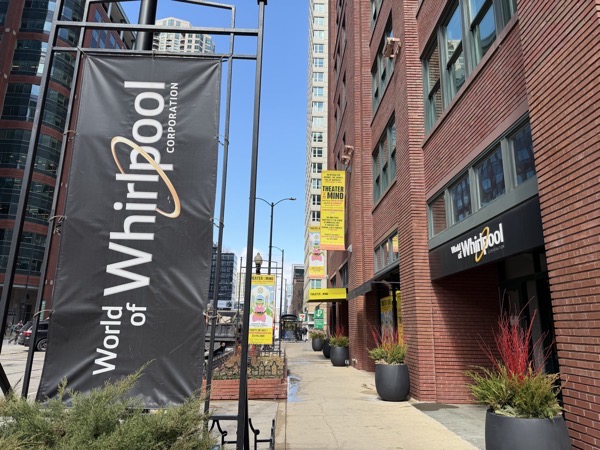
That’s the case here. I’m referring to Theatre Building, at 1225 W Belmont, Chicago. Yes, there is no “the” in front of it. Like Apple insists that there is no “the” before iPhone. In the case of the performance space that was intentional. Pretentious maybe, but purposeful nonetheless.

Theatre Building was founded as such in 1977 by three theatre companies: Travel Light Theatre, Pary Productions and the Dinglefest Theatre Company. The latter of those became Performance Community, and then the New Tuners Theatre, and after Travel Light and Pary Productions hit their respective closings, ended up managing the three theatre complex.

At one point or another just about every Chicago theatre company, and some from outside the city, rented performance space there. It was one of the centers of gravity in the Chicago theatre landscape. I can’t tell you the number of amazing performances by Chicago actors that I’ve seen on those stages. Shows hit. Shows flopped. Shows happened. And that was the point and purpose of Theatre Building.

Theatre Building was sold to Stage 773 in 2010 and still continued providing a home for Chicago theatres, until it changed it’s focus and became WHIM, which was supposed to be a sort of interactive attraction before it folded.

Here we are in 2025 and The Chicago City Council has granted approval for the property to be converted to a five-story apartment complex. As I said. nothing lasts forever.

My theatre company, The Absolute Theatre Company rented space there for a number of years, and I later served on the staff of New Tuners Theatre and helped manage the facility. I helped renovate the three theatre spaces in the late 90’s. So there are quite a few personal memories attached to those stages. They seems like another lifetime ago.

Change happens. The sad thing about this one is that there are three less performance spaces in Chicago, but that’s been the case since Stage 773 ran into financial difficulties and had to shut down after becoming WHIM.

I may not have been able to find a picture this morning of Theatre Building, but I do have this brick from the building that was given to me after my last show, before I headed out to Virginia for that part of my theatre career.

Guess I’ll hang on to that piece of Chicago theatre history.

You can also find more of my writings on a variety of topics on Medium at this link, including in the publications Ellemeno and Rome. I can also be found on social media under my name as above.

Brothers On Stage

Challenges met. Memories to cherish.

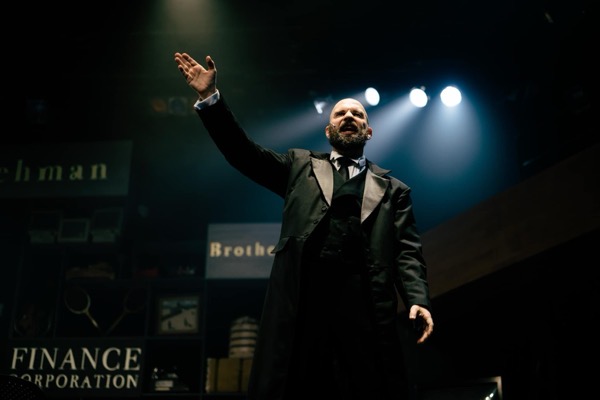
When our team assembled for The Lehman Trilogy some time ago, the three actors, John Maness, Michael Gravois, and Kevar Maffitt and I never knew that expereince would help us build such a strong, ongoing bond. Well it did. 

Last night I had the great pleasure to watch two of the brothers in the Theatre Memphis production of Hamlet, featuring Kevar Maffitt as the Dane, and John Maness as Claudius. I did so sitting along side the third brother Michael Gravois. 

CleanShot 2025-09-20 at 10.56.59@2x.

Let’s just say this. Kevar climbed the mountain that is portraying Hamlet brilliantly, captured the play and the audience and took us for quite a ride. Kudos to Kevar and to John, who was also excellent as Claudius, for their excellent work in this oh, so difficult play and oh, so difficult challenge for actors. 

We sat towards the back of the house so tha we would not become distrations during the many direct address monologues in the show. That said, the director gave Kevar the freedom to move about the house in those soliloquies and he chose to come up the stadium seating aisle and deliver the end of the famous “to be or not to be” monologue directly to Michael and I. 

It was quite a moment among brothers. The bond continues.

Chicago’s Uptown Theatre Hits 100 and is Still On The Skids

Decaying majesty

They certainly don’t make movie theatres like they used to. That’s not surprising or new, and long ago signaled a passing of a time when building special places for people to gather became less of a priority than so many other concerns. Chicago’s Uptown Theatre was one of those special places back in the day. It’s been decaying and shuttered since 1981 and every now and then efforts surface to try and bring it back to life.

Ctc 29062521 e1754425570173.

The Uptown celebrates its 100th birthday on August 18. Built as a grand show palace by Balaban & Katz and the architectural firm Rapp & Rapp, it was hailed as spectacular, and a “splendiferous palace of a place.” The Uptown sat 4,320 in what was called “an acre of seats.”

Offering movies and live entertainment it was billed as a “shrine to democracy where there are no privileged patrons. The wealthy rub elbows with the poor — and are better for this contact.” It also had air conditioning.

Obviously a lot changed throughout the years, talkies took over from silent films, the Great Depression, and the advent of TV changed the dynamic. The Uptown part of town itself fell on hard times and saw big changes, and during much of my time in Chicago was the last section of the lakefront resisting redevelopment. The final act on the Uptown stage was a concert by the J. Geils Band in 1981.

Robert Loerzel has a terrific piece looking back at the Uptown Theatre in the Chicago Tribune that’s more than worth a read as we approach the show palace’s centennial. There’s also an excellent gallery of photos, which the photo above is from. The link should be a gift link, although I don’t know how long that lasts. Loerzel has also authored a new book, The Uptown: Chicago’s Endangered Movie Palace

When I first moved to Chicago in 1999 there were still a few of these show palaces in operation around the city, but the Uptown had long since shuttered. I got to take a tour of the place in the early 1990’s and the scale of what it once offered was impressive to see, only dwarfed by the decay and disrepair.

There are still efforts to try and find funding to restore the Uptown, but I’m sad to say I think priorities have shifted in such a way that we won’t see that happen.

You can also find more of my writings on a variety of topics on Medium at this link, including in the publications Ellemeno and Rome. I can also be found on social media under my name as above.