The Cowards and Greedy Captains of Industry

If you can’t take a joke…

Once upon a time things like free speech, freedom of expression, freedom of the press were considered hallmarks of what America stood for. That feels more and more like a fairy tale. The folks in control of the government keep ripping their claws into social and political fabric and turning America into some weird fascist and cultish state that worships a convicted felon and child rapist.

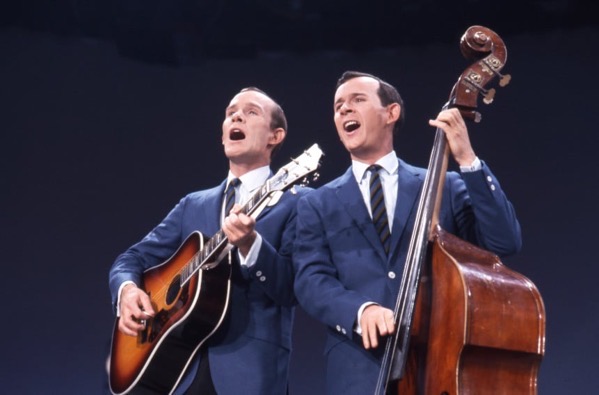
2021 11 08 smothers brothers alamy.

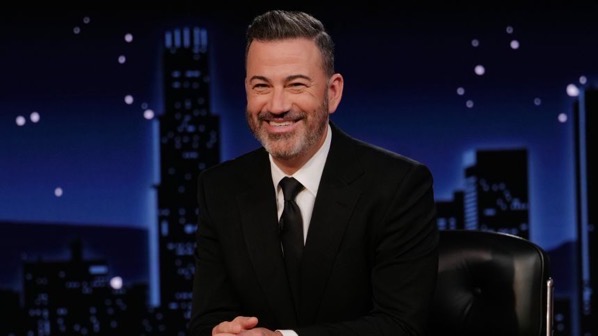
The latest outrageous move of the Trump administration is threatening ABC to take late night comedy host Jimmy Kimmel off of the air “indefinitely.” It’s a political move and a business move. It’s also a mob move.

Disney, the pseudo-family corporate parent of ABC, Disney made the move after one of the ABC affiliates, Nexstar Media said it was so offended by Kimmel’s comments about the recent shooting of Charlie Kirk that it would pre-empt the show on its stations.

Here’s the fun part. Nexstar is trying to expand its stable of channels and that requires FCC approval. You don’t need a crayon to draw your own conclusions because the thugs in charge are so transparent with their thuggery.

Day by day we’re watching what used to be called the Captains of Industry, academia, and the media drive their boats into what they presume is the safe harbor under Trump’s protection. That harbor is getting so crowded that no one is going to be able to sail out again. Forget the ship of state, the ships of commerce are running themselves aground. This will continue because once ground is given, the bully keeps taking. It’s a tale told too well.

This feels like a yet another power move and of course it requires power to pull off. But it’s actually the move of cowards who realize they are despised and have skin so thin that they can’t take a punch line from a so-so comic. It also requires what we once thought of strong business leaders to show their true colors as cowards. Captains of Cowardice fits more today than the former sobriquet of Captains of Industry.

Another president in another time, Lyndon Johnson, once said about the comedic and satiric criticism tossed at him by the Smothers Brothers.

“It is part of the price of leadership of this great and free nation to be the target of clever satirists. You have given the gift of laughter to our people. May we never grow so somber or self-important that we fail to appreciate the humor in our lives.”

Don’t get me wrong. LBJ was pissed. But he was man enough to rise above it, at least publicly. Those were tumultuous times then as well. These times are becoming not only tumultuous, but tortuous because of the daily drip of news like this.

You can also find more of my writings on a variety of topics on Medium at this link, including in the publications Ellemeno and Rome. I can also be found on social media under my name as above.

Apple TV+ Price Increase and the Dummy Price

Death, taxes, and subscription price increases

Times have changed how money changes hands. Back in the day purchasing a subscription meant you got a deal. It also created a relationship between the customer and the service, that often, but not always, protected subscribers from price increases. At least for a time. That really no longer exists. Sure there are deals and free trials to seduce new customers, but typically those deals are for a period of time and then the price goes up. It’s changed the definition of what we used to call “the dummy price.”

CleanShot 2025-08-21 at 10.45.50@2x.

“The dummy price” was for those who didn’t subscribe, thus paying full price. We used to joke in the theatre biz that “the dummy price” was for the guy who’s wife told him she wanted to see a show, and then he’d have his secretary use his credit card to buy the tickets when he got to the office.

When we had to raise prices we’d do so on single tickets and reward our subscribers by telling them we’d keep their current prices intact, thus increasing their savings and further building trust in relationship. That made it a bit easier sell when we inevitably had to raise subscription prices.

It was similar to buying the newspaper each day, instead of subscribing. A subscription was always cheaper than the newsstand price.

The only thing I think I subscribe to these days that actually offers any type of real savings is an E-ZPass, which in my state cuts the cost you pay at the toll booth by 50%.

Of course those are different markets than streaming entertainment, which didn’t exist when I was setting “dummy prices.” Subscriptions for streaming entertainment only gets you access. Certainly a lot of content is available for the price you pay, but realistically it’s more than anyone could ever consume. But the promise is access. The quantity makes much of the content as disposable as it is available, even if it is cheaper than back in the day when you had to purchase physical or digital media in order to view it at home.

The only thing you’re really buying is the inevitable price increase and a bit more frustration in balancing out your entertainment budget.

The new definition of “the dummy price” is hoping there are enough customers who don’t pay attention and miss the price increase.

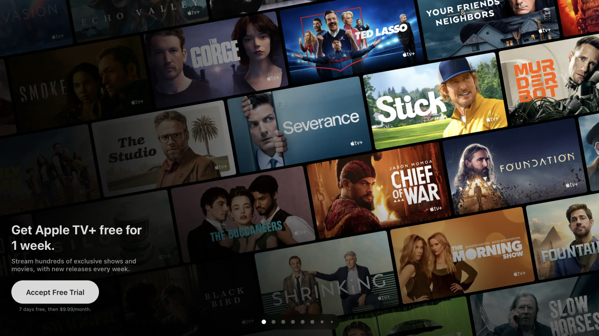
Apple announced today it’s increasing its monthly subscription price for its streaming entertainment service, Apple TV+ from $9.99 to $12.99 a month. Other streaming services do the same thing, more frequently than Apple. But every player in the market affects the perception of all the rest.

It’s led to a sort of comedic game for consumers who want to stream from different services. They cancel a service for a period of time, often waiting for new content to become abundantly available or a particularly desired title, and then they’ll resubscribe after canceling another service. Or they’ll just keep creating new email accounts, resubscribing under a new name.

Currently the streaming companies seem to be comfortable enough with this type of customer churn, but it builds more attraction to titles than it does to a service’s brand, which in turn drives up the marketing costs for each new title. I imagine at some point streaming companies will find a way to clamp down and try to minimize that churn, the same way they have done with password sharing.

But the subscription game is not just an entertainment industry business practice. There are quite a few services that want your monthly tithe and offer the same kind of price inducements. But it’s certainly easier to cancel Netflix for a period of time than it is some of these other types of services once the inevitable price increase comes along. It will be interesting to see how the AI market shakes out once the first big company needs to break the $20 a month barrier for general consumers.

Bottom line it’s a shell game for both customers and companies. Death and taxes used to be the only constants in that old axiom about the only things certain in life. That needs to be amended to include price increases for subscription services.

You can also find more of my writings on a variety of topics on Medium at this link, including in the publications Ellemeno and Rome. I can also be found on social media under my name as above. 

Mainstream Media Continues to Dismantle Itself

MSBNC to become MS Now

It’s been an accepted part of conventional wisdom for quite some time that what we consider mainstream media is gradually fading away in the face of newer generations turning to other sources available on the Internet for news and entertainment. Heck, even some older generations are turning what used to be the dial.

MSNBC MS NOW name change.

The business models have suffered for a while now whether it’s print, broadcast or cable. The fading away has gained new and seemingly panicked momentum thanks to the depredations of the Trump administration, aided by the greedy cowardice of the corporations worried more about avoiding the wrath of the beast they helped create, than the standards they all proudly trumpeted for years. Those trumpets have largely fallen silent or just ring hollow.

The end of late night comedy shows captured a lot of attention recently, but eventually most broadcast scripted news and entertainment will also give way. Which is ironic given that the convicted felon largely responsible for this quickening pace came to prominence via Reality TV, which let me tell you is anything but reality and is very scripted.

Now NBC Universal, owned by Comcast, is making a move away from MSNBC, attempting to distance the Peacock from controversy by rebranding as MS Now. That little branding acronym stands for  My Source | News | Opinion | World.

Yeesh. I guess the marketing department was the first place they made changes. As a social media friend Judgment Dave says, “it sounds like a translation of something in Japanese that doesn’t translate well into English.”

It’s weird, yet it isn’t to hang onto the ‘MS’, given that MSNBC was birthed as partnership with Microsoft and NBC, long since dissolved. Somewhere Bill Gates is laughing because it also sounds like a software program delivered on a CD-ROM.

Whatever sturm and drang comes from this news of the moment, (news of the Now?) the bigger picture is that these troubled corporations, in what feels like desperate efforts to try and save themselves, are essentially hastening their eventual final curtains in the wake of current trends already overtaking them.

Some may lay blame on the rise of the Internet and mobile devices in every hand, but the fact of the matter is the smart folks at the top of these corporations missed the moment. Some eventually tried to make changes. Remember CNN Plus? But in my opinion their failures were less about the delivery mechanisms and more about the decline of the news and entertainment products that they delivered as the cost cutters held sway.

NBCUniversal isn’t done trimming the sails yet. Plans are in place to spinoff other properties as well (CNBC, USA, Oxygen, and E!).

Some will blame it on advertisers seeking the best way to reach customers. That’s mostly true, but ask podcasters how that’s going for them these days. Chasing advertising revenue is always a cyclical game for just about everything except sports.

It’s no wonder then that it feels like we see our politics more and more resembling blood sports. Of course the irony is audiences claim they want less, not more in that realm. What will be interesting to see in the next decade or so is how political advertising, which fills so many corporate media coffers sorts itself out, once the usual outlets fade away as they continue to play to ever diminishing audiences that keep spreading themselves wider and wider, attempting to flee the same old, same old.

Certainly ads will continue to be designed to run on social media and circulate that way. But the only folks making real money off of that trend are the political consultants and ad-makers.

I hope I’m around to see how my grandkids eventually consume what we once revered and respected as the news. I’ll regale them with what I imagine they will view as fairy tales and myths.

You can also find more of my writings on a variety of topics on Medium at this link, including in the publications Ellemeno and Rome. I can also be found on social media under my name as above. 
Marc Maron’s Panicked Is Worth Watching

Don’t panic. Just watch.

Got a chance to watch Marc Maron’s latest on HBO or whatever it calls itself this week. Called Marc Maron Panicked, it’s genuine good stuff if you’re a fan of Maron’s comedy and satire, or even if you’re not.

D597d5b0 6619 4bde b9a8 b414c1a55c39.

Playing off of the panic most of us feel about most things these days, Maron’s pointed observations not only hit his targets, they knock a few of them down, delivering more than a few belly laughs.

If you think he’s panicked and anxious about the criminals running the country these days, you’re right. But as usual Maron takes sharp aim at liberal failings that helped usher them into office. It’s not all politics. Evacuating during the LA fires, end of life issues, avoiding Nazis and other calamities fuel his panic and his comedy.

Highly recommended, even if you’re not a Marc Maron fan.

You can also find more of my writings on a variety of topics on Medium at this link, including in the publications Ellemeno and Rome. I can also be found on social media under my name as above. 
Sunday Morning Reading

A bit of this, a bit of that. All good bits.

It’s the Dog Days of Summer and it’s been a hot one so far. We’re traveling again, but there’s still some interesting Sunday Morning Reading to share. Some of it hopeful, some elegiac. Some just geeky and fun. Enjoy.

Milen kolev zs9jdUCaP_4 unsplash.

Kicking things off is a piece in The Atlantic from Anna Deavere Smith called When You Don’t Look Like Anything. She’s a singular artist always worth paying attention to. Her story of her 50-year search for the American character is certainly more than worth your time. Damn good stuff.

A.R. Moxon popped up on my radar this week with a piece called Total Eclipses. It’s part 2 of a series, the first being Be Bolder, Not a Boulder. If you’re like me and looking for any light at the end of any tunnel these days, do give both pieces a read.

NatashaMH offers up An Ode To The Poetic Detours. It’s about writing and where she finds inspiration, but more broadly, it’s about observing, noticing, listening, seeing, and feeling between the lines we sometimes get trapped within.

Will Dunn asks Are Emoji’s Killing Language? I’ve been saying they are for quite some time. For the life of me I don’t understand why we seem intent on regressing back to an age of hieroglyphics instead using the complex beauty of words and language.

Mathew Ingram says The Google Link Economy Is Dying and It’s Not Coming Back. He’s not wrong. Actually, he’s very right.

Health is a big deal in tech these days, especially when it comes to adding features to improve monitoring what’s going on in our bodies. Frankly, as someone who uses medical devices for monitoring my diabetes, the promises to add that kind of monitoring to smart devices, along with blood pressure and other conditions, sound hollow, seeming as realistic to me as self-driving cars. We may get there one day, but for now it’s mostly a clever way to market something new to increase the bottom line. Victoria Song takes a look at Samsung’s recent effort to check out our level of antioxidants with their smartwatch in I ‘Fooled’ Samsung’s New Antioxidant Feature With a Cheez-It. 

Much has been made of Paramount’s caving to Donald Trump, leading to the firing of late not comedian Stephen Colbert. That was quickly followed up by the Trey Parker and Matt Stone’s skewering new season opener of South Park. Paramount paid up, got its merger, and in an Aristotelian, if not Mel Brooksian sense there’s some grand comedy in the entire thing. I’m a fan of Alexandra Petri’s piece examining the moment pre-South Park titled Are You Laughing Yet?

Sometimes we just need to laugh at what feels like no laughing matter.

(Image from Milen Kolev on Unsplash)

If you’re interested in just what the heck Sunday Morning Reading is all about you can read more about the origins of Sunday Morning Reading here. If you’d like more click on the Sunday Morning Reading link in the category column to check out what’s been shared on Sunday’s past. You can also find more of my writings on Medium at this link, including in the publications Ellemeno and Rome.

Are You Laughing or Crying?

Comedy kills or killing comedy?

Just a quick link to this piece from Alexandra Petri that had me laughing called Are You Laughing Yet? She also had me angry, but then that’s my state of things these days. I laughed because the writing and commentary is excellent. I got angry, because, well if you’re not angry at what’s going on these days, you’re either dead, or… well, I’ll just leave it at that.

Miguel alcantara udZkhKxnOyk unsplash.

Petri has a blisteringly funny take that begins with Trump’s takedown shakedown of Stephen Colbert via his pressure on Paramount. But it quickly spins into a larger take that’s well worth your while, especially if you enjoy comedy.

Well worth your time. Scroll back up and click the link.

(Image from Miguel Alcântara on Unsplash.)

You can find more of my writings on a variety of topics on Medium at this link, including in the publications Ellemeno and Rome. I can also be found on social media under my name as above. 

What’s Next After No Kings Protests?

We’re all asking the same question. There are no easy answers.

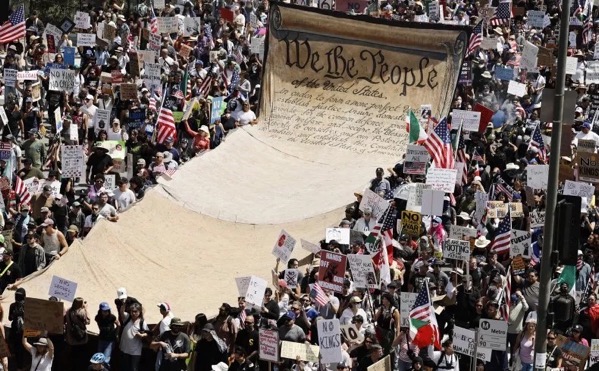
The No Kings protests this weekend were quite a recipe for hope. I won’t post any crowd number estimates because despite what you may hear or read there’s no real way to know numbers. What is knowable though is the large number of locations across the country that participated, indicating a depth and breadth of support against this horrible fascist regime we allowed to take over.

No kings protest la.

I’m including this link to Scott Dworkin’s post that contains a collection of No Kings protest photos from all 50 states. It’s a great look at that breadth and depth. But those are snapshots of moments in time. The energy that compelled so many to join protests this weekend needs to somehow be harnessed so that any momentum is not lost.

Certainly since the head of the regime we’re all protesting against has done the only thing he can do, which is double down with his threats, now more specifically calling out Blue State cities and populations.  We need to turn that recipe for hope into a full blown meal.

So, how do we keep it going?

That’s going to be tough, but this is a tough fight. I’m one who believes that we should extend weekend protests into the work week. Disrupt the work week and it will have a larger impact than just a weekend event. Especially given how the media seems too afraid to provide anything approaching real coverage, and the Trump adjacent media is just going to ignore it or make shit up. Unless there’s violence they want to exploit.

As an example of that, I sent out the above link from Scott Dworkin to some sadly still MAGAt worshipping relatives. From most I got the usual brush off. But two responded that they had no idea the protests were so large across the country. Guess where they get their news?

Perhaps that’s a simple cue we can use for our own good intentions. Accept the media won’t cover what needs covering. Assume those you know won’t see it if they do. Become your own source for providing information. Keep in mind, It won’t do any good to send inaccurate info or just be argumentative. Just send out the info with a message that says “in case you didn’t see this.”

I know that’s tricky ground for many with family tensions about this moment. But, in my humble opinion, it’s a step in the right direction and a necessary one. Big steps were taken this weekend. We need to keep moving forward. The other side is and will. Let’s make it tougher, not easier for them to do so.

You can find more of my writings on a variety of topics on Medium at this link, including in the publications Ellemeno and Rome. I can also be found on social media under my name as above. 

Yes, There’s More on The Chicago Sun-Times AI Flap

Content is no longer king. Revenue generation is the boss.

You probably remember last week’s adventure in AI and The Chicago Sun-Times. A special section featuring summer activities called The Heat Index included a traditional list of fifteen books for summer reading. Ten of the books didn’t exist, even though they are listed as being written by actual authors. Yes, AI was the culprit. But so too were the humans.

Well, it turns out there’s more to the story. Other parts of The Heat Index also included things like quotes from folks who claim they never made them and in the case of one chef was never solicited for an interview. The Sun-Times began checking the Heat Index and discovered 10 stories they checked all had similar erroneous sources, some phony, and multiple errors and information that couldn’t be verified.

The digging also unveiled that similar errors existed in past special supplements put together by King Features, a division of Hearts Corp, the newspaper published. The Sun-Times typically does about 10 such special supplements a year.

Here are some examples from the latest article describing the scenario:

One of the first stories in the summer section, touted as “a look at the hammock boom,” quoted several people who may not exist, or at least are not who Buscaglia said they were.

For example, a Ryan Leidecker was described as a product line manager at Eagles Nest Outfitters. The company said Leidecker is not an employee nor ever has been.

Buscaglia also cited a Dr. Jennifer Campos as professor of leisure studies at the University of Colorado. The university says it has no record of an employee named Jennifer Campos.

The story quoted Campos as saying a “hammock has become this generation’s equivalent of the Frisbee on the quad,” from her “2023 research paper published in the Journal of Contemporary Ethnography.” A search of her name in the journal yielded nothing.

In the same story, Mark Ellison is identified as an employee at Great Smoky Mountains National Park and warns about the damage that “improper hammock hanging techniques” can do to trees, with Buscaglia noting the information appeared on the park’s website.

Ellison posted on Facebook that he was not an employee of the park and said no such thing. The national park confirmed to the Sun-Times that Ellison does not work there and that there is no such information about hammocks on its website.

Also cited in the DIY article was a 2024 Wired magazine story by a tech writer named Brian Kahn, about setting up an outdoor movie area in your backyard. Wired told the Sun-Times that Kahn has not written for the publication and the quote was inaccurate.

The author of the content, Mark Buscaglia, did come clean about using AI and his failure to fact check. The Sun-Times has also come clean and said that no Sun-Times employees proofed the content before publishing it under its own banner.

What’s interesting, though not surprising, is The Sun-Times reasoning for how it got into this mess. Using King Features and not Sun-Times staff to prepare the supplements was, as you would expect, a cost-saving move according to Chicago Public Media’s CEO Melissa Bell, who also called the episode a series of “human mistakes.

Here’s another quote:

Bell said the decision to buy special sections from King Features — which predated her arrival at CPM last year — was a “creative solution to keep hitting revenue goals while we transition from print to digital revenue.” She said she had no objection: “I didn’t deeply investigate the editions, and quickly approved the team to continue the practice in place. My reasoning: let’s not sacrifice any revenue.”

As a side note to this story, and pointing to the bigger picture human mistakes I think all of these AI companies have made, it seems to me that a lot of these kind of error prone mistakes or hallucinations — too easily overlooked by most humans — could easily be rectified if the AI output included some sort of watermark or other identifier to say that it was generated by machines. That technology certainly should be easy to implement. At least given the promises of what AI is supposed to offer. But then that lets the air out of the balloon.

When it comes to scraping nickels off the pavement or bigger bucks from investors, and appearing that you’re something you’re not, we humans are far too accomplished at those skills. It’s no wonder Artificial Intelligence spits it back in our faces from time to time.

You can find more of my writings on a variety of topics on Medium at this link, including in the publications Ellemeno and Rome. I can also be found on social media under my name as above. 

We’re Losing The Battle Over What’s Real and What’s Not

The Chicago Sun-Times publishes AI generated fiction as fact

The Chicago Sun-Times is going to go through some things. Is AI the culprit? Business model? Lack of editorial oversight? The answer doesn’t really matter in the grand scheme of things when it comes to the struggle to understand what’s real and what’s not.

CleanShot 2025-05-20 at 09.26.11@2x.

The paper published a summer activities guide called the Chicago Sun-Times Heat Index that contained a reading list of books that included real authors, but some of the titles were entirely fictional. As in not real titles at all. Just made up. Five of the titles actually exist. Ten do not.

This episode lead most to immediately speculate that the article was generated by Artificial Intelligence and that there was no editorial oversight of what actually made it into print. I don’t know about you, but I’d call those assumptions more than an early warning sign.

According to 404 Media the Heat Index was published by King Features which is owned by Hearst Newspapers. The guide was licensed by the Sun-Times apparently for the Sunday print and online editions.

The Sun-Times issued an early statement saying they are looking into the matter as referenced below, promising more info to be released soon.

CleanShot 2025-05-20 at 09.32.34@2x.

To their credit they did. VP of marketing and communications for Chicago Public Media, which owns the Sun-Times stated to 404 Media that no one at Chicago Public Media reviewed the section, which follows a pattern used with similar such inserts saying that “historically, we don’t have editorial review…because it comes from a newspaper.” That statement of course includes the promise of a change in policy going forward and an investigation to see if there is other inaccurate information. You can read the full Chicago Sun-Times statement released later here.

The Sun-Times was not the only paper to license and publish the paper according to NPR.

That NPR report also says that writer Marco Buscaglia claimed responsibility for the guide and did acknowledge that it was partly generated by Artificial Intelligence.

Ah, well. All of those worst case assumptions were not a mass hallucination, I guess.

There were years that I bought both the Chicago Sun-Times and the Chicago Tribune every morning and got to work early enough to read them both. Those days are long gone, mostly thanks to the Internet and the changes that wrought on the newspaper publishing industry. We’ve all seen this next chapter coming. I guess it’s here.

Here’s the thing. The cold hard fact that most leapt to the assumption that this is some form of AI generated content proves the battle, and perhaps the war has already been lost, regardless of how this did or didn’t happen. It will happen again.

We’ve been heading into the land of make believe where facts don’t matter for some time now. It’s sad that what once were venerated media sources have been helping to lead the charge, especially in an era when governments feel free to make up things as they go along.

You can find more of my writings on a variety of topics on Medium at this link, including in the publications Ellemeno and Rome. I can also be found on social media under my name as above. 

Andor, Or We Are The Heroes We Need

Echoing Tina Turner

The ever expanding universe of the Star Wars franchise is one that often leaves me colder than I imagine I’d feel if I were floating alone in space. That’s the same with most of these run the IP into the ground franchises. When something comes out of those factories that’s actually decent, it’s a surprise. One of the surprising beacons of warmth has been the Andor series, which is currently streaming in its second season. I’m also a fan of the movie Rogue One for which Andor is a prequel.

P22265604 b h8 aa-e1673489907972-900x561.

Yes, the story is about the rebel rebellion against the Empire, but there’s something different about Andor. Recently I read a piece from Derek Pharr on Nerdist, Hope Without The Force: How Andor Rewrites Rebellion. It helped me put my finger on why the show feels different and surprisingly current beyond the scope of small screen entertainment.

Here’s a quote:

Andor makes the quiet argument that the Jedi weren’t just irrelevant to the uprising against the Empire. They were liabilities and detached from everyday suffering. The Jedi were fixated with balance and prophecy, and wildly ineffective at stopping fascism when it counted. The Jedi Order had their shot. They blew it. Meanwhile, on Ferrix and Narkina 5, regular people are building the rebellion through sweat, sacrifice, and solidarity. Not the Force.

Whether you are a fan of the series or not, I encourage you to read the entire piece. Pharr’s thesis is indeed a good one about the series. But for me it spins off into many of the challenging moments we face today in the wake of our own evolving evil empire. One that’s certainly not intelligently designed, much less preordained.

Bottom line, it’s going to come down to those of us on the ground.

I think we need to eternalize and begin acting on that instead of waiting around and looking for heroes among congress critters, political parties, media mouthpieces, TV lawyers and those at the bar, or even judges to come to the rescue. We know what’s ahead is going to continue to get uglier. We’re probably going to have to meet ugly with a little ugly ourselves. Cue Tina Turner’s We Don’t Need Another Hero.

As Pharr puts it,

The Jedi were legends. The rebellion was real.

No elegant solutions from a more civilized age. Just people. Flawed, desperate, courageous people, who decide enough is enough.

He also argues that noble as they were, the Jedi were spectacularly bad at saving things in their attempts to reclaim balance. I don’t know about you, but that sounds frighteningly familiar.

Read Pharr’s piece if and when you watch Andor. If you don’t watch the show, read the piece anyway.

Pie in the sky? Perhaps. But I’ll take a serving and ask for seconds.

You can find more of my writings on a variety of topics on Medium at this link, including in the publications Ellemeno and Rome. I can also be found on social media under my name as above.