Sunday Morning Reading

The lazy days of Summer

We’re technically out of the Dog Days of Summer, but it doesn’t feel much like it. It’s the kind of hot Summer I remember as a kid when the dogs would spend the hot part of the day lazing under the porch. I’m spending mine traveling (too much traveling) and sharing what I can here and there. Find some shade and check out this week’s Sunday Morning Reading.

Shutterstock 2623809139.

Peter Wehner thinks the only way out of the wreckage we’re in is to rewrite the cultural script. Tall task. He spells it out in The Virtue of Integrity.

Knowing is half the battle. What you do with knowledge is an altogether different story as knowing and knowledge are two different things. Check out Jim Stewartson’s piece The War on Knowing. 

Somehow in all of the wreckage we’re sorting through, empathy became a bad thing for those doing the wrecking. NatashaMH thinks this crazy Artificial Intelligence race we’re in is taking the human out of being human. If you ask me it’s all a bit too human as we look to foist off responsibility for the choices we make. The Risks of Synthetic Empathy is a great piece. Give it a read.

Then take a look at Mathew Ingram’s piece, People Fall In Love With All Kinds of Things Including AI Chatbots. When chatbots start filing for divorce I think we might have created Artificial Generative Intelligence.

Kyle Chayka is exploring The Revenge of Millennial Cringe. Home may be where the heart is, but it was a terrible song.

Stephen Marche is talking about Profound and Abiding Rage: Canada’s Answer to America’s Abandonment.  Abandonment is a good way to describe what we’re all feeling these days.

Apple’s about to unleash new operating systems for its devices in a few weeks and the one that has my interest is for iPads. From what I’ve seen (I don’t run the betas) the changes to the multi-tasking capabilities will be a positive step forward. Craig Grannell takes a look at how long it took for Apple to finally make these changes in Apple Finally Destroyed Steve Jobs’ Vision of the iPad. Good.

Chicago’s Uptown Theatre celebrated 100 years this week. Robert Loerzel takes a look in Uptown Theatre: 100 Years of Glory and Decay. 

When you think you’re the center of the universe it can rock your world when you find out you’re not. Kids learn this. Republicans in the current administration have not. Eric Berger writes about NASA’s Acting Chief Calls For the End of Earth Science at the Space Agency.

(Image from Machekhin Evgenii on Shutterstock.)

If you’re interested in just what the heck Sunday Morning Reading is all about you can read more about the origins of Sunday Morning Reading here. If you’d like more click on the Sunday Morning Reading link in the category column to check out what’s been shared on Sunday’s past. You can also find more of my writings on Medium at this link, including in the publications Ellemeno and Rome.

Chicago’s Uptown Theatre Hits 100 and is Still On The Skids

Decaying majesty

They certainly don’t make movie theatres like they used to. That’s not surprising or new, and long ago signaled a passing of a time when building special places for people to gather became less of a priority than so many other concerns. Chicago’s Uptown Theatre was one of those special places back in the day. It’s been decaying and shuttered since 1981 and every now and then efforts surface to try and bring it back to life.

Ctc 29062521 e1754425570173.

The Uptown celebrates its 100th birthday on August 18. Built as a grand show palace by Balaban & Katz and the architectural firm Rapp & Rapp, it was hailed as spectacular, and a “splendiferous palace of a place.” The Uptown sat 4,320 in what was called “an acre of seats.”

Offering movies and live entertainment it was billed as a “shrine to democracy where there are no privileged patrons. The wealthy rub elbows with the poor — and are better for this contact.” It also had air conditioning.

Obviously a lot changed throughout the years, talkies took over from silent films, the Great Depression, and the advent of TV changed the dynamic. The Uptown part of town itself fell on hard times and saw big changes, and during much of my time in Chicago was the last section of the lakefront resisting redevelopment. The final act on the Uptown stage was a concert by the J. Geils Band in 1981.

Robert Loerzel has a terrific piece looking back at the Uptown Theatre in the Chicago Tribune that’s more than worth a read as we approach the show palace’s centennial. There’s also an excellent gallery of photos, which the photo above is from. The link should be a gift link, although I don’t know how long that lasts. Loerzel has also authored a new book, The Uptown: Chicago’s Endangered Movie Palace

When I first moved to Chicago in 1999 there were still a few of these show palaces in operation around the city, but the Uptown had long since shuttered. I got to take a tour of the place in the early 1990’s and the scale of what it once offered was impressive to see, only dwarfed by the decay and disrepair.

There are still efforts to try and find funding to restore the Uptown, but I’m sad to say I think priorities have shifted in such a way that we won’t see that happen.

You can also find more of my writings on a variety of topics on Medium at this link, including in the publications Ellemeno and Rome. I can also be found on social media under my name as above. 
Sunday Morning Reading

Back home from travels. Still sharing stuff that warrants attention.

Back home after a couple of weeks on the road. Good times. Crazy times. Nevertheless, it’s Sunday and there’s Sunday Morning Reading to share.

Shutterstock 1626610513.

“Life isn’t just about knowing what you should do, or having the resources to do it, it’s about following through.” So says, John Burn-Murdoch in his piece The Troubling Decline In Conscientiousness. I agree there’s a decline. I’m not so sure the remedy is as simple as it sounds.

The AI race is continuing whether we want it to or not. Apparently there’s now a way to create your own TV show if you want to keep diving deeper into your own delusions. Nina Metz has a great piece on this intrusion into the entertainment industry saying After A Long Day, The Last Thing I Want Is To Tell GenAI To Create a TV Show For Me To Watch.

In Notes From The Circus, Mike Brock takes a look at The Faux Intellectuals of Silicon Valley. “When oligarchs treat human civilization as thought experiments while sophisticated courtiers provide intellectual cover, democratic discourse itself becomes impossible.” Nailed it.

I don’t know about you, but my handwriting went downhill mere minutes after I was no longer graded on it. So it has always sucked. So, I’m not sure if NatashaMH’s latest applies in my case, but she is taking a look at what happens When The Handwriting Changes, suggesting that the body keeps score and so does the pen. Damn, if I’d know there was score keeping…

Mathew Ingram takes a look at age gating, the move afoot to protect kids from the perils of the Internet in The UK’s Well-Meaning Online Safety Law Is A Dumpster Fire. American dumpsters won’t be far behind, because we like to hide from the things we think are bad, pretending we’ve solved the problem, instead of addressing the problem.

Matthew Wolfe tells a great story about Chicago and America’s first black detective, who had a few secrets of his own in The Talented Mr. Bruseaux.

The turmoil among Apple users continues to roil for lots of reasons. Certainly this week’s obsequious bending of the knee by Tim Cook has added more to it. I wrote a bit about that here. I like John Gruber’s take on the issue in Gold, Frankincense, and Silicon. 

(Image from OlegRi on Shutterstock)

If you’re interested in just what the heck Sunday Morning Reading is all about you can read more about the origins of Sunday Morning Reading here. If you’d like more click on the Sunday Morning Reading link in the category column to check out what’s been shared on Sunday’s past. You can also find more of my writings on Medium at this link, including in the publications Ellemeno and Rome.

Bending Over Backwards To Bend The Knee

These suck-ups suck.

The idiomatic phrase, “bending the knee” is defined something like this:

“To swear fealty or allegiance to another person. To submit to or show reverence toward a divine power.  To show undue deference, obedience, or support for someone or something.”

Focus for a moment on the word “undue” above. It’s the key.

Gettyimages 2228840629.

“Undue” is defined as not appropriate, warranted, or justified; excessive or overextended.

There’s no point really in being duly or unduly outraged any longer by cowardly corporate titans, academic institutions, legal firms, media mavens, and politicians bending the knee to the child rapist and convicted felon Donald Trump. Capitulation and public humiliation has become the name of the game for those who’ve lost any sense of honor and dignity. It appears now that the game has moved into a different quarter, to see who can be the most unduly outrageous in bootlicking and ass kissing.

U s president donald trump and apple ceo tim cook in the oval office together.jpg.

When CEOs like Apple’s Tim Cook start bearing ostentatious gifts featuring his company’s treasured and expensively protected branding on a glass plaque, mounted on gold, you have to wonder just how little self-respect these once corporate giants have for themselves, much less their companies.

Sure, they will say it is to protect the business, market share, and their stock holders. That’s largely true. When threatened with a corporate beheading, I’m sure most would prefer keeping their corporate head on their corporate shoulders, shrinking and cowering that they may be. I guess in the circles they travel in, it’s cooler to be a part of the cruel and vulgar crowd that’s grabbed them by the short hairs and made them squeal like so many pigs in a pen, than it is to stand for what’s right.

I’ve given up being shocked, disappointed, and pissed off when things like this happen. It’s become so routine. I look forward to the day when I may run into some of these cowards by chance and laughing in their face, after I spit in it. They may deserver their bonuses after keeping the profits rolling in, but they more than deserve public derision.

I’ve had to swallow some shit in my lifetime catering to donors in the not-for-profit arts game. I get the impulse, and I get the desperation. I’m proud to say I’ve turned away some donations. I’m also ashamed to say I had to accept a few with conditions I didn’t like. So, I get it. I will say that as personally demeaning as the latter instances were, they never jeopardized the image of the company I was working for. I’ll carry my indignity and the tasted of that shit from those instances to my grave.

If this chapter in the decline of humanity ever turns around the only thing certain is that the the shame these corporate, academic, legal, media, and political dwarves have earned will forever stain them and the brands they represent. They will be duly branded.

You can also find more of my writings on a variety of topics on Medium at this link, including in the publications Ellemeno and Rome. I can also be found on social media under my name as above. 

Sunday Morning Reading

With aging comes awareness. Or at least it should.

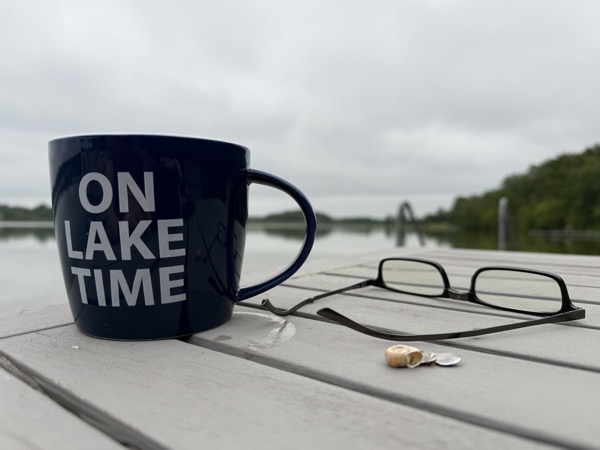
We’re on Lake Time this weekend, but there’s still time to share some Sunday Morning Reading. 

PXL 20250706 141021103.

Two weeks ago I shared a piece from youngster David Todd McCarty titled When I Was Old. I’m resharing it this week since I celebrated a birthday on Friday, getting one year closer to marking seven decades on this rock. Also sharing another great piece from David, called I Was Told There’d Be More.

“Scented memories.” I like those two words put together by NatashaMH in her piece, The Fragile Geometry of Becoming. 

I’ve been an Elmore Leonard fan for as long as I can remember. Anthony Lane’s Elmore Leonard’s Perfect Pitch may not be perfect, but it is damned close enough.

David Struett delivers a terrific ode to Chicago bike messengers, their culture and their jobs in Meet Chicago’s Last Bike Messengers. Here’s How They Survive.

You might notice a touch of sentimentality and reminiscing in the pieces above. Comes with the thoughts during a birthday weekend. Fair warning though that most of the links shared below are a bit darker, and yes, more political than those above. With aging comes awareness. Or at least it should.

Mathew Ingram wonders What Do We Do When The Facts Don’t Matter? I think we’re not liking what we’re finding out.

Mike Masnick’s piece Facism for First Time Founders offers the next generation a clue or two, assuming the current generation doesn’t crash it all before they get a chance to discover them.

I’ve written about the concept of enshittification in tech quite a bit. Mostly as regards the Internet. Henry Farrell and Abraham L. Newman take a look at The Enshittifcation of American Power. 

Another big contributor to enshittification is the media who increasingly seem more and more clueless and devoid of any self awareness. Charlotte Kim takes a look Inside The Media’s Traffic Apocalypse.

Speaking of things toxic and shitty, Adam Aleksic explores How Incel Language Infected The Mainstream Internet — and Brought It’s Toxicity With It. I’ve spent almost 70 years on this planet. I have no idea why guys turned into such misanthropic, self-loathing idiots.

In a world seemingly more and more intent on criminality, there are very few surprises, but there are legacies. Jessica Winter’s What I Inherited From My Criminal Great-Grandparents. Great story.

To conclude this week I’m sharing a film review by Sonny Bunch. This one of the new film Eddington. I haven’t seen the film. I plan to. Rarely does a review encourage or discourage me from seeing a film. If it’s anything like Bunch describes one way or the other I’m sure it will be worth it as it sounds like a fun, yet conflicted, summary of lots of things we’ve all been living through since 2020, and continue to do so. I’ll leave it with this quote:

The feed never stops, the algorithm never tires. There’s always more. It never ends. Just a few more videos. You can sleep later. You can never sleep, if that’s what you’d prefer. Who knows what you’ll miss when you’re asleep?

And we wonder why everyone has gone a little nuts.

If you’re interested in just what the heck Sunday Morning Reading is all about you can read more about the origins of Sunday Morning Reading here. If you’d like more click on the Sunday Morning Reading link in the category column to check out what’s been shared on Sunday’s past. You can also find more of my writings on Medium at this link, including in the publications Ellemeno and Rome.

Commodore 64 Nostalgia Nerds

Count me as a Commodore 64 nerd back in the day.

The older you get, nostalgic moments can be fun, even if fleeting. If nothing else they jog a few memories to the front of your brain for a bit. When they involve bits and bytes they also help you remember just how much things have changed. One of those fun memories for me is of my first computer, The Commodore 64.

CleanShot 2025-07-16 at 08.03.38@2x.

Recently, news hit that Christian ‘Peri Fractic’ Simpson, who has been trying to revive the Commodore 64 for some time now, has finally put enough of whatever he needs to start taking pre-orders for a “new” Commodore 64.

The announcement stirred a wave of nostalgia from those, like myself, who owned one of these early personal computers. And like many, those waves felt quite pleasant to surf in for a while. It also has churned up some of the rough waves from back in the day when “what computer is best” was a big part of the discussion.

I owned the Commodore 64, later moved to the Commodore 128 and then an Amiga, before eventually surrendering to the IBM PC/Windows world and later Apple. But I do indeed have fond memories of sprites dancing around on the small TV monitor I had connected to the 64, all of the peripherals I accumulated along the way, and some of the games. Archon and Lode Runner were two of my favorites, and the text adventure version of The Hitchhiker’s Guide to the Galaxy was my first exposure to Douglas Adams. I was also a fan of the GEOS operating system. And yes, I typed in many a computer program from computer magazines of the day, as well as quite a few words into PaperClip.

Drew Sauer has penned a nice  piece on this called The Commodore 64 Made A Difference, continuing the trip down memory lane and also surfacing some of those “what computer is best” feelings, apparently not too deeply buried in some memory banks. Apple bloggers John Gruber and Jason Snell have taken issue with some of Sauer’s comments and recollections.

Frankly, it’s all in good fun, (I hope), I don’t think it matters much for those who hope Simpson can deliver on his promises, and if he does, plop down their money to relive some of those memories. Nostalgia itself also comes in waves.

I’m also sure that memories can falter, become fuzzy, and take on a life of their own. Which is something the Commodore 64 could never do, unlike what so many want their computers to do today.

You can find more of my writings on a variety of topics on Medium at this link, including in the publications Ellemeno and Rome. I can also be found on social media under my name as above. 
Sunday Morning Reading

Notice the good things amidst the bad.

It’s been a week. But I repeat myself. These days it seems like that’s always the case. Superman’s back. (Again.) So too are this season’s butterflies. Everything circles back. Today’s Sunday Morning Reading is a potpourri of topics of interest that stroke a number of chords, some familiar, some not so, some good, some not so. Either way, enjoy.

Photo 1693722379283 fd3627e18cea.

In That Was Good, Merlin Mann says that smart people always find the best reasons for being very sad. I can relate. He suggests the cure for that might be noticing some good things. Even the small ones. Check it out. It’s a good thing.

This week featured the news revisiting the subject matter of several plays I’ve written or directed in the past. One of those, Inherit the Wind, the play by Jerome Lawrence and Robert Edwin Lee, is a semi-fictional retelling of the Scopes Monkey Trial in Dayton, Tennessee. This year marks the 100th year anniversary of that trial. Neil Steinberg has a terrific piece, both commemorating and commiserating. Given how short a distance we’ve traveled in this circle we keep walking in. Check out 100 Years Ago, The Scopes Trial Gripped The Nation, And Here We Go Again.

Twice a week on social media I post “This is your now weekly, and continuing reminder that we’re still fighting the Civil War.” Frankly, I don’t see it any other way for reasons I shouldn’t have to explain. I don’t often post interviews in this column, but I’m making an exception this week to post Amita Sharma’s interview with political scientist Barbara Walter who has helped forecast civil wars in other countries. Take a look at San Diego Political Expert Details Steps That Could Lead To US Civil War.

I blow hot and cold on Tom Nichols’ political commentary. I very much like his piece Damn You All To Hell! Find out his thoughts on how Hollywood taught a generation to fear nuclear catastrophe. It might have worked with that horror. Funny, yet sad, how it hasn’t worked with all of the goings on currently.

History is indeed always an incomplete picture that’s always evolving and struggling to take hold. In Texas Man’s Fight To Move A Lynching Marker Sparks New Battle For Truth, Christina Carrega pinpoints one of those moments of evolution.

Mathew Ingram says We Shouldn’t Blame AI For The Stupid Things That People Do. I agree. AI is the prime example.

Chris Castle takes on a piece of the Section 230 argument, thinking that a new theory of liability is emerging, grounded not in speech, but in conduct. Give a look at The Duty Comes From The Data: Rethinking Platform Liability In The Age of Algorithmic Harm. 

And to round out the circle this week, take a look at David SparksA Remarkable, Unremarkable Thing. Don’t let the small things go unnoticed.

(Image from Anya Chernik on Unsplash)

If you’re interested in just what the heck Sunday Morning Reading is all about you can read more about the origins of Sunday Morning Reading here. You can also find more of my writings on Medium at this link, including in the publications Ellemeno and Rome.

Sunday Morning Reading

Mixed feelings and mixed emotions on a Summer Sunday by the lake.

The 4th of July weekend is wrapping up in the U.S. and many are having mixed feelings this year. Today’s edition of Sunday Morning Reading will feature some excellent writing on some of those mixed feelings in addition to some interesting reads on familiar topics from familiar writers, and some not so familiar. Enjoy.

Giuseppe argenziano J04GmVkKSLQ unsplash.

First up, let’s take a look at Elizabeth Lopatto’s view on the state of things in the states in her post The American System of Democracy Has Crashed. Excellent. Should be required reading.

Neil Steinberg also has thoughts well worth your time in He’s baaaaaaack.

Jack Hopkins gives us The 4th of July: What We Were Meant to Celebrate — and How We’re Failing It. Again, worth a read as we close out the long holiday weekend and this section of today’s Sunday Morning Reading.

Now for some catching up on some links I’ve delayed too long in sharing.

First up is The Chosen Few and the Cost of Global Silence from NatashaMH. History repeats. All the damn time. As she also demonstrates in this piece The Cruelty of Indifference.

Relative youngster, David Todd McCarty writes about aging in When I Am Old.

Writers are having trouble finding the right fit when it comes to how to make a living. Matthew Ingram tells us Why Substack Shouldn’t Be The Future of Online Publishing. We

Chuck Wendig argues about and bemoans the loss of downtime in his writing process given all that’s happening around us in A Small But Vital Thing, Taken.

While writers search for new ways and new homes, Joshua Rothman wonders What’s Happening To Reading?

Never Forgive Them is a piece from Edward Zitron from December 2024 that seems relevant again in more ways than it was intended then.

Composer and poet Stan Stewart recently had his computer die on him. He writes about what he lost and found in Of Dead Computers and Really Living.

Matteo Wong says The Entire Internet Is Reverting to Beta. Sure everything is a janky work in progress, certainly in the janky days of AI. But I think that’s how those who think they run the joint like running the joint.

And to close out this week, take a good look at this wonderful long read from Eric Konigsberg from all the way back in 2001, entitled My Uncle The Hit Man.

Image from Giuseppe Argenziano on Unsplash.

If you’re interested in just what the heck Sunday Morning Reading is all about you can read more about the origins of Sunday Morning Reading here. You can also find more of my writings on Medium at this link, including in the publications Ellemeno and Rome.

Sunday Morning Reading

Intelligence or compassion? They both caught my eye this week.

It’s interesting how topics surface throughout a week. I’m not sure if it’s follow-the-leader or hive mind thinking, but from the sources I follow this week it seemed like everyone was thinking and writing, in one way or another, about Artificial Intelligence. Or maybe just about intelligence.

Certainly there was plenty on other topics because there were certainly plenty of other big things happening. Some intelligent, some not so. Some showing the capacity for compassion right along side our capacity for cruelty. I’m sure there will be plenty written in the days ahead about all of those things. These are the posts that stuck with me for this week’s Sunday Morning Reading.

Kicking things off is a short post by Gene Weingarten called A Cat Named Grandpa. It’s about compassion.

Mathew Ingram wonders Is AI Smarter Than We Are or Stupider Than We Are? Read the piece. If you’ve read any of the things I’ve written on AI you’ll know I agree with Mathew’s conclusions.

David Todd McCarty thinks the lack of originality in human consciousness is both appalling and comforting in I Gotta Be Me.

Natasha MH was Seeking God In A Machine.

For those who need to think about end of life issues, this might be a timely, yet frightening from Ashley Belanger. Check out How To Draft A Will To Avoid Becoming an AI Ghost. Apparently, it’s not easy.

Matteo Wong writes about The Newspaper That Hired ChatGPT. It’s mostly an interview, but one worth reading.

Folks can become addicted to and troubled by just about anything, and AI is no different. We’re starting to hear more and more about this, which is somewhat surprising on a number of fronts given how short a time generative AI has been with us. Kashmir Hill writes about a young man whose reality became so distorted it almost killed him in They Asked ChatGPT Questions. The Answers Sent Them Spiraling.

While not about AI in specific, this tech story speaks volumes about the decisions tech bosses make that influence the technology we use to work and play with. Check out Phil McKinney’s I Convinced HP’s Board To Buy Palm for $1.2B. Then I Watched Them Kill It In 49 Days.

And Happy Father’s Day to all. Miss you Dad.

(Image from Rey Seven on Unsplash.)

If you’re interested in just what the heck Sunday Morning Reading is all about you can read more about the origins of Sunday Morning Reading here. You can also find more of my writings on Medium at this link, including in the publications Ellemeno and Rome.

Sunday Morning Reading

When caring becomes a commodity, should we care more or less?

Lots to care about. On all the usual fronts. But in the grand scope of the universe does much of it really matter? Some interesting links to share in this week’s Sunday Morning Reading.

Dan Sinker, taking a look at The Chicago Sun-Times AI flaps calls it The Who Cares Era. His theory is that along the way, nobody cared. I’d venture they cared about the wrong things.

Apple’s annual developer conference WWWDC is a week away and given the many issues the company is confronting lots of folks care and are curious about how Apple begins to address them. Some don’t see Apple changing how it deals with developers, like Aaron Vegh in his post, They’re Not Going to Change.

Some, like John Siracusa, are rooting for Apple and even offering advice. Siracusa’s piece Apple Turnaround is a companion to his recent previous post Apple Turnover. All worth a read, regardless of how you feel about the predicaments Apple finds itself in.

The tech bros who seem to be in the pole position running to rule the world may be making bank, but they’re not winning any friends in the process. They most likely don’t care given that they think they’re on their way to conquering the universe. John Kaag is offering up A Reality Check For Tech Oligarchs. Frankly, I don’t think they live in anything close to reality.

Meanwhile, down here on planet reality, some are looking for ways to survive and perhaps beat the odds seemingly stacked against us. A.M. Hickman lays out a vision for How To Live on $432 a Month In America.

Much of what’s going on around us might seem profane and vulgar, leading to quite a few expletives coming out of our mouths as we cope. David Todd McCarty takes us on an exploration of his love of four-letter words in Frequently Profane But Never Vulgar. For what it’s worth, all words have value in my opinion. Hiding from them is fucking stupid.

Natasha MH is Reclaiming the Joy of Struggle in an AI-Driven World. Better grab that joy while we can, because that struggle is only going to become more intense.

Just when you thought we might have begun to figure out the new landscape of insanity we’re currently struggling through, comes along Ross Anderson who informs us about The Nobel Prize Winner Who Thinks We Have The Universe All Wrong. It may someday stop expanding the way we thought and might just remain stagnant for longer than originally theorized, allowing intelligent life to continue longer than we thought. One may ask, should we care?

(Photo from Vincent Nicolas on UnSplash.)

If you’re interested in just what the heck Sunday Morning Reading is all about you can read more about the origins of Sunday Morning Reading here. You can also find more of my writings on Medium at this link, including in the publications Ellemeno and Rome.