I Don’t Like This Day

Remembering January 6th Drives Me Into A Rage

I don’t like this day.

Insurrectionaftermath1 1024x688.

Rather I don’t like the anniversary of this day, January 6th, what it reminds me of, and all that it has come to mean.

We still live in a country where we excuse those that pretend what happened didn’t actually happen and wasn’t caused by a delusional, sadistic, power hungry pedophile and his followers.

We live in a country where we’ve just blown past the fact that he was elected president again, pardoned all of those who attacked the U.S. capitol in his name, and continues, with far too much help from his guilty cohort of cowards, to fill the airwaves and digital world with enough obvious lies to choke a million mules.

I don’t like this day.

A few men could have stopped this madness from extending beyond this day. A few men who chose not to. It was in their grasp. If American history survives this madness their names should live in infamy. I’m not sure America or American history will, but I can’t wait to piss on their graves.

And now we now live in a world, not just a country, that he’s tearing apart piece by piece just because he can, so he and others can profit from it.

I don’t like this day.

It’s a despicable, unerasable orange stain on 250 years that already bear enough stains.

It’s a day that ripped open the secret underbelly filled with the hateful and hating beasts that have always lived among us and spilled those entrails all over the myths we clung to, falsely assuming they held us together.

I don’t like this day.

It’s a day that will haunt me the rest of those I have left and leaves me sick to my stomach and trembling with rage about the future.

It’s a day that makes me contemplate doing horrible things. It’s a day that makes me hate.

I don’t like this day. Rather, I hate this day.

You can also find more of my writings on a variety of topics on Medium at this link, including in the publications Ellemeno and Rome. I can also be found on social media under my name as above.

Sunday Morning Reading

Boulder bustling

The world prepares to begin a new year and wakes up to an entirely new world. Or does it?

You go to bed on a Friday night with the holiday season inching to a close and wake up on Saturday morning and your country is running Venezuela after invading it and kidnapping its president and his wife. Or so the narrative on Sunday morning goes. I’m sure it will change by the time we get to midweek. Yeah, it was that kind of weekend and that will be reflected in this week’s Sunday Morning Reading along with a host of other topics.

Main-9 24-Nov-2.

I’ll lead off with a few in the moment takes on what happened in Venezuela yesterday. Note that in the moment takes often fade once the moment has its moment.

First up, David Frum says that Trump’s Critics Are Falling Into An Obvious Trap. Frankly, whether you’re a critic or a MAGA hat wearing supporter we’ve all fallen for so many obvious traps, what’s one more?

Thinking bigger picture, Tom Nichols thinks Maybe Russia and China Should Sit This One Out. They need to stop laughing first.

In the wake of the news, Carole Cadwalladr sees “a mass propaganda event” about to engulf the US in her piece, The Threat From America. She’s correct.

Written before the events of this weekend, Mathew Walther’s The Strange Death of Make America Great Again may seem out of place and time as it focuses on the MAGA culture wars within itself. I would venture that it is not, so stay tuned.

Turning to more local concerns that resonate alongside the global news, the folks at Block Club Chicago including Francia Garcia Hernádez and Madison Savedra have an excellent look at How Operation Midway Blitz Changed Our City in Chicago Under Siege.

As if not to be left out of the making bad news moment, Elon Musk’s back in the swing of things with his AI tool Grok allowing users to essentially turn X into a porn machine using photos of real folks to wreak havoc. Just note that X is still the social media platform of choice for far too many. Matteo Wong has the story in Elon Musk’s Pornography Machine.

Cory Doctorow published the text of a recent speech called A Post-American, Enshittification-Resistant Internet. He continues fighting the good fight like Sisyphus with that boulder.

JA Westenberg makes The Case For Blogging In The Ruins.

And to close out the week when holiday close out sales come to an end, Jake Lundberg takes a look at The Cult of Costco. Great piece whether you shop there or not.

If you’re interested in just what the heck Sunday Morning Reading is all about you can read more about the origins of Sunday Morning Reading here. If you’d like more click on the Sunday Morning Reading link in the category column to check out what’s been shared on Sunday’s past. You can also find more of my writings on Medium at this link, including in the publications Ellemeno and Rome.

Sunday Morning Reading

Sharing thoughts about big ideas and little things

Sunday Morning Reading is back from a two-week hiatus in which we watched the grandkids while their parents began moving into what will be their new house after the first of the year. It was a big deal featuring lots of little things with the little ones. As usual the column this week presents some interesting reading and writing that I think worth sharing. Big topics side by side with little things.

As the Christmas season I knew growing up begins to wind down and everyone begins gearing up for the New Year, I ran across Matthew Cooper’s Why We Need A New Dickens. He makes a good argument, but in my experience everyone loves reading what Dickens chronicled, but somehow it never really catches on.

Keeping somewhat in the Christmas vein The Guardian View On Far-Right Perversions Of The Christmas Message: Promoting A Gospel Of Hate by the Guardian’s editorial department hits its target, but in a glancing blow that proves my point from the link above.

NatashaMH takes on The Great Wall Of Honesty with blunt truths, bear hugs, and a bit of resilience.

JA Westenberg points out that we never pay much attention to the tech folks who do the grunt work behind the scenes to keep things running in The Rime Of The Ancient Maintainer. That’s the little story behind most of the big things we take for granted.

Illustrator Lauren Martin writes On The Pitfalls Of Saying Yes To Everything. Hat tip to Stan Stewart for this one.

I don’t usually link to book reviews in this column, but this one by Dorian Lynskey of Sven Beckert’s book Capitalism: A Global History made me buy the book. Check out Capitalism by Sven Beckert Review — An Extraordinary History Of The Economic System That Control Our Lives. (FWIW there are no affiliate links on this site.)

Speaking of the little things, David Todd McCarty enjoys The Casual Comfort Of Champagne And French Fries.

This piece by Josh Marshall has been sitting in my Sunday Morning Reading queue during the aforementioned hiatus and it’s certainly lost none of its luster with time. Check out Will The 21st Century Nabobs Win Their War On Public Accountabilty?

I’ve followed and linked to a number of Denny Henke’s posts about how he’s changing his personal computing habits this year. His 2025 End Of Year Personal Computing Check-In is worth a read even if you haven’t been paying attention up until now.

Neil Steinberg notices things big and small and occasionally writes about those he hasn’t seen in a while. Check out his observations on seeing an Armored Car.

And to close out this week and this year’s Sunday Morning Reading, here’s a piece that good friend Sumocat linked to that is indeed an obituary. One worth a look even if you never noticed or took for granted what the deceased created, The Moylan Arrow. Take a look at The Inventor Of The Little Arrow That Tells You What Side The Fuel Filler Is On Has Died by Daniel Golson.

It’s the little things that make a difference in this big world. Have a happy turn of the New Year.

If you’re interested in just what the heck Sunday Morning Reading is all about you can read more about the origins of Sunday Morning Reading here. If you’d like more click on the Sunday Morning Reading link in the category column to check out what’s been shared on Sunday’s past. You can also find more of my writings on Medium at this link, including in the publications Ellemeno and Rome.
Sunday Morning Reading

Hands on with playwrights, movies, smart toilets, and a discomforting rooster

Another Sunday. More snow overnight. More shoveling later. The holidays creep closer or perhaps they’re already here, given that grandpa mode has kicked into high gear. Started writing a new play out of the blue yesterday. I have no idea why, but it just tumbled out of my brain on to the screen via the keyboard. Time to share some Sunday Morning Reading. Read as you will, even if it’s on a smart toilet.

I often save the softer pieces for later in this column, but I’ll lead today with David Todd McCarty’s Christmas Means Comfort. Tell that to the rooster.

The world lost a treasure this week with the passing of architect Frank Gehry. Lee Bray writes a nice obituary and tribute. Check out Architect Frank Gehry Who Designed Millennium Park’s Pritzker Pavillion and Foot Bridge Dies at 96.

Samuel Beckett’s Hands is a terrific piece by Rob Tomlinson about, well it’s about Samuel Beckett’s hands and how Dupuytren’s contracture may have influenced not just how, but what he wrote, given that Beckett always begin his writing with pen and paper.

While I’m sharing stories about playwrights, the movie Hamnet is garnering lots of attention and accolades. (I haven’t seen it yet.) Based on Maggie O’Farrell’s excellent novel of the same name, Hamnet mostly follows accepted scholarship that William Shakespeare wrote Hamlet while grieving the death of his son, Hamnet. (At the time, the two names were practically interchangeable.) As with most things Shakespeare, there’s generally accepted knowledge and there are always those who challenge it. James Shapiro takes a look at The Long History of the Hamnet Myth.

And while I’m sharing stories about movies, take a look at Susan Morrison’s piece on How Noah Baumbach Fell (Back) In Love With The Movies.

I linked earlier this week to a piece by Phillip Bump called There Are Limits to the Hitler-Trump Comparison. Just Ask These Historians. I don’t disagree with the thesis. I just think it stops short in the way most history usually does.

Rory Rowan and Tristan Sturm write that Peter Thiel’s Apocalyptic Worldview Is A Dangerous Fantasy. Here’s hoping this first draft of our current history proves lasting.

There’s been much talk about all things military recently given how the current administration is tossing away most of what we believe the military stands for as easy as my grandson tosses away toy soldiers. Carrie Lee says The Soldier In The Illiberal State Is A Professional Dead End. I concur. Sadly.

In the wake of the cataclysm that was Twitter, social media is essentially a messy muddle these days with users continuing to migrate from one platform to another seeking some sort of place that feels comfortable enough to share and often discomfort others. Ian Dunt writes what he calls a love letter to one platform with Thank God for Bluesky.

Smart toilets were in the news this week. I actually got to see and use one at a Christmas party last night. All I could think about while doing my business was this piece by Victoria Song called Welcome To The Wellness Surveillance State. 

And to conclude this week, Amogh Dimri informs us that the Oxford University Press has chosen Rage Bait as 2025’s Word of the Year. Dimiri thinks it’s a brilliant choice. I guess it begs the question, if we’re angry enough to rage, is it really baiting?

If you’re interested in just what the heck Sunday Morning Reading is all about you can read more about the origins of Sunday Morning Reading here. If you’d like more click on the Sunday Morning Reading link in the category column to check out what’s been shared on Sunday’s past. You can also find more of my writings on Medium at this link, including in the publications Ellemeno and Rome.
Phillip Bump and Clumsy Nazi Comparisons

Not the time for historical nuance

Phillip Bump, a thinker and writer I greatly admire has an intriguing, yet troubling piece titled There Are Limits To The Hitler-Trump Comparison. Just Ask These Historians. I say troubling, not because I disagree with his points, but because I think it misses the larger one everyone is too afraid to acknowledge.

Shutterstock 720509233.

It is intriguing on an intellectual level, and nuanced on several levels. But I hasten to say that we’re living in a moment without much room for nuance, and as for the intellectual part? I’m afraid we’re suffering losses there as well.

Looking to explore further whether or not the Trump administration’s use of anti-immigrant rhetoric could be compared to the Nazi movement, Bump reached out to several historians who “generally agree that while the comparison was imperfect, it was not completely unfair.”  I urge you to read Bump’s column before continuing here.

I won’t argue with the callbacks to the history of America’s own xenophobia. Let’s remember where the Nazis claimed to get some of their ideas from. As a species we seem to be entirely incapable of finding news ways to diminish and dehumanize those we don’t like or want to scapegoat on the path to power. Nor will I argue that it depends on what part of the Nazi timeline you drop into when making comparisons.

I will say this.

While no one knows how any of this will turn out, the fact that we’re living through any resemblance, no matter how clumsy or incoherent it may be in comparison to past political movements here or abroad, should be more than enough to call us up short and put a stop to it.

Bump states:

So Trump’s allies have a point: Comparisons to Nazism, particularly the late-stage Nazism with which we are all familiar, are imperfect. The president’s administration mirrors that party’s ascent a century ago in other ways — its bullying, the collapse of opposition from the existing establishment — that sharpen the criticism. If it is on the same path forward, though, there is still a long way to go, and a lot of time to change direction.

The comparisons may indeed be imperfect. However, every time civilization has beaten back these ill winds it has had to do so imperfectly as well, having to stoop below many of the values we rallied to save in the name of those values.

There may indeed still be time for a change in direction. That said, I would argue that the longer the weak-kneed and cowardly capitulators let this go on, not only does that window of time close, but it makes it harder to pry back open even after all of the glass has been broken.

(Image from Claudio Divizia on Shutterstock)

You can also find more of my writings on a variety of topics on Medium at this link, including in the publications Ellemeno and Rome. I can also be found on social media under my name as above.

Sunday Morning Reading

Winter is coming. Or is it already here?

It’s a snowy Sunday after the Thanksgiving holiday here in Chicago. The Chicago Bears have already played this week’s game, beating the Philadelphia Eagles on Friday, sending the town into a tizzy before it got covered in a Saturday snowfall. So it feels like the perfect day to settle in and do a little Sunday Morning Reading after the shoveling and snow blowing move stuff around. Bitch of it is, the stuff still has to melt. Let’s take a look.

PXL 20250320 115712285.

Humorist Emily Bressler has a frighteningly funny piece of satire that I think sums up the chilling undercurrents in so much of what we’re living through at the moment in I Work For An Evil Company, But Outside Work, I’m Actually A Really Good Person.

Winter may be a few weeks away officially, but in Chicago, it feels like it’s here already this weekend. Actually the metaphor feels like it’s been too close for comfort for quite some time. The U.S. might be sinking ships in warmer waters threatening an invasion of Venezuela, but the Danes haven’t forgotten threats in colder climes and have been preparing. Miranda Bryant spells it out in Denmark Sets Up ‘Night Watch’ To Monitor Trump After Greenland Row. 

Theaters and other arts organizations are feeling quite a chill in this inhospitable political climate these days. Adam Harrington is Taking The Temperature Of Theater In Chicago: Distress As Venues Fall, But Optimism Driving By A Vibrant Community. 

Speaking of theater, Mathew Ingram takes a look at the ritualized charades that happen after a tech company gets called on the carpet for being evil in What Did Mark Zuckerberg Know And When Did He Know It? These performance art pieces happen all too frequently, regardless of venue. The audience never buys it. So why do these unfunny farces continue?

If we survive the Artificial Intelligence tsunami the next big thing that’s been the next big thing for quite some time will be when quantum computing actually turns into something. I imagine it’ll all be lumped in together as all of these waves crash ashore with the same promises. The Swinburne University of Technology asks the question If Quantum Computing Is Solving ‘Impossible’ Questions, How Do We Know They’re Right?

Josh Marshall takes a look at The Surreal Madness Of The AI Boom. I’m not sure I’d call it surreal, but it’s certainly something other than real. Otherwise, why would folks like Laura J. Nelson be chronicling how Tech Titans Amass Multimillion-Dollar War Chests To Fight AI Regulation. (Hint, when you have to play that kind of expensive defensive game, you’re trying to hide the ball, not advance it.)

NatashaMH provides a quilted farewell in a touching remembrance of a friend who passed too soon. Her closing line of My Best Friend Wrapped In Peace, “be safe in winter till summer arrives again,” chills and thaws in the same breath.

To close out this snowy holiday weekend, Neil Steinburg gives us a short piece titled simply, Home. Read it. Whether you’re home, on your way there, or returning to it.

If you’re interested in just what the heck Sunday Morning Reading is all about you can read more about the origins of Sunday Morning Reading here. If you’d like more click on the Sunday Morning Reading link in the category column to check out what’s been shared on Sunday’s past. You can also find more of my writings on Medium at this link, including in the publications Ellemeno and Rome.
Finishing Ken Burns’ The American Revolution

The series is complete. As a nation the question remains open.

We completed watching Ken Burn’s excellent The American Revolution this week. Thank goodness for streaming, allowing us to view it on our schedule. Two spoiler alerts. First, we won the war. Second, we’re still struggling with many of the differences that made the formation (and perhaps the continuation) of what would become the Untied States such a close thing. 

 The series is excellent and I highly recommend it. Burns and his team do their expected thorough job of researching and producing the documentary. We’re lucky there were so many letters written by those beneath the status of the cast of characters most of us could identify at a glance, because that material provides much of the content and texture inside the frame. 

The production does it’s job so well that my hunch is some will come away learning things they never knew about a period of our history we’ve wrapped in so many myths it would keep troops at Valley Forge warm. I would also guess that in today’s political and social climate there will be far too many who tune out or don’t tune in because they prefer the comfort of the mythology. 

Which is a damned shame. As I said in an earlier post about the series:

I’m not hearing things differently, but I’m hearing how folks can take their own meaning out of many of the things written and said during that period that led to this country’s founding. History may indeed rhyme, but it also echoes. Often in strange ways.

If you have followed any of Burns’ work you know his approach to American history is to tell the parts of stories we leave out of the picture. I grew up in a part of the country where you could turn your head left or right, spit, and hit the history of the American Revolution or the Civil War. I count myself lucky that my 10th grade history teacher kept reminding us that there was so much more to discover about our past than he had the time to teach us, planting a seed of curiosity that continues to grow inside of me to this day decades later. 

Ken Burns and his team continue to keep that curiosity growing. We should all be grateful and unafraid that they do so.

You can also find more of my writings on a variety of topics on Medium at this link, including in the publications Ellemeno and Rome. I can also be found on social media under my name as above.
Watching Ken Burns’ The American Revolution

Context is everything

Started watching Ken Burns’ The American Revolution last night. It sounds almost trite, but it’s typical Ken Burns (and his collaborators) historical documentary excellence.

The american revolution film by ken burns 1280x720 1 600x338.

What struck me is how I’m hearing things I’ve read and heard over and over again about the period leading up to the American Revolution. So far, (only two episodes in) the history is as I studied it. And by studying it, I mean well below the surface of the myths folks of my generation were taught in school.

I’m not hearing things differently, but I’m hearing how folks can take their own meaning out of many of the things written and said during that period that led to this country’s founding. History may indeed rhyme, but it also echoes. Often in strange ways.

That’s certainly true if all you hang your tri-cornered hat on are the myths.

You can also find more of my writings on a variety of topics on Medium at this link, including in the publications Ellemeno and Rome. I can also be found on social media under my name as above.

Little Feat Wraps It Up

Feats never let me down

News this week that one of my favorite bands of all time, Little Feat, is retiring after a final tour brought back quite a few memories. The Last Farewell Tour will kick off next spring and run through two years, promoting the band and their latest album, Strike Up The Band.

Little Feat - Feats Don't Fail Me Now.

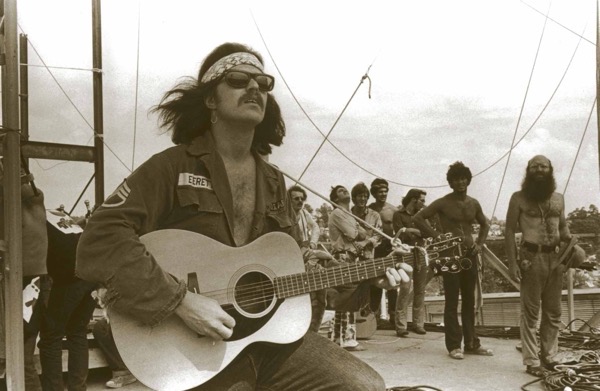
As for those memories, in what seems like a lifetime ago when I was in college I had an assistantship in the theatre department’s scene shop. When touring acts came to campus we’d sometimes be assigned to help with load in and load out, and occasionally help run the show.

Little Feat was promoting what would become one of my favorite of their albums, Feats Don’t Fail Me Now, while opening for Joe Cocker, another of my favorites. I got the assignment to run follow spot for the gig. Up until that point I wasn’t familiar with Little Feat’s music, but that concert turned me on and I’ve been a fan ever since. They rocked the house as the warm up act and the crowd wasn’t ready for their set to end.

They certainly weren’t ready for what came next.

During the changeover a roadie came out and set two cases of Budweiser beer on the stage by the central microphone. Cocker’s band came on, tuned up a bit, the lights went down, the band kicked off the intro, at the conclusion of which Cocker was supposed to enter, which was my first cue of the set. The band was still using the intro from Cocker’s Mad Dogs and Englishmen days and all of the stage mechanics happened as planned, the crowd was pumped, but there was no Joe Cocker.

After a few moments delay we got the message to reset and we did it all again. This time Joe Cocker appeared on cue with a fifth of whiskey in his hands. He stumbled to the mic, and promptly threw up all over the stage. Yep, I had my follow spot lighting up the entire thing.

That was the end of the concert. Cocker was escorted offstage as the band played the Mad Dogs and Englishmen intro once again, then said good night and left the stage. The crowd was understandably upset with the headliner, but in the days that followed the talk was all about Little Feat’s music.

That was a moment to remember and a memory to laugh at certainly. But as well as I remember that I’ll never forget my introduction to Little Feat and their music. The band’s roster has changed throughout the years (most of the current members are in their 70’s) and the band’s songbook has journeyed its way through different American music genres. Their final album, Strike Up The Band,  lands with a return to their original sound, albeit matured and nurtured from steps along the journey. It brings back memories.

There’s a brief, but good write up about the band’s retirement decision and final tour in Rolling Stone here.

You can also find more of my writings on a variety of topics on Medium at this link, including in the publications Ellemeno and Rome. I can also be found on social media under my name as above.

Penny Wise and Pound Foolish

A nickel for your thoughts?

If you’ve got some pennies hanging around in a piggy bank or coin collection you might want to hang on to them. Yesterday, November 12th, the U.S. Mint minted the last round of pennies.

The penny has been tossed across sales counters and burned holes in pockets for 238 years, but apparently it cost almost four cents to make one, which certainly seems like a losing proposition.

Not to worry though. If you’re not sentimental about the coin, it will still be considered legal tinder. Although some retailers are looking to round things up to the nearest nickel to avoid having to deal with them.

As for the “pound foolish’ part of this post’s headline, if retailers do follow through on rounding prices up any savings generated by no longer printing pennies will probably be outweighed by the costs of printing more nickels, which costs substantially more than printing a penny.

Setting aside the costs, somehow “a nickel for your thoughts” and “nickels from heaven” just don’t sing the way the originals do.

You can also find more of my writings on a variety of topics on Medium at this link, including in the publications Ellemeno and Rome. I can also be found on social media under my name as above.