Sunday Morning Reading

Traveling through the crazy paying attention along the way

It’s been a fortnight since I’ve published one of these columns due to travel. So much has happened. The travel adventures to London and Memphis were great. The way the world continues to pull itself apart continues to not be, as witnessed by protests and a madman’s threats of troops in the streets followed me from Chicago to London to Memphis. You can shut off and shut down to enjoy new places and visit dear friends, but the insanity keeps getting more insane. So, Sunday Morning Reading is back at it this week, with a mix of politics, culture and a bit of tech. (Oh, yeah, Apple released new iPhones during all of that.) If you can’t feel the currents flowing together, you’re not paying attention.

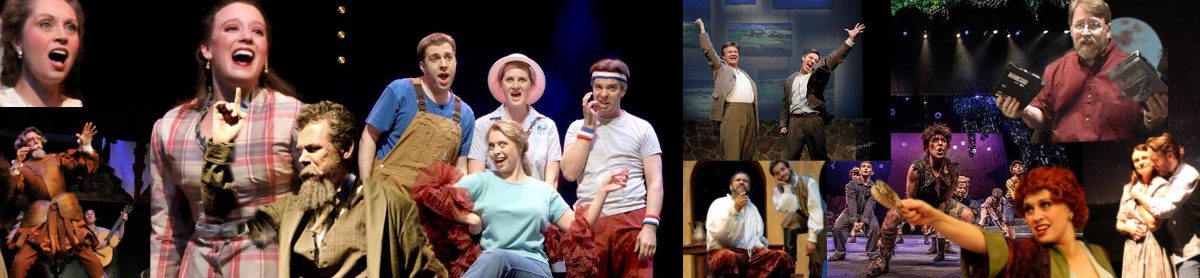
On my travels my wife and I caught some theatre. Two plays by Shakespeare and the contemporary play Stereophonic. The two Shakespeares were one of his worst, Merry Wives of Windsor, and one of the best, Hamlet. We’re theatre rats and know the importance of the medium and certainly recognize the role writers in all mediums play in our lives, history, and culture. So too does a favorite writer of mine, David Todd McCarty. Check out his important piece The Reason You Need To Be Making Art Right Now. And if I may be so bold, the other Sunday Morning Reading links below demonstrate that to a tee.

NatashaMH reflects on free speech, punk rebellion and British satire in When Satire Was Safe. Great piece. I dare say, satire has never been safe even when tolerated. Plenty of fools can attest to that. Ask Yorick.

I mentioned there’d be politics and here’s a few links to some excellent context on just how damn familiar all of what we’re living through is. For those who bother to pay attention. First up is Mark Hertling’s Beware Today’s ‘Fire-Eaters’. If you don’t know that term, read the piece. You’ll recognize today’s fire-eaters in a second.

On a broader scale, take a look at Nikki McCann Ramirez’s interview with Mike Duncan in Are We Witnessing The Fall Of The American Empire? My short answer is yes. Here’s the money quote that should terrify us all:

So if we go this route, we’re going to have congresses, we’re going to have Supreme Courts, we’re going to have a President of the United States, there will be governors, there will be elections, it’s just what’s happening underneath that facade. The facade is never going to go away, it’s how tissue-thin the facade is.

Follow that up with George Packer’s America’s Zombie Democracy.

For a bit of recent history and context, check out The Story of DOGE, As Told By Federal Workers from a team of Wired writers led by Zoe Schiffer.

As I mentioned Apple released new iPhones last week. Om Malik seems quite taken with the new iPhone Air, although he has some concerns in Go Out & Get Some Air.

In this column and other posts I’ve been following Denny Henke’s journey to de-Apple himself in his tech life with a keen interest. I greatly admire his drive and his sharing of his efforts. Check out My Ongoing Effort To de-Apple the iPad.

And to bring this all back around, take a look at Neely’s Tucker’s sharing of a guest post by Patrick Hastings,  Nobody Would Edit Shakespeare, Right? Right? They have and they do. David Garrick wasn’t the first or the last. Throughout history we always look for the ways to make it easier to swallow tragic moments and unhappy endings. In the theatre and on the stages of our lives.

(The image above is of David Garrick’s monument in Westminster Abbey, taken by me on my recent travels.

If you’re interested in just what the heck Sunday Morning Reading is all about you can read more about the origins of Sunday Morning Reading here. If you’d like more click on the Sunday Morning Reading link in the category column to check out what’s been shared on Sunday’s past. You can also find more of my writings on Medium at this link, including in the publications Ellemeno and Rome.

Nothing Lasts Forever

Another chapter of Chicago theatre history comes to a close

You know how you know that nothing lasts forever? When you go online to search for images of a place you worked, shed more than a few beads of sweat, blood, and tears in, and you can’t find images of it.

That’s the case here. I’m referring to Theatre Building, at 1225 W Belmont, Chicago. Yes, there is no “the” in front of it. Like Apple insists that there is no “the” before iPhone. In the case of the performance space that was intentional. Pretentious maybe, but purposeful nonetheless.

Theatre Building was founded as such in 1977 by three theatre companies: Travel Light Theatre, Pary Productions and the Dinglefest Theatre Company. The latter of those became Performance Community, and then the New Tuners Theatre, and after Travel Light and Pary Productions hit their respective closings, ended up managing the three theatre complex.

At one point or another just about every Chicago theatre company, and some from outside the city, rented performance space there. It was one of the centers of gravity in the Chicago theatre landscape. I can’t tell you the number of amazing performances by Chicago actors that I’ve seen on those stages. Shows hit. Shows flopped. Shows happened. And that was the point and purpose of Theatre Building.

Theatre Building was sold to Stage 773 in 2010 and still continued providing a home for Chicago theatres, until it changed it’s focus and became WHIM, which was supposed to be a sort of interactive attraction before it folded.

Here we are in 2025 and The Chicago City Council has granted approval for the property to be converted to a five-story apartment complex. As I said. nothing lasts forever.

My theatre company, The Absolute Theatre Company rented space there for a number of years, and I later served on the staff of New Tuners Theatre and helped manage the facility. I helped renovate the three theatre spaces in the late 90’s. So there are quite a few personal memories attached to those stages. They seems like another lifetime ago.

Change happens. The sad thing about this one is that there are three less performance spaces in Chicago, but that’s been the case since Stage 773 ran into financial difficulties and had to shut down after becoming WHIM.

I may not have been able to find a picture this morning of Theatre Building, but I do have this brick from the building that was given to me after my last show, before I headed out to Virginia for that part of my theatre career.

Guess I’ll hang on to that piece of Chicago theatre history.

You can also find more of my writings on a variety of topics on Medium at this link, including in the publications Ellemeno and Rome. I can also be found on social media under my name as above.

Jimmy Kimmel’s Return: Grace and Strength

Perhaps a spark

Jimmy Kimmel returned to the air in some places last night. In my opinion, he did so with grace and with strength. 

He certainly didn’t give any ground as a comedian, continuing to needle the Trump administration and the two-faced chair of the FCC, Brendan Carr. But he also showed a great deal of grace given the moments he and we have all been through since this episode of life under a crazy emperor with no clothes. 

I’m linking to the video above with his opening monologue, because one way on the other the moment is a piece of broadcast and cultural history. The optimist in me hopes it will prove to be bigger than that, perhaps a turning point. The realist in me thinks we’re due for some sequels. 

Here’s hoping people and the cowardly CEOs have learned a lesson or two before the next sequel is given a green light. I’m not holding my breath on the latter. I have more hope for the former.

You can also find more of my writings on a variety of topics on Medium at this link, including in the publications Ellemeno and Rome. I can also be found on social media under my name as above.
Add Satire to the List of the Dead

The Grim Reaper is hiring

The list of the things killed by this soul-less adminstration and it’s bloodthirsty allies keeps growing.

AdobeStock 317104103.

In the wake of the Stephen Colbert and Jimmy Kimmel silencing, satire now joins Congress, The Rule of Law, Irony, Facts, The Constitution, Academic Institutions, Law firms, Religion, the Media, corporate titans, health care, women’s rights…the list just keeps growing.

At this rate the graveyards are filling up and the Grim Reaper will be the only one hiring soon enough.

Eventually they will run out of targets. You could argue that the way they are turning on each other over the Epstein files and a few other things they are fast approaching that point.

I just wish that pace of cannibalism would speed up.

We Have To Do Better. At What Exactly?

The time is out of joint

We’re burning up the words and phrases we use for comfort faster than out-of-control wildfires. We’re drowning meaning under flash floods of ravaging frequency. We’re dancing around sensitivities like so many angels on the head of a pin, ignoring that the pin has been smashed into smithereens by a sledge hammer. We keep looking for better angels of our nature to appear but they seem to have given up the ghost trying to reign things in. The time is out of joint.

PXL 20250913 090506555.

The meaningless phrase of the moment this morning that has gotten my goat is “we have to do better.”

What the hell does that even mean?

We pretend that everyone cares about the outrage of political violence. Not everyone does. There are those that care only enough to use it to their own advantage and want to see more of it. Yes, it’s about power. But it’s increasingly  become about the money, because you can make boatloads of it preaching hate and division. You know, free speech and all of that.

We have to do better.

There’s no “better” to do when it comes to language, because language only expresses what is felt inside. About self. About others. About domination. About fear. And when the “better” is about better profits… well, that’s the world we live in and at the moment it’s what’s making the world spin faster.

Step away from politics for a second.

When a sports team loses and coaches and players say “we have to do better” or “we have to play better” it means nothing. Of course they do. They lost.

When a business doesn’t meet its sales targets, they always say “we have to do better.” Unless of course they’re spinning losses into wins hoping no one pays attention.

Shift back to political world.

The spinning happens there as well, with a speed that can burn through the surface it’s spinning on. Yet, it’s a bit late to want to do better after the bullet has struck a target so broadly painted.

We can no longer expect appeals to better angels or doing better to work. It’s a naive call to a different past that in many respects never existed, even though on the surface it seemed to. We should no longer be afraid of phrases like civil war, because in case you haven’t noticed, we’re in one. People are being killed in their homes, at rallies, in schools, just about in any place. Sad fact of history, what we want to believe is random violence by extremists always happens before someone declares that a war is on. But hey, we’ve got a deranged lunatic of a leader who wants to meme one into being, while we spend so much time trying to figure out what we know is the why of it.

You can argue that the extremists aren’t the ones with the guns, but the ones with the big mouths and the AI bots at their command. No one is going to clamp down on the rhetoric any more than they are going to clamp down on guns, and it has already bubbled over into a toxic stew. How are you going to “do better” when all sides claim their way is the better way? I don’t have an answer for that question, because I’m afraid I actually know the answer and there’s nothing “better” about it.

The only thing we have to “do better” at is recognizing the horrors of the moment we’re in and facing it for the reality that it is. You and I certainly don’t want to see and hear what we’re seeing and hearing. But we’re too far down that road to not acknowledge we’ve arrived at a terrible place.

Hamlet says:

‘The time is out of joint: O cursed spite,
That ever I was born to set it right!’

I feel like we’re all caught in Hamlet’s dilemma. Wanting to fix it, but afraid to the point of cursing what will eventually need to be done.

You can also find more of my writings on a variety of topics on Medium at this link, including in the publications Ellemeno and Rome. I can also be found on social media under my name as above.

Sunday Morning Reading

Sunday Morning Reading is on hiatus this week as we continue our travels, this time abroad.

Sunday Morning Reading will return next week. Possibly. Maybe. With luck.

If you’re interested in just what the heck Sunday Morning Reading is all about you can read more about the origins of Sunday Morning Reading here. If you’d like more click on the Sunday Morning Reading link in the category column to check out what’s been shared on Sunday’s past. You can also find more of my writings on Medium at this link, including in the publications Ellemeno and Rome.

Sunday Morning Reading

Things AI can’t summarize: Nostalgia and what’s worth not forgetting.

A brief breather at home before travels resume, so there’s a full plate for this week’s Sunday Morning Reading including some nostalgia that shouldn’t be, some very interesting reading on AI, a defiant Chicago, and even a bit on gambling and baseball. Enjoy.

Roman kraft _Zua2hyvTBk unsplash 1.

Chicago is under threat from a madman and you can feel the tension in the crisp fall air. Dan Sinker has written an excellent Benediction for Chicago On the Eve of Occupation. You don’t hear thoughts and prayers in the check out lines at the grocery store,  just a growing sense of defiant preparation.

The pendulum seems to be swinging wildly in the opinion wars about Artificial Intelligence now that some are actually able to sift through the hype bubbles and see what’s what. EmptyWheel has an excellent 4-part series that is more than worth your time. It begins with A Normal Person’s Explainer On What Generative AI Is And Does and continues with The Other Half Of The AI Relationship, Proteins, Factories, And Wicked Solutions, and concludes with LLMs Are Lead.

Follow that excellent series with The Tech Industry Has a Dirty Secret: The More People Learn About AI, The Less They Trust it by Victor Tangermann. For what it’s worth, I’m also seeing AI naysayers riding the pendulum back the other way as they find ways to make some of the tools of this tool work for them. No AI could ever sort this out with a summary.

The Power We Use and The Power We Give is a brilliant piece by Philip Bump. As he transitions from his former job with The Washington Post he’s talking about where choosing to land next and why making the right choice about where to exercise what power the words you use live. This is a complicated moment in history on so many levels, well illustrated in this one man’s piece.

Also, here’s an excellent piece from Bump on the goings on in Chicago called Trump Wants To Make War On Chicago. He Picked The Wrong Fight.

Speaking of complexity, David Todd McCarty wonders why so many men find themselves alone later in life in Boys Don’t Cry, Men Don’t Bond.

Chris Armitage says It’s Time For Americans To Start Talking About “Soft Secession.” I take the point about the term and the concept. I’m not criticizing either or Armitage’s piece when I say this, but hell, when the president of the country mockingly riles up everyone with a threat to declare war on a city, I’m not sure there’s anything “soft” about anything anymore.

NatashaMH tackles political amnesia is what I think is a timely piece worth revisiting more than once. Our capacity to forget or set aside so much, so often, is astounding. Check out Inside The Fortress, Outside The Fire. Here’s the money quote:

As often as I can, I remind them how history is a reminder of the lives we lost and of how stupid we really are. “Senseless to the core. And once we’re done with the bloodshed, we write poetry.”

To clear the palette a bit, check out Tim Newcomb’s piece about how A Remarkable Discovery of A Document Shatters One of Shakespeare’s Biggest Mysteries. 

Fact checking may be a dying art, given that most of the world has decided we can each have our own facts. Zach Helfand as a wonderful long piece on The History Of The New Yorker’s Vaunted Fact-Check Department. Too damn bad we have to file this under nostalgia.

Speaking of nostalgia, check out Bettor Up by J.R. Moehringer about gambling and baseball. Yes, it’s about gambling and baseball, but it’s the closest thing I’ve seen to the good sports writing (especially about baseball) that I grew up with.

(Image from Roman Kraft on Unsplash.)

If you’re interested in just what the heck Sunday Morning Reading is all about you can read more about the origins of Sunday Morning Reading here. If you’d like more click on the Sunday Morning Reading link in the category column to check out what’s been shared on Sunday’s past. You can also find more of my writings on Medium at this link, including in the publications Ellemeno and Rome.

Apple TV+ Price Increase and the Dummy Price

Death, taxes, and subscription price increases

Times have changed how money changes hands. Back in the day purchasing a subscription meant you got a deal. It also created a relationship between the customer and the service, that often, but not always, protected subscribers from price increases. At least for a time. That really no longer exists. Sure there are deals and free trials to seduce new customers, but typically those deals are for a period of time and then the price goes up. It’s changed the definition of what we used to call “the dummy price.”

CleanShot 2025-08-21 at 10.45.50@2x.

“The dummy price” was for those who didn’t subscribe, thus paying full price. We used to joke in the theatre biz that “the dummy price” was for the guy who’s wife told him she wanted to see a show, and then he’d have his secretary use his credit card to buy the tickets when he got to the office.

When we had to raise prices we’d do so on single tickets and reward our subscribers by telling them we’d keep their current prices intact, thus increasing their savings and further building trust in relationship. That made it a bit easier sell when we inevitably had to raise subscription prices.

It was similar to buying the newspaper each day, instead of subscribing. A subscription was always cheaper than the newsstand price.

The only thing I think I subscribe to these days that actually offers any type of real savings is an E-ZPass, which in my state cuts the cost you pay at the toll booth by 50%.

Of course those are different markets than streaming entertainment, which didn’t exist when I was setting “dummy prices.” Subscriptions for streaming entertainment only gets you access. Certainly a lot of content is available for the price you pay, but realistically it’s more than anyone could ever consume. But the promise is access. The quantity makes much of the content as disposable as it is available, even if it is cheaper than back in the day when you had to purchase physical or digital media in order to view it at home.

The only thing you’re really buying is the inevitable price increase and a bit more frustration in balancing out your entertainment budget.

The new definition of “the dummy price” is hoping there are enough customers who don’t pay attention and miss the price increase.

Apple announced today it’s increasing its monthly subscription price for its streaming entertainment service, Apple TV+ from $9.99 to $12.99 a month. Other streaming services do the same thing, more frequently than Apple. But every player in the market affects the perception of all the rest.

It’s led to a sort of comedic game for consumers who want to stream from different services. They cancel a service for a period of time, often waiting for new content to become abundantly available or a particularly desired title, and then they’ll resubscribe after canceling another service. Or they’ll just keep creating new email accounts, resubscribing under a new name.

Currently the streaming companies seem to be comfortable enough with this type of customer churn, but it builds more attraction to titles than it does to a service’s brand, which in turn drives up the marketing costs for each new title. I imagine at some point streaming companies will find a way to clamp down and try to minimize that churn, the same way they have done with password sharing.

But the subscription game is not just an entertainment industry business practice. There are quite a few services that want your monthly tithe and offer the same kind of price inducements. But it’s certainly easier to cancel Netflix for a period of time than it is some of these other types of services once the inevitable price increase comes along. It will be interesting to see how the AI market shakes out once the first big company needs to break the $20 a month barrier for general consumers.

Bottom line it’s a shell game for both customers and companies. Death and taxes used to be the only constants in that old axiom about the only things certain in life. That needs to be amended to include price increases for subscription services.

You can also find more of my writings on a variety of topics on Medium at this link, including in the publications Ellemeno and Rome. I can also be found on social media under my name as above. 
Mainstream Media Continues to Dismantle Itself

MSBNC to become MS Now

It’s been an accepted part of conventional wisdom for quite some time that what we consider mainstream media is gradually fading away in the face of newer generations turning to other sources available on the Internet for news and entertainment. Heck, even some older generations are turning what used to be the dial.

MSNBC MS NOW name change.

The business models have suffered for a while now whether it’s print, broadcast or cable. The fading away has gained new and seemingly panicked momentum thanks to the depredations of the Trump administration, aided by the greedy cowardice of the corporations worried more about avoiding the wrath of the beast they helped create, than the standards they all proudly trumpeted for years. Those trumpets have largely fallen silent or just ring hollow.

The end of late night comedy shows captured a lot of attention recently, but eventually most broadcast scripted news and entertainment will also give way. Which is ironic given that the convicted felon largely responsible for this quickening pace came to prominence via Reality TV, which let me tell you is anything but reality and is very scripted.

Now NBC Universal, owned by Comcast, is making a move away from MSNBC, attempting to distance the Peacock from controversy by rebranding as MS Now. That little branding acronym stands for  My Source | News | Opinion | World.

Yeesh. I guess the marketing department was the first place they made changes. As a social media friend Judgment Dave says, “it sounds like a translation of something in Japanese that doesn’t translate well into English.”

It’s weird, yet it isn’t to hang onto the ‘MS’, given that MSNBC was birthed as partnership with Microsoft and NBC, long since dissolved. Somewhere Bill Gates is laughing because it also sounds like a software program delivered on a CD-ROM.

Whatever sturm and drang comes from this news of the moment, (news of the Now?) the bigger picture is that these troubled corporations, in what feels like desperate efforts to try and save themselves, are essentially hastening their eventual final curtains in the wake of current trends already overtaking them.

Some may lay blame on the rise of the Internet and mobile devices in every hand, but the fact of the matter is the smart folks at the top of these corporations missed the moment. Some eventually tried to make changes. Remember CNN Plus? But in my opinion their failures were less about the delivery mechanisms and more about the decline of the news and entertainment products that they delivered as the cost cutters held sway.

NBCUniversal isn’t done trimming the sails yet. Plans are in place to spinoff other properties as well (CNBC, USA, Oxygen, and E!).

Some will blame it on advertisers seeking the best way to reach customers. That’s mostly true, but ask podcasters how that’s going for them these days. Chasing advertising revenue is always a cyclical game for just about everything except sports.

It’s no wonder then that it feels like we see our politics more and more resembling blood sports. Of course the irony is audiences claim they want less, not more in that realm. What will be interesting to see in the next decade or so is how political advertising, which fills so many corporate media coffers sorts itself out, once the usual outlets fade away as they continue to play to ever diminishing audiences that keep spreading themselves wider and wider, attempting to flee the same old, same old.

Certainly ads will continue to be designed to run on social media and circulate that way. But the only folks making real money off of that trend are the political consultants and ad-makers.

I hope I’m around to see how my grandkids eventually consume what we once revered and respected as the news. I’ll regale them with what I imagine they will view as fairy tales and myths.

You can also find more of my writings on a variety of topics on Medium at this link, including in the publications Ellemeno and Rome. I can also be found on social media under my name as above.