Sunday Morning Reading

Jokers to the left and right, but things feel increasingly unfunny.

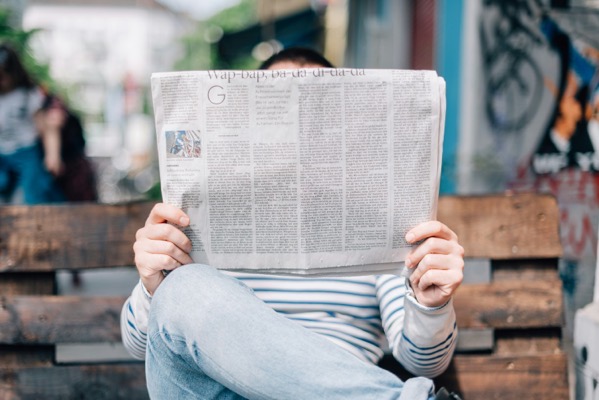
Time for some Sunday Morning Reading as we continue treading water until the election on November 5th and prepare for the aftermath here in the U.S. There’s more tech and culture in this week’s edition than politics, but that’s here too. Hard to avoid it.

Speaking of politics, this article from Leah Feiger, Meet the Far-Right Constitutional Sheriffs Ready to Assert Control if Trump Loses, should remind us that this election isn’t just about one fascist. It’s about quite a few of them, already in power.

Take a look at We Are Willing Lord, But What, If Anything, Is Needed?, by David Todd McCarty. It’s a fascinating, very human discourse on attempting to find a way through the madness we’re mired in. And it’s not just about politics.

There was a big kerfuffle when the LA Times owner chose not to make an endorsement in this year’s election. There was a much larger one when Amazon mogul Jeff Bezos did the same with the Washington Post. Cowardly moves by both men who got where they are by not being cowards. Funny how money can change a guy. Many of those working for the papers are upset, some have quit, some are making their views known, including Alexandra Petri, the humor columnist for the Post. Check out It’s Fallen To Me, The Humor Columnist, To Endorse Harris For President. 

On the AI beat this week, there’s more discussion about just how much, and what type of energy will be needed to power all of these Artificial Intelligence moves. Adele Peters takes a look in Google and Amazon Are Betting On ‘Advanced’ Nuclear. This Critic Warns It’s Not Ready.

Speaking of AI, Adobe seems to have put their foot in their mouth. Again. Jess Weatherbed reports that Adobe Execs Say Artists Need To Embrace AI Or Get Left Behind. Sadly, I think there’s truth in what Adobe is saying.

This week news broke about location surveillance issues and how our easily our smartphones can be tracked via ad tracking data. Yes, we’ve heard that for awhile, but if you check out this article from Brian Krebs called The Global Surveillance Free-for-All In Mobile Ad Data and this from Dan Goodin called Location Tracking Of Phones Is Out of Control. Here’s How To Fight Back, you’ll be thinking about this anew.

Iceland Embraced A Shorter Work Week. Olesya Dmitracova lets us know how it turned out. Spoiler alert: Better than predicted.

I keep talking about treading water, waiting for the election, Natasha MH talks about The Waiting Game in a broader context.

McNeal is a new play, by Ayad Ahktar on Broadway that tackles AI and creativity. Alexander Alter takes a look at How ‘McNeal,’ a Play About A.I., Lured Robert Downey Jr.to Broadway. There’s some fascinating semiotics with Ironman in this role of a writer embracing AI.

If you’re interested in just what the heck Sunday Morning Reading is all about you can read more about the origins of Sunday Morning Reading here.  You can also find more of my writings on Medium at this link, including in the publications Ellemeno and Rome. You can also find me on social networks under my own name.

Sunday Morning Reading

The days are getting longer and things are getting scarier in this week’s Sunday Morning Reading.

We’re getting closer to Halloween, Dia De Los Muertos, and perhaps the more frightening of the days ahead, Election Day in the U.S. With just three editions of Sunday Morning Reading to go before whatever tricks, treats, and horrors might befall us on or after the votes are tallied, enjoy the somewhat frightening reading ahead.

Aimee Ortiz takes a look at how Halloween has turned into a retail bonanza in Halloween’s Mutation: From Humble Holiday to Retail Monstrosity. 

For some every day is fraught with peril. Philip Ogley wonders Why Do We Find It So Hard To Get Through the Day?

Approaching Dia De Los Muertos, David Todd McCarty remarks on turning his father’s passing into a celebration in We Called Him Papa.

Artificial Intelligence continues to be the dominant ghost story in tech with ups, downs, and promises everywhere. So far, most tech promises make good hype, but not necessarily good products. Matteo Wong thinks delivering on promised deadlines for superintelligence might be the truly scary part in The AI Boom Has an Expiration Date.

Could copyright law be a part of the solution to the horror story that is gun violence? Robin Buller takes a look in Mass Shooting Survivors Turn To An Unlikely Pace for Justice—Copyright Law.

Perhaps the scariest story linked in this week’s edition is Franklin Foer’s What Elon Musk Really Wants. There’s no trick, and there’s certainly no treat in what this madman aims to do.

Equally, if not more frightening is this piece from back in July from George Michael called An Anti-Democratic Philosophy Called ‘Neoreaction’ Is Creeping Into GOP Politics. I would say it’s moved from a creep by creeps into a gallop by goblins.

Be afraid. Be very afraid. Paul Rosenberg examines Fighting Demons: The New Apostolic Reformation Is Waging A Holy War Against Democracy.

Paolo Bacigalupi takes us on a little science-fiction journey into what a future shaped by climate change might look like in Azalea: A Science-Fiction Story. A great piece. I’m just not so sure we can call what we’re living through science-fiction anymore.

If you’re interested in just what the heck Sunday Morning Reading is all about you can read more about the origins of Sunday Morning Reading here.  You can also find more of my writings on Medium at this link, including in the publications Ellemeno and Rome. You can also find me on social networks under my own name.

Sunday Morning Reading

Fears rise as the election nears in this week’s Sunday Morning Reading

Time for some Sunday Morning Reading, with more than a dash of politics, culture, and tech mixed together and served up for your pleasure.

Why Do Politicians Lie? My $.02 is because they can and not enough of us seem to care. Bill Adair takes a look at What I Didn’t Understand About Political Lying.

Michael Moore thinks Joe Biden should use the immunity and powers granted the office of the presidency by the Supreme Court in his final days to take care of some business. I may not agree with everything on Moore’s list, but check out what he thinks in Bucket List Joe. I do agree with the principle though.

The election is just around the corner and having served previously as an election judge I know first hand the anxiety election workers up and down the chain are feeling. The New York Times Editorial Board takes a good look at the stakes for those folks, paid and volunteer, in The Election Will Need More Heroes.

The Atlantic, famous for not endorsing a presidential candidate each and every election, has endorsed Kamala Harris. The endorsement is no surprise. Endorsements are choices and Trump has increased their pace of doing so. Check out The Case for Kamala Harris. 

Life is a gamble and sometimes you need to go all in. Natasha MH pushes her chips forward with Into the Battlefield Armed with a Toothbrush.

A bit or two on tech and AI that I found interesting this week. Apparently we’re running out of data to train these AI engines on, and we’re also running out of space in data centers to do that environment crushing work. Check out Microsoft Azure CTO: US Data Centers Will Soon Hit Size Limits from Reed Albergotti.

And on a frightening note, apparently Silicon Valley Is Debating If AI Weapons Should Be Allowed To Decide To Kill. Margus MacColl explores this tricky issue, which really shouldn’t be a tricky issue.

There’s also apparently slippage in the great gold rush to Artificial Intelligence as everyone chases a less than Holy Grail of turning these data crunching engines to machines that can reason. Gary Marcus says that LLMs Don’t Do Formal Reasoning-And That Is A HUGE Problem. For the investors, shareholders, and suckers perhaps. I’m guessing the rest of us are just fine with that.

The two hurricanes that hit the U.S have caused so much damage and for those suffering that has been multiplied by the political BS that has followed. Who would have thought that on the ground Neo-Nazi’s showed up to “help” but. more to the point, use the disasters and their aftermath as recruiting tools? Tawnell D. Hobbs, Jennifer Levitz and Joe Barrett explore When The Hurricane-Relief Worker Turns Out To Be a Neo-Nazi. Who would have thought it? Anyone who has read a history book.

If you’re interested in just what the heck Sunday Morning Reading is all about you can read more about the origins of Sunday Morning Reading here.  You can also find more of my writings on Medium at this link, including in the publications Ellemeno and Rome. You can also find me on social networks under my own name.

Sunday Morning Reading

Social Media, AI, and exoskeletons are all in this week’s Sunday Morning Reading

It’s Sunday. It’s a morning. Time for some Sunday Morning Reading with a bit of history, some looking forward on social media, and as usual, a mix of reading on AI and politics. Around here it’s always free for your reading pleasure.

Speaking of free, some say The Best Things In Life are Free. Not always. At least according to Natasha MH.

Molly White has some more than interesting thoughts about social media and how we use it. Check out POSSE: Reclaiming Social Media In a Fragmented World. Also check out Dave Winer’s Making The Social Web Really Work for his thoughts on POSSE and this discussion.

On the AI front Mike Elgan takes on a New AI Trick: ‘Synthetic Human Memories.’ I’m not sure if we’ll measure that in gigabytes or what.

Continuing on the AI front, Karen Hao takes a look at Sam Altman’s consolidation of power as OpenAI (and others) keep making moves behind the scenes that I doubt any LLM will ever be able to summarize. Check out OpenAI Takes Its Mask Off.

While we’re talking the Internet behind the scenes, Emma Roth gives us an explainer on what’s happening at WordPress in The Messy WordPress Drama, Explained. Hint: It’s always about the money.

Politics and the coverage of it continues to ratchet up anxiety levels. Dan Fromkin wonders What If The Media Has The Election All Wrong? At this point I don’t think they or we would have anyway of knowing.

Peter Wehner walks us through The Republican Freak Show, listing out most of the freaks most are already familiar with. It’s a good summary of the lineup, but as the cliché goes, it’s only the tip of the iceberg.

Speaking of MAGAt freaks, it’s one thing to be given a presidential pardon. It’s another to keep on committing crimes. Check out Trump Gave Them a Second Chance. They Could Not Stay Out of Trouble by Kenneth Vogel and Susanne Craig.

Here’s a couple of interesting reads that provide some necessary historical context. First up Paul Rosenberg takes a look at Who Created “The Constitutional Sheriff” Myth. Hint: It’s Not in the Constitution. Also check out The Fire of The Grand Dragon by Phil McCombs. The piece dates back to 1991. It’s not dated or old. It should serve as a reminder that what we’re seeing out in the open these days has been smoldering under cover for as long as most people keep conveniently  forgetting.

Here’s one more for some history and context: Blake Lindsey and Taylor Malone take a look at The Wide Awakes: The 1860 Election Was Influenced By Young People Advocating Against Slavery. 

And to close this out this week, issues surrounding the Right to Repair are always stewing around, but they are not hot button these days. Unless you’re a Paralyzed Man Unable to Walk After Maker Of His Powered Exoskeleton Tells Him It’s Now Obsolete. Check out the piece by Frank Landymore.

If you’re interested in just what the heck Sunday Morning Reading is all about you can read more about the origins of Sunday Morning Reading here.  You can also find more of my writings on Medium at this link, including in the publications Ellemeno and Rome. You can also find me on social networks under my own name.

Sunday Morning Reading

Fall is creeping in and things are creeping me out.

The world continues its whirl, the vultures continue circling, and down here on the ground we keep working hard to turn the tide on the ignorant before it’s too late. Still, it’s time to sit down, breathe and enjoy if you can some Sunday Morning Reading.

Perhaps you aren’t aware of the Second Circuit of Appeals decision rejecting the Internet Archive’s fair use defense. You can check out info on the decision here. Reading beyond that check out Matthew Ingram’s post The Second Circuit’s Decision in the Internet Archive Case is Bad. It is bad news for all of us. As a side note, Matthew has recently struck out on his own and you might want to check out his writing on The Torment Nexus. It promises to be a great place to read about issues in the intersection of technology, media, and, well…life.

Politics, or what passes for it these days, continues to dominate much of our attention even as it gets darker and more stupid with each passing day. Springfield, Ohio found itself the unwelcome center of the political world with all of the talk about eating pets and immigration. Isabel Fattal has a very good piece in The Atlantic titled The Springfield Effect. FWIW I don’t think Springfield is going to catch a break anytime soon, but then neither are the rest of us.

Voting is just around the corner, but the discussions and machinations around it now dominate our lives all the time. Check out Eli Saslow’s 3 Georgia Women Caught Up in a Flood of Suspicion About Voting. 

Sanewashing is just a new name in a long line of new names for ignoring the crazy, idiotic, and dangerous ways of the decaying orange convicted felon/child rapist and his followers. Parker Malloy tells us Why The Atlantic’s Critique of Sanewashing Doesn’t Hold Up. There’s a link to the Atlantic piece in Malloy’s article. When a thing becomes a thing to criticize it becomes just another excuse for ignoring the truth.

There’s sadly a chance of some sort of carnage, physical or psychic, post-election. Certainly there will be political casualties. Perhaps that’s why we should read Ian Rose’s piece The Hidden Value of Vultures. Let’s hope the vultures doing the cleanup are only feasting on those who caused the mess.

Karen Hao takes a look at Microsoft’s Hypocrisy on AI when it comes to Microsoft working with fossil-fuel companies while purporting to fight climate change.

In a world full of what feels like willful ignorance, Daniel R. DeNicola takes a look at Plato’s Cave and the Stubborn Persistence of Ignorance.

Elizabeth Laura Nelson has a very poignant piece called Friends for 16 Years. Lovers for One Night. Don’t let moments and opportunities pass you by.

Before you clear your palette and move on to whatever you move on to, take a brief trip along with NatashaMH to Bangkok City in When The World’s Your Oyster.

If you’re interested in just what the heck Sunday Morning Reading is all about you can read more about the origins of Sunday Morning Reading here.  You can also find more of my writings on Medium at this link, including in the publications Ellemeno and Rome. You can also find me on social networks under my own name.

The AI Bubble Won’t Burst. It Will Just Flatten Into a Puddle.

Put on your waders.

Artificial Intelligence in some form or the other continues to dominate tech and the markets around it, though there are some clouds on the horizon. Even the gold rush seems to show signs of slowing with the realization that AI might not be all it’s cracked up to be. 

 It’s still exciting technology and there will certainly be some aspects that stick and enhance the way we do things. There will also be quite a bit that doesn’t, even more that’s controversial, and all causing trouble for that which does stick, and generally mucking everything up.

If you’ve paid attention to the comments and reviews during this recent Apple beta season and Google’s latest releases, it’s pretty easy to discern that the general temperature of the responses is lukewarm at best.

Advocates say it’s still early in the game.. That’s true. It’s also true that that putting bets down on an NFL team based on what seems like a good draft and undefeated pre-season is, well, more than a bit premature. (*Cough* *Chicago Bears* *Cough*)

Take the 5G rollout. Though the technologies aren’t comparable, the hype certainly is. 5G got its beginnings before 2020, but that was the year of the big push, arguably led by Apple. I’ve done a lot of driving over quite a few major highways large and small this summer and I’m still amazed at how little 5G coverage (and often LTE coverage) there is along these well traveled arteries between large population centers in the South, Midwest and on the East Coast.

What’s intriguing about that is that while there is a push by Apple and Google to have large chunks of AI operation happen locally on device, there will still be quite a few of those operations that will need higher bandwidth when they do need to call home to the mother ship for a response.

If we fast forward a decade or so and put a query into some LLM to summarize the rise of Artificial Intelligence, I’m betting it will spit out something along the lines of “yet another new promising technology, launched as a product before it was really ready, and spoiled by the hype.” 

The book that will eventually be stolen by scraping Internet posts like this one is still to be written, but in these early chapters it is feeling more and more like the bubble might have currently reached it’s outer limits of expansion. There’s pushback on a number of fronts and quite a few enthusiasts always easily seduced by the thrill of a new technology seem to be chilling, if not chafing a bit.

Is there gloom and doom on the horizon? No, just storms and cloudy skies. I don’t think the AI bubble will ever burst, but I do think it will flatten into a puddle with not enough rising tides to lift all boats.

We’ve seen this story before. We’ll see it again. Only this time around the summaries will all sound more and more alike.

You can find more of my writings on a variety of topics on Medium at this link, including in the publications Ellemeno and Rome. I can also be found on social media under my name as above. 

Sunday Morning Reading

Summer begins to fade into fall with this week’s Sunday Morning Reading.

It’s Labor Day weekend here in the states, which means a three-day weekend, yielding more than a little extra time for some Sunday Morning Reading during the last lake visit of the season. Kick back and enjoy.

I’m a Shakespeare geek so my senses perked up when one of my favorite writers, Natasha MH. revealed her reasons for not appreciating the bard in Much Ado About Nothing, Something, and Everything. Excellent read and I know she’s not alone. But then lots of folks are wrong about lots of things.

Jeff Jarvis tells us How Murdoch Makes a Meme (and how the rest of the media helps it spread). No real secrets here. Jarvis is correct about Rupert Murdoch’s malign influence. The single most destructive human on the planet during his lifetime of muckracking.

Preetika Rana takes a look at how the political moment is ruffling the feathers in the halls and salons of big tech in Clash of the Tech Titans: Silicon Valley Fractures Over Harris vs. Trump.

Ted Chiang explores Why A.I. Isn’t Going To Make Art. I agree with the thesis, but I’ll add that it’s going to screw up a lot while trying.

Why are software glitches and problems called bugs? Check out Matthew Wills’ The Bug in the Computer Bug Story. 

Private Equity continues to gobble up everything it can get its teeth into. Apparently Private Equity Is Coming for Youth Sports according to Ira Boudway.

And to close out this week as summer begins to fade into fall, Mike Tanier gives us The Amusement Park Falls Cold and Dark. 

If you’re interested in just what the heck Sunday Morning Reading is all about you can read more about the origins of Sunday Morning Reading here.  You can also find more of my writings on Medium at this link, including in the publications Ellemeno and Rome. You can also find me on social networks under my own name.

Sunday Morning Reading

Steering clear of politics (mostly) here’s some Sunday Morning Reading to share.

It’s a tough weekend to put this Sunday Morning Reading column together in the wake of last week’s U.S. Presidential debate. I’ve never seen so many knees jerk so violently at once leading me to assume there are quite a few bruises caused from crashing them against computer desks. So, I’ll be avoiding politics this morning. Perhaps. Maybe. We’ll see.

Did you know that milk is the latest front in the culture wars dividing America? Tony Diver tells us how.

Yes, it’s political but no, it isn’t about recent events specifically, so once again I highly recommend you check out The Split by Steve Radlauer and Ellis Weiner. The Split, now up to Chapter 34, is a terrific serialization of all things political, social, and well… all things.

James B. Stewart and Benjamin Mullen take a long look at the future of streaming in The Future of Netflix, Amazon and Other Streaming Services. It’s a worth your time kind of read even though it takes awhile, but it more than hints that none of the titans of this industry has a clue.

The entertainment industry isn’t the only place run by folks without a clue. Check out The Federal Reserve’s Little Secret by Rogé Karma. Apparently those folks pulling the strings on interest rates don’t have much of one either.

And speaking of titans of industry and god-like powers David Todd McCarty thinks If Someone Asks If You’re A God, You say Yes. 

On the Artificial Intelligence front Wired has been doing some good work lately reporting on on that front. Check out Lauren Goode and Tom Simonite’s This Viral AI Chatbot Will Lie and Say It’s Human.

Also check out Elizabeth Lopatto’s Perplexity’s Grand Theft AI. Sounds human to me.

Joan Westenberg has an interesting think piece on the misconstruing and appropriation of the message of George Orwell’s 1984 in “This Is Just Like 1984.” Great piece.

I said I’d avoid the political hot potato of the presidential debate. It’s not that I lied, or changed my mind, it’s that this piece is too good to not recommend. Check out Natasha MH’s view in The US Presidential Debate Reminded Me of My Divorce.

If you’re interested in just what the heck Sunday Morning Reading is all about you can read more about the origins of Sunday Morning Reading here.  You can also find more of my writings on Medium at this link, including in the publications Ellemeno and Rome.You can also find me on social networks under my own name.

Sunday Morning Reading

Some Sunday Morning Reading and mourning insights to share.

Another sweltering summer Sunday morning so it’s time for a little Sunday Morning Reading with a host of topics mostly dealing with the myriad challenges ahead of us and mourning some that are behind us.

Natasha MH reminds that in the midst of tough times there are ways to conjure magic that’s actually within our power to control in When Space Meets Stoicism. A lovely piece that hits home. Good advice in these unsettling times. Or even settled ones.

Speaking of unsettling, Cody Delistraty takes a look at how we Americans do and don’t deal with grief in It’s Mourning in America.

Artificial Intelligence remains a hot topic this summer and will remain so for quite some time. There’s been some excellent points made on all sides of the issues involved and I can’t wait to be a few years down the road and see how that’s all rolled up and regurgitated by some generative AI engine that probably doesn’t exist today. In the meantime check out some interesting thinking on the matter from Wenzel in Apple Intelligence and the DMA, Dan Henke’s take in Beardy Guy Musings, and Tim Marchman and Dhruv Mehrotra’s chronicling of Wired’s adventures with Perplexity, Plagiarism and the Bullshit Machine here and here.

Most of the above centers on the issues surrounding AI and its potential for abuse of creators. Sadly, history proves the heat around that issue will eventually cool down. Perhaps we should examine the heat all of this “compute” needed to power this abuse takes on the planet. Check out Bloomberg’s AI’s Insatiable Need for Energy Is Straining Global Power Grids. 

David Todd McCarty gives us an artist’s guide to learning how to listen in It’s Not All About You. It’s not just advice for artists.

As crazy as the political and tech worlds are these days, the entertainment world is just as nuts, especially when it comes to the covering of it. Winter of Content by Kevin Nguyen is a rich piece focusing on print media’s transition to the Internet from within the crazy explosion of coverage of Game of Thrones. Great read.

And speaking of entertainment coverage and mourning, it’s a fun game for this older guy to track the sad news surrounding an artist’s death. You can tell when a typically young writer knows very little about an artist’s body of work by the ludicrous title choices of that artist’s work they choose to run in the lede of the obituary. I doubt AI summaries of this will be any better than the quick scans of Wikipedia these interns obviously do now. With this week’s passing of Donald Sutherland it was particularly entertaining given the breadth and complexity of his career. However, there was one piece that grabbed my attention that bucked the trend. Amber Haley tells her remembrance of working with Donald Sutherland as a young set decorator proving that not only do small details matter, they tell the bigger story.  Check out The Set Decorator and Donald Sutherland. 

If you’re interested in just what the heck Sunday Morning Reading is all about you can read more about the origins of Sunday Morning Reading here.  You can also find more of my writings on Medium at this link, including in the publications Ellemeno and Rome.


Apple and the EU Squabble Over Inclusion of Apple Intelligence and Other New Features

Apple and the EU squabbles continue now over new features.

It’s a Friday free-for-all between Apple and the European Union. Miffed at, or stymied by, the EU’s DMA regulations, Apple announced in the Financial Times that all of the ballyhooed (but still not seen in the real world) Apple Intelligence features along with a few others might not be coming to the EU when they launch in the U.S this fall or even this year.

Screenshot%202024 06 10%20at%2011.36.33%E2%80%AFAM.

John Gruber of Daring Fireball has the full statement from Apple as reproduced here:

Two weeks ago, Apple unveiled hundreds of new features that we are excited to bring to our users around the world. We are highly motivated to make these technologies accessible to all users. However, due to the regulatory uncertainties brought about by the Digital Markets Act (DMA), we do not believe that we will be able to roll out three of these features — iPhone Mirroring, SharePlay Screen Sharing enhancements, and Apple Intelligence — to our EU users this year.

Specifically, we are concerned that the interoperability requirements of the DMA could force us to compromise the integrity of our products in ways that risk user privacy and data security. We are committed to collaborating with the European Commission in an attempt to find a solution that would enable us to deliver these features to our EU customers without compromising their safety.

Apple PR is obviously hard at work here and I’m sure the EU’s PR operations will be following suit shortly. I’m particularly entertained by the phrase “we do not believe.” It’s also fascinating to watch the sideshow of reactions that might turn into something more: how Apple users on their respective sides of the pond are responding to this. Generally speaking from the early reactions I’ve seen the majority of American sympathies tend to lean towards Apple, while it’s just the opposite in Europe. But it’s early and it’s a Friday.

The timing of this suggests an opening salvo in further negotiations given that none of the features in question have been rolled out yet. However, according to Gruber a few of the non Apple Intelligence features (iPhone Mirroring and SharePlay Screen Sharing) are scheduled to roll out in the next betas to be released. iPhone Mirroring is one of the sexier features announced, so it will be interesting to see how that is handled with the next round of betas.

It is obvious that at some point down the road there will be some sort of compromise. Apple doesn’t want to lose the EU market no matter what those who suggest Apple should just pull out of the EU markets might say.  And somehow I doubt EU Apple users will exert enough pressure to change any strong position the EU might cling to.

In the meantime the sideshow commentary in addition to the news will make for an interesting Summer beta season.

You can find more of my writings on a variety of topics on Medium at this link, including in the publications Ellemeno and Rome. I can also be found on social media under my name as above.