Sunday Morning Reading

Small Pieces Loosely Joined

Connecting the dots can be one helluva hard game when you have so many dots. The volume of dots and the plots might seem overwhelming, but, if you care to look, it’s easy to find the connective threads, thin though they may be. String them together and the picture becomes clearer. Take a look at the links shared in this Sunday Morning Reading column. If you can’t find the connections, I suggest you’re not even trying to look.

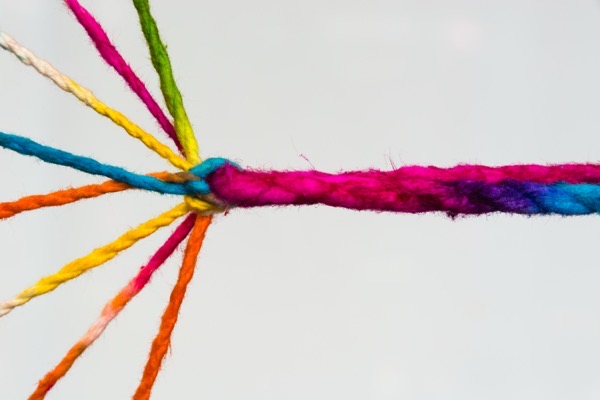
Different colored strands of yarn woven together into a strong strand. Shutterstock 504091696.

Dave Winer writes of Small Pieces Loosely Joined, what he considers the best description of the web. It fits for the web. It fits for most things.

JA Westenberg discusses Why Intelligence Is A Terrible Proxy For Wisdom. Smart.

Backseat Software. That’s how Mike Swanson sees the state of things with software that is constantly interrupting us. As he puts it, “the slow shift from software you operate as a tool to software as a channel that operates you.” Excellent read.

John Gruber thinks we should shift from calling the bad guys Nazis and facists, instead use The Names They Call Themselves. Come to think of it, not sure why it’s so hard to do so given the dictates of the brander-in-chief.

Good dots among the bad are easy to spot. Ava Berger tells the story of how A Red Hat, Inspired By A Symbol Of Resistance To Nazi Occupation, Gains Traction In Minnesota.

In the boiling battle that is Canada and the U.S., Cory Doctorow is elbows up with another of his speeches on enshittifcation. (I’m glad he publishes these.) Check out Disenshittification Nation.

If you’re looking for an antidote to all that’s flying around and at us, it’s tough. Gal Beckham says we can connect those dots through what we’re seeing in Minneapolis. She finds the right word to describe the activism, protests, political opposition, neighborism, and resistance. I won’t spoil it, but she threads them all together in There Is A Word For What Is Happening In Minneapolis. 

David Todd McCarty suggests America is a dual state in Then They Came For Me.

Steven Levy says After Minneapolis, Tech CEOs Are Struggling To Stay Silent. Silence speaks volumes. So do actions. So too do “tepid free-floating empathy” memos that mean nothing. Nothing will come of nothing. Speak again.

Joshua Panduro Preston tells the story of John Carter Of Minnesota: The “Convict Poet” Who Won His Freedom.

Pro football fans, especially those in Chicago know Charles ‘Peanut’ Tillman and the “peanut punch” well. Most don’t know that after his gridiron career he became a FBI agent. Even more don’t know that he walked away from that second career after the immigration raids started. Dan Pompeo connects the dots in After Charles Tillman Transformed Football, He Joined The FBI. Then The Immigration Raids Started.

(image from RA2016 on Shutterstock)

If you’re interested in just what the heck Sunday Morning Reading is all about you can read more about the origins of Sunday Morning Reading here. If you’d like more click on the Sunday Morning Reading link in the category column to check out what’s been shared on Sunday’s past. You can also find more of my writings on Medium at this link, including in the publications Ellemeno and Rome.
Promises, Promises

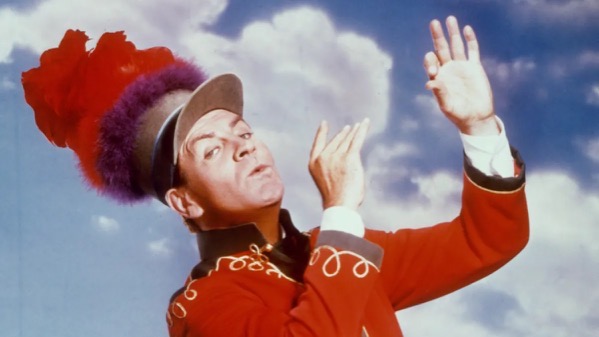
Harold Hill never had such easy marks

Years ago when I ran professional theatres my principal responsibility was picking a season of plays and/or musicals, then pulling things together to actually produce that season. Planning was based on quite a few variables and data, but you never knew how things were actually going to play out in the end. Show business can be cruel.

The Music ManThere were always surprises. Some good and some bad. Some shows would become surprise runaway hits, others that seemed like sure things would flop. Lose a weekend due to a snowstorm and the bottom line got hit hard.

Of course the choice of plays was always the key variable. I remember sitting in a particularly contentious board of directors meeting as we were nearing a season announcement and a board member was pushing back hard on our revenue and expense projections for what we had planned. He pounded the table and asked, “How can you know what will sell tickets a year from now?” I told him I could project, but I couldn’t know and that I always went into each season saying that if we succeeded as much as .300 hitters in baseball we’d be superstars.

Well, we weren’t baseball players, but we still usually came out ahead of the game with more hits some seasons than others. We held our own. The not-for-profit theatre version of the game I was playing relied on picking and announcing a season a year or so in advance. You’d promote and sell that season to subscribers to accumulate cash and support up front, and then once you were in the season proper you’d push hard for single ticket sales and then after they got a taste, try to convert them into subscribers, then donors.

It was always risky, just like many business propositions. I remember asking that same board member if his business would be comfortable announcing his plans and projecting sales a year in advance knowing all of the risks. It was a rhetorical question on my part because I knew his business couldn’t operate that way. Most can’t.

The entire thing was based initially on a promise, and each new season announcement was a new promise. Each time you delivered a promised season the theatre built or kept trust with that subscriber base. That loyal base would resubscribe based on that trust. Those customers knew there may be a play or two in the season they didn’t care for, but they came back season after season based on the quality of what we offered, and also that we delivered on what we initially sold and promoted.

As an artistic director (CEO) I was the one who was responsible for that trust and never took that responsibility lightly. Yes, there were times we had to change our plans, but the trust engendered along the way helped weather those moments as long as we were honest with our customers and donors.

The above is a long wind up to something I’ve been thinking about lately and spurred by an article I saw on Elon Musk’s latest promises about delivering robots “next year.”

No one thinks that’s real. For the life of me, I doubt he does. Given how many “promises” this guy has made and broken I don’t understand how reasonably intelligent (I assume they are reasonably intelligent) reporters and investors don’t just burst out laughing when the next one self-drives out of the empty garage that is his mouth. But then again, everyone is in on the con.

Musk isn’t alone these days when it comes to talking out of more orifices than human anatomy provides. Our politicians do it. Relentlessly. As do Tech and other corporate CEOs. The politicians you can almost understand because they are allowed to say whatever the hell they want under the Speech and Debate clause of the Constitution, granting them immunity for anything they say while doing their legislative duties. Unfortunately that seems to have spread a bit outside of the original boundaries through various court rulings and a willingness to boldly and brazenly lie at the drop of a hat.

But CEOs are supposed to be under more scrutiny. From their shareholders. From various regulatory agencies. And yet, those like Musk and many of the Artificial Intelligence promoters seem to be able to promise the Moon (or Mars) without ever delivering.

As I said earlier, at some point you’d think intelligent folks would catch on and actually run these Harold Hills out of town, instead of allowing them to continue courting the librarians they want to take jobs away from. If the regulators aren’t regulating and the shareholders keep writing checks I guess those of us watching shouldn’t care if they all end up playing air trombones. (Bonus points for those who get The Music Man references.)

There’s a truism in my business that nobody ever starts out to do a bad show. Yet, some shows flop. I used to believe that no one ever started a business to be a bust. But the flimflammery we’re seeing these days makes me wonder. As long as you can continue to fleece the flock along the way, does it really matter if you ultimately succeed in producing what you promised as long as you score along the way?

Set aside for the moment that anything, well intentioned or not, can fail. But after delivering a string of broken promises you’d think there’d be enough erosion of trust that only fools would continue to pony up their money. Perhaps I’ve just underestimated the number of fools.

My business was disposable. Technology isn’t. Essential as the arts are to our collective humanity, the arts are always the first to feel financial hits in tough times, and generally the last to recover. Technology keeps playing an increasing role in all of our lives and is becoming dangerously essential. Lord help us if an EMP ever goes off.  Watching this new rush into the a world of Artificial Intelligence it’s frightening to contemplate even a small portion of what the promises offer, even as some have already collapsed under their own weight. It’s even more challenging to contemplate what the remaining ones might actually turn into.

It’s one thing to run a smartphone on a beta OS. It’s another when it runs your life for you.

Frankly, I don’t buy all of the promises. The ones that I think offer possible benefits I’m skeptical about. And that’s because I don’t trust the folks offering the promises, the folks funding them, or those rushing to implement them. They’ve all had their chance to earn my trust. There are very few remaining that haven’t squandered it.

You can also find more of my writings on a variety of topics on Medium at this link, including in the publications Ellemeno and Rome. I can also be found on social media under my name as above.

 

Tim Cook Captured, Trapped, and Caged

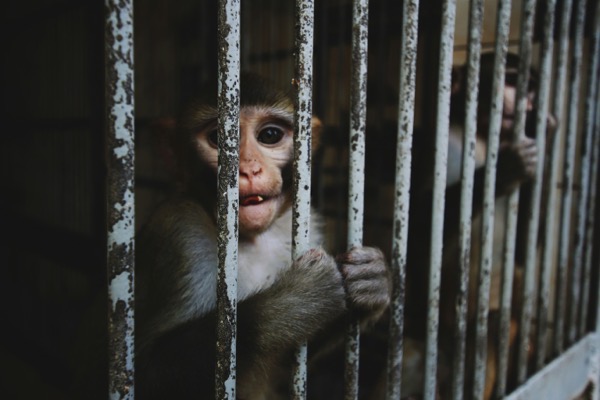
Tough to be a performing monkey in a cage

Om Malik has a great piece about Tim Cook and Apple’s current fail mode when it comes to dealing with the Trump administration called A CEO, Captured. M.G. Siegler sees Cook as trapped in his post Aside From That Mr. Cook, What Did You Think of the Movie?

Artem bryzgalov DaC_1AZEscY unsplash.

If you haven’t been paying attention, Cook has indeed seemingly been captured by his efforts to hang onto Apple’s success in the face of the Trump administration’s intent to drag everyone into his ever increasing cesspool view of the world. Attending the premiere of the Amazon produced film Melania on the night that Alex Pretti was murdered in Minneapolis is just the latest in a series of what can politely be called missteps by Cook, but in my view more appropriately called sucking up out of naked and unabashed fear.

Cook, hearing the large number of complaints about his latest knee bending issued a memo to Apple employees expressing his heartbreak over the events in Minneapolis and notes that he had a good conversation with the president about trying to deescalate the situation. From the reactions I’ve seen nobody is buying it. Issuing memos designed to be leaked is another cowardly PR move, certainly from a company once admired for its supposed civic conscience.

Sure, corporations are corporations and do what they need to do to protect their market share and shareholders. You can make that argument with assurance until the MBAs are all penned up in the same pasture. But when you’ve built much of your success by heavily marketing civic engagement, and I dare say a civic conscience, it becomes not just a dent in that hard earned reputation, but a tougher row to hoe going forward. But we are living in the age of melting myths and laughing at legends.

Malik posits:

When your company is worth more than most nations, you cannot afford principles that inconvenience presidents. The moral equation changes. What once seemed unthinkable becomes necessary. Cook learned this the hard way after he skipped a presidential photo op and was thrown back under the tariff bus. So now he shows up. He sits in the front row. He claps when expected. This is what happens when valuation becomes destiny.

Siegler says Cook should have pulled out of the event and “has lost his way,” and probably should wait out Trump or the GOPs defeats before passing on his dimmed torch.

I don’t disagree with Malik or Siegler. But if you carry the captured analogy further it makes one wonder if reaching the top doesn’t just turn you into just another zoo animal behind bars.

I wonder if they teach that in business school.Photo by Artem Bryzgalov on Unsplash

You can also find more of my writings on a variety of topics on Medium at this link, including in the publications Ellemeno and Rome. I can also be found on social media under my name as above.
Treading Through the Storms

Rough weather on all fronts still ahead.

Those blobs on weather radar maps that blanketed vast amounts of the U.S this past weekend felt not just predictive, but also somewhat defining. The traditional red and blue color schemes signaling rough weather almost hinted at our political and social divisions, reminding those that pay attention that Mother Nature doesn’t pick sides when she chooses to show her wrath.

Viktor mogilat PqPorwfUJlo unsplash.

And she’s tossing a torrent in this, our winter of discontent. Weather, politics, culture and technology all seem to be conspiring to obscure our view in a swirling tempest that chills to the bone, while boiling the blood.

We’ve all seen movies where folks get lost in winter terrain during a storm and can’t find their bearings. It feels like we’re all in that movie, or maybe it’s a stultified streaming series, given how it just keeps stringing us along and clogging up the queue, long after we’ve figured out the formula.

But this is a tortuous tempest. Minneapolis murders. Booting Bovino (or not?) Now US owned TikTok being more ruthless censoring than the Chinese. The gun nuts prematurely treading all over their cherished 2nd amendment, only to retreat after the muzzle blew up in their faces with the shots they just fired. Tim Cook continuing to debase himself and Apple by attending the Melania premiere at the White House. ICE here, there, and everywhere including the Winter Olympics. Consumer confidence hitting a 12-year low. The Doomsday Clock moving closer to midnight. Greenland. Venezuela. Canada. Europe. Iran.

Billy Joel in his heyday would have a rough time chronicling all that’s currently swirling in this winter’s winds for a new version of We Didn’t Start the Fire.

I’m not sure if we’ve reached a tipping point, but it feels like we’re closer to it than we have been since these idiots started shredding all of the life preservers and poking holes in the rowboats on their version of the Titanic. (Thanks for that reference J.D. Vance.)

They wanted to flood the zone with shit so that we couldn’t keep up. By and large they’ve succeeded to this point, but you can sense that the smell may be shifting. There’s chaos all over, but there’s just as much chaos in their inner sanctums as they try to trim sails to survive the storms they’ve created. Small victories add up. Take the wins when they happen and build on that.

It’s up to us to keep the pressure on, because if you’re relying on any of those lifeboats or life preservers (Congress, media, the business community) we’re all going to freeze before we go under with them.

It’s not going to happen overnight. There will be setbacks. It’s One Battle After Another. (Talk about a prescient film release.)

No one knows how this is going to end. No one knows when it’s going to end. No one knows what will be once it does end. But certainly it will end.

Rough weather still ahead. Uncharted waters in a storm. No horizon in sight.

Bundle up. Buckle up. Trust your own compass. Follow the lead of the good folks from Minneapolis causing good trouble. As my friend, David Todd McCarty says, Stand Your Ground.

(Photo by Viktor Mogilat on Unsplash)

You can also find more of my writings on a variety of topics on Medium at this link, including in the publications Ellemeno and Rome. I can also be found on social media under my name as above.

 

Chatbots, Pins, and Other Talking Distractions

The world of talking to chatbots just isn’t for me

In the end everything boils down to a question of taste or a matter of preference. In the beginning everything bubbles up in a hot tub with the jets on high. That’s kind of how I’m viewing all the bubbling around chatbots, AI Pins , possible AI earbuds, AI glasses, and any other kind of method or gadget folks are devising to talk to computers — those with screens, and those without.

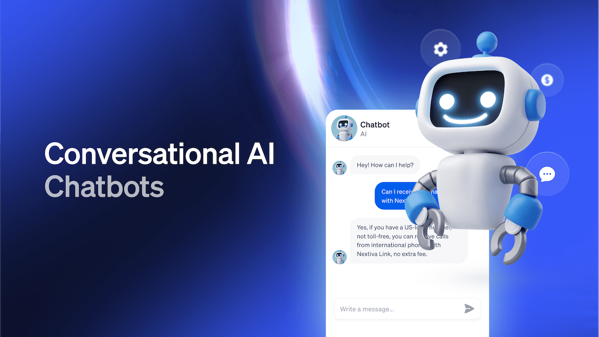
Conversational AI Chatbots.webp.

Apple rumors popping like champagne corks are going to turn up the heat on discussions about chatbots, especially since Apple had been previously saying they weren’t interested in creating a chatbot for its Apple Intelligence portfolio. Fortunately most of those discussion will be between humans.

Mark Gurman reports that we’ll see changes to what we currently think of as Siri this spring, but stay tuned for a revamped version that offers the back and forth conversational approach that existing chatbots offer, codenamed Campos,  later this year.

Almost simultaneously, MacWorld reports that Apple employees are being encouraged to use a chatbot called Enchanté in their work. So, it sounds like Apple is seeding the ground for what’s to come.

For the record, I’m not big on voice computing. Yes, I use my Apple Watch to ask Siri to set a reminder or send a text message, but that’s about the extent of what my experimenting with voice computing has boiled down to.

I’ve tried some of the existing chatbots on smartphones and on computers, and I’ve been in the company of others who enjoy using voice as their primary method of interacting with smartphones. I don’t begrudge anybody using voice as their input method if that’s their preference, and I certainly don’t if it makes computing accessible to those who can’t type. But it’s just not for me.

Part of it is I find myself being more accurate when I can type, and part of it is the social aspect. While microphone technology continues to improve to allow better pickup in noisy environments I find it awkward when someone pulls out their smartphone and starts talking to it with others around. I feel compelled to silence myself while they are doing so. I couldn’t imagine using it in my theatre work, compared to using an iPad with pen to take notes, because my talking would be distracting to everyone else in the rehearsal hall. Goodness knows being in a room with small children laughing/crying/talking at the top of their lungs doesn’t strike me as a suitable environment.

I spent a good portion of this fall watching the Chicago Bears on their improbable run, while texting back and forth on several chains with my nephews and others. I can’t imagine doing that in my local sports pub trying to do so via voice input.

I won’t get into a conversation about how some are using existing chatbots for social interactions like therapy and companionship except to say that I’m guessing if those trends continue as voice input as chatbots proliferate, we’ll eventually see similar reactions to curtail that type of usage similar to what we saw back in the day about decreasing smartphone and screen time usage.

There are some interesting questions out there though. OpenAI has already announced its inevitable move into advertising for ChatGPT. I’m sure the others aren’t far behind. I’m not sure how viable advertising really is in a voice chat environment, whether it’s a smartphone, pin, or set of headphones. I certainly wouldn’t want a “conversation” interrupted with an ad. Amazon certainly doesn’t seem to have come close with its Alexa products.  To my way of thinking, ads in chatbot conversations will give new meaning to the clichés about intrusive advertising.

I’m also of the opinion that while the non-smartphone AI devices might be clever gadget accessories, I don’t see them ever replacing smartphones or significantly denting that market. Too much of everyday life has become so inextricably linked to smartphone usage that requires a screen that I just don’t see voice chatbots replacing it. Someday your voice may be your password, but I think we’re a long ways off from that for interacting with the businesses and other institutions we deal with daily.

But who knows where this is all headed. Quite frankly, I don’t think anybody does. Including the chatbots.

You can also find more of my writings on a variety of topics on Medium at this link, including in the publications Ellemeno and Rome. I can also be found on social media under my name as above.
“Then No Line Exists”

Musk’s Grok has erased them all

I recently linked to Eizabeth Lopatto’s excellent and scathing article pointing fingers at Apple and Google for continuing to allow Elon Musk’s Grok AI to undress without consent adults and children. Calling Tim Cook and Sundar Pichai cowards in the headline on this issue is, in my opinion, table stakes and will be until they take public action and actually apologize for violating their own rules and the privacy of the users that pump money into their bank accounts.

1001 PandorasBox.

Following that up I’m linking to another excellent article on the topic from Charlie Warzel and Matteo Wong, published in the Atlantic. The headline is strong, saying Elon Musk Cannot Get Away With This. The article is stronger still. Yet, the sad reality is that he already has, and even if Cook and Pichai suddenly change direction, the damage has already been done. Like the political figures they have bent knees to, they won’t be able to find a mirror to look in that won’t reflect their cowardice back at them.

Hiding under their respective rocks, both Cook and Pichai have let Musk turn this from a ruinous troubling feature into a paid premium feature, which is not only ridiculous but makes a mockery of both Apple and Google. I’ve already said that any X users who still hang onto that platform are just as culpable.

But then that’s the world we live in. We ignore the horrible nature of what’s unfolding in front of our faces. So many demons have flown out of this era’s Pandora’s Box we find ourselves it is impossible to count them, much less have any hope of banishing them. But then, that’s what the demons are counting on. As the article says:

This crisis is an outgrowth of a breakneck information ecosystem in which few stories have staying power. No one person or group has to flood the zone with shit, because the zone is overflowing constantly. People with power have learned to exploit this—to weather scandals by hunkering down and letting them pass, or by refusing to apologize and turning any problem into a culture-war issue.

As Warzel and Wong also say, “the silence says everything.”

You can also find more of my writings on a variety of topics on Medium at this link, including in the publications Ellemeno and Rome. I can also be found on social media under my name as above.
Apple’s New Siri Will Be Google’s Gemini

Giving Up The Chase

In news you wouldn’t need AI to hallucinate, Apple and Google  in a joint statement to CNBC announced that Apple will be using Google’s Gemini to power Apple’s long anticipated and delayed New Siri in a multi-year deal.

Screen shot 2020 09 01 at 11 11 53 am.png.

You can call it a surrender. It is. You can call it an admission of failure. It is. Even if Apple rarely admits mistakes.

Stating that the new models will continue to run on Apple’s private cloud compute in a joint statement, (published on Google’s news blog and to my knowledge not in any Apple press release), the statement said,

Apple and Google have entered into a multi-year collaboration under which the next generation of Apple Foundation Models will be based on Google’s Gemini models and cloud technology. These models will help power future Apple Intelligence features, including a more personalized Siri coming this year.

After careful evaluation, Apple determined that Google’s Al technology provides the most capable foundation for Apple Foundation Models and is excited about the innovative new experiences it will unlock for Apple users. Apple Intelligence will continue to run on Apple devices and Private Cloud Compute, while maintaining Apple’s industry-leading privacy standards.

Given the delay in releasing the promised and once heralded update to Siri, this isn’t really news and  has been thought to be the path Apple would adopt for quite some time. Speculation is that users might see this as early as this spring, but I’m still thinking it won’t roll out until WWDC 2026 this summer.

For what it’s worth, the statement to business network CNBC tells everyone who the audience is for this news that isn’t news and I’m guessing the complete retrenchment from Apple’s initial endeavors to try and create a AI powered Siri is quite a blow and the fallout won’t blow over soon.

Saying “Apple determined…” is quite some shade from Google, even in a joint statement.

I doubt this is the end of this saga, but in the end, does this really matter? Who knows. But given the C-suite shakeups at Apple, whatever happened with Apple Intelligence and New Siri has changed how iPhone users, investors, and probably a bot or two view Apple going forward.

For future curiosity purposes it will be interesting to see how Apple’s New Siri/Gemini will respond if someone prompts it to generate a summary of this news.

You can also find more of my writings on a variety of topics on Medium at this link, including in the publications Ellemeno and Rome. I can also be found on social media under my name as above.

My Year In The Apple Fruit Basket 2025

Not a good fruit crop yield for Apple

2025 was an odd year toiling in Apple’s orchard.

Shutterstock 1478322374.

Getting this out of the way upfront, it was a year that Apple’s corporate behavior, personalized by Tim Cook, made me think seriously about looking to fill my computing needs and habits elsewhere. That’s an ongoing discussion I’m having with myself. As it rattles around my brain, I don’t see an alternative that is any better or any worse from a corporate posture point of view. Apple has plenty of company.

From a technology point of view I also don’t see any better alternative beyond reliving my past hobbyist days with Linux that I’m far too old to contemplate. I used to be that geek. I’m not anymore. Aside from communal political knee bending, every tech company’s plunge into the Artificial Intelligence swamp has mucked up everything, everywhere all at once, in one way or another.

I have to touch Windows now and again and every time I do I feel like I need to take a purgative and wash my hands. I feel much the same about Google’s products. Life as a geek was already becoming increasingly more distasteful in the days when it was just the algorithms that enshittified everything, but adding Artificial Intelligence into the mix has created a slop that even hogs are beginning to turn away from. I know that’s all here to stay and I’m honestly sad that it is.

Hardware

This was the first year that I didn’t upgrade much Apple hardware. I don’t think it was a conscious choice correlating with Apple’s corporate behavior, but I won’t rule out my subconscious working against my small contribution to Apple’s bottom line. Let’s put it this way, I didn’t feel the usual gadget lust tugs and twinges over anything Apple announced this year.

I did upgrade to an iPhone 17 Pro and didn’t even think twice about taking a serious look at the iPhone Air. Apparently I wasn’t the only one. There’s nothing really remarkable to say about the 17 Pro. It’s as good and solid as it’s predecessor and if that’s incremental, than incremental is more than enough for me. I think that’s also true for most users.

I did pick up a pair of AirPods Pro 3 and wrote a quick review that you can read here. The battery life on the AirPods Pro 2 was approaching end of life, so it was time, and I use AirPods a lot.

I also upgraded to the Apple Watch Series 11 from the Series 10. It’s not that the Series 11 does anything more remarkable from a technology perspective. It doesn’t. But I’m in sort of a trap of upgrading every year due to the technology I use to monitor my diabetes.

I use the Dexcom G7 sensor that pairs with both my iPhone and Apple Watch to show me and my doctor how I’m doing with my blood sugar readings. I’ve come to rely on the constant monitoring on the Apple Watch app more than I do on the iPhone. But the two devices and their apps are married. On the Apple Watch that constant monitoring takes a heavy toll on Battery Life and Battery Health. Since I’ve been using that technology Battery Health can degrade at or below 70% in a year. That’s enough for me to upgrade every year.

That is an excellent example of one of the pitfalls of Apple’s development pace that drops new operating systems annually, but trickles out fixes over the course of a year. Dexcom developers take quite a bit of time to catch up with new hardware and software. They have to. They are a medical device company. That lag is certainly more acute with a device that monitors medical conditions, but this year’s round of operating system changes have been challenging for developers in all software categories leading us all into a perpetual year of beta software.

Summing up what I feel about Apple’s 2025 hardware releases I’ll leave it this way. Apple continues to make good improvements with each hardware iteration. Quite frankly, I’d be content to see Apple continue iterating the way it has since the dawn of the M-series chip change, but the many voices continually calling for something newer and bolder seem like they’ll have their day in the next few hardware cycles.

The current crop of Apple hardware has matured into the best I’ve seen on the market. Here’s hoping all that’s rumored continues that trend. That said, I don’t really see the appeal of a vastly more expensive folding iPhone beyond it being a regressive retro move and small enough to make it easier to stuff in a pocket. I guess the next big retro innovation will be to bring back mechanical keyboards. But, hey the Commodore 64 also made a come back this year. I’m guessing a folding iPhone will be enough to excite the faithful. For a few months.

Software

Software provided the real color on Apple’s fruit plate this year with what they shipped and what they still haven’t. The Apple Intelligence slices are browning around the edges, leaving an unappetizing anticipation for what may or may not be unveiled. I say “may not” because in Apple’s announcement last spring delaying the rollout of how Apple Intelligence integrates with the “new Siri” there was an important word that most seem to have overlooked. Here’s the statement:

“Siri helps our users find what they need and get things done quickly, and in just the past six months, we’ve made Siri more conversational, introduced new features like type to Siri and product knowledge, and added an integration with ChatGPT. We’ve also been working on a more personalized Siri, giving it more awareness of your personal context, as well as the ability to take action for you within and across your apps. It’s going to take us longer than we thought to deliver on these features and we anticipate rolling them out in the coming year.”

The key word in that statement is “anticipate.” Most conventional assumption makers believe whatever Apple is working on will roll out sometime in the first half of 2026. But that word “anticipate” is a great hedge that only a PR professional or lawyer could love. I don’t doubt the pressure is on to release something. I wouldn’t bet a dime on it happening before WWDC 2026.

As for what Apple Intelligence is currently, it’s still nothing to write home about. Notification summaries remain a comedy gold mine. I think I’ve touched the Writing Tools a few times, but fall back on other proofreading habits and tools. Whatever Siri is or is not doing, it’s gotten worse and even less predictable than it was before. Every time an accidental touch of the camera button light’s up the border of the screen it’s more a reminder of what’s not there than what it was promised to do. Whatever Apple is planning, the current iteration feels like it’s been largely abandoned like a rotting piece of fruit.

Liquid Glass was the feature that did ship. Countless words have proliferated around the Internet about the design change. I’ve written a few myself. My take at year end is that Liquid Glass is neither here nor there.

Legibility issues and design disasters need lots of work and attention, most of which won’t come while the number 26 is still affixed to the operating systems. Devices still work, even though I’m seeing more and more haphazard weirdness as app developers try to play catch up while Apple itself is still trying to chase down its own problems.

Given the leadership turmoil within Apple who knows what Liquid Glass may or may not become in the future. But then who knows what it was actually intended to be in the first place, beyond a distraction from the Apple Intelligence miss. It certainly wasn’t designed to fulfill anything Apple’s marketers thought it might. If there’s harmony in trying to unify things across platforms, someone needs a basic course in music theory.

While I don’t hate Liquid Glass my continuing impression is that it still feels childish in a bubbly sort of way that doesn’t jive with the sophistication that the advanced hardware platforms seem to beg for. That was my first impression when Liquid Glass rolled out, and it was solidified after spending a large junk of time with my grandkids and other relatives’ kids watching them play children’s games on their non-Apple tablets over the holidays.

CleanShot 2025-12-30 at 15.43.21@2x.

It may look cool to some, but it feels like undercarriage lighting on a car to me.

There Were Some Good Things

The most important operating system change that Apple made was iPadOS 26, finally instituting, and then continuing to iterate on, a much better windowing system for iPads. 

And, the best new feature on any of the Apple devices I use the most is the Wrist Flick to dismiss a notification on my Apple Watch. It’s simple, it’s effective, it makes sense on all levels. It should have existed earlier. And it should be what Apple aspires to with everything it creates.

Spotlight was given an overhaul offering new features like a clipboard manager. I’m still experimenting with it, but can see how it might replace Raycast in the future if Apple continues iterating on it. It’s a good addition that still needs work.

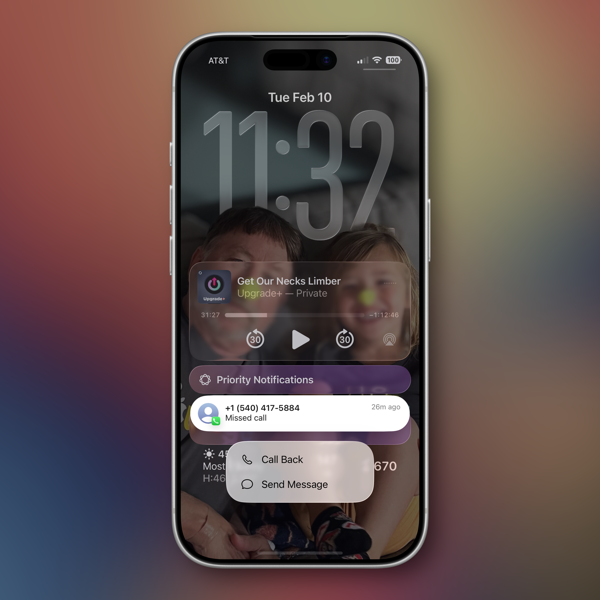
I think Apple is on to something with the changes it made for the Phone app to try and help alleviate spam calls. I hope they continue to improve this, because as good an effort as it is, I and others still find it confusing. 

Perhaps the best thing about the OS 26 releases beyond that is that all of my devices are working as I anticipate if I look past (not through) Liquid Glass and avoid Apple Intelligence.

Summing Up

In the end, I think 2025 will be considered a lost year for Apple. I maintain that Apple’s ability to take the long view strategically hindered more than it helped. And I think that some of the executive level changes reflect that. But the fact that it takes a long time to see any new substantial change in an already crowded and confused orchard didn’t argue well for the year to be a success. The political posturing alongside the product missteps has led to my personal disgruntlement and I know it has for many others as well.

One of the many Apple mantras that we’ve become accustomed to is that Apple designs its products for 90% of its users. That may indeed still be true. As much as I feel comfortable with steady iteration in hardware and software, it feels to me increasingly that Apple is reaching more and more for innovations that excite the remaining 10%. I get that. And to a degree it’s commendable. But in my experience with the users I support, the majority of those in that 90% probably never even attempt to use many of these new innovations. It’s not a case of reach exceeding grasp in my opinion. Rather, it’s reaching in the wrong direction.

Apple has already made some noise that the next OS versions will be more fixing and futzing rather than feature rich. How could it not be? By the same token, how could it be if, I as feel is increasingly likely, it will be the first time we see what the new Siri and Apple Intelligence will really offer.

I also think Apple and the other tech companies need to pay attention to the warning signs that are starting to bubble up about Artificial Intelligence. I think most of the growing distaste of AI comes not from what these tech companies are offering on computing platforms, but from the day to day encounters people are experiencing in their daily lives as more and more non-tech companies roll out versions of AI support. The way I’m hearing and feeling it, jokes and complaints about AI at holiday gatherings this year are starting to compete in numbers with ones about government and politics.

I don’t think that’s an accomplishment that augurs well.

(First image from Johann Lensless on Shutterstock)

You can also find more of my writings on a variety of topics on Medium at this link, including in the publications Ellemeno and Rome. I can also be found on social media under my name as above.

Apple’s Customer Support Weaknesses

Closing holes in customer support

The story from Paris Buttfield-Addison about losing 20 years of his digital life due to a hacked gift card broke last week when I was watching my grandkids. I was able to follow along but didn’t have time to comment, but it certainly flashed me back to some issues I have had with Apple in the past. The good news is that it appears that someone from Apple’s Executive Relations solved the issue.

If you aren’t up on the story the quick summary is that Paris Buttfield-Addison attempted to redeem a $500 Apple Gift Card he had recently purchased from a third party retailer. The card had been tampered with. Apple’s system saw it as problematic and disabled his 25-year old account. After frustrating attempts to resolve the situation Buttfield-Addison blogged about his situation, which was picked up by much of the Apple press. That in turn prompted action which escalated the situation to the Executive Relations Team. You can read all about it here.

As I said, the good news is that the account was eventually restored.

The bad news is that it took the pressure from exposure online to solve the issue. What’s good is that the story was picked up enough to generate that pressure. Often that’s not the case.

I can testify to that from two events in my Apple experiences. Both of which required escalation to the executive level. The second one requiring intervention from Craig Federighi after I had all but given up hope. You can read about that adventure here. It took quite a while to get that issue resolved, one that lasted through several operating system revisions.

The worse news is that increasingly if you have an issue with Apple (or any other large company for that matter) that falls outside their prescribed systems of support you really have to be either lucky or damned persistent to get a resolution. There’s an old saying that if you have one employee you have an employee problem. That applies to customers also. If you have one, you have a customer relations problem. To be fair in a company as large as Apple it has to be tough to mitigate these kind of issues given the very large number of users.

But if you smash those old sayings about employees and customers together the resolution dynamic can easily become untenable. It shouldn’t. The fact that large companies have to have an Executive Relations Team speaks to failures in management. Anyone remember Comcast Cares on Twitter? Great that it existed. An admitted failure that it had to.

When a company anticipates potential breakdowns and devotes resources to solving problems its existing customer support systems can’t handle, the dog is chasing its tail. One has to assume the resources devoted to Executive Relations Teams solving issues that regular customer support systems can’t must be less expensive than addressing the flaws in existing customer support mechanisms. At least I hope that’s the case. The alternative is that a company just doesn’t care.

To be fair, there will obviously be issues that can’t be anticipated that require some method of higher level oversight to be corrected. Customers can only hope that leads to better support further down the line once an out of the ordinary problem arises. Unique problems crop up all the time and rules and regulations get changed to deal with them. But setting up barriers to problem solving creates its own set of problems.

With more and more companies adopting AI solutions to help with customer service and support, it makes one wonder if we’ll end up with AI Executive Relations Teams made up of AI engines solving problems AI support created in the first place. But I imagine it will fall back to humans.

Assuming you can reach one without needing allies in the media to help make your case.

You can also find more of my writings on a variety of topics on Medium at this link, including in the publications Ellemeno and Rome. I can also be found on social media under my name as above.

Living in the Past with Apple Music Replay

Musical time warps

I listen to music but I’m not a voracious listener like some are. Fact is, I spend most of my listening time with podcasts and audio books. Nevertheless, it is interesting to see what music I did spend my time listening to. Apple Music, like other music services, offers a feature to summarize what tunes you’ve tuned into over the year called Apple Music Replay.

CleanShot 2025-12-02 at 08.48.09@2x.

Given all that’s going on in the U.S currently I shouldn’t find it surprising that I spent most of my time reliving parts of my youth that were just as tumultuous as our present, revisiting a lot of Crosby, Stills, Nash and Young and The Grateful Dead as well as the musical Girl From the North Country that features the music of Bob Dylan. (I spent considerably more time with that selection last year.)

It’s also interesting to me that when I do listen to music I do so through a couple of very eclectic playlists that range over quite a few genres. I never see that reflected in these generated mixes, only artists or albums I’ve selected specifically, which tells me these lists are mostly made up from selections you’re searching for. Perhaps that explains why when I ask Siri to cue up a playlist it fails as much as it succeeds. But then again, most of those playlists contain mostly music from my past, more than contemporary selections.

Seems to me, we could all do with a little more music these days that is speaking directly to these days.

You can also find more of my writings on a variety of topics on Medium at this link, including in the publications Ellemeno and Rome. I can also be found on social media under my name as above.