At The Mercy of The Backend

Part of the Information Super Highway traveled some rough road this morning. Meta experienced an outage in all of its services today that took down Facebook, Threads, Instagram, Messenger, and I imagine everything else in the Metaverse. A source told the Daily Mail that the company’s internal systems were also down. Boomshakalaka, another day on the Internet.

We’re somewhat accustomed to Internet outages. In much the same way we’re sadly becoming accustomed to extreme weather events. Some are caused by malicious hacks, some by incompetence, some by rodents chewing through cables. Internet connectivity has made so much of our current world more convenient and convenience always comes with a cost. It’s a cost that those who own the servers, the services, and the connections, sometimes don’t want to pay for, leaving users stranded at times. It’s apparently tough to value an ounce of prevention on the Internet.

We hear about these outages when big ones hit. That’s sensational news. But far too often there are “backend” issues that happen that we never hear about. Those are the ones that only affect “a small percentage of users” or companies that don’t command the public’s day in day out appetite for connectivity.

Intriguingly enough, those charged with communicating with users when problems do arise sometimes never hear about them either, or if they do are they are told not to talk about them. Again, nothing surprising.

The corporate PR pros may or may not issue lawyered up responses, but rarely do users get any nuts and bolts answers as to what went wrong. Vague apologies, promises to do better, free credit monitoring when user info is hacked, etc… We’ll’ hear the now-clichéd “small percentage of users” modifier trotted out whenever things get righted. It’s funny/not funny how we all just move on.

Earlier this morning I was chatting with some folks on Threads who were seeing issues with Apple’s Weather app not updating as designed on their Apple Watches. I casually replied that it was probably an issue with iCloud’s backend and how it was associated with the provider Apple uses to offer up weather info. These issues with Apple always seem to manifest as they are rolling out new operating system updates, so my guess is more than a guess. (Apple rolled out iOS updates today.)

I’ve been going round and round with Apple for almost two years now trying to solve what is apparent to me, after much effort and investigation, an iCloud related issue. It’s not just apparent to me, there are several other users experiencing the same issues I’m having, as well as other users with other iCloud related issues in similar but different veins.

When I talk to Apple Support (a regular occurrence) we’ve developed this coded, often unspoken, acknowledgment that the issues are iCloud related. But as I said in this post, Apple needs to allow its support personnel to acknowledge directly what the problems are. And in my case, and those of others, so far that continues to not happen.

(Side note for those who might read the links above or are familiar with the situation: I’ve discovered a workaround to sometimes get things back to normal thanks to Dwight Silverman. Signing out of Messages and then back in works about 8 times out of 10. Otherwise I just have to wait it out.)

The problem is bigger than a social media network going down, or a streaming service buffering out during the big game for lack of bandwidth. Those may be frustrating but in the grand scheme of things merely inconveniences. But the more connected our daily lives become to our banks, our medical institutions, our governments, etc… the more reliant we become on services being well run, well maintained, and frankly just available and working as advertised.

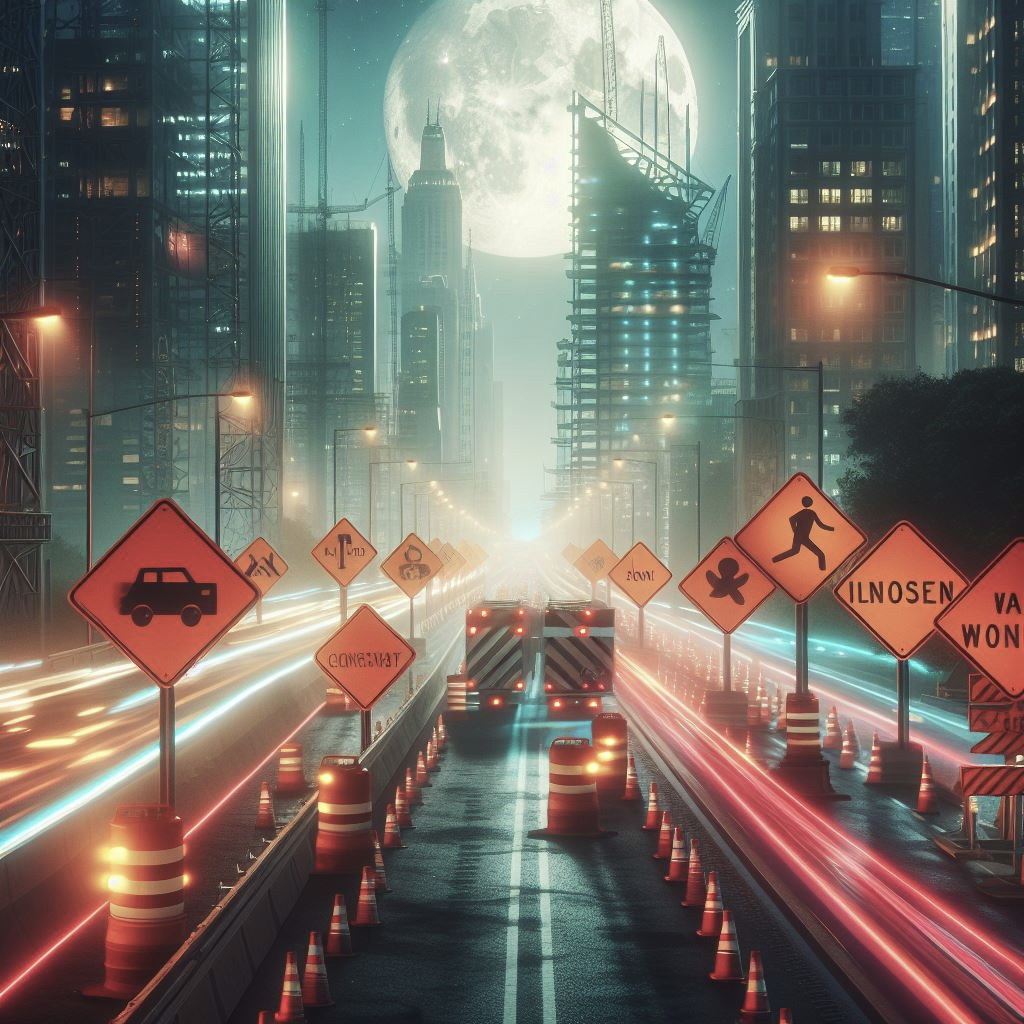
I think of it as I think of streets and roads. We’re reliant on them and need them well maintained. The big difference is we see the potholes and understand the inconvenience we’re about to experience when the construction barriers go up.

When Apple, Microsoft, or Google releases a software update, they are not just updating the bits and bytes on your device. Corresponding updates happen on the backend as well. When your favorite app updates the same thing occurs. If that app provides a service, whether it be a social network, streaming media, or checking your bank balance something’s cooking on the backend.

And that’s just the backend updates we’re at least peripherally aware of. Perhaps we need better signage on the Information Super Highway.

You can find more of my writings on a variety of topics on Medium at this link, including in the publications Ellemeno and Rome

Sunday Morning Reading

Still bouncing back and through some health issues, but it’s Sunday and we’re approaching the start of the baseball season. So here’s some Sunday Morning Reading to share.

David Todd McCarty wonders how we convince friends and family that they’re wrong and we’re right in today’s mixed up world in Those Closest To Us. My hunch is that’s becoming no longer possible.

The Internet is as mixed up and crazy as everything else in the world these days. Was it always? Joan Westenberg published a zine that you can download for free called I Miss The Internet: a zine. I’d grab a copy if I were you.

The bills always come due. But this one might never get paid. Christopher Mims takes a look at the growing problem of technical debt in The Invisible $1.52 Trillion Problem: Clunky Old Software.

It didn’t take long for someone to create an AI worm. Makes one wonder where the good guys are who might use AI to beat this stuff back. Matt Burgess sounds the alarm in Here Come the AI Worms.

Sports analytics has been the latest craze for quite some time now. With the Major League Baseball season just around the corner, some are concerned that AI will eventually overwhelm the new wave of analysts and the games. The AP has this report from Jimmy Golen, Sports Analytics May Be Outnumbered When It Comes to Artificial Intelligence.

And from the tech future to the tech past, check out American’s Last Morse-Code Station by Saahil Desai.

If you’re interested in just what the heck Sunday Morning Reading is all about you can read more about the origins of Sunday Morning Reading here.  You can also find more of my writings on Medium at this link, including in the publications Ellemeno and Rome.

Something Cooking In My Prostate

I wrote a little something about the twists and turns of time after my recent  and ongoing adventures in the American medical system.

“I’ve got cancer.” That was the first terrible, all consuming, soul crushing, time stopping thought coursing through my brain after the doctor in his roly-poly good old boy manner said, “there’s something cooking in your prostate.”

Spoiler alert: I don’t have cancer.

You can read the rest here in the publication Ellemeno on Medium.

You can find more of my writings on a variety of topics on Medium at this link, including in the publications Ellemeno and Rome

Sunday Morning Reading

Playing a bit of catch up after a week off due to some health issues and travel to visit the grandkids, so here’s some Sunday Morning Reading to catch up on and share as the world continues its wobbly spin. 

Context is Everything. I concur with NatashaMH. Cat piss and all.

Trigger me this: John Mellencamp says that one way to combat our US problem with guns is to start showing the carange on the news. Daniel Kreps tells us about it in John Mellencamp on How To End Gun Violence: ‘Show America the Carnage.’ I think Mellencamp is right.

Teri Kanefield has a nice rundown on Why Some Prefer Oligarchy and What’s Russia Got To Do, Got To Do With It? If you don’t follow Teri’s stuff, you should. 

Michel Schwirtz and Adam Entous writing for The New York Times put out an explosive piece on The Spy War: How The CIA Secretly Helps Ukraine Fight Putin. It’s not explosive for the content because those who need to know these things already do. What’s intriguing is that when info like this hits the Main Stream Media, there’s always a motive. The question is whose?

James Carville writes a piece for The Bulwark entitled A Crusade for Something Noble. If the title triggers you, read the article. If the subject matter doesn’t trigger you, well… let’s just say don’t say you weren’t warned.

Christopher Mims says AI means It’s The End of the Web As We Know It. I think he’s right, but have we ever really known this moving target?

David Dreams of Everything is a nice piece of introspection from David Todd McCarthy. Also check out his piece  Fish Or Cut Bait.

If you’re interested in just what the heck Sunday Morning Reading is all about you can read more about the origins of Sunday Morning Reading here.  You can also find more of my writings on Medium at this link, including in the publications Ellemeno and Rome.

Sunday Morning Reading

Sunday Morning Reading is taking a hiatus this week as I’m spending time with the grandkids and most of my reading has been with my grandson.

Sunday Morning Reading will be back next week. Carry on.

If you’re interested in just what the heck Sunday Morning Reading is all about you can read more about the origins of Sunday Morning Reading here.  You can also find more of my writings on Medium at this link, including in the publications Ellemeno and Rome.

Sunday Morning Reading

Here’s some Sunday Morning Reading to share on a day when the political world is fixated on diatribes about age, infirmity, and a tottering judicial system that’s too long in the tooth and already rotted out with decay. Meanwhile a majority of eyeballs are getting ready to tune all of that out and watch some talented young athletes bash each other’s brains out on a playing field, hoping for a moment of glory. But hey, you can always do some reading.

First up, Clare Malone wonders Is The Media Prepared for An Extinction Level Event? The short answer is no. But read the article. It’s good.

And speaking of bordering on extinction, David Brooks in The New York Times pens an interesting piece titled Trump Came for Their Party But Took Over Their Souls.A bit like that old axiom about shutting barn doors after the horses have galloped away, but worth a read.

Smart Is Not Always Wise, says David Todd McCarty. He’s right. I may have linked to this already, but it’s worth you catching up to if you haven’t yet. Also check out The Scale of Evil Things. Smart and wise.

One of the mysteries of our time is how so many got suckered into so much bullshit thinking about things that used to feel like touchstones in our lives. In this piece, Reed Galen is talking about religion. The scary thing is how spot on the title is: Hiding in Plain Sight.

NatashaMH thinks she needs to be fucked up in order to be creative in her piece The Fucked Up Creative. Here’s to being fucked up if that’s the case. 

Back on the politics beat, but also the fucked up beat, Ronald Brownstein talks about the non-secret plans the decaying orange turd has if he gets elected again in Trump’s ‘Knock on the Door’. We can’t say we didn’t see it coming this time around.

The Apple Vision Pro continues to dominate tech talk and here are a couple of interesting takes from this second week of that beta project’s life in the wild. Apple Vision Pro Review: Eyes on the Future by Jason Snell of Six Colors and  Christopher Mim’s analysis that Apple’s New Face Computer Is For Work. 

And finally to close out the morning here’s a look at How Steinbeck Used The Diary as a Tool of Discipline, A Hedge Against Self Doubt, and a Pacemaker for the Heartbeat of Creative Work by Maria Popova. No AI or fancy tech required.

If you’re interested in just what the heck Sunday Morning Reading is all about you can read more about the origins of Sunday Morning Reading here.  You can also find more of my writings on Medium at this link, including in the publications Ellemeno and Rome.

Apple Vision Pro: Thoughts After the Demo

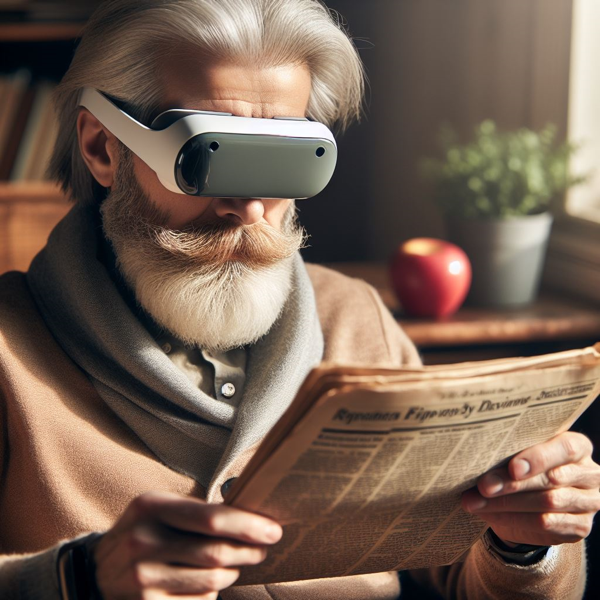
They say you can’t teach an old dog new tricks. That may be so. But this old dog is certainly willing to try out a few new things, tricks or not. And the Apple Vision Pro certainly qualifies as a new thing. It is certainly not a trick. Understand I don’t own one. I’m not currently contemplating owning one. But I did schedule a demo at a local Apple Store and I’m very glad I did. These are my thoughts about the demo and after.

First, let’s talk about the demo. If you’re remotely interested and live close enough to make a trip to an Apple Store I’d highly recommend you do so. Certainly to check out the device and the limited look at the technology Apple lets you experience for 30 minutes, but also because in the end it’s as much fun as any entertainment experience you might put on your calendar. It’s also free. It’s well done and it’s a no pressure to buy interaction.

I equate it to the first time I attended an IMAX screening back in the day when that was a brand new thing (old dog here, remember.) The number of IMAX screens was small and the brand actually meant something beyond a higher ticket price. I remember marveling at the pre-show demo revealing all of those speakers and the technology more than I remember whatever movie I watched. The Apple Vision Pro demo is that sort of experience. At least it was for me.

As I mentioned, the demo is indeed limited. You don’t get to watch the entire movie. You learn the basics of using the device and what it feels like to strap this thing on your face. After your face is scanned with an iPhone to get the right fit, the device is shortly served up to you on a wooden platter with a panache that feels like you’re being served in a fine dining establishment.

It might feel like the main course, but think of it instead as being served up a large Charcuterie or a Mezza. You get to sample bits of the magic: 3D/Spatial video and photo experiences, the pass through mode, and moving windows up down and around. You don’t get a full course meal. For example, you don’t get to experience using it with a Mac which is understandable, but also a disappointment.

On the day I had my demo there were two folks completing demos in front of me and two waiting when I finished up. I was in a smaller Apple Store, so your experiences may vary depending on where you go. It will be interesting to see how this goes in the days and weeks ahead once the novelty has worn off.

So, those are my  thoughts on the demo. Again, my recommendation is to do it if you’re even mildly interested. It’s worth the 30 minutes and whatever travel time it takes to get to an Apple Store. And it’s the only way you’re really going to discover whether or not this device and what it may or may not offer might be right for you. It’s also a lot of fun.

Now that I’ve experienced this small taste here are some of my thoughts about this new thing.  Again, these are based only on the demo and along with what I’ve read, viewed and listened to online. I mention that because by and large I think most of the reviewers and early adopters are being quite fair in their praise and criticism of the Apple Vision Pro. Sure, there’s some over the top excitement, but that is well tempered with some realistic descriptions of issues and pitfalls that some are experiencing.

I included some links to early reviews in a prevous post after the review embargo dropped and I’ll include a few more below that have come out since. I don’t think you’ll go wrong checking these out because folks are putting this device and its operating system in what I view as the proper context: something brand new that’s attainable now, but is largely undefined as to its future.

And undefined it remains for me. If I lived alone I could see the Apple Vision Pro as how I possibly would choose to watch entertainment. In this first version it offers a very cool way to do so whether you’re in the immersive experiences or not. Even with the demo’s soupçon of this viewing magic it’s easy to see the appeal and be drawn to it. But that’s not enough alone for me to make the investment in this first generation.

I think the isolation factor many have mentioned shouldn’t be overlooked. I can see it being very easy to get lost in the world of spatial computing. That may be just fine for some, but this old dog wants to spend some time with friends and grandkids, sharing experiences and not keeping them to myself. How that part of Apple’s “vision” plays out is yet to be seen or really discussed in these early days, but it will need to be sooner rather than later in my opinion.

That said, the opposite could also be very true when it comes to providing shared experiences for folks already living in an isolated situation. For example, I was out of town on a gig for portions of December and most of January, with travel plans to be back home for a break during the holidays. COVID intervened and I spent the holidays on the road in isolation until the illness resolved. I can imagine folks in similar isolated situations, being able to share spatial videos or photos in the future. And yes, those are amazing, and indeed somewhat emotional experiences. But we’re far from that being even close to our current reality of quickly firing up a Zoom or FaceTime session and sitting in as a talking head during a holiday dinner.

As for the interface and working with the device, Apple has made it pretty easy to get acquainted with controling what you see with your eyes and gestures. The eye tracking worked as advertised with a few quirks. I expect it is only going to continue to improve. So that’s a win.

The biggest adjustment (and a number of reviewers have mentioned this as well) is that you have to keep your eyes focused on what you want to manipulate in order to excercise control with gestures. Certainly that probably becomes second nature with longer use, but it is certainly different than the way I use a trackpad, keyboard, or touch in relating to what’s on a screen. In the limited demo I found that I had to slow myself down in order to make selections, zoom, or move windows about and was encouraged to do so by the Apple rep guiding me. I do often use a multiple screen setup and this is a different way of working from how I may take a glance at one thing on one window, while scrolling through another almost without thinking about it.

As I mentioned earlier the demo understandably doesn’t offer a chance for you to see how the Apple Vision Pro will work with a Mac. There are plenty of videos and reviews online that discuss this in good detail. Many describe how effortlessly this works with Universal Control, using a keyboard and trackpad to go back and forth between a Mac and the Vision Pro. That’s encouraging, although I hope that doesn’t fall prey to some of the iCloud related issues with Universal Control that I’ve been experiencing for quite some time now that Apple doesn’t seem to have an answer for.

Honestly, this would be a headline feature for me and from what I’ve read it is designed and works well enough to warrant that sort of headline. Couple that with entertainment viewing and the Apple Vision Pro might be a bigger temptation for me a generation or two down the road, and again, I see this feature only getting better in versions ahead.

Apple Stores are very well lit. Much better than the environments where I work and how I actually prefer to work. In those bright light conditions everything I saw was crisp and easily readable. However, there was a noticeable difference between the brightness of the real world before and after putting the headset on. It does feel as if you’re entering into a darker place. I’ve read that in low light conditions the visuals aren’t quite as crisp or stunning, but there’s no way to verify that from the my participation in the demo.

As to the comfort of the device there’s no doubt it is something heavy on your face. We checked the fit several times in my demo, but the device kept wanting to slide down my face slightly. I was wearing the Solo Band. When that occured I had to constantly adjust my neck and viewing angle in much the same way I used to do with my eyeglasses back when I wore progressive lenses prior to catarct surgery several years ago. That adjustment felt minor with eyeglasses. It felt a bit more burdensome with the Apple Vision Pro. I’ve read and heard that the Dual Loop band included in the package that fits over the head might prevent that sort of slippage. I had no opportunity to try that out in my demo.

I hesitate to share this next bit of info because it’s very personal and it’s not necessarily something that can be attributed directly to the Apple Vision Pro. Later in the day of my demo I experienced some dizziness and disorientation that turned into what my doctors described as a Vertigo episode. I have never had or been diagnosed with anything resembling Vertigo previously. Because my blood pressure also rose significantly I ended up in the ER that evening. I was quite disorientated and out of whack.

Again, I am not saying there is a direct correlation here with the Apple Vision Pro. I have other health issues that could be the cause and it could very well be coincidental. I am in the process of doing quite a few tests to try and figure out the cause as some of the issues still persist. That said, Apple does have a support document about motion sickness, dizziness and nausea and I did take note that it mentions it can take up to 30 minutes for symptoms to start. My symptoms began well after that time frame, but when something scary like that happens you consider all external and unique possibilities and circumstances leading up to the event.

The point of including this info here is that it is just possible I fit one of the pre-existing medical conditions that might make me more susceptible to motion sickness symptoms as Apple mentions in the support document. So, while I encourage follks to take advantage of the free demo Apple is providing, I’d also urge them to follow Apple’s guidance and check with your medical provider if you have any of the conditions mentioned in this other document. The larger point here is that as much potential as the Apple Vision Pro offers, it may not, at least in its current form, be a device for everybody. Especially if you’re an older dog with some existing medical issues.

Is there a future here in Apple’s Vision Pro? I think so. I don’t know what it is or will be. I don’t know who it’s for or not for. I doubt Apple actually does either and is anxious to find out in the months ahead. What is certain is the elements of something exciting is here and we’re living in a time when we can experience that as its story reveals itself in the years to come. Note I said “years to come.” I think it will take awhile. But this is now. Take advantage of the demo if you can or are able. It’s a chance to see and try something brand new for yourself. Trust this old dog, that doesn’t happen every day.

Here’s some additional review links that are worth your time::

Jason Snell in Six Colors: Eyes On The Future

Brian Heater in TechCrunch: Apple Vision Pro review: The Infinite Desktop

Matt Birchler: Like Buying an iPhone in 2007

MKHBD: Apple Vision Pro Review: Tomorrow’s Ideas…Today’s Tech!

Upgrade #498 (podcast): Leap the Uncanny Valley

Stephen Robles: Should Anyone Buy Apple Vision Pro?

Christopher Mims in the Wall St. Journal: Apple’s New Face Computer Is for Work.

You can find more of my writings on a variety of topics on Medium at this link, including in the publications Ellemeno and Rome and check out The Lehman Trilogy Diaries here. 

SCOTUS Hearing Marks The Middle of the Ending

Today is not the beginning of the end. It’s not anywhere close to the end. It’s smack dab in the middle. The US Supreme Court will hear a case on disqualifying everyone’s, including many of his supporters, most detested human from running for the presidency of the United States. As we’ve gotten closer to the moment the back and forth has been backed and forthed enough to make the Veritigo episodes I’m currently experiencing seem like I’m firmly rooted and well balanced on solid ground.

Shutterstock_90114865 copy.

For what it’s worth I don’t have a middle ground. I think the guy should be tossed out on his oversized orange keister, and that the well compromised Supreme Court should take a flyer to cover their asses in a few blankets shy of complete ignominy. Sure that might lead to violence, but I think that’s coming regardless. Just a matter of when. Call me cynical. But you’ll call me right before we get to the end.

What’s going to happen today? No one knows. That’s why this is such a fraught moment. The drama and the stakes don’t get any higher. The only problem with this drama is that no self-respecting writer would populate it with such transparently screwed up characters and motivations. Hell, even farceurs wouldn’t touch this list of characters. If you believe, as I do, that we’ve already done irreparable damage to what was the United States and all it stood for, today is the middle act of a tragedy heading to its conclusion.

I’m linking here to a good rundown of what the arguments in the court may be about today. For those interested in placing bets on the outcome here’s a link to what the oddsmakers are thinking. I’m mean if the ship of state is  going down, you might as well try to make a buck or two on how long it’s going to take.

You can find more of my writings on a variety of topics on Medium at this link, including in the publications Ellemeno and Rome and check out The Lehman Trilogy Diaries here. 
Sunday Morning Reading

It’s one of those winter Sunday mornings. Time to share a little Sunday Morning Reading while trying to get back into a different groove after returning home from a long gig and nursing a couple of bulging disks in my back. Today’s version is a wide mix of topics today mostly in the cultural realm. Enjoy.

First up, check out Scott-Ryan Abt’s The Euphoria of Quiet Time. Quiet time is something I’m trying to find more time for.

Controversial theatre director Milo Rau is coming to America. Helen Lewis takes a look at why he’s controversial in The Theater Director Who Likes to Go Too Far.

Family squabbles over money and legacies are never fun. Certainly when they invovle art collections. Check out Kelly Crow’s piece about the Neuman family in The $1 Billion Art Collection That’s Tearing a Family Apart.

Legendary record producer Max Norman says there’s no point in making “world class” records any longer because no one cares anymore. Check out The Phonecian’s article on Norman here.

It’s no secret what most of us think of as journalism is in as much trouble, if not more so, than anything else. Phillip Longman offers How Fighting Monopoly Can Save Journalism. It’s a long, detailed look at a troubling issue.

Speaking of journalism, Kirstin Butler tells us why Dorothy Thompson Is The Most Famous Female Journalist You’ve Never Heard Of.

Michelangelo Signorile discusses an issue that I wish was a larger part of our political discourse in Welfare States Declare War On Donor States. But They Have No Money. It’s ironic how those who decry socialism need it to survive.

David Todd McCarty says I Owe You Nothing. He’s right. Go read the piece and find out why.

And finally this week marked the release of The Apple Vision Pro. I posted some links to some great review coverage of the device and what it may or may not promise here. This one, Apple Vision Pro Review: The Infinite Desktop, from Brian Heater is also worth your time, regardless of which device you read your bits and bytes on.

If you’re interested in just what the heck Sunday Morning Reading is all about you can read more about the origins of Sunday Morning Reading here.  You can also find more of my writings on Medium at this link, including in the publications Ellemeno and Rome.