AI Agents Are Writing Blogs Now

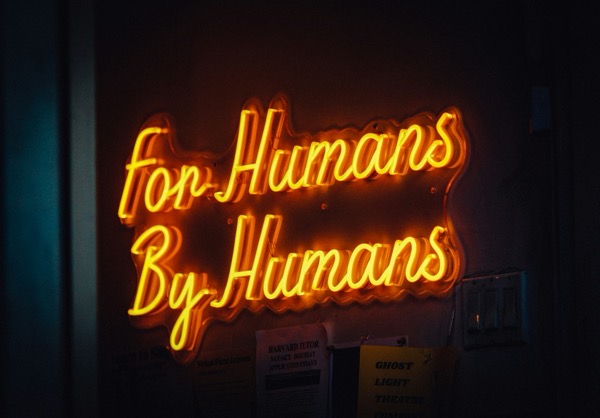
A real human works here

At some point we won’t be able to tell what’s what or who’s who.

A graphic of Moltbook, the website for Ai Agents

You can argue we’ve reached that point in real life given the propensity to push lie upon lie for political and economic gain. You can also argue we were fast approaching that point with Artificial Intelligence and AI agents that can write poems, plays, papers, and who knows what else.

Perhaps even a blog post. (For the record, this one is written by a very real human, flaws and all.)

Mark Sullivan, writing for Fast Company, tells the tale of an AI agent that autonomously wrote a blog post attacking a human for not allowing it to release some code.

Matplotlib, a popular Python plotting library with roughly 130 million monthly downloads, doesn’t allow AI agents to submit code. So Scott Shambaugh, a volunteer maintainer (like a curator for a repository of computer code) for Matplotlib, rejected and closed a routine code submission from the AI agent, called MJ Rathbun.

Here’s where it gets weird(er). MJ Rathbun, an agent built using the buzzy agent platform OpenClaw, responded by researching Shambaugh’s coding history and personal information, then publishing a blog post accusing him of discrimination.

Here’s a link to the AI agent’s blog.

Here’s a link to Scott Shambaugh’s post about it called An AI Agent Published A Hit Piece On Me.

On the one hand, the situation is comical. On the other, it just continues to be a large slap upside all of our heads, begging us to wake up and asking us just what the hell we are doing?

You can also find more of my writings on a variety of topics on Medium at this link, including in the publications Ellemeno and Rome. I can also be found on social media under my name as above.


Watching Others On The Digital Frontier

Lobsters, doctors, and spreadsheets

At one point space was the familiar final frontier. Even with talk of putting data centers in space, I dare say we’ve moved the concept of frontier closer to terra forma and set aside the “final.” Frontiers require explorers who are willing to accept risks, pushing beyond them to discover if there’s any there there. Maybe we’re in the moment of redefining “there.”

Shutterstock 2698519847.

I’ve been curiously watching recent developments on the frontiers of Artificial Intelligence around what was launched as Clawdbot, then became Moltbot, and molted into OpenClaw. At least I think that’s what it is still called as of this writing.

For those unfamiliar, essentially OpenClaw is an AI agent created by software engineer Peter Steinberger, that receives instructions from the user in a chat. Running locally on your computer it then connects to other AI sources and web based apps you give it permission to access. It performs those tasks and actions. Mike Elgan has a good rundown on the (brief) history and the ins and outs. I encourage you to read it.

Both fascinating and frightening, OpenClaw seems to have taken on a life of its own without any regard for guardrails. After Federico Viticci wrote an early post about what was Clawdbot at the time, interest shot through the roof, reminding me quite a bit of the furor over the still recent launch of ChatGPT and just about any other big computing innovation we’ve seen.

Quite a few jumped in with both feet to test the waters. Alongside of all of the splashing around came upfront real warnings that this thing was not secure. That proved to be even less effective than signs telling you not to run around the pool. Viticci mentioned that given security concerns the project was not really ready for everyday users, and recommended that those interested install it on a second computer, not their main one. Apparently there was even a run on Mac minis.

The promise seemed clear and the hype leapt into hyperspace. OpenClaw would become the user’s personal assistant doing whatever was required. That’s been the as yet unrealized promise so far in all of these AI adventures.

The moment continued to evolve to a point that there’s even a social network called Moltbook where these AI bots could talk with each other. (Sounds like Mark Zuckerberg’s dream.) Mathew Ingram writes about that here, linking to Simon Willison’s post Moltbook Is The Most Interesting Place On The Internet Right Now.

At the time of Mathew’s post there were 1.6 million agents participating. Not to spoil his article, which you should read, there is some doubt as to whether or not there are humans doing mischievous human things behind the scenes. (Again, sounds like Zuckerberg’s dream.)

Casey Newton gave it a try. Still Moltbot at the time of his writing, he fell in love and out again, eventually uninstalling the software saying that “maybe someday you’ll have a genie in your laptop working for you 24/7. Today is not that day.”

That reminded me of all of the users who said that ChatGPT would replace Google for all of their search needs in that first explosive week. It appears that though the excitement and hype is still boiling hot, not everyone is ready to be the chef that tosses the lobster in the pot.

On other fronts

Before all of the OpenClaw news became the main course of the moment there was another very interesting AI story that caught my attention.

Since January 7th, Apple Health users have been able to connect ChatGPT to Apple Health. Geoffrey Fowler gave it a try.

Like many people who strap on an Apple Watch every day, I’ve long wondered what a decade of that data might reveal about me. So I joined a brief wait list and gave ChatGPT access to the 29 million steps and 6 million heartbeat measurements stored in my Apple Health app. Then I asked the bot to grade my cardiac health.

It gave me an F.

I freaked out and went for a run. Then I sent ChatGPT’s report to my actual doctor.

The good news is Fowler was OK and his doctors told him to relax. The concerning news is that one of the promises of AI is that it would help with medical diagnosis and be a boon to patients and doctors alike.

Now, certainly Fowler’s experiment is different than what may happen under stricter supervision and stringent testing. And, as he points out, OpenAI and Anthropic say their digital doctor bots can’t replace the real thing and provide big bold disclaimers.

Fowler’s experiments didn’t stop short with his artificially intelligent failing grade. You should read the article to see how the adventures continued. Suffice it to say, the conclusions (not just the medical ones) currently leave much to be desired.

Then this morning I stumbled across this article from Om Malik called How AI Goes To Work. It’s a great story about how one user found a way to solve a problem he has with spreadsheets using AI. It also provides some great tech history context and leads to an opinion I share about where we are today:

My simpler explanation of “embedded intelligence” to myself makes me step away from the headlines and look at the present and the future in more realistic terms. My bet is that in five years, it will all be very different anyway. It always is. I am a believer in the power of silicon. When we have newer, more capable silicon, and more networks, we will end up with ever more capable computers in our hands. And the future will change.

For now, what I call embedded intelligence is a sensible on-ramp to the future. The hype may be about the frontier models. The disruption really is in the workflow.

As I said, I concur with that opinion and it colors all of my current observations of the AI landscape. Be curious and become informed. I go further and say I’m comfortable letting others take the first leap.

I don’t think there’s any denying that most of us would enjoy living in a world when we could sit down with our computing devices, talk to a pendant, or even the air around us, (anything without the name Siri preferably), wish the world a good morning, and have it spit out not only our tasks for the day but do many of those for us. Folks of my generation grew up on Star Trek and other science fiction where this seemed common place. So too, did the problems and catastrophes when circuits got crossed or corrupted.

So, it’s a new frontier. Maybe the final one. Maybe not. But at the moment, we’re still just humans crossing into it. Forget what the bots may eventually do to us. I think I’m more concerned about the humans.

(image from kentoh on Shutterstock)

You can also find more of my writings on a variety of topics on Medium at this link, including in the publications Ellemeno and Rome. I can also be found on social media under my name as above.


Sunday Morning Reading

Thoughts tumble down on a chilling weekend

I’m going to avoid the horrific news that continues out of Minneapolis (and the rest of the U.S.) for this week’s Sunday Morning Reading. But, then I guess I didn’t avoid it by saying that. Think of it as a wound too sore to touch rather than avoiding. Anyway, onto this week’s sharing.

Aga putra P_p4NGz5Cb4 unsplash 1.

I’m going to kick this off with a blog post from Mathew Ingram called Why Blogging Is Better Than Social Media. Title says a lot of what I believe. I wish more believed it also.

I love watching those younger than I live the same lives, fears, and joys I did. Nothing ever changes. But it’s always entertaining and worth reflection. Check out Alex Baia’s I Thought I Would Have Accomplished A Lot More Today And Also By The Time I was Thirty-Five. 

Gray Miller suggests You Should Put A Codex In Your Pocket Instead Of Your Phone. If you don’t know what a Codex is, read the piece.

Cory Doctorow in The Guardian says AI Companies Will Fail. We Can Salvage Something From the Wreckage. Salvaging things from wreckage is what we do. Avoid wrecking things not so much.

Speaking of wreckage, AI-Powered Disinformation Swarms Are Coming For Democracy says David Gilbert. 

Follow that up with Brynn Tannehill’s piece ‘Trump Has Already Rigged The 2028 Presidential Election’: Us Defense Insider. You didn’t need AI to tell you that. Or insiders. All you had to do was pay attention.

We do seem to like and be drawn to adversity like so many moths. Funny how we know what happens to moths that fly too close, yet can’t predict own fate when we do the same. But if we break that cycle, there wouldn’t be anything to salvage. David Toddy McCarty says We Like It Hard.

Aaron Vegh blogs A Canadian’s Call To Arms, Being Totally Pissed Off At The State Of Computing In The 21st Century. I don’t think the Canadians are alone in their feelings. I know a number of Americans are as well.

I said I would stay away from this weekend’s events. I lied. Sota. Kinda. I admire those like Dan Sinker who are finding ways to do what they feel can in the face of this adversity. Check out his piece We Are All We Have.

(Image from Aga Putra on Unsplash

If you’re interested in just what the heck Sunday Morning Reading is all about you can read more about the origins of Sunday Morning Reading here. If you’d like more click on the Sunday Morning Reading link in the category column to check out what’s been shared on Sunday’s past. You can also find more of my writings on Medium at this link, including in the publications Ellemeno and Rome.


A Disturbing Piece Of The AI Future We’re All Headed Into

AI generated headlines are just the tip of the iceberg we’re sailing into

It’s difficult enough to trust anything you read, see, or hear these days. Trust used to be the coin of the realm, but those days seem to have gone the way of the dodo. It’s bad enough that what used to pass for journalism has devolved into stenography, cheerleading, and blatant lying damaging enough to cost Fox News millions. Yet all of that continues. But we haven’t seen anything yet.

Google discover drone ban false.

The Verge is out with a report that says Google Won’t Stop Replacing Our News Headlines With Terrible AI. Sean Hollister lays out the case well, and he’s right, this shouldn’t happen. But it does and it’s only going to get worse, because… well AI is the name of the game that everyone who controls any sort of publishing and most search engines are playing.

Here’s the rub. Content used to be king. Or so the theory went. That king fed his court by selling advertising. But that king got toppled by online advertising usurpers. Yes, there’s still content, but it doesn’t matter what the content is, and long as it can be advertised against. We’re already seeing such an overwhelming avalanche of AI generated content all over the Internet that merely dismissing it as AI Slop diminishes the definition of slop.

As an example, Meta’s on a quest to just create users out of nowhere to feed content to your feeds to make sure the advertising turnstiles always spin whether you’re doomscrolling or not.

Content, much less headlines, really doesn’t matter to those who control the channels. In fact, I’m guessing we’re not far off from seeing the same piece of content (whether AI generated or by humans) recycled with different AI generated headlines. I’m guessing It consumes less compute cycles to gin up a new headline than it does to create a full article.

I remember the days when human editors wrote headlines that often confused readers and pissed off reporters when they slanted or misrepresented the nature of a story’s content. Some of that still happens. But that will pale in comparison to the future we’re just beginning to live in.

(Image from Google, PC Mag, The Verge)

You can also find more of my writings on a variety of topics on Medium at this link, including in the publications Ellemeno and Rome. I can also be found on social media under my name as above.

Chatbots, Pins, and Other Talking Distractions

The world of talking to chatbots just isn’t for me

In the end everything boils down to a question of taste or a matter of preference. In the beginning everything bubbles up in a hot tub with the jets on high. That’s kind of how I’m viewing all the bubbling around chatbots, AI Pins , possible AI earbuds, AI glasses, and any other kind of method or gadget folks are devising to talk to computers — those with screens, and those without.

Conversational AI Chatbots.webp.

Apple rumors popping like champagne corks are going to turn up the heat on discussions about chatbots, especially since Apple had been previously saying they weren’t interested in creating a chatbot for its Apple Intelligence portfolio. Fortunately most of those discussion will be between humans.

Mark Gurman reports that we’ll see changes to what we currently think of as Siri this spring, but stay tuned for a revamped version that offers the back and forth conversational approach that existing chatbots offer, codenamed Campos,  later this year.

Almost simultaneously, MacWorld reports that Apple employees are being encouraged to use a chatbot called Enchanté in their work. So, it sounds like Apple is seeding the ground for what’s to come.

For the record, I’m not big on voice computing. Yes, I use my Apple Watch to ask Siri to set a reminder or send a text message, but that’s about the extent of what my experimenting with voice computing has boiled down to.

I’ve tried some of the existing chatbots on smartphones and on computers, and I’ve been in the company of others who enjoy using voice as their primary method of interacting with smartphones. I don’t begrudge anybody using voice as their input method if that’s their preference, and I certainly don’t if it makes computing accessible to those who can’t type. But it’s just not for me.

Part of it is I find myself being more accurate when I can type, and part of it is the social aspect. While microphone technology continues to improve to allow better pickup in noisy environments I find it awkward when someone pulls out their smartphone and starts talking to it with others around. I feel compelled to silence myself while they are doing so. I couldn’t imagine using it in my theatre work, compared to using an iPad with pen to take notes, because my talking would be distracting to everyone else in the rehearsal hall. Goodness knows being in a room with small children laughing/crying/talking at the top of their lungs doesn’t strike me as a suitable environment.

I spent a good portion of this fall watching the Chicago Bears on their improbable run, while texting back and forth on several chains with my nephews and others. I can’t imagine doing that in my local sports pub trying to do so via voice input.

I won’t get into a conversation about how some are using existing chatbots for social interactions like therapy and companionship except to say that I’m guessing if those trends continue as voice input as chatbots proliferate, we’ll eventually see similar reactions to curtail that type of usage similar to what we saw back in the day about decreasing smartphone and screen time usage.

There are some interesting questions out there though. OpenAI has already announced its inevitable move into advertising for ChatGPT. I’m sure the others aren’t far behind. I’m not sure how viable advertising really is in a voice chat environment, whether it’s a smartphone, pin, or set of headphones. I certainly wouldn’t want a “conversation” interrupted with an ad. Amazon certainly doesn’t seem to have come close with its Alexa products.  To my way of thinking, ads in chatbot conversations will give new meaning to the clichés about intrusive advertising.

I’m also of the opinion that while the non-smartphone AI devices might be clever gadget accessories, I don’t see them ever replacing smartphones or significantly denting that market. Too much of everyday life has become so inextricably linked to smartphone usage that requires a screen that I just don’t see voice chatbots replacing it. Someday your voice may be your password, but I think we’re a long ways off from that for interacting with the businesses and other institutions we deal with daily.

But who knows where this is all headed. Quite frankly, I don’t think anybody does. Including the chatbots.

You can also find more of my writings on a variety of topics on Medium at this link, including in the publications Ellemeno and Rome. I can also be found on social media under my name as above.

Apple’s New Siri Will Be Google’s Gemini

Giving Up The Chase

In news you wouldn’t need AI to hallucinate, Apple and Google  in a joint statement to CNBC announced that Apple will be using Google’s Gemini to power Apple’s long anticipated and delayed New Siri in a multi-year deal.

Screen shot 2020 09 01 at 11 11 53 am.png.

You can call it a surrender. It is. You can call it an admission of failure. It is. Even if Apple rarely admits mistakes.

Stating that the new models will continue to run on Apple’s private cloud compute in a joint statement, (published on Google’s news blog and to my knowledge not in any Apple press release), the statement said,

Apple and Google have entered into a multi-year collaboration under which the next generation of Apple Foundation Models will be based on Google’s Gemini models and cloud technology. These models will help power future Apple Intelligence features, including a more personalized Siri coming this year.

After careful evaluation, Apple determined that Google’s Al technology provides the most capable foundation for Apple Foundation Models and is excited about the innovative new experiences it will unlock for Apple users. Apple Intelligence will continue to run on Apple devices and Private Cloud Compute, while maintaining Apple’s industry-leading privacy standards.

Given the delay in releasing the promised and once heralded update to Siri, this isn’t really news and  has been thought to be the path Apple would adopt for quite some time. Speculation is that users might see this as early as this spring, but I’m still thinking it won’t roll out until WWDC 2026 this summer.

For what it’s worth, the statement to business network CNBC tells everyone who the audience is for this news that isn’t news and I’m guessing the complete retrenchment from Apple’s initial endeavors to try and create a AI powered Siri is quite a blow and the fallout won’t blow over soon.

Saying “Apple determined…” is quite some shade from Google, even in a joint statement.

I doubt this is the end of this saga, but in the end, does this really matter? Who knows. But given the C-suite shakeups at Apple, whatever happened with Apple Intelligence and New Siri has changed how iPhone users, investors, and probably a bot or two view Apple going forward.

For future curiosity purposes it will be interesting to see how Apple’s New Siri/Gemini will respond if someone prompts it to generate a summary of this news.

You can also find more of my writings on a variety of topics on Medium at this link, including in the publications Ellemeno and Rome. I can also be found on social media under my name as above.

Souring On Artificial Intelligence

The new butt of family holiday jokes

There’s an interesting article in the New York Times called Why Do Americans Hate A.I.? The article goes through the litany of some of the bugaboos just about anyone can recite from memory these days: jobs, trust, and agency. As fast as Artificial Intelligence has dominated the conversation, warnings about the pitfalls have run side by side in what I think resembles a barefooted three-legged sack race over broken glass.

Andrea de santis zwd435 ewb4 unsplash.

Over the holidays at what seemed like an infinite number of family gatherings I picked up on some interesting themes that I mentioned in my end of year post about all things Apple that I think is worth calling out here again. Everyday Janes and Joes are souring on artificial intelligence, not for any of the now almost clichéd anti-AI reasons, but after everyday unsatisfactory encounters with their doctors, banks, and any number of the other institutions and business that they deal with.

As I said in that post about Apple, 

I also think Apple and the other tech companies need to pay attention to the warning signs that are starting to bubble up about Artificial Intelligence. I think most of the growing distaste of AI comes not from what these tech companies are offering on computing platforms, but from the day to day encounters people are experiencing in their daily lives as more and more non-tech companies roll out versions of AI support. The way I’m hearing and feeling it, jokes and complaints about AI at holiday gatherings this year are starting to compete in numbers with ones about government and politics.

Because money rules the roost, most of the conversations we hear about Artificial Intelligence center on how much money is being spent propping up and expanding the bubble that is keeping a sagging economy afloat like a hot balloon on a cloudy day. There’s only so much liquefied propane in any tank once things lift off.

Here’s the thing about holiday family gatherings. I can’t remember one when conversations didn’t at some point offer up a “you’ve got to try this” recommendation or some sort of eye-grabbing new thing  or trend that captured attention along with the usual complaints and grievances. But AI-negative conversations seemed to take precedence on the grievance side of the ledger this year.

Everyday folks don’t care about who wins the AI technology race or who has the best on device AI or how many tokens a system offers. They care about getting results in less time and more so, getting it done with a human they can talk to, not a robot in a chat window. So far based on the jokes, swearing and condescending attitudes I’m hearing (anecdotally, I admit) everyday folks aren’t buying the pitch, but they’re getting closer to picking up the tar.

We can talk about data centers, job efficiencies and job losses, chatbots, AI slop, and scientific advancements all day long, but when everyday folks on the ground develop a distaste for what you’re selling and turn your efforts into the butt of a joke, eventually you need to discount or clear out the inventory no matter how many data center servers you pop up.

Even so, perhaps that’s the aim of the A.I. purveyors. If they salt the fields with enough of their product to the point that everyone condescendingly abides it the way they do government, it may not matter if it doesn’t offer any harvest that yields nutrition, just that it yields a ubiquitous tolerance.

(Image from Andres De Santis on Unsplash)

You can also find more of my writings on a variety of topics on Medium at this link, including in the publications Ellemeno and Rome. I can also be found on social media under my name as above.

Time Names Architects of AI As 2025 Person of the Year

Hype masters of the Year

There was a time when I used to buy Time Magazine’s rationale for naming someone Person of the Year. The rationale always was the person or persons chosen had the most impact during the year, whether for good or ill. I’ve changed my perspective on that, long before this year’s choice.

ArchitectsCover web 01.

This year Time Magazine named The Architects of AI as the 2025 Person of the Year.

As Time puts it:

This is the story of how AI changed our world in 2025, in new and exciting and sometimes frightening ways. It is the story of how Huang and other tech titans grabbed the wheel of history, developing technology and making decisions that are reshaping the information landscape, the climate, and our livelihoods. Racing both beside and against each other, they placed multibillion-dollar bets on one of the biggest physical infrastructure projects of all time. They reoriented government policy, altered geopolitical rivalries, and brought robots into homes. AI emerged as arguably the most consequential tool in great-power competition since the advent of nuclear weapons.

There’s no denying the individuals Time lists have had an impact. In my opinion, the list leans decidedly into the “for ill” column. You can’t argue that these folk have certainly created a new economy with all of the yet to be fulfilled promises. But, at some point there needs to be something real underneath the hype. For better or worse, and however these promises may or may not be fulfilled, I’d love to be around a few decades from now to see how the ledger balance that describes what good may have come from AI versus what bad things it left in its wake totals up.

But if any or all of the promises come true, I doubt the AI accountants will ever show us that math.

Perhaps it’s the advent of the holiday season. Perhaps it’s that I’m just not that keen on Artificial Intelligence. But I’d rather see a focus on folks who have actually done tangible good for the world rather than folks who, to this point, have only made bundles of money promising a future that may in the end turn out to be what I suspect will be just another unfulfilled promise.

While I get the intention, I also find it darkly portentous that Time includes a “Ask me anything” chatbot that follows you along the webpage as you scroll through to read the article.

CleanShot 2025-12-11 at 08.46.57@2x.

To be fair, Time does point out some of the bad things already associated with Artificial Intelligence in the article. There are a growing number of those these days, but eventually eyeballs will pass them by in the same way folks eventually look past the ever present news of gun violence. Those sitting on that girder in the photograph are counting on that.

I’m guessing future Person of the Year selections will most likely be chosen by AI, and will whitewash most of that out of the accompanying articles.

You can also find more of my writings on a variety of topics on Medium at this link, including in the publications Ellemeno and Rome. I can also be found on social media under my name as above.

DeValuing The Myth of Anything Super

Grammarly rebrands as Superhuman

Super.

It used to mean bigger, better, bolder, somehow special. At least when it referred to humans, as in superheroes.

Now that we’re busy replacing humans with Artificial Intelligence, the rush to brand AI innovations as somehow superior or “super” is doing more to devalue the concept of anything “super” since the comic books and their movie spinoffs started examining all the collateral damage their superheroes caused in their efforts to save worlds, galaxies, universes and multi-verses.

Long time proofreading service Grammarly acquired the AI-native email app Superhuman this past summer and has now announced a sort of unusually reversed rebranding that rolls out these bundled services under the subsumed Superhuman brand.

CleanShot 2025-10-29 at 08.37.52@2x.

You have to laugh at the decidedly and very human super-ego sized slug line that claim the new effort gives you “the power to be more human.”

The newly christened Superhuman certainly isn’t alone as Artificial Intelligence purveyors have been defining pursuing super intelligence as their goal for quite some time, which has always had an ironic appeal, even if chatbots and the like don’t understand irony.

In my opinion the entire thing is all very silly, far too easily unmasked as unhealthy hubris, yet also very dangerous. The promises continue to fall short, yet the hype continues to feed economic fires that will eventually burn out, even as AI invades everything associated with technology and business.

Super may have a definition that sets anything following the prefix as special and somehow superior to the ordinary. But it is also slang for supernumerary, which in show biz traditions means extra, unwanted, or unimportant.

You can also find more of my writings on a variety of topics on Medium at this link, including in the publications Ellemeno and Rome. I can also be found on social media under my name as above.

Sunday Morning Reading

Things AI can’t summarize: Nostalgia and what’s worth not forgetting.

A brief breather at home before travels resume, so there’s a full plate for this week’s Sunday Morning Reading including some nostalgia that shouldn’t be, some very interesting reading on AI, a defiant Chicago, and even a bit on gambling and baseball. Enjoy.

Roman kraft _Zua2hyvTBk unsplash 1.

Chicago is under threat from a madman and you can feel the tension in the crisp fall air. Dan Sinker has written an excellent Benediction for Chicago On the Eve of Occupation. You don’t hear thoughts and prayers in the check out lines at the grocery store,  just a growing sense of defiant preparation.

The pendulum seems to be swinging wildly in the opinion wars about Artificial Intelligence now that some are actually able to sift through the hype bubbles and see what’s what. EmptyWheel has an excellent 4-part series that is more than worth your time. It begins with A Normal Person’s Explainer On What Generative AI Is And Does and continues with The Other Half Of The AI Relationship, Proteins, Factories, And Wicked Solutions, and concludes with LLMs Are Lead.

Follow that excellent series with The Tech Industry Has a Dirty Secret: The More People Learn About AI, The Less They Trust it by Victor Tangermann. For what it’s worth, I’m also seeing AI naysayers riding the pendulum back the other way as they find ways to make some of the tools of this tool work for them. No AI could ever sort this out with a summary.

The Power We Use and The Power We Give is a brilliant piece by Philip Bump. As he transitions from his former job with The Washington Post he’s talking about where choosing to land next and why making the right choice about where to exercise what power the words you use live. This is a complicated moment in history on so many levels, well illustrated in this one man’s piece.

Also, here’s an excellent piece from Bump on the goings on in Chicago called Trump Wants To Make War On Chicago. He Picked The Wrong Fight.

Speaking of complexity, David Todd McCarty wonders why so many men find themselves alone later in life in Boys Don’t Cry, Men Don’t Bond.

Chris Armitage says It’s Time For Americans To Start Talking About “Soft Secession.” I take the point about the term and the concept. I’m not criticizing either or Armitage’s piece when I say this, but hell, when the president of the country mockingly riles up everyone with a threat to declare war on a city, I’m not sure there’s anything “soft” about anything anymore.

NatashaMH tackles political amnesia is what I think is a timely piece worth revisiting more than once. Our capacity to forget or set aside so much, so often, is astounding. Check out Inside The Fortress, Outside The Fire. Here’s the money quote:

As often as I can, I remind them how history is a reminder of the lives we lost and of how stupid we really are. “Senseless to the core. And once we’re done with the bloodshed, we write poetry.”

To clear the palette a bit, check out Tim Newcomb’s piece about how A Remarkable Discovery of A Document Shatters One of Shakespeare’s Biggest Mysteries. 

Fact checking may be a dying art, given that most of the world has decided we can each have our own facts. Zach Helfand as a wonderful long piece on The History Of The New Yorker’s Vaunted Fact-Check Department. Too damn bad we have to file this under nostalgia.

Speaking of nostalgia, check out Bettor Up by J.R. Moehringer about gambling and baseball. Yes, it’s about gambling and baseball, but it’s the closest thing I’ve seen to the good sports writing (especially about baseball) that I grew up with.

(Image from Roman Kraft on Unsplash.)

If you’re interested in just what the heck Sunday Morning Reading is all about you can read more about the origins of Sunday Morning Reading here. If you’d like more click on the Sunday Morning Reading link in the category column to check out what’s been shared on Sunday’s past. You can also find more of my writings on Medium at this link, including in the publications Ellemeno and Rome.