The Little Prince Meets Artificial Intelligence

A melange of technology and fantasy

Every year, sometimes twice a year,  I return to one of my favorite theatre gigs, directing a staged reading for The International Voices Project. IVP is a Chicago company that produces staged readings of plays translated from other countries and cultures. Throughout the years the plays I’ve directed have taken me on journeys with writers from Syria, Lebanon, Ireland, Germany, Norway, Ukraine, El Salvador, and now Romania.

The reason I return each year is one of the reasons I have pursued and enjoyed my life making theatre. I get to touch and explore worlds, cultures, and ideas I would never have had the chance to experience otherwise. It’s always an adventure into something new.

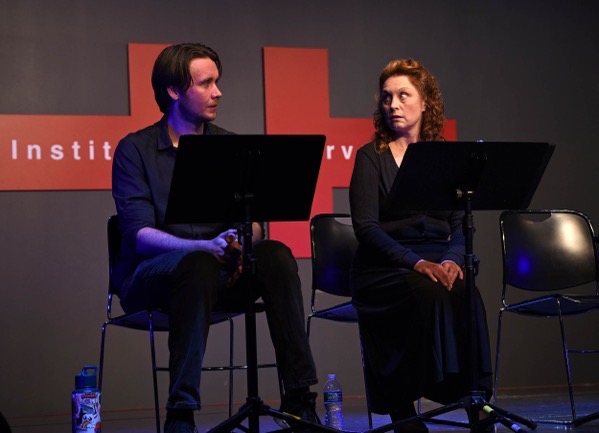
My most recent gig with IVP certainly scratched all of those itches. The play is called Veronica’s Little Prince by Romanian playwright Dr. Catalina Florina Florescu. Yes, Antonie de Saint-Exupéry’s character of The Little Prince plays an important role.

The piece centers on Veronica, a former principal ballerina who has literally had her legs taken out from under her in a mysterious accident, leaving her in an institution, unable to move without the aid of a wheelchair and unable to speak. Unhappy with her fate Veronica is suspected of wanting to kill herself. Even before the mysterious accident she’s lived a life of self-destructive behavior.

The Little Prince arrives to help her examine and uncover the truth within her actions.

There’s another twist. I mentioned that Veronica can’t speak. In a technological twist she communicates via an AI robot by typing on her body. Via an implant those signals transmit to the robot who speaks her words and thoughts.

The play weaves in and out of Veronica’s mind and thoughts, her past and present, reality and fantasy, technology and humanity in very theatrical ways.

Creating an even more mysterious melange of tech and fantasy, the most frightening line to me is when Veronica’s Little Prince answers Veronica’s question about who told her to come by saying:

You see, they have programmed me to pop up whenever I hear certain words.

That may delight AI enthusiasts and those who keep suggesting we’re living in some sort of simulation, but given the rush to push us all deeper into a world run by Artificial Intelligence, it more than tweaks a nerve for those, like me, who may see benefits to AI in some forms, but think the pitfalls are more dangerous. Frankly, I prefer the characters in fantasy to spring from the minds of humans, not lines of code.

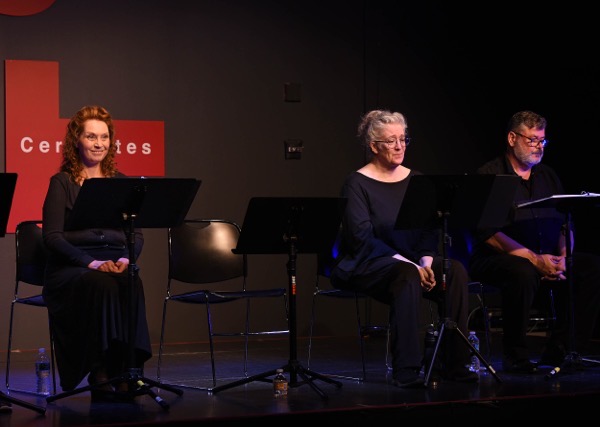
Given the sound and visual representations that give the script its many layers it was quite a challenge to present in a staged reading format without the benefit of theatre technology. But we managed to pull it off, letting the words weave their magic.

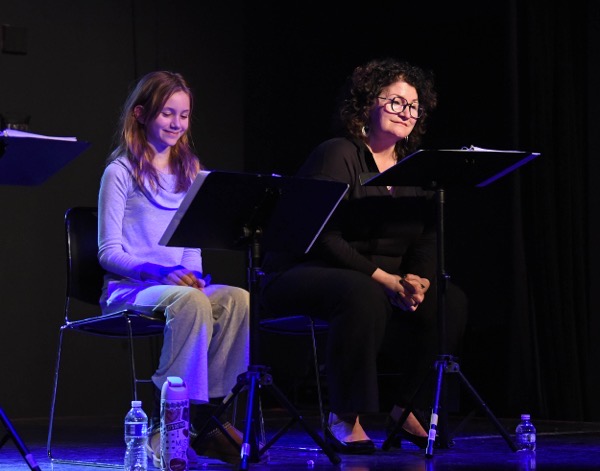
My thanks and kudos to the cast for doing such great work and especially to young Olive Popio who played our Little Prince.

(Photo by Scott Dray for The International Voices Project)

You can also find more of my writings on a variety of topics on Medium at this link, including in the publications Ellemeno and Rome. I can also be found on social media under my name as above.
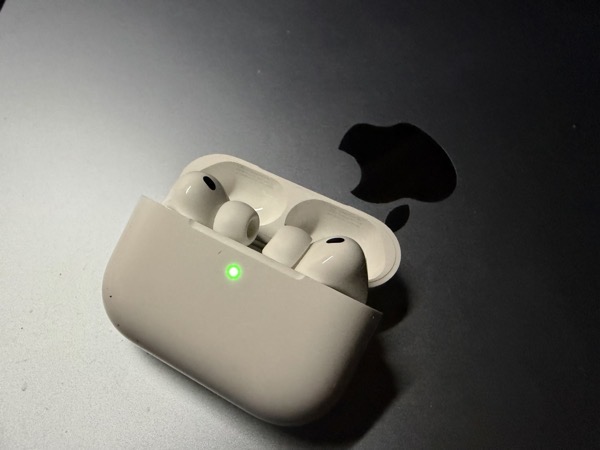
AirPods Pro 3 Review: Hits and Misses

Not quite the right fit, but still a hit in my ears

In showbiz you know you can never please everybody no matter how hard you try. The same is actually true when it comes to any product, including tech. Especially hardware.  Especially hardware you stick in your ears. Add that layer and the odds of pleasing everyone decrease substantially, even if you do create a hit.

Apple’s AirPods have generally been perceived as a hit product since their debut even though the first version was made fun of for its initial appearance. Each iteration gained more fans along the way with the AirPods Pro 2 being more than generally regarded as quite a hit.

The AirPods Pro 3 got early overwhelming raves but as more folks have tried them in more ears some of those first blush raves have been joined with more tempered opinions. Apple made a big deal about improvements in both the sound AirPods Pro 3 deliver and also how much testing they did to find the best fit for the most people. In my experience Apple scored a hit when it comes to sound and noise cancelation, but a more of a miss when it comes to fit.

First the hits

I’m a long time AirPods user and have long considered the AirPods one of Apple’s best products. They are not perfect, but they are good products I rely on. That said, I’ve never quite bought in to what I consider the myth about how good Apple’s active noise cancellation is with previous models. It has improved along the way. But to my ears it was never quite as good for me as it was promised and as it was ballyhooed by so many. It was fine and certainly better than not having it when mowing the yard, flying on a plane, or washing the dishes, but not quite as promising as Apple and others described.

That said, in my ears the active noise cancellation for the AirPods Pro 3 takes a substantive leap. The first time I noticed the improvement was in my kitchen. I had been listening to a podcast while washing the dishes. My wife came in to ask me a question. I paused the podcast, answered the question but I didn’t turn the podcast back on as I was finishing up.

I left the AirPods in as I was doing the usual clean up of kitchen counters and my wife came in again to help. We chatted a bit and then I went in the other room. This entire time we had been running our window air conditioner as temperatures had been running warmer than usual for this time of year. As I passed back and forth through the kitchen my wife and I chatted. On one of those trips I noticed that I didn’t hear the sound of the window air conditioner and I asked her if she had turned it off. With her verbal reply that she hadn’t, the sound of the AC returned. Again I was not playing any audio at the moment.

When she finished talking the noise of the air conditioner just stopped. I told her what I was hearing and it returned with my voice. It was literally as if we were using an on/off switch.

This morning as I was mowing the lawn for what I hope is the last time this season, I did some A/B testing between the AirPods Pro 2 and Pro 3 models. There was a decided difference with the lawn mower with the AirPods Pro 3 being much better at muffling the sound of the mower. It didn’t kill it completely, but it did muffle it more.

So in terms of improving noise cancellation I would say Apple certainly set a new mark.

I’m not an audiophile by any stretch of the imagination and I use my AirPods to primarily listen to podcast and audio books much more than I do music and other entertainment. In that A/B testing during my lawn mowing chores and afterwards I’ll say I didn’t notice that much of, if any difference in the audio quality of the podcasts I was listening to, but adding in the better noise cancellation I’d say I heard better over the more muffled mower.

Continuing to listen after my yard work in quieter indoor environs, I was quite pleased with the quality of the sound, but no more so than with the AirPods Pro 2. So, in my listening I’d call it a wash as far as audio quality is concerned.

The Misses

In the two experiences above I was using the AirPods with noise cancellation turned on. Apple’s AirPods feature three different listening modes, Noise Cancellation, Adaptive, and Transparency. Noise Cancellation seeks to cancel outside noise, Transparency lets outside noise in but still focuses the audio you’re listening to, Adaptive is somewhere in between, supposedly adapting to external noise to raise the signal you’re listening in balancing against outside noise as it may come and go.

When I’m walking and listening I’ll use the Adaptive mode to have awareness of what’s around me. I walk on city streets and in city parks and I’ve never felt satisfied with the myth of the Adaptive listening mode. I still don’t with the AirPods 3. When introduced Apple trumpeted “a new listening mode that dynamically blends Transparency mode and Active Noise Cancellation together based on the conditions of a user’s environment to deliver the best experience in the moment.”

In theory, the Adaptive mode should help decrease louder external sounds (leaf blowers, lawn blowers, city buses, etc…) but that’s never really worked well for me in practice. My experience with AirPods Pro 2 was there might or might not be an adjustment. It was always inconsistent, and if there was an adjustment it was quite slow in reacting to external sound, often doing so after a loud vehicle and its noise had passed.

I haven’t really given this much time with the AirPods Pro 3 but in the brief time I have, I’ll say that when there is an adjustment the response seems a bit quicker. But again, it’s inconsistent when that happens. Overall I’d rate this as about the same as the AirPods Pro 2  in that it is not really a feature that works for me.

The biggest miss for me with the AirPods Pro 3 is the fit. But there’s somewhat of a caveat that goes along with that statement. I can’t say I’ve ever been satisfied with the fit of any of the AirPods that I’ve owned. The AirPods Pro 2 came the closest. But even then I’d occasionally have difficulty keeping them in my ears or wearing them too long.

This year Apple worked hard on creating a physical design for this new generation to try and find the best fit for the most ears. The ear tips are foam-infused to create a better seal in the ear, which along with the computational audio contributes to the better noise cancellation I spoke of earlier. That said, these ear-tips constantly remind me of their presence more than the others did and after a while feel uncomfortable.

Apple also included more sizes of ear tips, again aiming for a better fit for more ears. If you run the Acoustic Seal test it can theoretically guide you to the best fit. Here’s an interesting personal tidbit. I have achieved a good seal with both the Medium sized ear tips and the Extra Small sizes, but not the Small. I’m not sure what that means.

I credit Apple with continuing to try and find ways to accommodate customers, but I think Apple’s challenge speaks more to the size and variable anatomy of its potential market than it does to any failure. Certainly ears come in all shapes and sizes. Apple claims it scanned 10,000 ears. I’m betting if it scanned another 10,000 there would still be fit issues for some customers. After all, we’re told since childhood not to stick anything smaller than our elbow in our ears.

Other Features

Apple continues to add and improve Health related features to the AirPods Pro lineup this year adding  a custom-built heart rate sensor. Apple has also added Live Translation as a feature that’s currently in beta. For the former I haven’t used the AirPods Pro 3 long enough to test the feature, and I haven’t even attempted the latter.

Summary

All in all, even with some misses, the new AirPods Pro 3 leave me in the same place previous editions have. It’s a very good Apple product that’s not perfect by any means, but it is good enough for me to want to keep using it even if it’s not a perfect fit. As I’ve previously gotten just under two years of good life out of earlier models before I notice battery life degrading, I imagine I’ll be using these for the next two.

You can also find more of my writings on a variety of topics on Medium at this link, including in the publications Ellemeno and Rome. I can also be found on social media under my name as above.

Nothing Lasts Forever

Another chapter of Chicago theatre history comes to a close

You know how you know that nothing lasts forever? When you go online to search for images of a place you worked, shed more than a few beads of sweat, blood, and tears in, and you can’t find images of it.

That’s the case here. I’m referring to Theatre Building, at 1225 W Belmont, Chicago. Yes, there is no “the” in front of it. Like Apple insists that there is no “the” before iPhone. In the case of the performance space that was intentional. Pretentious maybe, but purposeful nonetheless.
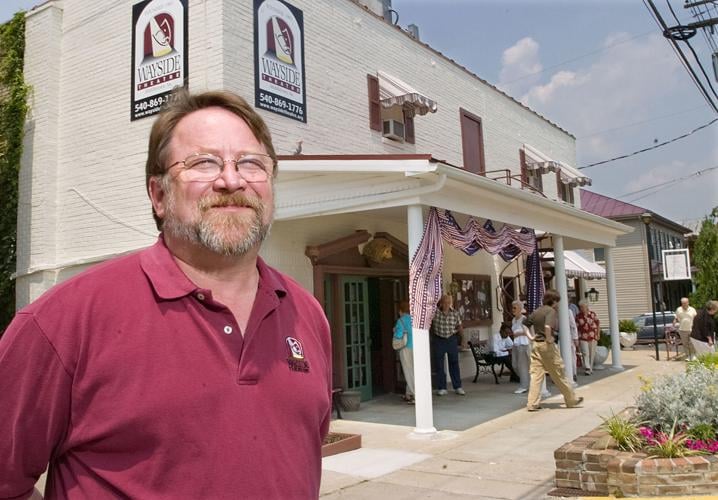
Theatre Building was founded as such in 1977 by three theatre companies: Travel Light Theatre, Pary Productions and the Dinglefest Theatre Company. The latter of those became Performance Community, and then the New Tuners Theatre, and after Travel Light and Pary Productions hit their respective closings, ended up managing the three theatre complex.

At one point or another just about every Chicago theatre company, and some from outside the city, rented performance space there. It was one of the centers of gravity in the Chicago theatre landscape. I can’t tell you the number of amazing performances by Chicago actors that I’ve seen on those stages. Shows hit. Shows flopped. Shows happened. And that was the point and purpose of Theatre Building.

Theatre Building was sold to Stage 773 in 2010 and still continued providing a home for Chicago theatres, until it changed it’s focus and became WHIM, which was supposed to be a sort of interactive attraction before it folded.

Here we are in 2025 and The Chicago City Council has granted approval for the property to be converted to a five-story apartment complex. As I said. nothing lasts forever.

My theatre company, The Absolute Theatre Company rented space there for a number of years, and I later served on the staff of New Tuners Theatre and helped manage the facility. I helped renovate the three theatre spaces in the late 90’s. So there are quite a few personal memories attached to those stages. They seems like another lifetime ago.

Change happens. The sad thing about this one is that there are three less performance spaces in Chicago, but that’s been the case since Stage 773 ran into financial difficulties and had to shut down after becoming WHIM.

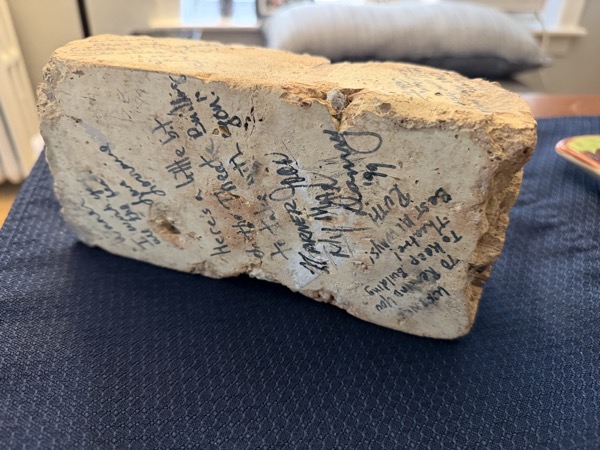
I may not have been able to find a picture this morning of Theatre Building, but I do have this brick from the building that was given to me after my last show, before I headed out to Virginia for that part of my theatre career.

Guess I’ll hang on to that piece of Chicago theatre history.

You can also find more of my writings on a variety of topics on Medium at this link, including in the publications Ellemeno and Rome. I can also be found on social media under my name as above.

David Mamet’s Woke Pain Behind His Masks

“Always tell the truth. It’s the easiest thing to remember.” -David Mamet

I first arrived in Chicago in 1999 aiming for a theatre career. I arrived just as David Mamet, one of the bright lights in the theatre firmament at the time, was spreading his wings and moving on from the city that birthed the characters in his plays. Here’s the thing, I was never that big a fan of his work.

David Mamet 080425 1 3c82613a6ff24dc685b547d0b8bf0872.

I saw the genius in it, but in the viewing it was always as predictable as it was entertaining. In later years after Mamet had found success in film I actually came to believe that his work for the big screen was actually better than it ever was on a stage. As an example, I enjoy the film version of Glengarry Glenn Ross more than I ever have on stage and I attended the Amrerican premiere of that play at The Gooodman Theatre back in 1984. The Spainish Prisoner and State and Main are delights that I always enjoy revisting.

To be fair, I’m in a minority among my professional peers. There’s no denying Mamet’s influence in the theatre and film. Personally, I was more a fan of Sam Shepard’s work. The two ran neck and neck in popularity in my early days in the theatre. But that’s not what this is about.

Somewhere along the way, Mamet became even more of an enigma when he opened up about his political views, which in some ways spun in counter orbit to the milieu of much of what his plays seemed to profess. His plays had a power dynamic that while not completely in sync with the “eat the rich” vein, both celebrated and condemned the powerful, alongside empathy with the downtrodden or less capable.

He was always a gadfly who reveled in that reputation. But there’s reveling, and then there’s reveling. At times it seemed as if he aspired to assume a Bertolt Brecht-like influence. I’m referrring more about his views on theatre, than his political views. Check out his book True and False, or the videos and articles you can find all over the Internet.

No matter what you thought of his work on the stage or in the cinema, once he began commenting about politcal and social issues he became, I dare say,  more entertaining than any piece of dramatic literature he created.

In a recent podcast with Sam Fragoso, Mamet revealed that part of the reason for his seemingly 180 degree turn in professing his political beliefs was because those in the media and literary circles that had always promoted him turned away from his work. No criticism stings more than being ignored. I’m not sure what’s the chicken or what’s the egg in that discussion, but it was a statement that did leave quite a bit of egg on his face. He later got fed up with Fragaoso and walked off the podcast.

Continuing to stay in the entertainment news this week, Mamet authored an op-ed in the Wall Street Journal called Sorry, Billionaires — There’s No Escape, essentially saying we’e all doomed regardless of how we’re measured on the wealth scale in life. Biilionaires who think they’ve built doomsday hide-aways will be undone by the laborers they hire to keep the places running. Of course those less privileged don’t even matter in the equation. It’s a reguritation of the history of the world that Brecht and Sondheim did better.

The thing of it is, for many Mamet was always as entertaining as he was enigmatic . I find him more so in these later chapters of his story, even with its odd and often confusing mix of woke hurt feelings bouncing up against his conservative bent.

But then, as Mamet, contradicting his maxim about truth says, “it’s not a lie. It’s a gift for fiction.”

You can also find more of my writings on a variety of topics on Medium at this link, including in the publications Ellemeno and Rome. I can also be found on social media under my name as above. 

Bullies Can Be Made To Turn Tail

Stand up or shut up

So much of what we’re living through in this age of destruction in America was unavoidable before it started, but and yet we avoided doing what was necessary. Damage is happening and will continue. The children’s rhyme of Humpty Dumpty comes to mind and that doesn’t have a pleasant ending. 

 Even if you can’t put all of the pieces back together in the same way they were before, the attempt is worth it. It’s not easy and it’s not without risk. The question of the moment is all about how American businesses will respond to the Trump tariffs. The general consensus is those costs will be passed along to consumers, in effect creating a tax. 

I happen to agree with that consensus. Our problem is that too many American businesses are afraid to confront the bully, and also afraid to cut into their profit margins. The only way to conquer that last fear is to confront the first one. 

While not the same by any stretch of the imagination, here’s a story from my past that’s somewhat analogous, at least on the bully fighting part. 

I used to run the Wayside Theatre in Middletown, Virginia. At the time it was indeed a one stoplight town. The theatre served the local surrounding counties (it sat geographically at the intersection of three counties) and parts of two adjoining states (West Virginia and Maryland). It also served the Washington DC suburbs with easy access down Interstate 66. In the immediate town the theatre helped bring customers to several restaurants and antique stores along its one Main Street. Saturday and Sunday matinees were always a delight to see folks strolling down the sidewalks between the various businesses before and after a show. 

After years of the same very local political leadership, a newcomer to the town succeeded in ousting the mayor. One of his first initiatives was to approach me and say that he was going to enact a $1.00 per ticket surcharge on the theatre to increase the town’s revenue. 

We argued back and forth about this for few months because obviously I didn’t want to see this happen. When I suggested to him that we’d print out each ticket with his name on it saying “This $1.00 Surcharge Brought To You By Mayor Brown,” he didn’t take me seriously at first, but when I showed him a mock-up of the ticket, he saw the light. 

He and I had several other contretemps over the years but ended up being friends in the end, primarily, I believe, because I did stand up to him in that first instance. I’ve won and lost battles to bullies in a similar fashion throughout my life and career. 

Again, it’s not a perfect analogy of what we’re facing as a country, as a society, and as a planet. Even so, to my way of thinking, when you’re confronted with a challenge from someone who wants to toss around their power — real or make believe — you need to stand and deliver or sit down and shut up, taking what you deserve. You might indeed lose, but otherwise you’re just a coward for not trying. 

You can find more of my writings on a variety of topics on Medium at this link, including in the publications Ellemeno and Rome. I can also be found on social media under my name as above. 

Sunday Morning Reading

Sunday Morning Reading is on the road but there’s still plenty to share.

We’re on the road this weekend to get the Christmas holidays started with the grandkids, but there’s still time to share a little Sunday Morning Reading. Enjoy.

First up is a piece by Margaret Dean called An Afternoon In My Strawberry Fields. You’ll enjoy wandering there.

I don’t think the sun sets anywhere on the planet that there isn’t a current political crisis. Artists and storytellers keep doing their thing regardless. This story from Tom Phillips and Etienne Cóte-Paluck tells of a Haitian theatre troupe still carrying on in the face of that island’s chaos. Check out ‘An Act of Rebellion: Haitian Theatre Persists Amid Political Crisis and Violence.

No crime story has quite captured public attention and exposed how insufficient American media is at reporting out what’s behind the headlines as the murder of United HealthCare’s CEO Brian Thompson. The act is shocking, the reaction to it is shocking as well, yet not surprising. Some of the best reporting I’ve seen so far comes from the BBC from Mike Wendling and Madeline Halpert in Killing of Insurance CEO Reveals Simmering Anger At US Health System.

If you’re wondering about that “simmering” and why I don’t think we should be surprised by what this event reveals, check out this guest essay in the New York Times from Dr. Helen Ouyang entitled What Doctors Like Myself Know About Americans’ Health Care Anger.

Casey Newton delivers one of the best pieces I’ve seen on Artificial Intelligence with The Phony Comfrots of AI Skepticism. You might want to hang on to this one for future reference.

Mark Jacob wonders Can Journalism Survive Billionaires? My short answer is not with this current crop.

If you think repealing women’s right to vote in America isn’t on the agenda of some in the world of MAGA misogyny check out Emma Cieslik’s piece Christian Nationalism’s First Item On The Agenda: Repeal The Women’s Right To Vote. 

Brian Krebs is a name most on the Internet have run across as a top-notch security researcher and reporter. Robert McMillian and Vipal Monga have gone behind the curtain to reveal some of the lengths Krebs has to go through to keep himself secure. And not just on the Internet. Check out He Investigates The Internet’s Most Vicious Hackers-From A Secret Location.

If you’re interested in just what the heck Sunday Morning Reading is all about you can read more about the origins of Sunday Morning Reading here.  You can also find more of my writings on Medium at this link, including in the publications Ellemeno and Rome. You can also find me on social networks under my own name.

A Dream Cast Delivers a Dreamy Dream of Autumn by Jon Fosse

Exceptional performances highlight a magical evening with a magical play.

Fantastic! That’s the first, but not the last compliment I’ll issue to the remarkable cast of our staged reading of Jon Fosse’s play Dream of Autumn last night. Matt Keely, Thomasin Savaiano, Gabrielle Brite, Amy Stricker, and Kevin Grubb were each, and as an ensemble, gloriously fantastic. They deserve all the praise that came flying their way after the reading. Producers should hire them.

Dream of Autumn was presented as a part of this year’s International Voices Project festival. Each piece is given a one-night only reading after a limited rehearsal period (more on that later).

For those unfamiliar, the actors read from their scripts, but are expected to bring full life to the text. This group sure did. Dream is a tricky play, dwelling in the realm of magical realism, with time shifts, and in this story character shifts, that can turn on the edge of dime. In a full production there would be production elements to help the audience follow those shifts. In this very barebones reading style, with the actors sitting in chairs and reading from their scripts from behind music stands, those shifts were handled via the reading of stage directions and the acting choices made by each member of the cast. According to the audience during our post-performance talk back, every one followed each twist and turn.

We only had about six hours of rehearsal to prepare, and the cast took the direction that was given and ran with it, culminating in a very “in the moment” experience for themselves as well as the audience. This was the first time this cast had read the play start to finish, together, without stopping. It was also the first time I had heard it. You could feel the entire room caught in the moments of the play and the moments of performance, breathing as one.

Having directed a number of these staged readings I’ve seen similar quite a few times, but rarely as well and as thrilling as last night’s effort. I often maintain that one of the true tests of an actor’s mettle is watching them carry the day with little preparation, trusting their skill and instincts. This team certainly carried this play last night further than most.

My hat’s off to each of them. Job exceptionally well done.

All photos by Scott Dray.

You can find more of my writings on a variety of topics on Medium at this link, including in the publications Ellemeno and Rome. I can also be found on social media under my name as above. Check out the categories for this blog to read more about my theatre work. 

Problematic 3 Body Problem

I both enjoyed and was ultimately left frustrated by 3 Body Problem, the Netflix adaptation of Liu Cixin’s sci-fi novel The Three-Body Problem. Thanks to fellow Mastodonian @RickiTarr I was finally able to put my finger on the source of my frustration.

I both enjoyed and was ultimately left frustrated by 3 Body Problem, the Netflix adaptation of Liu Cixin’s sci-fi novel The Three-Body Problem. Thanks to fellow Mastodonian Ricki Tarr I was finally able to put my finger on the source of my frustration.

Set aside the twists and turns through physics, politics, battles with cancer, romance, and everything else this story throws at you. The fundamental fight focuses on  humans who understand that an alien race is coming in 400 years to wipe out our civilization.  The aliens are doing so to save their own.

Given that we’re a species that can’t deal with more immediate threats currently facing us in far closer futures it’s hard to imagine trying to marshall the solidarity and resources to try and stave off a threat 400 years in the future. And that’s not even the problem in the title.

There’s not too much discussion of that in the show. Which is probably a good thing for how the storytellers want to unfold their story. But it puts us at a remove that left me and my wife joking throughout the series that Netflix has 400 years to unravel this tale.

Once the alien threat is revealed to all there are the usual sci-fi tropes about how those under threat deal with all such threats, but things quickly focus back on the main characters and their attempts to try and change what’s coming. As far as this adaptation is concerned everyone panics, reacts and then essentially shrugs and leaves it to a group of smart guys and gals to figure out.

I kept waiting for the 3 Body Problem metaphor to manifest in main character chaotic orbits as their arcs developed, but their orbital paths were all too damn predictable to cause the sort of friction that might have ignited the story, much less take hold with any metaphorical meaning.

As I said in the beginning I took some enjoyment from the experience. Some of the individual threads were captivating in and of themselves, but ultimately not enough to recommend the whole.

You can find more of my writings on a variety of topics on Medium at this link, including in the publications Ellemeno and Rome.

The Lehman Trilogy Diaries: Standing O!

We’re open. The Lehman Trilogy opened last night to a well deserved standing ovation from the first night crowd. Well deserved, if I may say so.  It was a great night for all associated with the production, a great night of theatre for all attending, and a great moment of recognition for some pretty damn good storytellers.

This story begins with the script, but in the moment in the theatre it’s all about the actors. These three, John Maness, Michael Gravois and Kevar Maffit, did a remarkable job and captivated the audience from the first moments in this challenging tale that unfolds over three acts. Actually, the word remarkable sells their efforts short. Individually they are each terrific. Together they are beyond whatever dynamic means. They made strings of numbers and lists of names sing and moments of truth cut like a knife. I’m so grateful for their efforts and my association with them.

As we kept meeting challenges in this final grueling week there were moments when you could feel just how badly the three of them just wanted this show. Tireless and relentless, they wouldn’t let a moment pass when they weren’t working like madmen. I was right there with them. Some shows are just another show. Some are just jobs. This one was and is one of the special ones. Because of the plays length and its heft it’s not going to be put on many theatre schedules. We consider ourselves lucky to say we’ve done The Lehman Trilogy. We’ll have that forever. And boy do we have stories to tell and laughs to share that only a few people will ever understand.

Kudos to all who worked on the show. To those who will see it in the weeks ahead, you’re in for a rare treat. I hope you enjoy the story and much as we enjoyed telling it. Because we enjoyed the hell out of it.

You can find more of my writings on a variety of topics on Medium at this link, including in the publications Ellemeno and Rome and check out The Lehman Trilogy Diaries here. 

The Lehman Trilogy Diaries: A Show Finds Its Home

We spent the weekend taking the stage for the first time in rehearsals for The Lehman Trilogy here at Playhouse on the Square. What a joyful and glorious weekend of rehearsals it was.

Pictured above is me (on the right) with this astounding cast, Michael Gravois, Kevar Maffit, and John Maness. We’re all smiling because we’re really enjoying this process. These three are putting their all into this beast of a play. Their roles require as much work as if they were each doing Hamlet.. They are rising to the challenge and then some.

Let me tell you it’s not often that you feel this joyful at this point (transferring from the rehearsal room to the stage), but the work is so good, so rich, so fun, and most importantly so collaborative that there’s no other way to express it. The other day I wrote about my fears of missing the intimacy of the rehearsal room before we moved. Well that intimacy transferred right along with our props and all those bankers boxes. That’s rare. The four of us, plus our stage manager, Emma White, continue to experience the work and the story almost like we don’t want each day to end. That’s a bit silly of me to say because we push each other so hard that by the time we call it a day we’re exhausted.

The best part of our transfer from the rehearsal room to the stage is that a good 85% of our work translated intact. Often in that kind of space shift you lose quite a bit. That 85% has allowed us to continue advancing the story instead of spending time adjusting what we wanted to do to new realities.

Don’t get we wrong. We’ve still got a long way to go as we begin adding the technical artistry. Those technical elements are behind so we’re working to keep the cast focused on their part of the story telling and getting a little ahead before the inevitable begins.

Today is our final day off before opening so we’ll get a brief breather. Then onward.

You can find more of my writings on a variety of topics on Medium at this link, including in the publications Ellemeno and Rome and check out The Lehman Trilogy Diaries here.