Sunday Morning Reading

“The life of a man is of no greater importance to the universe than that of an oyster.” -David Hume

On the weekend when some parts of the world think they can alter time by simply changing the clocks, I’m reminded of the biggest lesson most learn in life: we’re each not the center of the universe. Most learn it. Some never do, or if they do, they continue to operate under that delusion. We pretty good at setting up systems and structures that reinforce and rely on that delusional thinking. Somehow that seems to be the theme running through the articles and writing I collected this week for this edition of Sunday Morning Reading. 

Bronze statue of a child sitting on an outdoor stone bench with legs crossed, reading an open book that rests on their lap, a small bird perched on the top edge of the book, and a stack of books beside them, with a paved walkway, grass lawn, and buildings in the background.Kicking things off is the story of how Humanity Altered an Asteroid’s Orbit Around The Sun by Becky Ferreira. The article links to the ScienceAdvances abstract on the nudge that might be as good as a wink.

Last week the war in the Middle East had just kicked off as I was publishing this column. This week it continues. And, yes, it’s a war, regardless of the stupid debate. Jonathan Taplin looks at The Terrifying New Era of American Imperialism, and Jay Caspian Kang examines The No-Explanation War.

“Society grows great when old men plant trees who shade they’ll never sit under” and the opposite of that wisdom is how Scott Galloway kicks off his piece on Role Models.

Ali Breland takes a looks at those yearning for a return to McCarthyism in ‘We Need To Do McCarthyism to the Tenth Power.’ Turning back time only works as a song lyric.

JA Westenberg offers up a A Soft-Landing Manual For The Return To The Second Gilded Age. It’s tough to avoid the usual hard crashes.

The Dodgy Code examines The Great AI Arbitrage: Making A Killing Before Your Client Wises Up. The inevitable turnaround on this is going to be something to see.

Before we get to that turnaround, Mathew Ingram says The Danger Posed By AI Just Got A Lot More Real All Of A Sudden. Going to be interesting to watch AI bots fighting each other to be the center of the universe. If we’re around to see it.

David Todd McCarty is Searching For Originality In A Sea of Slop. Even on dry land that’s tough.

I’ve been revisiting a lot of Shakespeare of late, so this piece by Alice Cunningham caught my eye. Check out Author To Revive Shakespeare Club After 300 Years. We could all do with revisiting the his works.

And to conclude this week, James Verini brings us the wild tale of The Man Who Broke Into Jail.

(Photo taken by the author.)

If you’re interested in just what the heck Sunday Morning Reading is all about you can read more about the origins of Sunday Morning Reading here. If you’d like more click on the Sunday Morning Reading link in the category column to check out what’s been shared on Sunday’s past. You can also find more of my writings on Medium at this link, including in the publications Ellemeno and Rome.


Hollow Crowns, Hollow Honor, Hollow Men

There’s nothing new under the sun

My wife and I spent the weekend watching two pieces of history. One unfolding, one already folded into folios more times than creases might allow. Separated as they are by hundreds of years, one a streaming dramatic retelling, the other a dramatic reality, they share more similarities than those distances impart.

Promotional poster for the TV series “The Hollow Crown: The Wars of the Roses,” showing the title in large white text on a dark background at left while, on the right, a group of medieval characters in armor and period clothing stand in front of misty trees and a bright, cloudy sky, with a crowned knight in full plate armor holding a sword at the front of the group.

That reality I speak of is of course the war that the United States and Israel have launched against Iran for any of the hollow rationales the administration keeps trying to fill in. The retelling is the two-season BBC series encompassing William Shakespeare’s history plays spanning the reigns of Richard II, through a collection Henrys, an Edward, and ending with Richard III called The Hollow Crown. 

The title of the series is taken from a soliloquy from Richard II that always felt apt as preamble for what was to come through the period of history those plays encompass, as it has throughout human history, both before and after that bloody era.

From Richard II

…for within the hollow crown
That rounds the mortal temples of a king
Keeps Death his court and there the antic sits,
Scoffing his state and grinning at his pomp,
Allowing him a breath, a little scene,
To monarchize, be fear’d and kill with looks,
Infusing him with self and vain conceit,
As if this flesh which walls about our life,
Were brass impregnable, and humor’d thus
Comes at the last and with a little pin
Bores through his castle wall, and farewell king!

The plays and our current Middle East maelstrom demonstrate the folly of humans in what we call war, civil and otherwise, and the allegiances we are taught to assign to countries, kings, and presidents. They also demonstrate the collective capacity to forget that these humans we bow down to, willingly or no, are no more or less flawed than those they govern. Even as some become monsters or others reveal that they always have been.

Shakespeare had the benefit of over 100 years distance from the events he was dramatizing before he embarked on writing the first tetralogy, (Henry VI, Parts I, II, and III, and Richard the Third,) and a few years later completing the second (Richard II, Henry IV parts 1 and 2 and Henry V.) Although taken as two parts of a whole in terms of history, the two tetralogies were written out of historical sequence with the latter years chronicled before the former.

Obviously, today we don’t have the benefit of perspective that distance and the passage of time can lend as current news swoops in like flocks of drones. In truth, we really shouldn’t need it. The only thing that really changes are the players and history’s progression of weaponry and technology that they wield. Even the rhetoric doesn’t change much.

From Henry V

Take pity of your town and of your people
Whiles yet my soldiers are in my command,
Whiles yet the cool and temperate wind of grace
O’erblows the filthy and contagious clouds
Of heady murder, spoil, and villainy.
If not, why, in a moment look to see
The blind and bloody soldier with foul hand
Desire the locks of your shrill-shrieking daughters,
Your fathers taken by the silver beards
And their most reverend heads dashed to the walls,
Your naked infants spitted upon pikes
Whiles the mad mothers with their howls confused
Do break the clouds

These are the things men say when they choose to go to war, whether they may have good reason or not. If reason itself does exist in those moments. Once you descend down that path, it becomes an increasingly greater challenge to swallow the bluster and reverse course. Honor demands, they always say, and more than not leaves its corpse on the field.

Although you have to admit, Shakespeare’s poetry, even for those not used to scanning Shakespeare, is easier on the ear than anything spewing out of the mouths of Trump, Hegseth or any of the other current day blowhards and courtiers.

Regardless of whether the war councils happen in throne rooms, camp tents, or a makeshift Mar-A-Lago SCIF, it doesn’t take much imagining to see the similarities between modern day cabinet members, and long dead peers and archbishops. The costumes may be different, but the egos, hubris and fear remain the same. The fear isn’t always as much of the opponent, but of the leader’s capricious power against those who think differently and raise their heads to speak their minds. Civilization may have advanced to the point in most regions that we don’t cut off heads at a whim, but legs and livelihoods can swiftly be cut off with a Twitter/Truth Social post.

One of the things that struck me most about the production of The Hollow Crown, was the intimacy that filming allows. The series features a cast of superstars including Patrick Stewart, Judi Dench, Benedict Cumberbatch, Tom Hiddleston, Jeremy Irons, Simon Russell Beale, Ben Whishaw, David Suchet, Hugh Bonneville, Michelle Dockery, and Sophie Okonedo among a host of others it would be tough to assemble to speak those speeches on a stage. They do so with intimacy and nuance than larger, more open venues allow without amplification.

I’ve seen each of these plays live on stage multiple times. In fact, one of the signature live theatre viewing experiences of my life was attending the English Shakespeare Company’s The Wars of the Roses at the Chicago International Theatre Festival in 1988 that presented all of the plays over the course of three days.

Both that live version and this made for TV version made cuts in the text for various reasons including length. The three parts of Henry VI are condensed into two, with the TV version omitting Jack Cade’s rebellion, and Henry V bypassing the slaying of the children managing the baggage train are examples. But both gave you the essentials of the same story.

The live stage version certainly brought grandeur and spectacle to the event. The parade of the various reigns of kings proceeded through history adorned in Renaissance costumes with weapons of the period for Richard II evolving to more contemporary clothing and weapons for Richard III, before quickly devolving to the final battle between that Richard and Richmond in full battle armor, then flashing forward again, presenting Richmond’s final speech as a press conference broadcast on TV.

The TV version suffers a bit compared to current day streaming spectacles given the obvious budget and technology constraints of the time of its filming in 2012 through 2016. Amazing how 10-15 years can make more of a difference in our storytelling techniques than hundreds of years does in how we continue to rerun the actions of those stories in real life.

But the streaming version does hold up extraordinarily well and offers new insights, due to the intimacy that the camera allows. Using the camera to focus on Shakespeare’s moments of inner thoughts in soliloquies dissects those character kings and queens in ways modern day lickspittle journalists only wish they could access. Even though Shakespeare’s words describing those thoughts are his, they have the ring of more truth than the many we hear and see through these days, certainly in moments of chaos.

And there’s the rub. In moments that strain the hearts and souls of nations, we yearn for anything approaching a morsel of truth amongst all the banquets of rhetoric we’re served. Shakespeare’s fictionalized histories, though not accurate in detail or some necessary facts, reveal the more important and enduring truths, doubts, and fears that all men and women harbor beneath the armor they don for battle as they command us to follow.

Whether watching The Bishop of Canterbury recite the litany of lineage that gives King Henry V the right to invade France, or Secretary of State Marco Rubio breathlessly trying to spin together the strands of stories this administration has spewed out as justification for our current war, the comparisons favor neither, yet reveal the time worn folly of both. And you can’t walk away from comparing the falsehoods, conniving, and deteriorating health of Falstaff to those of Donald Trump.

History catalogs facts and the myths manufactured around them. Drama reveals the humanity of those behind the history. I have said more times than I can count that Shakespeare is the greatest chronicler of the human condition and the ways we relate one to another. There isn’t a human to human interaction that he doesn’t reveal in his characters, even those who have no character.

We like to ignore, or conveniently forget that it’s all been written before. Watching our current myth makers trying to rewrite history as it happens moment to moment, it’s no wonder we yearn for any small slice of humanity to help us make sense of it all.

I’m guessing the dramatists who will reveal that to us haven’t been born yet.

You can also find more of my writings on a variety of topics on Medium at this link, including in the publications Ellemeno and Rome. I can also be found on social media under my name as above.
 

Sunday Morning Reading

Slicing life close to the bone

It could be said that the world is off its axis. Or it could be said that we’re just slicing the meat closer and closer to the bone. Because we don’t know what we don’t know about the war the U.S and Israel launched against Iran I’ll leave off any direct links on that topic for this week’s Sunday Morning Reading. Be warned though, some might be peripherally related. Things happen that way. I’m sure there will be plenty to share in the weeks to come. Meanwhile, here is the usual serving of links on a variety of topics that caught my eye this week. You’re on your own for the tzatziki.

Parthenon 14.

David Todd McCarty is bringing his writings from other platforms to his own site, and some of his earlier writings often strike with new currency. This piece, Defiantly Daft, Duplicity Delicious is certainly one that does.

What is journalism for? Good question these days, but it’s actually been an important one for quite awhile. Take a look at this piece from 1989 from Janet Malcolm called The Journalist And The Murder-I.

Journalism, like everything else, might be under fire at the moment, some of it friendly, some of it not so. Check out Zack Whittaker’s adventure in FBI Agents Visited My Home About An Article I Wrote, And Now I Can’t Go To Mexico.

Tom Nichols says The Republican Party Has A Nazi Problem. Well, duh.

One of the many charges against Artificial Intelligence is what it will do to the cost of the energy needed to power it. Chris Castle takes a look in Update: Trump’s “Ratepayer Protection” Pitch Becomes A Private Power Plan for AI — But Grassroots Revolt Won’t Fade. Hat tip to Stan Stewart for this one.

Apple is about to release a number of products this week at a time that it is under increased criticism on a number of fronts. Recently, Jason Snell of Six Colors released The Six Colors Report Card, in which he surveys a number of the Apple faithful on how things went in the last year and compares that to year’s previous. The scores are always interesting, but the commentary is even more so, which you can read here. Also of interest is Kieran Healy’s charting out the bad vibes based on that commentary. 

Speaking of Apple, Wesley Hilliard takes a look at some of those bad vibes in Apple’s Week February 27: Chasing The Puck.

On a local Chicago front and also on the tech beat, The Chicago Tribune’s Editorial Board takes on a local (yet owned by Albertsons) grocery store’s shopping app in Fix Your Lousy Shopping App, Jewel-Osco! Having suffered through using this app, and watching store personnel and other customers show their distaste for it, I can agree. Fix the lousy app.

Libraries, like so much else, are under attack these days. So this piece from 2017 from Eliza McGraw reminds us of a bit of history. Check out Horse-Riding Librarians Were The Great Depression’s Bookmobiles. Knowledge, like life, finds a way.

If you’re interested in just what the heck Sunday Morning Reading is all about you can read more about the origins of Sunday Morning Reading here. If you’d like more click on the Sunday Morning Reading link in the category column to check out what’s been shared on Sunday’s past. You can also find more of my writings on Medium at this link, including in the publications Ellemeno and Rome.


What We Know Is We Don’t Know Much

The world changes. Again.

It’s not surprising that we woke up this morning learning that the U.S and Israel had launched a war with Iran. I say a “war” because that’s what the president called it.

Of course he says a lot of things. Although for this cheerleading bunch of losers, they have been surprisingly quiet today, even as every news outlet in the world wants to tell us what we know about what’s going on. The truth is we don’t know much because I don’t think the folks in charge know much. I imagine that will change in the days ahead.

That said, the smartest thing I’ve read on the situation today was a post on Mastodon from user Sven Schmidt. 

Screenshot of a mobile social media app showing a favorited post. At the top are the time “15:02” and status icons. Below, a profile entry displays a blurred circular avatar, the name “Sven A. Schmidt,” the handle “@finestructure,” and a gray “MUTUAL” badge. The post text reads, “A rare moment where you root for regime change in all three countries involved.” At the bottom are purple icons with counts for replies (5), boosts (296), favorites (438), sharing, and settings.

While we wait and see what’s actually what, I’ll leave this as a good summary about how I feel about the day.

You can also find more of my writings on a variety of topics on Medium at this link, including in the publications Ellemeno and Rome. I can also be found on social media under my name as above.

 

Sunday Morning Reading

Weird plants, weird politics, and weird tech

Winter’s back. Though less here in the Midwest than it looks to be on the Atlantic Coast. And it’s another Sunday. So time for some Sunday Morning Reading between shoveling sessions.This day of rest features a collection of writing on tech, politics, science, botany, and bots. There’s even a bit of satire. All written by humans. Not sure who hired them though.

Shutterstock 232794637.Writing satire is tough these days with the world being what it is. David Todd McCarty found a way with The Risk Of Inflation In The Age of Plutocracy. You don’t always get what you overpay for.

Speaking of overpaying, Ed Zitron takes a look at what he sees is a yet another looming financial crisis. This one is The AI Data Center Financial Crisis. It is intriguing that we haven’t heard much about how AI might help fix the rigged accounting game. I mean “fix” as in actually make the numbers resemble reality. h/t to Ian Robinson for that one.

Imagine that. A scientist has discovered a way to harvest water from dry air in the desert. Natricia Duncan takes on the discovery in ‘Reimagining Matter’: Nobel Laureate Invents Machine That Harvests Water From Dry Air. A boon to humanity if it scales. Next work on doing the same for political hot air.

Meet Strongylodon Macrobotrys. Or rather let Neil Steinberg introduce you to the botanical find and the entomological roots of this plant that has its roots in the “intersection of botany and colonialism.” It’s also an interesting story in accountability which seems as rare as that plant these days.

Mike Elgan asks Is AI Killing Technology? The headline might challenge the Betteridge Law of Headlines depending on what vibe you have about AI.

Continuing on the Artificial Intelligence beat for a beat, Kyle MacNeill takes a look at The Rise of RentAHuman, The Marketplace Where Bots Put People To Work. I’ve often said the place to start with replacing humans in the workforce is at the top.

Political winds might seem like they are shifting faster than anyone can predict these days. One thing’s for certain, neither U.S. party owns the mantle of most incapable. Mark Leibovich thinks The Democrats Aren’t Built For This. I happen to agree. But then is anybody? Because who knows what “this” is? It certainly isn’t politics. Bean bag, hardball, or otherwise.

Apple seems to want to change things up with its iPhone hardware lineup over the next few years. Of course that means changes to software as well. Matt Birchtree thinks it’s inevitable that Apple Will Kill iPadOS. I think that’s correct as far as how we think of that OS today.

Whether it’s the Olympics or any other form of competition, once you reach the top, the air is always rare. But it eventually becomes stale. David Pierce takes a look at what it means to be number one on the Apple App Store in The Biggest App In The Whole Wide World. 

The Chicago Bears have turned football into a hot political potato with news that they might be moving to Hammond, Indiana. Is it a negotiating tactic or the real deal? Nobody really knows. The Editorial Board of the Chicago Tribune like everyone else is confused saying The Chicago Bears of Hammond, Indiana, Is Bad News For Illinois. But What About Chicago? Oh. In case you didn’t know, we’ve got an election for governor happening in Illinois. Fumbling will occur.

(Image from ppl on Shutterstock)

If you’re interested in just what the heck Sunday Morning Reading is all about you can read more about the origins of Sunday Morning Reading here. If you’d like more click on the Sunday Morning Reading link in the category column to check out what’s been shared on Sunday’s past. You can also find more of my writings on Medium at this link, including in the publications Ellemeno and Rome.


U2 Joins Parade of Musicians Meeting the Moment

American Obituary, a tribute to Renee Good

Slowly the jukebox is beginning to fill up. U2 has joined the list of musicians releasing songs of protest agains the Trump regime’s horrors with a new song, American Obituary, now available on a six-cut EP titled Days of Ash. 

American Obituary features lyrics paying tribute to Renee Good, who was horribly murdered in Minneapolis. According to U2 frontman Bono the album, released on Ash Wednesday, contains “reactions to present day anxieties.” 

Let’s hope this catalog of protest songs keeps growing, because what we’re protesting about sure shows no sign of slowing down.

Sunday Morning Reading

Big stuff is happening.

Something big is happening. Everywhere all at once. At a pace that seems like it’s uncontrollable. We can either try to keep up, or tune out. Those are the options. I choose to try and keep up, try and stay aware. Mostly just try. That’s one of the reason this Sunday Morning Reading column exists. To share some of the writing about some of things that I think keep me aware. Hope you agree.

Person in a bright yellow hoodie and jeans sits on a floor covered with newspaper pages, holding an open newspaper in front of their face so it hides their identity, with a wall of newspapers behind them. Photo by Egor vikhrev IFdQ6ea7r0s unsplash.

I took the first sentence of the above paragraph from the excellent post from Matt Shumer. Yes, it’s called Something Big Is Happening. Because there are so many big things happening. As a spoiler, Matt’s post addresses Artificial Intelligence. Pay attention.

“Art begins when the words stop.” That’s a quote from the excellent Every Brushstroke Is A Philosophy In Motion by Natasha MH. It’s the text of a Valentine’s Day speech of hers. Read these first two pieces back to back. Connect the dots. Pay attention.

A Great Social Rewilding Is Coming. So says, David Todd McCarty. So say I as well.

Wonderful actor Bob Odenkirk tells us what his agenda will be in I Will Be Your Next President. He nails the moment. If he ran I’m sure he’d get votes. Probably mine. Can’t be much worse than what we’ve recently seen.

Mike Elgan writes Why There’s No ‘Screenless’ Revolution. I happen to agree that there won’t be one. Anyone still watching 3D TV?

Curtis McHale takes on Binary Bias, Cancel Culture, and the Death of Nuance. Sadly, it wasn’t a quick or a painless death.

There’s no question that journalism is in as big a mess as most everything else. David Brooks Sucks. This Is Who Should Replace Him by John Warner lays out the case for the first sentence. But read it for the links to those who he thinks should replace him.

The surveillance state is going to the dogs thanks to a Super Bowl ad. Mathew Ingram tells us about Building the Panopticon: The Doorbell Camera Version.

It’s been quite a cold winter, though it’s warming up a bit in these midwestern parts, but apparently this cold weather across most of the U.S. led to increased demand for firewood and just about anything that will burn. Neil Vigdor writes about it Shivering Americans Snap Up Firewood As Winter Grinds On.

And since this is Valentine’s Day weekend, I’ll close the circle with Catherynne M. Valente’s piece, On Valentine’s Day. There are indeed worse things to feast over.

(Photo  by Egor Vikhrev on Unsplash)

f you’re interested in just what the heck Sunday Morning Reading is all about you can read more about the origins of Sunday Morning Reading here. If you’d like more click on the Sunday Morning Reading link in the category column to check out what’s been shared on Sunday’s past. You can also find more of my writings on Medium at this link, including in the publications Ellemeno and Rome.

Measuring Sticks

Testing the waters

I read and listen to people I know I don’t agree with. Call it curiosity. Call it a test. At the very least I call it both. I read and listen because I use opposite thinking and beliefs to measure mine against. If something makes me angry, or challenges what I’m thinking, and I find my thinking still holds, I remain confident that my beliefs and values are measure up.

Water level gauge mounted on a weathered wooden dock wall, with black and yellow measurement markings partly submerged in calm, reflective water.

I chalk that up to age and experience. Especially when I’m reading younger writers who may have skill, but not enough life experience to avoid shortcutting most of the context that has preceded them along their short path to whatever point they are making. I know I was guilty of that in my younger days. Live and learn? Perhaps. Live and listen. Absolutely.

I actually look forward to having my convictions and my beliefs challenged. When they are and yet still stand it’s always buttressing. When they are challenged and I find myself needing to rethink something, it’s stimulating intellectually and emotionally, and always discomforting. I don’t mind the discomfort. I’d rather experience that than stand still out of stubbornness.

Comfort comes from knowing I’ve allowed myself to measure up and my thinking has not been found wanting as the tides come and go.

(image from imfoto on Shutterstock)

You can also find more of my writings on a variety of topics on Medium at this link, including in the publications Ellemeno and Rome. I can also be found on social media under my name as above.
 

Sunday Morning Reading

Football, opera, dying newspapers and politics are on the menu

Somehow amidst all we’re living through in the dual state of America it’s the Sunday of the Super Bowl. A dual state that will feature dueling half time spectacles. Apparently we have nothing better to fight over. Go figure. Even so, there’s Sunday Morning Reading to share on a variety of topics amidst it all. I’m avoiding links on Artificial Intelligence this Sunday, because I shared a few in a post on that topic earlier. If you’re interested you can find that here. So, onward.

Kicking off, Jason Snell penned a post on Apple’s Long History With The Super Bowl. Call me old fashioned but when a sports contest becomes as much about the commercials and half-time shows, I don’t think anybody wins regardless of how many points anyone scores.

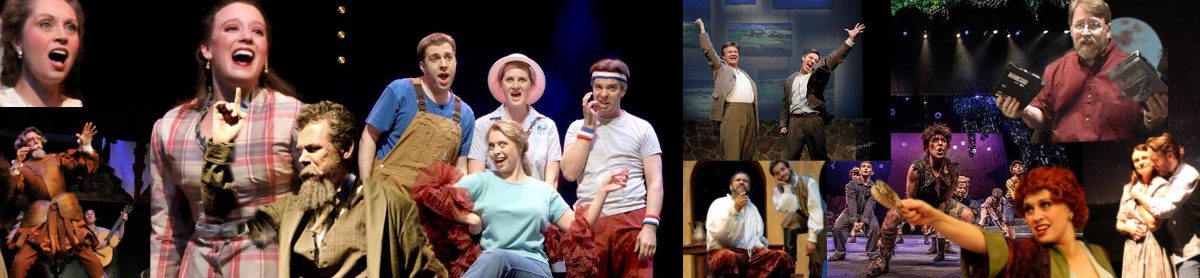
If football or sports aren’t your cup of tea, perhaps the arts are. Ronald Blum tells us about ‘Monster’s Paradise,’ Lampooning US President Donald Trump, Has World Premiere At Hamburg Opera. It’s inspired by Alfred Jarry’s play “Ubu Roi.” I imagine it will be quite some time, if ever, we see this on an American opera stage. Although I can dream of seeing it at the Kennedy Center, restored from Trump’s desecrations long after he’s gone. (This week’s image above is a publicity still from the Hamburg State Opera.)

Media attention on ICE atrocities may be fading at the moment, but ProPublica continues to do excellent investigative work on the subject even after the headlines fade. Check out The Real Story Behind The Midnight Immigration Raid On A Chicago Apartment Building by Melissa Sanchez and Jodi S. Cohen.

It’s tough to keep up with the avalanche of things rolling our way. That’s certainly been true with the torrent of news surrounding the partial release of the Epstein files. There’s so much information that I can’t imagine anyone trying to sum it all up, and yet, Elizabeth Lopatto might have come damn near close in her piece, How The Men In The Epstein Files Defeated #MeToo. It’s a bigger article with an even more powerful scope than the #MeToo in the headline suggests.

Also addressing the scope of that mess, Anand Giridharadas says It’s So Much Bigger Than Epstein. I agree.

JA Westenberg tackles The Coherence Premium. No real hints here beyond this quote: “When I say coherence, I mean something specific: the degree to which every part of an operation derives from the same understanding, the same model of reality and set of priorities and tradeoffs.”

Ashley Parker writes about The Murder of The Washington Post

Meanwhile, David Todd McCarty suggests that The Return of The Local Newspaper may be the path to reclaiming power over information and securing democracy. It certainly might beat the ways we seem to be trying now

If you’re interested in just what the heck Sunday Morning Reading is all about you can read more about the origins of Sunday Morning Reading here. If you’d like more click on the Sunday Morning Reading link in the category column to check out what’s been shared on Sunday’s past. You can also find more of my writings on Medium at this link, including in the publications Ellemeno and Rome.