The Netflix Paramount Media Money Muddle

Stay tuned

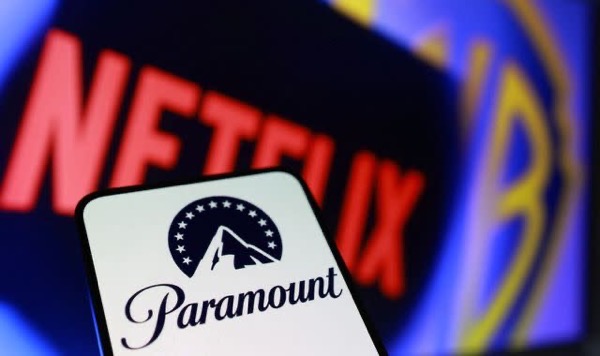
It was quite comedic to watch the reaction to the news at the end of last week that Netflix had won the bidding to take over Warner Brothers. There was indeed much celebrating. There as also quite a bit of consternation. The celebration was primarily because there is an abundant school of thought that no one wanted Paramount, now essentially another tentacle of the Trump administration, to win.

CleanShot 2025-12-09 at 14.59.44@2x.

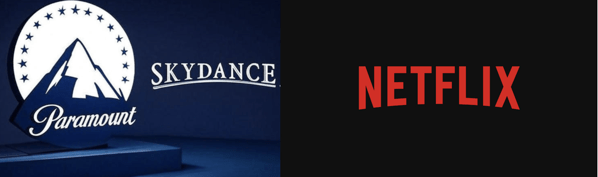
I didn’t bite on the news celebrations or the consternation being the final chapter then. Of course it wasn’t. The Netflix bid parlayed out to $72 billion. On Monday, Paramount Skydance launched a hostile all cash takeover bid of $77.9 billion.

There’s only a roughly $5-6 billion difference between the two bids, but the Paramount bid seeks to swallow up the pieces of Warner Brothers/Discovery that Netflix apparently wasn’t interested in, including media properties such as CNN, TNT Sports, and Discovery. Netflix’s bid was for Warner’s Studio and HBO’s streaming business only. Note that Warner Brothers had previously announced that it planned to split up the combined businesses in just that vein.

So, what does it all mean?

First, it means a lot of lawyers and lobbyists are going to make a lot of money. There are political, marketplace, and money pieces moving around the board in what looks to be quite a saga that I imagine Hulu will end up making a series about within a couple of years.

Netflix is after the content. And the control. Ben Thompson has an excellent run down on that, and why Netflix’s delivery system makes it make sense. Netflix has created quite a war chest for its bid (which is both cash and stock), by building a relatively slick distribution system to deliver its already abundant content, plus whatever it continues acquiring. (How many TV remotes are there without a Netflix button these days?)

Paramount Skydance CEO David Ellison’s all cash bid includes quite a few players including his pop, Larry Ellison, both of whom are Trump supporters, as well as outlays from sovereign wealth funds of Saudi Arabia, Abu Dhabi, Qatar, and also Jared Kushner’s Affinity Partners. Without those partners Paramount, valued at around $15 billion, would have a hard time competing with Netflix’s roughly $400 billion war chest. (The Wall Street Journal has a decent rundown on more of the money specifics.)

Second, it means what was already a muddle the way most of these kind of things are, will get muddled up even more due to the politics of the moment. I’ll disagree with Ben Thompson’s analysis that points out that the President doesn’t have final say on this. That may have indeed been true in a past we’re no longer living in. Those old rules no longer apply. As we’ve been learning everyday since January 20, 2025.

Third, Hollywood also has its concerns. The traditional studio power structure is not enamored of Netflix and its heretofore disdain for theatrical releases, which also brings movie theatre owners into play. I’m not sure if the Netflix bid means the death of Hollywood as some claim, but it certainly would shift the pieces, the game board, and the power structure as what began as a tech company could end up controlling much of what we see on our smaller silver screens.

Big money is at stake obviously. But when big egos get involved the costs for everyone increase. Including those flipping through content consumption choices with their remotes.

Stay tuned. I’m guessing that Hulu series will be quite a watch when all is said and done.

You can also find more of my writings on a variety of topics on Medium at this link, including in the publications Ellemeno and Rome. I can also be found on social media under my name as above.
Filmmakers, Storytellers and The Resistance

Storytelling in conflict

Writing for Bloomberg, Mark Leydorf makes a case that movies are taking up the whistles of resistance in The Rise of Resistance Cinema in the Era of Trump. He’s right but he shortcuts the great history of storytelling.

Shutterstock 697665772.

He’s correct that there are a number of films being released, along with those already past their big screen sell by dates, featuring stories and themes that can’t help but strike resonant chords for those repelled by and rebelling against the current political moment we’re living in.

He doesn’t have to reach too far beyond his initial example of Wicked: For Good to create a long list of titles to support his thesis. A thesis I buy, even though I think it serves cinema history, and storytelling in general, a bit short in the end.

In compiling his list, Leydor says:

The list goes on:

Eddington, Bugonia, Sirāt— there’s a reason directors are digging into stories of conflict, paranoia and cataclysm. Taken together, these films, most of which were conceived and went into production during Donald Trump’s interregnum, between the insurrection of Jan. 6, 2021, and MAGA’s triumphant return to power, have coalesced into a troop of cinematic resistance amid the conflicts and crises defining his political era and the rightward, nationalistic turns happening broadly around the globe.

I’ll reach into that quote and point out that all successful storytelling, on the screen, on the page, on the stage, around campfires, or told sitting on bar stools involve some form of conflict, paranoia, and cataclysm. Even top rated fare on the feel good Hallmark Channel features conflict. Heck, they have to make it up on Reality TV. Without conflict you don’t really have much of a story. Goodness knows we’re overripe with enough conflict to tell thousands of stories at the moment.

While focusing on this current crop of films, Leydor is spotlighting a point in the long timeline of story telling. These current storytellers are doing what storytellers do, bringing their near term reactions to whatever is in the zeitgeist at the moment, following traditions established long before Hollywood executives ever got involved in a script conference or endings became focus group fodder.

Frankly, I’m glad to see such a strong list of filmmakers telling these stories at this moment. We need to see ourselves reflected back in the mirror we hold up to nature, before it’s all AI generated. The same is happening on stages, in late night television comedy, and from the keyboards of many authors. Given how none of us knows how this moment is going to play out, it’s fascinating.

Note that Leydor points out that most of these films were conceived and green lit after the first Trump administration and prior to this second one.

I had the privilege in the Fall of 2022 to direct three one-act plays from Ukrainian playwrights about the effects of the Russian invasion that had begun earlier that year in February. The writing was alive, fresh, and as urgent as the wounds were then. That writing still is today, even though now those stories are snippets of a longer story still unfolding to an end no one knows.

Historically few stories springing up in any current conflict, regardless of medium, retain staying power beyond almost artifact curiosity. It’s usually the stories told after the moment passes that last and define with more resilient resonances, even as their lessons are forgotten by those too eager to write what they think will be a different ending.

What will be more fascinating to watch is how many of these current films are remembered years or decades from now, once this historical moment does pass.

Whatever that turns out to be.

(Image from Skylines on Shutterstock)

You can also find more of my writings on a variety of topics on Medium at this link, including in the publications Ellemeno and Rome. I can also be found on social media under my name as above.

Review: A House of Dynamite

Shear terror in the face of madness

When you live in Chicago, a city under siege by ICE, I’m not sure, but I guess it a strong bent of masochism to watch a movie where your city gets nuked by an unknown enemy. That’s sorta how I felt when my wife and I cued up the excellent Kathryn Bigelow film, A House of Dynamite over the weekend. We debated back and forth, and decided to give it a go. I’m glad we did.

CHANG   THE HOUSE OF DYNAMITE   UBO_20240926_29648_R3.

It’s certainly not an easy movie to watch, regardless of where you live. Yes, a city gets nuked. But that’s not the strength or the point of this movie. Nor should it be a spoiler at this point. The strength lies in watching otherwise steely individuals wither when their shields of confidence dissolve into vulnerable realizations as a horrible what-if scenario becomes all too real to contemplate, yet alone live through, even though they’ve contemplated them over and over again in training.

We don’t get the disaster movie special effects explosions and carnage. They aren’t necessary for this film to work. What we do get is far more terrifying. We get holes ripped through the souls of the characters we’re allowed to meet as they do their jobs. We get belief in systems and protocols developed by smart people shattered, leaving us all wondering if any of it was worth it in the end. It’s a parable of the moment.

It’s certainly not a Halloween movie, but I can’t think of a scarier film to watch as it strips away every possible security blanket and myth we might have become just too comfortable imagining, and realize just how much we’re in the hands of human beings just like us when horrible things unfold.

That’s more than frighteningly true with an utterly incompetent administration running the U.S at the moment. Noah Oppenheim’s script subtly, deceptively, and brilliantly lays that out as it carries us deeper into unfolding and inevitable danger that may be too horrible to watch, but is certainly more terrifying not to.

Bigelow and Oppenheim’s characters all seem more than capable of the sensitive jobs they hold. The filmmakers dispense with the tropes typical of these kind of disaster flicks that feature the usual array of martinets, incompetent and insufferable fools, and even heroes, sung or unsung. Sure, we see some of the personal traumas and trivia some may be dealing with as they come to work on the morning in question. But we initially watch each of these men and women of strong character knuckle down to perform when the unthinkable moment presents itself.

We then watch as they ultimately come face to face with that horrible moment of realization that there is nothing they can do to stop the inevitable. We watch as the enormous personal toll alters their breathing as they have no choice but to carry on with psychic wounds bigger than any smoldering crater before the missile even hits. Bigelow’s camera work and the cast’s strong acting gives us searing glimpses into those moments of horror and devastation as she catches her characters when each crushing realization occurs.

In three parts and an epilogue, the movie repeats the same horrible 18 minutes or so from missile detection to impact, presenting the scenarios in different government locales and viewpoints. We see a missile interception station in Alaska communicating with the White House Situation Room, the STRATCOM headquarters in Nebraska, FEMA headquarters as they have to pull out the plans for the inevitable, and the president who is attending a basketball camp event and then whisked away, while his aides work to inform him from the White House.

Those parts overlap using much of the same dialogue presented from these different points of view via video or audio conferences as the government tries to formulate its response. The repetition of dialogue serves as a better tension builder and reminder of the time before impact than any of the countdown clocks we might see on the screen. As does the sudden departures of those who need to be taken to secure locations as events unfold.

Bigelow’s cast includes some big name actors in a cast headed by Idris Elba and Rebecca Ferguson, that also includes Anthony Ramos, Gabriel Basso, Jared Harris, Jason Clarke, Greta Lee, and Tracy Letts among a host of others. Some of that host provides some of the most telling reactions on the periphery of the action as they watch their bosses try to handle the situation.

To my mind, nothing procedural happens that we haven’t seen or read about in countless Cold War thrillers of the past. With one exception. I was left with the same sort of existential dread after viewing A House of Dynamite as I was when I first read Tom Clancy’s Sum of All Fears and realized the weapon was going to explode. The only difference is that there was a hero in the Clancy novel to pick up the pieces and help us move beyond the horror.

In A House of Dynamite there are no heroes. Only humans. Trying to do their best. Not failing. But having to face the reality that sometimes your best is simply not enough in the face of madness.

You can also find more of my writings on a variety of topics on Medium at this link, including in the publications Ellemeno and Rome. I can also be found on social media under my name as above.

Final Trailer for Guillermo del Toro’s Frankenstein Released

Looking forward to this

I’m looking forward to the release of Guillermo del Toro’s Frankenstein on Netflix perhaps more than any other film to be released this fall. The movie hits theaters on October 7 and streams on Netflix beginning November 7th. The official trailer has now been released. 

Mary Shelly’s tale of the monster who created a monster has been so twisted around in so many different incarnations it’s hard to separate the takes from the original fiction. That’s not a complaint, it’s just what it is. I can imagine this one will offer up a unique twist or two given Guillermo del Toro’s previous films. 

I’m really looking forward to this and hope it lives up to its promise.

You can also find more of my writings on a variety of topics on Medium at this link, including in the publications Ellemeno and Rome. I can also be found on social media under my name as above.

Chicago’s Uptown Theatre Hits 100 and is Still On The Skids

Decaying majesty

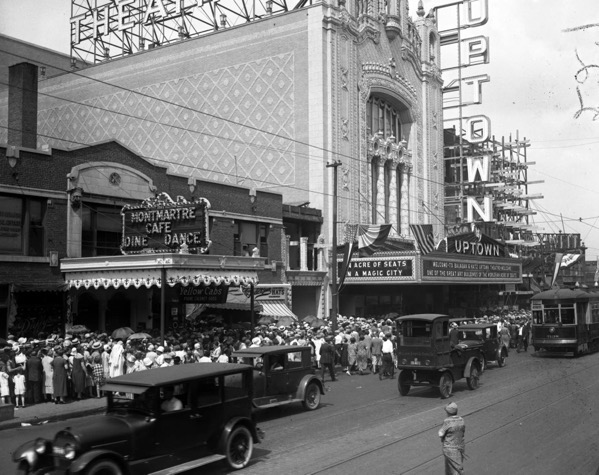
They certainly don’t make movie theatres like they used to. That’s not surprising or new, and long ago signaled a passing of a time when building special places for people to gather became less of a priority than so many other concerns. Chicago’s Uptown Theatre was one of those special places back in the day. It’s been decaying and shuttered since 1981 and every now and then efforts surface to try and bring it back to life.

Ctc 29062521 e1754425570173.

The Uptown celebrates its 100th birthday on August 18. Built as a grand show palace by Balaban & Katz and the architectural firm Rapp & Rapp, it was hailed as spectacular, and a “splendiferous palace of a place.” The Uptown sat 4,320 in what was called “an acre of seats.”

Offering movies and live entertainment it was billed as a “shrine to democracy where there are no privileged patrons. The wealthy rub elbows with the poor — and are better for this contact.” It also had air conditioning.

Obviously a lot changed throughout the years, talkies took over from silent films, the Great Depression, and the advent of TV changed the dynamic. The Uptown part of town itself fell on hard times and saw big changes, and during much of my time in Chicago was the last section of the lakefront resisting redevelopment. The final act on the Uptown stage was a concert by the J. Geils Band in 1981.

Robert Loerzel has a terrific piece looking back at the Uptown Theatre in the Chicago Tribune that’s more than worth a read as we approach the show palace’s centennial. There’s also an excellent gallery of photos, which the photo above is from. The link should be a gift link, although I don’t know how long that lasts. Loerzel has also authored a new book, The Uptown: Chicago’s Endangered Movie Palace

When I first moved to Chicago in 1999 there were still a few of these show palaces in operation around the city, but the Uptown had long since shuttered. I got to take a tour of the place in the early 1990’s and the scale of what it once offered was impressive to see, only dwarfed by the decay and disrepair.

There are still efforts to try and find funding to restore the Uptown, but I’m sad to say I think priorities have shifted in such a way that we won’t see that happen.

You can also find more of my writings on a variety of topics on Medium at this link, including in the publications Ellemeno and Rome. I can also be found on social media under my name as above. 

Sinners: A Review

Worth sinking your teeth into.

I saw Ryan Coogler’s Sinners in a movie theatre when it was released in April. I rarely go to movie theaters these days, but in this one instance I was certainly glad I did. Now that Sinners has reached streaming on the 4th of July, I hope anyone who didn’t have a chance to see it on the big screen will take time to view the fireworks it provides at home. I’m looking forward to a second watch. It is excellent. It’s not perfect. But it is sublime in its imperfections.

Sinners01 978x652.Ryan Coogler knows how to tell stories. He knows how to tell stories in big ways. He knows how to tell stories that entertain and unsettle. He knows how to weave the various strands of history, culture, and popular story tropes together in ways that spin out a fresh new cinematic delight that redefines the old and refreshes the tired. He may get a bit carried away here and there, but in the end he delivers as a filmmaker of note.

In Sinners he ties Southern-gothic, vampire horror, and depression era gangster styles together along with a musical storyline that literally burns down the house. Working with his familiar actor collaborator, Michael B. Jordan, playing a set of twins, Coogler creates something brand new, dangerous and in the end just damn dandy. I fully expect Sinners to be quite popular in the Best Picture categories when awards season rolls around. Even with its imperfections, it’s at the top of my list for best films of the year.

Jordan and all of the actors are superb. The music is red hot. The vampire gore is plenty gory. There’s a raw, violent, sexual tension throughout that’s heightened by the rawness of the blues music that infuses the storyline. The sequence when the fateful evening’s dancers are intermingled with ghosts of African and African-American pasts and premonitions of musical genres of a future yet to be is a highlight, even if it is a bit too precious.

Coogler also plays with some larger themes among the music, horror, and history. Questioning why Blacks cleave to Christianity (“Blues wasn’t forced on us like that religion,” and who counts as Black when everyone doesn’t have the same black skin or heritage, cut through many of the myths so easily consumed and assumed about the Black South.

As to the flaws, perhaps the biggest is also its biggest strength. Coogler stretches out a wide canvas to paint this story on.  Perhaps too wide, and even so he often paints outside the bounds of that canvas. And once the delicious and setup is accomplished, the violent confrontation we all know is coming at times feels more rushed than we want it to, certainly when it consumes characters we’ve invested in.

Even with those flaws, Sinners yields a bounty that often borders on the rapturous. It is more than worth your time.

You can find more of my writings on a variety of topics on Medium at this link, including in the publications Ellemeno and Rome. I can also be found on social media under my name as above. 

Is Apple’s F1 Push Ad Enshittification or Just Shitty?

Apple pushing ads push users’ buttons

As if Apple needed another kerfuffle, it appears that one of its marketing efforts for the movie F1 has raised the hackles on the necks of some. You almost have to be tuned out completely to have missed the plethora of marketing methods Apple has already been pushing around the racetrack to get this movie to the starting line. But there’s always more.

Apple started pushing out Apple Wallet notifications to users of that service announcing that they could receive a discount for movie theater tickets via Fandango by purchasing those tickets with, yep, you guessed it, Apple Pay.

I saw the notification late last night and just swiped it away the way I do the majority of these mosquito-like pests. Too bad I didn’t take a screenshot.

But Casey Liss, of The Accidental Tech Podcast trio grabbed one and posted about it on Mastodon, accompanied by a vomiting emoji.

New Screenshot.

Those who felt as ill about the promotion as Casey did quickly jumped in, condemning it and pulling out the enshittification label that we’ve all become familiar with since it was coined by Cory Doctorow in 2022.

Yes, it is advertising, but I’m not sure it was enshittification. Perhaps we’re reaching the point of shitting all over that label and diminishing, yet revealing its power in sort of a weird turning in on itself way that proves the original meaning behind the original term even while mucking it up by using it too frequently.

Granted there aren’t too many who lust for the ever increasing onslaught of advertising and marketing pitches we’re bombarded with hourly. I’m certainly not one who does. But advertising and marketing, as overused and overwrought as it has become, in and of itself isn’t enshittification, no matter how fast it grows like weeds rapidly enveloping every corner of our Internet usage.

My grandfather used to say that “a weed is anything that grows where you don’t want it to.” Most of today’s advertising certainly feels weed like. And it keeps getting worse, especially when pushed at us from sources we don’t expect it from. Amazon we expect this from. Apple not so much. Though there is a history there.

In my view of things, Apple advertising this promotion is really not that much different than a podcast advertising its latest merch to its audience or promoting a fundraiser. Don’t get me wrong, I’m not shitting on The Accidental Tech Podcast, which does both of those things. I actually pay for a subscription and occasionally buy their merch and donate when they fundraise. Captive audience marketing is an age old technique and it works. I’ve used it myself. Even so, it can grow old and tip over into enshittification.

But there’s a larger point.

Eventually most users tune out. I used to deliver a curtain speech pitching the next play or special offer before every performance at a theatre I ran. Initially they were wildly successful. Eventually returns diminished. That may be anecdotal, but I believe the more ads increase the more they become the blandest of white noise or even a turn off to the product. Again, anecdotally I had initial interest in the F1 movie, but after the inundation of advertising I’ve already decided my interest has waned. So I’m certainly not going to be contributing to Apple’s goal of finally putting butts in theater seats for one of its movies. I’ll catch it sometime down the line on streaming.

Overhyping, as a facet of enshittification can too easily create diminishing returns, gradually enshittifying the very business models of the enshittifiers. Mosquitos can’t feed when everyone within their range packs up and goes indoors and they eventually move on or die out.

We just haven’t reached that tipping point in this bloodsucking business model we’re trapped in currently. In his original post outlining the enshittification of early social media platforms Doctorow says “the same forces that drove rapid growth drove rapid collapse.”

I doubt we’ll reach that tipping point in advertising. Because there’s a whole new frontier that the enshittifiers are just waiting to exploit and that’s AI. Google’s moving away from search faster than its search rankings are dropping and there’s no secret on the path it’s choosing.

I’ve often imagined that perhaps AI could be one of our salvations in the advertising scheme of things, figuring out better than humans seem capable of doing when enough is enough. But those driving that racetrack see the possibility of too many dollar signs to make that more than just a wild imagining no matter how much sense it might make.


You can find more of my writings on a variety of topics on Medium at this link, including in the publications Ellemeno and Rome. I can also be found on social media under my name as above. 

Mel Brooks’ Spaceballs Sequel Trailer Is Brilliant

Just posting this here because in the midst of all of the shit going down around us, it surfaced and made me laugh. And I needed that for just a minute. 

Mel Brooks announced a sequel to his wacky sci-fi comedy, Spaceballs. It’s been awhile and he takes full advantage of that in this brilliant trailer. 

You can find more of my writings on a variety of topics on Medium at this link, including in the publications Ellemeno and Rome. I can also be found on social media under my name as above. 

CNN Will Air George Clooney’s ‘Good Night and Good Luck’ Live From Broadway on June 7

This paradox should be a must watch.

I’d mark your calendar for this one. CNN will be airing George Clooney’s production of the play Good Night, and Good Luck, live on June 7th from the Winter Garden Theatre on Broadway. It will be the first time that a live play performance has been televised.

GNGL GNGL 111064 020792 TodayTix 1600x1200.

The play is adaptation of the 2005 movie of the same name that Clooney co-wrote, directed, and starred in, based on CBS journalist’s Edward R. Murrow’s work to expose Joe McCarthy during the Red Scare in the 1950s. In the movie Clooney played Fred Friendly, Murrow’s producer. On the stage he plays Murrow.

The Broadway production has met with critical acclaim and just recently announced that it had recouped its initial investment during its run that began in March of 2025.

I’m a big fan of the movie (I wrote a little about it here) and imagine I will also be of the stage version. I’m sure the story’s central message of standing up to bullies and demagogues translates just as well in a live version as it does on film.

I’m looking very much forward to watching this and would encourage you to as well. I know there are some who see Clooney as one of the villains in our recent political turmoil. And some see CNN has a willing accomplice to the madness we face. Even with what may seem like all of that irony, I would urge you to set that aside and give Good Night, and Good Luck a watch. As I said then

This isn’t some moment of nostalgia for a time gone by. It is a recognition that where we are now is a place we’ve been before. This time around those that control the media and messaging have, for the moment, much more control than they did in Murrow’s day. Make no mistake, they had some control then, but now it’s more pervasive and the Murrow’s, Friendly’s and Paley’s are fewer in number.

Setting aside the historical significance of this broadcast of a live play, and the paradox between the message and the messengers, I can’t think of a better reason to watch given where we are and will continue to be for some time.

You can find more of my writings on a variety of topics on Medium at this link, including in the publications Ellemeno and Rome. I can also be found on social media under my name as above. 

iHostage Review: Not A Good Trip To The Apple Store

Apple Store takes center stage in this hostage drama.

I’m guessing iHostage is a flick you’ll never see on Apple TV+ even though it features the Amsterdam Apple Store as a prominent character in the story. iHostage, directed by Bobby Boerman is currently streaming on Netflix and is based on an actual hostage situation that took place at the Apple Store in Leidseplein in 2022.

Ihostage netflix movie review.

As far as hostage films go it isn’t bad nor is it great. These things typically only end one way, and of course if you have any familiarity (I did not) with the actual events you already know how things turn out in this case. But as to the entertainment value there’s good fun to be had as the director and his cameras look for every conceivable angle to shoot within and without the Apple Store. AirPods play an important role early on. Also interesting is watching some of the hostages use an Apple Watch to check whether or not another was having a heart attack. (For the record, an Apple Watch can’t detect underlying causes of a heart attack, but it can detect irregular rhythms.)

The acting, visuals, and direction are generally good, keeping the tension going as we cut back and forth between the hostage taker and his primary hostage, and those on the police side trying to bring about an end to the event. But again, these stories have a formula about them that to some extent just requires a plug-and-play approach with all the necessary elements of filmmaking. I’d say everyone pulls their job off well with the sort of cleanliness you’d expect in an Apple Store. In the end it’s all a bit too clean.

You can read about the true story behind the movie here and watch the trailer below. I’d say it’s a fun watch if this kind of story is your kind of thing, or you just want to tour an Apple Store in Amsterdam.

You can find more of my writings on a variety of topics on Medium at this link, including in the publications Ellemeno and Rome. I can also be found on social media under my name as above.