
The Quest for the Unicorn AI Device

Hyping a tech war that won’t ever happen

Reporters love to declare war, crown winners and dismiss losers. Except of course when it comes to shooting wars and the rhetoric that often leads to them. But that’s not what this post is about. Tim Higgins of The Wall Street Journal, and his headline writers, are declaring that Mark Zuckerberg Just Declared War on the iPhone. 
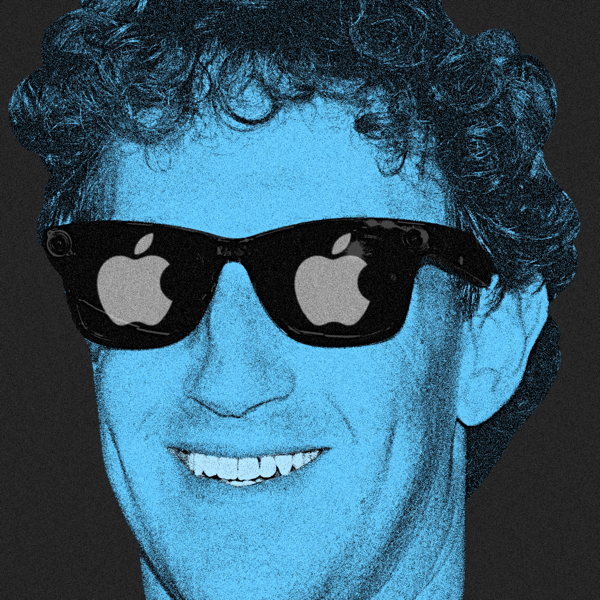
I usually expect this kind of nonsense from the half-a-gazillion blogs and social media accounts out there that like to ginny up controversy to generate clicks. With AI glasses will clicks become blinks?

Now that I think about it, I’m wrong in my expectations because the WSJ, like most of the mainstream media is trying hard (too hard) to follow that pattern these days. It’s an easy game to play in the short term, but then so is the game of companies and governments making big announcements about the future. Remember the “pivot to video?” Remember “virtual reality?” The faux legs went out from underneath that pretty quick.

Higgins does and mentions those failures to capture marketshare beyond the initial hype and funding fevers. Nevertheless, he forgets a few simple things during his embedded tour on this march to the promise of “Personal Super Intelligence.” (That’s this fiscal quarter’s new label.) Zuckerberg might indeed be banging the war drums by propagandizing AI glasses as the latest form factor of mass destruction, but it’s too much hype without enough rhythm to marshall the troops. And to be fair, most of Higgins’ column is just regurgitating old news (AI summary?) that has been bouncing around in what passes for new news these days, tacking Zuckerberg’s recent announcement on as the headline war cry.

Bottom line in my opinion, we’re not going to see any new form factor take down iPhones, smartphones as a category, or computers, as the way we live, work and play in any near future. Folks have been waiting for all kinds of second comings for quite awhile now. I love how even the coming of advanced AI is now referred to as “near emergence.”

One day perhaps. Long after most of us interested in what this technological moment might eventually yield will have forgotten what Medicare and Medicaid were actually about. If and when that day arrives, the real clicks (blinks?)  will be in tutorials on how to turn off all of the notifications and other distractions and keep the tech from tracking you.

I’m old enough to remember when FourSquare came on the scene. The promise was you’d walk down the street and receive a notification from the coffee shop you just passed about the daily special. That never really materialized, but the tech was different then. Google and Waze later tried that and just annoyed any driver who stopped at stoplights looking for their next turn.

When the marketing survelllance mavens can figure out how not to send me ads for something I just bought I think there might actually be a chance for that kind of thing to work. A small chance, but a chance. But they’re not even close to that on the backend, let alone integrating them into some device that might pinch your nostrils after wearing them for too long.

Don’t get me wrong. I think it is indeed cool when companies create niche products that give some people joys and hobbies. Bits and pieces of that kind of innovation often creep into bigger things that do help our lives somewhere down the road. Even if they become creepy. Obviously I’d prefer they not become creepy, but that’s where the money is and the creeps always follow the money.

I’d much prefer to see the money and the hype meisters follow something like this that could probably actually help humanity. But even that kind of innovation can attract the creep factor.

Call me when a reporter can research, write, and submit for editing a column like this one I’m complaining about with a pair of AI glasses, an Alexa device, or a pendant, or any other smart device currently in the works.

Call me again, when the AI summary machines can actually deliver an accurate summarization of that article.

You can also find more of my writings on a variety of topics on Medium at this link, including in the publications Ellemeno and Rome. I can also be found on social media under my name as above. 

Mark Zuckerberg Says We All Need AI Glasses

The blind leading the blind-to-be

Mark Zuckerberg, trying to see his way clear to dominating the Artificial Intelligence race, is now saying that those of us who don’t use AI glasses will be at a disadvantage in the future. Reminds me of the X-Ray glasses hype from my childhood.

X ray man 1.

When you consider Zuckerberg’s checkered legend with starting what would eventually become Facebook, after running a college website called FaceSmash to rate girls, the comparison to the come on for X-Ray glasses does have a prurient parallel to many an adolescent boy’s fantasies.

I guess Zuckerberg needs to justify all of the money he’s spent building out AI infrastructure and wooing talent but it also is very reminiscent of the days he mucked up the media by declaring text was out and the pivot to video was in. In fact, much of this AI race feels very much like that. Sure, some of that stuck, but it mostly just made a mess and the legacy of that pivot left more than a few scars.

This entire AI race feels like that to me at the moment. I believe some of it is going to stick around and actually be useful. But mostly it’s just messing things up at the moment as everyone jumps into the deep end of a pool hoping to learn a new way to swim.

I’ve dealt with a few different companies of late trying to help some elder clients cut down on bills and solve some issues. Several of those companies have been switching much of their customer service to AI chatbots and the like. In those transitions they’ve more than made a mess of things for their customers and their employees who are left trying to clean up the mess.

I’m not completely down on Artificial Intelligence. I can see some benefits from the technology. At this point in the game it’s tough to sort out what that might be from the hype that seems to be authored by the folks who keep promising self-driving cars and those that promised X-Ray glasses.

You’d think by now someone would have developed an AI platform for investors and corporations that could see through the hype.

You can find more of my writings on a variety of topics on Medium at this link, including in the publications Ellemeno and Rome. I can also be found on social media under my name as above. 
Has Fact Checking Ever Worked?

Facts and the factless.

Has fact checking ever worked? Seriously. Has it ever? In my opinion if there was ever any real utility, it’s long since lost its pucker.

Mark Zuckerberg caused all sorts of consternation yesterday announcing he was going to dismantle Meta’s fact checking operation now that he realizes a million-dollar bribe probably wasn’t enough to keep him out of jail during the reign of the next administration. It was quite a public puckering up.

But let’s get real for a moment. Once any fact-less statement takes off it spreads faster than a wildfire in California and all the fact checkers in the world can’t snuff it out. For some facts do indeed matter. They occasionally do in our legal system, though not always. They used to in our legislative processes, but that’s long since become a relic of a time gone by. For most of its history, journalism wasn’t what so many bemoan the loss of today. Myths have fueled our religions and our histories since we first sought understanding.

And as for social media and the Internet in general? That’s a medium that has always allowed (and encouraged) the presence of fake personas. All bets there have always been off. 

Prior to Zuckerberg’s recent sucking up, Meta had taken recent fire for allowing the creation of AI-generated chatbot personas to appear in feeds alongside regular users. Reaction to that led to a pull back that’s sure to be only temporary. I mean, think of the business model. Why do you need problematic real users when you can just create them and still con advertisers into paying for ads that most avoid or don’t see anyway? Programmatic users are certainly easier to control than problematic real ones—at least until the AI takes over.

Here’s a fact that doesn’t need checking. Facts matter if you think they do, but most of the rest of the world doesn’t care what you think if they can support their beliefs—or protect their business model—by making shit up and making it stick.

You can find more of my writings on a variety of topics on Medium at this link, including in the publications Ellemeno and Rome. I can also be found on social media under my name as above.