macOS 26.1 Seems To Have Fixed the iconservicesagent Memory Leak

A bug fix. But who did the fixing?

A little follow up.

A few weeks back before Apple released the non-beta version of macOS 26.1 I wrote up some observations about macOS 26. One of those observations was about memory leaks.

Cleanshot 2025 10 17 at 09.35.13402x.

I cited one example I was seeing frequently with iconservicesagent, a process that the system uses to read and generate icon images. When it goes awry because of a corrupted icon or corrupted icon cache then the memory leak occurs. You can kill the process and it will restart, but that wasn’t fixing the problem and the memory leak would reoccur.

Tracking down what might be a corrupted icon is beyond my skill level, so I was hoping this was a bug that would eventually get fixed by Apple, or an app developer who might clean up an errant icon.

Apparently that happened because I haven’t seen the memory leak reoccur since installing macOS26.1. Of course quite a few apps have updated in the meantime as well. So, there’s no way for me to really know whether the fix was on Apple’s end or an app developer’s without doing some digging I don’t have time for. Nor would most users.

Keep in mind, Apple created an entirely new method for developers to build icons this year. Some developers have used the new Icon Composer already, some have not. It’s caused a few developer headaches, especially for app developers who offer multiple icon choices as a part of their app and general disgruntlement with the icons Apple itself has released. Note Apple hasn’t as of yet updated all of its own icons.

I’m glad the bug has been fixed. Whether the fault was on Apple’s end or a developer’s it points to the catch up that Apple has to do to solidify things in macOS 26 Tahoe with app developers having to follow behind as it does so. We’ll see how many other bugs get quashed in the months ahead with macOS 26.2 presumably coming sometime before the end of the year and successive  point releases following in the first half of the next year.

You can also find more of my writings on a variety of topics on Medium at this link, including in the publications Ellemeno and Rome. I can also be found on social media under my name as above.

Craig Hockenberry’s Take on the Why of Liquid Glass

Is Liquid Glass an edge case?

There is a quote largely attributed to Robert F. Kennedy. No not the one rampaging through the U.S. healthcare system. It goes “some men see things as they are and ask why. I dream things that never were, and ask why not?” But, it actually came first from George Bernard Shaw in his play Back to Methuselah. 

Apple WWDC25 Liquid Glass hero 250609_big.jpg.large_2x.

The text gets mangled often enough as does the attribution. Regardless, the point is made. In my experience as a theatre producer/director/designer/playwright the biggest part of the game is the “dreaming” part. The next hurdle is finding a way to turn that into reality. The dreams often come when least expected, occasionally after many attempts at finding a solution, and sometimes at random moments. They sometimes come into focus as almost impossible, or perhaps wrong-headed. 

Typically, in something completely uncharacteristic for me, when I find I can’t articulate what I’m feeling or seeing, I know I’m on to something, and that’s the moment to ask “why not?” rather than “why?”

I’m also very familiar with the desire or temptation to do something new instead of doing again what I know works. Speaking from my experience that’s yielded both positive and negative results. There’s a reason some things are called “tried and true.” There’s also a reason to hold your breath, roll the dice and gamble it all on something new.

Honestly, either way is a risk. And that’s how it should be. But if you feel the need for change, go for it and don’t reverse course. 

But what do I know? I’m just a theatre guy who’s produced hits and flops along the way and comfortable taking slings and arrows along with occasional accolades. I’m not sure what feels better, being admired for a courageous leap of faith, or feeling accomplished for sticking the landing. In the end, I’m not sure it matters.

Liquid Glass 

A lot has already been said, good, bad, or indifferent about how Apple’s designers dreamed up its new Liquid Glass design approach. But that doesn’t answer the “why?” Was it a compulsion for something new? Time for a change? A diversion to distract? Or a romantic new vision spurred on by a heavy new headset?

App developer and designer Craig Hockenberry of the

, in an interesting post recently asked that question and provided what he thinks is a possible answer. It’s titled simply Liquid Glass. Why? I don’t want to spoil the post. You should go read it yourself. But his answer points to a possible future of devices “with screens that disappear seamlessly into the physical edge.” 

A cautionary note here. For several years Apple trumpeted “edge-to-edge screens” that still had bezels. Marketing mavens often outrace product dreamers to the destination.

I joked with Craig on Mastodon that he should have subtitled the piece Liquid Glass is an Edge Case. 

The joke may indeed prove to be true, but it’s a truth we’ll live with in some form or fashion for the next few years, edge case or not, regardless of the good, bad, or indifferent reactions.

Anyway, go read Craig’s piece. However Liquid Glass is received in a few weeks, I’m looking forward to discovering it myself.

I mean, why not?

You can also find more of my writings on a variety of topics on Medium at this link, including in the publications Ellemeno and Rome. I can also be found on social media under my name as above. 

Through A Glass Darkly: Apple’s Liquid Glass Future Isn’t Clear

Continuing to watch Apple’s Betas from the sidelines.

Apple’s adventures with its new Liquid Glass design language reminds me of the title of a terrific, yet gloomy, Ingmar Bergman film, Through a Glass Darkly. Keep in mind that I’m not running the beta and living vicariously through the reactions of those whose opinions I trust. That said, based on some of those opinions of the recently released 4th developer beta, the future of Apple’s new design approach appears less than clear. 

Image from @davemark on Mastodon

From most accounts it’s a battle between legibility and the “coolness” of the design’s featured transparency that overlays content with the intent for the content below to bleed through. The challenge seems to be finding the right amount of bleed through that also allows users to easily read a notification or a control. 

In my view, the challenge with that challenge seems to be one of fighting things you can’t control. Holding liquid in your bare hands without spilling a drop might be easier. Every website and app designer has their own preference and approach. Even Apple apparently has difficulty as some of their own apps with background bleed through obscuring text. 

Image from @viticci on Mastodon

Since Apple announced Liquid Glass there have been three iterations of the approach. In a sort of Goldilocks and the Three Bears adventure with Apple dialing transparency features back and forth. Now in the 4th version of the developer beta reengaging more transparency. Searching for a “just right” solution doesn’t yet seem to be yielding any clear direction. But then, Apple’s ambitions, perhaps by design, have created a lose-lose short term future. The eventual product will never please everyone with this design change. But to be fair, that’s always the case with design changes and the folks at Apple knew that going in.

There are other usability issues as well, including things like making it easy to tell which tab or control is in focus, and having to tap multiple times to perform a function that used to be one tap to name a couple I see repeatedly mentioned.

But the clear focus of complaints (and some praise) is Liquid Glass. I would venture that for users it’s still too early to judge, but supposedly the Public Beta is due soon and the consensus is that what we see there will be pretty close to what we see in the Fall. Developers on the other hand are increasingly worried about Apple’s search for a “just right” solution while they try to find a path forward to have their own apps ready for the big release alongside or close to the release of this new wave of operating systems. 

CleanShot 2025-07-24 at 08.38.27@2x.

The problem becomes magnified when designing for the lowest common denominator with so many users. From my perspective of supporting clients and family members, most folks just want to pick up their devices and do what they want or need to do. They don’t want a new learning curve getting in the way. They certainly don’t want legibility issues to get in the way. There’s a real tension between what Apple needs to do to keep the cash registers ringing and the familiarity users want that I don’t think the folks in Cupertino understand given the annual pace they seem locked into. 

Image from @jsnell on Mastodon

The Bigger Picture

From where I sit on the sidelines, I think Apple has also created some real and perhaps less transparent problems beyond how Liquid Glass eventually rolls out.

Coming on the heels, and at least somewhat intended as a distraction from last year’s Apple Intelligence and Siri woes, Apple needs to create a clear narrative surrounding Liquid Glass in order to sell this year’s new crop of iPhones. (I imagine the commercials have already been scripted if not filmed.)

That already seemed like quite a challenge given that the only big hardware news this year is the rumored introduction of a smaller, lighter, apparently with less features iPhone Air. I don’t imagine that Apple’s traditional iPhone lineup is going to have new features to tout that makes those familiar device form factors must haves or must upgrades. 

If you’re counting on a flashy UI design change as the distraction that gets criticized as much as the issue you’re trying to distract from you’re magnifying your problems. Unless of course, you bank on criticism of the distraction further distracting from bigger issues.

Adding to that, the larger narrative has somewhat already passed by this year’s iPhones to what comes next year, with just about everyone assuming Apple’s version of folding iPhones will be the new focus. 

Sum all of that up and this is starting to feel potentially like a lost year for Apple. Sure, Apple will sell lots of iPhones, but if it can’t capture the imagination the way Apple usually does, much of the narrative will be wait ’til next year. Apple historically takes a long view. Time will tell if they have lost control of the visible horizon.

iPadOS 26

That said, somewhat under the radar, iPad beta users continue to trumpet the success of changes made in iPadOS 26. I’m looking forward to seeing that myself. That said, as much as those potential changes will be welcome, I can’t imagine that’s the tentpole Apple wants to rely on to create excitement this year.

CleanShot 2025-07-23 at 07.19.00@2x.

I mentioned the film Through A Glass Darkly in the opening of this post. The story of that classic film is about a family that gathers to try and heal after a member diagnosed with schizophrenia is released from an asylum. If you ask me, the challenges we’re seeing at Apple with design changes, Apple Intelligence and Siri among other things demonstrate that there are multiple personalities exhibiting control at various times within Apple, at a time when some turnover at the top is already underway, with quite a few calling for more.

As always, I recommend Michael Tsai’s Blog as a good source to keep track of how all of this continues to develop.

And with that, I’ll leave this update from the sidelines with this. 

CleanShot 2025-07-24 at 08.29.28@2x.

Update: The public betas for all of Apple’s new operating systems were released shortly after this post was originally published.

You can find more of my writings on a variety of topics on Medium at this link, including in the publications Ellemeno and Rome. I can also be found on social media under my name as above. 

Random Thoughts and Links Looking Ahead to an Apple Beta Summer

A summer of viewing betas from the sidelines.

We’re already several weeks deep in Apple’s beta season for all of its operating systems. As of this writing the second developer betas have been released. We’re due to see the first public beta this month and that’s when things will really heat up. I’m not a developer and I no longer run betas on any of my Apple hardware, choosing to live vicariously until the official releases this fall.
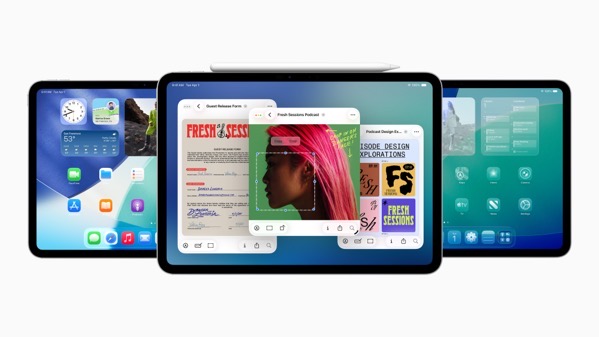
Apple WWDC25 iPadOS 26 hero 250609.

I have to admit though that I was tempted to pick up another iPad given the changes to iPadOS 26 and the general early positive reactions to it. But I stuck to my guns and will look forward to what some trusted sources have to say over the course of the summer.

Speaking of, if you’re interested in following how the new operating systems develop and evolve over the summer, I’m going to list several links to sources you might want to follow, if you don’t already. That list will come at the end of this post.

As to my random thoughts I have three.

First, it looks like Apple’s big Liquid Glass design change will indeed garner most of the focus this year. That was certainly the intent, and from what I’ve seen Apple is on the way to pulling it off, certainly on the iPhone and the iPad. The jury is still out for the Mac at this early juncture in the beta season. Even so, it appears Apple has managed to add a shiny new coat of paint that won’t confuse most users when it comes to familiar functionality of their devices.

Second, as I said previously I’m excited to see the changes in iPadOS 26. Depending on the job at hand, and whether or not I’m home or away, I jump between Macs and iPads frequently. I’m looking forward to what these changes mean when I’m primarily working on an iPad away from home.

Third, the deeper integration of Shortcuts with Apple Intelligence (whatever that may come to mean) and also with Spotlight has me intrigued. I don’t use a ton of shortcuts and currently rely on Raycast as a launcher for those I do use. If I had two wishes on this I would hope that this plays out the way it proposes to do, and I would hope Apple could finally find a way to keep what happens behind the scenes with Shortcuts from constantly breaking. Giving app developers access to the App Intent Framework and the Foundation Models Framework promises good things, if Apple can avoid the infrastructure hiccups of the past. Although I’m sure that will usher in a different sort of hiccups going forward.

Good Apple, Bad Apple

On another note, I, like many this year, have had a hard time reconciling my views about what I consider wrong moves from Apple the corporation with my preference for Apple hardware and software. I’ve thought long and hard about it and at the bottom of that deep well of thought the decision to stick with my current Apple tool set comes from the fact that I support a lot of friends, family members, and a few small businesses that use Apple products. I have no desire to abandon that part of my life personally, even if Apple’s actions pisses me off to the point where I’m occasionally ready to chuck gear into the trash. Convincing those I support to shift gears would mean saying goodbye to that part of the relationship for the most part (I’ve explored this) and neither they nor I am ready for that.

Is that a trap? Perhaps, depending on your point of view and I won’t argue against that. Am I talking out of both sides of my mouth? Also, perhaps. But I think using and enjoying products of a company gives you a bigger license to criticize.

So, I’m sticking with things for the moment, but I will say that I’m paying close attention to folks like Denny Henke who’ve made different choices than mine. I admire their approach and am always learning. I’m also paying close attention to how Apple handles things going forward. I despise this dilemma.

Links

I’m going to link to a few specific articles from which you should be able to get back to the homepages of the various sources, some are just the homepage links.

Michael Tsai’s Blog always contains an excellent collection of links to various sources worth following. In fact, it may be the one stop source for quite a bit of Apple News.

Six Colors is an excellent source for information and reviews. This is one source to look to when the first public betas drop for good reviews of what we will know at that time. Jason Snell, Dan Moren, and now with Glenn Fleishman as a contributor, always provide excellent coverage.

Speaking of reviews, MacStories is another go to site when reviews of software drop. While they cover a range of gadget topics beyond Apple, the coverage there is quite good, even if it sometimes is aimed more at advanced users.

Parker Ortolani has recently started blogging and his thoughts are always worth a look.

If you’re looking for a developer’s perspective check out Craig Hockenberry’s furbo.org. Craig is a founder of the iconfactory, which is responsible for a number of apps including, Tapestry, Wallaroo, Linea Sketch, Tot, and more including the original Twitterrific for Macs and iPhones.

Craig Grannell’s blog, Stuff, is also a good source to add to your reading list or RSS reader.

Myke Hurly has also started blogging in addition to his many podcasting chores. Check out his blog, The Enthusiast.

Louie Mantia, Jr. is an artist and designer who lends that perspective to his writings about Apple and its designs.

John Gruber’s Daring Fireball is always a must read.

There are certainly more that are worth your time, but the ones I’ve linked to here continue to provide me with not only good information, but some good and deeper thoughts beyond the surface news. It’s going to be an interesting beta season viewing it from the sidelines.

You can find more of my writings on a variety of topics on Medium at this link, including in the publications Ellemeno and Rome. I can also be found on social media under my name as above.