Adolescence. See it.
I’d like that to be all that I write about this sensational limited streaming series on Netflix, but there’s more I want to say.
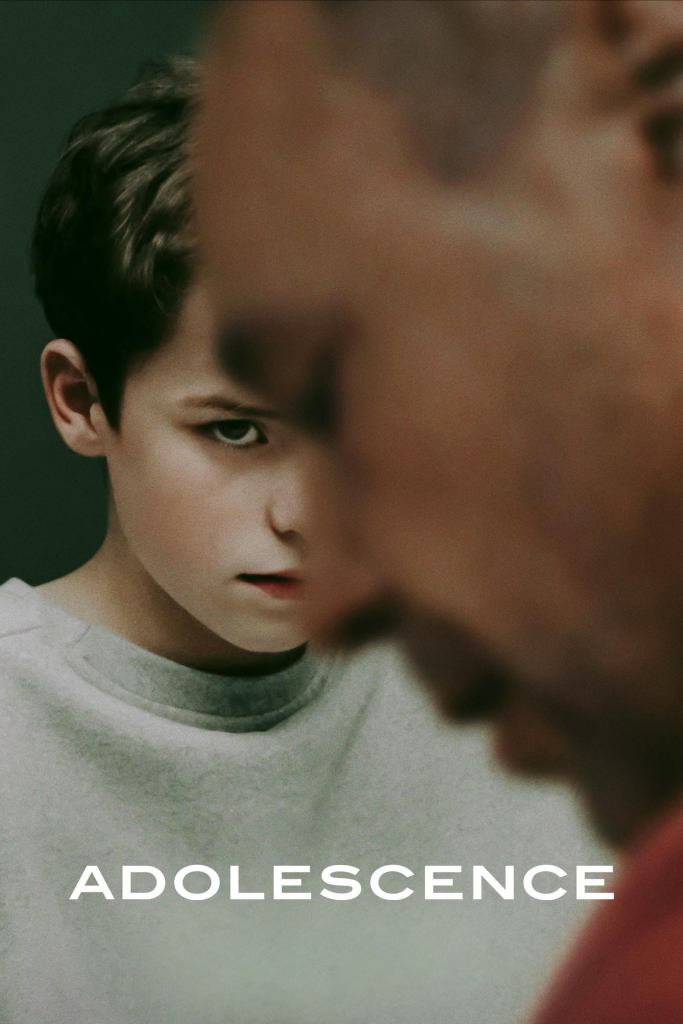
You’ve probably heard of Adolescence. It’s become a well deserved hot topic of conversation because it’s an excellently done piece of storytelling that cuts through what seems like an impenetrable zeitgeist like a hot knife through melted butter. I’m glad to see that the hype tour surrounding its recent release ramp up after the series took off because something this good needs to be ballyhooed, bravoed, and brandished with flying banners.
For me, the bottom line, beyond just saying “see it” is that the producers and artists involved captured something we all know in our gut and make us face it. Captured it in a challenging way that they didn’t need to, but by accepting that challenge opened up those gut instincts with a rawness that touches nerves we may have all let somehow deaden. The painful intimacy of one family’s story opens up a chasm full of realizations that speak far beyond the specific issues so well portrayed.
In brief, a young boy is accused of stabbing a young girl and through the investigation we delve into a world of young boys and men influenced by Incel culture and bullying. A world not understood in this instance by the young boy’s family, or any one of the parents’ generation that we meet in the story. Watching the investigating detective’s son educate his father is a remarkable scene.
We follow the story through the boy’s arrest, booking and indictment, examination with a therapist, and the devastating conclusion as the family deals with the aftermath. Every moment is powerful. His arrest in the first episode is only the beginning of story that digs into every emotion there is when confronted with horrible moments that one would hope no family would ever have to endure. I can’t imagine any parent of young children, especially boys, watching this without wanting to take the doors off of their child’s bedroom doors and disconnect them from the Internet. It is tough to watch and it’s impossible to look away.
Toxic masculinity, patriarchy, bullying, isolation, fear, self-loathing, and the perils of social media become bigger monsters by the moment than any knife wielding attacker.
Director Philip Barantini, known for filming his stories in one take, uses that device to exquisite effect. He didn’t need to, but he and his team did and the payoff is exquisite. Each episode unfolds like a one-act play, filmed in one amazing traveling take. In later interviews it’s been revealed that they only did two full takes after a weekend’s rehearsal for each of the four episodes. The one take keeps you riveted as it ratchets up the tension, never letting you catch a visual breather from the story. How they filmed the second episode which takes place in and around a school is almost beyond imagining.
The cast is superb, especially 13-year old Owen Cooper as the young boy. In his acting debut he delivers a performance that is so outstanding that it takes your breath away. He’s not only a natural, his performance borders on the supernatural. Stephen Graham, who also co-authored the story with Jack Thorne, plays the boy’s father and strikes true in every millisecond he is on the screen. Well known for playing in-your-face tough guys, Graham’s journey through this story is like watching a rock face that has been the feature of a cliff, let go and crash into a million pieces. The rest of the cast is equally up to the task of matching these amazing performances.
The back story is that Graham, hearing about crimes featuring young boys stabbing young girls, felt that questions needed to be asked, the obvious one being “why is this happening?’ As is the case with all good drama and story telling Adolescence raises as many questions as it answers others. Certainly I imagine parents who see this, and they all should, will be asking the same questions the mother and father in the series do themselves.
On a larger scale, as we daily face an adult and supposedly mature world that seems stuck in adolescent, if not prepubescent misbehavior, celebrating toxic masculinity, bullying, and the perils of social media, this amazingly told story might at least give us a glimpse into how we looked away too often, when we knew we shouldn’t, ignoring so much at the cost of even more.
You can’t look away from this.
You can find more of my writings on a variety of topics on Medium at this link, including in the publications Ellemeno and Rome. I can also be found on social media under my name as above.
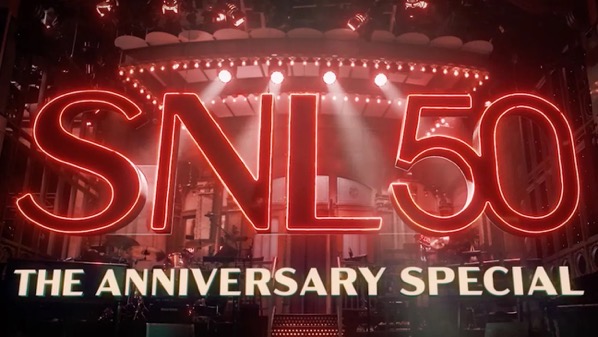 Like the series itself the evening had its ups, its downs, and its moments of mediocrity, but taken as a whole it was a keystone event chronicling a key cultural touchstone in entertainment history that’s been in and out of my life since the year after I graduated high school.
I remember the first time I saw the show, well into its first season, and remarking in a bit of awe that they can’t do that on TV. Well, they did.
And I’m glad they did.
Like I said, I’ve blown hot and cold through the years, but having been around show biz for the majority of my life I know there are more misfires than there are direct hits. Even so, you certainly can’t deny the cultural impact the show has had and that’s a credit to both longevity and the willingness to fail and flail.
While I’m sure some of the sketches from the special will be criticized for not landing, the fact that some did and some didn’t seems like the perfect celebration of walking that fine line.
The good news for those who might not have tuned into the broadcast is that you don’t have to wait around for highlights to appear on YouTube as the entire special (over 3.5 hours) is available for streaming.
You can find more of my writings on a variety of topics on Medium at
Like the series itself the evening had its ups, its downs, and its moments of mediocrity, but taken as a whole it was a keystone event chronicling a key cultural touchstone in entertainment history that’s been in and out of my life since the year after I graduated high school.
I remember the first time I saw the show, well into its first season, and remarking in a bit of awe that they can’t do that on TV. Well, they did.
And I’m glad they did.
Like I said, I’ve blown hot and cold through the years, but having been around show biz for the majority of my life I know there are more misfires than there are direct hits. Even so, you certainly can’t deny the cultural impact the show has had and that’s a credit to both longevity and the willingness to fail and flail.
While I’m sure some of the sketches from the special will be criticized for not landing, the fact that some did and some didn’t seems like the perfect celebration of walking that fine line.
The good news for those who might not have tuned into the broadcast is that you don’t have to wait around for highlights to appear on YouTube as the entire special (over 3.5 hours) is available for streaming.
You can find more of my writings on a variety of topics on Medium at  I’m finding myself attracted to very complex and complicated films and streaming series these days, even if they are flawed. That is certainly opposite of the minimalist and often stark aesthetic of Brutalist architecture where everything must have its functional point. Make no mistake, The Brutalist is functionally a complex and complicated film that I’m sure some will find a brutal time watching. And that’s not just because the run time is three hours and thirty-five minutes with a fifteen minute intermission.
I’m sure that length will scare some off. It certainly made me think long and hard about waiting to see it at home, instead of seeing it in the theatre. As an older guy with a bladder that prefers having a pause button nearby I decided to take the risk. I’m glad I did.
During that intermission the conversation in the men’s lavatory was all about how thankful everyone was for the pause. Talk about a sharing a communal experience the way art is supposed to do. Let’s just say I’m glad there was an intermission and I can think of a number of recent longer films that would have been well served to have added one.
But the intermission speaks not just to relief, but ironically it speaks back to a grander, perhaps more audacious age of cinema, when movies had things like overtures and intermissions, and were shown in ornately decorated movie palaces, instead of gray boxes stuffed next to other gray boxes. It certainly adds weight and import to the epic scale of this ambitious movie about ambitious aims.
At its core The Brutalist is an immigrant story. A Jewish immigrant story in America after the horrors of World War II. It feels all the more resonant in this time and place. Watching the protagonist survive, struggle, and try to succeed might, in and of itself, feel like a typical American Dream story, but it plumbs the depth of American nightmare moments as well. We’ve seen these epic immigrant stories before.
We’ve also seen the epic stories of artists struggling against all odds, shedding and hurting those who love them as they pursue their passion, while suppressing and harming parts of themselves to serve at the pleasure of rich philistines who use and abuse them as extensions of their own outsized egos.
This epic story works on all of those levels, but it works because of the art of the filmmaking, more specifically the men behind the cameras. Corbet may be telling the tale of a Brutalist architect pushing for his dream, but there is nothing minimalistic or spare about how he and his cinematographer and composer uses cameras and sound to tell it.
The cinematographer Lol Crawley and his camera is everywhere and anywhere, often in odd places from odder angles, especially in the first half, using visuals that disorient as much as they reveal. The sound design and the music by Daniel Blumberg in collaboration with the director is equally surprising, and at times wonderfully disconcerting and deliciously uncomfortable.
Corbet sets us up for this by shattering expectations with the overture and the credits. Instead of credits scrolling vertically, or fading in, or overlayed on the action, they scroll horizontally from right to left. It feels wrong to western eyes and is matched by the camera work in the opening section. Literally bouncing in and out of point of view, light and dark, the cameras follow the characters stumbling from the bowels to the deck of their ship, finally landing upright on Ellis Island. We are thrown into the chaos of the scramble with as much desperate anticipation and confusion as the characters. If you’re not uncomfortably ready for something different after these first few minutes then you are not ready to surrender to what the rest of this film has to offer.
The story is divided into two parts by that intermission and unfolds with many such surprises. Part I is cinematically more intriguing than Part 2, which lags at times. There the camera and editing slow down to capture longer, quieter, yet equally intense moments and that makes sense. That’s never more apparent than the scene when a husband comforts his wife’s physical pain, knowing his solution is as wrong as it will be relieving and welcome. It’s an injection of pure agony, painfully, yet beautifully acted, filmed, and scored.
But that’s a setup for when the pace picks back up to its Part 1 tempos, propelling us to the conclusion. It’s almost too much of a shock, and that’s the intent. We’re finally delivered to an epilogue, which to me feels unnecessary and almost tacked on even as it completes the epic arc of the story. But it does allow you to sober up a bit before leaving the theatre.
Overall the cast is generally quite good with Brody standing out as the architect László Tóth. You can almost breathe his pain its so present. Felicity Jones almost matches him once she enters the story in Part 2, only failing when the script fails her. But when she’s the focus, she captivates. Guy Pearce, who I generally don’t like, does the best work I’ve seen from him, and often threatens to take the story away as the central antagonist.
All in all the story isn’t unfamiliar, but it’s told with a rawness and complexity that propels us and it forward into something larger than itself, even larger than the ambitions of its characters and those of it’s storyteller. It won’t be a film for everybody, but it is more monumental than anything I’ve seen in a while.
You can find more of my writings on a variety of topics on Medium at
I’m finding myself attracted to very complex and complicated films and streaming series these days, even if they are flawed. That is certainly opposite of the minimalist and often stark aesthetic of Brutalist architecture where everything must have its functional point. Make no mistake, The Brutalist is functionally a complex and complicated film that I’m sure some will find a brutal time watching. And that’s not just because the run time is three hours and thirty-five minutes with a fifteen minute intermission.
I’m sure that length will scare some off. It certainly made me think long and hard about waiting to see it at home, instead of seeing it in the theatre. As an older guy with a bladder that prefers having a pause button nearby I decided to take the risk. I’m glad I did.
During that intermission the conversation in the men’s lavatory was all about how thankful everyone was for the pause. Talk about a sharing a communal experience the way art is supposed to do. Let’s just say I’m glad there was an intermission and I can think of a number of recent longer films that would have been well served to have added one.
But the intermission speaks not just to relief, but ironically it speaks back to a grander, perhaps more audacious age of cinema, when movies had things like overtures and intermissions, and were shown in ornately decorated movie palaces, instead of gray boxes stuffed next to other gray boxes. It certainly adds weight and import to the epic scale of this ambitious movie about ambitious aims.
At its core The Brutalist is an immigrant story. A Jewish immigrant story in America after the horrors of World War II. It feels all the more resonant in this time and place. Watching the protagonist survive, struggle, and try to succeed might, in and of itself, feel like a typical American Dream story, but it plumbs the depth of American nightmare moments as well. We’ve seen these epic immigrant stories before.
We’ve also seen the epic stories of artists struggling against all odds, shedding and hurting those who love them as they pursue their passion, while suppressing and harming parts of themselves to serve at the pleasure of rich philistines who use and abuse them as extensions of their own outsized egos.
This epic story works on all of those levels, but it works because of the art of the filmmaking, more specifically the men behind the cameras. Corbet may be telling the tale of a Brutalist architect pushing for his dream, but there is nothing minimalistic or spare about how he and his cinematographer and composer uses cameras and sound to tell it.
The cinematographer Lol Crawley and his camera is everywhere and anywhere, often in odd places from odder angles, especially in the first half, using visuals that disorient as much as they reveal. The sound design and the music by Daniel Blumberg in collaboration with the director is equally surprising, and at times wonderfully disconcerting and deliciously uncomfortable.
Corbet sets us up for this by shattering expectations with the overture and the credits. Instead of credits scrolling vertically, or fading in, or overlayed on the action, they scroll horizontally from right to left. It feels wrong to western eyes and is matched by the camera work in the opening section. Literally bouncing in and out of point of view, light and dark, the cameras follow the characters stumbling from the bowels to the deck of their ship, finally landing upright on Ellis Island. We are thrown into the chaos of the scramble with as much desperate anticipation and confusion as the characters. If you’re not uncomfortably ready for something different after these first few minutes then you are not ready to surrender to what the rest of this film has to offer.
The story is divided into two parts by that intermission and unfolds with many such surprises. Part I is cinematically more intriguing than Part 2, which lags at times. There the camera and editing slow down to capture longer, quieter, yet equally intense moments and that makes sense. That’s never more apparent than the scene when a husband comforts his wife’s physical pain, knowing his solution is as wrong as it will be relieving and welcome. It’s an injection of pure agony, painfully, yet beautifully acted, filmed, and scored.
But that’s a setup for when the pace picks back up to its Part 1 tempos, propelling us to the conclusion. It’s almost too much of a shock, and that’s the intent. We’re finally delivered to an epilogue, which to me feels unnecessary and almost tacked on even as it completes the epic arc of the story. But it does allow you to sober up a bit before leaving the theatre.
Overall the cast is generally quite good with Brody standing out as the architect László Tóth. You can almost breathe his pain its so present. Felicity Jones almost matches him once she enters the story in Part 2, only failing when the script fails her. But when she’s the focus, she captivates. Guy Pearce, who I generally don’t like, does the best work I’ve seen from him, and often threatens to take the story away as the central antagonist.
All in all the story isn’t unfamiliar, but it’s told with a rawness and complexity that propels us and it forward into something larger than itself, even larger than the ambitions of its characters and those of it’s storyteller. It won’t be a film for everybody, but it is more monumental than anything I’ve seen in a while.
You can find more of my writings on a variety of topics on Medium at 



 Life on the Wicked Stage: Act 3