-
Sunday Morning Reading
Temperatures are warming. Every day brings more daylight, more blooms in the gardens and trees Yet on the edges of two of my interests, politics and tech, things continue to darken a bit. The common denominator between the two? Humans. But then again, humans are the ones who read this Sunday Morning Reading column. As well as the bots that scrape it of course.

Some of the big news in tech this week was about a new AI product from Anthropic called Mythos. So fraught with potential peril that Anthropic gathered together the major tech heads to form a consortium to keep lid on it. Monica Verma has a good run down with her piece Did Claude Mythos Break The Cybersecurity Industry.
M.G. Siegler’s The Causal Catastrophe of AI takes a look at maneuvering around Mythos as well. Call me crazy, but I don’t think there’s anything casual about this development.
The reason I’m a pessimist on this is that I agree with a comment from JA Westenberg, “Being wrong about doom costs you nothing.” Check out Optimism Is Not A Personality Flaw. The piece walks a line. You should read it and walk it too.
Mike Elgan takes a look at Black Traffic: The Corporate Sabotage Technique You’ve Never Heard Of. Now you have.
Ng Chong examines The Echo Chamber In Your Pocket. Follow that up with this from Julie Jargon: Over 4,732 Messages, He Fell In Love With An AI Chatbot. Now He’s Dead.(That’s an Apple News lnk. This is an archived link.)
David Todd McCarty thinks one path to reclaiming power over information might be in The Return Of The Local Newspaper.You don’t know what you had until it’s gone.
This Is What Will Ruin Public Opinion Polling For Good. The “this,” according to Lief Weatherby, is something called silicon sampling. Yes, you guessed it. AI.
Coming back around to my comment at the top about not having faith in humans, OpenAI’s Sam Altman got his turn in the barrel (again) this week. Ronan Farrow and Andrew Marantz spent quite a bit of time putting this piece together. Check out Sam Altman May Control Our Future — Can He Be Trusted? FWIW, I don’t need much more time than it takes to put this column together every week to answer their question in the negative. And not just about Altman.
Mean while Altman responded on his blog, after someone tossed a Molotov cocktail at his house. He says “I have underestimated the power of words and narratives.” For someone who has scraped all the words he can off of the Internet and tried to turn them into something smarter than humans, you’d think his machines could have at least figured out that words have power.
Natasha MH sums up a lot of my lack of faith in humans in her piece, Stop Blaming The Chatbot. As she puts it, “AI didn’t make you stupid. You were already getting there.”
Sorry to be so negative this week, but that’s where I’m living., But to change the tone, Neil Steinberg turns around the Latin term, memto mori, (remember to die) around to memento vivere, or remember to live. A nice little bit of humanity to close out this week with Little LIfe.
(Photo from the author)
If you’re interested in just what the heck Sunday Morning Reading is all about you can read more about the origins of Sunday Morning Reading here. If you’d like more click on the Sunday Morning Reading link in the category column to check out what’s been shared on Sunday’s past. You can also find more of my writings on Medium at this link, including in the publications Ellemeno and Rome.
-
Out Of My Element for Fight Night
Life is an adventure. So grab something new when it comes your way. My son-in-law is a producer for The Professional Fighters League and their most recent event was tonight. He swung me a ticket. I swung down to catch the act.
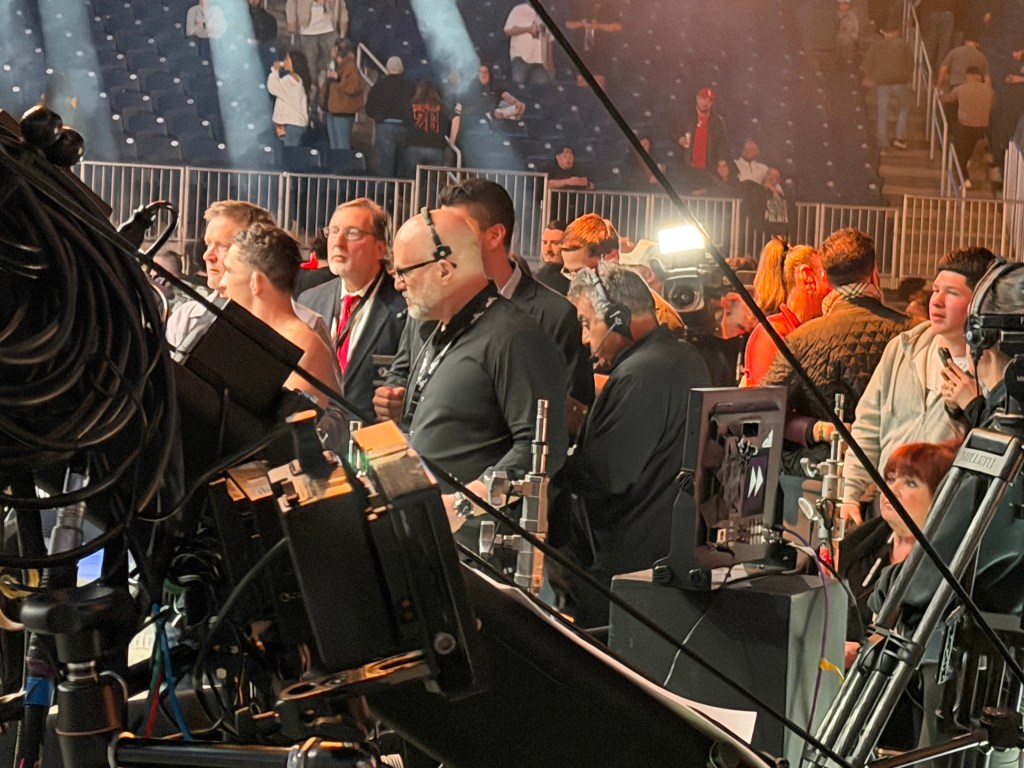
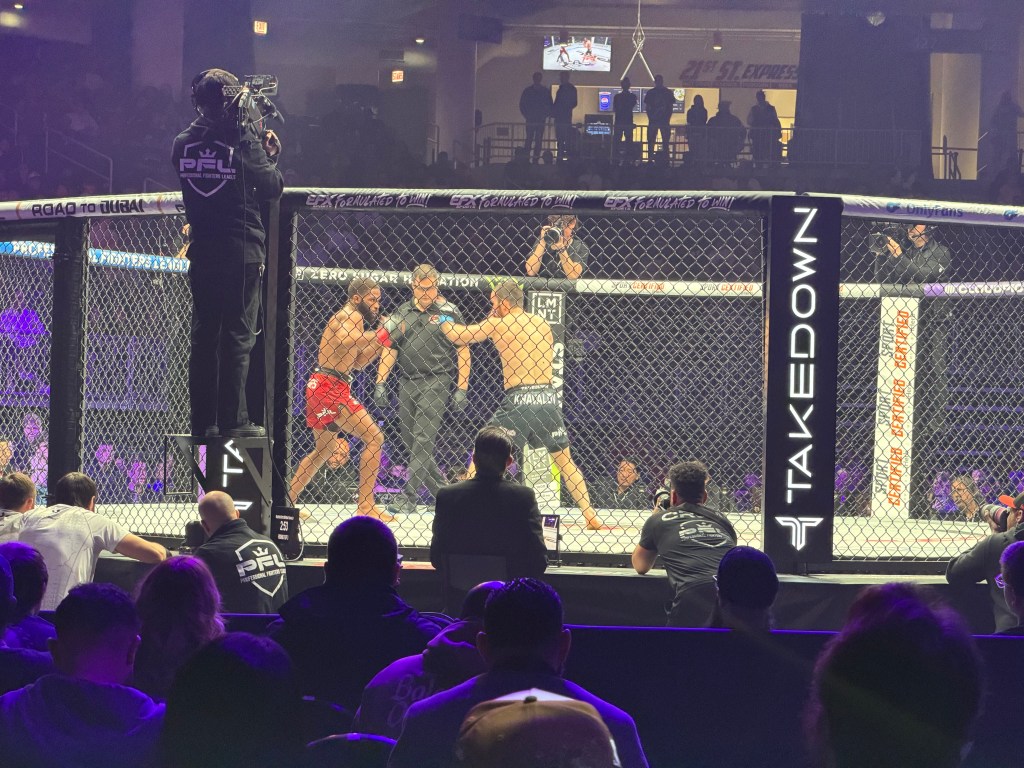
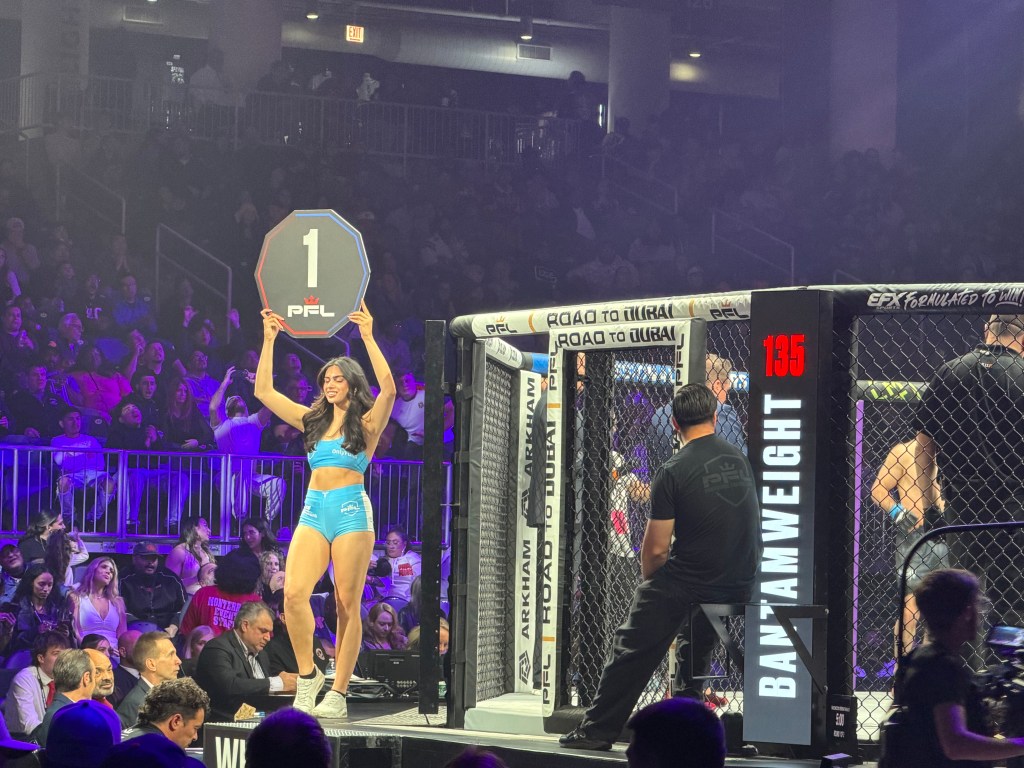
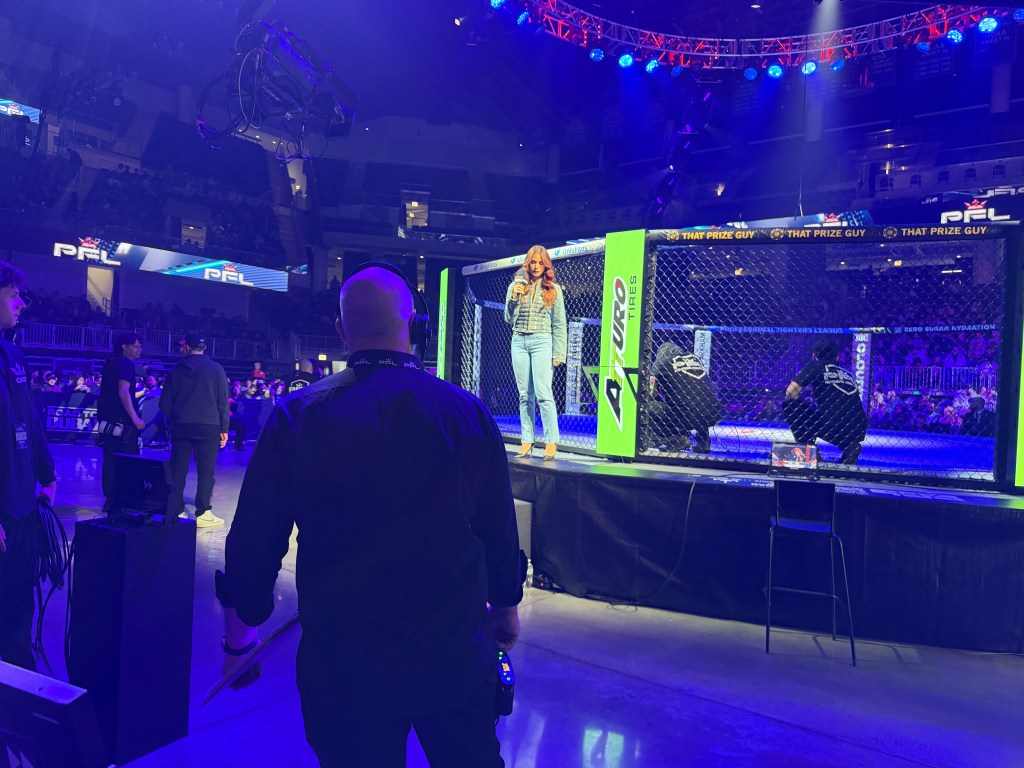


I’ve never been one to enjoy boxing, wrestling, or any of the modern derivations of those sports, but the impetus was to see my son-in-law in action while checking out the fights.
The entire thing was quite a spectacle and I have to say the fans of the sport know their stuff, cheering and booing for things that didn’t register with me. Made quite a few new friends and learned a few things. Always a good day or evening when that happens.
And I enjoyed watching my son-in-law do his wrangling throughout the gig. We’ve discussed what he does before, but seeing him in action in front of you was a treat. He’s on to Belfast this next week for the next set of matches.
Grab adventures when you can. Before life punches you in the mouth.
You can also find more of my writings on a variety of topics on Medium at this link, including in the publications Ellemeno and Rome. I can also be found on social media under my name as above.
-
The Evil Eye
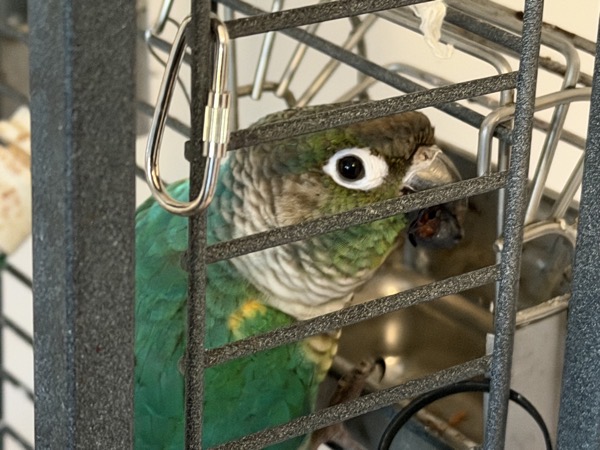
We’re bird sitting the newphew’s bird this weekend. Don’t ask. Long story. The little sucker doesn’t like me much and keeps giving me the evil eye.
-
MacBook NEO: Had To Happen Eventually
As I mentioned when Apple first introduced the MacBook NEO, it wasn’t going to be the laptop for me. I also mentioned that at a point sooner or later, one of the folks I support was going to want one, and I’d end up purchasing and setting it up for them. Today was that point.



I’ll do the drudge work (OS updates, etc…) of getting it up and running this afternoon and we’ll set things up the way they want this weekend.
Should be interesting.
You can also find more of my writings on a variety of topics on Medium at this link, including in the publications Ellemeno and Rome. I can also be found on social media under my name as above.
-
Taking Flight On A Glasswing
Every time I hear the warnings about the current or next big thing in Artificial Intelligence, I’m reminded of the Surgeon General’s warnings that are printed on packs of cigarettes. I’m also reminded of every new fad I’ve seen in my lifetime, that might have inched over into a trend, but eventually ended up waiting for its turn on the nostalgia wheel of time.
As the world was holding its breath from the civilization destroying threats that sprung forth from the mind of the U.S. President, and then exhaling as they turned into the latest episode of “Bluff, Bluster, and Bullshit,” we were learning about a new AI leap and threat from Anthropic, potentially as dire, called Claude Mythos Preview. To get ahead of any damage this coming attraction might visit upon us Anthropic created Project Glasswing. Given that the raving lunatic in the White House came to power a second time with a civilization destroying manual in hand called Project 2025, I’m more than a bit leery of anything with a title that leads with the word “Project.”
From what I’ve read, Mythos is the latest innovation in Anthropic’s flavor of Artificial Intelligence. It is so powerful that it has sought out and found vulnerabilities in so much of the software the world runs on, that Anthropic is only releasing it to a hand full of companies (Apple, Microsoft, Google, Broadcom, JPMorganChase, the Linux Foundation, NVIDIA, and more.) That’s Project Glasswing. Tech overlords uniting to protect us from their sloppy software. (The lawyers will have a field day.)
Anthropic, having been declared by the U.S. as an unacceptable national security threat and supply chain risk, nevertheless is also working with the same U.S. Government looking ahead to the threats. Somehow security and existential threats always seem to become negotiating partners with their foes when money is at stake. Also occasionally when global annihilation is knocking on the door.
The way I interpret the idea behind Project Glasswing is that these companies, and presumably governments, might use Mythos to seek out all of the vulnerabilities, and perhaps obliterate them (I use that term in the Trumpian and Hegsethian sense) before they can filter down into things like power grids, banking systems, and consumer use. It can supposedly do this at a scale humans can’t. Note that Mythos discovered problems in every operating system and, on a level both big and small, the constantly updating browsers we use on our computers.
During our testing, we found that Mythos Preview is capable of identifying and then exploiting zero-day vulnerabilities in every major operating system and every major web browser when directed by a user to do so. The vulnerabilities it finds are often subtle or difficult to detect.
I think of it this way. Announcing the existence of Mythos is akin to living the moments of terror those responsible for our safety have in House of Dynamite, once they realize the gig is up, misses are inbound, and the interceptors have failed. I’d call it an “Oh, shit” moment.
If you ask me Mythos is also exposing more than a few myths as well as vulnerabilities. The sound you hear is PR slide decks about security enhancements in the latest releases of current software being furiously redone.
As M.G. Siegler puts it,
Historically, many vulnerabilities have been fixed only after someone exploited them in some way. Again, that’s because the incentives are in favor of the attacker versus the defender. If and when Mythos-caliber tools are put in the hands of hackers… yeah.
That’s obviously exactly why Anthropic isn’t releasing Mythos to the public and also why they’ve set up Glasswing. While the company may be first to such capabilities, they won’t be the last. They probably don’t even have long to try to get ahead of the situation. While I generally dislike the nuclear weapons analogy for AI, I must admit, this all does feel a bit Manhattan Project-y. The good guys are racing against the clock to implement a new technology before the bad guys catch up. But they will. They always do.
Yeah, that sounds problematic.
Paul Krugman took a break from agonizing and writing about the situation in the Middle East and weighed in with this,
The good news is that Anthropic discovered in the process of developing Claude Mythos that the A.I. could not only write software code more easily and with greater complexity than any model currently available, but as a byproduct of that capability, it could also find vulnerabilities in virtually all of the world’s most popular software systems more easily than before.
The bad news is that if this tool falls into the hands of bad actors, they could hack pretty much every major software system in the world, including all those made by the companies in the consortium.
So, there’s plenty of doom floating around, along with the now clichéd approach to all things AI, that there’s good tech behind all of the bad things that the tech can do. Note that the profits from tobacco helped found the U.S. and twisted science and politics into knots trying not to end up on the ash heap.
I’ve largely stayed away from playing with any of these AI tools and toys, but I follow the news of the advances on all fronts, and those who do play around with it. Like it or not, those who run the world have decided this is our future.
I’ll be honest. Hallucinations aside, I don’t know enough rather or not to trust the software. I have my doubts and I do have fears about the tech. Project Glasswing might be a noble effort. Yet, with a clear mind, I do know enough not to trust any of the humans running the show. Frankly, it feels like they don’t know enough to trust the software either, much less to protect their and our systems from being destroyed by some kid in a basement.
As Natasha MH puts it, not writing about Mythos specifically, but about Artificial Intelligence in general, AI didn’t make you stupid. You were already getting there.
You can also find more of my writings on a variety of topics on Medium at this link, including in the publications Ellemeno and Rome. I can also be found on social media under my name as above.
-
Insanity Marches On. Now’s The Time To Stop It
Insanity has been on the march for the last decade or so in the guise of Donald Trump. In his latest flight of madness, a wounded ego-fueled and dementia-addled rant, he’s declared that if Iran doesn’t capitulate to his terms by 8pm EDT, then at his hands, “A whole civilization will die tonight, never to be brought back again.” I guess he’s hoping for big ratings.
It may be Taco Tuesday, and this may indeed all be another bluff. It may be a real threat. Who knows? I don’t think it matters. It’s a dangerous corner he’s backed himself and the world into. Either way, everyone is going to lose more than anyone stands to gain.
Don’t get me wrong. Certainly it matters if he launches an attack, regardless of whatever form that might take. But the sheer inane insanity of making such a statement proves for, I don’t know, about the millionth time that he doesn’t belong anywhere near any decision making process that can affect other humans.
Possible bomb damage assessments aside, the damage has already been done. Those words have further pried open the lid to Pandora’s box and led to a much more dangerous future, regardless of what happens, and further frayed whatever is left of the reputation the American fabric stands for. You can argue that he’s already destroyed one civilization hours before his 8pm deadline.
I’m glad to see that emergency protests are being hastily arranged around the country.

As dangerous as the chaos of this moment is, in my opinion we’ve reached the point when piling chaos on top of chaos might be the only way out of this moment’s danger and the larger incipient danger behind it. I’m sorry to say that. But in my view, that’s the truth of it.
I’m even sorrier (and angrier) to say that the Democratic political leadership continues adding to its reputation for feckless fighting back. Calls for Congress to come back to Washington from a vacation, or the cabinet to invoke the 25th amendment are as feeble as they come in the face of the cowardly dynamic in a capital populated by political eunuchs.
If ever there was a Democrat who wanted to separate him or herself from the pack of wannabe future contenders, assuming there is another presidential election of consequence, today might just be the opportune moment to come out of hiding and meme making and call people to the streets instead of falling back on modes of legislative and constitutional provisions essentially rendered moot. Leading in picking up the pieces won’t count for much if you continue to allow the pieces to shatter.
Who knows how this day will end. I believe it could end differently if enough citizens, yearning for leadership, found someone willing to lead, or lacking that and tired of waiting, take matters into their own hands. It won’t be pretty. It’s happened in other countries. It’s never been pretty. But there’s nothing about tomorrow that promises to be pretty regardless of whether Trump backs down (again) or sends humanity backsliding.
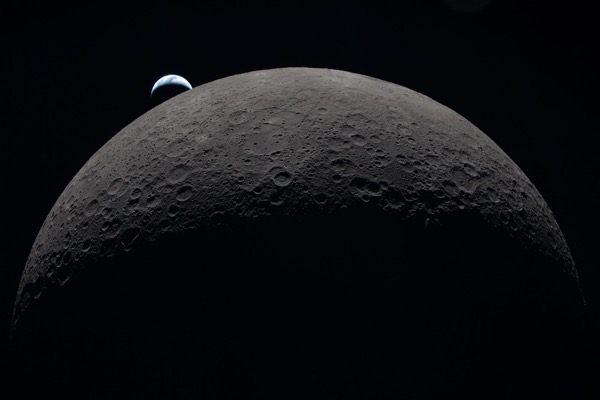
Certainly makes one wonder what perspective the astronauts currently circling the Moon might have looking back on this troubled planet. As former astronaut Sunita Williams once said,
You don’t see any borders between countries from space. That’s hand-made and one experiences it only when you return to Earth.
You can also find more of my writings on a variety of topics on Medium at this link, including in the publications Ellemeno and Rome. I can also be found on social media under my name as above.
-
The Wrecking Ball Comes For The Theatre Building
A friend and fellow theatre professional, Walter Stearns, took this sad photo today. It marks the end of an era, the end of a theatre (multiple ones under one roof), and the closing of a chapter in my life.

The Theatre Building, later Stage 773, and even later WHIM, has finally come under the wrecking ball.
If you were a theatre practitioner in any of its disciplines, I’m betting you worked on one of its three stages. Big name stars worked there before they were big names, just like many others less famous doing their thing.
If you think of what has become known as Chicago theatre, The Theatre Building was one of the venues that made theatre in Chicago, Chicago Theatre. I was privileged to produce and direct shows on each of those three stages, was a tenant, worked on staff for a period of time, and helped manage a major renovation in the 90’s.
We’ve known this has been coming for a while now, but seeing this photo of the demolition sharply marks the end. The site of so much theatre magic and home to so many Chicago theatre companies will now be developed into residential units.
Here’s a link to a Chicago Tribune article from last summer announcing the impending final curtain.
I’d take a drive by today, but feel I would be too emotional. Instead I’ll commiserate with some theatre friends tonight when we see Walter’s latest show in another part of town.
Sad day for many.
You can also find more of my writings on a variety of topics on Medium at this link, including in the publications Ellemeno and Rome. I can also be found on social media under my name as above.
-
Sunday Morning Reading
For those who celebrate Easter and Passover, and all who do not celebrate either, may you find some bit of peace on this Sunday morning, however you see yourself and the world. I’d like to say this week’s edition of Sunday Morning Reading is filled with Easter eggs, but instead it’s just the usual basket stuffed with links to interesting topics and stories that I like to share. Enjoy.

It’s good to be seen, certainly the way you see yourself. When seen by someone who doesn’t know you, that’s eye-opening. Check out Natasha MH’s The Taxi Driver Knew.
The war that isn’t a war in Iran continues. Whatever that story is, it is still being written. Given that this might be heading to the culmination of a conflict that has simmered, and occasionally boiled over, for decades if not longer, there are a few stories out there that offer preface. He Helped Stop Iran From Getting The Bomb by David D. Kirkpatrick is one worth reading.
JA Westenberg’s The “Passive Income” Trap Ate A Generation of Entrepreneurs is also one heckuva a read. There’s nothing passive about this take.
Seva Gunitsky takes on The Incel Global Order. Somebody needs to.
As the technology we use advances, in some spheres some are stepping back. Joshua Cohen takes a look in Sweden Goes Back To Basics, Swapping Screens For Books In The Classroom.
Social Media is under the microscope again after two recent court verdicts against Meta. Chris Castle takes a look with The Social Media Verdicts Are In. Now Ask The Hard Question: Where Was The Board? Counting the money, I imagine. Hat tip to Stan Stewart for this one.
In the category of no easy answers, Mathew Ingram also examines what’s going on in social media with Social Media May Be Bad For You But The Remedy Could Be Worse.
On the Artificial Intelligence front there are always interesting topics cooking as the AI purveyors cook the planet. I wrote about two fascinating pieces yesterday, and today I’m highlighting Angela Fu’s An AI Company Set Out To Fix News Deserts. Instead, It Copied Local Journalists Work. Something tells me we’re going to be seeing more of this going forward.
Apple is, I assume, winding up its week celebrating its 50th Anniversary. So much has been written on that topic because there is indeed much to celebrate and much history to contemplate while looking ahead. Here are four pieces that caught my eye, the first three primarily because they are more personal than historical, the fourth is a look ahead.
John Moltz gives us Missed Connections: Me and Apple.
James Thomson is one of my favorite Apple developers. His Apple At 50: Gonna Be, Gonna Be Golden is indeed a personal journey.
Adam and Tonya Engst have been writing Tidbits since 1990. I started reading it shortly thereafter. What Apple’s 50th Anniversary Misses is certainly different than most, but one that mirrors the thoughts of many on this anniversary.
And Marco Arment, looking ahead, has penned A Letter To John Ternus, the guy everyone assumes will don the CEO mantle in the future.
Baseball is back. And every team and their fans are dreaming of a championship. David Todd McCarty spins a bit of fiction that’s baseball adjacent, but rooted deep in dreams in The Taste Of A Dream.
To conclude this week, this story by Audrey Pachuta very much sums up the contradictions we’re living through at the moment. Check out A Student Set A Goal To Run Every Street In Chicago And Inspired A City. Now He Must Leave The Country.
May you find peace however you can.
(Photo from the author.)
If you’re interested in just what the heck Sunday Morning Reading is all about you can read more about the origins of Sunday Morning Reading here. If you’d like more click on the Sunday Morning Reading link in the category column to check out what’s been shared on Sunday’s past. You can also find more of my writings on Medium at this link, including in the publications Ellemeno and Rome.
-
Pinning Tails On AI Donkeys
Shortly after OpenAI fired the starting pistol for the AI race by releasing ChatGPT, I started saying that at some point the real money was going to be made by whatever company wins the horserace for identifying work created, regurgitated, or recycled by AI. Turns out I may have been wrong. In the face of what can be called abject surrender to an AI filled future, the sprint is now on to determine who has the best tool to identify what was created by humans. My money says everyone involved is running the Mongol Derby.

Two very interesting recent articles caught my eye. The first is by Jess Weatherbed on The Verge. Riffing off a quote from Instagram’s Adam Mosseri that it will be “more practical to fingerprint real media than fake media,” the article delves into some of the companies working to authenticate human-made work and the challenges they are facing.
The second article is by JA Westenberg, called The AI Writing Witchhunt Is Pointless. Westenberg examines the unreliability of current AI detection tools, and the very reliable human instinct to jump on Internet band wagons loaded with pitchforks and torches at the ready, if they get any sniff of AI in any content.
Both pieces are worth your time.
As someone who has adapted Alexandre Dumas’ The Three Musketeers for the stage in both a musical and a dramatic version, in English and for Russian audiences, I really appreciate Westenberg using Dumas and his almost factory-like ways of cranking out his content and how that would most likely be received in today’s Internet world.
I also very much appreciate Westenberg’s conclusion, essentially saying that there’s no way we to tell how this all turns out. It’s too early in the race. I’m a bit more hard-nosed about accepting Weatherbed’s optimism that “maybe we can return to the days of trusting what we see with our eyes.” We’ve never been all that good at doing that.
At this moment, among admittedly many more moments to come in this saga, all of the major AI services come with the same kind of PAY ATTENTION warnings on some of their features, yet not so much when it comes to content. There’s really no incentive to do so. Mosseri’s Instagram makes money regardless of who or what creates whatever Reel you scroll by.
Outside of consumable and ad serving content, AI purveyors urge users to check sources because the output before them may be inaccurate in a search result, a math problem, or a medical diagnosis. Notice that the CEO of America’s largest public hospital system is ready to start replacing radiologists with AI. Every time I hear that AI will remove us from donkey-like drudge work, I hear AI will remove salaries, yet I somehow doubt the billing will change much.
We’ve never been good at heeding these types of warnings whether they come from Surgeon Generals, Terms of Service, or from our parents. We’re certainly not that adept at being able to separate fact from fiction, regardless of how it’s created.
It strikes me as a deeply ironic, and somewhat nihilistic question, that if Artificial Intelligence was as good as promised or continues as problematic as it is in its current form in any of its facets, would we even care? Yet, if it is good enough to plant seeds of doubt as to how a piece of content comes to be, does it even matter? Reminds me of the discussion between Oppenheimer and Einstein, teased early and then revealed at the end of the Oppenheimer.
I understand why human creators are concerned, but I’m afraid those concerns are being handicapped away from the pole position. We’ve allowed our economies, both large and small, to be staked on the outcome of the race. On the other hand, if AI is so great, why the hell are AI advocates, running such a breathless and competitive race, so afraid of having anything it produces labeled as created by AI?
(Image from Erwan Hesry on Unsplash.
You can also find more of my writings on a variety of topics on Medium at this link, including in the publications Ellemeno and Rome. I can also be found on social media under my name as above.
-
Looks Like Thaw Will Be A Good Menu Bar Manager Solution For Mac OS 26
I use a lot of Menu Bar apps on my Macs. It looks like I may have found a new solution to managing those apps.

I had previously used Bartender to manage those, especially on the MacBook Air with a notch. But since the release of macOS 26, Bartender had run into some difficulties. I gave macOS 26’s new way of handling Menu Bar items a try, and that just didn’t work for me. I experimented with a few other Menu Bar managers and for a while settled on Ice.
Like Bartender, Ice also had its issues, and its developer has since halted updates. Turns out there’s an app that melts those issues away. It’s called Thaw.
Thaw, created by stonerl, is an open source fork of Ice, so much of what it offers is familiar and you can import your Ice settings. This article by Jannis explains why Ice, and I presume Bartender, ran into difficulties managing Menu Bar items.
So far things are working as expected. The idea is to hide Menu Bar icons that I don’t access frequently, yet make them available with a quick cursor flick to the Menu Bar.
As a side note on this, with the debut of macOS 26, it appeared Apple made was beginning to shift users away from using Menu Bar apps, favoring the Control Panel instead. I could easily get on board with that shift, but very few apps I use actually make Control Panel access available without creating a Shortcut to launch the app. That seems like a waste of time, but perhaps more apps will make accessing them through the Control Panel possible when we move to macOS 27.
You can also find more of my writings on a variety of topics on Medium at this link, including in the publications Ellemeno and Rome. I can also be found on social media under my name as above.
Skip to content

Life on the Wicked Stage: Act 3
Musings on life, the theatre, technology, culture and the occasional emu sighting
 Life on the Wicked Stage: Act 3