Filmmakers, Storytellers and The Resistance

Storytelling in conflict

Writing for Bloomberg, Mark Leydorf makes a case that movies are taking up the whistles of resistance in The Rise of Resistance Cinema in the Era of Trump. He’s right but he shortcuts the great history of storytelling.

Shutterstock 697665772.

He’s correct that there are a number of films being released, along with those already past their big screen sell by dates, featuring stories and themes that can’t help but strike resonant chords for those repelled by and rebelling against the current political moment we’re living in.

He doesn’t have to reach too far beyond his initial example of Wicked: For Good to create a long list of titles to support his thesis. A thesis I buy, even though I think it serves cinema history, and storytelling in general, a bit short in the end.

In compiling his list, Leydor says:

The list goes on:

Eddington, Bugonia, Sirāt— there’s a reason directors are digging into stories of conflict, paranoia and cataclysm. Taken together, these films, most of which were conceived and went into production during Donald Trump’s interregnum, between the insurrection of Jan. 6, 2021, and MAGA’s triumphant return to power, have coalesced into a troop of cinematic resistance amid the conflicts and crises defining his political era and the rightward, nationalistic turns happening broadly around the globe.

I’ll reach into that quote and point out that all successful storytelling, on the screen, on the page, on the stage, around campfires, or told sitting on bar stools involve some form of conflict, paranoia, and cataclysm. Even top rated fare on the feel good Hallmark Channel features conflict. Heck, they have to make it up on Reality TV. Without conflict you don’t really have much of a story. Goodness knows we’re overripe with enough conflict to tell thousands of stories at the moment.

While focusing on this current crop of films, Leydor is spotlighting a point in the long timeline of story telling. These current storytellers are doing what storytellers do, bringing their near term reactions to whatever is in the zeitgeist at the moment, following traditions established long before Hollywood executives ever got involved in a script conference or endings became focus group fodder.

Frankly, I’m glad to see such a strong list of filmmakers telling these stories at this moment. We need to see ourselves reflected back in the mirror we hold up to nature, before it’s all AI generated. The same is happening on stages, in late night television comedy, and from the keyboards of many authors. Given how none of us knows how this moment is going to play out, it’s fascinating.

Note that Leydor points out that most of these films were conceived and green lit after the first Trump administration and prior to this second one.

I had the privilege in the Fall of 2022 to direct three one-act plays from Ukrainian playwrights about the effects of the Russian invasion that had begun earlier that year in February. The writing was alive, fresh, and as urgent as the wounds were then. That writing still is today, even though now those stories are snippets of a longer story still unfolding to an end no one knows.

Historically few stories springing up in any current conflict, regardless of medium, retain staying power beyond almost artifact curiosity. It’s usually the stories told after the moment passes that last and define with more resilient resonances, even as their lessons are forgotten by those too eager to write what they think will be a different ending.

What will be more fascinating to watch is how many of these current films are remembered years or decades from now, once this historical moment does pass.

Whatever that turns out to be.

(Image from Skylines on Shutterstock)

You can also find more of my writings on a variety of topics on Medium at this link, including in the publications Ellemeno and Rome. I can also be found on social media under my name as above.
Scene Painting a History of Hamlets at The National Theatre

Hamlets watching Hamlet

I’ve done some scene painting in my day, but nothing like this. Actually nothing even approaching anything like this. 

Hamlet 2.jpg.

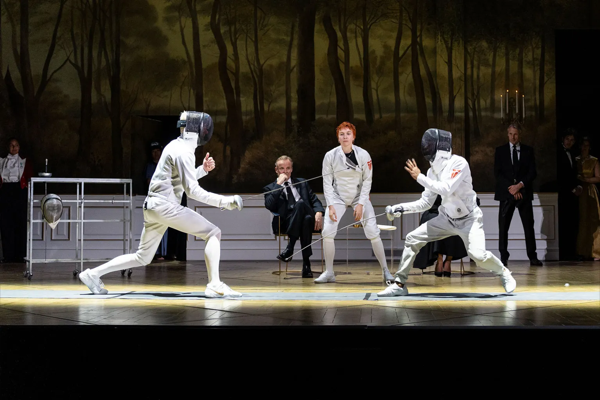
In Robert Hatcher’s production of Shakespeare’s Hamlet at Britain’s National Theatre Ben Stones’ scenery features a gigantic mural that surrounds the set that includes the faces of actors who have played Hamlet through the ages. The picture above doesn’t do that description or the concept justice. 

The faces woven into the Danish artwork are the ultimate theatrical Easter egg. While Stones keeps the full cast list close to his chest, he confirms that they are all there – a complete history of the role.

“They’re all hidden in there. Everybody who’s been in it… even Tinuke Craig’s schools Hamlets, the three boys who played on that tour. We were very clear that if we include, we are including everyone who’s ever spoken those words in any version of this kind of play.”

As a statement on the play and its theatricality that’s cool in and of itself. The ghost visages of previous Hamlets watching what can be described as a ghost story has a meta appeal.

What also attracted my attention to this article — and why I’m sharing it — is that it puts the spotlight on scenic painting, somewhat of a lost art in this day of projected backgrounds and digital printing. This theatrical work of art required 920 hours to complete. 

There’s a terrific little video that gives you an idea of the scale and scope of the painting requirement. Unfortunately it’s filmed in vertical mode so you don’t get the grand finale the same way on a computer webpage that you might on a smartphone. Even on smaller screens it has an impact.

 It made me recall my days directing theatre in Omsk, Russia when the scene painting loft was at the top of the building. There, drops would be stretched on a frame that would rise and descend through an opening in the floor allowing the scenic artists to stand on the floor as they painted. There were some amazing scenic painters in that loft. 

The article also gives credit to the scenic artists who did the work for Hamlet at the National. Well deserved.

You can also find more of my writings on a variety of topics on Medium at this link, including in the publications Ellemeno and Rome. I can also be found on social media under my name as above.

Little Feat Wraps It Up

Feats never let me down

News this week that one of my favorite bands of all time, Little Feat, is retiring after a final tour brought back quite a few memories. The Last Farewell Tour will kick off next spring and run through two years, promoting the band and their latest album, Strike Up The Band.

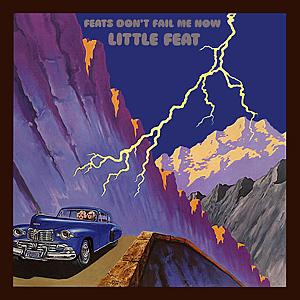
Little Feat - Feats Don't Fail Me Now.

As for those memories, in what seems like a lifetime ago when I was in college I had an assistantship in the theatre department’s scene shop. When touring acts came to campus we’d sometimes be assigned to help with load in and load out, and occasionally help run the show.

Little Feat was promoting what would become one of my favorite of their albums, Feats Don’t Fail Me Now, while opening for Joe Cocker, another of my favorites. I got the assignment to run follow spot for the gig. Up until that point I wasn’t familiar with Little Feat’s music, but that concert turned me on and I’ve been a fan ever since. They rocked the house as the warm up act and the crowd wasn’t ready for their set to end.

They certainly weren’t ready for what came next.

During the changeover a roadie came out and set two cases of Budweiser beer on the stage by the central microphone. Cocker’s band came on, tuned up a bit, the lights went down, the band kicked off the intro, at the conclusion of which Cocker was supposed to enter, which was my first cue of the set. The band was still using the intro from Cocker’s Mad Dogs and Englishmen days and all of the stage mechanics happened as planned, the crowd was pumped, but there was no Joe Cocker.

After a few moments delay we got the message to reset and we did it all again. This time Joe Cocker appeared on cue with a fifth of whiskey in his hands. He stumbled to the mic, and promptly threw up all over the stage. Yep, I had my follow spot lighting up the entire thing.

That was the end of the concert. Cocker was escorted offstage as the band played the Mad Dogs and Englishmen intro once again, then said good night and left the stage. The crowd was understandably upset with the headliner, but in the days that followed the talk was all about Little Feat’s music.

That was a moment to remember and a memory to laugh at certainly. But as well as I remember that I’ll never forget my introduction to Little Feat and their music. The band’s roster has changed throughout the years (most of the current members are in their 70’s) and the band’s songbook has journeyed its way through different American music genres. Their final album, Strike Up The Band,  lands with a return to their original sound, albeit matured and nurtured from steps along the journey. It brings back memories.

There’s a brief, but good write up about the band’s retirement decision and final tour in Rolling Stone here.

You can also find more of my writings on a variety of topics on Medium at this link, including in the publications Ellemeno and Rome. I can also be found on social media under my name as above.

The Little Prince Meets Artificial Intelligence

A melange of technology and fantasy

Every year, sometimes twice a year,  I return to one of my favorite theatre gigs, directing a staged reading for The International Voices Project. IVP is a Chicago company that produces staged readings of plays translated from other countries and cultures. Throughout the years the plays I’ve directed have taken me on journeys with writers from Syria, Lebanon, Ireland, Germany, Norway, Ukraine, El Salvador, and now Romania.

The reason I return each year is one of the reasons I have pursued and enjoyed my life making theatre. I get to touch and explore worlds, cultures, and ideas I would never have had the chance to experience otherwise. It’s always an adventure into something new.

My most recent gig with IVP certainly scratched all of those itches. The play is called Veronica’s Little Prince by Romanian playwright Dr. Catalina Florina Florescu. Yes, Antonie de Saint-Exupéry’s character of The Little Prince plays an important role.

The piece centers on Veronica, a former principal ballerina who has literally had her legs taken out from under her in a mysterious accident, leaving her in an institution, unable to move without the aid of a wheelchair and unable to speak. Unhappy with her fate Veronica is suspected of wanting to kill herself. Even before the mysterious accident she’s lived a life of self-destructive behavior.

The Little Prince arrives to help her examine and uncover the truth within her actions.

There’s another twist. I mentioned that Veronica can’t speak. In a technological twist she communicates via an AI robot by typing on her body. Via an implant those signals transmit to the robot who speaks her words and thoughts.

The play weaves in and out of Veronica’s mind and thoughts, her past and present, reality and fantasy, technology and humanity in very theatrical ways.

Creating an even more mysterious melange of tech and fantasy, the most frightening line to me is when Veronica’s Little Prince answers Veronica’s question about who told her to come by saying:

You see, they have programmed me to pop up whenever I hear certain words.

That may delight AI enthusiasts and those who keep suggesting we’re living in some sort of simulation, but given the rush to push us all deeper into a world run by Artificial Intelligence, it more than tweaks a nerve for those, like me, who may see benefits to AI in some forms, but think the pitfalls are more dangerous. Frankly, I prefer the characters in fantasy to spring from the minds of humans, not lines of code.

Given the sound and visual representations that give the script its many layers it was quite a challenge to present in a staged reading format without the benefit of theatre technology. But we managed to pull it off, letting the words weave their magic.

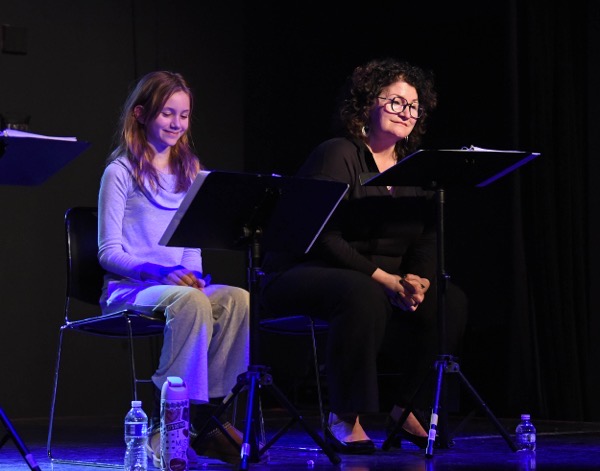
My thanks and kudos to the cast for doing such great work and especially to young Olive Popio who played our Little Prince.

(Photo by Scott Dray for The International Voices Project)

You can also find more of my writings on a variety of topics on Medium at this link, including in the publications Ellemeno and Rome. I can also be found on social media under my name as above.

Nothing Lasts Forever

Another chapter of Chicago theatre history comes to a close

You know how you know that nothing lasts forever? When you go online to search for images of a place you worked, shed more than a few beads of sweat, blood, and tears in, and you can’t find images of it.

That’s the case here. I’m referring to Theatre Building, at 1225 W Belmont, Chicago. Yes, there is no “the” in front of it. Like Apple insists that there is no “the” before iPhone. In the case of the performance space that was intentional. Pretentious maybe, but purposeful nonetheless.
Theatre Building was founded as such in 1977 by three theatre companies: Travel Light Theatre, Pary Productions and the Dinglefest Theatre Company. The latter of those became Performance Community, and then the New Tuners Theatre, and after Travel Light and Pary Productions hit their respective closings, ended up managing the three theatre complex.

At one point or another just about every Chicago theatre company, and some from outside the city, rented performance space there. It was one of the centers of gravity in the Chicago theatre landscape. I can’t tell you the number of amazing performances by Chicago actors that I’ve seen on those stages. Shows hit. Shows flopped. Shows happened. And that was the point and purpose of Theatre Building.

Theatre Building was sold to Stage 773 in 2010 and still continued providing a home for Chicago theatres, until it changed it’s focus and became WHIM, which was supposed to be a sort of interactive attraction before it folded.

Here we are in 2025 and The Chicago City Council has granted approval for the property to be converted to a five-story apartment complex. As I said. nothing lasts forever.

My theatre company, The Absolute Theatre Company rented space there for a number of years, and I later served on the staff of New Tuners Theatre and helped manage the facility. I helped renovate the three theatre spaces in the late 90’s. So there are quite a few personal memories attached to those stages. They seems like another lifetime ago.

Change happens. The sad thing about this one is that there are three less performance spaces in Chicago, but that’s been the case since Stage 773 ran into financial difficulties and had to shut down after becoming WHIM.

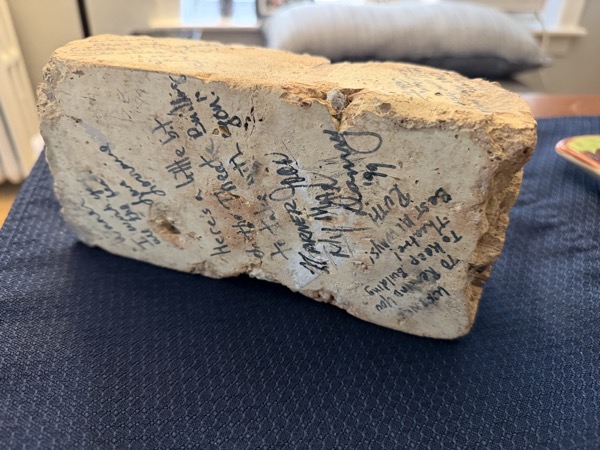
I may not have been able to find a picture this morning of Theatre Building, but I do have this brick from the building that was given to me after my last show, before I headed out to Virginia for that part of my theatre career.

Guess I’ll hang on to that piece of Chicago theatre history.

You can also find more of my writings on a variety of topics on Medium at this link, including in the publications Ellemeno and Rome. I can also be found on social media under my name as above.

David Mamet’s Woke Pain Behind His Masks

“Always tell the truth. It’s the easiest thing to remember.” -David Mamet

I first arrived in Chicago in 1999 aiming for a theatre career. I arrived just as David Mamet, one of the bright lights in the theatre firmament at the time, was spreading his wings and moving on from the city that birthed the characters in his plays. Here’s the thing, I was never that big a fan of his work.

David Mamet 080425 1 3c82613a6ff24dc685b547d0b8bf0872.

I saw the genius in it, but in the viewing it was always as predictable as it was entertaining. In later years after Mamet had found success in film I actually came to believe that his work for the big screen was actually better than it ever was on a stage. As an example, I enjoy the film version of Glengarry Glenn Ross more than I ever have on stage and I attended the Amrerican premiere of that play at The Gooodman Theatre back in 1984. The Spainish Prisoner and State and Main are delights that I always enjoy revisting.

To be fair, I’m in a minority among my professional peers. There’s no denying Mamet’s influence in the theatre and film. Personally, I was more a fan of Sam Shepard’s work. The two ran neck and neck in popularity in my early days in the theatre. But that’s not what this is about.

Somewhere along the way, Mamet became even more of an enigma when he opened up about his political views, which in some ways spun in counter orbit to the milieu of much of what his plays seemed to profess. His plays had a power dynamic that while not completely in sync with the “eat the rich” vein, both celebrated and condemned the powerful, alongside empathy with the downtrodden or less capable.

He was always a gadfly who reveled in that reputation. But there’s reveling, and then there’s reveling. At times it seemed as if he aspired to assume a Bertolt Brecht-like influence. I’m referrring more about his views on theatre, than his political views. Check out his book True and False, or the videos and articles you can find all over the Internet.

No matter what you thought of his work on the stage or in the cinema, once he began commenting about politcal and social issues he became, I dare say,  more entertaining than any piece of dramatic literature he created.

In a recent podcast with Sam Fragoso, Mamet revealed that part of the reason for his seemingly 180 degree turn in professing his political beliefs was because those in the media and literary circles that had always promoted him turned away from his work. No criticism stings more than being ignored. I’m not sure what’s the chicken or what’s the egg in that discussion, but it was a statement that did leave quite a bit of egg on his face. He later got fed up with Fragaoso and walked off the podcast.

Continuing to stay in the entertainment news this week, Mamet authored an op-ed in the Wall Street Journal called Sorry, Billionaires — There’s No Escape, essentially saying we’e all doomed regardless of how we’re measured on the wealth scale in life. Biilionaires who think they’ve built doomsday hide-aways will be undone by the laborers they hire to keep the places running. Of course those less privileged don’t even matter in the equation. It’s a reguritation of the history of the world that Brecht and Sondheim did better.

The thing of it is, for many Mamet was always as entertaining as he was enigmatic . I find him more so in these later chapters of his story, even with its odd and often confusing mix of woke hurt feelings bouncing up against his conservative bent.

But then, as Mamet, contradicting his maxim about truth says, “it’s not a lie. It’s a gift for fiction.”

You can also find more of my writings on a variety of topics on Medium at this link, including in the publications Ellemeno and Rome. I can also be found on social media under my name as above. 

A Trip Worth Taking: Billy Joel Documentary ‘And So It Goes’

Terrific trip down my lanes of memories.

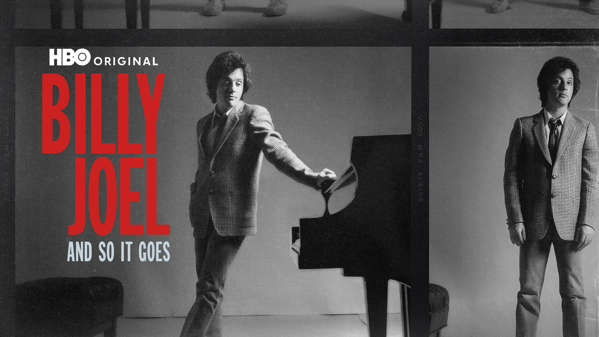
Talk about bringing back the memories and the feels. The excellent Billy Joel documentary, And So It Goes, is a must watch if you’re a fan. Or even if you’re not. I am a fan and have been since I worked a load-in, load-out shift for a Billy Joel concert back in my college days and partied with his road crew.

82fe8509 4fdb 4308 b4ae 295cd7fb0bf9.

The excellent two-part documentary chronicles the ups, downs, and of course there’s plenty of Joel’s music, because it’s always about the music and where it took Joel and those of us who grew up with him. It’s more than a trip down memory lane, the four hours is a well spent vacation back in time. I highly recommend this.

It’s interesting, and I dare say rewarding, that two of the music artists I grew up with, Joel and Bruce Springsteen, have had excellent recent documentaries about their careers. As they and I both hit later decades of life it’s a good way to look back and dredge up memories often buried in the hurly burly of the current day to day. I consider these documentaries on HBO (or whatever it calls itself this week) gifts well received.

For those interested further, there’s a playlist of the music from And So It Goes available on all the usual music streaming services. If your library, like mine, is filled with the entire catalog of Joel’s music, it’s worth adding just to track and hear how some of his songs have matured, yet not lost any of relevance, and even gained both relevance and resonance with time.

You can find more of my writings on a variety of topics on Medium at this link, including in the publications Ellemeno and Rome. I can also be found on social media under my name as above. 

CNN Will Air George Clooney’s ‘Good Night and Good Luck’ Live From Broadway on June 7

This paradox should be a must watch.

I’d mark your calendar for this one. CNN will be airing George Clooney’s production of the play Good Night, and Good Luck, live on June 7th from the Winter Garden Theatre on Broadway. It will be the first time that a live play performance has been televised.

GNGL GNGL 111064 020792 TodayTix 1600x1200.

The play is adaptation of the 2005 movie of the same name that Clooney co-wrote, directed, and starred in, based on CBS journalist’s Edward R. Murrow’s work to expose Joe McCarthy during the Red Scare in the 1950s. In the movie Clooney played Fred Friendly, Murrow’s producer. On the stage he plays Murrow.

The Broadway production has met with critical acclaim and just recently announced that it had recouped its initial investment during its run that began in March of 2025.

I’m a big fan of the movie (I wrote a little about it here) and imagine I will also be of the stage version. I’m sure the story’s central message of standing up to bullies and demagogues translates just as well in a live version as it does on film.

I’m looking very much forward to watching this and would encourage you to as well. I know there are some who see Clooney as one of the villains in our recent political turmoil. And some see CNN has a willing accomplice to the madness we face. Even with what may seem like all of that irony, I would urge you to set that aside and give Good Night, and Good Luck a watch. As I said then

This isn’t some moment of nostalgia for a time gone by. It is a recognition that where we are now is a place we’ve been before. This time around those that control the media and messaging have, for the moment, much more control than they did in Murrow’s day. Make no mistake, they had some control then, but now it’s more pervasive and the Murrow’s, Friendly’s and Paley’s are fewer in number.

Setting aside the historical significance of this broadcast of a live play, and the paradox between the message and the messengers, I can’t think of a better reason to watch given where we are and will continue to be for some time.

You can find more of my writings on a variety of topics on Medium at this link, including in the publications Ellemeno and Rome. I can also be found on social media under my name as above. 

Bullies Can Be Made To Turn Tail

Stand up or shut up

So much of what we’re living through in this age of destruction in America was unavoidable before it started, but and yet we avoided doing what was necessary. Damage is happening and will continue. The children’s rhyme of Humpty Dumpty comes to mind and that doesn’t have a pleasant ending. 

 Even if you can’t put all of the pieces back together in the same way they were before, the attempt is worth it. It’s not easy and it’s not without risk. The question of the moment is all about how American businesses will respond to the Trump tariffs. The general consensus is those costs will be passed along to consumers, in effect creating a tax. 

I happen to agree with that consensus. Our problem is that too many American businesses are afraid to confront the bully, and also afraid to cut into their profit margins. The only way to conquer that last fear is to confront the first one. 

While not the same by any stretch of the imagination, here’s a story from my past that’s somewhat analogous, at least on the bully fighting part. 

I used to run the Wayside Theatre in Middletown, Virginia. At the time it was indeed a one stoplight town. The theatre served the local surrounding counties (it sat geographically at the intersection of three counties) and parts of two adjoining states (West Virginia and Maryland). It also served the Washington DC suburbs with easy access down Interstate 66. In the immediate town the theatre helped bring customers to several restaurants and antique stores along its one Main Street. Saturday and Sunday matinees were always a delight to see folks strolling down the sidewalks between the various businesses before and after a show. 

After years of the same very local political leadership, a newcomer to the town succeeded in ousting the mayor. One of his first initiatives was to approach me and say that he was going to enact a $1.00 per ticket surcharge on the theatre to increase the town’s revenue. 

We argued back and forth about this for few months because obviously I didn’t want to see this happen. When I suggested to him that we’d print out each ticket with his name on it saying “This $1.00 Surcharge Brought To You By Mayor Brown,” he didn’t take me seriously at first, but when I showed him a mock-up of the ticket, he saw the light. 

He and I had several other contretemps over the years but ended up being friends in the end, primarily, I believe, because I did stand up to him in that first instance. I’ve won and lost battles to bullies in a similar fashion throughout my life and career. 

Again, it’s not a perfect analogy of what we’re facing as a country, as a society, and as a planet. Even so, to my way of thinking, when you’re confronted with a challenge from someone who wants to toss around their power — real or make believe — you need to stand and deliver or sit down and shut up, taking what you deserve. You might indeed lose, but otherwise you’re just a coward for not trying. 

You can find more of my writings on a variety of topics on Medium at this link, including in the publications Ellemeno and Rome. I can also be found on social media under my name as above. 

Adolescence: A Review

A tough watch. A must see.

Adolescence. See it. 

 I’d like that to be all that I write about this sensational limited streaming series on Netflix, but there’s more I want to say.

You’ve probably heard of Adolescence. It’s become a well deserved hot topic of conversation because it’s an excellently done piece of storytelling that cuts through what seems like an impenetrable zeitgeist like a hot knife through melted butter. I’m glad to see that the hype tour surrounding its recent release ramp up after the series took off because something this good needs to be ballyhooed, bravoed, and brandished with flying banners.

For me, the bottom line, beyond just saying “see it” is that the producers and artists involved captured something we all know in our gut and make us face it. Captured it in a challenging way that they didn’t need to, but by accepting that challenge opened up those gut instincts with a rawness that touches nerves we may have all let somehow deaden. The painful intimacy of one family’s story opens up a chasm full of realizations that speak far beyond the specific issues so well portrayed. 

In brief, a young boy is accused of stabbing a young girl and through the investigation we delve into a world of young boys and men influenced by Incel culture and bullying. A world not understood in this instance by the young boy’s family, or any one of the parents’ generation that we meet in the story. Watching the investigating detective’s son educate his father is a remarkable scene.

We follow the story through the boy’s arrest, booking and indictment, examination with a therapist, and the devastating conclusion as the family deals with the aftermath. Every moment is powerful. His arrest in the first episode is only the beginning of story that digs into every emotion there is when confronted with horrible moments that one would hope no family would ever have to endure. I can’t imagine any parent of young children, especially boys, watching this without wanting to take the doors off of their child’s bedroom doors and disconnect them from the Internet. It is tough to watch and it’s impossible to look away. 

Toxic masculinity, patriarchy, bullying, isolation, fear, self-loathing, and the perils of social media become bigger monsters by the moment than any knife wielding attacker. 

Director Philip Barantini, known for filming his stories in one take, uses that device to exquisite effect. He didn’t need to, but he and his team did and the payoff is exquisite. Each episode unfolds like a one-act play, filmed in one amazing traveling take. In later interviews it’s been revealed that they only did two full takes after a weekend’s rehearsal for each of the four episodes. The one take keeps you riveted as it ratchets up the tension, never letting you catch a visual breather from the story. How they filmed the second episode which takes place in and around a school is almost beyond imagining. 

The cast is superb, especially 13-year old Owen Cooper as the young boy. In his acting debut he delivers a performance that is so outstanding that it takes your breath away. He’s not only a natural, his performance borders on the supernatural. Stephen Graham, who also co-authored the story with Jack Thorne, plays the boy’s father and strikes true in every millisecond he is on the screen. Well known for playing in-your-face tough guys, Graham’s journey through this story is like watching a rock face that has been the feature of a cliff, let go and crash into a million pieces. The rest of the cast is equally up to the task of matching these amazing performances.

The back story is that Graham, hearing about crimes featuring young boys stabbing young girls, felt that questions needed to be asked, the obvious one being “why is this happening?’ As is the case with all good drama and story telling Adolescence raises as many questions as it answers others. Certainly I imagine parents who see this, and they all should, will be asking the same questions the mother and father in the series do themselves. 

On a larger scale, as we daily face an adult and supposedly mature world that seems stuck in adolescent, if not prepubescent misbehavior, celebrating toxic masculinity, bullying, and the perils of social media, this amazingly told story might at least give us a glimpse into how we looked away too often, when we knew we shouldn’t, ignoring so much at the cost of even more.

You can’t look away from this. 

You can find more of my writings on a variety of topics on Medium at this link, including in the publications Ellemeno and Rome. I can also be found on social media under my name as above.