Time for some Sunday Morning Reading.
There’s a great lyric and greater question in Lin-Manuel’s musical retelling of American history, “Who lives, who dies, who tells your story?” Control is a crazy concept. We strive to control what we can, while we’re around. Too often we delude ourselves into thinking we control more than we actually do. No one wants to define themselves or be defined as lacking control, much less under the control of others. We may think we’re masters and mistresses of our own universes and control our own narrative. Yet too often, when we do have control and things go askew, we foist the responsibility (blame) off on others. That may be essential to surviving on the paths we choose. But it’s not easy to control the reactions a dog may have to who’s good or who’s not, a dragon, or much less the demons of our own making.
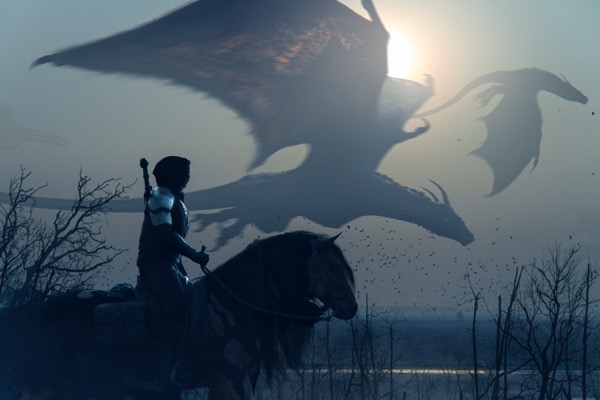
Kicking off this week is Natasha MH asking the question, What’s The Best Story You’ve Been Told About Yourself? There be dragons.
The Guardian published an editorial on the ‘unmasking’ of anonymous artists in the wake of the second unmasking of Bansky and the reveal of a hoax surrounding the death of Italian novelist writing under the nom-de-plume Elena Ferrante. Regarding Banksy, The Guardian opines that “his mask is his art — let’s not destroy it.”
I don’t often link to book reviews in this column, but this one struck my fancy. A.O. Scott’s A Treacherous Secret Agent, examines How Literature Spoke Truth To Power During The Red Scare. I’m looking forward to reading this.
Jason Perlow’s The Well We Never Tapped is a sequel to an earlier piece he wrote about the future of science fiction. He argues that in the runaway world of big sci-fi franchises like Star Trek and Star Wars the answer to controlling the future of these and other properties isn’t retooling or reimagining, but perhaps to stop for a while.
Speaking of science fiction and stopping, on the Artificial Intelligence front a number of things happening in that wannabe industry that can’t really find a purchase beyond the flimflammery of the financial markets and bean counting boardrooms, have been prompting some interesting writing of late. kstenerud on the yoloai blog writes Why Your AI Agents Will Turn Against You. There be lobsters and dragons.
Kevin Baker takes a look at how AI Got The Blame For The Iran School Bombing. Follow that up with Anna Moore’s piece Marriage Over, €100,000 Down The Drain: The AI Users Whose Lives Were Wrecked By Delusion. Makes one suspect that we’re not looking for ways to better exert control over our lives, but to more easily avoid taking the rap when things inevitably go wrong.
Big news last week got kind of mushed about in wish casting about Facebook killing off the Metaverse. That sort of did and didn’t happen. Regardless, Neil Stephenson’s My Prodigal Brainchild caught quite a bit of attention.
Apple is celebrating its 50 year anniversary and there’s lots being written about its history and it’s present. Everyone’s vying for control of that story. Harry McCracken’s How Apple Became Apple: The Definitive Oral History Of The Company’s Earliest Days is worth a read.
So too is David Sparks’ The MacBook Neo’s Unfair Advantage and the Stephen Sinofsky piece he links to, Mac Neo And My Afternoon Of Reflection and Melancholy. The damn thing hasn’t even been on sale for a month, yet we’re already trying to define its legacy.
Two political pieces to conclude with after all of the good feelings surrounding yesterday’s No Kings Rallies. (Watch for the comical battle to control the narrative over that moment this week.) Lydia Polgreen says what I’ve been saying for over a decade now. It’s Not Trump, It’s America. It’s hard to come out from under the burden of a myth.
Mike Lofgren’s How Trump Fits The “Great Man” Theory of History — Sort Of, taps into Hegel, Asimov, and the wisdom of dogs. He concludes his piece with:
History as we experience it at the sharp end is the aggregation of moral choices made by individual human beings. When those choices become corrupted by fear, resentment or inexcusable stupidity, and then amplified by mass suggestion, we get a creature like Trump, the reflection of a people’s image.
I’ll leave it at that this week.
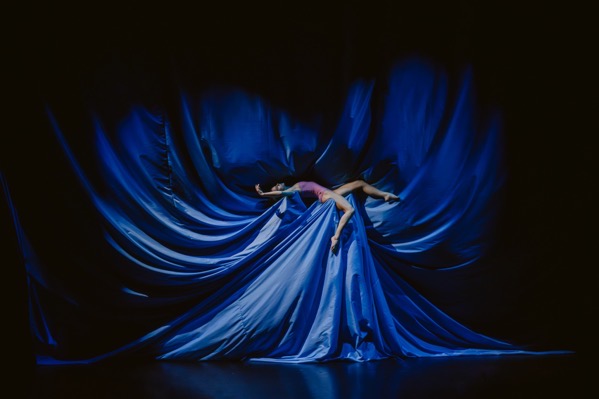
(Image from Daniele Gay on Shutterstock
If you’re interested in just what the heck Sunday Morning Reading is all about you can read more about the origins of Sunday Morning Reading here. If you’d like more click on the Sunday Morning Reading link in the category column to check out what’s been shared on Sunday’s past. You can also find more of my writings on Medium at this link, including in the publications Ellemeno and Rome.


 Life on the Wicked Stage: Act 3