-
Sunday Morning Reading
Lots to care about. On all the usual fronts. But in the grand scope of the universe does much of it really matter? Some interesting links to share in this week’s Sunday Morning Reading.

Dan Sinker, taking a look at The Chicago Sun-Times AI flaps calls it The Who Cares Era. His theory is that along the way, nobody cared. I’d venture they cared about the wrong things.
Apple’s annual developer conference WWWDC is a week away and given the many issues the company is confronting lots of folks care and are curious about how Apple begins to address them. Some don’t see Apple changing how it deals with developers, like Aaron Vegh in his post, They’re Not Going to Change.
Some, like John Siracusa, are rooting for Apple and even offering advice. Siracusa’s piece Apple Turnaround is a companion to his recent previous post Apple Turnover. All worth a read, regardless of how you feel about the predicaments Apple finds itself in.
The tech bros who seem to be in the pole position running to rule the world may be making bank, but they’re not winning any friends in the process. They most likely don’t care given that they think they’re on their way to conquering the universe. John Kaag is offering up A Reality Check For Tech Oligarchs. Frankly, I don’t think they live in anything close to reality.
Meanwhile, down here on planet reality, some are looking for ways to survive and perhaps beat the odds seemingly stacked against us. A.M. Hickman lays out a vision for How To Live on $432 a Month In America.
Much of what’s going on around us might seem profane and vulgar, leading to quite a few expletives coming out of our mouths as we cope. David Todd McCarty takes us on an exploration of his love of four-letter words in Frequently Profane But Never Vulgar. For what it’s worth, all words have value in my opinion. Hiding from them is fucking stupid.
Natasha MH is Reclaiming the Joy of Struggle in an AI-Driven World. Better grab that joy while we can, because that struggle is only going to become more intense.
Just when you thought we might have begun to figure out the new landscape of insanity we’re currently struggling through, comes along Ross Anderson who informs us about The Nobel Prize Winner Who Thinks We Have The Universe All Wrong. It may someday stop expanding the way we thought and might just remain stagnant for longer than originally theorized, allowing intelligent life to continue longer than we thought. One may ask, should we care?
(Photo from Vincent Nicolas on UnSplash.)
If you’re interested in just what the heck Sunday Morning Reading is all about you can read more about the origins of Sunday Morning Reading here. You can also find more of my writings on Medium at this link, including in the publications Ellemeno and Rome.
-
Checking Out The Windy City Hot Dog Fest
Beautiful day, yet chillier than I’d like, so I thought I’d take a hike through the neighborhood to check out the Windy City Hot Dog Fest in Portage Park.
 Chicago’s neighborhood festivals are always a good time. Obviously there’s food, but there’s also music and the usual vendors selling all sorts of crafts and the occasional artwork. Of course there’s also just the fun of people watching.
But today was about hot dogs. To kick it off I had a traditional Chicago hot dog as an appetizer before strolling down the street. But then I decided to check out the gourmet sausage creations from Chicago’s Dog House. It was a tough choice between the rattlesnake and rabbit sausage and the smoked alligator sausage but I chose the rattlesnake and rabbit.
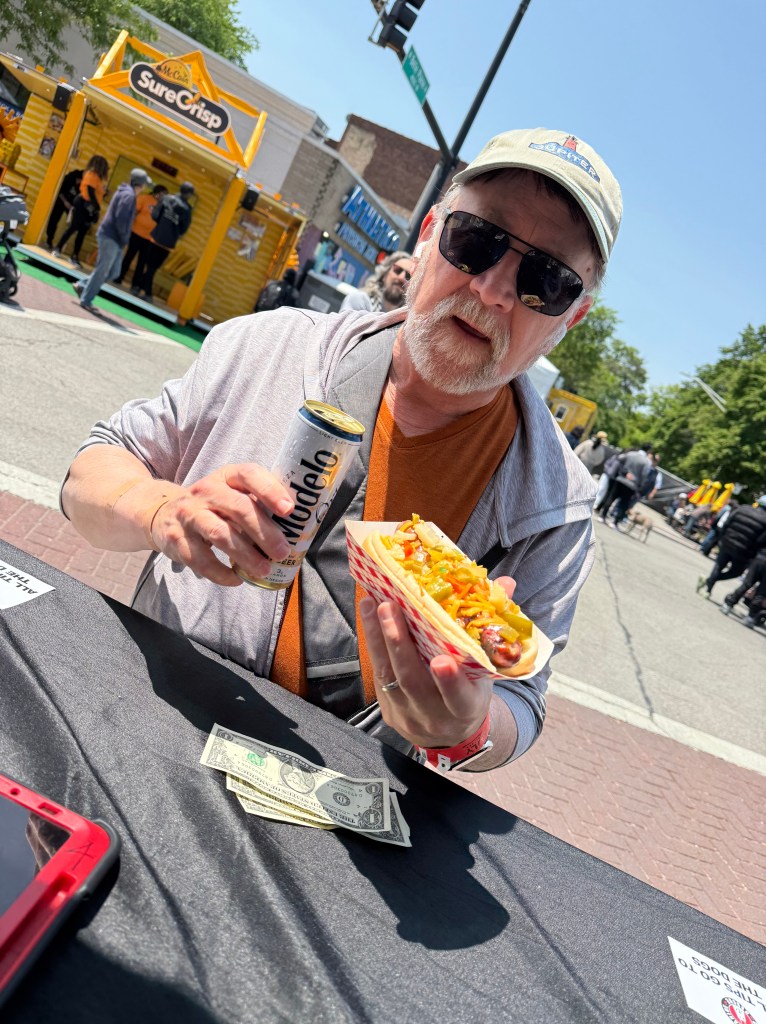
Good choice as it turns out. Since I had eaten my fill and didn’t want to mix reptiles on the same day, I strolled away satisfied. Given that the weather looks similar for tomorrow I’ll probably head back to try out the smoked alligator version.






As you can see from the gallery, there’s plenty of different varieties of hot dogs and sausages available, although I’m not sure how successful the selections from L.A. Style Hot Dogs will go over.
I also didn’t see too much ketchup around, though I can’t say I looked that closely.
You can find more of my writings on a variety of topics on Medium at this link, including in the publications Ellemeno and Rome. I can also be found on social media under my name as above.
-
Apple Opts Out of John Gruber’s Talk Show Live at WWDC
This is significant. Apple — under fire from many directions — is opting out of having executives participating in a now decade-long tradition on John Gruber’s The Talk Show Live podcast. Gruber made the announcement on his blog, Daring Fireball.
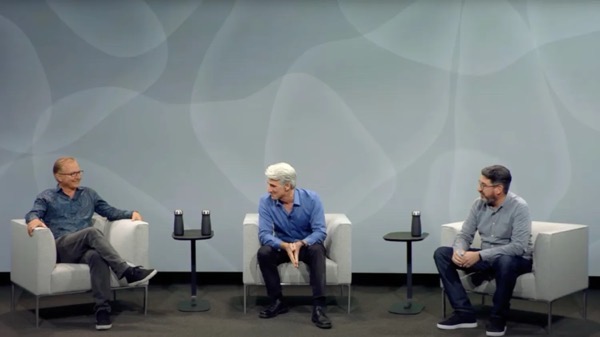
On the one hand, given the number of fires the folks at Cupertino are fighting at the moment, it’s easy to say you can’t fault the decision. To my way of thinking though, that’s an injured hand you’re afraid to show. If it were my decision — and granted I certainly do not know what the folks at Apple know — I’d use the other hand, with a whip in it.
Here’s why.
There’s nothing that each of the audiences Apple plays to at WWDC aren’t aware of. Who are those audiences? There are the fans, the developers, the media, and Wall Street. Like it or not each of those audiences already have enough awareness of Apple’s problems delivering Apple Intelligence, tariff battles, developer relations, and court and regulatory actions. They each come in with their own set of expectations and agendas.
I would also suggest that those paying attention at WWDC — and who have read Patrick McGee’s new book Apple in China — will be approaching whatever Apple announces this year and going forward in a new context. That book not only alters the Apple narratives; in my opinion, it forces a reset.
Already I’ve seen several in the community respond to the news that Apple is forgoing an opportunity to put on a human face and connect in the midst of all that’s going on. Here’s Marco Arment and Parker Ortolani to link to two.
These Talk Show Live events have indeed been a welcome side show — an opportunity to catch a glimpse of a bit of the humanity behind the corporate front. By and large I think the history of the Gruber’s event has been a net positive. Think of it like seeing the filmmakers on stage after a screening. To a certain degree I also think those days are over with the current leadership.
In this moment of high stakes on so many fronts, Apple has obviously calculated that not putting its executives in the relatively warm seat — no offense to Gruber, but the past questions and follow up have usually not been too tough — is the better bet than attempting to meet things head on.
Again, I’d argue for the head-on approach. If you ignore what your audience is already thinking you essentially ignore (and further offend) them. If ever there was a crowd that might be receptive to some honesty (admittedly PR-coached,) Gruber’s forum would be the place to find it. Does Apple need to issue some mea culpas? Maybe, maybe not. But even well coached honesty in a discussion can go a long way to creating good will. If you ask me, Apple needs more than a little of that presently.
In my professional life I’ve faced some high-stakes presentations. None on this level certainly. I may have been working to save a theatre or two, but my success or failure never had a large piece of the world’s economy depending on it. Still, the minute stakeholders assemble for such an event you only have several choices. Distract. Deny. Or be honest.
WWDC is going to happen. Arms among the audiences will be crossed, waiting for answers and clues. Apple will certainly have enough well-packaged announcements to distract at WWDC. They can’t deny their way out of the problems they brought on themselves. Being honest, however, can’t cause any more damage than has already been done.
I certainly wouldn’t want to be involved in the planning or presenting of this year’s WWDC event — even if it is pre-taped and packaged within an inch of its life. Apple has made its choice for The Talk Show Live. While the big packaged show always takes precedence, this year seems very ripe for a side show that clears the air a bit. As Parker Ortolani says, not having that will speak volumes. It is already a very loud signal about how things might play out going forward.
You can find more of my writings on a variety of topics on Medium at this link, including in the publications Ellemeno and Rome. I can also be found on social media under my name as above.
-
Yes, There’s More on The Chicago Sun-Times AI Flap
You probably remember last week’s adventure in AI and The Chicago Sun-Times. A special section featuring summer activities called The Heat Index included a traditional list of fifteen books for summer reading. Ten of the books didn’t exist, even though they are listed as being written by actual authors. Yes, AI was the culprit. But so too were the humans.

Well, it turns out there’s more to the story. Other parts of The Heat Index also included things like quotes from folks who claim they never made them and in the case of one chef was never solicited for an interview. The Sun-Times began checking the Heat Index and discovered 10 stories they checked all had similar erroneous sources, some phony, and multiple errors and information that couldn’t be verified.
The digging also unveiled that similar errors existed in past special supplements put together by King Features, a division of Hearts Corp, the newspaper published. The Sun-Times typically does about 10 such special supplements a year.
Here are some examples from the latest article describing the scenario:
One of the first stories in the summer section, touted as “a look at the hammock boom,” quoted several people who may not exist, or at least are not who Buscaglia said they were.
For example, a Ryan Leidecker was described as a product line manager at Eagles Nest Outfitters. The company said Leidecker is not an employee nor ever has been.
Buscaglia also cited a Dr. Jennifer Campos as professor of leisure studies at the University of Colorado. The university says it has no record of an employee named Jennifer Campos.
The story quoted Campos as saying a “hammock has become this generation’s equivalent of the Frisbee on the quad,” from her “2023 research paper published in the Journal of Contemporary Ethnography.” A search of her name in the journal yielded nothing.
In the same story, Mark Ellison is identified as an employee at Great Smoky Mountains National Park and warns about the damage that “improper hammock hanging techniques” can do to trees, with Buscaglia noting the information appeared on the park’s website.
Ellison posted on Facebook that he was not an employee of the park and said no such thing. The national park confirmed to the Sun-Times that Ellison does not work there and that there is no such information about hammocks on its website.
Also cited in the DIY article was a 2024 Wired magazine story by a tech writer named Brian Kahn, about setting up an outdoor movie area in your backyard. Wired told the Sun-Times that Kahn has not written for the publication and the quote was inaccurate.
The author of the content, Mark Buscaglia, did come clean about using AI and his failure to fact check. The Sun-Times has also come clean and said that no Sun-Times employees proofed the content before publishing it under its own banner.
What’s interesting, though not surprising, is The Sun-Times reasoning for how it got into this mess. Using King Features and not Sun-Times staff to prepare the supplements was, as you would expect, a cost-saving move according to Chicago Public Media’s CEO Melissa Bell, who also called the episode a series of “human mistakes.”
Here’s another quote:
Bell said the decision to buy special sections from King Features — which predated her arrival at CPM last year — was a “creative solution to keep hitting revenue goals while we transition from print to digital revenue.” She said she had no objection: “I didn’t deeply investigate the editions, and quickly approved the team to continue the practice in place. My reasoning: let’s not sacrifice any revenue.”
As a side note to this story, and pointing to the bigger picture human mistakes I think all of these AI companies have made, it seems to me that a lot of these kind of error prone mistakes or hallucinations — too easily overlooked by most humans — could easily be rectified if the AI output included some sort of watermark or other identifier to say that it was generated by machines. That technology certainly should be easy to implement. At least given the promises of what AI is supposed to offer. But then that lets the air out of the balloon.
When it comes to scraping nickels off the pavement or bigger bucks from investors, and appearing that you’re something you’re not, we humans are far too accomplished at those skills. It’s no wonder Artificial Intelligence spits it back in our faces from time to time.
You can find more of my writings on a variety of topics on Medium at this link, including in the publications Ellemeno and Rome. I can also be found on social media under my name as above.
-
You Will Be Assimilated as OpenAI Seeks Single Sign On Capabilities
News on so many fronts is fast and furious these days and this little Artificial Intelligence nugget seemed to skirt around quite a few radars. OpenAI, the purveyors of ChatGPT is working on a Sign In with ChatGPT feature.

As I said on social media when this news broke, we’ve seen this movie before. It’s a complex plot, that never seems to work out in the end. Signing in with Beginning what seems like a generation ago, Facebook, Twitter, Google, and the like proliferated and many users joined the parade out of convenience. Apple has its own Sign in with Apple feature, and swears up and down that it doesn’t share your data. That may be true, but we now know different about most, if not all of the others.
Like what happens with most new technology, we jump into the pool without really knowing what lurks beneath, and once it became more apparent how single sign in allowed companies to track you across most online activities folks began changing their habits. Swimming with sharks is never fun.
The tracking is the key. So is the passage of time. There’s an entire new generation of users who have embraced Artificial Intelligence, OpenAI’s ChatGPT in particular. TechCrunch cites that there are 600 million monthly active users of ChatGPT. I’d wager that a large number of those users were too young to experience the last generation of the single sign in revolution years ago.
As I said, we’ve seen this movie before, and by and large it never ends well. Data is tracked, traded — and now with AI used for training — in ways that should cause greater care when it comes to the tradeoff for convenience when consenting to those user agreements no one ever reads.
As the TechCrunch article points out the intent here is to use that data for commercial purposes supposedly to “help people with a wide range of online services.” That’s the pitch. But it’s a knuckle ball that is difficult to control, much less swing at. It’s always about the money and data is money.
OpenAI may be the first of the AI companies vying to sign you in, it won’t be the last. In my opinion the safest bet in the big data casino is to always create a separate sign in for each online service you use. Don’t let the convenience factor outweigh what little control you do have over how your data is used and abused.
You can find more of my writings on a variety of topics on Medium at this link, including in the publications Ellemeno and Rome. I can also be found on social media under my name as above.
-
Review: Apple In China by Patrick McGee
Timing is everything. As I began to write this short review of Patrick McGee’s new book Apple in China, this article, Auto Shangai 2025 Wasn’t Just a Car Show. It Was a Warning to the West, popped up on my radar. Let’s just say, they are nice companion pieces, given what I think the real message of McGee’s book is all about.
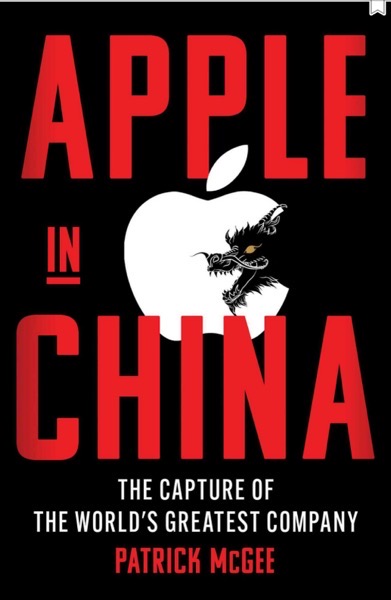
I highly recommend McGee’s Apple in China. It not only provides some rich history and context to much of the hurly burly news we follow about Apple and its relationship with China, but beneath that surface it provides a deeper warning about the failures of capitalism — Apple and American style — in general.
Not only does it hit that crucially important overlay of the story, it provides some fascinating, and at times frightening detail in many of the design, engineering, corporate, and political maneuverings far beneath the surface of all the machinations we read about on our iPhones.
In my opinion, that’s where the real magic is in the story. Given the amount of detail, McGee had access to some excellent sources. He’s an excellent writer. Portions of the story read with the pace, suspense, and scope of an adventure novel.
The focus of the book — and any of the praise and criticism of it — is obviously Apple. The gist is that Apple essentially trained up China to such a point, that with the pull of a plug, China can cut it off, and take what it has learned to dominate the world’s manufacturing sectors. His arguments are persuasive, and since Apple is — and has been — such a crucial focus since the dawn of the iPhone age, that focus makes sense. But lurking beneath those headlines, are other American companies, occasionally mentioned, who might not have gained the same notoriety, but essentially followed the same path. Check out the article I linked to earlier about the Shanghai Auto Show.
If there’s a villain in the story, it’s China. If there’s a useful idiot, it’s Apple, along with other shareholder valuing and profit loving American companies. Think of the parable of The Scorpion and the Frog.
Certainly Tim Cook plays a central role in all of this, but I have to say outside of some of the details, his obsequious compromises and acquiescence throughout comes as no more of surprise revelation as does his knee-bending to the Trump regime’s recent bullying. That’s all been on transparent display for anyone who has paid the slightest bit of attention, which makes any and all of it seem nothing short of a foolish farce, albeit a lucrative one.
In fact, I think you learn more about Foxconn’s Terry Gou than you do about Tim Cook.
If there is one big surprise that I think pierces the Apple aura, it’s just how little central control and understanding of what was happening on the ground in China in the helter-skelter days of early iPhone growth. What on the surface may have seemed like, and been adopted almost as mantra-like by the tech press, a giant corporation with a vision pushing buttons in Monday morning executive meetings, often feels like a company reacting to forces beyond its control that it brought into the tent.
The fact that Apple was as completely overwhelmed by early iPhone sales volume in China is quite frankly astounding, given what most have believed was a generally good central command of inventory control and marketing predictions. Certainly no one can predict everything, but it seems Apple wasn’t even close to understanding, much less predicting, what might happen in that market. Even as it was unfolding.
Obviously Apple won most of those skirmishes and battles. The question the book raises is will Apple have what it takes to win the larger war that it helped set the battlefield for.
(I don’t do affiliate links to products mentioned in any article.)
You can find more of my writings on a variety of topics on Medium at this link, including in the publications Ellemeno and Rome. I can also be found on social media under my name as above.
-
Sunday Morning Reading
If you’re observing Memorial Day weekend in the U.S. I hope you have had a pleasant one. Even if the weather isn’t cooperating, seemingly echoing the threats of seeing that tradition, like so many others, diminished. We’re on the road again for a dear friend’s memorial service, but there’s still time for a little Sunday Morning Reading. Mostly tech related this week, some politics, and of course some cultural happenings. If you’re paying attention, it’s all intertwining. Listening to a lot of Bruce Springsteen. Enjoy.

Adding to what’s becoming a recurring theme in this column, Ian Dunt is looking for ways to get the most out of our digital lives while taking back a bit of control from the tech god wanna-be’s. Check out Taking Back Control of Our Digital Life.
Matthew Ingram wonders If AI Helps To Kill The Open Web What Will Replace It? Excellent piece and excellent topic, because like it or not, it’s the current and next movement we on the ground are going to have to contend with. Pay attention.
Neil Steinberg, one of my favorite of a dying breed of Chicago journalists, gives his take on the recent Chicago Sun-Times AI flap in The AI Genie Is Out of The Bottle, and the Granted Wish Often Brings Trouble.
Lucy Bannerman takes on the AI’s abuse of copyright and artists rights in Nick Clegg: Artists’ Demand Over Copyright Are Unworkable. They aren’t. Those demands just cost more than folks counting the beans want to pay.
Lynette Bye’s Misaligned AI Is No Longer Just Theory raises up that specter that haunts this entire episode of our life across all spectrums that seems easy to fall prey to or dismiss, depending on which side of the coin you’re on. Frankly, if you don’t think the future of this can be manipulated, you’re not paying attention.
Jason Snell’s take on the recent announcement that OpenAI has bought Jony Ive’s company to produce new hardware for AI I think is the correct one. Check out Sam and Jony and Skepticism.
Chloe Rabinowitz fills us in on the outgoing president of the Kennedy Center’s response to the bullshit coming out of the White House. in Deborah Rutter Releases Statement In Response to Trump Kennedy Center Allegations.
The real boss, Bruce Springsteen, continues to piss off the orange buffoon in the White House and I’m glad to see it. So is Eric Alterman in a guest essay in The New York Times proclaiming Bruce Springsteen Will Never Surrender to Donald Trump. We need more of this.
And to wrap up this week, here’s NatashaMH wondering Do We Really Need To Have This Discussion? No hints. No clues. Just good stuff for you to read.
If you’re interested in just what the heck Sunday Morning Reading is all about you can read more about the origins of Sunday Morning Reading here. You can also find more of my writings on Medium at this link, including in the publications Ellemeno and Rome.
-
John Siracusa on Changes Needed at Apple
Apple is taking it on the chin lately. Deservedly so. Although some of the pounding is from external sources (Tump’s not happy with Tim Cook apparently,) most of the blows are entirely self-inflicted. Among those critics is noted Apple pundit and podcaster, John Siracusa, who delivered a piece on how he sees Apple’s current predicament. His post, Apple Turnover, essentially says it’s time for a leadership change in the C-Suite. I think he’s correct and his post is worth a read.
Nothing lasts forever, as Siracusa nicely sums it up. Change happens. Life goes on whether that change is planned, forced, or fumbled into; a sort of a reverse echo of Shakespeare’s funniest villain Malvolio telling us that “some are born great, some achieve greatness, and some have greatness thrust upon them.” His display of hubris comes before his comic comeuppance. Apple’s won’t yield as much comedy.
Quoting from his piece:
…the only truly mortal sin for Apple’s leadership is losing sight of the proper relationship between product virtue and financial success—and not just momentarily, but constitutionally, intransigently, for years. Sadly, I believe this has happened.
The preponderance of the evidence is undeniable. Too many times, in too many ways, over too many years, Apple has made decisions that do not make its products better, all in service of control, leverage, protection, profits—all in service of money.
You can certainly argue that Apple achieved greatness and now appears like it’s reached a critical juncture on many fronts, including falling behind in Artificial Intelligence and trying to ring every ounce of worth it can from every penny its users might be willing to pay for its goods and services. I won’t go into any detail on any of that here because whether it’s AI, App Store business practices, or developer relationships, it’s all been chronicled well enough for most of those paying attention to recite like a catechism. The question is, are the high priests in the C-Suite paying attention?
A few years ago I wrote a piece about how I thought Apple had built itself into a design trap. Here’s a quote from that piece:
The larger and more precarious point with this tangent is that Apple’s rich design expectations, as powerful as they are, are also Apple’s Achilles heel. Great artists aren’t afraid to fail. Great product makers who use great art as a selling point need to tread more carefully to avoid the level of disappointment that can turn a legacy into a burden.
I think they’ve built themselves a similar sort of trap in their business model(s) that comes from the same sort of reliance on their legacy of success and the hubris that’s engendered. You can easily argue that Apple’s business prowess, akin to its design prowess have both yielded unparalleled results feeding each other and fueling the company’s growth.
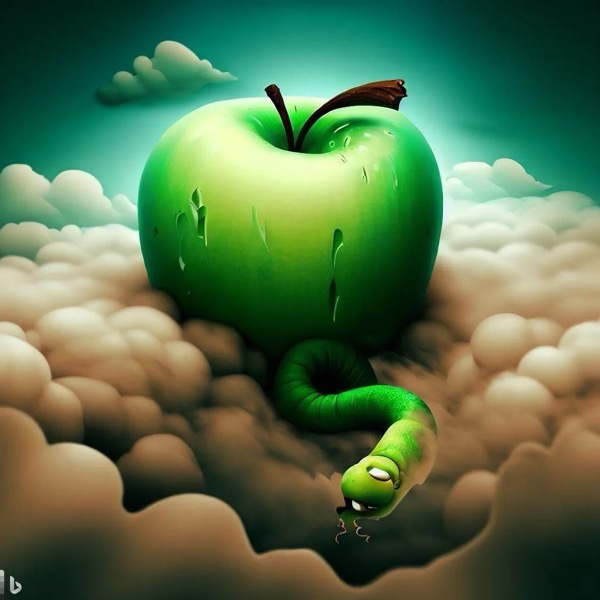
Joan Westenberg has an excellent piece called Apple’s Diet of Worms that touches on this. But to a certain extent it goes well beyond that. Apple is well known to take a long view, and by and large that’s paid off. They’ve been able to afford that long view historically, even though there have been grumblings along the way. However, I don’t believe Apple is dictating the terms or the timeline any longer.
In the case of Artificial Intelligence, as an example, who knows how that is going to play out for any of the players currently on the field or yet to come. But you can’t deny how OpenAI has changed the pace of things or how Google, and everyone else, is trying to play catch up. The recent announcement that OpenAI was purchasing Jony Ive’s design company to collaborate on what looks like new hardware, coming chock-a-block on top of Google’s mostly AI IO conference announcements, certainly changed the conversation. But then again it might be all smoke and mirrors, no matter how anxious everyone seems to be for some kind of new gadget of the future. Personally, I still think much on this AI front is a race without a finishing line or even a destination beyond collecting data for dollars.
That said, Apple is in it, perhaps thrust into the fray or perhaps fumbling along. Regardless, in my opinion any future achievements are going to require leadership change at the top.
You can find more of my writings on a variety of topics on Medium at this link, including in the publications Ellemeno and Rome. I can also be found on social media under my name as above.
-
Mozilla Finally To Shut Down Pocket
Add another marker in the Internet/Tech graveyard. Mozilla has announced that it will shutting down Pocket on July 8th. Nothing lasts forever.

It’s not a surprise to me given how poorly the app was treated after Mozilla took it over in 2017. The read it later service became almost unusable and I had gradually moved away from my reliance on it for bookmarking web links. My move away quickened once they decided to discontinue the Mac app. Making it a web only app ironically led to a pretty horrible user experience.
Pocket joins other apps like Evernote that were once old standbys that in order to grow and sustain felt like they needed to add feature upon feature in order to compete and attract funding and subscribers. You can’t blame anyone for trying to make a buck and run a company. You can blame them for doing such a poor job of it.
Mozilla has made a way for users to archive links they’ve saved with instructions to be found in their post about closing the doors. Users have until October 8th to export their data.
Update: On Friday Digg co-founder Kevin Rose has offered to step in and take over Pocket to save it from its demise. Anything’s possible I guess.
You can find more of my writings on a variety of topics on Medium at this link, including in the publications Ellemeno and Rome. I can also be found on social media under my name as above.
-
We’re Losing The Battle Over What’s Real and What’s Not
The Chicago Sun-Times is going to go through some things. Is AI the culprit? Business model? Lack of editorial oversight? The answer doesn’t really matter in the grand scheme of things when it comes to the struggle to understand what’s real and what’s not.

The paper published a summer activities guide called the Chicago Sun-Times Heat Index that contained a reading list of books that included real authors, but some of the titles were entirely fictional. As in not real titles at all. Just made up. Five of the titles actually exist. Ten do not.
This episode lead most to immediately speculate that the article was generated by Artificial Intelligence and that there was no editorial oversight of what actually made it into print. I don’t know about you, but I’d call those assumptions more than an early warning sign.
According to 404 Media the Heat Index was published by King Features which is owned by Hearst Newspapers. The guide was licensed by the Sun-Times apparently for the Sunday print and online editions.
The Sun-Times issued an early statement saying they are looking into the matter as referenced below, promising more info to be released soon.

To their credit they did. VP of marketing and communications for Chicago Public Media, which owns the Sun-Times stated to 404 Media that no one at Chicago Public Media reviewed the section, which follows a pattern used with similar such inserts saying that “historically, we don’t have editorial review…because it comes from a newspaper.” That statement of course includes the promise of a change in policy going forward and an investigation to see if there is other inaccurate information. You can read the full Chicago Sun-Times statement released later here.
The Sun-Times was not the only paper to license and publish the paper according to NPR.
That NPR report also says that writer Marco Buscaglia claimed responsibility for the guide and did acknowledge that it was partly generated by Artificial Intelligence.
Ah, well. All of those worst case assumptions were not a mass hallucination, I guess.
There were years that I bought both the Chicago Sun-Times and the Chicago Tribune every morning and got to work early enough to read them both. Those days are long gone, mostly thanks to the Internet and the changes that wrought on the newspaper publishing industry. We’ve all seen this next chapter coming. I guess it’s here.
Here’s the thing. The cold hard fact that most leapt to the assumption that this is some form of AI generated content proves the battle, and perhaps the war has already been lost, regardless of how this did or didn’t happen. It will happen again.
We’ve been heading into the land of make believe where facts don’t matter for some time now. It’s sad that what once were venerated media sources have been helping to lead the charge, especially in an era when governments feel free to make up things as they go along.
You can find more of my writings on a variety of topics on Medium at this link, including in the publications Ellemeno and Rome. I can also be found on social media under my name as above.
Skip to content

Life on the Wicked Stage: Act 3
Musings on life, the theatre, technology, culture and the occasional emu sighting

