My grandson, the photographer.

You can find more of my writings on a variety of topics on Medium at this link, including in the publications Ellemeno and Rome. I can also be found on social media under my name as above.
Life on the Wicked Stage: Act 3
Musings on life, the theatre, technology, culture and the occasional emu sighting
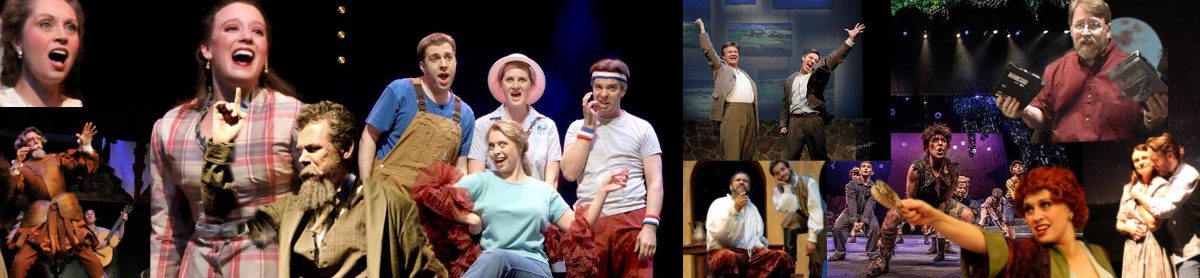
They learn young.
Summer’s almost here and at least in my neck of the woods we got a brief breather this morning before temperatures in the 90’s hit Chicago this weekend and into next week.
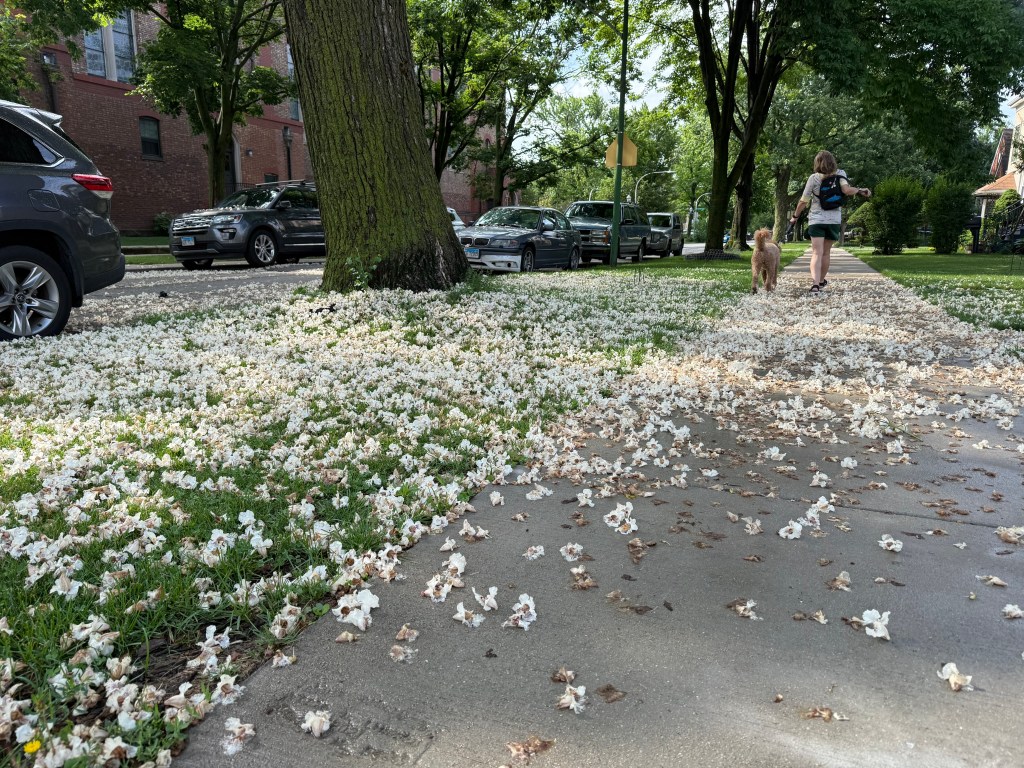
I say a brief breather because in the early morning hours the sky was crystal blue and the air was clean and fresh thanks to a wave of storms that finally blew all of the wildfire smoke out of our atmosphere. Of course that changed once the Sun got a little higher and you can feel the temps rising, high clouds and humidity beginning to creep in.
Those storms knocked many of the blossoms off of the surrounding Catalpa trees, making it almost appear like a Summer snowfall.



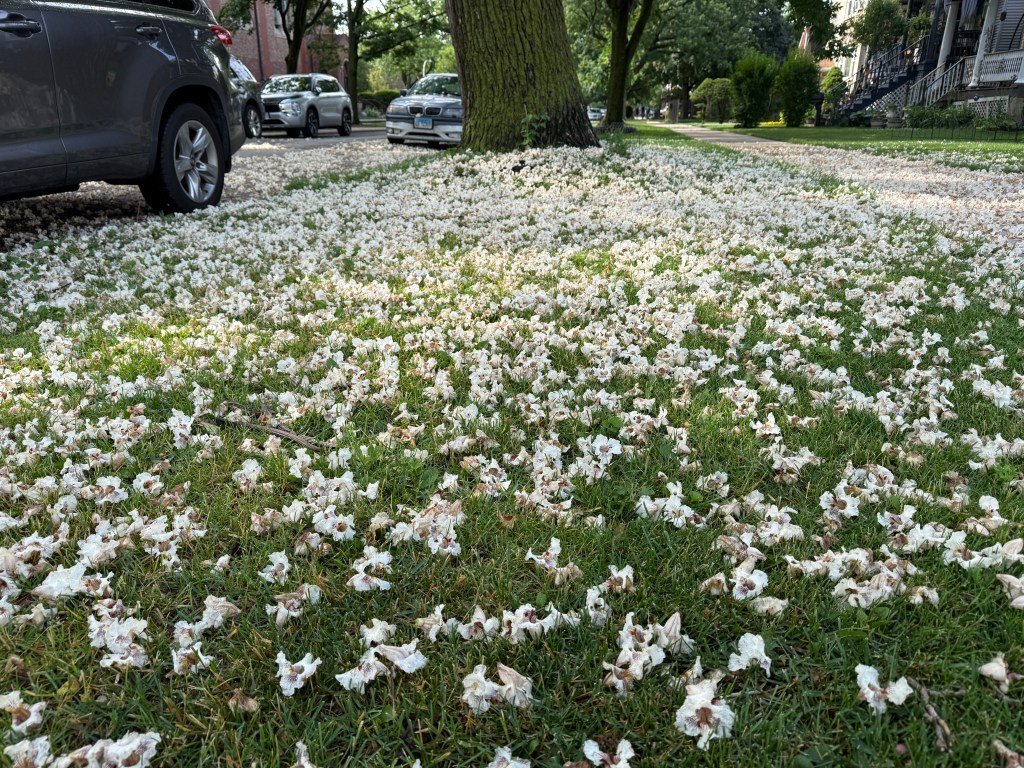
These days, you take your moments when you can.
You can find more of my writings on a variety of topics on Medium at this link, including in the publications Ellemeno and Rome. I can also be found on social media under my name as above.
Shopping on eggshells.
Brutal filmmaking and story telling in a monumental achievement.
 I’m finding myself attracted to very complex and complicated films and streaming series these days, even if they are flawed. That is certainly opposite of the minimalist and often stark aesthetic of Brutalist architecture where everything must have its functional point. Make no mistake, The Brutalist is functionally a complex and complicated film that I’m sure some will find a brutal time watching. And that’s not just because the run time is three hours and thirty-five minutes with a fifteen minute intermission.
I’m sure that length will scare some off. It certainly made me think long and hard about waiting to see it at home, instead of seeing it in the theatre. As an older guy with a bladder that prefers having a pause button nearby I decided to take the risk. I’m glad I did.
During that intermission the conversation in the men’s lavatory was all about how thankful everyone was for the pause. Talk about a sharing a communal experience the way art is supposed to do. Let’s just say I’m glad there was an intermission and I can think of a number of recent longer films that would have been well served to have added one.
But the intermission speaks not just to relief, but ironically it speaks back to a grander, perhaps more audacious age of cinema, when movies had things like overtures and intermissions, and were shown in ornately decorated movie palaces, instead of gray boxes stuffed next to other gray boxes. It certainly adds weight and import to the epic scale of this ambitious movie about ambitious aims.
At its core The Brutalist is an immigrant story. A Jewish immigrant story in America after the horrors of World War II. It feels all the more resonant in this time and place. Watching the protagonist survive, struggle, and try to succeed might, in and of itself, feel like a typical American Dream story, but it plumbs the depth of American nightmare moments as well. We’ve seen these epic immigrant stories before.
We’ve also seen the epic stories of artists struggling against all odds, shedding and hurting those who love them as they pursue their passion, while suppressing and harming parts of themselves to serve at the pleasure of rich philistines who use and abuse them as extensions of their own outsized egos.
This epic story works on all of those levels, but it works because of the art of the filmmaking, more specifically the men behind the cameras. Corbet may be telling the tale of a Brutalist architect pushing for his dream, but there is nothing minimalistic or spare about how he and his cinematographer and composer uses cameras and sound to tell it.
The cinematographer Lol Crawley and his camera is everywhere and anywhere, often in odd places from odder angles, especially in the first half, using visuals that disorient as much as they reveal. The sound design and the music by Daniel Blumberg in collaboration with the director is equally surprising, and at times wonderfully disconcerting and deliciously uncomfortable.
Corbet sets us up for this by shattering expectations with the overture and the credits. Instead of credits scrolling vertically, or fading in, or overlayed on the action, they scroll horizontally from right to left. It feels wrong to western eyes and is matched by the camera work in the opening section. Literally bouncing in and out of point of view, light and dark, the cameras follow the characters stumbling from the bowels to the deck of their ship, finally landing upright on Ellis Island. We are thrown into the chaos of the scramble with as much desperate anticipation and confusion as the characters. If you’re not uncomfortably ready for something different after these first few minutes then you are not ready to surrender to what the rest of this film has to offer.
The story is divided into two parts by that intermission and unfolds with many such surprises. Part I is cinematically more intriguing than Part 2, which lags at times. There the camera and editing slow down to capture longer, quieter, yet equally intense moments and that makes sense. That’s never more apparent than the scene when a husband comforts his wife’s physical pain, knowing his solution is as wrong as it will be relieving and welcome. It’s an injection of pure agony, painfully, yet beautifully acted, filmed, and scored.
But that’s a setup for when the pace picks back up to its Part 1 tempos, propelling us to the conclusion. It’s almost too much of a shock, and that’s the intent. We’re finally delivered to an epilogue, which to me feels unnecessary and almost tacked on even as it completes the epic arc of the story. But it does allow you to sober up a bit before leaving the theatre.
Overall the cast is generally quite good with Brody standing out as the architect László Tóth. You can almost breathe his pain its so present. Felicity Jones almost matches him once she enters the story in Part 2, only failing when the script fails her. But when she’s the focus, she captivates. Guy Pearce, who I generally don’t like, does the best work I’ve seen from him, and often threatens to take the story away as the central antagonist.
All in all the story isn’t unfamiliar, but it’s told with a rawness and complexity that propels us and it forward into something larger than itself, even larger than the ambitions of its characters and those of it’s storyteller. It won’t be a film for everybody, but it is more monumental than anything I’ve seen in a while.
You can find more of my writings on a variety of topics on Medium at this link, including in the publications Ellemeno and Rome. I can also be found on social media under my name as above.
I’m finding myself attracted to very complex and complicated films and streaming series these days, even if they are flawed. That is certainly opposite of the minimalist and often stark aesthetic of Brutalist architecture where everything must have its functional point. Make no mistake, The Brutalist is functionally a complex and complicated film that I’m sure some will find a brutal time watching. And that’s not just because the run time is three hours and thirty-five minutes with a fifteen minute intermission.
I’m sure that length will scare some off. It certainly made me think long and hard about waiting to see it at home, instead of seeing it in the theatre. As an older guy with a bladder that prefers having a pause button nearby I decided to take the risk. I’m glad I did.
During that intermission the conversation in the men’s lavatory was all about how thankful everyone was for the pause. Talk about a sharing a communal experience the way art is supposed to do. Let’s just say I’m glad there was an intermission and I can think of a number of recent longer films that would have been well served to have added one.
But the intermission speaks not just to relief, but ironically it speaks back to a grander, perhaps more audacious age of cinema, when movies had things like overtures and intermissions, and were shown in ornately decorated movie palaces, instead of gray boxes stuffed next to other gray boxes. It certainly adds weight and import to the epic scale of this ambitious movie about ambitious aims.
At its core The Brutalist is an immigrant story. A Jewish immigrant story in America after the horrors of World War II. It feels all the more resonant in this time and place. Watching the protagonist survive, struggle, and try to succeed might, in and of itself, feel like a typical American Dream story, but it plumbs the depth of American nightmare moments as well. We’ve seen these epic immigrant stories before.
We’ve also seen the epic stories of artists struggling against all odds, shedding and hurting those who love them as they pursue their passion, while suppressing and harming parts of themselves to serve at the pleasure of rich philistines who use and abuse them as extensions of their own outsized egos.
This epic story works on all of those levels, but it works because of the art of the filmmaking, more specifically the men behind the cameras. Corbet may be telling the tale of a Brutalist architect pushing for his dream, but there is nothing minimalistic or spare about how he and his cinematographer and composer uses cameras and sound to tell it.
The cinematographer Lol Crawley and his camera is everywhere and anywhere, often in odd places from odder angles, especially in the first half, using visuals that disorient as much as they reveal. The sound design and the music by Daniel Blumberg in collaboration with the director is equally surprising, and at times wonderfully disconcerting and deliciously uncomfortable.
Corbet sets us up for this by shattering expectations with the overture and the credits. Instead of credits scrolling vertically, or fading in, or overlayed on the action, they scroll horizontally from right to left. It feels wrong to western eyes and is matched by the camera work in the opening section. Literally bouncing in and out of point of view, light and dark, the cameras follow the characters stumbling from the bowels to the deck of their ship, finally landing upright on Ellis Island. We are thrown into the chaos of the scramble with as much desperate anticipation and confusion as the characters. If you’re not uncomfortably ready for something different after these first few minutes then you are not ready to surrender to what the rest of this film has to offer.
The story is divided into two parts by that intermission and unfolds with many such surprises. Part I is cinematically more intriguing than Part 2, which lags at times. There the camera and editing slow down to capture longer, quieter, yet equally intense moments and that makes sense. That’s never more apparent than the scene when a husband comforts his wife’s physical pain, knowing his solution is as wrong as it will be relieving and welcome. It’s an injection of pure agony, painfully, yet beautifully acted, filmed, and scored.
But that’s a setup for when the pace picks back up to its Part 1 tempos, propelling us to the conclusion. It’s almost too much of a shock, and that’s the intent. We’re finally delivered to an epilogue, which to me feels unnecessary and almost tacked on even as it completes the epic arc of the story. But it does allow you to sober up a bit before leaving the theatre.
Overall the cast is generally quite good with Brody standing out as the architect László Tóth. You can almost breathe his pain its so present. Felicity Jones almost matches him once she enters the story in Part 2, only failing when the script fails her. But when she’s the focus, she captivates. Guy Pearce, who I generally don’t like, does the best work I’ve seen from him, and often threatens to take the story away as the central antagonist.
All in all the story isn’t unfamiliar, but it’s told with a rawness and complexity that propels us and it forward into something larger than itself, even larger than the ambitions of its characters and those of it’s storyteller. It won’t be a film for everybody, but it is more monumental than anything I’ve seen in a while.
You can find more of my writings on a variety of topics on Medium at this link, including in the publications Ellemeno and Rome. I can also be found on social media under my name as above.
Putting the pit in the pulpit.
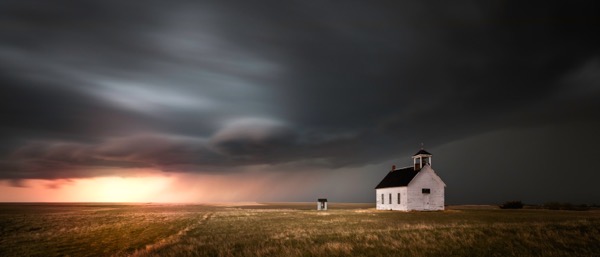 I wrote a bit on my thoughts and some of mh history walking down and away from church aisles that formed those thoughts in the publication Ellemeno on Medium. The piece is called Whatever Gets You Through The Night.
Yes, you can thank John Lennon for the title, actually you can thank John Lennon’s inspiration for the title, the Reverend Ike as well. As I say in the piece:
I wrote a bit on my thoughts and some of mh history walking down and away from church aisles that formed those thoughts in the publication Ellemeno on Medium. The piece is called Whatever Gets You Through The Night.
Yes, you can thank John Lennon for the title, actually you can thank John Lennon’s inspiration for the title, the Reverend Ike as well. As I say in the piece:
The rules matter until they don’t. The stories matter until they don’t. The questions always matter. Especially the ones we can’t answer.I hope you check out Whatever Gets You Through The Night. You can find more of my writings on a variety of topics on Medium at this link, including in the publications Ellemeno and Rome. I can also be found on social media under my name as above.
Real names matter. Why is that so unreal?
I wrote a little something for the publication Ellemeno on Medium about names and anonymity on the Internet. Take a look at What’s In a Name?
 Prompted by a new display name policy adopted by the publication, this is something I’ve been thinking about for quite some time. I always publish my writing and anything I do on social media under my real name. It’s the same way I conduct my professional life as a theatre director, always using the moniker I was given.
Certainly there are reasons folks adopt other names, handles, and nom-de-plumes and I don’t judge anyone negatively for doing that in an increasingly dangerous world. That said, I’ve always believed the world would be a better place if we all had the courage to conduct ourselves under our real names. But that’s perhaps naive.
Obviously there’s a lot more to say in the piece. I hope you take a few moments and read it.
You can find more of my writings on a variety of topics on Medium at this link, including in the publications Ellemeno and Rome. I can also be found on social media under my name as above.
What if the former office holders at Carter’s funeral, took the orange turd into a backroom and knocked him around a bit?
Watching a bit of former president Jimmy Carter’s funeral service today I couldn’t help buy fantasize a bit.
 Watching the remaining former presidents, the current and outgoing president and vice president, along with a few former VPs my mind leapt into wild imaginings. I sort of wished that there would be a moment when, post ceremony, they all gathered together in a room with the incoming sad excuse of a human-soon to be president, looked him in the eye, and just said, “No, we are not going to let this happen again.”
Then I imagined they beat the shit out of him.
Of course they are collectively far too long in the tooth for that and decorum and dignity always seems to reign. Even when the incoming keepers of decorum and dignity are about to tear it to shreds. So, it’s just a fantasy.
But I liked the moment in my mind.
You can find more of my writings on a variety of topics on Medium at this link, including in the publications Ellemeno and Rome. I can also be found on social media under my name as above.
Facts and the factless.
Has fact checking ever worked? Seriously. Has it ever? In my opinion if there was ever any real utility, it’s long since lost its pucker.

Mark Zuckerberg caused all sorts of consternation yesterday announcing he was going to dismantle Meta’s fact checking operation now that he realizes a million-dollar bribe probably wasn’t enough to keep him out of jail during the reign of the next administration. It was quite a public puckering up.
But let’s get real for a moment. Once any fact-less statement takes off it spreads faster than a wildfire in California and all the fact checkers in the world can’t snuff it out. For some facts do indeed matter. They occasionally do in our legal system, though not always. They used to in our legislative processes, but that’s long since become a relic of a time gone by. For most of its history, journalism wasn’t what so many bemoan the loss of today. Myths have fueled our religions and our histories since we first sought understanding.
And as for social media and the Internet in general? That’s a medium that has always allowed (and encouraged) the presence of fake personas. All bets there have always been off.
Prior to Zuckerberg’s recent sucking up, Meta had taken recent fire for allowing the creation of AI-generated chatbot personas to appear in feeds alongside regular users. Reaction to that led to a pull back that’s sure to be only temporary. I mean, think of the business model. Why do you need problematic real users when you can just create them and still con advertisers into paying for ads that most avoid or don’t see anyway? Programmatic users are certainly easier to control than problematic real ones—at least until the AI takes over.
Here’s a fact that doesn’t need checking. Facts matter if you think they do, but most of the rest of the world doesn’t care what you think if they can support their beliefs—or protect their business model—by making shit up and making it stick.
You can find more of my writings on a variety of topics on Medium at this link, including in the publications Ellemeno and Rome. I can also be found on social media under my name as above.
Out with the old and in with the new.
Happy New Year!

Let’s hope it’s better than the last one. But we’ve been saying that for almost a decade now without much to show for it. So drink up and buckle up.
You can find more of my writings on a variety of topics on Medium at this link, including in the publications Ellemeno and Rome. I can also be found on social media under my name as above.
Merry Christmas!
Merry Christmas to all who celebrate and a happy day to those who do not!

May you find warmth and joy in the good company of family and friends!
You can find more of my writings on a variety of topics on Medium at this link, including in the publications Ellemeno and Rome. I can also be found on social media under my name as above.

 Life on the Wicked Stage: Act 3