The Lehman Trilogy Diaries: Expanding the Team

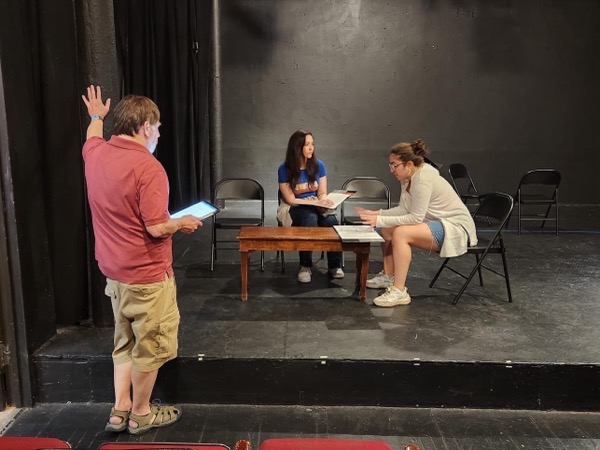
We’ve been hacking away at The Lehman Trilogy for a few weeks now. Three cast members, a director, and a stage manager in a rehearsal room, collectively working through an extremely fun, yet densely challenging script, beat by beat, moment by moment. I can speak for that small cadre that we feel very good about our work so far, and a bit terrified by the work ahead. Tonight we do a run-thru for the design team and the production staff and the inner circle expands.

The designers and production folks have had their brains on this for awhile now, but tonight is the first time they will be in the room where it happens, exposed to more than just my words and rehearsal notes about what is exactly is happening with the story we’re trying to tell.

I have a love and hate relationship with designer run-thrus. First, they are a necessary part of the process. Challenges become more real and collaboration becomes more possible. On the other hand, it also kicks things into another gear for the actors. All of a sudden they feel ike they’re performing instead of just advancing the work reherarsal to rehearsal. The atmosphere becomes less safe. Not in any dangerous way, but in a way that usually invovles a step or two backwards before allowing things to begin moving forward again.

We’re still in the rehearsal room, safely tucked away on the 5th floor, anxious to get to the stage. But we’re not done here yet. As inhibited as this room is compared to the actual less confining confines we’ll be inhabiting soon, it’s become home, familiar and comfortable, yet growing tired and small as the cast’s work is begging for the space the stage will provide.

As an example, a good portion of the staging features actors standing on a conference room table, and we don’t have the ceiling height to make that possible in the rehearsal room without the actors crashing their heads into the drop ceiling tiles.  We’ve come up with some interesting, occasionally humorous alternatives for those moments, yet they yearn to play in the full height and freedom of the stage.

So, embracing both the love and hate, we’ll grow the team tonight as we prepare for the next steps. Should be fun. Should be scary. Should be quite a show…er…um…rehearsal.

The iPad Is My Perfect Theatre Rehearsal Tool

For some the iPad can be a strange beast. For some the iPad is just what they need. Of course that depends on which iPad you might have or use. That’s where the “strange” comes in. Most of the follow the leader tech press thinks the iPad lineup is confusing. Following along, I happen to agree to an extent. If you know what you’re looking for it’s not that difficult a choice. But if you are in the market for the first time it can be confusing. There’s size differences. There’s iPad Pros, iPad Airs, just plain iPads, and then there’s the iPad mini.
Apple hasn’t helped with the confusion because it’s sent mixed signals along the way. I’m not one to be that concerned because my needs are clearly defined. I’m not looking to use an iPad as full computer replacement, though there have been times I’ve used it as such and reliably well. I’m in the game for mobility for both work and play. Frankly, while the lineup may seem confusing to the easily distracted,  the variety in the lineup does offer an array of choices.

My family is one example. For my wife an iPad is primarily a content consumption device. For me it serves that purpose, and is also an indispensible work platform. I keep up to date with current hardware. That’s my gadget geek side. My wife is still quite happy with a much older version. (It still has a Home button!) My wife defines the case for many that frustrates the “must have new hardware” and “growth at all costs” crowds. For lack of a better analogy, she sits in the larger main section of the theatre often referred to as the orchestra. I sit in the “always ready for the new thing” smaller mezzaine or balcony. That analogy flips the pricing equation on its head, given that the main floor tickets are usually higher priced, but I think it holds in terms of numbers.

I own the latest models of an 11-inch iPad Pro and also an iPad mini. Love them both. I use them in similar but different ways, fitting the tool to the job of the moment. I may be a gadget geek, but I’m primarily a theatre professional. Most of my work is directing plays. Both serve me well in my job. Currently, I’m working out of town on staging The Lehman Trilogy. Both the iPad Pro and the iPad mini suitably fill my down hours with entertainment and are reliable work horses for the gig. To be honest, their roles as tools are so familiar that to call my usage “rote” would be accurate.

Background

Back in the day I was a Tablet PC fan boy. I used them primarily as a work device in the theatre. I was at one time a Microsoft MVP for Tablet PC. Those devices allowed me to quit using paper scripts in rehearsal and write my notes directly into a digital script. I could set aside my beloved yellow legal pads and not so beloved folders of research and have everything handy in digital format on a Tablet PC. The debates then were over slates versus convertible Tablet PCs.

Microsoft screwed the pooch with Tablet PCs leaving the door open for Apple. And along came the iPad. It certainly wasn’t perfect for my work initially, but it offered promise. I can’t remember  how many different stylus solutions I went through (from Adonit to Zagg) until the Apple Pencil came along. Along the way I’ve tried most of the other tablet solutions but as far as my work needs are concerned the iPad is hands down the only viable choice. I include Microsoft’s Surface tablets in the reject pile.

My Work

When I’m doing a show, work includes reading and working from scripts; research gathering and consumption; using, taking and making notes in rehearsal as well as on the research. Working with scripts, once a page gets too filled with my indescipherable scribbles, I simply open another copy and start afresh. GoodNotes is my app of choice for this. (I’ve tried them all.) It’s an easy solution for scribbling notes in the margins of a script in prep or in actual rehearsal. It also provides a way for me to archive scripts once I’m done with a show.

As a director I often walk into rehearsal with a clean copy of the script so that I’m more focused on the actors and the text and less on my notes. It’s a snap (swipe?) to switch back and forth when I need to reference my notes or research. Time is money and a limited commodity in rehearsal and I have to maximize what time I’m given.

In the early days of staging I’m primarily using the iPad Pro. It’s a Goldilocks device as far as size goes. The text and my notes are large enough to read at a glance and the size of the device is easy to tote when I move around the theatre or rehearsal room. In the stages of rehearsal when I’m mostly taking notes as the actors rehearse what we’ve done, I switch to the iPad mini for even more mobility and a bit of discretion.

My research is ongoing, but primarily done prior to rehearsals beginning. I do some of that on the iPads, but use a Mac for quite a bit of it. Apple Notes is my app of choice for all of that research gathering, though I’ve tried many others and still do. Prepping for a day’s rehearsal when I may need specific research I’ll create a note with links to those notes, the research directly, or a work list and have them handy via Slide Over. I’m still not a fan of Stage Manager although I’ve given it several attempts to win me over.

Marshall McLuhan coined the phrase “the medium is the message” in the 1960’s about human communication. For me, the same is true with my work tools. When I’m staging and working scenes the larger iPad Pro is the medium of choice and feels natural as I’m moving actors and scenery from moment to moment. When I’m watching and note-taking as the actors move through scenes on their own, the smaller iPad mini serves to remind me that I’m an observer, not a participant in the moment. If I move about the theatre while the actors are working it can be distracting if they see me a take a note. They can fall out of the moment and into a “what did I do wrong” mode of self-monitoring. So I try to be as discreet as possible.

Once we’re down to the final days of rehearsals and I have limited hours for giving notes I’ll actually return back to my Mac for preparation and organizing my notes for efficiently relaying them via email or in note sessions with the cast. Often I’ll use the Notes app on my iPhone when giving those notes in person. Once we invite the audience in for previews, I’ll stick with the smaller iPad mini for taking those notes, again for discretion purposes. When you tell an audience to put away their smartphones it’s not a good look to see a larger iPad light up while the director is taking notes. There was a time that I used a Samsung Galaxy Note in this scenario using OneNote or Evernote as the note-taking app. But those days are gone as my routine has become more focused.

For this current gig, we conducted some early table work and read-throughs of the script using Zoom. I’d be on my Mac, but have my script on the iPad Pro. My actors were using iPads for their scripts as well.

My work also consists of a lot of meetings and since I’m a now happily a freelance director I often travel for work. That means I’m often doing pre-production virtually using whatever video conferencing app the theatre uses. I’m also auditioning actors in virtual auditions. Video submissions also play a significant role. Both devices serve well in those aspects of the job, though I typically prefer the iPad Pro in those cases.

Play

Throughout this article I’ve also mentioned that I use both iPads for play as well as work. That is indeed the case. There’s downtime, and like many I use an iPad for consuming media and reading. I read a lot of scripts. The iPad mini is perfect for this whether I read the scripts as PDFs imported into Apple’s Books app, (my preference), in the Kindle app or in a PDF reader. As I’m working on this article on my Mac, I’m watching two football games in the background, one on the iPad Pro and one on the iPad mini.

Stall Surfing

Back in the day I often spoke and wrote about Tablet PCs as great Stall Surfing devices. Yeah, Stall Surfing. That thing you do when sitting on the toilet. You know you do it, whether it’s on a smartphone or a tablet. I’m here to tell you, that if nothing else, the iPad mini is the perfect Stall Surfing device. It’s sure beats reading scripts in paper or bound versions. I doubt we’ll ever see a marketing campaign featuring Stall Surfing, though.
Future Wishes

If I had a wish list for future iPads (both Pro and mini) it would be simple. I’ve heard talk that Apple might be moving away from the 11-inch size of the Pro models, thinking the Air liineup might be sufficient for most who need that size. I hope that’s not the case. It’s the perfect size and power house for my line of work. Sure, improve the larger Pros or make even larger ones, but don’t forget those of us who move around while we work and want a document sized device to work from that offers us power when we need it.

As for the iPad mini, I’d love to see that power up a bit in the next generation with an M-series processor. As to the design of both, I know new iPads without significant design changes can be boring to many. I’m not in that camp. I’d be content with these hardware designs for quite awhile to come. Both work exceptionally well for me as is. But I’m sure I’ll jump at the next models that come out regardless.

After all, I’m both a gadget and theatre geek.

Good Things Come In Small Packages: The GL.iNet Beryl AX (GL-MT3000) Travel Router

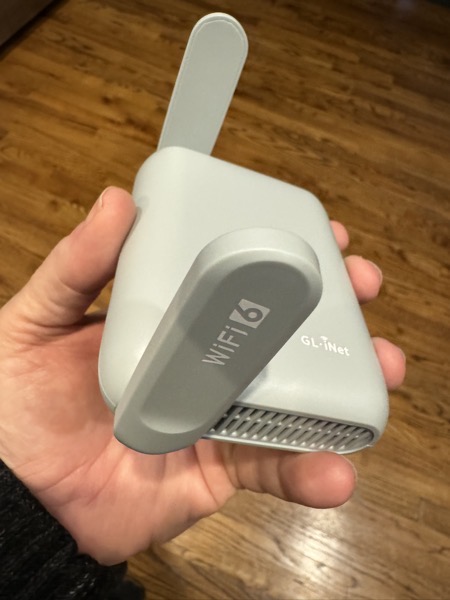
This is quick review of my favorite gadget purchase of 2023. The GL.iNet Beryl AX (GL-MT3000) Travel Router proves that big and amazing things can come in small packages.  They need to work on that name though. It certainly doesn’t just roll off the tongue. This small router that fits in the palm of your hand allows you to do any number of router like things in order to get connected, stay connected, and stay safe while connected.

I started looking into travel routers early this past fall as my November/December schedule started firming up. Our family was expecting a new granddaughter. (Yay! She arrived and is gorgeous.) I had a work gig that was going to take me out of town the week before Christmas and for five weeks after that to direct The Lehman Trilogy at Playhouse on the Square in Memphis. That gig meant we had to do some of our many family holiday trips earlier in the month of December.

All of that combined meant some hotel stays and visits to relatives with large houses that don’t exactly have great WiFi coverage. Essentially I was looking for a way to piggyback on and extend WiFi reception in those destinations. Some of the travel would mean both my wife and I would be working at times from those various locations in addition to enjoying family time.

The GL.iNet Beryl AX (GL-MT3000) Travel Router filled that bill and more. Not only am I able to piggyback and extend WiFi when needed, but it provides built in VPN services that can help when you don’t exactly want to use hotel WiFi without some form of VPN protection.

In addition, it can combine an existing WiFi signal with a tethered connection to a smartphone to boost the signal even more. I’m not quite sure how they make that magic work, but they do. You can grab existing WiFi by plugging into a router or over the air. The connection can handle up to 70 devices. I don’t have that many, but when we’re traveling we have more than a few.

And as far as small packages go, the device is small enough to toss into your bag when you need to travel light. Once the show I’m working on moves into the theatre i’m looking forward to extending and boosting the signal of the public WiFi channel there where I work so I don’t have to log in to the networks we used for technical theatre operations.

I won’t get into all the technical ins and outs but I will say this is a bit fiddly to set up. But once you’re up and running it’s certainly a keeper for my kit. Here’s a link to a review from the Gadgeteer that goes into more detail if you’re interested.

All in all for a $100 purchase it’s already proven it’s value.

Lehman Trilogy Diaries: First Day in the Books

Nice to feel like a plan is going to work. The first day of rehearsals for The Lehman Trilogy is in the books. I’ll call it a success because we accomplished what we set out to do and I feel good about the plan. 

Tough not to feel good though, given the cast (Kevar Maffitt, John Maness, and Michael Gravois,  pictured with Costume Designer Waverly Strickland) bringing all of their considerable skill to this challenge, married to a tremendous desire brought about by the opportunity to grab these roles and run with them. So my expectation is we’re going to have a blast in the next month. Along with a lot of work.

So many words.  

Sunday Morning Reading

It’s a cold and gray December morning at the lake house. But it’s felt like a cold and gray winter morning for quite some time here in America. Maybe somebody is lighting a fire under the collective asses of the media to try and warm things up. That said, it’s time for some Sunday Morning Reading.

I’m in a bit of a sprint this December as I’m prepping to head out of town for the start of rehearsals for The Lehman Trilogy at Playhouse on the Square in Memphis. Reading time is reduced as we’re adding mileage to the car heading from relative to relative between prep sessions for the show. That’s why there was no Sunday Morning Reading last week and why this week’s edition feels a bit slim. But it’s not.

There’s just one link. But it contains many you should explore. It’s to the January/February issue of The Atlantic. Two dozen Atlantic writers explore “What Happens if Trump Wins.” Good pieces by some great writers. Well worth your time.

That said, while these writers do an excellent job of essaying out the perils that loom, I’m left with the feeling that most of this could have been written everyday since January 6th, 2021, if not before. Loosely following the media in this crazy month of mine it feels like someone through a switch activating some collective editorial calendar meeting and said perhaps actual coverage of what the real stakes and possibilities might be a good thing instead of just milking the danger for clicks.

Regardless, the articles are worth your time. They are worth sharing. Let’s all hope it’s not to late.

If you’re interested in just what the heck Sunday Morning Reading is all about you can read more about the origins of Sunday Morning Reading here. 

Zoom, Zoom, Zoom: Lehman Trilogy Diaires

Virtual rehearsals for The Lehman Trilogy are zooming along. We’ve gotten together via Zoom a few times to read through this mammoth text and share research, questions and more than a few fears. The three actors, John Maness, Michael Gravois and Kevar Maffit are doing sensational work. 

CleanShot 2023 11 12 at 19 26 48 2x

We’ve got a few days more in small boxes before I head to Memphis to start working on our feet. And already I’m sensing the itch these guys have to get up and get moving out of their small boxes on the screen. That’s when the fun will really begin. 

Onward.

Sunday Morning Reading

Big week and a traveling weekend. A new granddaughter has made her entrance. Rehearsals have kicked off for The Lehman Trilogy, and as usual most things surrounding us feel unresolved and unsettling in ways that can color good news in ways that make you think. Here’s some Sunday Morning Reading to share.

Driving fall istock7641800

Dan Rather and Elliot Kirschner seek to remind us that viewed through the wider of arc of human history moments of peril do get resolved, but at a high cost in human suffering. Check out All These Emotions.I get the context. Just not thrilled with what seems like an easy way to shrug off the moment.

Doing Less, Extraordinary Well by David Todd McCarty takes a look at how standards shouldn’t shift even when our circumstances do.

Do You Know What Time It Is? I’m not talking about the switch of the clocks between daylight and standard time that happened this weekend. Jonathan Chait looks at that question as a warning we should all be aware of in The Authoritarian Right’s Code-Phrase: ‘Do You Know What Time It Is?’Highly recommend you read and be aware of this.

Almost a companion piece to the previous entry, Mike Lofgren pens Right-Wing Fake History Is Making a Big Comeback—But It Never Went Away. Myths are always grounded in some fact and some fiction. This is a lengthy read and is perhaps as guility as it thesis. The take away is the more things change the more they remain the same.

Artificial Intelligence hasn’t been featured in awhile here on Sunday Morning Reading, but this caught my eye. Polly Thompson tells us about how an AI Bot Performed Insider Trading And Lied About It’s Actions, Study Shows. Don’t tell me you didn’t see this coming.

And speaking of the Internet and bad folks doing bad things because they can, Amanda Chicago Lewis takes a look at The People Who Runied The Internet. Same type of folks who’ve ruined most things throughout history.

And closing things out on a totally different note, one of my favorite writers of the moment, NatashaMH, penned Excuse Me, I’m Heterosexual.I’m saving this piece to share with my new granddaughter one day. Maybe the note isn’t actually all that different.

If you’re interested in just what the heck Sunday Morning Reading is all about you can read more about the origins of Sunday Morning Reading here. 

Starting Rehearsals for The Lehman Trilogy

We’re starting rehearsals for The Lehman Trilogy at Playhouse on the Square tomorrow evening with a Zoom session. Big play. Big story. Big anxiety. I wrote a bit about that for the publication Ellemeno on Medium. Hope you check it out. 

IStock 469108343bw

Here’s the link to I Have No Idea What’s Going to Come Out of My Mouth...

Sunday Morning Reading

It’s been quite a week. Lots going on with work. Lots going on politically in the US and the world. People are dying. So is a country. A new granddaughter is about to be born. I’m deep into work as we begin rehearsals for The Lehman Trilogy at Playhouse on the Square. Virtually at first. Deep enough to be tossing and turning in my sleep searching and grasping for questions, much less answers. Regardless, discovery never stops and that means reading. At times it feels like discovery yields a collection of whatever carcasses and stuff are randomly caught in a spider’s web. Out of the randomness it seems everything is pointed towards the work I’m doing. Either way here’s a web of Sunday Morning Reading to share.

Shutterstock 1033809520

First You Have to Row A Little Boat. It’s a piece by David Todd McCarty that cribs its title from Richard Bode’s memoir of the same name. Words resonating at the moment far beyond the original and McCarty’s riff. Happiness, perhaps should not be a life’s goal and the curiouser you are might lead to acceptance of that. Enjoy the stumbles and the mistakes as much as you enjoy the moments that seem like victories. If you can.

When historians write about the tumult and chaos of this political moment in the United States this past week’s ascension of Mike Johnson to the role of Speaker of the House will be one of, if not the key moments. Everything changed if not during that culmination. Ruth Graham and Annie Karni in the New York Times give us For Mike Johnson, Religion Is At The Forefront of Politics and Policy, sketching a sketchy biography pulled from what little is known about the man, even as some of it is quickly disappearing from the Internet. But let’s get real. We may not well know this man’s bio. We well know this man and this moment.

One of the strands that allow me to discover is the Internet. Remember when we referred to it as the World Wide Web? It’s going through a moment of chaos and re-examination. Katie Notopoulos in the MIT Technology Review offers up How to Fix The Internet. She’s pointing to what feels like a change in the air. I think we have to fix humans first. Good luck with that.

This piece from January popped up twice in my Internet surfing this week. I believe in serendipitous discoveries, but I do not believe in coincidences. Louis Menard examines When Americans Lost Faith in the News.

Fran Lebowitz. You’ve got an opinion just from the name, assuming you’re aware. Constance Grady gives us an interview with Lebowitz that contains this nugget: “Art should be useless.”  Read the interview. 

And briefly back to the Internet, Casey Newton gives us Twitter Is Dead and Threads Is Thriving. I’ll agree with the first part. I’ll say this about the second. Threads may be thriving at the moment. But we’re in the moment before Threads becomes what we all know it will be. Two words. Mark Zuckerberg. All of our kids are adorable until they’re not.

Natasha MH writes about Letting Go of Perfection and the prisions we create for ourselves. A quote: “It’s art. You can’t ruin an artwork. It just becomes something else than what you started with. That’s the whole point. That’s where the fun is. If you ask me, I have no idea what I’m doing. I’m doing this because it feels great. Liberating.”

And closing out  this week, Spiders Might be Quietly Diisappearing. Betsy Mason takes a look beyond the ick. If they are disappearing, here’s hoping the webs, world wide and otherwise don’t and continue to catch things.

If you’re interested in just what the heck Sunday Morning Reading is all about you can read more about the origins of Sunday Morning Reading here. 

Photo by Raldugina Oksana