Sunday Morning Reading

Celebrating the grandson’s second birthday this weekend but there’s still a bit of Sunday Morning Reading to share. As usual it’s a myriad collection of writing on different topics featuring some history, some politics, some Shakespeare, and some writers with some personal things to share.

Childreading

First up are a couple of interesting pieces about Shakespeare. In August Drew Lichtenberg wrote a provoking piece in the New York Times about the latest attempts to cancel Shakespeare in the wake of all of the current nonsense going on in educational and political circles. The title, Cancel Shakespeare, might turn you off. Don’t let it. It’s worth a read for the turn.

In a follow up to that piece, Shakespeare’s ‘Sublimely, Disturbingly Smutty Effect’ Must Endure, Lichtenbeg lists some Shakespearean passages that readers say “got their blood flowing.”

And while I’m sharing pieces on how politicians think banning and banishing books, topics and history can change the future, this Politico piece by James Traub, Virginia Went to War Over History. And Students Actually Came Out on Top is worth considering. This in depth piece is worth hanging on to if we ever come to our senses and someone chronicles this period of insanity for future generations.

And speaking of history, you might not (or might) be sipping some whiskey with your Sunday Morning Reading, but this piece from Jason Willick on What a 1790’s Rebellion Shows About the Campaign to Disqualify Trump takes us back to the Whisky Rebellion. It’s worth considering in light of all the talk about the 14th Amendment disqualifying Trump from holding office again. FWIW I wrote a little something about that here.

And one thing follows another. Nate White, a British writer, delivers a terrific takedown of the orange guy in British Writer Pens The Best Description of Trump I’ve Read.

Jay Rosen is always worth following if you’re interested in what’s going on in journalism. This sketch of a lecture he was going to give in 2013 resurfaced in my feeds and I thought “Old Testatment and New Testatment Journalism” was worth sharing.

And on a somewhat personal note, I’ve contributed a few pieces to a Medium publiciation Ellemeno, thanks to the prodding of David Todd McCarty. The publication hosts some excellent writers with fantastic writing from a personal perspective.

I recommend two such pieces here if you want to get a taste. First up is McCarty’s All On My Own. As he describes it: “The art of being alone without being lonely, or one man’s semi-solitary adventure through time and space.”

Next up is Natasha MH with Why Are You Obssesed With Me? I’m thinking it has something to do with her writing.

If you’re interested in just what the heck Sunday Morning Reading is all about you can read more about the origins of Sunday Morning Reading here.

The iPad Mystery That Isn’t Really a Mystery

Apple is about to unleash its annual storm of iPhone news next week when it unveils the 2023 edition of the computer that changed everything. There will be a flood of impressions initially, good and less than good, and we’ll be wading through high water right into the holiday season.

So why is it raining thoughts about iPads?

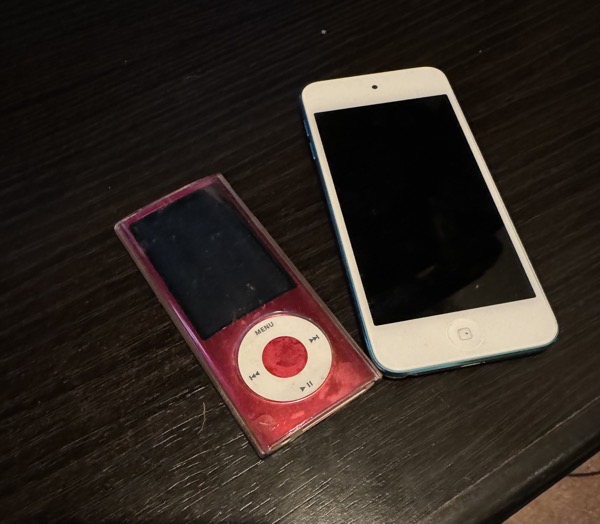
Goldiipads

Probably because it doesn’t look there will be much in the way of iPad news at this event. And from what we know of iPadOS the big news seems to be correcting the goofy mistakes made last year with Stage Manager. I also think that since this year’s iPhones and Apple Watches are rumored to be more interative than innovative, and much of the pent up energy is focused ahead to next year’s release of Apple’s Vision Pro, AND the predominant iPad rumor is that the 2024 iPad will feature big design changes, there’s room to kvetch a bit.

Don’t get me wrong about the iPhone. I don’t think iterative is a bad thing. The iPhone is mature platform. In and of itself that’s a great thing. But that doesn’t set the tech pundit heartbeats a-fluttering as much as the potential for bigger innovations.

Nature abhors a vacuum and so does the Internet. So why not talk about everyone’s favorite Apple mystery: iPad.

Why a mystery? No one seems to know exactly how to define this device. Including Apple.

Before moving on let me say this. I’m an iPad fan. I’ve owned most of them, currently the latest versions of the 11-inch iPad Pro and iPad mini. I use them both daily (along with Macs) for both work and play. I’m typing this currently on the iPad Pro while visiting family. There hasn’t been one too far from my reach since the first version. It’s my favorite work device and my favorite stall surfing device.

Here’s a quick summary of what some are saying:

Jason Snell of Six Colors kicked off this current wave by saying he’s Giving up the iPad-Only Travel Dream. He’d like to see the iPad capable of more functionality with Apple opening the platform up for developers and users to more easily extend it to their heart’s content.

John Gruber picked up and extended that argument on Daring Fireball.

Wes Davis on The Verge hammers the iPad sits in an awkward place argument.

Harry McCracken calls it a beautiful disappointment.

Jason McFadden asks the question Why do some want the iPad to be more than just a good tablet?

Denny Henke of Beardy Guy Musings thinks we’re perpertually moving goal posts in the discussion between touch-first casual users and power users who pound keyboards for a living.

I’m sure I missed a few.

None of them are wrong.

Much of the mystery isn’t really mysterious. It’s that there seems to be no Goldilocks answer. The pro-users want more and the extremes in that camp won’t be content until the Mac and the iPad are one and the same. In the middle, the iPad Air line offers most users much of what the Pro offers but holds back a bit. The iPad without a modifer offers even less, but compensates with a price point that makes it popular for those who just want to stream entertainment, do some browsing, FaceTime, or shut their kids up by letting them stream CoComelon.

And the iPad mini is caught somewhere in the middle. In my view the iPad mini is the most hindered by Apple’s attempts at segregating the lineup beyond size. Goldilocks might have called it “just right.” It’s the device I pick up the most.

Unless you measure success merely by sales charts, there’s nothing wrong with there being some confusing segmentation. On the other, what we currently know (and use) in all computing categories is constantly changing around and underneath our finger tips. Apple Silcon changed everything, including, I think, Apple’s plans. All you had to do was watch the “What’s a computer” commercials in the last decade to see where things seemed to be headed.

And if you think that spatial computing, the concept behind Apple’s Vision Pro, wasn’t in the works when those commericals were approved and aired, you’re mistaken. Whatever spatial computing is going to be it is going to profoundly change things.

It’s hard for the pundits when Apple’s cues aren’t easily decipherable. In my view it’s less, but still so for consumers. I’ve yet to read a review of any product in any category that calls it perfect without calling for more. Goodness knows how confusing things will be in the future if spatial computing’s future offers a lineup of products resembling anything  close to current speculation, from contact lenses to powerhouse gaming headsets.

So I say enjoy the ride while the riding’s good. There’s no Goldilocks iPad for all. There’s no Goldilocks computing platform for all. There probably shouldn’t be and I hope that always remains the case. Niches can be nice. And besides, we’d all be bored and begging for more anyway if the game just stopped. Just look at the lack of excitement about this year’s iPhones and Apple Watches.

Sunday Morning Reading

Summer is inching its way to fall. So here’s some Sunday Morning Reading to share for a long sleepy Labor Day weekend here in the US.  Grab some coffee.

Cup of coffee and newspaper

Speaking of sleepy, here’s A Look Into the REM Dreams of the Animal Kingdom from Carolyn Wilke at Ars Technica.

And following that theme, Amanda Gefter explores What Are Dreams For?

There’s lots of words being written about the shaky state of theatre in the US at the moment. (I expect I’ll spill out a few this week.) MIchael Paulson has a good take about the challenges of the subscription model and what that might mean for the industry in Hitting Theater Hard: The Loss of Subscribers Who Went To Everything.

David Todd McCarty takes a look at Why Sports Matter. 

Proust. Yeah, that guy. There’s seemingly a Proust for everybody and Adam Gopnik takes a look into what might be the real one in What We Find When We Get Lost in Proust.

ProPublica has a an excellent piece from Cheryl Clark about the crazy challenge you might have if you have to appeal to your health insurance company for a denial of benefits in I Set Out To Create a Simple Map for How To Appeal Your Insurance Denial. Instead, I found a Mind-Boggling Labyrinth. Call it a horror story.

And since my wife and I are celebrating our 23rd Wedding Anniversary this weekend here are two pieces that caught my eye this week.

In The Day The Circus Came to Town Natasha MH isn’t clowning around as she takes along for a very personal story.

Max Meroni takes us on a bride’s One Way Ticket train ride into a voyage of self-discovery.

And if you’re enjoying a cup of coffee with your Sunday Morning Reading don’t toss out the coffee grounds when you’re done. Check out Scientists Discovered How To Make Concrete 30% Strong With Used Coffee Grounds by Joshua Hawkins.

If you’re interested in just what the heck Sunday Morning Reading is all about you can read more about the origins of Sunday Morning Reading here.

The Bear Christmas Episode

We’re late to season two of The Bear. It’s a fantastic show we’ve loved since season one. You can find it on Hulu. I highly recommend you do. We finally tuned in this week and we’re damn glad we did, mad we waited so long, and wishing this show would never end.

The bear season 2 seven fishes christmas meal meaning

The writing, the acting and the direction are top notch. Some of the best TV you’ll discover and more than worth your time. At times a little too much in your face for my tastes, but I get it and it more than makes sense. If you haven’t discovered the show yet, do start with season one and allow yourself the pleasure of that before diving into season two.

No spoilers here, but let me just say this. The Christmas episode, Fishes, is without question one of the most amazing pieces of TV I think I’ve ever seen. there is more tension and comedy crammed into each moment that it makes the overstuffed and crowded kitchen seem spacious.  The story telling is unreal good given the large ensemble cast. And the ensemble playing amongst a bevy of heavyweight guest stars is just mesmerizing. It’s difficult to find the words to describe Jamie Lee Curtis’s performance. It will blow you away. Mix that in with the powerful ensemble playing of the rest of the cast, the level of detail, and this is a gift of bounty for any season.

Just see it. See it all.

There You Go

I wrote a little something that I’ll share a link to here. It’s a little something about race in my hometown, growing up, and reunions in a mountain top restaurant sitting astride a country line. 

Efda6f882ed90ac1

You can find the piece called There You Go on Ellemeno, a publication on Medium. There’s an excellent collection of writers there.

Thanks to David Todd McCarty for letting me put my words down there. 

Can’t Self-Enforce Our Way Out Of This Mess

That damn Constitution and those damn amendments. Always an obstacle. Especially depending on whether you use the paper it’s printed on as a shield, a weapon, a distraction, or a promotional tool.

Section 3 of the 14th Amendment is the hot topic these days. Here it is below:

14thamendment

Did I say hot topic? Tepid is probably more like it. Well, let’s put it this way. Legal scholars and TV talking heads are debating whether or not it’s self-enforcing and rules out a presidential run by you know who.

Let me say this about that:

If folks are fighting mad over whether or not the orange buffoon is either the saddest excuse of criminal humanity currently on the planet or some sort of divinely anointed martyr-to-be then I don’t think this debate is going to self-ennunicate a solution.

As long as Supreme Court Justices can wine and dine their vacations away on other folks’ dimes there’s no such thing as self-enforcing. Self-enriching for lawyers. But that’s about it.

Sunday Morning Reading

Summer is heading towards Fall and we’re on lake time this weekend. So a shorter list of things to share. As usual it’s a potpourri of topics and great writing. Enjoy!

IMG 3220

Mug shots were the talk of all the towns this week. David Todd McCarty takes a look at a bit of of mug shot shooting history in The Lost Art of Shooting Criminals.

Always fun to look back on the history of old school Chicago politics. Edward Robert McClelland takes just such a look back as he looks ahead in The Machine Has Given Way to Organizing.

This piece is a real pleasure from Natasha MH. Worth lingering over for more than two minutes. Check out A Two-Minute Pleasure.

In this world where the reliance on facts keeps diminishing Jonathan Taplin takes a look at How Musk, Thiel, Zuckerberg and Andresseen-Four Billionaire Techno-Oligarchs- Are Creating an Autocratic Reality.

And if Autumn is approaching so too is football. David. K. Li takes a look back at the Supreme Court case that changed the game (or rather the money behind the game), in Meet The Man Who Thinks He’s Screwed Up College Football With A Supreme Court Win.

An another harbinger of Fall is the build up and anticipation of new Apple gear. Jason Snell takes yet another look at the never ending debate surrounding the purpose of the iPad in Giving Up The iPad-only Travel Dream.

If you’re interested in just what the heck Sunday Morning Reading is all about you can read more about the origins of Sunday Morning Reading here.

Sunday Morning Reading

Here’s some Sunday Morning Reading to share. It’s an interesting mix of topics that caught my eye (and prompts a bit of editorializing). Hope something catches yours. 

SundaynewspaperWith this being the 25th year anniversary of the iMac, Jason Snell writing for the Verge tells us How The iMac Saved Apple. Well worth your time if, like me, you have any interest in Apple and its hardware. 

Work From Home is probably going to be a topic of interest for quite some time as we try to grapple with how we’ve changed since the pandemic began. (Hint: We haven’t come close to understanding how we’ve changed.) Jessica Grose has an intriguing NYTimes piece that takes the discussion a step deeper beyond just where we work but also how long we work in Leaving the Office at 5 Is Not a Moral Failing. 

Chris Jones in the Chicago Tribune has an excellent piece called What Happened to Theater in Chicago. Looking at the doldrums we seem to be in following the pandemic, the piece hits many of the issues head on. Except one. High ticket prices. It’s not just Chicago. It’s nationwide. 

A great piece of writing from Dorothy Gallagher called My Father’s House reminds us that a house is more than just a home. 

And back to Apple stuff for a second, M.G. Siegler takes a look at StandBy for iOS 17, which is looking like one (if not the one) tent pole feature of the new release. If you ask me, if this type of feature, no matter how cool, is where we are with smartphone evolution, we’ve more than reached the end of the curve. 

Artificial Intelligence is still the topic of the moment and probably will be for the rest of our lifetimes. Charles Jennings takes a look in a very good article with a title meant to provoke, There’s Only One Way to Control AI: Nationalization. If you ask me, it’s time to provoke and heat up the discussion. 

Lisa Weatherby in the NYTimes takes a look at the eye-popping cuts now happening at West Virginia University. If projected decling enrollments suggest cutting programs in the liberal arts and humanities, it sounds like the game to make the world a bit dumber is succeeding. 

If you’re interested in just what the heck Sunday Morning Reading is all about you can read more about the origins of Sunday Morning Reading here.

I Swear We Need to Get Rid of Oaths

Don’t make promises you can’t keep. I can’t imagine anyone who hasn’t heard that at some point in their life. I also can’t imagine anyone who hasn’t made one of those “can’t keep” promises only to have it come back to bite then. Also can’t imagine anyone having not broken one.

Handonbible

That’s apparently where we are. We make promises, take oaths, utter vows, and swear on bibles stacked with meaning and historical symbolism. We enter into contracts and agreements. We teach our children not to lie. But when push comes to shove does it really matter?

As far as the US legal system is concerned Special Counsel Jack Smith has essentially told us it doesn’t. The First Amendment of the U.S. Constitution gives anyone the right to lie. Lying is protected political speech. if you can avoid slandering or libeling someone, or your target doesn’t have the resources to defend themselves, our much cherished freedom of speech gives you the right to lie your ass off. Legally.

That being the case, here’s the question: Shouldn’t we then dispense with the ritual and the formality of swearing oaths? What’s the point? Why do we need the symbolism for something most know is a public pageant and a sham?

We all know the oath that elected leaders, members of the military and other government services swear. Our founding fathers didn’t want to see us swearing fealty to any king or church, so we take an oath to support and defend the US Constitution. Many who have never taken that oath can recite it by heart. I’m not suggesting some don’t take it to heart and live it. But if enough don’t, it makes a mockery of those who do.

I can remember a small right wing media dustup when Obama and the Chief Justice muffed a few words during the swearing in ceremony. That dustup caused enough of a ruckus they later re-created the swearing in. Just to be sure.

We also all know the oath that folks swear on a witness stand or legal proceeding. That one includes the “tell the truth, the whole truth, and nothing but the truth” part. We all know how flimsy that is. Heck, the entire legal profession is built on finding ways to keep clients avoid and keep them from divulging the truth when confronted.

So why keep up the charade? What is it about us that when things get dicey we’ll forswear oaths and vows?

In my opinion we all want to believe in something larger, that bolsters and binds our position beyond question. It’s supposedly an enobling act that raises the oath-taker to another plain, above it all, embuing the moment with a deeper unquestioned signficance. Or at times it’s a desperate plea for shelter when caught in the act. We swear to God and heaven. We swear on the lives and souls of our mothers and fathers. We swear on our children’s lives. And some even swear on a stack of bibles.

Oh. About those bibles. In rituals when hands are placed on bibles, there’s often personal and historical symbolism attached to the actual bible used in the act to deepen the signficance. Paradoxically, it’s intriguing that many Christian religions believe that the bible tells us in Matthew 5:34 to essentially forswear swearing on anything in Heaven or on Earth.

If you continue reading the Sermon on the Mount in Matthew you’ll find Jesus saying simply, “But let your ‘Yes’ be ‘Yes’ and your ‘No,’ ‘No.’ For whatever is more than these is from the evil one.” Interpretations of this range from a biblical forbidding of all oaths to it being allowed for ceremonial oath taking. It’s a debatable theological question. Ask the Calvinists and the Quakers. Some hold it tighter than others, which has resulted in affirmations replacing oaths in some situations. Some have simply rationalized it into the ether of meaningless.

Debatable or not, it calls into question the familiar customs and rituals around swearing in, taking vows, and taking oaths. We bind ourselves to these rituals for their significance and some sense of continuity. But in reality most see through the pageantry even while recognizing the holes in the plot. It’s like agreeing to support a couple’s wedding vows when everyone knows they aren’t going to make it.

Dropping out of the theological realm, I prefer to keep my own tussles with the truth grounded in that old saying “my word is my bond.” I’ve stumbled on that ground at times. But while it’s easy to take some comfort in the fact that I’m not stumbling alone, it’s still troubling. I don’t have answers, but it does make me wonder if we shouldn’t bring an end to the pageantry of public oath taking. There’s enough paradox already built in to call the entire thing into question. Why stand on ceremony when we can’t and aren’t expected to stand by our word?

We might have already reached that point without recognizing it as we see large portions of the population living in a fantasy world exposed by an orange madman who never uttered a word he couldn’t break in the next breath.

The willing suspension of disbelief is enough to make one swear.