
When You Think You Own The Railroad

The European Commission and Google

Kicking this post off let me say I’m not really sure how I feel about any of this. The subject matter is The European Commission’s Recent Guidance to Google for AI Interoperability on Android & Sharing of Google Search. John Gruber has a very good post on Daring Fireball that’s worth reading if the topic interests you.

Shutterstock 208228144.

You should be interested and you should read Gruber’s post as he lays the arguments out quite well. The bottom line is the European Commission is trying to slow down what has made Google’s railroad run(Search) and what Google wants to use to run them in the future (AI). Here’s a quote:

Today, the European Commission has issued two sets of binding specification measures to Google under the Digital Markets Act.

The aim of the first specification measures is to ensure that competitors’ Artificial Intelligence (AI) services can compete with Google’s own AI services, such as Gemini, by having equal access to features on Google’s Android devices.

The aim of the second specification measures is to rebalance the playing field by giving third-party search engines access to search data that only Google Search can collect at scale.

In a moment when device costs are rising because of AI and companies like Apple are reportedly planning leasing hardware to users to offset higher prices in the same way automobile companies lease cars, it seems like this move from the EC, obviously striking at what most would consider a monopoly, also has the potential to segment computing in a different way than I’ve been writing about.

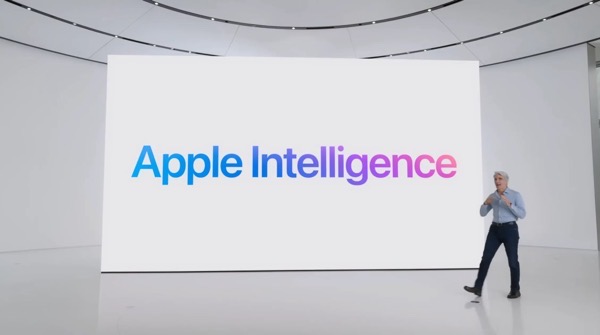
We’ve already seen that Apple is having similar problems with the EC, choosing so far not to release any of its now in beta new SiriAI and Siri related Apple Intelligence features in Europe until they can resolve similar conflicts with the EC’s aims.

The big difference is Google has built the beginnings of its new railroad and Apple doesn’t want to lay down its European tracks until the EC gives guidance approval. The EC doesn’t work that way, only passing guidance on what exists, not what’s planned.

If it sounds like the railroad expansion era in America during the Gilded Age, you’re not imagining train whistles in the dark.

On the one hand it’s very easy for me to feel this is a good move for consumers who believe users should be able to control what’s on their devices. On the other, it is conceivable that Google and Apple could end up creating separate operating systems and devices for different parts of the world operating under different governing bodies. Some of that already exists with tech companies following different laws from different countries, but nothing on a level like this that seems to strike at the core of how Google and Apple build these devices, operating systems, and companies.

As I said in the beginning,  I’m not really sure how I feel about this. The EC’s guidance seems like a potential good thing long term. But in a world that seems increasingly splintered along so many different lines, I’m not quite sure how I feel about the potential of segmenting our computing lives across borders.

I guess I’m old enough to remember when technology began to bring the far flung corners of the globe closer together rather than keep it separated. I’m also old enough to remember the early days of the Internet when some pointed out that our governments were too far behind the curve and ceding too much control to big tech companies too easily. Watching things grow and change at the speed of a bullet train mostly felt harmless back then. Things don’t seem quite so harmless today.

The cry then was to give users more control back in those early days. But it all became too convenient too quickly to stop or slow down, and those big tech trains left the station. As good or bad as the EC’s new guidance may ultimately be for users, it feels more like a potential derailment rather than switching tracks.

(Image from designbydx on Shutterstock)

Thanks for reading. You can subscribe to this blog if you care to. You can also find more of my writings on a variety of topics on Medium at this link, including in the publications Ellemeno and Rome. I can also be found on social media under my name as above. This site does not use affilate links.

EU Charges Apple with Violating DMA Rules

The EU charges Apple with violations of the DMA

The friction between Apple and the European Union just took another turn. The EU has charged Apple with DMA rules violations dropping the dubious distinction on Apple of being the first “gatekeeper” company to be so charged. It’s a preliminary ruling and Apple has until March 2025 to respond to this preliminary ruling.

If the charges stick, the potential remedy is for Apple to be fined up to 10 percent of its annual global revenue. quite a bite of the Apple.

This comes on the heels of last week’s pot-stirring announcement that Apple’s new, but yet unreleased and untested, Apple Intelligence features won’t be rolling out in the EU (and other markets) until next year. As I said then, this is all going to be one big negotiation with legal and political shots fired by both sides.

At the root of the charges is “steering,” which the EU sees as key to a competitive market. Bottom line, the EU wants gatekeeper companies to allow software developers to be able to “steer” potential customers to their products free from closed App Store and other gatekeeper restrictions. Apple joins Alphabet, Amazon, ByteDance, Meta and Microsoft in the EU”s list of gatekeepers.

The EU is also challenging Apple’s moves to come into compliance by charging a Core Technology Fee that most complain violates the intention to allow side loading of apps.

This will bounce back and forth over the next nine months and will probably become even more contentious given quotes like this from Thierry Breton, the EU internal market commissioner: “Apple’s new slogan should be ‘act different.

Apple has released the following statement:

“Throughout the past several months, Apple has made a number of changes to comply with the DMA in response to feedback from developers and the European Commission. We are confident our plan complies with the law, and estimate more than 99% of developers would pay the same or less in fees to Apple under the new business terms we created. All developers doing business in the EU on the App Store have the opportunity to utilize the capabilities that we have introduced, including the ability to direct app users to the web to complete purchases at a very competitive rate. As we have done routinely, we will continue to listen and engage with the European Commission.”

The Financial Times seems to be the front lines where both the EU and Apple are waging this battle. The Verge also has a writeup on the news. I’m sure there will be more. Intelligent or not.

You can find more of my writings on a variety of topics on Medium at this link, including in the publications Ellemeno and Rome. I can also be found on social media under my name as above. 

Apple and the EU Squabble Over Inclusion of Apple Intelligence and Other New Features

Apple and the EU squabbles continue now over new features.

It’s a Friday free-for-all between Apple and the European Union. Miffed at, or stymied by, the EU’s DMA regulations, Apple announced in the Financial Times that all of the ballyhooed (but still not seen in the real world) Apple Intelligence features along with a few others might not be coming to the EU when they launch in the U.S this fall or even this year.

Screenshot%202024 06 10%20at%2011.36.33%E2%80%AFAM.

John Gruber of Daring Fireball has the full statement from Apple as reproduced here:

Two weeks ago, Apple unveiled hundreds of new features that we are excited to bring to our users around the world. We are highly motivated to make these technologies accessible to all users. However, due to the regulatory uncertainties brought about by the Digital Markets Act (DMA), we do not believe that we will be able to roll out three of these features — iPhone Mirroring, SharePlay Screen Sharing enhancements, and Apple Intelligence — to our EU users this year.

Specifically, we are concerned that the interoperability requirements of the DMA could force us to compromise the integrity of our products in ways that risk user privacy and data security. We are committed to collaborating with the European Commission in an attempt to find a solution that would enable us to deliver these features to our EU customers without compromising their safety.

Apple PR is obviously hard at work here and I’m sure the EU’s PR operations will be following suit shortly. I’m particularly entertained by the phrase “we do not believe.” It’s also fascinating to watch the sideshow of reactions that might turn into something more: how Apple users on their respective sides of the pond are responding to this. Generally speaking from the early reactions I’ve seen the majority of American sympathies tend to lean towards Apple, while it’s just the opposite in Europe. But it’s early and it’s a Friday.

The timing of this suggests an opening salvo in further negotiations given that none of the features in question have been rolled out yet. However, according to Gruber a few of the non Apple Intelligence features (iPhone Mirroring and SharePlay Screen Sharing) are scheduled to roll out in the next betas to be released. iPhone Mirroring is one of the sexier features announced, so it will be interesting to see how that is handled with the next round of betas.

It is obvious that at some point down the road there will be some sort of compromise. Apple doesn’t want to lose the EU market no matter what those who suggest Apple should just pull out of the EU markets might say.  And somehow I doubt EU Apple users will exert enough pressure to change any strong position the EU might cling to.

In the meantime the sideshow commentary in addition to the news will make for an interesting Summer beta season.

You can find more of my writings on a variety of topics on Medium at this link, including in the publications Ellemeno and Rome. I can also be found on social media under my name as above.