
There’s an old saying in the theatre biz. No show is ever really ready on opening night. It’s a cliché that has seen it’s time pass in the big money commercial circuit because so many producers run lengthy preview weeks, charging essentially, but not quite, full price to avoid reviewers publishing their criticisms until the show is officially open. The preview process began lengthing after the days of out-of-town tryouts came to an end, although we see that still happening occasionally as larger regional theatres will debut a work, allowing it to still be worked on, hoping that it will one day make it to Broadway.
There was a famous production of Eugene O’Neil’s play Hughie, starring and directed by Al Pacino, that ran in previews for almost a month before finally opening. That led to a critic from Daily Variety breaking the only after opening night embargo a week early since the announced limited run would end up with less “real” performances than those in previews after the show officially opened. The show would go on to extend the run a couple of times.
In smaller circuits the cliché still lives on, simply because of a lack of resources to run many preview performances in front of audiences to really gauge reaction before it officially opens. A show can look great in final dress rehearsals, but it’s never complete until there’s a paying audience of strangers sitting in the dark to tell if it works or not. The ever-present lack of time still breathes life into the cliché in ways that offer both hope and anxiety behind opening night curtains around the world.
In the professional sports world teams play in a pre-season or spring training games that don’t matter while the players tune up for the real thing. Although in most of those types of meaningless games it’s really more like watching players audition than it is anything else. Occasionally a budding star emerges, but that’s atypical. Early “real” season games that do count (at full price) are when teams find out what they have, leading knowledgeable sports viewers knowing when it is time to pay real attention to a team’s chances or not.
Those are two interests in my life. I’m a theatre professional (and geek) and I watch sports. Another is my interest in tech. In tech we have betas. Or we used to, when that was mostly for software. Now we’re just in previews, pre-season, or perpetual betas forever for both software and hardware. Which is somewhat understandable, yet weird, perhaps ironic, but ultimately a joke on the paying public, given the pace in which things are always advancing in tech, including the pace and price of advancement.
We never seem to reach opening night, opening day or the end of a beta period in tech. Instead products and software are released incomplete, occasionally followed immediately by “leaks” that suggest the company that just took your money for it’s latest best product ever is working on fixing the things they knew were wrong for the next version when they released the product you just payed for.
But you’re going to love it.
It’s easier to swallow with software. It’s a bigger pill that sticks in the craw with hardware.
It used to be that betas were for working out bugs. They still are to a degree, but now they’re just the next show in a never-ending season, or the latest minor-league call up. But you still pay full price for the game when the team needs to put a not ready for the big leagues pitcher on the mound just to fulfill its obligation to play the announced season.
You can argue that there’s nothing wrong with the way things have evolved in tech because the financial equations are different. It requires a substantial upfront investment to create, produce and deliver new technology. You’d be mostly wrong, but you can argue it. Most of the costs in show biz happen upfront before a show even gets close to an audience, hopefully a large enough one in a long enough run to recoup the initial investment. It is a different equation in sports.
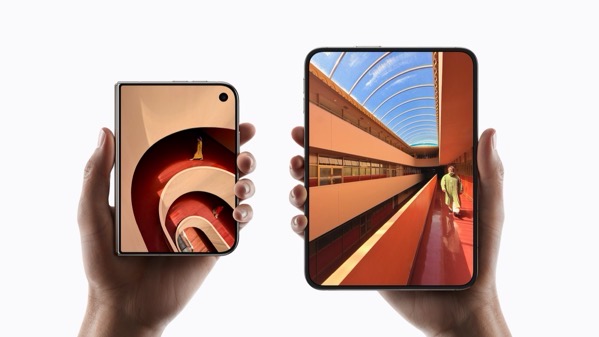
The release of Apple’s iPhone Duo strikes me as an interesting entry in this evolution of consumer dynamics. Soon, perhaps too soon, before the product was released to the general public, leaks popped out that Apple was working on tweaks to two of the major criticisms of the device for the next generation — a larger model and adding FaceID. That followed criticism from reviewers.
In general, most tech reviews I read, watched, or listened to made it very clear that the iPhone Duo was a first generation device with some rough edges that wasn’t for everyone, especially at the entry price. I can’t judge those reviews myself since I haven’t seen the product, but they mostly seemed very similar and to my mind fair. Some, sounding more like theatre critics or sport writers I’ve known, were more harsh, delivering criticism that might have prompted a closing notice being posted before intermission or an early game benching.
Here’s where my three interests diverge a bit. In theatre the show can close early if it’s savaged or not enthusiastically endorsed by reviews. In sports a pro team can retool a bit by trading or signing free agents midseason. Tech companies have to play out the run with tech hardware until the next generation is ready.
Given the leaks following the reviews I find it sort of funny that I’m in a place of feeling a bit sorry for the carriers that are offering great deals on the iPhone Duo subsidized by a three year contract. That’s a tough sell to anyone who pays attention, though admittedly most won’t if they’re hot to trot for the new shiny folding phone from Apple.
It’s my hunch, and only a hunch, that Apple knew these criticisms were coming. Even so, it’s one thing to prepare the next version hoping to make changes that advance a platform, it’s another to make them in reaction to negative press once the product is unveiled. It sets you up in the next round for being congratulated for fixing what was wrong the last time.
In the theatre if a joke doesn’t land, you can replace the joke in previews. In sports you bench a player or fire a coach. With tech hardware it’s not that easy changing things before it becomes a punch line. (See the Vision Pro.)
My second hunch, only a hunch, is that the iPhone Duo will eventually become a successful part of Apple’s lineup and get past what feels like a rough opening. I don’t think it will enter into Vision Pro punchline territory. Critics of all human endeavors need something to criticize as much as companies need to produce the next thing. It’s a symbiotic relationship that feeds on itself. And the always distracted general public has short-term memory bordering on amnesia.
It’s my wish that tech companies, like theatre companies and sports teams, would figure out a better path to the success they seek. Sure, you might be able to fool some of the people all of the time. But for the most part folks figure it out on their own. Some of the time. And that some of the time is what everybody on the producing end of things counts on.
Thanks for reading. You can subscribe to this blog if you care to. You can also find more of my writings on a variety of topics on Medium at this link, including in the publications Ellemeno and Rome. I can also be found on social media under my name as above. This site does not use affilate links.


