Sunday Morning Reading

Summer is inching its way to fall. So here’s some Sunday Morning Reading to share for a long sleepy Labor Day weekend here in the US.  Grab some coffee.

Cup of coffee and newspaper

Speaking of sleepy, here’s A Look Into the REM Dreams of the Animal Kingdom from Carolyn Wilke at Ars Technica.

And following that theme, Amanda Gefter explores What Are Dreams For?

There’s lots of words being written about the shaky state of theatre in the US at the moment. (I expect I’ll spill out a few this week.) MIchael Paulson has a good take about the challenges of the subscription model and what that might mean for the industry in Hitting Theater Hard: The Loss of Subscribers Who Went To Everything.

David Todd McCarty takes a look at Why Sports Matter. 

Proust. Yeah, that guy. There’s seemingly a Proust for everybody and Adam Gopnik takes a look into what might be the real one in What We Find When We Get Lost in Proust.

ProPublica has a an excellent piece from Cheryl Clark about the crazy challenge you might have if you have to appeal to your health insurance company for a denial of benefits in I Set Out To Create a Simple Map for How To Appeal Your Insurance Denial. Instead, I found a Mind-Boggling Labyrinth. Call it a horror story.

And since my wife and I are celebrating our 23rd Wedding Anniversary this weekend here are two pieces that caught my eye this week.

In The Day The Circus Came to Town Natasha MH isn’t clowning around as she takes along for a very personal story.

Max Meroni takes us on a bride’s One Way Ticket train ride into a voyage of self-discovery.

And if you’re enjoying a cup of coffee with your Sunday Morning Reading don’t toss out the coffee grounds when you’re done. Check out Scientists Discovered How To Make Concrete 30% Strong With Used Coffee Grounds by Joshua Hawkins.

If you’re interested in just what the heck Sunday Morning Reading is all about you can read more about the origins of Sunday Morning Reading here.

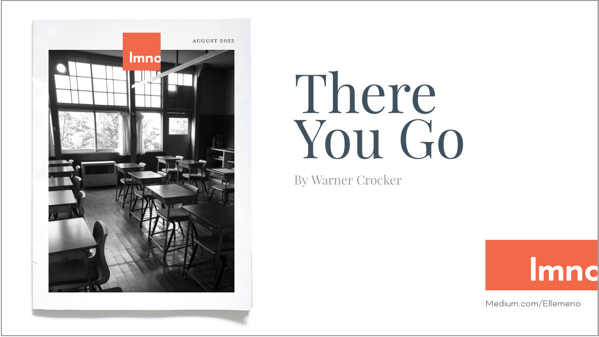
There You Go

I wrote a little something that I’ll share a link to here. It’s a little something about race in my hometown, growing up, and reunions in a mountain top restaurant sitting astride a country line. 

Efda6f882ed90ac1

You can find the piece called There You Go on Ellemeno, a publication on Medium. There’s an excellent collection of writers there.

Thanks to David Todd McCarty for letting me put my words down there. 

Sunday Morning Reading

Summer is heading towards Fall and we’re on lake time this weekend. So a shorter list of things to share. As usual it’s a potpourri of topics and great writing. Enjoy!

IMG 3220

Mug shots were the talk of all the towns this week. David Todd McCarty takes a look at a bit of of mug shot shooting history in The Lost Art of Shooting Criminals.

Always fun to look back on the history of old school Chicago politics. Edward Robert McClelland takes just such a look back as he looks ahead in The Machine Has Given Way to Organizing.

This piece is a real pleasure from Natasha MH. Worth lingering over for more than two minutes. Check out A Two-Minute Pleasure.

In this world where the reliance on facts keeps diminishing Jonathan Taplin takes a look at How Musk, Thiel, Zuckerberg and Andresseen-Four Billionaire Techno-Oligarchs- Are Creating an Autocratic Reality.

And if Autumn is approaching so too is football. David. K. Li takes a look back at the Supreme Court case that changed the game (or rather the money behind the game), in Meet The Man Who Thinks He’s Screwed Up College Football With A Supreme Court Win.

An another harbinger of Fall is the build up and anticipation of new Apple gear. Jason Snell takes yet another look at the never ending debate surrounding the purpose of the iPad in Giving Up The iPad-only Travel Dream.

If you’re interested in just what the heck Sunday Morning Reading is all about you can read more about the origins of Sunday Morning Reading here.

Sunday Morning Reading

Here’s some Sunday Morning Reading to share. It’s an interesting mix of topics that caught my eye (and prompts a bit of editorializing). Hope something catches yours. 

SundaynewspaperWith this being the 25th year anniversary of the iMac, Jason Snell writing for the Verge tells us How The iMac Saved Apple. Well worth your time if, like me, you have any interest in Apple and its hardware. 

Work From Home is probably going to be a topic of interest for quite some time as we try to grapple with how we’ve changed since the pandemic began. (Hint: We haven’t come close to understanding how we’ve changed.) Jessica Grose has an intriguing NYTimes piece that takes the discussion a step deeper beyond just where we work but also how long we work in Leaving the Office at 5 Is Not a Moral Failing. 

Chris Jones in the Chicago Tribune has an excellent piece called What Happened to Theater in Chicago. Looking at the doldrums we seem to be in following the pandemic, the piece hits many of the issues head on. Except one. High ticket prices. It’s not just Chicago. It’s nationwide. 

A great piece of writing from Dorothy Gallagher called My Father’s House reminds us that a house is more than just a home. 

And back to Apple stuff for a second, M.G. Siegler takes a look at StandBy for iOS 17, which is looking like one (if not the one) tent pole feature of the new release. If you ask me, if this type of feature, no matter how cool, is where we are with smartphone evolution, we’ve more than reached the end of the curve. 

Artificial Intelligence is still the topic of the moment and probably will be for the rest of our lifetimes. Charles Jennings takes a look in a very good article with a title meant to provoke, There’s Only One Way to Control AI: Nationalization. If you ask me, it’s time to provoke and heat up the discussion. 

Lisa Weatherby in the NYTimes takes a look at the eye-popping cuts now happening at West Virginia University. If projected decling enrollments suggest cutting programs in the liberal arts and humanities, it sounds like the game to make the world a bit dumber is succeeding. 

If you’re interested in just what the heck Sunday Morning Reading is all about you can read more about the origins of Sunday Morning Reading here.

I Swear We Need to Get Rid of Oaths

Don’t make promises you can’t keep. I can’t imagine anyone who hasn’t heard that at some point in their life. I also can’t imagine anyone who hasn’t made one of those “can’t keep” promises only to have it come back to bite then. Also can’t imagine anyone having not broken one.

Handonbible

That’s apparently where we are. We make promises, take oaths, utter vows, and swear on bibles stacked with meaning and historical symbolism. We enter into contracts and agreements. We teach our children not to lie. But when push comes to shove does it really matter?

As far as the US legal system is concerned Special Counsel Jack Smith has essentially told us it doesn’t. The First Amendment of the U.S. Constitution gives anyone the right to lie. Lying is protected political speech. if you can avoid slandering or libeling someone, or your target doesn’t have the resources to defend themselves, our much cherished freedom of speech gives you the right to lie your ass off. Legally.

That being the case, here’s the question: Shouldn’t we then dispense with the ritual and the formality of swearing oaths? What’s the point? Why do we need the symbolism for something most know is a public pageant and a sham?

We all know the oath that elected leaders, members of the military and other government services swear. Our founding fathers didn’t want to see us swearing fealty to any king or church, so we take an oath to support and defend the US Constitution. Many who have never taken that oath can recite it by heart. I’m not suggesting some don’t take it to heart and live it. But if enough don’t, it makes a mockery of those who do.

I can remember a small right wing media dustup when Obama and the Chief Justice muffed a few words during the swearing in ceremony. That dustup caused enough of a ruckus they later re-created the swearing in. Just to be sure.

We also all know the oath that folks swear on a witness stand or legal proceeding. That one includes the “tell the truth, the whole truth, and nothing but the truth” part. We all know how flimsy that is. Heck, the entire legal profession is built on finding ways to keep clients avoid and keep them from divulging the truth when confronted.

So why keep up the charade? What is it about us that when things get dicey we’ll forswear oaths and vows?

In my opinion we all want to believe in something larger, that bolsters and binds our position beyond question. It’s supposedly an enobling act that raises the oath-taker to another plain, above it all, embuing the moment with a deeper unquestioned signficance. Or at times it’s a desperate plea for shelter when caught in the act. We swear to God and heaven. We swear on the lives and souls of our mothers and fathers. We swear on our children’s lives. And some even swear on a stack of bibles.

Oh. About those bibles. In rituals when hands are placed on bibles, there’s often personal and historical symbolism attached to the actual bible used in the act to deepen the signficance. Paradoxically, it’s intriguing that many Christian religions believe that the bible tells us in Matthew 5:34 to essentially forswear swearing on anything in Heaven or on Earth.

If you continue reading the Sermon on the Mount in Matthew you’ll find Jesus saying simply, “But let your ‘Yes’ be ‘Yes’ and your ‘No,’ ‘No.’ For whatever is more than these is from the evil one.” Interpretations of this range from a biblical forbidding of all oaths to it being allowed for ceremonial oath taking. It’s a debatable theological question. Ask the Calvinists and the Quakers. Some hold it tighter than others, which has resulted in affirmations replacing oaths in some situations. Some have simply rationalized it into the ether of meaningless.

Debatable or not, it calls into question the familiar customs and rituals around swearing in, taking vows, and taking oaths. We bind ourselves to these rituals for their significance and some sense of continuity. But in reality most see through the pageantry even while recognizing the holes in the plot. It’s like agreeing to support a couple’s wedding vows when everyone knows they aren’t going to make it.

Dropping out of the theological realm, I prefer to keep my own tussles with the truth grounded in that old saying “my word is my bond.” I’ve stumbled on that ground at times. But while it’s easy to take some comfort in the fact that I’m not stumbling alone, it’s still troubling. I don’t have answers, but it does make me wonder if we shouldn’t bring an end to the pageantry of public oath taking. There’s enough paradox already built in to call the entire thing into question. Why stand on ceremony when we can’t and aren’t expected to stand by our word?

We might have already reached that point without recognizing it as we see large portions of the population living in a fantasy world exposed by an orange madman who never uttered a word he couldn’t break in the next breath.

The willing suspension of disbelief is enough to make one swear.

Sunday Morning Reading

On the road spending time with the grandson this weekend. So I’ll be brief. But these writers and articles are worth spending some time with this Sunday morning. A few of them writing about, well, writing.

Unknown 5

I’ll kick off with a controversial piece by Adam Thirlwell in The Guardian who takes a look back to the French Revolution to perhaps find clues into why we’re writing and expressing ourselves quite so much today. Too much writing? Too much self-examination? Depends on what you call writing if you ask me. Anyhow, check out ‘We’re Gripped by graphomania’: why writing beame an online contagion and how we can contain it. I’m not one for containing any of this. The terrific examples below I think illustrate why.

Baldur Bjarnson is one of the thinkers I’m following when it comes to the topic of AI. He’s written a terrific piece called Authorship, in which he explores what happens when creative work, in this instance he’s using film to illustrate, becomes less about the author and more about the aggregator.

One of my most recent discoveries NatashaMH has written two excellent pieces that I recommend. The first is The Need To Write And The Will to Heal From Our Traumatic Experiences.It’s quite a journey. The second is A Portrait of A  Woman and is also more than worth your time. Great stuff.

Natasha tells us this piece by David Todd McCarty, I Still Haven’t Found What I’m Looking For inspired her to sketch A Portrait of A Woman. I’ll take her word for it. It damn sure stands on it’s own and sorta makes me hope he never does find it.

Talking at The Texaco is another McCarty piece worth your time. As you read it and you think you know where it’s headed, hang on. You don’t.

So much, too much, of our energy is being taken up with all of the news surrounding the orange buffoon and the shit he’s dragged us all into. It’s worth remembering we’ve been here before. While I’m not a fan of Rich Lowry, this look back at Huey Long is a good reminder. We’ve been here before. Damn shame we’re so good at burying those memories.

And to close this out and look ahead, the Farmer’s Almanac is out with it’s predictions for the winter. If they’re correct, many of us might be bundling up this winter.

If you’re interested in just what the heck Sunday Morning Reading is all about you can read more about the origins of Sunday Morning Reading here.

Sunday Morning Reading

Back home after a two-week road trip supporting my wife teaching her summer acting camp. Needless to say we’re pooped. The kids were amazing. Regardless, here’s some Sunday Morning Reading to share.


Movies are big news this summer because of a couple of big original ones (Barbie and Oppenheimer), but also because the unions for writers and actors are on strike. James Surowiecki in The Atlantic lands a take on the strike and says Netflix opened the door for this upheaval in A Strike Scripted by Netflix. 

One of my favorite writers I’ve recentlly discovered, Natasha MH, pens an incredible review of Barbie entitled The One About Barbie. 

And while I’m raving about Natasha MH, take a look at this incredible piece of hers, The Need to Write and The Will to Heal From Our Traumatic Experiences. Excellent.

And since it’s Sunday, I think this piece by Jake Meador called The Misunderstood Reason Millions of Americans Stopped Going to Church is a worthy read. I’m not so sure it’s so misunderstood. 

George Dillard in Rome Magazine tackles the orange guy racking up indictments like bowling pins in Trump’s Defense: I’m a Stupid Liar. 

I rarely link to pieces I find ridiculous in Sunday Morning Reading. But this one is rarely ridiculous in how the logic turns in on itself and defeats the entire point. David Brooks takes on the what’s happening in American politics and wonders What If We’re The Bad Guys Here?  Think of it as comedy.

And to close out this week, here’s an excellent piece by Elizabeth Lopatto in The Verge, What Would The Internet Of People Look Like Now? Hits to how we got to where we are today in this crazy thing called “online.”

If you’re interested in just what the heck Sunday Morning Reading is all about you can read more about the origins of Sunday Morning Reading here.

Iron Fisting

Rods aren’t just for fishing or catching lightning. Metaphorical and figurative rods (often made of iron) seem to be a favorite when it comes to rulers wielding strength. They’ve been around for awhile. The Bible’s Psalms 2 and later the Book of Revelation tells us that God is going to put a figurative iron rod in Jesus’ nail-pierced hand to use in smiting his enemies. There’s an old British idiom about ruling with a rod of iron. Don’t spare the cruelty if you need to make a point. Of course if you spare the rod, you spoil the child, or so says Proverbs 13. And for those who’d like to dish out a bit of up close and personal punishment there’s the ever popular ruling with an iron fist.

Right before and during the disintegration of the USSR I had the privilege to direct several productions in Russia. Omsk and Yekaterinburg to be specific. I was there as the Iron Curtain was coming down. It was a bit on the wild side to be spending time in a country going through so much upheaval. But this isn’t about that.
Vonberlichingen

It’s about the myth of the tough guy needing to wield something of iron to achieve aims and hang on to control.

On this Siberian adventure, in the middle of winter, in a closed city, we were facing creative tensions in the early going of the rehearsal process. Excitement and anxiety were abundant in just about equal measure. The Russian actors and artists were trying to get over the newness of having an American director and this American director was trying to figure out how and why things worked in their much older and storied repertory system. These were exquisitely talented artists and craftspeople. We all worked through translators. I later picked up enough Russian to run a rehearsal, but in the early going it was often comically challenging. To be honest, we were spinning our wheels a bit.

After a particularly tough morning rehearsal session with one of the leads I asked him why his work felt so tenative. I had seen him rule the stage the night before in a performance of another show, so I was a bit confused and concerned and looking for a way in. After a few moments, this marvelously talented actor, all the while avoiding my eyes and looking at the floor, said to me, “Please tell me what I must think and feel so I might do the part I am assigned.” My heart sank.

My Russian assistant director pulled me aside after that conversation. In so many words, (again, all of this was through a translator) he told me straight up that I needed to be more of a dictator and less of a director. Russian directors need to rule with an “iron fist.”  The actor was right, he said. Russian actors want to be told what to do and think. They don’t know how to make choices for themselves. They want to do what the director wants and no more.

He emphasized the “iron fist” part by violently pounding his fist on a table and then holding it in my face. The translator, thought he should follow suit and also pounded the table. But instead of holding his fist in my face, he knocked the script pages onto the floor. Drama. And we were doing a musical comedy.

I understood my Russian colleague’s admonitions. Directors, like ship captains, generals, kings, queens, elected leaders, CEOs, etc… have to command to lead. They have to become the gravitational center of those who work with and for them, and in most cases against them. Not really my style, but I understand it and use it more as a tool than a method. Something about attracting more flies with honey.

Yet there was one actress in the company who seemed to thrive on having the freedom to create. She didn’t wait for direction. She just took the material and made choices. You could see in her eyes she was a bit of a firebrand. She forced those in the scenes with her to follow her lead and defined the scenes she was in. In that repertory system that was challenging. But she soared and you either went with her or took your seat while another actor playing the same part stepped up.

You could tell she wasn’t well liked in the company. I noticed she was missing the last digit on one of her fingers. Later on in the rehearsal process she confided to one of my American associates that it had been cut off in an interrogation over something her husband did. So, yeah, I guess she didn’t like being told what to do.

Again, the point here isn’t about the differences between Russian and American theatre artists or me adjusting my way of working to someone eles’s. For me it highlights the two-sided coin of human nature: the desire to be told what to do and in same breath simultaneously saying “NO.”  There’s not too many of us who actually graduated beyond the terrible two’s. But some learn to set it aside or hide it. Or maybe have it knocked out of us. (Spare the rod…) Some never grow out of it.

We find ourselves in this moment with so many yearning for, and quite a few pretending to offer, biblical violent gestures and postures as the best approach to our problems. And to be honest, I’d like to take a rod of any make to quite a few heads to stop all the whining that’s become our new national pastime. (So many spoiled children.)

Granted there’s an ever-expanding sheep pasture full of wool being pulled over quite a few eyes. But still. Why are so many looking for a big bad orange Daddy strong man with a fist of iron? His bluff and bluster has already turned into so much fluff and so many feathers. And yet he’s got the gravitational pull of a black hole that’s destructive to all in his orbit, both supporter and foe.

I always thought Daddy issues were about seeking approval, not looking for a pompous protector who pretends he’s got an iron fist with a spine to match. I get that many feel left out of the picture as they sense the world is changing around them. I get their sense of impotence. But nobody is going to harden anybody eles’s resolve by being a blowhard whiner. All that whining is as corrosive as rust. And rust covers better than the orange goo smeared on his face.

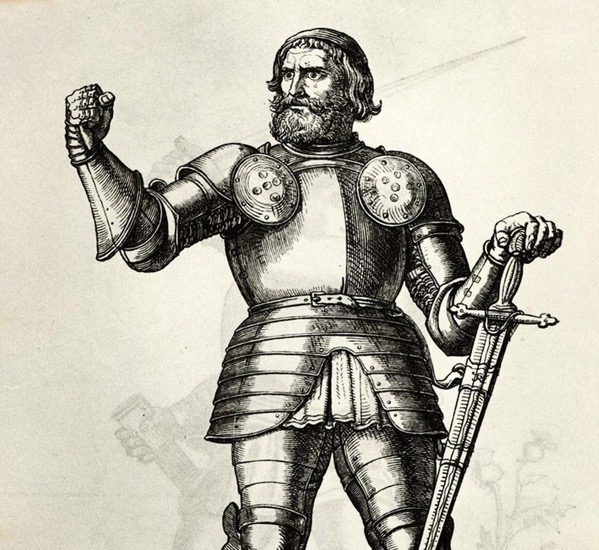
Long before my Russian theatre adventures, I directed John Arden’s adaptation of Goethe’s play Götz von Berlichingen entitled Ironhand. The hero was a noble land baron. We’d call him an oligarch today. He had lost his hand in battle and fastened an iron gauntlet on to his handless appendage. Of course the play’s sturm and drang spoke to how his fearsome legend as a warrior struck terror and allegiance into his enemies and his followers.

Our actor wore a well crafted fake iron fist of celastic  It looked great on stage. In the second scene of the play there are two big reveals. Our main character is met on the road by a monk. They converse about philosophy and religion. At the conclusion of the scene the monk reveals himself to be Martin Luther. And of course in the next beat, the hero reveals his iron hand from underneath his cape as he introduces himself with his fearsome moniker.

On opening night our lead blew both reveals out of the water. At the top of the scene he choked on his lines and attempting to recover he whipped his celastic covered hand from under his cape and gesturing vigorously to the monk said “Welcome Martin Luther.” Needless to say, not one of our best openings.

That was make believe.

So is much of what’s dominating our lives at the moment. For the life of me, I keep wondering why we’re in thrall to all of this and keep willingly suspending our disbelief to this ham-fisted shit show. We all know how this ends. There’s no new character development coming in Act 2, no deus-ex-machina in the final act. So, let’s cut the drama, cut the comedy, forsake the 11 o’clock number and get to the final curtain.

To borrow from Neil Young, “Rust never sleeps.” So why does it feel like we’re sleep walking?
Sunday Morning Reading

Here’s some Sunday Morning Reading to share. From arts in space and on the stage, to booby trapped tombs and age-old pathogens thawing out of the ice, here’s an electic mix of topics that might or might not connect together as we sweat and swelter through the Dog Days of Summer. Enjoy.

Terracottaai

The Lunar Codex is an archive of various forms of creativity including contemporary art, poetry, podcasts, film, images, and other Earth bound cultural artifacts that’s on it’s way to the Moon. Headed up by Samuel Peralta it will travel on several rockets and include works of 30,000 artists, writers, musicians, and filmmakers from 157 countries. J.D. Biersdorfer tells us about it in the New York Times.

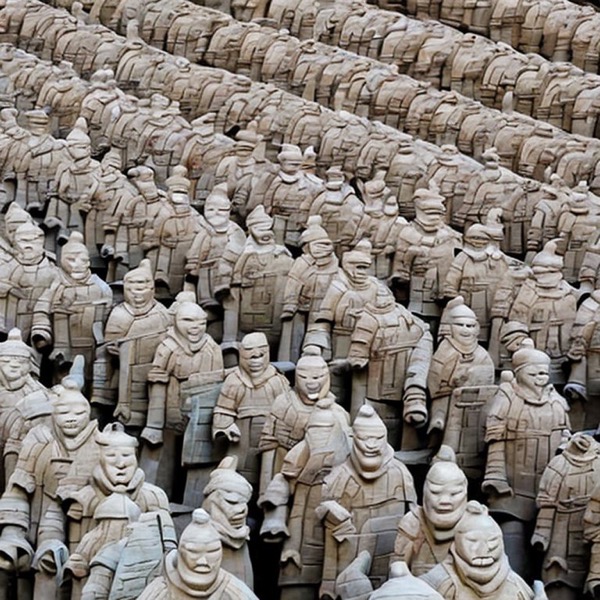
Back to Earth it seems that archaeologists are afraid to look inside the tomb of China’s first emperor. You know the one guarded by the Terra Cotta army among other things. Apparently it’s not just what might be disturbed by digging or what might be disturbing if they do, but there’s a theory that the place is booby trapped. Sounds very Indiana Jonesish. Tom Hale writes about it in IFLSCIENCE.

The Stage Is Yours according to Natasha MH in this Medium post on Ellemeno. It’s a great piece about arts, artists, dance, theatre, authenticity, and those hidden fears and secrets inside of us all. You know, the ones we choose not to share when we offer ourselves up. Or do we?

The strikes by the actors and writers unions have pointed a spotlight on AI and how that might replace creatives in film, TV and other industries. Studios see financial savings from reduced costs. But maybe they should take a look at Michael Grothaus’ piece in Fast Company as he theorizes that AI might even replace the studios themselves.

In what sounds like science fiction, scientists have woken up a 46,000-year-old roundworm from the Siberian permafrost. Carolyn Y. Johnson in the Washington Post tells us about that. But if tinkering with what many might think should be left alone doesn’t sound John Carpenterish enough for you, we’re also hearing about frozen pathogens that are waking up on their own in cold places that are warming up. (Can you say Climate Change?) Corey J.A. Bradshaw and Giovannie Strona wrote about this in The Conversation and I caught the article from Science Alert.

Ryan Busse is a former gun company exec who is now warning about the dangerous growing radicalization in his former industry. Corey G, Johnson talked to him for this article in ProPublica.

The social media world is certainly in a state of flux given all the damage Elon Musk has done to Twitter and the scramble by others to provide venues that might offer some of what Twitter used to be before it was X-ed out. Craig Grannell has a great piece called X Marks the Rot. Don’t Buy Into Elon Musk’s Lifelong Crusade.

If you’re interested in just what the heck Sunday Morning Reading is all about you can read more about the origins of Sunday Morning Reading here.