Apple Peelings

Like it or not, Apple locks us all into perpetual betas

A concerned reader asked me a question the other day. She wondered why I always seem so down on Apple even though I use lots of Apple gear.

Shutterstock 2366050051.

I have many reasons to be down on Apple. I’m not fond of how Tim Cook has sucked up to the Trump regime. I think Apple’s monopolistic policies harm developers and users alike. I think Apple can’t live up to the pace it has put themselves and us on. Apple’s “It just works” mantra long ago faded into the dustbin of history the same way Google’s “Do no evil” did.

That last one is the one that gets me riled up the most.

Things don’t “just work” anymore. They work sometimes. Sometimes they don’t. Sometimes after working for a while they just stop. Sometimes they return to working. Sometimes not. I chalk this up to the fact that every Apple user is essentially running beta software whether or not they have opted into betas. (I don’t run betas.) As I’ve stated here often, when beta software arrives for beta users on their devices, beta software is also being introduced behind the scenes on Apple’s servers. Beta users expect there to be issues. That’s the price of admission. Non-beta users do not. And in my view, they shouldn’t be exposed to those same “take your chances” experiences.

Most users aren’t aware of this and some of the signals that are easily missed are so common place that they are easily ignored.  For example, if you use an Apple Watch to log in to a Mac, every now and then you’ll see a message on your Mac that you have to sign in with your password to make that Apple Watch feature work again. Typically, that happens around the time Apple releases a new beta version. Or you may see that a notification that a device you’ve owned for quite some time has suddenly signed on as a new device to your iCloud account as a new device.

Things get muddier still as most Apple coverage is about what’s happening with each new beta and ignores the problems that backend issues may cause for non-beta users. At least I rarely see it and I try to stay current. Apple coverage is also spending as much time looking to the future as it does the current moment. That begs the question, are we just bored with the present and if so, why?

Apple is on what seems to me like a far too haphazard and perhaps reckless pace of advancing software development that is leaving users and developers playing catch up, while it does the same. It’s one thing to play catch up, it’s another to play catch up when you’re adding new features into the mix at the same time. I get it. The pace of tech, fed by the AI bubble/boom/bombast is forcing everyone into a high stakes race. But it sure isn’t taking care of the potholes on the racetrack.

The last few years there’s been a period in the spring each year where things have settled down somewhat before they start ramping up again for the next year’s betas to be released at Apple’s WWDC. That typically comes after a .3 or .4 release of that year’s current operating system. That’s typically in the Spring and often feels like a breath of fresh air. I like the Spring. I also like the Fall, but while I eagerly look forward to the leaves changing color, I approach Apple’s annual Fall operating system releases more and more with trepidation knowing that some of the Summer’s beta issues will continue as we head into Winter.

A big part of this in my opinion is Apple’s fortunate position of taking a long view in its hardware and software development. Apple may be working several generations ahead of whatever they are selling at the moment, but I don’t believe they are paying enough attention to what’s happening in the moment the majority of its users are living.

But, back to that original question. After some of the bigger issues I mentioned earlier became prominent enough to make me question my use of Apple products I did some looking around and some self examination. Given that I support a number of folks who use Apple products as well as products from other makers it was easy enough to do. The simple sum that all added up to is that Apple’s hardware is, in my opinion, the best of what’s on the market, and no one else has come up with software solutions any more reliable than Apple at the moment. I chalk that up to the AI rat race that feels more and more likely to keep companies and users frustrated for sometime to come while everyone chases promises that more than likely won’t pan out they way they were sold.

Sure, I could try to work my older geek muscles back into shape and chuck it all and buy cheaper equipment to run Linux, etc…and that has had some romantic appeal. But in the end, I am no longer that romantic and will admit to the compromise that I need something that works reliably most of the time, if not all of the time.

The fact that I felt very uncomfortable typing the phrase “most of the time” in that previous sentence is I guess the best answer to the user question I opened this post with.

In a different context, but to the same point, since I pay for the hardware and the services I use, I feel I have every right to complain when something doesn’t work reliably or as advertised. It’s no different than complaining to my grocer or my auto mechanic when they don’t live up to service I initially signed on for. Sad to say, my realization is that it’s easier to change grocers or auto shops if things don’t change for the better. And that’s the compromise I’ve let Apple (and the rest of the tech sector) force me into.

I write about my experiences mostly. I don’t regurgitate Apple’s PR for clicks and then comment how problematic something might be on a podcast down the road when something new is rolling out. If I’m having a bad experience I’m betting others are too. So, I share what’s at my fingertips, on my screen, and occasionally running rampant in a memory leak.

(Image from zebronit on Shutterstock)

You can also find more of my writings on a variety of topics on Medium at this link, including in the publications Ellemeno and Rome. I can also be found on social media under my name as above.

Penny Wise and Pound Foolish

A nickel for your thoughts?

If you’ve got some pennies hanging around in a piggy bank or coin collection you might want to hang on to them. Yesterday, November 12th, the U.S. Mint minted the last round of pennies.

The penny has been tossed across sales counters and burned holes in pockets for 238 years, but apparently it cost almost four cents to make one, which certainly seems like a losing proposition.

Not to worry though. If you’re not sentimental about the coin, it will still be considered legal tinder. Although some retailers are looking to round things up to the nearest nickel to avoid having to deal with them.

As for the “pound foolish’ part of this post’s headline, if retailers do follow through on rounding prices up any savings generated by no longer printing pennies will probably be outweighed by the costs of printing more nickels, which costs substantially more than printing a penny.

Setting aside the costs, somehow “a nickel for your thoughts” and “nickels from heaven” just don’t sing the way the originals do.

You can also find more of my writings on a variety of topics on Medium at this link, including in the publications Ellemeno and Rome. I can also be found on social media under my name as above.

Death By Lightning: A Mini-Review for a Mini-Success

Music, fighting, sausages

Candace Millard’s excellent non-fiction book Destiny of the Republic: A Tale of Madness, Medicine and the Murder of the President is often overlooked, though it was well received well when it debuted in 2011. I’m hoping that the new Netflix adaptation titled Death By Lightning will give Millard, her book, and the period of American history it chronicles more well deserved and appropriate notoriety.

Death by lightning.

Yes, this is one of those many cases where the original source material far outshines the film/TV version. That said, Death By Lightning is worth a watch, if nothing else for an entertaining opportunity to dip your toes into the historical waters that are still affecting much of what we’re wading through today in an age when those in control are so eager to pour cold water on the pieces of history they don’t like.

More to the point, Death By Lightning touches on a piece of history from a tumultuous time that seems largely forgotten, that we perhaps might have learned better from, even before we got into this current mess. A poignant, late scene sets this up wonderfully.

Created by Mike Makowsy and directed by Matt Ross, Death By Lightning is a limited Netflix series, that chronicles the unlikely rise of James Garfield to the presidency and his assassination by Charles Guiteau. (If you think anything in this brief review is a spoiler it proves my earlier point.)

There are four episodes and in the end that’s part of what weakens the series as it doesn’t allow much time for much of the depth of Millard’s book. Towards the end it feels like it’s rushing to a conclusion, leaving me wondering how much got left on the cutting room floor or chucked away in the C-suite.

An excellent cast largely rises to the occasion featuring Michael Shannon as Garfield and Matthew MacFadyen as an over the top Guiteau. That said, Guiteau was apparently quite over the top in real life according to many accounts, so much so that there are so many accounts. They are well supported by Betty Gilpin, Shea Whigham, Bradley Whitford, and especially Nick Offerman in a scenery and sausage chewing turn as Chester Arthur, who succeeded Garfield.

One of the wonders of Millard’s book is that it featured an intersection of so much of American life at the time following the Civil War, from politics to science and medicine. The battle between the politics of the spoils system and a desire for a less corrupt civil service system is well chronicled in both the book and the series and adds interesting context to our current tariff tangles that I’m guessing most will find surprising.

If you’re frustrated by recent happenings in our current day Congress and politics both the book and the series will add some historical (and often entertaining) context to the mess we’re in.

Less featured in the series are the conflicts in medicine with many American physicians of the day rejecting what had become largely accepted in Europe as a new approach to germs and sanitary surgical practices.  Not really a spoiler, Garfield was shot, but it wasn’t the bullet that killed him. He died from sepsis caused by infection due to unsanitary practices in the aftermath.  If you’re detecting hints of the medical madness we’ve been living through since the pandemic, you’re not wrong.

Alexander Graham Bell also makes an appearance with a new invention that could possibly detect the bullet lodged in Garfield’s gut, but the fuller story about his scientific advances and entrepreneurship, which runs on an almost parallel path to Garfield and Guiteau’s in the book, is mostly left as a footnote in the Netflix series.

Again, it’s by no means a perfect piece of streaming entertainment. I highly recommend the book on which it is based and I would mildly rate it better than most of the mundanity that fill our screens instead of the lists we curate. The cast and the exposure to a forgotten moment in American history that I’m certain many have no clue about makes it a good candidate for your watch list.

Besides just getting a chance to see Nick Offerman toss out the line, “Music, fighting, and sausages” is worth the time spent.

You can also find more of my writings on a variety of topics on Medium at this link, including in the publications Ellemeno and Rome. I can also be found on social media under my name as above.

Sunday Morning Reading

Politics, the arts, a little snow, and the end of an era

It’s a Sunday and Fall is homing in on Winter as the first snow of the season hits Chicago this morning. Perfect time for a little Sunday Morning Reading featuring some interesting stories about the arts, AI, and home.

As the first flakes of this winter of discontent fall, two interesting reads highlight some of the chaos the art-less U.S administration is inflicting on the American arts scene, specifically The Kennedy Center. Shawn McCreesh takes a look at the damage being done in The Kennedy Center Crackup.

Meanwhile, Charlotte Higgins reports that the Washington National Opera May Move Out Of The Kennedy Center Due to Trump ‘Takeover.’ I’m here to tell you that while what’s happening on the banks of the Potomac may feel very inside the beltway, the repercussions are being felt in the boardrooms of arts organizations across the country.

The above, like most of our news of late, is certainly not something to laugh at. That doesn’t mean we shouldn’t find ways to laugh at the incompetent, ignorant and dangerous players wreaking havoc in their wake. Laughter gets under their all too thin skins, no matter how made up or stretched too tight by surgery. Mike Monteiro offers up How To Point At Fascists And Laugh.

NatashaMH, far too young to worry about being old, takes a look at creating art as she nears the mid-century mark in I Don’t Paint For Your Sofa. Youngsters these days.

Art and politics might be an unholy mix in dangerous times like these, but there’s another foul concoction brewing. Adam Willems points to An ex-Intel CEO’s Mission To Build A Christian AI: ‘Hasten The Coming of Christ’s Return.’ If you ask me these folks wishing for these kind of end times have really missed the points. All of them.

Continuing on the AI front there seems to be a bit of weakening in the walls of what most concede is an economic bubble. The cliché is that bubbles pop. Those that don’t, just disappear as they float away. Ben Thompson takes a look at what happens in either case in The Benefits of Bubbles. 

Home is where hearts are and often places you can’t return back to. I’ve lived both. Chris Andrei is Searching For The Elusive Feeling Of Home.

With the weather changing and snowflakes falling out my window, there’s a passage of time marker about to be set. The Farmers’ Almanac is about to shut down. Growing up in rural America there were only two publications that everyone I knew received in the mail. It was always a big deal in our house when my dad, who was the postmaster, brought those home. The Sears Catalog and The Farmer’s Almanac. The Sears Catalog is long gone. The 2026 edition of the latter will be its last. Grace Snelling takes a look back and ahead in After More Than 200 Years, The Farmers’ Almanac Is Shutting Down For Good. 

Returning to where this week’s column began, the arts, Jack Rodolico’s The Blue Book Burglar examines how New York’s once vaunted Social Register, was not only a destination that social climbers desired to be included in, but was also a hit list for the country’s hardest working art thief. I just don’t understand how the current thieves doing today’s pillaging have it so damn easy.

If you’re interested in just what the heck Sunday Morning Reading is all about you can read more about the origins of Sunday Morning Reading here. If you’d like more click on the Sunday Morning Reading link in the category column to check out what’s been shared on Sunday’s past. You can also find more of my writings on Medium at this link, including in the publications Ellemeno and Rome.

Chicago’s Fall Canopies of Color

I love the change of seasons. I especially love the change of seasons where I grew up in Virginia and also where I’ve lived for most of my professional live in Chicago. The simple reason is I’m always impressed with Mother Nature’s show when the leaves return in the Spring and when they change color in the Fall. 

We’re at the peak Fall color season here in Chicago and driving through many of the streets in my neighborhood you do so under canopies of color. 

Here are a few shots I’ve captured recently. 


Smartphone Makers Need To Make Delete and Report Spam Buttons A Priority

Time to end the phone spam game

I’ve written about the changes Apple made to the Phone app before. I’m writing about it again. Apple, other smartphone makers, and the telecommunications companies need to make detecting and deleting spam calls and texts more of a priority. Yes, there’s been some progress but to call it incremental is to insult the idea of incrementalism.

Apple now sends unwanted calls to a sort of purgatory. If they’ve been already identified as spam you may never see them thanks to the new features, unless you check for them. If it’s a new phone call you will have the opportunity to banish it yourself.

It’s an improvement, but it still takes too much effort.

For example if you receive an unwanted call, you see this screen:

New Shareshot.

Unless you know to hit the delete button or to slide the number to the left for more options the design of the screen offers you only the two options, Delete and Mark as Known. Nothing on the screen gives you any indication on how to mark or delete the call as spam.

Tapping on the Delete button gives you the following options

New Shareshot.

Swiping to the left reveals the following icons with the orange one giving you the option to block the number.

New Shareshot.

My suggestion would be to design that first screen so deleting and blocking spam calls was a first page priority instead of having to make an additional tap or swipe to get rid of the number. If you asked me, in an age when spam calls are so prevalent I’d put a Block and Report screen on the main screen when a call comes in.

I also wonder why if I delete, block, and report a number as spam the number hangs around in a list, forcing me to use an edit function to actually get them off my phone. It feels very email like, reminiscent of having to check your spam folder if you think you haven’t received a message. But in these cases, the number as already been identified as such.

New Screenshot.

Apple has shown that it wants to help with the improvements I wrote about in an earlier post. Apple and other smartphone makers need to go further in helping us rid our phones of these unwanted annoyances.

Of course the telecommunications companies can do better here too. Spam filtering uses databases they maintain of phone numbers reported as spam. All well and good. But if you’ve already identified them as a spammer, don’t let the number make the call or send the text in the first place.

You can also find more of my writings on a variety of topics on Medium at this link, including in the publications Ellemeno and Rome. I can also be found on social media under my name as above.
The Little Prince Meets Artificial Intelligence

A melange of technology and fantasy

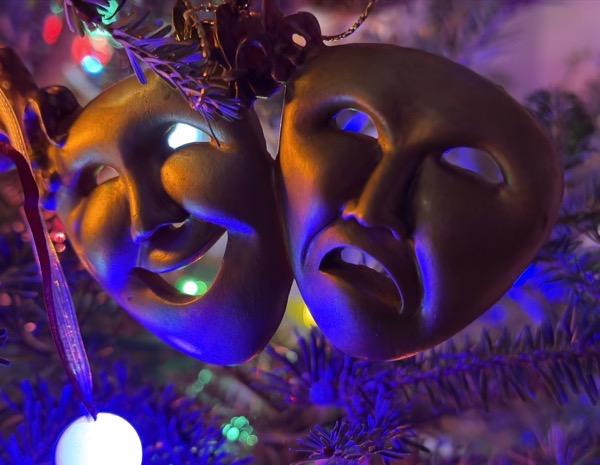
Every year, sometimes twice a year,  I return to one of my favorite theatre gigs, directing a staged reading for The International Voices Project. IVP is a Chicago company that produces staged readings of plays translated from other countries and cultures. Throughout the years the plays I’ve directed have taken me on journeys with writers from Syria, Lebanon, Ireland, Germany, Norway, Ukraine, El Salvador, and now Romania.

The reason I return each year is one of the reasons I have pursued and enjoyed my life making theatre. I get to touch and explore worlds, cultures, and ideas I would never have had the chance to experience otherwise. It’s always an adventure into something new.

My most recent gig with IVP certainly scratched all of those itches. The play is called Veronica’s Little Prince by Romanian playwright Dr. Catalina Florina Florescu. Yes, Antonie de Saint-Exupéry’s character of The Little Prince plays an important role.

The piece centers on Veronica, a former principal ballerina who has literally had her legs taken out from under her in a mysterious accident, leaving her in an institution, unable to move without the aid of a wheelchair and unable to speak. Unhappy with her fate Veronica is suspected of wanting to kill herself. Even before the mysterious accident she’s lived a life of self-destructive behavior.

The Little Prince arrives to help her examine and uncover the truth within her actions.

There’s another twist. I mentioned that Veronica can’t speak. In a technological twist she communicates via an AI robot by typing on her body. Via an implant those signals transmit to the robot who speaks her words and thoughts.

The play weaves in and out of Veronica’s mind and thoughts, her past and present, reality and fantasy, technology and humanity in very theatrical ways.

Creating an even more mysterious melange of tech and fantasy, the most frightening line to me is when Veronica’s Little Prince answers Veronica’s question about who told her to come by saying:

You see, they have programmed me to pop up whenever I hear certain words.

That may delight AI enthusiasts and those who keep suggesting we’re living in some sort of simulation, but given the rush to push us all deeper into a world run by Artificial Intelligence, it more than tweaks a nerve for those, like me, who may see benefits to AI in some forms, but think the pitfalls are more dangerous. Frankly, I prefer the characters in fantasy to spring from the minds of humans, not lines of code.

Given the sound and visual representations that give the script its many layers it was quite a challenge to present in a staged reading format without the benefit of theatre technology. But we managed to pull it off, letting the words weave their magic.

My thanks and kudos to the cast for doing such great work and especially to young Olive Popio who played our Little Prince.

(Photo by Scott Dray for The International Voices Project)

You can also find more of my writings on a variety of topics on Medium at this link, including in the publications Ellemeno and Rome. I can also be found on social media under my name as above.
Elections, Government Shutdowns and Other Quick Thoughts

Can dangerous actions continue to outstrip broken politics?

Just a few quick thoughts.

Without question I have to say I’m very pleased with the Democratic election victories across the country last night. Both the winners and the size of the margins in the headline races for governors, NYC mayor, and redistricting in California. I’m even more pleased to see some of the down ballot races yield Democratic victories as well.

Im 06752617.

Especially in my home state of Virginia where the Democrats took enough seats to have quite a majority in the House of Delegates. Here’s hoping that yields very positive results for the newly elected Democratic governor.

Obviously everyone is going to parse all of these election results and find ways to celebrate, castigate, and even dismiss what’s obvious. People are pissed off. They need to remain so.

Today also sets a record for the longest government shutdown in American history. Real people are being affected by this and that will only continue and get worse as long as the shutdown does. Of course when you have one house of Congress refusing to gavel into session and also refusing to swear in an elected member, who knows how long things will last.

In so many ways, the GOP and Trump’s tactics have been the biggest act of self-mutilation and self-humiliation by a political party I think the world has ever seen.

They will never acknowledge that.

Voters sure did.

Meanwhile the evil continues in Chicago and other places as ICE keeps ramping up its horror campaign. That’s not going to abate soon. I heard this morning that yesterday they were checking people’s IDs at the entrance to my local grocery store’s parking lot.

Perhaps those digging these holes that they will someday bury themselves in will keep ratcheting up their insidious actions to a point where events continue to outstrip the usual to and fro of politics. That’s a weird and painful thing to hope for, but it might just be our best hope at the moment.

And on we go.

You can also find more of my writings on a variety of topics on Medium at this link, including in the publications Ellemeno and Rome. I can also be found on social media under my name as above.