Hollow Crowns, Hollow Honor, Hollow Men

There’s nothing new under the sun

My wife and I spent the weekend watching two pieces of history. One unfolding, one already folded into folios more times than creases might allow. Separated as they are by hundreds of years, one a streaming dramatic retelling, the other a dramatic reality, they share more similarities than those distances impart.
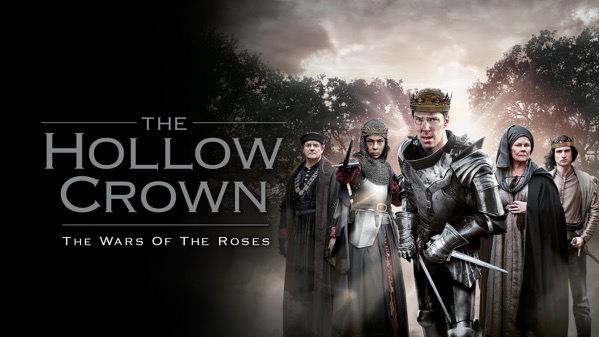
Promotional poster for the TV series “The Hollow Crown: The Wars of the Roses,” showing the title in large white text on a dark background at left while, on the right, a group of medieval characters in armor and period clothing stand in front of misty trees and a bright, cloudy sky, with a crowned knight in full plate armor holding a sword at the front of the group.

That reality I speak of is of course the war that the United States and Israel have launched against Iran for any of the hollow rationales the administration keeps trying to fill in. The retelling is the two-season BBC series encompassing William Shakespeare’s history plays spanning the reigns of Richard II, through a collection Henrys, an Edward, and ending with Richard III called The Hollow Crown. 

The title of the series is taken from a soliloquy from Richard II that always felt apt as preamble for what was to come through the period of history those plays encompass, as it has throughout human history, both before and after that bloody era.

From Richard II

…for within the hollow crown
That rounds the mortal temples of a king
Keeps Death his court and there the antic sits,
Scoffing his state and grinning at his pomp,
Allowing him a breath, a little scene,
To monarchize, be fear’d and kill with looks,
Infusing him with self and vain conceit,
As if this flesh which walls about our life,
Were brass impregnable, and humor’d thus
Comes at the last and with a little pin
Bores through his castle wall, and farewell king!

The plays and our current Middle East maelstrom demonstrate the folly of humans in what we call war, civil and otherwise, and the allegiances we are taught to assign to countries, kings, and presidents. They also demonstrate the collective capacity to forget that these humans we bow down to, willingly or no, are no more or less flawed than those they govern. Even as some become monsters or others reveal that they always have been.

Shakespeare had the benefit of over 100 years distance from the events he was dramatizing before he embarked on writing the first tetralogy, (Henry VI, Parts I, II, and III, and Richard the Third,) and a few years later completing the second (Richard II, Henry IV parts 1 and 2 and Henry V.) Although taken as two parts of a whole in terms of history, the two tetralogies were written out of historical sequence with the latter years chronicled before the former.

Obviously, today we don’t have the benefit of perspective that distance and the passage of time can lend as current news swoops in like flocks of drones. In truth, we really shouldn’t need it. The only thing that really changes are the players and history’s progression of weaponry and technology that they wield. Even the rhetoric doesn’t change much.

From Henry V

Take pity of your town and of your people
Whiles yet my soldiers are in my command,
Whiles yet the cool and temperate wind of grace
O’erblows the filthy and contagious clouds
Of heady murder, spoil, and villainy.
If not, why, in a moment look to see
The blind and bloody soldier with foul hand
Desire the locks of your shrill-shrieking daughters,
Your fathers taken by the silver beards
And their most reverend heads dashed to the walls,
Your naked infants spitted upon pikes
Whiles the mad mothers with their howls confused
Do break the clouds

These are the things men say when they choose to go to war, whether they may have good reason or not. If reason itself does exist in those moments. Once you descend down that path, it becomes an increasingly greater challenge to swallow the bluster and reverse course. Honor demands, they always say, and more than not leaves its corpse on the field.

Although you have to admit, Shakespeare’s poetry, even for those not used to scanning Shakespeare, is easier on the ear than anything spewing out of the mouths of Trump, Hegseth or any of the other current day blowhards and courtiers.

Regardless of whether the war councils happen in throne rooms, camp tents, or a makeshift Mar-A-Lago SCIF, it doesn’t take much imagining to see the similarities between modern day cabinet members, and long dead peers and archbishops. The costumes may be different, but the egos, hubris and fear remain the same. The fear isn’t always as much of the opponent, but of the leader’s capricious power against those who think differently and raise their heads to speak their minds. Civilization may have advanced to the point in most regions that we don’t cut off heads at a whim, but legs and livelihoods can swiftly be cut off with a Twitter/Truth Social post.

One of the things that struck me most about the production of The Hollow Crown, was the intimacy that filming allows. The series features a cast of superstars including Patrick Stewart, Judi Dench, Benedict Cumberbatch, Tom Hiddleston, Jeremy Irons, Simon Russell Beale, Ben Whishaw, David Suchet, Hugh Bonneville, Michelle Dockery, and Sophie Okonedo among a host of others it would be tough to assemble to speak those speeches on a stage. They do so with intimacy and nuance than larger, more open venues allow without amplification.

I’ve seen each of these plays live on stage multiple times. In fact, one of the signature live theatre viewing experiences of my life was attending the English Shakespeare Company’s The Wars of the Roses at the Chicago International Theatre Festival in 1988 that presented all of the plays over the course of three days.

Both that live version and this made for TV version made cuts in the text for various reasons including length. The three parts of Henry VI are condensed into two, with the TV version omitting Jack Cade’s rebellion, and Henry V bypassing the slaying of the children managing the baggage train are examples. But both gave you the essentials of the same story.

The live stage version certainly brought grandeur and spectacle to the event. The parade of the various reigns of kings proceeded through history adorned in Renaissance costumes with weapons of the period for Richard II evolving to more contemporary clothing and weapons for Richard III, before quickly devolving to the final battle between that Richard and Richmond in full battle armor, then flashing forward again, presenting Richmond’s final speech as a press conference broadcast on TV.

The TV version suffers a bit compared to current day streaming spectacles given the obvious budget and technology constraints of the time of its filming in 2012 through 2016. Amazing how 10-15 years can make more of a difference in our storytelling techniques than hundreds of years does in how we continue to rerun the actions of those stories in real life.

But the streaming version does hold up extraordinarily well and offers new insights, due to the intimacy that the camera allows. Using the camera to focus on Shakespeare’s moments of inner thoughts in soliloquies dissects those character kings and queens in ways modern day lickspittle journalists only wish they could access. Even though Shakespeare’s words describing those thoughts are his, they have the ring of more truth than the many we hear and see through these days, certainly in moments of chaos.

And there’s the rub. In moments that strain the hearts and souls of nations, we yearn for anything approaching a morsel of truth amongst all the banquets of rhetoric we’re served. Shakespeare’s fictionalized histories, though not accurate in detail or some necessary facts, reveal the more important and enduring truths, doubts, and fears that all men and women harbor beneath the armor they don for battle as they command us to follow.

Whether watching The Bishop of Canterbury recite the litany of lineage that gives King Henry V the right to invade France, or Secretary of State Marco Rubio breathlessly trying to spin together the strands of stories this administration has spewed out as justification for our current war, the comparisons favor neither, yet reveal the time worn folly of both. And you can’t walk away from comparing the falsehoods, conniving, and deteriorating health of Falstaff to those of Donald Trump.

History catalogs facts and the myths manufactured around them. Drama reveals the humanity of those behind the history. I have said more times than I can count that Shakespeare is the greatest chronicler of the human condition and the ways we relate one to another. There isn’t a human to human interaction that he doesn’t reveal in his characters, even those who have no character.

We like to ignore, or conveniently forget that it’s all been written before. Watching our current myth makers trying to rewrite history as it happens moment to moment, it’s no wonder we yearn for any small slice of humanity to help us make sense of it all.

I’m guessing the dramatists who will reveal that to us haven’t been born yet.

You can also find more of my writings on a variety of topics on Medium at this link, including in the publications Ellemeno and Rome. I can also be found on social media under my name as above.
 

Well That Happened

U.S Invades Venezuela and kidnaps president and his wife

Invading another country and kidnapping its president and his wife is certainly one way to distract from all of the many reasons the Trump regime needs to distract us from. Given that today, January 3rd is the statutory deadline to release the Epstein files, and we now have available the long transcript and video of Jack Smith’s deposition stating that the special prosecutor had irrefutable evidence that Trump was guilty it’s enough to spur suspicions in a stone.  It’s also not a great way to bring the holidays to an easy end. But then nothing about beginnings and endings have been easy for far too long.

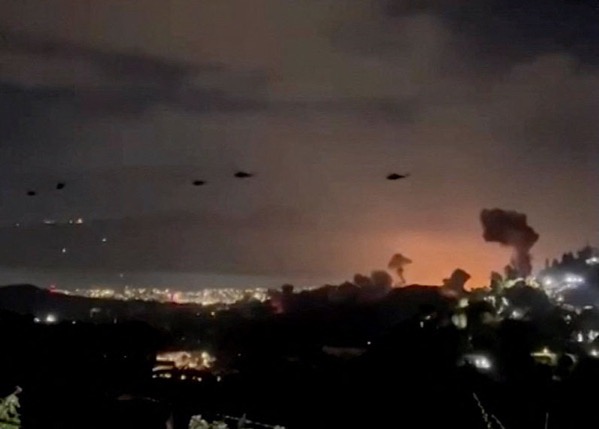
2026-01-03T093611Z 505068464 RC2LTIAJCXK4 RTRMADP 3 USA-VENEZUELA-EXPLOSIONS.

If you haven’t heard the news about the U.S. invasion of Venezuela be grateful for summaries. I won’t regurgitate beyond the opening paragraph of this blog post. I will say that the one piece of news in what passed for a press conference, the President of the United States says we’re now going to be running Venezuela. Watching a team that can’t run its own country say it’s going to run another strikes me as ironic, but then irony rusts in revolt at the doings of this bunch of dolts.

We’ve been on a wild ride for almost a year with the Trump regime and this will undoubtedly make it even wilder in the days ahead. I don’t believe anyone, including those in the administration, knows what it all means going forward. But we’re about to find out. Like it or not. I’m guessing we won’t like it.

The only silver lining I can possibly see is that taking these actions might possibly lead to the beginning of the end of this corrupt regime run by a child molester and convicted rapist. America historically has never been good at foreign conquest and overthrowing other governments, even when taking down corrupt evil regimes. Those past attempts have at least been undertaken with reasonably intelligent adults doing the planning and the work. That’s certainly not the case with this cast of characters acting in this Made for TV tragi-comedy.

If you listened, take anything you heard from the press conference with a grain of salt. Just like most things with this group it’s all poorly supported improv. Already the vice president of Venezuela who the Trump regime says we’re going to be working with and was gracious in her conversations is already demanding the U.S return Maduro.

Good luck to us all.

You can also find more of my writings on a variety of topics on Medium at this link, including in the publications Ellemeno and Rome. I can also be found on social media under my name as above.

Sunday Morning Reading

Tough times. Tough thoughts.

The world changed last night in ways we can’t comprehend this morning after the Trump Regime did indeed launch anticipated bombing attacks on Iran. Or maybe it’s too easy to comprehend, yet ignore, the why of it all too well. So it’s tough to put this week’s Sunday Morning Reading column together. I had a number of links to share on my usual topics of interest that I’ll save for another day. Instead I’ll just link to three posts that speak to the moment.

Gwyn hay JWUtWikNpSA unsplash.

First up is The Chosen Few and the Global Silence from NatashMH. “Yet history repeats with cruel precision,” she says. And she’s right. One day perhaps we’ll stop destroying ourselves with our decidedly unoriginal thoughts and ways.

Graham Peebles asks Is This What Collapse Looks Like? That we have to ask the question…

Writing about last week’s horrendous assassination of Melissa Hortman and the attempted assassination of John Hoffman, Sheririlyn Ifill says “people of character stand up” in her piece When Small Men and Women Rule. On so many fronts, it’s time for some standing up.

(image from Gwyn Hay on Unsplash.)

If you’re interested in just what the heck Sunday Morning Reading is all about you can read more about the origins of Sunday Morning Reading here. You can also find more of my writings on Medium at this link, including in the publications Ellemeno and Rome.

A Gentleman in Moscow is a Romantic Adventure With a Warning

An entertaining adventure in avoiding the tyranny of big men with small minds.

We’re in the process of another Thanksgiving/Black Friday ritual in our house. Saving some money by canceling entertainment streaming services and resubscribing via Black Friday deals. It’s a good time to save a few bucks going forward into the new year and to take inventory on what’s worth continuing or needs discarding.

A Gentleman in Moscow 2048x1152.

One of the things we do as a part of this tradition is make sure we catch up on things we’ve delayed watching on the services we won’t renew, so this week we’ve finally tuned in to A Gentleman In Moscow on Paramount/Showtime. The show is quite a delight, as was the original book by Amor Towles. As I am enjoying viewing, I can’t help but notice many moments that should serve as a warning for us here in America for what’s most likely to come in our near future.

Before the warning, first a quick summary of the show.

A Russian aristocrat, Count Alexander Ilyich Rostov, sent away from his home country after wounding another in a duel, returns home to a chaotic Moscow after the Bolshevik Revolution. He takes up residence at the grand Hotel Metropol and is seized, like so many of the aristocratic class, by forces now in control. Some government officials believe a revolutionary poem attributed to him, mark him as a hero of the revolution and spare his life, but sentence him to house arrest in the Hotel Metropol. If he walks out of the hotel, he is to be arrested and shot.

Throughout the remainder of his life and internment, he meets and befriends residents and staff of the hotel and begins a surprising alliance with the Russian agent assigned to his case, while constantly being dogged by the spies placed in the hotel to watch him and other residents, including a smarmy government collaborator who uses his new found power to rise to the position of manager of the hotel.

The story is told very romantically, with wistful nods to traditions lost and crushing change constantly in conflict. He finds himself at the center of adventures and intrigue throughout. In and of itself it is excellent viewing. Watching the characters learn to navigate the whipsaw changes Russia was undergoing, trying to survive while maintaining some sense of dignity and purpose, is the signature joy of both the book and the series.

That also leads to the warning I mentioned earlier that feels perhaps a bit too contemporary.

When you boil it all down all revolutions are essentially the same, regardless of the big ideas that motivate the change. In the case of Russia in 1917, it was the Bolshevik/Communist revolution. In this country it was the fight for American Independence from Britain. France, Russia again in the 20th century, the list goes on. As it appears at the moment, it is certainly possible years from now that we might look back on the events of 2024 as another such revolution if those on the winning side of the election fulfill promises made during the campaign. Very few such revolutions are bloodless. All are messy. Prices are paid.

What will happen, regardless, is that small men with small minds following big men with equally small minds, engorged with some self-serving sense of righteousness, will exact a toll on too many once in power. The Elon Musks, Tom Homans, Stephen Millers of the incoming administration are quite gleeful about causing pain with their plans for devastation. If you haven’t been paying attention to that, shame on you.

History and literature tell us this is feature of all revolutions. Once the worm turns, some of those who helped turn it can’t wait for their turn at the wheel. Once power is achieved, those who want to succeed, or in some cases, merely survive, will do anything to keep themselves on course, and in some cases prosper. And then there are others who merely surrender their principles or morality in order to go along. All become prey to those who crawl into the light to seek their moment in the sun.

When watching A Gentleman In Moscow, there are numerous examples of this, most tellingly the waiter who rises to hotel manager by reporting all he sees to the government security forces. Loyalty and betrayal are two sides of the same coin, too easily spent by those with small minds and big dreams. While big ideas always crush some going forward, big ideas don’t work without these small men doing the work. Note how ironically the MAGA dream of draining the swamp is filling up every available piece of dry land with swamp creatures of their own. Revolutions always target the bureaucracy and the bureaucrats on their way to becoming the same. Without them, the new system can’t bring down the old.

In an essay entitled MAGA’s Downward More Spiral, Damon Linker says: “Trumpism is seeking to advance a revolutionary transvaluation of values by inverting the morality that undergirds both traditional conservatism and liberal institutionalism. In this inversion, norms and rules that counsel and enforce propriety, restraint and deference to institutional authority become vices, while flouting them become virtues.

And then the circle begins again because the wheel always turns.

Certainly the big ideas between the Russian revolution of 1917 and what’s just happened in the United States are different, but only through ideology, if that. In Russia those at the top were on the way out in favor of “the people.” In our America, we’re just replacing one group of penthouse dwellers for another, with both sides being propped up by “the people.” For some twisted reason, “the people” who propelled Trump to victory haven’t yet grasped the roles they’ve been assigned and probably never will. Those at the top throughout history have always known “the people” are always ripe for the picking.

This has strayed far from just a recommendation for A Gentleman in Moscow, but contemporaneous events kept making small moments throughout the excellent series strike me with both sadness and trepidation as it presages what’s to come while feeling wistful for what we’re about to lose. The wheel does always turn and for a time the good guys can come out on top. But there are always those crushed as it churns ever onward. I highly recommend the series (and the book) as entertainments themselves, but also for what they presage.

You can find more of my writings on a variety of topics on Medium at this link, including in the publications Ellemeno and Rome. I can also be found on social media under my name as above.