Who knew Country Music would get embroiled in the so-called “Culture Wars.” Well, unless you haven’t been paying attention, just about everybody. Because hey, just about everything gets caught up at one time or the other. Emily Nussbaum has a terrific long read in Country Music’s Culture Wars And The Remaking of Nashville. FYI: No mention of some guy not born in a small town but singing as if he was.
If you’re looking for a collection of good writers and good writing you won’t go wrong with Ellemeno Magazine on Medium. Some top notch and provactive stuff going on there. Because there’s so much quality writing, I don’t feel so guilty for not recommending more this selections this Sunday.
If you’re interseted in just what the heck Sunday Morning Reading is all about you can read more about the origins of Sunday Morning Reading here.
A few loose threads in this edition of Sunday Morning Reading. Yes, that’s a bad attempt at headlining what’s going on in the social media universe after the release of Threads by Meta. But hey, if you’re interested there’s also pieces on our inevitable extinction driven by our pursuits of pleasure along with a piece of how we can possibly slow down aging.
SAG-AFTRA joined the WGA by going on strike against the Hollywood studios. This sounds and feels like it’s going to be quite a show. The issues surround the pieces of the compensation pie, but also everyone’s favorite new tech-bug-a-boo, Artificial Intelligence.
The studios, like many other industries see AI as a way to reduce costs. Set aside the issue of replacing labor, introducing AI also affects creativity. We’ve been heading here for quite some time and this is certainly a moment when lines need to be drawn because the precedents set down now will have an effect for who knows how long.
Here’s SAG-AFTRA president Fran Drescher’s speech announcing the strike. She says it better than I, or just about anyone could.
And for history and political buffs if history does indeed repeat, Fran Drescher will be elected President of the US down the road. Ronald Reagan was the last president of the guild when it went on a similar strike with other guilds.
News on so-called Artificial Intelligence continues to fill up the digital pages, social networks, air and cable waves with more words, words, words than you can shake a Complete Works of Shakespeare at. Abridged or unabriged. It’s truly amazing how ravenous the appetite for info on this is. But then again it isn’t.
The purveyors of AI are running so fast with something so incomplete that while the technology is impressive on one hand, they are welcoming the slight of the other. It’s not all smoke and mirrors, but there’s certainly enough smoke to make any reflection feel a bit hazy. We’re told AI is everything from our salvation to the end of it all. There’s a lot of sound and fury from all sides, signifying not much more at the moment than a lot of sound and fury.
I was re-reading some of legendary director Peter Brook’s writings this morning and I stumbled on this quote. I think it comes extremely close to pinning down what’s missing in this moment. Keep in mind this quote was published in his 2013 book, The Quality of Mercy: Reflections on Shakespeare.
Yes. You read that correctly. 2013. Brook left us in July 2022.
Once a computer was asked, “What is truth?” It took a very long time before the reply came back, “I will tell you a story…”
It’s been a week. But they usually are. I don’t think there’s a theme to this week’s Sunday Morning Reading other than that things continue along the same path of craziness that for some reason we just continue to accept as somehow normal. So perhaps it is.
Kicking things off is a great piece by M.G. Siegler about the Elon Musk and Mark Zuckerberg let’s have a cage mage nonsense called These Used To Be Serious People. I think that title could be applied to just about any field of human endeavor in this current moment.
Annalee Newitz says Ben Franklin Would Have Loved Bluesky as Twitter and Facebook lose ground to federated platforms. She says we’re in a social media era of chaos that sociologists woujld call a “legitmation crisis.” While the title uses Bluesky and Ben Franklin for attention grabbers she burrows down a bit into how the decentralization desires for some in social media, government and life tend to get thwarted by money. She goes deeper than that in a worthy read.
And Casey Newton says The AI Is Eating Itself. I’m very much in line with his thinking here.
Did you know that Samuel Beckett and Buster Keation collaborated on a film? They did. Thomas Leatham tells us about it in The Film Created by Samuel. Beckett and Buster Keaton. You can check out a small clip of it in the article.
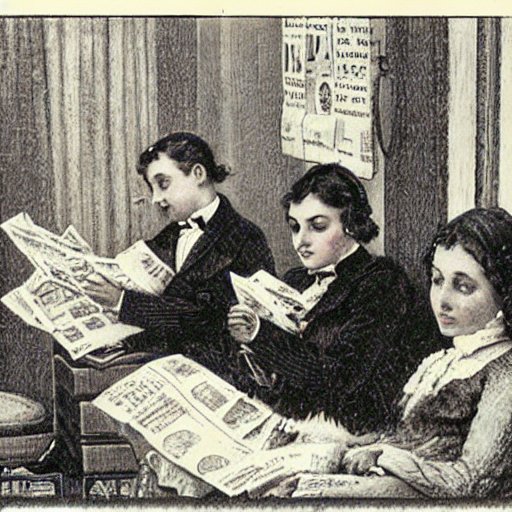
And to wrap things up this week here’s a bit of fun and curiosity. Jisha Joseph highlights an interesting bit of Victorian news and comedy commentary from Tit-Bits Magazine:
a competition that offered a reward to unmarried women who could provide the best answer as to why they were yet to find themselves a husband. The page-full of responses published on April 27, 1889, made one thing abundantly clear: Women in Victorian England had a badass sense of humor.
If you’re interseted in just what the heck Sunday Morning Reading is all about you can read more about the origins of Sunday Morning Reading here.
I’ve written and linked to a bit about Artificial Intelligence. I see the upsides and the downsides. The mislabeling (marketing.) The gold rush. The warnings. And I’m starting to see a bit of tarnish on this shiny new object of desire. It’s fascinating.
What’s starting to puzzle me in this ongoing discussion is what we’re not seeing.
But first a few themes.
One of the biggest stories is how AI is going to give us more freedom to enjoy our lives and be more creative by assuming many of the mundane drudgery of our lives. What immediately follows that is how many jobs we’re going to lose and stories of “too eager for the quarterly results” CEOs cutting jobs.
The next recurring story is how this will affect creativity by replacing artists, stealing from artists, and generally reducing creativity to bits and bytes created by bits and bytes.
And then there’s our continued march away from knowledge and facts to one where we don’t know what’s real and what isn’t. Especially once the supposed AI bots and Large Language Models start feeding on themselves instead of just on the stuff we make up.
Those three themes seem to predominate the conversation. But back to what I’m not seeing.
Why aren’t we seeing the tech bros advocating ways to use AI to help us get rid of the some of the scourges of the Internet and our lives?
A few examples:
A tool to indentify and remove spam from email, texts, phone calls, etc…
A tool to indentify scams and scammers.
A quick label on any web page that tells us how many trackers there are and where they are from.
A tool that always puts the “Continue Watching” queue at the top of the home page of streaming apps.
A tool that kills ads for products we just purchased.
A tool that actually lets users unsubscribe from content.
A tool that points to which company sold our data to the new content in our in-boxes.
A label that justs says “Bullshit” on content that is bullshit.
A tool that tells us when our ISP is throttling bandwidth.
A tool that always links back to the original source for regurgitated content.
A tool that identifies and labels bots.
A tool that tracks and reports the origin of evil doers on the web.
A tool that actually deciphers error messages, tells us the real problem, and connects us to useful solutions that don’t require wading through scores of bogus and out of date webpages and videos.
A tool that actually lets us vote advertisments up or down and lets us say I never want to see this ad again.
And of course:
A quick label that says this content was created by artificial means.
I’m sure there are others.
Of course this kind of “intelligence” would devastate so many business models that the global economy would probably collapse. But then perhaps there could be an AI tool that tells calls bullshit on the stuff economists and politicians tell us about that as well.
As the picture says, I’m on lake time this Sunday morning. So the list of suggested Sunday Morning Reading topics is a shorter one. Here’s hoping you find a little weekend time to chill as well.
Theatre and opera director Adele Thomas talks about her beginnings, her art and her career and how artists and the challenges (financial and otherwise) that directors face trying to get a career going. Good interview by Fiona Maddocks.
Some Sunday Morning Reading for Father’s Day. There’s no real theme to this week’s edition. Which is fitting. We used to joke that my Dad had a new hobby every six months. He did. But that just demonstrated his endless curiosity about the world around us. I think I got some of that tossed into my mix. So here’s a pot-pourri of topics to share.
What came first the chicken or the egg? Well that age-old riddle leaves the rest of the egg-laying species out of the question. Intriguing piece by Nisha Zahid.
And while we’re talking about the riddles that plague humans about the non-humans sharing our planet, Ari Daniel highlights an article in Cell that says an Octopuses can tweak the RNA in their brains to adjust to warmer and cooler waters.
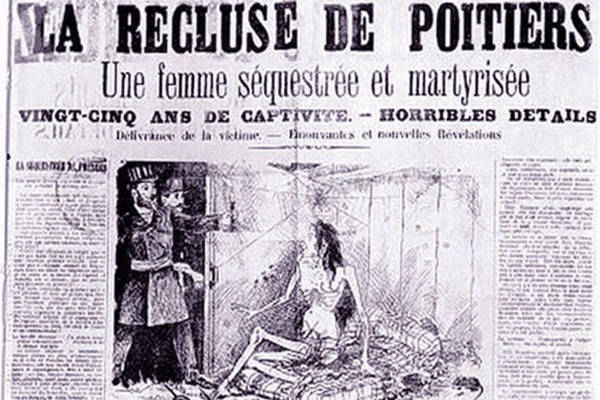
This is a scary and sad tale. Gina Dimuro tells us about Blanche Monnier. Her parents locked her in her room for 25 years after she fell in love with the wrong kind of guy.
If you’re interseted in just what the heck Sunday Morning Reading is all about you can read more about the origins of Sunday Morning Reading here.
Charisma might be the theme of some of this week’s edition of Sunday Morning Reading. Or maybe it’s our fasicnation with folks who seem to marshall it for mischief. The theme runs through a range of topics from Artificial Intelligence to the media with a few other subjects tossed on the reading pile. Speaking of charisma and mischief marshaling, these articles all came my way as we were absorbing the news of the Trump indictment this week. I wrote a little something about that here.
Om Malik stands as much in dismay as I do at how much time the media spotlights charlatans in Media and Monsters.
“I knew: This man is doing me violence — but I was no longer strong enough. I kissed the hand he offered and with choking voice uttered: ‘Master, what shall I do?’”
We’ve witnessed quite a few falls from grace this week. None more glaring than CNN’s Chris Licht. Mark Jacob in the Courier breaks down the difference between platforming and journalism. The latter Licht’s lickspittling helped slide further down the reputation damage scale.
Morality is declining. That seems to be something most believe at the moment. Data says otherwise according to Mariana Lenharo.
Jeff Jarvis followed a court case in which a couple of lawyers had to own up for submitting nonexistant citations and cases created by ChatGPT.
John Warner lays out an excellent long read on why Speed and Efficiency are Not Human Values. Yes, it’s AI related but you’ll also find a little Korsakov, Tolstoy and Prince in the mix.
James Grissom claims he received a phone call from playwright Tennessee Williams, who asked Grissom to “be my witness.” After a meetiing with Williams, Grissom takes the names Williams gives him and proceeds to follow the playwright’s wish: “I would like you to ask these people if I ever mattered.” Grissom turned it into a calling card, a book and a career. Lots of folks doubt the whole thing. Helen Shaw tackles the story in Did This Writer Actually Know Tennesee Williams?
David Todd McCarthy takes on our fascination with the unprecdented in America Grows Up.
And to end this week’s edition of Sunday Morning Reading here’s a piece by Melissa Cunningham about Jenny Graves. “Why are we still singing about Adam and Eve when there’s so much gorgeous science out thre is the world that explains our origins.” That’s the question Jenny Graves, an evolutionary geneticist, asked herself on her way to creating a libretto based on Joseph Hayden’s The Creation. Melissa Cunningham tells the story
If you’re interseted in just what the heck Sunday Morning Reading is all about you can read more about the origins of Sunday Morning Reading here.