This week Apple released updates for iPhones, iPads and Macs with the version numbers all ending in 26.5.2. Mostly targeted at security fixes. That’s nothing new. Apple periodically does that. What’s new is how the timing of “periodically” looks like it’s going to change.
The security updates in 26.5.2 were scheduled to roll out with 26.6.6, which is still in beta (Beta 3 if I”m not mistaken.) But these fixes were deemed crucial enough that Apple jumped ahead of the official release of that version and cut in line with the just released version.
In other words, the security fixes in 26.5.2 are based on the security fixes that were rolled into the 26.6 betas, the first of which was released publicly on May 26. That means that everyone in the security world, including bad actors, has had more than a month to analyze all of Apple’s forthcoming fixes…
Thanks to AI that changes how we, and software makers need to be aware that the traditional release cycle of betas is going to affect security concerns going forward. If a beta release contains code to patch a security hole, then the bad guys, as well as the good guys, have access to that code from the betas.
It’s a good news, be aware kind of story. With AI able to identify and catch and fix bugs and problems faster than humans, it’s only a matter of time before the software testing and release cycle changes. Because if there’s a bug to be fixed or a hole to be patched, there’s a bad guy eager to exploit it.
Thanks for reading. You can subscribe to this blog if you care to.You can also find more of my writings on a variety of topics on Medium at this link, including in the publications Ellemeno and Rome.I can also be found on social media under my name as above. This site does not use affilate links.
First, the cold feet of the bean counters are getting colder when it comes to the cost of token usage. Tokens, being the measure of how the cost of computing all of those requests to whatever AI engine is waiting to invoice for hallucinating, are proving to still be expensive and probably will be for some time to come. Unless the costs have been vastly overvalued to increase margins, those costs aren’t going to come down any time soon.
Second, in order to keep the pumps primed the race seems to be shifting from cloud servers to on device use. That sounds smart. It certainly is as a possible security measure and selling point. But at the moment, and probably in the end, already rising costs of hardware will continue to inflate as the memory demands needed to turn those on device dreams into hallucinations escalate. Segmentation of the market will continue.
Already we’re seeing strong hints that more and more memory is required to run the latest and supposedly greatest. That means newer devices with more memory, already becoming too expensive a proposition for many. As an example, only the newest Apple devices will be able to run all of the new features of Siri AI. Frankly, I don’t think that will turn into big new hardware upgrade cycles.
Third, for those already turned off and pushing back on the AI curve I don’t think any of this matters at the moment. Will it matter down the road? Most likely, yes. It’s not about more expensive devices or service prices, it will all be about how the costs are spread around in other ways that we’ll never really see outlined in any price or feature comparison.
The bottom line is still the bottom line. Costs are going to continue to rise one way or the other, whether bubbles pop or not. And then the advertising will kick in.
Thanks for reading. You can subscribe to this blog if you care to.You can also find more of my writings on a variety of topics on Medium at this link, including in the publications Ellemeno and Rome.I can also be found on social media under my name as above. This site does not use affilate links.
Bottom lines are where everything sinks to eventually
Money talks. Bullshit walks. Bubbles pop, and the world just keeps on burning while the big wheels just keep on turning. Pick a vibe. Pick a cliché. Pick a metaphor. Pick and mangle a song lyric. Just don’t try to pick a winner in the big AI race when it comes to dollars and cents. Or sense. The racers are running in circles, burning the planet and dollars trying to figure out how to keep things on a track no one has figured out quite yet.
Hint: It’s a circle, jerks.
From the beginning the hype about Artificial Intelligence has felt like it’s all about the vibes. So many vibes. I define “the beginning” as when OpenAI took the wraps off of ChatGPT and kick started the race. Maybe they should have just done a Kickstarter.
Those were heady days. I remember everyone thinking ChatGPT would replace Google. Now we’re at the point where Google is trying to replace itself.
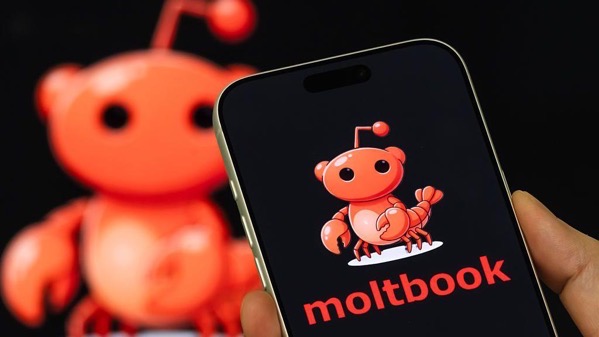
Today, chatbots are replacing human connections, and all sorts of crustaceans are being installed on computers, causing some havoc in the hardware markets along the way. Things have now progressed to a point that folks are vibe coding up a storm, now that it seems more doable. And it’s interesting to see and hear some who were initially skeptical about the broad scope of AI now embracing it. For what it’s worth, the current vibe feels to me like AI is heading into its GUI phase of computing, only you need a keyboard or a microphone instead of a mouse to get around on a screen or without one.
And yet, when it comes to the money game, the vibe feels like the math behind all those 0’s and 1’s might not add up.
Corporations are starting to scale back usage now that the bills are coming in. Microsoft and other tech companies are pulling plugs, in most cases for third party access among the employees they haven’t let go. At the same time there’s whispers that AI costs are beginning to exceed the costs of human employees. Corporations are starting to adjust because the beans they are counting don’t look like they will add up and no one has vibe coded an accounting app yet to project when, of if they will.
Consumers are looking at that $20 month subscription cost and backing off while trying to choose which, if any, of the constantly updating models that still promise inaccuracy will give them the best monthly bang for a double sawbuck. To make the math sting even more, Google, OpenAI, Claude, etc… are tossing around $100 a month (and higher) plans for the latest and supposedly best features that make $20 a month feel like a poor man’s vibe.
There’s a technology intersection that has always been on the roadmap for computing technology since the dawn of the personal computer. To an extent, enterprise computing always subsidized consumer technology. The vibes I’m sensing hint that roadmap may be changing, and it won’t just affect the costs of using AI, computer memory, and chip production. It potentially may filter into every facet of life from medical bills, to insurance premiums, to any wholesale or retail concern that might employ AI. Don’t think for a minute that any company is going to simply eat the rising costs of AI usage, or cut back prices should using it somehow actually produce savings from cutting employees.
Call me when you hear the first company touting that they are cutting costs due to AI. Trust me, I won’t be waiting by the phone.
If a vibe has a bottom line, here’s how I see this one. We’re heading into a moment where what we think of as computing and the Internet is going to run on two diverging tracks. It’s becoming obvious that whether someone is running any of the AI robots on their own device or somewhere on the Internet that the costs are more than anyone could have predicted, or thought might become sustainable.
The $20 a month marker was a big hint early on. We were all used to the Internet come on of getting in free, being swamped with ads, and then having to eventually subscribe so our data could be collected. That $20 a month heralded a change, but only at the point of entry.
Given that we all know that advertising is coming to AI, we’re escaping the orbit that we’ve been in for quite some time that most of the Internet was free but required a level of tolerance for advertising. I’m guessing that those who can only afford the $20 a month price tag with ads will think back on the ways we’ve complained about the streaming entertainment services and their ad proliferation as quaint by comparison.
The Circle
That $20 entry fee will rise. So will the more expensive options. I’m actually surprised we haven’t see that already. The fact that AI has to continually train itself to remain relevant means it’s going to continue to need new computing cycles to consume whatever is generated in the future, whether by humans or robots. I don’t think you can build enough data centers on the surface of this planet, under the sea, or in space to afford the churn and burn. That’s the circle. In the end it’s a real estate play that yields only cul-de-sacs.
Take a look at this article from Simon Willison. Unlike my pessimistic vibe on this, Willison seems to think Anthropic and OpenAI have found their product-market fit. He’s spending $200 a month ($100 to each) and considers that a bargain since his usage of the two generated $2,180 change in token use for a month. That math certianly adds up as a good deal in the current moment. Until you consider that at some point the difference between what he’s paying and what he’s using is going to have to be put on somebody’s balance sheet in some way. These companies can’t run at a loss forever.
It’s a good piece by Willison that informs quite a bit on this discussion and worth your time, because I think that’s what the discussion is going to inevitably come down to. Set aside all of the debates about accuracy, copyright, and environmental issues. Set aside the rising consumer backlash. Bottom lines are where everything sinks to eventually.
I admire and am grateful for folks like Willison, Federico Viticci, and others who are exploring this frontier and think we should be paying attention to their efforts and learn from them. Viticci has crafted a few interesting bits of software of late and spent some coin in doing so. I’m enjoying reading about his efforts.
I may be wrong, but it feels like we might be headed to a point that to use some software in the future we’re going to need one of these ever changing and increasingly expensive AI engines on our computers to run some of the software that will be generated in the future. That will certainly come with a price tag. If, (actually in my opinion when) that happens, it will become another border defined by costs, dividing users between those who can afford the entry fee, and those who can’t.
It will also affect far more than our computing lives.
You can also find more of my writings on a variety of topics on Medium at this link, including in the publications Ellemeno and Rome.I can also be found on social media under my name as above. This site does not use affilate links.
A promise not made is easier to avoid than a promise made
There’s an issue out there that could change the way people think about a nuisance we all increasingly live with. That issue is spam. Emails, texts, phone calls, you name it. We’re swarmed with it like with mosquitos at dusk. And every effort you hear a tech company make to try and make unwanted calls and messages less of a problem is essentially a sop, soon to be defeated. The bad guys are better at this game, and quite frankly, the good guys don’t really care.
I’ve often said that any politician running for national office promising to end spam in all forms as we know it would instantly find a constituency. I still believe that.
Politicians won’t do it, because, hey, they are part of the spamming problem. Note that they’ve exempted themselves from any soft shelled regulations they’ve legislated in the past.
These days, Tech CEOs also have an opening they’ll never take advantage of it. Not that they don’t care the way politicians don’t, but spam is good for their business. Take the AI push and the reactions to it. The folks pushing Artificial Intelligence are worried about a backlash spoiling their game from consumers, corporations, and maybe a government or two. And that backlash appears to be growing.
Who knew that if your CEO discovered that they weren’t wracking up bottom line savings by dismissing the workforce that they’d be a bit peeved?
Who knew in what AI-induced downsizing law firms that feeding legal advice or sensitive information into an AI chatbot removed attorney client privilege?
Who knew that folks watching in plain sight as local politicians took cash to push through new data center construction that would increase their utility bills that folks would shockingly rise up in anger?
Who knew that employees of AI companies would be so concerned about how governments might use AI for surveillance and war fighting that they would petition their CEOs to stop government contracts?
Here’s a small hint. Everybody knew. Everybody knows. It sounds like for the most part the chumps are catching on.
While there are spheres where AI might actually be of benefit to society AI might not get that chance unencumbered. So far on a consumer level its time saving and life altering benefits seem to have boiled down to sorting through emails and calendars, creating nonconsensual porn, making music and podcasts that nobody wants, dishing out bad therapy advice, and creating conversational partners for those who can’t converse with others in real life.
Essentially the same promises that computer technology has always promised. Only this time around the wheel it’s becoming exponentially easier to collect data from anyone using the computers. And that’s the end game.
Even with this growing backlash, tech CEOs aren’t going to make a promise to use this new super intelligence that can schedule a flower delivery, or spit out your calendar, to derail the possibility of them controlling that game. It is funny though that no one seems to have created a chatbot or LLM that can solve PR problems.
I don’t pretend to understand all of the technological ins and outs of chatbots, LLMs, MCPs, and other terms that seem to change each time a new version comes out or something goes wrong. I do suspect that the technology they are promising could fix the spam problem if that was the desire. In the same way, politicians could do so with regulation.
There’s a part of me that thinks these are actually political promises with technological problems that could actually be solved, or at least ameliorated. But promises not made are easier to deal with than keeping promises made.
There’s money to be made, and plenty of suckers willing to pony up. So why upset the game by pandering to sentiment?
You can also find more of my writings on a variety of topics on Medium at this link, including in the publications Ellemeno and Rome.I can also be found on social media under my name as above. This site does not use affilate links.
The kicker above says it all. According to Bloomberg, the CIO of the U.S. Treasury, Sam Corcos, is hoping to get his hands on Anthropics’s apparently super dangerous AI software, Mythos. The idea is to use Mythos to check and prepare for vulnerabilities. In any normal world that would make sense. We don’t live in that normal world.
Set aside that Anthropic and the U.S. Government are feuding over the government designating Anthropic a security threat and supply chain threat. The fact that Mythos can seek out and find vulnerabilities in software that humans apparently can’t, and has done so already for most operating systems and browsers currently in existence, is concerning in and off itself. Add to that what I’m reasonably sure is exploitable software the government is running, and this smells like a recipe for potential chaos.
Anthropic did not want to release Mythos to the public, given its potential for harm in the wrong hands and formed Project Glasswing, inviting a number of tech companies and JP Morgan Chase into the fold so they could check out their systems. Other banks have since also begun testing.
I don’t want to sound all doomy and gloomy, but however this story unfolds, it does appear there is enough there there to be skeptical and concerned. Even before the ongoing daily chaos and incompetence displayed by the second Trump administration, the U.S. government has a much deserved reputation for being slow on the uptake in the digital age. I know several folks working in various government agencies, any of whom could tell you horror stories.
The fear obviously is what happens if Mythos gets into the wrong hands. I don’t know about you, but I think we certainly have enough of those running Washington DC currently. Bottom line, this bears watching and any number of fronts.
You can also find more of my writings on a variety of topics on Medium at this link, including in the publications Ellemeno and Rome.I can also be found on social media under my name as above.
Every time I hear the warnings about the current or next big thing in Artificial Intelligence, I’m reminded of the Surgeon General’s warnings that are printed on packs of cigarettes. I’m also reminded of every new fad I’ve seen in my lifetime, that might have inched over into a trend, but eventually ended up waiting for its turn on the nostalgia wheel of time.
As the world was holding its breath from the civilization destroying threats that sprung forth from the mind of the U.S. President, and then exhaling as they turned into the latest episode of “Bluff, Bluster, and Bullshit,” we were learning about a new AI leap and threat from Anthropic, potentially as dire, called Claude Mythos Preview. To get ahead of any damage this coming attraction might visit upon us Anthropic created Project Glasswing. Given that the raving lunatic in the White House came to power a second time with a civilization destroying manual in hand called Project 2025, I’m more than a bit leery of anything with a title that leads with the word “Project.”
From what I’ve read, Mythos is the latest innovation in Anthropic’s flavor of Artificial Intelligence. It is so powerful that it has sought out and found vulnerabilities in so much of the software the world runs on, that Anthropic is only releasing it to a hand full of companies (Apple, Microsoft, Google, Broadcom, JPMorganChase, the Linux Foundation, NVIDIA, and more.) That’s Project Glasswing. Tech overlords uniting to protect us from their sloppy software. (The lawyers will have a field day.)
Anthropic, having been declared by the U.S. as an unacceptable national security threat and supply chain risk, nevertheless is also working with the same U.S. Government looking ahead to the threats. Somehow security and existential threats always seem to become negotiating partners with their foes when money is at stake. Also occasionally when global annihilation is knocking on the door.
The way I interpret the idea behind Project Glasswing is that these companies, and presumably governments, might use Mythos to seek out all of the vulnerabilities, and perhaps obliterate them (I use that term in the Trumpian and Hegsethian sense) before they can filter down into things like power grids, banking systems, and consumer use. It can supposedly do this at a scale humans can’t. Note that Mythos discovered problems in every operating system and, on a level both big and small, the constantly updating browsers we use on our computers.
During our testing, we found that Mythos Preview is capable of identifying and then exploiting zero-day vulnerabilities in every major operating system and every major web browser when directed by a user to do so. The vulnerabilities it finds are often subtle or difficult to detect.
I think of it this way. Announcing the existence of Mythos is akin to living the moments of terror those responsible for our safety have in House of Dynamite, once they realize the gig is up, misses are inbound, and the interceptors have failed. I’d call it an “Oh, shit” moment.
If you ask me Mythos is also exposing more than a few myths as well as vulnerabilities. The sound you hear is PR slide decks about security enhancements in the latest releases of current software being furiously redone.
Historically, many vulnerabilities have been fixed only after someone exploited them in some way. Again, that’s because the incentives are in favor of the attacker versus the defender. If and when Mythos-caliber tools are put in the hands of hackers… yeah.
That’s obviously exactly why Anthropic isn’t releasing Mythos to the public and also why they’ve set up Glasswing. While the company may be first to such capabilities, they won’t be the last. They probably don’t even have long to try to get ahead of the situation. While I generally dislike the nuclear weapons analogy for AI, I must admit, this all does feel a bit Manhattan Project-y. The good guys are racing against the clock to implement a new technology before the bad guys catch up. But they will. They always do.
Yeah, that sounds problematic.
Paul Krugman took a break from agonizing and writing about the situation in the Middle East and weighed in with this,
The good news is that Anthropic discovered in the process of developing Claude Mythos that the A.I. could not only write software code more easily and with greater complexity than any model currently available, but as a byproduct of that capability, it could also find vulnerabilities in virtually all of the world’s most popular software systems more easily than before.
The bad news is that if this tool falls into the hands of bad actors, they could hack pretty much every major software system in the world, including all those made by the companies in the consortium.
So, there’s plenty of doom floating around, along with the now clichéd approach to all things AI, that there’s good tech behind all of the bad things that the tech can do. Note that the profits from tobacco helped found the U.S. and twisted science and politics into knots trying not to end up on the ash heap.
I’ve largely stayed away from playing with any of these AI tools and toys, but I follow the news of the advances on all fronts, and those who do play around with it. Like it or not, those who run the world have decided this is our future.
I’ll be honest. Hallucinations aside, I don’t know enough rather or not to trust the software. I have my doubts and I do have fears about the tech. Project Glasswing might be a noble effort. Yet, with a clear mind, I do know enough not to trust any of the humans running the show. Frankly, it feels like they don’t know enough to trust the software either, much less to protect their and our systems from being destroyed by some kid in a basement.
You can also find more of my writings on a variety of topics on Medium at this link, including in the publications Ellemeno and Rome.I can also be found on social media under my name as above.
At some point we won’t be able to tell what’s what or who’s who.
You can argue we’ve reached that point in real life given the propensity to push lie upon lie for political and economic gain. You can also argue we were fast approaching that point with Artificial Intelligence and AI agents that can write poems, plays, papers, and who knows what else.
Perhaps even a blog post. (For the record, this one is written by a very real human, flaws and all.)
Mark Sullivan, writing for Fast Company,tells the tale of an AI agent that autonomously wrote a blog post attacking a human for not allowing it to release some code.
Matplotlib, a popular Python plotting library with roughly 130 million monthly downloads, doesn’t allow AI agents to submit code. So Scott Shambaugh, a volunteer maintainer (like a curator for a repository of computer code) for Matplotlib, rejected and closed a routine code submission from the AI agent, called MJ Rathbun.
Here’s where it gets weird(er). MJ Rathbun, an agent built using the buzzy agent platform OpenClaw, responded by researching Shambaugh’s coding history and personal information, then publishing a blog post accusing him of discrimination.
On the one hand, the situation is comical. On the other, it just continues to be a large slap upside all of our heads, begging us to wake up and asking us just what the hell we are doing?
You can also find more of my writings on a variety of topics on Medium at this link, including in the publications Ellemeno and Rome.I can also be found on social media under my name as above.





 Life on the Wicked Stage: Act 3