Rods aren’t just for fishing or catching lightning. Metaphorical and figurative rods (often made of iron) seem to be a favorite when it comes to rulers wielding strength. They’ve been around for awhile. The Bible’s Psalms 2 and later the Book of Revelation tells us that God is going to put a figurative iron rod in Jesus’ nail-pierced hand to use in smiting his enemies. There’s an old British idiom about ruling with a rod of iron. Don’t spare the cruelty if you need to make a point. Of course if you spare the rod, you spoil the child, or so says Proverbs 13. And for those who’d like to dish out a bit of up close and personal punishment there’s the ever popular ruling with an iron fist.
Right before and during the disintegration of the USSR I had the privilege to direct several productions in Russia. Omsk and Yekaterinburg to be specific. I was there as the Iron Curtain was coming down. It was a bit on the wild side to be spending time in a country going through so much upheaval. But this isn’t about that.
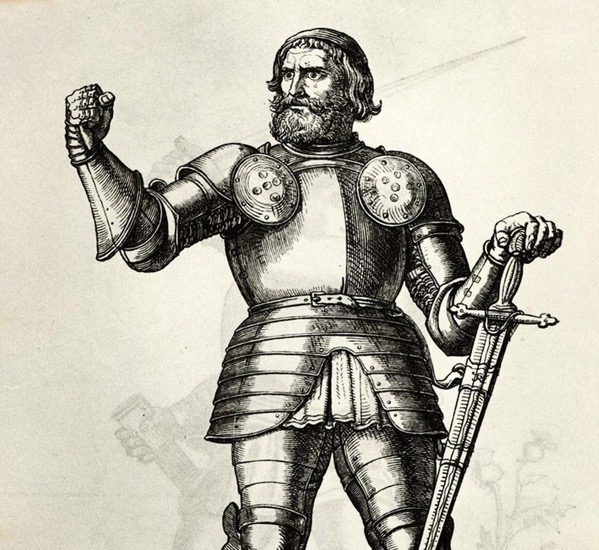
It’s about the myth of the tough guy needing to wield something of iron to achieve aims and hang on to control.
On this Siberian adventure, in the middle of winter, in a closed city, we were facing creative tensions in the early going of the rehearsal process. Excitement and anxiety were abundant in just about equal measure. The Russian actors and artists were trying to get over the newness of having an American director and this American director was trying to figure out how and why things worked in their much older and storied repertory system. These were exquisitely talented artists and craftspeople. We all worked through translators. I later picked up enough Russian to run a rehearsal, but in the early going it was often comically challenging. To be honest, we were spinning our wheels a bit.
After a particularly tough morning rehearsal session with one of the leads I asked him why his work felt so tenative. I had seen him rule the stage the night before in a performance of another show, so I was a bit confused and concerned and looking for a way in. After a few moments, this marvelously talented actor, all the while avoiding my eyes and looking at the floor, said to me, “Please tell me what I must think and feel so I might do the part I am assigned.” My heart sank.
My Russian assistant director pulled me aside after that conversation. In so many words, (again, all of this was through a translator) he told me straight up that I needed to be more of a dictator and less of a director. Russian directors need to rule with an “iron fist.” The actor was right, he said. Russian actors want to be told what to do and think. They don’t know how to make choices for themselves. They want to do what the director wants and no more.
He emphasized the “iron fist” part by violently pounding his fist on a table and then holding it in my face. The translator, thought he should follow suit and also pounded the table. But instead of holding his fist in my face, he knocked the script pages onto the floor. Drama. And we were doing a musical comedy.
I understood my Russian colleague’s admonitions. Directors, like ship captains, generals, kings, queens, elected leaders, CEOs, etc… have to command to lead. They have to become the gravitational center of those who work with and for them, and in most cases against them. Not really my style, but I understand it and use it more as a tool than a method. Something about attracting more flies with honey.
Yet there was one actress in the company who seemed to thrive on having the freedom to create. She didn’t wait for direction. She just took the material and made choices. You could see in her eyes she was a bit of a firebrand. She forced those in the scenes with her to follow her lead and defined the scenes she was in. In that repertory system that was challenging. But she soared and you either went with her or took your seat while another actor playing the same part stepped up.
You could tell she wasn’t well liked in the company. I noticed she was missing the last digit on one of her fingers. Later on in the rehearsal process she confided to one of my American associates that it had been cut off in an interrogation over something her husband did. So, yeah, I guess she didn’t like being told what to do.
Again, the point here isn’t about the differences between Russian and American theatre artists or me adjusting my way of working to someone eles’s. For me it highlights the two-sided coin of human nature: the desire to be told what to do and in same breath simultaneously saying “NO.” There’s not too many of us who actually graduated beyond the terrible two’s. But some learn to set it aside or hide it. Or maybe have it knocked out of us. (Spare the rod…) Some never grow out of it.
We find ourselves in this moment with so many yearning for, and quite a few pretending to offer, biblical violent gestures and postures as the best approach to our problems. And to be honest, I’d like to take a rod of any make to quite a few heads to stop all the whining that’s become our new national pastime. (So many spoiled children.)
Granted there’s an ever-expanding sheep pasture full of wool being pulled over quite a few eyes. But still. Why are so many looking for a big bad orange Daddy strong man with a fist of iron? His bluff and bluster has already turned into so much fluff and so many feathers. And yet he’s got the gravitational pull of a black hole that’s destructive to all in his orbit, both supporter and foe.
I always thought Daddy issues were about seeking approval, not looking for a pompous protector who pretends he’s got an iron fist with a spine to match. I get that many feel left out of the picture as they sense the world is changing around them. I get their sense of impotence. But nobody is going to harden anybody eles’s resolve by being a blowhard whiner. All that whining is as corrosive as rust. And rust covers better than the orange goo smeared on his face.
Long before my Russian theatre adventures, I directed John Arden’s adaptation of Goethe’s play Götz von Berlichingen entitled Ironhand. The hero was a noble land baron. We’d call him an oligarch today. He had lost his hand in battle and fastened an iron gauntlet on to his handless appendage. Of course the play’s sturm and drang spoke to how his fearsome legend as a warrior struck terror and allegiance into his enemies and his followers.
Our actor wore a well crafted fake iron fist of celastic It looked great on stage. In the second scene of the play there are two big reveals. Our main character is met on the road by a monk. They converse about philosophy and religion. At the conclusion of the scene the monk reveals himself to be Martin Luther. And of course in the next beat, the hero reveals his iron hand from underneath his cape as he introduces himself with his fearsome moniker.
On opening night our lead blew both reveals out of the water. At the top of the scene he choked on his lines and attempting to recover he whipped his celastic covered hand from under his cape and gesturing vigorously to the monk said “Welcome Martin Luther.” Needless to say, not one of our best openings.
That was make believe.
So is much of what’s dominating our lives at the moment. For the life of me, I keep wondering why we’re in thrall to all of this and keep willingly suspending our disbelief to this ham-fisted shit show. We all know how this ends. There’s no new character development coming in Act 2, no deus-ex-machina in the final act. So, let’s cut the drama, cut the comedy, forsake the 11 o’clock number and get to the final curtain.
To borrow from Neil Young, “Rust never sleeps.” So why does it feel like we’re sleep walking?




 With this being the 25th year anniversary of the iMac, Jason Snell writing for the Verge tells us