Musings on life, the theatre, technology, culture and the occasional emu sighting
Author: Warner Crocker
I stumble through life as a theatre director and playwright as well as a gadget geek...commenting along the way. Every day I learn something new is a good day, so I share what I find exciting, new, stupid and often worthwhile.
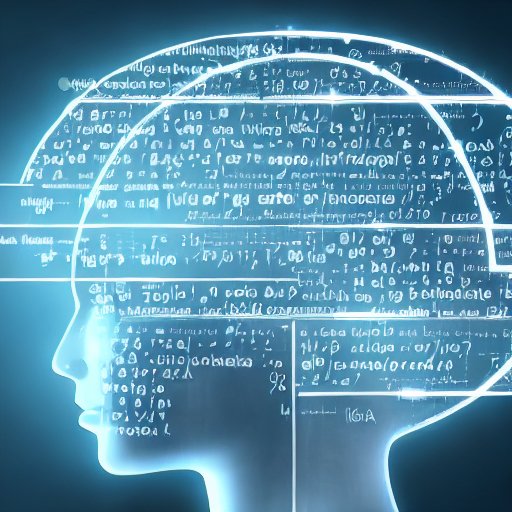
Why are we calling this current fad/trend/gold rush into Artificial Intelligence “artificial?” Shouldn’t we be calling it Accumulated Intelligence?
From what I’m reading the output these new services are spitting out is more like a mash-up of what they’ve scraped and collected from around the Internet. You know. Stuff created by humans. Apparently the writings, the artwork, the photos, the music, the code, the thoughts, the you name it, have been collected and are being tumbled and jumbled up and presented as responses. So somebody can charge you for it or sell ads against it.
And knocking the moniker again here, that of course means it’s all been said and done before. There’s not much we can really credit to divine inspiration beyond the talent to discover, describe or display what already exists. Because that’s sorta kinda how we humans evolve (or are intelligently designed) anyway. We gain knowledge and intelligence through our experiences. And through those experiences we become who we are, think what we think, and create what we create based on the knowledge we accumulate.
I’m assuming that’s what the makers of artificial intelligence call real or natural intelligence. But it’s tough to sell ads against that.
Given that we humans are known for both brilliance and the not-so-brilliant in what we say, do, think, create and accumulate, you can say we as a species struggle a bit with the tensions brought about by natural intelligence. Certainly we seem to be hitting a speed bump on the brilliance part as the not-so-brilliant part continues to plow-ahead of late.
But again, this AI fad is taking what exists, shaking and baking, stirring the pot, and presenting it to us in a newly polished form we can get on our smartphones while waiting for the transit apps to give us wrong information about our train’s arrival time.
The very human response when someone learns something new or that an answer is wrong can certainly be “I didn’t know that.” What’s funny with these machine learners though is that in the early going they seem to be spitting out mistakes just like humans do. And taking the same kind of offense when called on it. So nothing new under the sun there.
And apparently these machines need to be governed by rules. Well, that’s only human too. We govern ourselves (well, some of us do) in order to try and remain civil and polite. And protect our profit margins. Again, only human.
So, I’m saying it’s early enough in this game that we should strip away the “artificial” in AI and change it to “accumulated.” Because sure as shooting at some point down the line some big error is going to be spit out by a machine that causes something bad to happen. And we’ll shift the blame to the machines. Just like we humans always do.
But I guess there’s one benefit to this “artificialness.” The machines can’t plead ignorance or “I don’t recall” when things get inconvenient or uncomfortable. At least until we start using “artificial lawyers.”
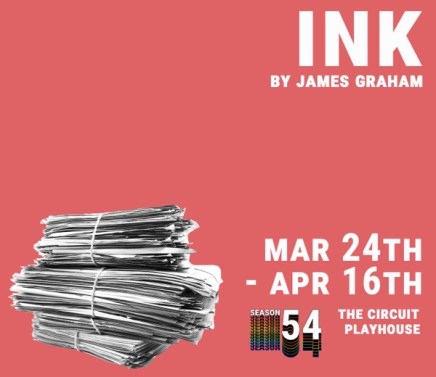
One week from today we’re off to the races when we begin rehearsals for James Graham’s play Ink at Playhouse on the Square in Memphis. I’m chomping at the bit to get in the room with actors and start bringing this story alive on our way to its opening on March 24.
We’re still heavy into production work but I’m just about at that point where I shut down research and script work. I call it Dark Mode.
Essentially I’ll put the script away for 4-5 days. All the research, script work and note taking just sort of percolates, simmers, or stews a bit. The day before rehearsals start I’ll take another cursory pass at the script. But when we sit down for the first read I want to hear the words with the voices of the actors and see how those voices confirm or challenge the thoughts I’ve been bringing to the mix so far. I look forward to both the confirmations and the challenges.
Immediately after that first read my brain will enter a period where it doesn’t shut off on the show until after it has opened. But until then I sort of have to enforce Dark Mode on myself. I’ll want to jump back into things now and then, but I’ve learned over the years to trust this percolating part of the process. Maybe it’s like letting a good piece of meat rest a bit before carving and serving. And maybe I should stop with the food analogies.
“Every creative act involves a leap into the void. The leap has to occur at the right moment and yet the time for the leap is never prescribed. In the midst of a leap, there are no guarantees. To leap can often cause acute embarrassment. Embarrassment is a partner in the creative act—a key collaborator.”
Is it real or is it Memorex? Remember those days? We’ve been treated to questions like those for some time now when it comes to music, film, and other means of arts and entertainment. And the pace of things seem to be quickening as the powers that be in these industries are jumping with both feet into the big tech Artificial Intelligence rush.
New technology is great when it can advance creativity. New technology is also bit scary when we don’t know exactly what it’s going to yield. But the one thing we do know is that if the bean counters think they can save a buck and make two by using a new innovation they’ll take that leap, regardless of the risks it might pose to the creative spirit.
I’ve been talking about Artificial Intelligence a bit here and obviously will continue to do so. It’s the thing of the moment. Which means some hope it’s the thing of the future. And it just might well be. But how that is going to impact the arts is going to be a tricky future to navigate. Perhaps after Google, Mircosoft and any other tech giants get their AI search engines up and running we can ask and find out. (Google calls theirs Bard. Seriously?)
We’ve already seen technology create magic in audio and film/TV. De-aging is a popular recent trend in film. Of course that follows the trends of CGI characters and CGI backgrounds and CGI just about everything else.
We’ve got computer generated narrations for eBooks competing with live readers. We’ve been enhancing audio tracks for decades, and in the most recent decade or two we’ve been enhancing live performers.
Yesterday there was a story in Vice about voice actors being asked to sign over the rights to their voices so their clients can use artificial intelligence to generate synthetic versions for future work, perhaps replacing the need for the artist for future work.
Each technology advance gets met with both praise and criticism. Some deserved. Some not so. I’m no luddite or traditonalist who eschews these advancements. But I think we’re heading into tricky ground in this next chapter of entertainment and creativity that parallels what we’re experiencing in real life.
There’s that old and recently accelerating propaganda truism (ha!) that teaches us it’s not about separating fact and fiction. In the Peacock network’s series The Undeclared War there’s a great sequence when a news editor sums it up while explaining the way it is to a younger new recruit:
“The point is to get people used to the idea that everything’s a lie. There is no truth. Once they accept that. Biggest liar wins.”
Who cares if a search result yields a false result? Who cares if Carrie Fisher is dead when she’s still appearing in Star Wars? Who cares if deep fake videos or audio can sabotage a politician or a company? Who cares if the audiobook you’re listening to is read by a human or a computer?
Set aside the labor issues and putting folks out of work. Those are real discussions that need to happen. But what if Tom Hanks, who is pretty darn excited by the de-aging process in film, or rather a digitally created Tom Hanks keeps starring in movies long after he’s gone. Hell, we could have Forrest Gump appearing with world leaders that haven’t been born yet twenty years after they’re dead.
We all had a good laugh at the manipulative creation of boy bands awhile back. Don’t think we won’t see and hear new bands created out of the whole cloth of digital bits and bytes. There’s no question in my mind that we’ll see an entire film created out of an AI prompt some day down the road.
There will be innovation. There will be excitement and celebration and there will be reactions. Some of which might actually be human.
There’s an excellent discussion about design vs practicality going on currently within the Apple community that gathers around the Mastodon water cooler. It was kicked off by Matt Birchler responding to a post from Daring Fireball’s John Gruber commenting on how far ahead third party iOS apps for Mastodon were than those on the Android platform. Birchler filled out his thoughts in a post called The Shocking Stage of Enthusiast Apps on Android.
John Gruber continued the thread on Daring Fireball with an excellent post called Making Our Hearts Sing. That in turn prompted Frederico Viticci to pen a post on MacStories called The Practicality of Art in Software. I’d highly recommend you read Matt, John, and Viticci’s posts.
Beyond a brief summary let me just say that I’m in profound agreement with each of the posts. There are differences in the arguments, but they all aim at the same larger point about Apple.
Yes, in my view Android apps for Mastodon pale in comparison to iOS apps. As backed up by my own experiences, I do feel the general design of Android apps also lack what Gruber calls “the artistic value in software and interface design” that he sees in iOS apps. AND, as Viticci says “As a computer maker or app developer, you have to strike that balance between the aspirational and the practical, the artistic and the functional.”
The two cents I’m about to add to the discussion isn’t in contrast to what these three have laid out. Like I said I’m in agreement with the points in each argument. Think of this as tangential to the discussion.
So here’s the tangent.
Design is key to any endeavor that’s creating a product. We can talk form following function, or practicality, or art for art’s sake. Doesn’t matter where you enter the discussion. It’s key. And the posts I’ve mentioned above do an excellent job of hitting those points.
Apple has captured, captivated, seduced and perhaps suckered many of us with its approach to the design of its products. In my opinion I think they’ve largely succeeded. If you “think different” then I won’t question your taste, but I’ll just acknowledge that we sail on two different oceans. That said, Apple is also masterful in the design of the marketing and rollout of products. In many ways the product and the marketing of the product are inseparable.
But I think Apple has designed itself into a predicament in the same way many tastemakers do. Once you embody an asthetic and it becomes not only your brand but your essence you create almost impossible semiotic expectations. You’re no longer designing just your next creation, you’re designing to meet the expectations you’ve created. It can be a trap when you follow that path OR if you deviate from it.
And that’s where the trap gets tricky. Be real with me here. When you see amazing and beautiful screenshots of a new app I’m sure you’re often as tempted as I am to push the Buy button before you even read and understand the description of what the app offers. Especially if the App is from a developer you’ve had good experiences with in the past. It’s no different than following any other artist in any other medium. Favorite singer, buy the next album. Favorite author, buy the next book.
Don’t get me wrong I’m not saying all app developers, Apple, or other artists are trying to pull one over on us. (I’m sure some are but that’s another topic for another day.) Using a combined appeal to our senses and our reservoir of good feelings from past experiences is what designing products is all about. The successful designers know just how to reach us and build a following. Some would call it maniuplation. They’re correct. The intent of most art is to maniuplate a response.
Take Weather apps for example. Goodness knows how many of those I tried just because those radar displays looked gorgeous in screenshots. The well worn cliché of not buying a book by its cover certainly applies to App marketing and we all know how clichés get started.
And then there are the artists and designers that break the mold. Try something new. Take a different, sometimes radical approach. That may work in the long view once a more full body of work can be viewed from a distance. But it’s risky in the immediate market of expectations, which is why its viewed as a departure. But strike gold and the risk can pay off.
Play to our attactions to the pretty. The shiny. The well designed. The well packaged. Play to our desires for something familiar while yearning for something new. Create tension with those competing desires and debut that “departure” inside a wrapping of the familiar and you get a double bang for the buck. And here’s where Frederico Viticci’s long, and well documented struggle with Stage Manager works so well as the prime example in this tangent.
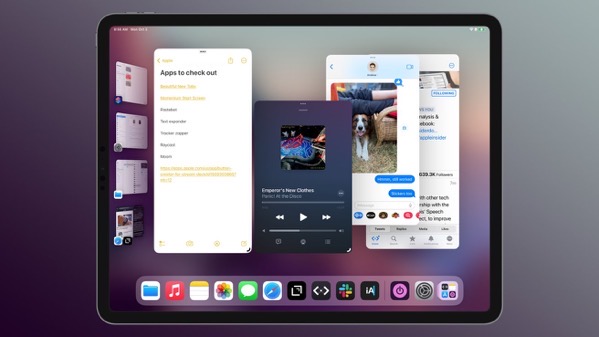
Stage Manager is Apple’s attempt at a windowing solution for iPads and Macs. iPad users have been yearning for a windowing or multi-tasking solution for awhile. What they’ve been yearning for is something most are already familiar with from experiences with laptops and desktops. Surely this would be beautiful in a “think different” sort of way. But not too “think different” in the practical mechanics.
If you’re an iPad user I am reasonably sure you were awed by the demo of Stage Manager when you first saw it. It looked magical. It looked magical in that Apple way. It looked like the solution many iPad users have all been waiting for. I know it did for me. And it was rolled out in all the ways we’ve all become accustomed to.
But the practicality of Stage Manager on the iPad largely failed to live up to the promise of those expectations once users got their hands on it. Frankly, I find it more than a dissapointment. But the design from demo to packaging of the idea was certainly alluring and seductive enough to get us (me) in the door.
So to wrap this up and get back to the points about design asthetics, practicality vs pretty, and Mastodon Apps on competing platforms let me say this. I’ve downloaded and followed the development of many of the iOS Apps for Mastodon. I’m genuinely excited by what I see and feel. Although there are differences, some are starting to morph a bit into the same look and feel but the feature sets (currently) set them apart.
After giving a spin to some of the Android Mastodon apps I’ve been dissappointed in the smaller selection available and also the lack of strong design statements in those that do exist. And again, features sets give them distinction. I’m sure others feel differently and vive la differénce.
This difference though cements my thinking that the expectations and semiotic differences between Apple and Android design philosophies are baked in at this point in the game. Apple has created such a deeper dependency on design prowess. Android’s “come as you are” approach leaves more room for less when it comes to the art of visual design. Fundamentally there’s nothing wrong with ether approach from a user perspective. Choose what you’re attracted to and have fun with your choice.
The larger and more precarious point with this tangent is that Apple’s rich design expectations, as powerful as they are, are also Apple’s Achilles heel. Great artists aren’t afraid to fail. Great product makers who use great art as a selling point need to tred more carefully to avoid the level of disappointment that can turn a legacy into a burden.
Whoo boy. I’m a bit angry. So be forewarned. Actually if you need forewarning more’s the pity. I think we should all be a bit angry.
Here’s what steamed me up this morning. The newswires went a-buzzing with the news that serial liar, conman, and fraudster George Santos had announced to his GOP House colleagues that he was going to take a “pause” on his newly appointed committee assignments. He’s pausing until the multitude of matters he’s under local, state, federal and International investigations for are resolved. Well, to be honest, I’m not sure which ones he’ll let continue before he backs off his “pause.”
So, I just have to ask what in bloody hell is going on?
One would think that this is a guy that everyone wants to see gone. His political opponents loudly push it. Many in his own polticial party do as well. (I hesitate to call it a political party any longer but that’s beside the point.) His constituents want him gone faster than the citizens of River City wanted to oust Harold Hill in The Music Man. From all appearances there’s no Winthrop or Marian the Librarian to come to the rescue.Quite frankly I think George Santos or whatever this fraud’s name is needs to be run out of town on a rail.
Further, I think it’s just the sort of thing this country needs. We’re all sick and tired of seeing Santos, Trump and other would-be decaying orange turds parade around their disdain for the rest of us. We all see the game. We all know the players and we all know we’re being played.
Running Santos loudly and publicly out of public life would do everyone some good. It would provide a brief cleansing moment amongst all the filth we’re wallowing through.
But while it makes some practical sense, several things will prevent his overdue public humiliation.
1. We are somehow stlll cliinging to the myths that we’re a nation of laws and due process. Merrick Garland has brought the final act of that farce to its sad conclusion.
2. Neither the Republicans nor the Democrats want to see him go. Oh, some talk a good game. But as far as the Democrats go they haven’t had this good of a punching bag in a long time. They’d prefer to keep him right where he is and keep punching. No matter what they say. As far as the Republicans are concerned they do need his vote. But more importantly he’s a great shiny distraction that allows them to more easily continue organizing things behind the scenes.
If Santos resigned or was booted out Congress critters would have to get back to actual work. The media would actually have to talk about issues. And no one wants that. On either side or in any circle. This show still has legs.
So, no. We won’t get any cathartic cleansing moment. No rails. No tar. No feathers. Just lots of noise. And our modern day political life will continue to be as out of tune as those trombone toting kids in River City.
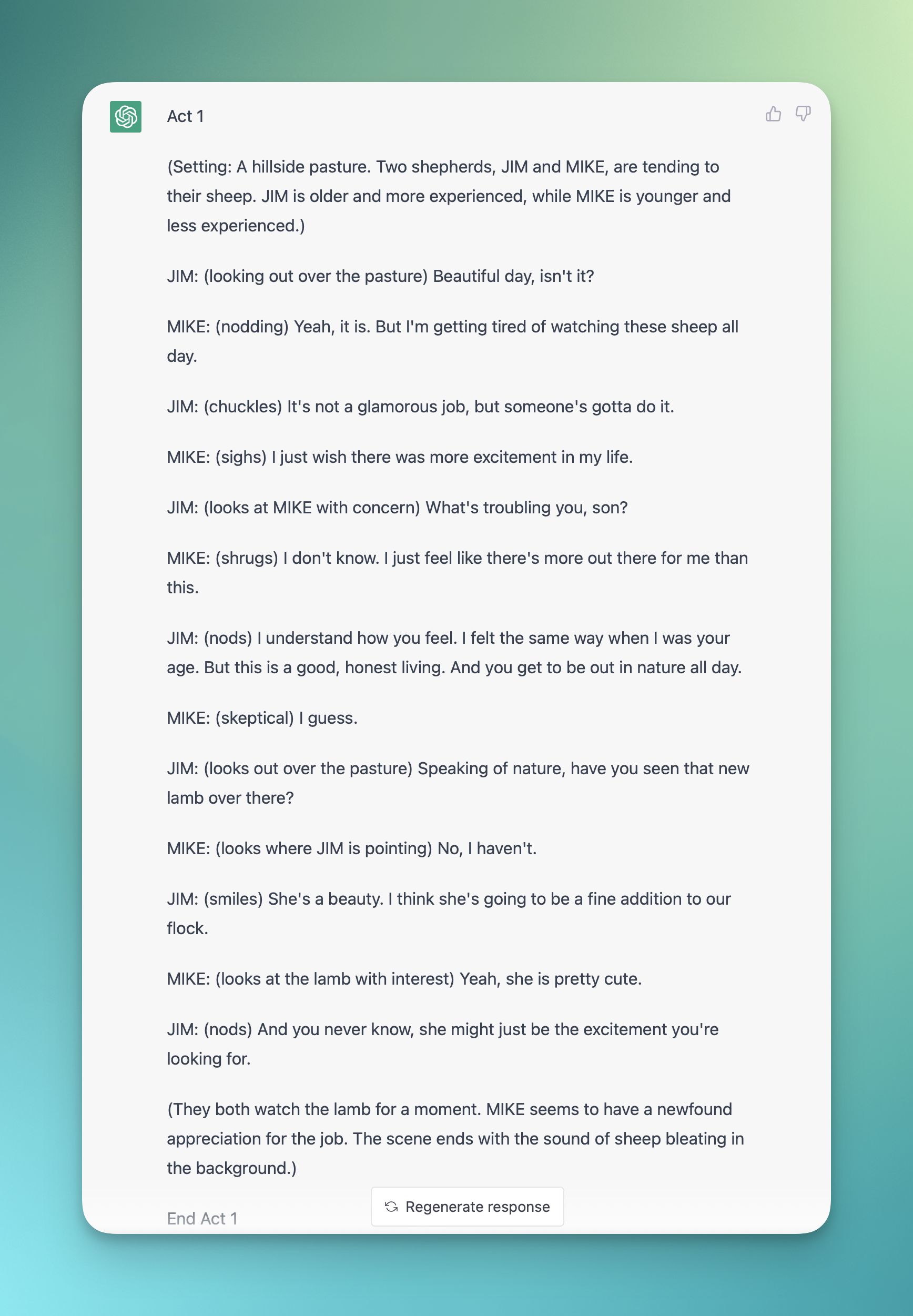
The tech word, the academic world, the business world and a few other worlds are having a moment over ChatGPT and other Artificial Intelligence innovations. For those not in the know, ChatGPT is an Artificial Intelligence product created by a company called OpenAI that allows users to input a query or a request. It’s trained on the bazillion words that exist on the Internet. And it can generate output that can be anything from an essay to a poem, computer code, a piece of digital art, typed text that can turn into script, something resembling an answer to a search query, to a play. Below is play I generated with the simple request: “write a short play about shepherds.” (click on the image below to enlarge it.)
Some are thrilled. (I’m sure the sheep in the story are not.) Some are concerned.
It’s illuminating quite a paradox. Educational institutions see benefits and also as a potential tool for students to cheat when it comes to writing assignments. Artists see this as potentially crowding them out of work and entire new ways for new artists to express themselves. In the journalism world we’ve already seen CNET start to use this form of AI to generate content (and get criticized for not disclosing it.) Buzzfeed says it’s going to be using it in some capacities to “personalize” some of its content.
I’m not quite sure about the PR spin on that one. Sounds like it might have been generated by a ChatGPT PR request instead of a thinking human. But then again, most PR speak is formulaic anyway.
It’s not just text either. There are now tools to generate AI digital art, music, computer code and who knows what else.
And yes, there are accuracy problems. And context problems. And plagarism problems. And…problems.
But AI is all the rage and it’s stoking rage from those that see this as a harbinger of doom vs those who see it as the future. There are some who think (and hope) this might mean the beginning of the end for Google’s search dominance. Microsoft has made a huge investment in ChatGPT prompting some to envision a more intelligent Clippy dancing across our desktops. The Chicago Tribune is wondering if ChatGPT can replace restaurant critics. Apparently Real Estate Agents are seeing dollar signs.
Maureen Dowd of the New York Times took things out for a spin and wordsmithed the description AI: Actually Insipid Until It’s Actively Insidious. (or at least her headline writer did.) That was after doing an interview with with an AI Shakespeare. Zounds!
A friend of mine, Sumocat, is generating fake Mastodon posts using a few of the tools and some iOS shortcuts to create fake Mastodon posts. (He labels them as such.)
So there’s fun and games and then there’s maybe not so fun and games.
The labor issue is a legitimate concern in the same way we’ve seen technology innovations create labor issues throughout history. (Anyone still selling printing presses?) Unfortunately no artificial or non-artificial intelligence has yet to figure out how to get companies to put some distance between announcements of large layoffs and new technology investments. Timing issues aside, the cold cruel economics of innovation always surface when something cool comes along.
I can’t and won’t judge whether or not this is a good or bad thing at this point. One never can tell how the day is going to turn out when it first dawns. But it’s a thing. And it’s a paradox.
Let me tell you a short story about my field, the theatre. Years ago electronic, synthesized and digital music technology advanced to the point where producers could replace entire orchestras with a digital track of the score. Instead of a conductor or music director all you needed to run the show was a sound engineer to push the go button and voila, the theatre filled with the booming sound of a full orchestra. Heck, you could even digitally enhance the singing during particularly strenuous dance numbers.
The change didn’t happen overnight. First orchestras started reducing their numbers as digital instrumentation meant that fewer players needed to be hired. Purists howled. Bean counters cheered. I don’t think any of that is news to anybody. But here’s the story part:
I directed a tracked musical for a dear friend and colleague. We were standing in the back of theatre watching the audience enjoy the show as it neared its final moments. He turned to me and asked what I thought of the music quality. I answered that I thought it was decent but not great and it didn’t allow the show to breathe properly. (The tracks he’d rented weren’t the best and this was in the early days of this trend.) He said that he didn’t think anyone would notice. And then he delivered the punchline: “But I hate it that I need to do this.”
The sad reality boils down to economics. It’s so much cheaper for a producer to rent tracks than to hire musicians to rehearse and play the score live. Licensing agencies are making a decent piece of change from that business.
Back in the day to engage an orchestra or a pit band or just a piano player, producers would rent the score from the licensing house. Hard copy scores would be distributed via mail or delivery service. Those scores would get used by musicians. By used I mean they also got marked up with notes, pages were dog-eared and worse. And then when the show concluded those markings had to be erased and folded pages straightened before sending them back to the licensing house.
That evolved into electronic distribution of scores, which simply transferred the cost of re-producing those scripts from the licensing agency to the producer.
The point I’m sure you’ve grasped behind this story is that innovation induces change all along any chain of production. Lives and professions are affected. Some lose out, others gain.
It seems almost inhumane to replace humans with the output of machines. But we’re well practiced at it and the almighty dollar eventually erases our memories of the tensions or dulls the pain these moments of human ingenuity create to replace humans.
But in our age of misinformation, when trusting what we see, hear, and read requires developing new skill sets because humans who have always been adept at creating misinformation have figured out how to really profit by doing so, the beginnings of using Artificial Intelligence to create “news” we see, hear, and read eerily feels like it has the potential to be too far a step over a line that maybe we shouldn’t cross.
Which ultimately is a paradox. AI is computer science. The essence of which is simply bits that are on and bits that are off. 1’s and 0’s. True. False. One would think that distinction reduced to that binary response could be helpful in sorting out fact from fiction.
It’s not. It’s not simply because it takes humans to create it. And it’s not because those humans are training these AI robots against all of the accuracies and inaccuracies, truths, lies, facts and fiction humans have created along the way.
It’s an endless paradox.
And here’s what ChatGPT has to say about that: (click to expand)
I’m disappointed. This classified documents imbroligo has emeshed us in another make it worse everyday mess. In my not-so-humble opinion it needs to stop. But before it does I think we can make a little hay.
We need a Spartacus moment (if for some reason you don’t know, use Google or ChatGPT, although ChatGPT may give you the wrong answer.) The way it’s going quite a few folks who have ever had access to classiifed documents need to come clean, clean out their files, or cleanly escape to a country without extradition. Why they haven’t trashed these documents is…well…stupid. But their stupidity could be our gain.
I know it won’t be popular with those who thought the decaying orange turd’s mishandling of classified documents would be the quickest way to an indictment and possible conviction. I’d join you in that camp. But let’s get real. It’s turning out that even folks in high places that shy away from orange makeup don’t play by the rules because hey, rules are for suckers.
So, in the end we’ll most likely end up changing the rules.
But before we do, I think those who’ve taken a top secret souvenir or two ought to come clean. Publicly. Loudly. Turn it into a telethon or a game show. Folks can appear in person or call in remotely and confess. I’d say they could confess on Twitter, but no one believes anyone is really who they say they are on that site anymore. Raise a ton of money for some noteworthy cause (maybe toss a few bucks to Reality Winner.)
You could probably turn it into a limited streaming series by gamifying it the way we do elections. I’m sure Steve Kornacki would have fun with the math and the maps.
Things need to move quickly though. The shelf-life probably won’t be long and the streaming services would probably cancel realtively quickly. Interest is already waning. You can tell the media is just about over this story the way they’re covering it. They thought they had a big one and the air went out of that balloon.
So before the wind goes completely out of the windbags have some fun. I mean it’s all just a reality show anyway these days. No matter how unreal it seems to get.
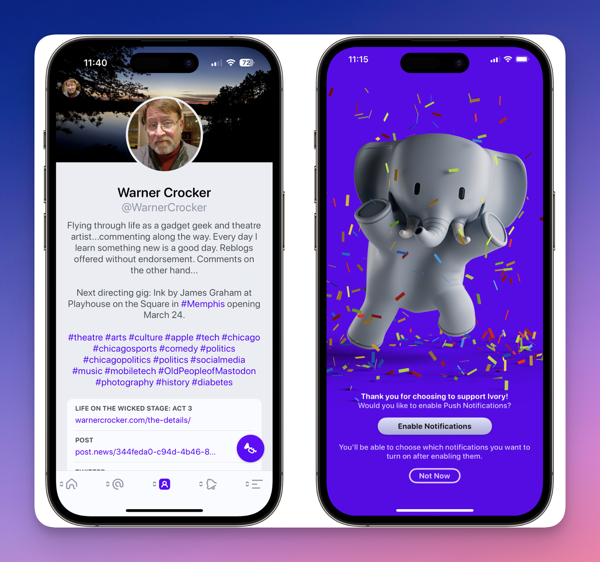
iOS and Mac developer Tapbots gladdened the hearts of many today with the iPhone and iPad release of Ivory, a new app for using the social network Mastodon.
There’s an intangible, permeating quality about Tapbots apps that trascends features and specs: craftsmanship. With Ivory, launching today on the App Store for iPhone and iPad, you can instantly appreciate that level of care and refinement that the Texas-based duo is well known for after more than a decade on the App Store. But there’s something else, too: for the first time in a few years, it feels like Mark and Paul are having fun again.
He covers the ins and outs of the features of the app well, so if you’re interested check out that review.
What I will spend a few mintues on is the rich journey the developers Paul and Mark have gifted all of us interested in the app and its development.
Tapbots is a premium app developer for Apple devices. Its Twitter client Tweetbot set many a standard along with the other great apps that have come out of that company. (I’ve used them all.) When things began going sideways with Twitter after Elon Musk’s purchase many became concerned about the longevity of the third-party Twitter apps that we used to access that social network. (Twitter’s own app has never been liked, only tolerated.)
Sure enough, Musk and his minions unceremoniously cut off access for Tapbots, IconFactory, and other 3rd-party app developers for his newly acquired plaything. When I say unceremonius-think kicked to the curb without so much as a fare thee well.
As Paul and Mark (and other developers for other apps) began working on apps to access Mastodon, they all created quite a bit of excitement along the way. But the Tapbots team not only treated us to a beautiful first beta version of the app, but with wonderful glimpses into some of their process along the way.
I can tell you that the journey was keenly followed, supported and encouraged. As will be the new Ivory app. I can speak for myself and only speculate for others, but their efforts in sharing the journey add an intangible yet very real extra-special value to the lovely finished product that exceeds anything I’ve ever felt or seen surrounding the release of a piece of sofware.
Let me just say this. Tapbots has long been a favorite developer of software for Apple devices. Paul and Mark capitalized on that hard won and much deserved loyalty and took what could have been a crushing blow and turned it into what I believe will be an extraordinary success story by letting their users participate along the way.
Any company, regardless of product, should take note.
I’ll tolerate your intolerance. But there are conditions.
I’ll get to those in a shortly. But first a bit of personal context. If you know me you’d describe me as “leans to the left.” While leaning one way or the other seems to fit the way the world wants to define everyone these days it’s not a distinction that matters to me. As a few of my “lean to the right” friends have found to their dismay I actually hold a few opinions on a few things that make their views look left of Karl Marx.
The labels and the leanings don’t mean spit to me because it’s all a circle. Lean left enough and you end up on the right and vice-versa. What goes around comes around as long as you can convince enough folks in the center that you’re on the up side of the curve and not the down side. It’s enough to make one see red. A color that proves this knock-down, knee-slapping funny point. The only place we’ve seen as much red as that adorning everything on the American right these days was in the old Soviet Union in a Moscow whore house off Red Square. Matadors and bulls are having a tough time keeping up. Oh, wait. Not a popular sport these days. Sorry.
Regardless of the ridiculous games we play with left and right, everyone (both sides?) find themselves currently playing the change the language, change the discourse game thinking or pretending they’ve come up with something new and relevant (again.) Those that think they have just haven’t been around enough to know better. Those that pretend know better. But they do it anyway.
Banning books is popular (again.) Limiting and condeming speech is popular (again.) Banning artists is popular (again-although this time around we call it “canceling”.) Banning the teaching of the full breadth of history is popular (again.) And again, and again, and again ad nauseam.
There’s nothing new under the sun and certainly the human capacity to forget or set aside the past is right up there with all of our other failings. The only innovation is the technology that allow us to observe, comment, and take advantage of our forgetfullness more quickly. I used to think that technology would help us somehow hang on to our past a bit easier, learn from our mistakes and create a better world. That was a false hope. It’s easier and more profitable to serve ads to the ignorant.
So, with the above context in mind, back to the beginning.
I’ll tolerate your intolerance. And here are my conditions.
1. If you’re intolerant of some “other” go right ahead and be so, say so, and speak what you’re going to do about it. But before you puff yourself up with righteous indignation think it through.
That “other” isn’t going to go away. The “other” was probably here before you or whomever taught you to hate them. You can pass all the laws you want, but “others” will continue to do their “othering” regardless of your existence. They always have. They always will. You be you. They will be they.
The only way you change that, and bear with me here, is if you wipe all those “others” out of existence. If that’s what you want, have the chutzpah to stand up and say so. Sure, you’ll be ostracized and maybe punched in the face or tossed into prison. And then you too can be an “other.”
2. Admit you’re afraid. You’re not standing for anything. You’re not preserving anything. You’re not advancing a cause. You’re just scared shitless, retreating and running from ideas that challenge yours like a terrified mouse into a hole. It’s scary to suspect that someone else’s ideas feel like they’re shaking the ground beneath your feet. I’ve got news. The ground isn’t shaking. It’s your knees that have gone wobbly.
3. Follow the money. You may not be making any, but folks sure are making bank off of your outrage.
4. Have a sense of humor. If you’ve lost yours I’m sorry. Go find another one. Otherwise the joke’s on you. Life is comedy. It only turns to tragedy when folks forget, that in the end, we’re all punch lines.
I do technical support for several older family members. I shouldn’t really call it technical support because it’s really more like telling them to “Just Say No” when it comes to how they use the Internet and in a couple of cases landline phones. Bottom line? Don’t trust anyone or anything.
Does that sound overly paranoid? Perhaps. But let’s get real. Companies with big names like PayPal, Amazon, AT&T, T-Mobile and many others, have surrendered their identities and don’t care that spammers impersonate them in phishing emails and scam calls. There are no real government regulations to protect consumers in these cases regardless of the PR. The bet is that no one will pursue the bad guys, so the good guys they impersonate act with impunity.
Something changes when life is viewed through our large and small screens that seems to strip away gut instinct bullshit detection folks have in the face-to-face world. Maybe it’s lack of eye contact and other non-verbal clues. But I’ve seen folks who can smell a scam in real life too easily tempted by online and phone scams, regardless of the warnings.
This is not new news I’m talking about here. The lack of trust in just about every aspect of life is astonishing. Online, doctors, lawyers, politicians, the media, religious leaders… it’s a long list. Yet many continue to try and make their way through this world assuming some level of trust might still be out there.
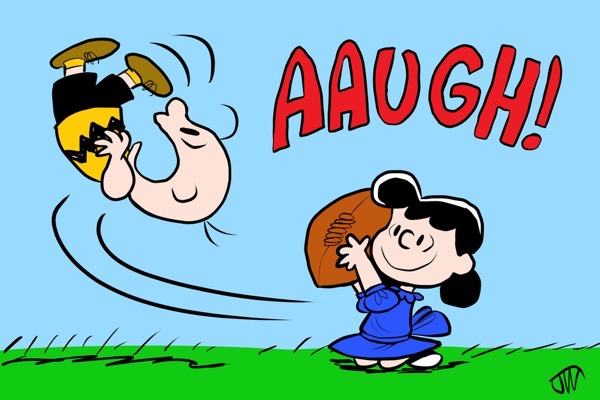
We’re all just Charlie Brown and the world is full of Lucys.






 Life on the Wicked Stage: Act 3