The farce that unfolded in Washington DC yesterday regarding Artificial Intelligence wasn’t comedy. Yet it was super hilarious. At some point you have to understand that the wool is being pulled over all of our eyes, including those of the president. And you have to laugh.
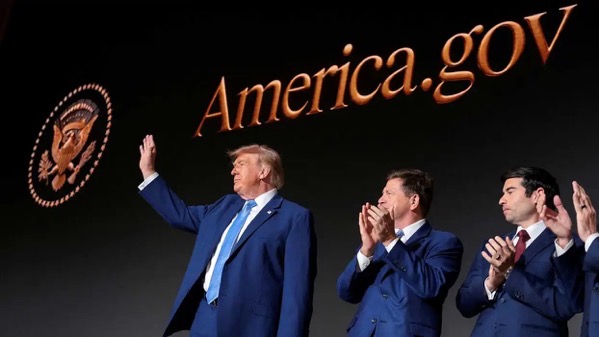
In an election year that sees American’s distaste for anything approaching the topic of AI growing like kudzu, the folks running the AI show keep rapidly alternating back and forth between requests that the government step in and stop them from destroying humanity and telling us that their products will create a new golden age of abundance.
If there’s a joke in the circle jerk of a game they’re playing, it’s that the president croaks that he got the assembled AI oligarchy to sign on to a “morally binding” agreement to self-police. You read that right. “Morally binding.” There’s lots of laughing about a group of technologists who built empires on stealing the work of others, who never met a law or a moral they wouldn’t spit on, signing such a document put forward by one of the most outrageous criminals the world has ever known. But that’s just the set up.
The joke is that these conmen are playing the decaying before our eyes president for all they can while he’s still breathing. He no longer understands what’s put before him. He doesn’t have a competent staff. A fact made abundantly clear by the misspelling of the United States under the president’s signature and the fact that his administration’s AI fueled new website spent the day disproving all the lies he’s foisted upon a population with an average reading age of a sixth grader. You’d think his flunkies would use AI to do some basic proofreading and fact-checking. But that’s above a sixth grader’s skill set. Apparently they’ve already “corrected” the website to spit out the lies again.
These tech bros are openly yanking the president’s chain, taking advantage of his infirmity, our divisiveness, our curiosity, and the greed of the markets. The rest of the world is doing it. Given their desires to run the planet, into the ground or elsewhere, they might as well get in on the act before the curtain comes down.
Couple all of that with the supposed name change in the order, rebranding Artificial Intelligence to Super Intelligence. On the one hand it’s good to know that if the technology kills us all there will be no shortage of superlatives to describe the end of times in the summaries all the robots, Muses, and Dots will spam each other with after we’re gone. It beats being wiped out by something branded as artificial, I guess. On the other, the name change is just super silly. Call me when OpenAI changes its name. I’m just surprised he didn’t name it American Intelligence. Or Trump Intelligence.
If there’s drama ahead in any of this, it’s that at some point it’s going to all go to shit. Mostly it has already. Those who dismiss every warning as merely marketing remind me of early climate change deniers. Those who take the warnings seriously remind me of every bandwagon jumper that’s ever leaped to a conclusion. As in most things, what truth that exists probably lies somewhere in the muddy middle, which is exactly where those who will profit over either their success or failure want it to stay.
Thanks for reading. You can subscribe to this blog if you care to. You can also find more of my writings on a variety of topics on Medium at this link, including in the publications Ellemeno and Rome. I can also be found on social media under my name as above. This site does not use affilate links.