Sunday Morning Reading

I’m kicking back this Memorial Day weekend and reading a bit less on the Internet. So this Sunday Morning Reading edition doesn’t feature articles of interest. Instead it features links to a few folks I follow for their writing and creativity. I’d recommend you take a look at their stuff as well. 

IMG 6149

Stan Stewart is a musician, poet, and does some nice photoraphy on his site Muz4Now. He’s always putting out something worth your time.

David Todd McCarthy is a writer I’ve come to know since jumping on to Mastodon last year. He’s opinionated, always fun, and occasionally infuriating. But you’ll come away glad you walked in the door. You can find him on Medium

Jason Kottke is one of the original bloggers from back in the day when everyone was asking what a blog was. If you’re looking for something/anything that might pique your interest, you’ll certainly find it at kottke.org

If you’re interested in tech, especially Apple tech as well as some interesting takes on some cultural things surrounding us, you might want to check out M.G. Siegler on 500ish.com. 

If you’re interseted in just what the heck Sunday Morning Reading is all about you can read more about the origins of Sunday Morning Reading here

Significant Insignificance

Humbling would be one way to describe it. Grounding might be another. Or maybe you just don’t have the TIME to think about how really insignifcant your moments on this planet measure up to all that’s come before. Regardless, this short film, To Scale: TIME should shed a little light and add some perspective. 

Flimmakers Alex Gorosh and Wylie Overstreet went to the desert to try and explain our place as humans on the timeline of the universe and it’s certainly worth a look-see. Don’t worry. It’s only 10 minutes and 19 seconds long. So, it shouldn’t take up too much of your TIME. 

To Subscribe or Not Subscribe? That’s the App Question

Apple is releasing iPad versions of its Pro apps, Final Cut Pro and Logic Pro this week. For the uninitiated “Pro” is typically code for an expenisve, full featured app for professional users. Final Cut Pro for the Mac runs you $300. Logic Pro will set you back $200. It’s an investment.

FinalCutProandLogicPro

Users have wished, requested, and even demanded that Apple release iPad versions of these two apps for Apple’s top of the line iPad Pro line. Heck, many even point to the lack of native iPad versions of these apps as proof of Apple’s lack of committment to the iPad. So, on May 9th when Apple announced that these two apps would be available for iPad Pro users on May 23 there was a rush of excitement about the release and also a hesitant holding of breath while examining the pricing.

That pricing, while lower than the Mac versions, ushered in a new era for Apple’s own apps: Subscription pricing. That raised some grumbles of discontent that Apple was releasing these two long awaited apps and for the first time using subscription pricing. Each app will be available for $4.99 a month or $49 a year. There’s also a one-month free trial.

The grumbles come from a lot of folks who don’t like the app subscription model. Some are quite vehement about it. For that crowd paying an annual or monthly price to use an app seems a bit too far. And since subscription pricing became more and more predominant there have been complaints from many users who don’t like to see an existing app that may have once been free, or purchased for a one-time cost go down this path. There are arguments aplenty on all sides of this issue. I’m not going to rehash any of those here.

Admittedly when subscription pricing for apps began to take hold I went back and forth on whether this was a good thing or not. But then after a few apps I use religiously chose this path I began to reframe how I thought about subscription pricing.

Where my thinkng landed rested on two points.

First, the value proposition: If I’m paying $X.XX a month for an app does it provide value to me? If yes, subscribing was no big deal. If not, it was easy enough to not subscribe or cancel.

Second: If this was a new app that looked promising, Apple’s App Store policies make it easy enough to try out the app and then cancel the subscription if it doesn’t offer enough value to reside in my toolbox.

Along the App-ian way of subscription pricing we’re starting to see some apps offer a free trial period. Typically they aren’t as lengthy as Apple’s one-month trial for these two apps, but generally they provide ample time to avoid committing if you’re unsure. Even so, signing up to test a new app for a month isn’t going to break my bank. Your bank balance may vary.

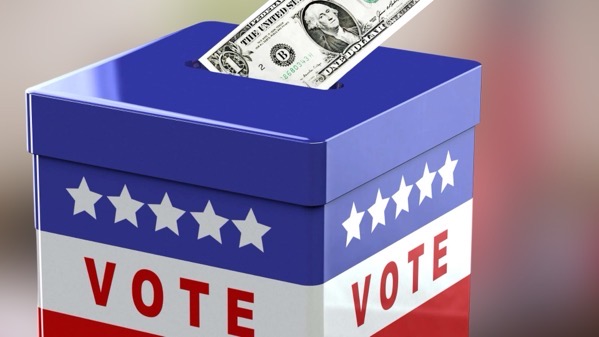
Extending these thoughts a bit, there’s another advantage to subscription pricing. That comes in measuring the success and potential future of an app for the developer. If enough users subscribe in the initial rush on a per-month basis and then choose to unsubscribe after the first month or so, the developer of that app should have a pretty good idea of the marketplace for the app going forward. Some users won’t try the app out until later, but I would think that after six months or so a developer should know whether or not to continue to commit resources to an app or not. It’s like up or down voting on an app but using your dollars to do the voting.

Of course using dollars is an important choice for users. Subscription fatigue is a real thing. So are budgets. And in the case of trying out new apps there are some things to think about.

1. Don’t sign on for an annual subscription, even though there is typically a discount for doing so. Use the month to month option if you’re trying things out. Sure it costs you a little more per month, but you maintain your flexibility.

2. Just know that app subscription pricing like any other type of subscription (streaming services in particular) or other monthly services (utilities, etc…) the price is eventually going to increase. It’s like taxes and death. It’s a given. When you hear of a price increase, it’s a good time to reexamine the value you’re getting out of the app.

3. Don’t wait until the end of a subscription period to cancel the app subscription. Once you’re sure the app won’t be something you want to keep paying for, cancel the subscription. If you’re unsure but leaning against keeping the subscription you’ll still have a portion of the month you subscribed in to test out the app.

4. Just like with media streaming services if you need an app for a specific job or not you can subscribe and then cancel. No one is going to turn your money down if you need to resubscribe in the future.

The bottom line for me is I’m not hesitant to try out apps with subscriptions if they are on the App Store.

There’s an interesting thread running on Mastodon started by Matt Birchler and picked up by John Gruber, Jason Snell and others if you roam with the Mastodons and have more thoughts on this.

Apple iCloud Migraines Continue

Earlier this month I posted about iCloud issues preventing a number of services from working. The issues continued to plague me and other users. Apple support personnel had no answers and dealing with them proved…well let’s just call it less than satisfactory.

Apple recently released updates to all of its many devices on May 18 and lo and behold included in the release notes was this little gem.

CleanShot 2023 05 22 at 07 33 40 2x
Hope? Relief? Too early to tell. Losing the ability to sign in with an Apple Watch was usually the first indicator something was wrong. As mentioned in that earlier report this seemingly random disconnecting from some iCloud services was just that: random. And though I pinned the issue on a previous series of Ventura updates it didn’t manifest until few days after I had installed the updates. 

So I installed these new updates and crossed my fingers. For a day things seemed fine. Two days in though the problems resurfaced on the MacBook Air. A reboot has so far solved that. (There had been multiple reboots since installing the latest updates.) Three days in the issues returned to the iMac. Again a reboot seems to have solved things. For the moment. 

We’ll see how things roll going forward, but I’m guessing this isn’t solved yet. Neither are Apple’s support issues. Which is another story for another day.

Sunday Morning Reading

Some Sunday Morning Reading to share. If you’re new to this now regular feature on Wicked Stage, you can read more about the origins of Sunday Morning Reading here. As always, it’s a varied collection of links. Some I find fun. Some informative. Some just weird. Regardless they caught my attention and I hope they catch yours. 

Unknown 3 4

The Debt Limit is Just One of American’s Six Worst Traditions. Lots of talk about the US Debt Limit debate at the moment. Here’s a look from John Schwarz and others at The Debt Limit and five other silly/stupid/bad political traditions in the US. Bet you’ll learn something from this one.

The Story Behind the Chicago Newspaper That Bought a Bar. Great read about a newspaper’s investigative unit and the lengths they went to exposing some Chicago backroom political shenanigans. By Andy Wright.

Why The Supreme Court is Blind to Corruption. By Randall Eliason in the NY Times. 

And while we’re talking about the Supreme Court. How about an article from Gillian Brockell discussing the only impeachment of a Supreme Court Justice in an article called: Can a Supreme Court Justice Be Impeached? Meet ‘Old Bacon Face.’

The Battle of Beach Rowdies, B-Girls, and Disorderly Women. An excerpt from Robert Loerzel’s series on The Coolest Spot in Chicago: A History of Green Mill Gardens and the Beginnings of Uptown. (You can find much more on his site by following his links. Well worth your time.)

Rudy Giuliani, Timothy McVeigh, and Sexual Abuse. Teri Canfield weaves a few threads together, that should remind us all just how tangled this twisted mess we’re dealing with today really is.  

The Song That Spawned the Four Chords of Pop by Tim Coffman. Fun stuff. 

This Little-known Rule Shapes Parking in America. Cities Are Reversing It. By Nathaniel Myerson. “They paved paradise and put up a parking lot…”

Apple announced some very interesting new accessibility features coming later this year. John Vorhees of MacStories did an interview with David Niemeijer of AssistiveWare, a company that makes augmentative and alternative communication apps for the iPhone and the iPad about how these kind of features can beneift real-world users. 

Book Banning is all the rage. Not for the first time. Check out Book Bans Soared in the 70’s, too. The Supreme Court Stepped In. By Anthony Aycock. 

Have a good week. 

Pocket Begins The Internet Dance of Death

Damn. I hate it when this happens. An app that has been a useful part of my Internet dance routine decides it’s time to join the algorithm dance party so it can recommend “things I might like.” Pocket, an app that has long been one of my partners has sashayed onto that crowded recommendation engine dance floor. Which essentially means it will eventually disappear from my dance card.

CleanShot 2023 05 18 at 10 51 16 2x

Pocket began it’s life as an app called appropriately “Read It Later.” It’s flirted with all sorts of changes along the way, adding a paid premium version in 2014. Pocket was integrated into the Firefox browser awhile back and then acquired by Mozilla in 2017, Up to now Pocket has avoided the lure of the recommendation algorithm dance party. But no longer. They began rolling out this change to Android users In January and are now introducing it to iOS users this month. 

Pocket works on all of my devices so when I see an article I want to read I use an extentsion to save it to Pocket so I can read it when I have the time and on the device that is most convenient when I find that time. I’ve been using it for quite awhile and it is at the top of my Billboard Top 10 list of apps I install on a new device.

To be fair, many apps end up chasing new dance partners. In order to keep paying the bills the money has to come from somewhere, whether it be advertising, raising prices or venture capital. At the moment there is still a free version of Pocket. So the origins and functionality of the service still exist.

Here’s my complaint. Pocket is turning into a recommendation engine first and deemphasizing the “Read Later” functionality. All you have to do is look at the new UI on a mobile device and while “Recent Save” is at the top, the page is designed to take you to “Editors’ Picks.” Those “Editors’ Picks” are curated. Call me cynical, and probably unfair, but I’m guessing that curation is done by algrothim. Call me even more cynical but when a service tells me that it is making a change to provide me with “topics you care about” I translate that into “links that serve the service first and not the user.”

Thursday 18 May 2023 10 46 44Be honest. Do you actually rely on recommendation engines? Sure, occasionally they’ll surface something of interest. But in my experience they mostly serve up more of the same the way that Amazon and streaming media services do. Like a bad DJ who doesn’t know how to keep the mix fresh and exciting and just spins the same old same old. I can’t begin to list the number of apps I once used that have danced their way into an uninstall this way.

It’s not an original dance step. It’s become a tired one. Sure most love to hear the DJ spin up “The Chicken Dance” at a wedding. But do they actually put it on their own personal playlist? By and large, while it may increase revenue (again not a bad thing) in the short term I’ve yet to find an app or a service in this drunken conga line that I don’t at some point scratch from my dance card. Bluntly, I could care less what Pocket’s “editors” think I should see, or what other users think I should see.

Obviously nothing lasts forever, especially in Internet years. But I’d love to see this dance party be one that wears out its welcome sooner rather than later.

Apple Introduces New iOS Accessibility Features

In the wind up to Apple’s World Wide Developers Conference for Apple to release news of upcoming new impressive technology focused on Accessibility issues around Global Accessibility Awareness Day. This year is no different.

Apple’s press release highlights the new features for cognitive accessibility, Live Speech, Personal Voice and Point and Speak Magnifier. You can read the press release here.

CleanShot 2023 05 16 at 07 05 09 2x

While each of the advances are more than worthy I was particularly impressed reading about Personal Voice. Here’s an excerpt from that release:

For users at risk of losing their ability to speak — such as those with a recent diagnosis of ALS (amyotrophic lateral sclerosis) or other conditions that can progressively impact speaking ability — Personal Voice is a simple and secure way to create a voice that sounds like them.

Users can create a Personal Voice by reading along with a randomized set of text prompts to record 15 minutes of audio on iPhone or iPad. This speech accessibility feature uses on-device machine learning to keep users’ information private and secure, and integrates seamlessly with Live Speech so users can speak with their Personal Voice when connecting with loved ones.1

Personal Voice allows users at risk of losing their ability to speak to create a voice that sounds like them, and integrates seamlessly with Live Speech so users can speak with their Personal Voice when connecting with loved ones.

“At the end of the day, the most important thing is being able to communicate with friends and family,” said Philip Green, board member and ALS advocate at the Team Gleason nonprofit, who has experienced significant changes to his voice since receiving his ALS diagnosis in 2018. “If you can tell them you love them, in a voice that sounds like you, it makes all the difference in the world — and being able to create your synthetic voice on your iPhone in just 15 minutes is extraordinary.”

I’m reminded of the time when noted film critic Roger Ebert, who lost his voice due to cancer, made quite a stir with news of how he was using a synthesized version of his voice to communicate. It was big news then. Apple’s Live Voice seems like it has the potential to make that kind of thing more accessible to many more.

Here’s hoping it fulfills that potential.

Sunday Morning Reading

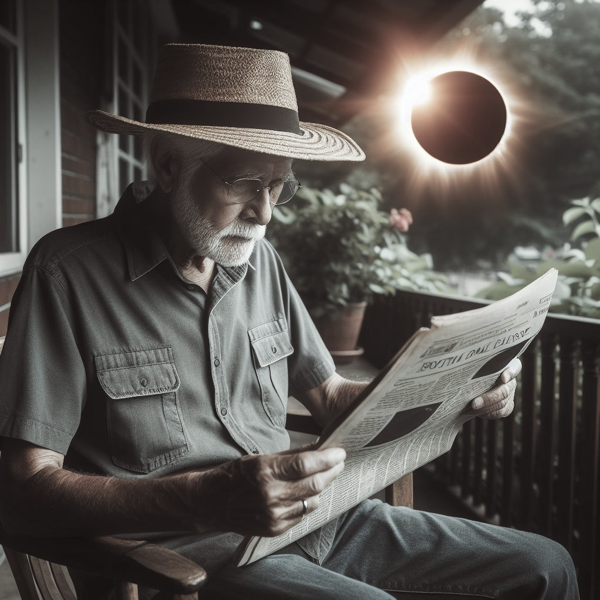
Sunday Morning Reading was a regular feature back in my previous blogging days. I thought I’d continue it here. The idea originally came about because I used to love to read multiple newspapers on Sunday mornings. Some of you might remember those days when Sunday morning newspapers were chock-a-block with stories of all kinds, featuring information (we now call it content) on a variety of topics. Newspapers used to save up their best stuff for the Sunday edition.

DALL E 2023 05 13 10 50 03  newspapers stacked on a porch table in black and white

Well, the Internet has replaced all of that. But I still do my Sunday morning reading. So this feature is nothing more, nothing less than a series of links to items and writers (with occasional commentary) I find interesting, informative, and indicative of things we are or should be thinking of in this moment. Typically I’ve discovered this in the week prior. Sometimes I actually do on Sunday mornings. For better or worse, the Internet has turned me into a prolific sharer of things I find interesting and here we are.

Note, I read a lot of different sources. Some with opinions I agree with. Some with opinions I disagree with. So you’ll find a bit of both here. I happen to believe in and enjoy exploring writers, opinions, and subjects that I disagree with. I think you should too. In fact I encourage it.

So on with this first Act 3 edition of Sunday Morning Reading.

Ben Franklin Would Have Loved Bluesky. Annalee Newitz’s take on the moment in social media. The headline skewers what the article is actually about. Worth a read if social media is your thing.

The Epic Battle No One Wanted, Or Asked For by David Todd McCarty. McCarty is a writer I’ve gotten to know since signing up on Mastodon“>Mastodon. Glad I did. His stuff is always thought provoking and often fun. Like this piece on The Magic And Mystery of Pommes Frites.

The Hedonic Treadmill – Are We Forever Chasing Rainbows by Seph Fontane Pennock A bit academic, but it’s about the temporary joys of happiness.

A Guilty Ex-President. Lots of folks don’t like David French and also don’t like that he’s writing for the NY Times. I don’t agree with a lot of his thinking, but when I want my thinking challenged I’m typically glad he’s writing about a subject I’ve been thinking on. His takes on religion and the law go far beneath the surface spewing we so much of these days.

The Billion-Dollar Ponzi Scheme That Hooked Warren Buffett And The U.S. Treasury by Ariel Sabar.  A great story in and of itself, but viewed with a wider lens says so much about where we are.

Deskilling On The Job from zephoria. If the age of AI an interesting look at the future of work.

The Last Gamble of Tokyo Joe A Chicago mob story in Chicago Magazine by Dan O’Sullivan

Students’ Understanding Of History and Civics Is Worsening by Donna St. Geroge in the Washington Post. Well, given that this has been the plan for a generation or so, I guess it’s a good thing we’re discovering that the plan is working to our detriment.

And since this is a Mother’s Day edition of Sunday Morning Reading here’s a link to an origin story about Mother’s Day from Olivia B. Waxman in Time