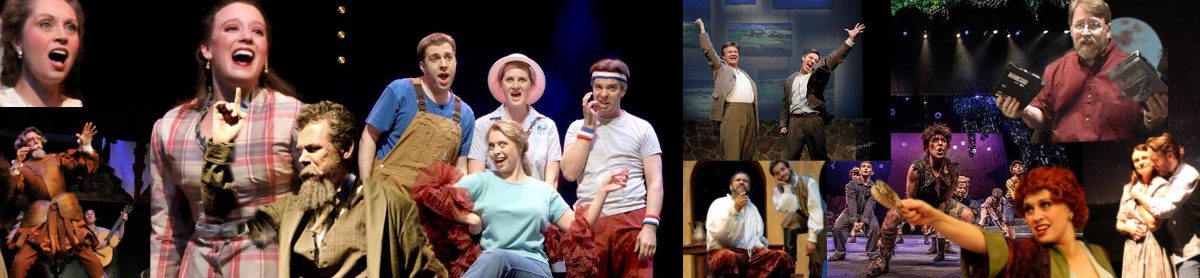
Check out this video interview on Bluff City Live about our production of James Graham’s Ink at Playhouse on the Square featuring cast memember Stephanie Almeida. Stephanie plays Stephanie Rahn, the first Page 3 girl in The Sun after Rupert Murdoch’s buys the paper.
I’d embed the interview here, but that doesn’t seem possible so if you’ll need to click on this link to go to station’s webpage and view it there. Enjoy!
Doing a gig in another town offers challenges running right alongside new adventures. The challenges have to do with the simple acts of living: food, laundry, where to get prescriptions, etc… The new adventures include discovering things in a new place and making it feel like a temporary home.
I don’t require much when I’m on the road directing a show. I’m ususally tunnel focused on the work and the time away from home is typically of short duration. I’m long since past my post-rehearsal hit the bar days. Don’t much have the energy or stamina for that anymore. Not quite sure how I used to pull that routine off anymore. And while directing is a job that requires building a team around you, I enjoy and need the moments of solitude to keep the work focused.
This gig in Memphis at Playhouse on the Square is a bit longer than most rounding out to five weeks, so there’s more time to explore and accommodate although that usually only happens on off days. And since I’ve done gigs with this great theatre before it’s a combination of discovering the new while touching base with the familiar.
The weather in Memphis is certainly warmer than Chicago this time of year so that’s a plus.
I’m in the Midtown section of Memphis in an area called Overton Square and it’s brimming with arts activity. That’s a glorious bonus. Playhouse operates three theatres, Ballet Memphis is just down the street and directly across the street from POTS is the Hatilloo Theatre. It’s a joy and a bit of inspiration to walk to work and see those arts facilities regardless of whether I turn my head left or right.
But it’s back to work today with production concerns and an afternoon and evening of rehearsals.
There’s really no such thing as a day off when you’re directing a show. But today, Monday, is our day off. The actors do very much need down time to deal with the realities of life and also process a bit. And yeah, I’ll do a grocery run, throw some stuff in the laundry and some other personal stuff. But it’s also a breath when I prep for the week ahead. Sure is nice to be able to get away from all of those other screens and sit on the porch swing with just an iPad to do that.
We’ve reached that point in rehearsals. Scenes are being strung together into acts which will eventually be strung together as a play. We’re two weeks away from technical rehearsals and the story we’re telling with our staging of James Graham’s play Ink is coming into shape nicely. We’re still in the rehearsal room for another week and by the time we leave it, the actors will be telling a tight story.
And then we’ll tear it all apart in technical rehearsals. Those technical elements of our story-telling are coming more into focus in the little theatre in my mind as I watch the actors put chunks of the show together. But they have to get out of my mind, into the designers’ and then onto the stage. Clear communication and direction is the key.
Lighting, music, and in this show a voluminous series of projections that will play on multiple screens on the stage offer a full menu. It’s one thing to visualize them as pieces of the puzzle in the little theatre in my mind and discussions around the production table. it’s another to begin charting them out as assets for discussions with the designers so they can go and build those assets.
Over the years my toolkit is always evolving and changing as technology advances, always offering new options (and the opportunites to play with new toys.) For my prep work to flow on this show I am using several screens to keep track of spreadsheets, notes and of course the script as I chart out the assets cue to cue.
Back in my digs the M2 Macbook Air is the anchor. Hanging off it is an ESR Portable Kickstand Monitor. Sitting adjacent is an 11 inch iPad Pro with the script, sometimes connected via Universal Control depending on the work I’m doing.
When it’s time for rehearsal the iPad Pro becomes the anchor and travels with, bringing it all back home for the next prep session. For someone who loves both the making of live theatre and playing with gadgets it’s a dream world.
Last night we completed blocking Act 2. So the show is “in the books.” I could get hit by a bus and someone could step in and take the show home at this point. Blocking is painting with a broad brush and it reveals the picture slowly coming into focus. The staging of some scenes won’t change a wit from this point. Others will morph and grow and end up looking totally different as the characters grow and we flesh out the details. The moments begin to breathe and the story fills out.
It’s a good marker of our progress and I’m feeling comfortable with how we’re telling the story picture by picture.
It’s also the point where I start questioning the choices I’ve planned. You know when the story works or you’re working against the story. Or when new discoveries yield new paths.
Ok. Some of that above is a lie. I had one of those “Oh Shit” moments last night that leads me to a hunch that we’re on to something new and unplanned to get into the last scene. The play talked back to me as we neared the last scene. I was about to stage the transition into the final scene and I felt that tingle. That tingle that opens a new door and tells me that I had arrived at a different path to the conclusion. I didn’t and don’t want to articulate the new thoughts just yet. But they feel right. They feel dangerous. When we come back around to the moment in work sessions I’ll know because I won’t be able to do anything but follow that tingle in my gut and step through the door.
Unusual circumstances took us there. One of our actors was out due to local flooding from some heavy rains in the area and her understudy was standing in for her. (Doing a great job by the way.) The understudy has her own minor ensemble role in the finale of the show and as the clock was ticking down to the end of the rehearsal I had forgotten to take care of her assigned role in setting up the transition. When I realized my mistake I was about to go back and correct it, but then saw this new door open and I stopped. Cold.
We’d previously staged the last scene so all that was left to do was stage the transition itself. I cheated. Talked through the transition as planned and then ended rehearsal for the night vibrating with the energy of this new discovery. I’m both excited for this new approach and terrfiied of it. That tension won’t leave until I stage the moment.
Waking up ths morning the new door is still open and I’m having difficulty writing this post and talking about it. Guess it’s time to step through the door.
It’s a week on the calendar. But it’s actually only six days of rehearsal. It was six days of rehearsal that saw us accomplish a lot, especially since we were on our feet for only four of them. We’ve got Act 1 blocked and “in the book.” We’ve learned a lot about each other and it feels like we’re starting to work as a team. I can feel the ensemble starting to build its identity. But it wasn’t a week without challenges.
At this stage of rehearsal you’re always in a rehearsal room of some sort. And POTS has a good one. It’s not an exact footprint match of the stage. Rehearsal rooms rarely ever are. But we’re all used to that. That’s why we call the first rehearsals on stage “spacing rehearsals.” We got to take a look at the scenery being installed on stage and that was informative.
Given the nature of one of the major scenic locations in this play our original plan required a lot of furniture-desks, chairs, and other stuff you’d find in a newspaper office. It was a solid plan. Until I realized that we just didn’t have enough room to adequately rehearse those scenes and the transitions in and out of them in the rehearsal space.
So I changed the plan. On the fly.
I love those in the moment moments: following the plan, feeling something’s wrong, and knowing you have to make a change. Your senses tingle back and forth between panic and possibility. You don’t know what the change will be. But you dive in, articulate the idea and hope you’re on the right course. Sometimes the new idea flies. Sometimes it crashes.
I’ve learned through the years that when I hit one of these moments I find myself literally not being able to initially articulate the idea clearly and cleanly at first. Because it is literally forming as the words tumble out. The cast has that “what the hell” look in their eyes as they’re trying to follow what I’m saying. And then we put it into motion. This time it flew.
The new plan required some re-thinking after that rehearsal to make sure I hadn’t changed us into a trap later on in the show. I’m confident we’re in good shape. But hell, I was confident in the original plan. This new plan feels much better than the original, both in how it’s going to allow us to rehearse in the next two weeks before we load into the theatre and how it’s going to make the flow of the show much more successful. And dare I say-fun.
Everyone has the day off today after a fun, hard week of work and then tomorrow we turn the page into Act 2. Can’t wait.
Our play began to take life last night. We had our first read with the cast. It was exciting and in the end ultimately a great beginning. It might have taken three years from the point that I got this gig to get to this point but all of that time evaporated last night as we heard the cast breathe life into James Graham’s words. Iit was an excellent beginning.
The cast was surprised at how much humor flows through the show and brimming with questions about their characters, our process and next steps.
Next steps. Yeah, we’re off and running and the clock is now officially ticking. More table work tonight and then tomorrow we get on our feet. Here we go.
Why are we calling this current fad/trend/gold rush into Artificial Intelligence “artificial?” Shouldn’t we be calling it Accumulated Intelligence?
From what I’m reading the output these new services are spitting out is more like a mash-up of what they’ve scraped and collected from around the Internet. You know. Stuff created by humans. Apparently the writings, the artwork, the photos, the music, the code, the thoughts, the you name it, have been collected and are being tumbled and jumbled up and presented as responses. So somebody can charge you for it or sell ads against it.
And knocking the moniker again here, that of course means it’s all been said and done before. There’s not much we can really credit to divine inspiration beyond the talent to discover, describe or display what already exists. Because that’s sorta kinda how we humans evolve (or are intelligently designed) anyway. We gain knowledge and intelligence through our experiences. And through those experiences we become who we are, think what we think, and create what we create based on the knowledge we accumulate.
I’m assuming that’s what the makers of artificial intelligence call real or natural intelligence. But it’s tough to sell ads against that.
Given that we humans are known for both brilliance and the not-so-brilliant in what we say, do, think, create and accumulate, you can say we as a species struggle a bit with the tensions brought about by natural intelligence. Certainly we seem to be hitting a speed bump on the brilliance part as the not-so-brilliant part continues to plow-ahead of late.
But again, this AI fad is taking what exists, shaking and baking, stirring the pot, and presenting it to us in a newly polished form we can get on our smartphones while waiting for the transit apps to give us wrong information about our train’s arrival time.
The very human response when someone learns something new or that an answer is wrong can certainly be “I didn’t know that.” What’s funny with these machine learners though is that in the early going they seem to be spitting out mistakes just like humans do. And taking the same kind of offense when called on it. So nothing new under the sun there.
And apparently these machines need to be governed by rules. Well, that’s only human too. We govern ourselves (well, some of us do) in order to try and remain civil and polite. And protect our profit margins. Again, only human.
So, I’m saying it’s early enough in this game that we should strip away the “artificial” in AI and change it to “accumulated.” Because sure as shooting at some point down the line some big error is going to be spit out by a machine that causes something bad to happen. And we’ll shift the blame to the machines. Just like we humans always do.
But I guess there’s one benefit to this “artificialness.” The machines can’t plead ignorance or “I don’t recall” when things get inconvenient or uncomfortable. At least until we start using “artificial lawyers.”
Is it real or is it Memorex? Remember those days? We’ve been treated to questions like those for some time now when it comes to music, film, and other means of arts and entertainment. And the pace of things seem to be quickening as the powers that be in these industries are jumping with both feet into the big tech Artificial Intelligence rush.
New technology is great when it can advance creativity. New technology is also bit scary when we don’t know exactly what it’s going to yield. But the one thing we do know is that if the bean counters think they can save a buck and make two by using a new innovation they’ll take that leap, regardless of the risks it might pose to the creative spirit.
I’ve been talking about Artificial Intelligence a bit here and obviously will continue to do so. It’s the thing of the moment. Which means some hope it’s the thing of the future. And it just might well be. But how that is going to impact the arts is going to be a tricky future to navigate. Perhaps after Google, Mircosoft and any other tech giants get their AI search engines up and running we can ask and find out. (Google calls theirs Bard. Seriously?)
We’ve already seen technology create magic in audio and film/TV. De-aging is a popular recent trend in film. Of course that follows the trends of CGI characters and CGI backgrounds and CGI just about everything else.
We’ve got computer generated narrations for eBooks competing with live readers. We’ve been enhancing audio tracks for decades, and in the most recent decade or two we’ve been enhancing live performers.
Yesterday there was a story in Vice about voice actors being asked to sign over the rights to their voices so their clients can use artificial intelligence to generate synthetic versions for future work, perhaps replacing the need for the artist for future work.
Each technology advance gets met with both praise and criticism. Some deserved. Some not so. I’m no luddite or traditonalist who eschews these advancements. But I think we’re heading into tricky ground in this next chapter of entertainment and creativity that parallels what we’re experiencing in real life.
There’s that old and recently accelerating propaganda truism (ha!) that teaches us it’s not about separating fact and fiction. In the Peacock network’s series The Undeclared War there’s a great sequence when a news editor sums it up while explaining the way it is to a younger new recruit:
“The point is to get people used to the idea that everything’s a lie. There is no truth. Once they accept that. Biggest liar wins.”
Who cares if a search result yields a false result? Who cares if Carrie Fisher is dead when she’s still appearing in Star Wars? Who cares if deep fake videos or audio can sabotage a politician or a company? Who cares if the audiobook you’re listening to is read by a human or a computer?
Set aside the labor issues and putting folks out of work. Those are real discussions that need to happen. But what if Tom Hanks, who is pretty darn excited by the de-aging process in film, or rather a digitally created Tom Hanks keeps starring in movies long after he’s gone. Hell, we could have Forrest Gump appearing with world leaders that haven’t been born yet twenty years after they’re dead.
We all had a good laugh at the manipulative creation of boy bands awhile back. Don’t think we won’t see and hear new bands created out of the whole cloth of digital bits and bytes. There’s no question in my mind that we’ll see an entire film created out of an AI prompt some day down the road.
There will be innovation. There will be excitement and celebration and there will be reactions. Some of which might actually be human.
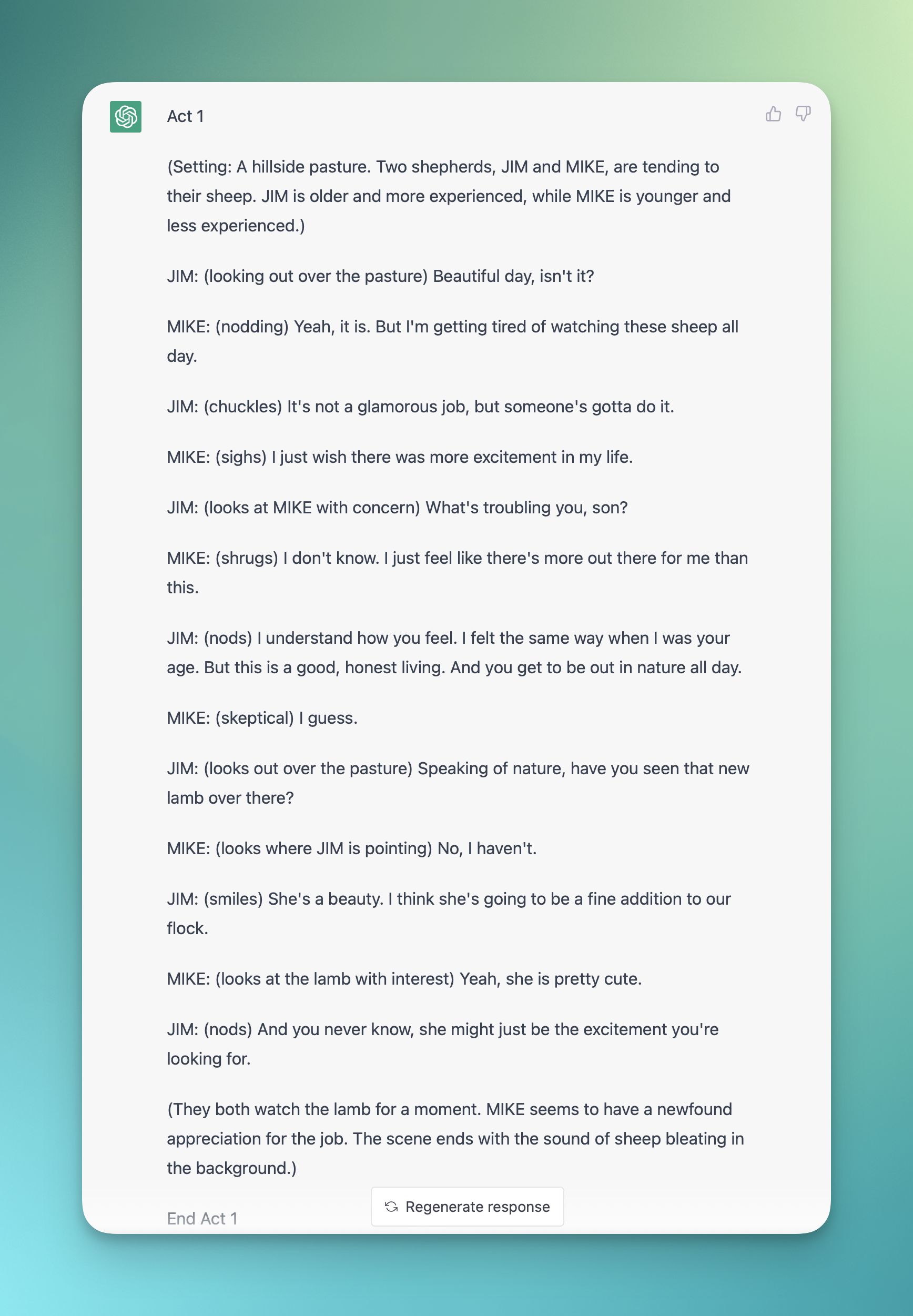
The tech word, the academic world, the business world and a few other worlds are having a moment over ChatGPT and other Artificial Intelligence innovations. For those not in the know, ChatGPT is an Artificial Intelligence product created by a company called OpenAI that allows users to input a query or a request. It’s trained on the bazillion words that exist on the Internet. And it can generate output that can be anything from an essay to a poem, computer code, a piece of digital art, typed text that can turn into script, something resembling an answer to a search query, to a play. Below is play I generated with the simple request: “write a short play about shepherds.” (click on the image below to enlarge it.)
Some are thrilled. (I’m sure the sheep in the story are not.) Some are concerned.
It’s illuminating quite a paradox. Educational institutions see benefits and also as a potential tool for students to cheat when it comes to writing assignments. Artists see this as potentially crowding them out of work and entire new ways for new artists to express themselves. In the journalism world we’ve already seen CNET start to use this form of AI to generate content (and get criticized for not disclosing it.) Buzzfeed says it’s going to be using it in some capacities to “personalize” some of its content.
I’m not quite sure about the PR spin on that one. Sounds like it might have been generated by a ChatGPT PR request instead of a thinking human. But then again, most PR speak is formulaic anyway.
It’s not just text either. There are now tools to generate AI digital art, music, computer code and who knows what else.
And yes, there are accuracy problems. And context problems. And plagarism problems. And…problems.
But AI is all the rage and it’s stoking rage from those that see this as a harbinger of doom vs those who see it as the future. There are some who think (and hope) this might mean the beginning of the end for Google’s search dominance. Microsoft has made a huge investment in ChatGPT prompting some to envision a more intelligent Clippy dancing across our desktops. The Chicago Tribune is wondering if ChatGPT can replace restaurant critics. Apparently Real Estate Agents are seeing dollar signs.
Maureen Dowd of the New York Times took things out for a spin and wordsmithed the description AI: Actually Insipid Until It’s Actively Insidious. (or at least her headline writer did.) That was after doing an interview with with an AI Shakespeare. Zounds!
A friend of mine, Sumocat, is generating fake Mastodon posts using a few of the tools and some iOS shortcuts to create fake Mastodon posts. (He labels them as such.)
So there’s fun and games and then there’s maybe not so fun and games.
The labor issue is a legitimate concern in the same way we’ve seen technology innovations create labor issues throughout history. (Anyone still selling printing presses?) Unfortunately no artificial or non-artificial intelligence has yet to figure out how to get companies to put some distance between announcements of large layoffs and new technology investments. Timing issues aside, the cold cruel economics of innovation always surface when something cool comes along.
I can’t and won’t judge whether or not this is a good or bad thing at this point. One never can tell how the day is going to turn out when it first dawns. But it’s a thing. And it’s a paradox.
Let me tell you a short story about my field, the theatre. Years ago electronic, synthesized and digital music technology advanced to the point where producers could replace entire orchestras with a digital track of the score. Instead of a conductor or music director all you needed to run the show was a sound engineer to push the go button and voila, the theatre filled with the booming sound of a full orchestra. Heck, you could even digitally enhance the singing during particularly strenuous dance numbers.
The change didn’t happen overnight. First orchestras started reducing their numbers as digital instrumentation meant that fewer players needed to be hired. Purists howled. Bean counters cheered. I don’t think any of that is news to anybody. But here’s the story part:
I directed a tracked musical for a dear friend and colleague. We were standing in the back of theatre watching the audience enjoy the show as it neared its final moments. He turned to me and asked what I thought of the music quality. I answered that I thought it was decent but not great and it didn’t allow the show to breathe properly. (The tracks he’d rented weren’t the best and this was in the early days of this trend.) He said that he didn’t think anyone would notice. And then he delivered the punchline: “But I hate it that I need to do this.”
The sad reality boils down to economics. It’s so much cheaper for a producer to rent tracks than to hire musicians to rehearse and play the score live. Licensing agencies are making a decent piece of change from that business.
Back in the day to engage an orchestra or a pit band or just a piano player, producers would rent the score from the licensing house. Hard copy scores would be distributed via mail or delivery service. Those scores would get used by musicians. By used I mean they also got marked up with notes, pages were dog-eared and worse. And then when the show concluded those markings had to be erased and folded pages straightened before sending them back to the licensing house.
That evolved into electronic distribution of scores, which simply transferred the cost of re-producing those scripts from the licensing agency to the producer.
The point I’m sure you’ve grasped behind this story is that innovation induces change all along any chain of production. Lives and professions are affected. Some lose out, others gain.
It seems almost inhumane to replace humans with the output of machines. But we’re well practiced at it and the almighty dollar eventually erases our memories of the tensions or dulls the pain these moments of human ingenuity create to replace humans.
But in our age of misinformation, when trusting what we see, hear, and read requires developing new skill sets because humans who have always been adept at creating misinformation have figured out how to really profit by doing so, the beginnings of using Artificial Intelligence to create “news” we see, hear, and read eerily feels like it has the potential to be too far a step over a line that maybe we shouldn’t cross.
Which ultimately is a paradox. AI is computer science. The essence of which is simply bits that are on and bits that are off. 1’s and 0’s. True. False. One would think that distinction reduced to that binary response could be helpful in sorting out fact from fiction.
It’s not. It’s not simply because it takes humans to create it. And it’s not because those humans are training these AI robots against all of the accuracies and inaccuracies, truths, lies, facts and fiction humans have created along the way.
It’s an endless paradox.
And here’s what ChatGPT has to say about that: (click to expand)

 I don’t require much when I’m on the road directing a show. I’m ususally tunnel focused on the work and the time away from home is typically of short duration. I’m long since past my post-rehearsal hit the bar days. Don’t much have the energy or stamina for that anymore. Not quite sure how I used to pull that routine off anymore. And while directing is a job that requires building a team around you, I enjoy and need the moments of solitude to keep the work focused.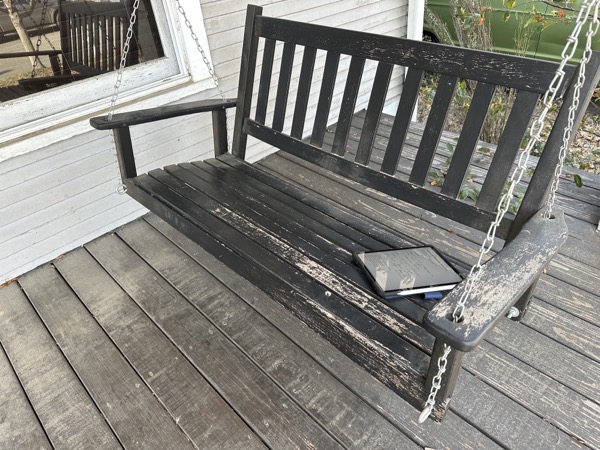




 Life on the Wicked Stage: Act 3