Peter Brook Takes on Artificial Intelligence (Well, Sorta Kinda)

News on so-called Artificial Intelligence continues to fill up the digital pages, social networks, air and cable waves with more words, words, words than you can shake a Complete Works of Shakespeare at. Abridged or unabriged. It’s truly amazing how ravenous the appetite for info on this is. But then again it isn’t.

Peterbrookatthc3a9c3a2tredesbouffesdunord photobysimonannand 2 860x516

The purveyors of AI are running so fast with something so incomplete that while the technology is impressive on one hand, they are welcoming the slight of the other. It’s not all smoke and mirrors, but there’s certainly enough smoke to make any reflection feel a bit hazy. We’re told AI is everything from our salvation to the end of it all. There’s a lot of sound and fury from all sides, signifying not much more at the moment than a lot of sound and fury.

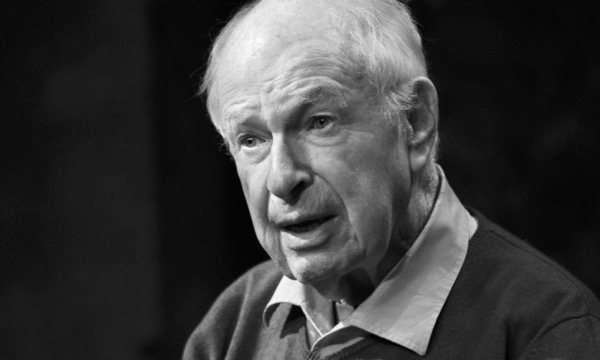
I was re-reading some of legendary director Peter Brook’s writings this morning and I stumbled on this quote. I think it comes extremely close to pinning down what’s missing in this moment. Keep in mind this quote was published in his 2013 book, The Quality of Mercy: Reflections on Shakespeare. 

Yes. You read that correctly. 2013. Brook left us in July 2022.

Once a computer was asked, “What is truth?” It took a very long time before the reply came back, “I will tell you a story…”

/end scene.

Sunday Morning Reading

It’s been a week. But they usually are. I don’t think there’s a theme to this week’s Sunday Morning Reading other than that things continue along the same path of craziness that for some reason we just continue to accept as somehow normal. So perhaps it is.

Unknown 2

Kicking things off is a great piece by M.G. Siegler about the Elon Musk and Mark Zuckerberg let’s have a cage mage nonsense called These Used To Be Serious People. I think that title could be applied to just about any field of human endeavor in this current moment.

Moral Panic? Mabye. But then maybe you’re just in a moral panic about moral panics. Interesting read from Pamela Paul.

Annalee Newitz says Ben Franklin Would Have Loved Bluesky as Twitter and Facebook lose ground to federated platforms. She says we’re in a social media era of chaos that sociologists woujld call a “legitmation crisis.” While the title uses Bluesky and Ben Franklin for attention grabbers she burrows down a bit into how the decentralization desires for some in social media, government and life tend to get thwarted by money. She goes deeper than that in a worthy read.

And speaking of money making the world go around Emma Roth says the FTC wants to put a ban on fake reviews on Amazon. Pick your favorite metaphor for being late to the party and good luck with that one.

A couple of interesting reads on so-called Artificial Intelligence. First up is The Age of AI: Everything You Need To Know About Artificial Intelligence by Devin Coldewey. Good explainer. I’m not sure if an AI bot could have done it better or not.

And Casey Newton says The AI Is Eating Itself. I’m very much in line with his thinking here.

Did you know that Samuel Beckett and Buster Keation collaborated on a film? They did. Thomas Leatham tells us about it in The Film Created by Samuel. Beckett and Buster Keaton. You can check out a small clip of it in the article.

And to wrap things up this week here’s a bit of fun and curiosity. Jisha Joseph highlights an interesting bit of Victorian news and comedy commentary from Tit-Bits Magazine:

a competition that offered a reward to unmarried women who could provide the best answer as to why they were yet to find themselves a husband. The page-full of responses published on April 27, 1889, made one thing abundantly clear: Women in Victorian England had a badass sense of humor.

If you’re interseted in just what the heck Sunday Morning Reading is all about you can read more about the origins of Sunday Morning Reading here.

Off Axis

“Off Axis” is a description I use when directing plays quite a bit. It’s simple really. It’s when a character does something that’s different than we’ve expected from the character. Or it’s when circumstances change around the character, forcing adjustment to new realities.

Lights orbiting planet earth royalty free illustration 1660241936

Being “off axis” is an uncomfortable state. Which in story telling increases the stakes for drama, comedy, or some combination of both. It’s where you want your stories to live whether on a stage, on a screen, or on a page.

Here in the real world I think we’re getting far too comfortable being “off axis” to be comfortable.

Sunday Morning Reading

As the picture says, I’m on lake time this Sunday morning. So the list of suggested Sunday Morning Reading topics is a shorter one. Here’s hoping you find a little weekend time to chill as well.

OnLakeTime

Theatre and opera director Adele Thomas talks about her beginnings, her art and her career and how artists and the challenges (financial and otherwise) that directors face trying to get a career going. Good interview by Fiona Maddocks.

A great piece from Lisa Melton: My Coming Out Party

A couple of interesting pieces on Artificial Intelligence:

Artificial Stimulated Stupidty by Robert E. Wright and Is AI a Snake That Eats Itself? by Om Malik both reflect some of my thoughts on the topic.

And while the world is watching Orcas attack yachts and other sea-going craft, here’s a piece on The Giant Whale That Terrorized Constantinople.

If you’re interseted in just what the heck Sunday Morning Reading is all about you can read more about the origins of Sunday Morning Reading here.

Creating a Bit of Magic with The Egyptian Bride

Fantastic time last night (and this past weekend) working on a new play in development. The play in question is Fouad Teymour’s Egyptian Bride. It’s been in development for several years and this year The International Voices Project picked it up to present its current iteration in a staged reading. I was asked by Fouad to direct and immediately jumped at the chance.

IMG 1959

We put together a stellar cast featuring Catherine Dildilian, Tina El Gamal, Annalise Raziq, Bassam Abedlfattah, Donaldson Cardenas and Anelga Hajjar. We spent a few rehearsals over the weekend working through the piece and the story. Fouad managed to take advantage of the short period of time and slip in a few re-writes. Last night we presented the reading to a very enthusiastic audience. (The photo above is from the talk back after the reading.)

Based on that response the play has legs. Here’s hoping we can keep those legs moving forward for the next iteration.

Congratulations to all invovled and thanks to Patrizia Acerra, the driving force behind the International Voices Project. Fantastic work, proving once again if you put talented artists in a room with a great story you can create a bit of magic.

Sunday Morning Reading

Some Sunday Morning Reading for Father’s Day. There’s no real theme to this week’s edition. Which is fitting. We used to joke that my Dad had a new hobby every six months. He did. But that just demonstrated his endless curiosity about the world around us. I think I got some of that tossed into my mix. So here’s a pot-pourri of topics to share. 

Blanche monniers news

Humans aren’t mentailly ready for a lot of things. So called Artificial Intelligence is certainly one of them. Thor Benson tells us why that might be the case

Nicholas Casey tells a great spy story in The Spy Who Called Me.

Barbara Kinsolver is a great writer. Her latest book Demon Copperfield brings a dive into Dickens for a tale from Appalachia. Lisa Allardice has written a terrific profile on Kingsolver. 

Pennsylvania apparently is one of the key stomping grounds for the Christian Right’s desire to spin us back to the dark ages. Frederick Clarkson gives us an excllent look into this. 

Why Is Everyone Watching TV With the Subtitles On? Devin Gordon offers up some answers. Mine’s simple: Selfish stupid filmmaking. 

What came first the chicken or the egg? Well that age-old riddle leaves the rest of the egg-laying species out of the question. Intriguing piece by Nisha Zahid. 

And while we’re talking about the riddles that plague humans about the non-humans sharing our planet, Ari Daniel highlights an article in Cell that says an Octopuses can tweak the RNA in their brains to adjust to warmer and cooler waters. 

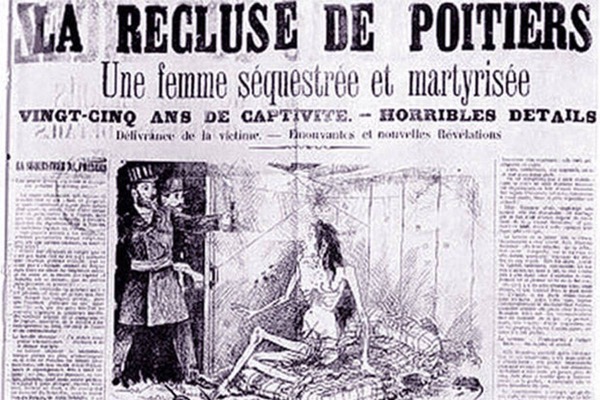
This is a scary and sad tale. Gina Dimuro tells us about Blanche Monnier. Her parents locked her in her room for 25 years after she fell in love with the wrong kind of guy.

If you’re interseted in just what the heck Sunday Morning Reading is all about you can read more about the origins of Sunday Morning Reading here

Sunday Morning Reading

Charisma might be the theme of some of this week’s edition of Sunday Morning Reading. Or maybe it’s our fasicnation with folks who seem to marshall it for mischief. The theme runs through a range of topics from Artificial Intelligence to the media with a few other subjects tossed on the reading pile. Speaking of charisma and mischief marshaling, these articles all came my way as we were absorbing the news of the Trump indictment this week. I wrote a little something about that here.

Unknown 2

Om Malik stands as much in dismay as I do at how much time the media spotlights charlatans in Media and Monsters.

Joe Zadeh takes a look at the The Secret History and Strange Future of Charisma. It features this quote from Ernst Glöckner.

“I knew: This man is doing me violence — but I was no longer strong enough. I kissed the hand he offered and with choking voice uttered: ‘Master, what shall I do?’”

We’ve witnessed quite a few falls from grace this week. None more glaring than CNN’s Chris Licht. Mark Jacob in the Courier breaks down the difference between platforming and journalism. The latter Licht’s lickspittling helped slide further down the reputation damage scale. 

Morality is declining. That seems to be something most believe at the moment. Data says otherwise according to Mariana Lenharo. 

Jeff Jarvis followed a court case in which a couple of lawyers had to own up for submitting nonexistant citations and cases created by ChatGPT. 

John Warner lays out an excellent long read on why Speed and Efficiency are Not Human Values. Yes, it’s AI related but you’ll also find a little Korsakov, Tolstoy and Prince in the mix. 

James Grissom claims he received a phone call from playwright Tennessee Williams, who asked Grissom to “be my witness.” After a meetiing with Williams, Grissom takes the names Williams gives him and proceeds to follow the playwright’s wish: “I would like you to ask these people if I ever mattered.” Grissom turned it into a calling card, a book and a career. Lots of folks doubt the whole thing. Helen Shaw tackles the story in Did This Writer Actually Know Tennesee Williams?

David Todd McCarthy takes on our fascination with the unprecdented in America Grows Up.

Sabrina Imbler tells us the story of The Strange Case of the Woman Who Gave Birth To Rabbits. 

And to end this week’s edition of Sunday Morning Reading here’s a piece by Melissa Cunningham about Jenny Graves. Why are we still singing about Adam and Eve when there’s so much gorgeous science out thre is the world that explains our origins.” That’s the question Jenny Graves, an evolutionary geneticist, asked herself on her way to creating a libretto based on Joseph Hayden’s The Creation. Melissa Cunningham tells the story 

If you’re interseted in just what the heck Sunday Morning Reading is all about you can read more about the origins of Sunday Morning Reading here. 

Sunday Morning Reading

Some complex, challenging, and excellent writing to share with you today covering everything from big picture politics to the small, media meanderings and meltdowns, and some interesting tech analysis heading into Apple’s big mixed reality headset announcement at its WorldWide Developer Conference tomorrow. Hope you find the suggestions fascinating. I do. 

Unknown 3

Chilling read. Ryan Busse, a former gun executive talks to ProPublica’s Corey G. Johnson about the danger of increasing radicalization in the industry

The subhead for this piece, “The view from nowhere came from somewhere” should have been the title instead of The Invention of Objectivity. Regardless Darrell Hartman lays out a good read about how “objectivity” came to the New York Times. Subjectively speaking pretending that journalism can be unbiased is not a bias I subscribe to. 

David Todd McCarthy walks along The Edge of Defeat in today’s political battles between progressives and establishment loyalists. Note: McCarthy is also setting up a new publication focusing on his political writings and musings called Rome Magazine. Also worth your time while the world burns. 

Peter Turchin in The Atlantic adapts some of his book End Times (a good read) into an article called America is Headed Toward Collapse. He argues that history can show us how to muck our way through our present day “discord” as we have done twice before. I’m not sure history is going to be so kind this time around. 

Anyone paying attention to the goings on at CNN leading up to and following the recent “town hall” featuring the conman known as the former president will find this behind the scenes feature by Tim Alberta in the Atlantic a fascinating read. The title certainly points to where it’s going: Inside the Meltdown at CNN

Big pictures are complex. Neil Theise’s book Notes on Complexity: A Scientific Theory of Connection, Concsicousness, and Being tackles some of that complexity. In this article he lays out five key insights from his book. 

Smart People are Falling for Stupid Lies by Kathryn Joyce in Vanity Fair is another article that racks the big picture political focus down to the view inside local battles in a specific county. These type of articles are enormously helpful in shedding light on the fact that the problems we face aren’t just top down but also bottom up, and how both feed the frenzy. Here’s another one from February in Politico about Ottawa Country, Michigan.

Om Malik tosses a bit of reality into the hype fire surrounding Apple’s headest to be unveiled tomorrow.

One more piece on Apple’s upcoming headset. David Pierce at the Verge says If Apple Wants Its Headset To Win, It Needs to Reinvent the App.I don’t agree with some of the things David lays out, but his central thesis is spot on.

If you’re interseted in just what the heck Sunday Morning Reading is all about you can read more about the origins of Sunday Morning Reading here

Why Do We Love Shows About Bad People Like Succession and The Great?

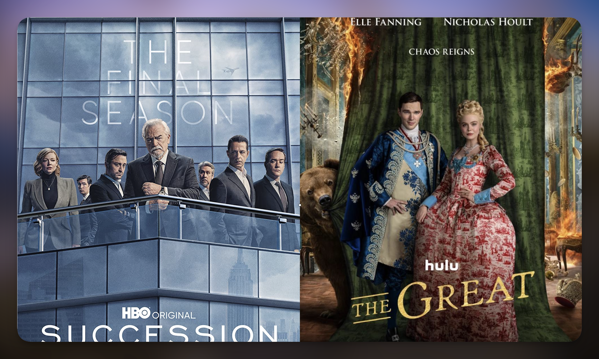
Two nasty viewing pleasures came to an end this spring. Succession and The Great. Why do I call them “nasty?” Well, because they are both populated with nasty people doing nasty things to each other and everyone else with nary a glimpse of anything resembling a redeeming character that survives more than a few seconds in each.
CleanShot 2023 06 01 at 12 54 28 2x

Both shows mix a milieu that features characters so above it all they can get away with all sorts of mischief including murder. Both shows slather on salaciousness to the point of impotence. Both stories feature folks who despise and disdain the masses so openly that it would embarrass Marie Antoinette.

And yet, both shows are deliciously and deliriously fun to watch and quite popular. Why is that? Do we just enjoy watching bad people behaving badly? Are we transferring our fantasies on to these characters? Are we deep down that sick, twisted, greedy and gluttonous? Is that the reflection we want to see in the mirror held up to our own nature?

The short answer is yes. Apparently.

I’m sure there are plenty of folks who don’t see the attraction in these characters and their shows. Even so there is something deep inside of many of us (enough of us?) that makes the villainy attractive and entertaining. Richard III is one of the greatest villains to ever parade around a stage. And he’s certainly entertaining. But like the Duke of Gloucester, villains usually get their comeuppance. Sometimes searching for a horse. Or in the case of Catherine, well…

Villains meet their end. Unless they’re primed for a series of sequels. And in the age of streaming series, I don’t think we want our villains to meet their end whether it be on a show or in real life.

Historically, there has always been a catharsis that purges our alliance and dalliance with the dark side when the house lights come up. We know that going in. There will be an end. The bad guys won’t win. In ancient entertainment the gods saw to that. These days, the show runners not so much. Our current moment is not serving comeuppance in the same way anymore.

The folks in Succession and The Great may have reached the end of their series, but there’s no real hint of their circumstances or the gods bringing them to heel. For the survivors there’s no suggestion of a change in their characters. The Roys are still richer than Croesus and Catherine is still empress of Russia. They and their respective courts will still bounce around behaving badly. They may all be living with the sting of regret from their choices and losses, but hey, nursing your wounds in palaces and island retreats sure beats having your head chopped off. Euripides would not be pleased. There’s no Butch and Sundance ending for these folks. The gluttony goes on.

And apparently we like our villainy viewing that way.

Oh sure, we love our heroes too. They may wear brightly colored costumes, but we underdress heroes in shades of gray tinted with flaws. So many (too many?) align with our real world heroes and villains because of their flaws not despite them. The more flawed they appear the greater the attraction. Substitute the word “human” for the word “flawed” in that last sentence and you can hold up that old mirror cliché and feel seen. Warts and all. It’s a fun house both on the screen and in real life. It makes me wonder why there’s such an interest in Alternate or Virtual Reality. We’ve already created it, and most of us actually have legs.

When it comes to the villains, the absence of consequences for those with money and power mocks anyone looking for the bad guys to get theirs in the end. It’s almost like you need to be a stupid villain to end up hoisted on your own petard. Currently we’ve cornered the market on celebrating stupid villains, misplacing craft and cunning with stupid and bumbling.

The lust for guile, guilt, and gluttony used to exist within some sort of security blanket wrapping us in that comforting myth that things would turn out in the end. Those bad guys weren’t like us. We couldn’t be that stupid or evil. Could we? Maybe we just wish we could.
Sunday Morning Reading

Some Sunday Morning Reading to share. If you’re new to this now regular feature on Wicked Stage, you can read more about the origins of Sunday Morning Reading here. As always, it’s a varied collection of links. Some I find fun. Some informative. Some just weird. Regardless they caught my attention and I hope they catch yours. 

Unknown 3 4

The Debt Limit is Just One of American’s Six Worst Traditions. Lots of talk about the US Debt Limit debate at the moment. Here’s a look from John Schwarz and others at The Debt Limit and five other silly/stupid/bad political traditions in the US. Bet you’ll learn something from this one.

The Story Behind the Chicago Newspaper That Bought a Bar. Great read about a newspaper’s investigative unit and the lengths they went to exposing some Chicago backroom political shenanigans. By Andy Wright.

Why The Supreme Court is Blind to Corruption. By Randall Eliason in the NY Times. 

And while we’re talking about the Supreme Court. How about an article from Gillian Brockell discussing the only impeachment of a Supreme Court Justice in an article called: Can a Supreme Court Justice Be Impeached? Meet ‘Old Bacon Face.’

The Battle of Beach Rowdies, B-Girls, and Disorderly Women. An excerpt from Robert Loerzel’s series on The Coolest Spot in Chicago: A History of Green Mill Gardens and the Beginnings of Uptown. (You can find much more on his site by following his links. Well worth your time.)

Rudy Giuliani, Timothy McVeigh, and Sexual Abuse. Teri Canfield weaves a few threads together, that should remind us all just how tangled this twisted mess we’re dealing with today really is.  

The Song That Spawned the Four Chords of Pop by Tim Coffman. Fun stuff. 

This Little-known Rule Shapes Parking in America. Cities Are Reversing It. By Nathaniel Myerson. “They paved paradise and put up a parking lot…”

Apple announced some very interesting new accessibility features coming later this year. John Vorhees of MacStories did an interview with David Niemeijer of AssistiveWare, a company that makes augmentative and alternative communication apps for the iPhone and the iPad about how these kind of features can beneift real-world users. 

Book Banning is all the rage. Not for the first time. Check out Book Bans Soared in the 70’s, too. The Supreme Court Stepped In. By Anthony Aycock. 

Have a good week.